Summer house Buća
Summer house Buća is a historical complex and one of the most impressive attractions of Tivat.
Located in the center of Tivat, the summer house was founded by the famous Kotor noble family Buća. Ov
Summer house Buća
Summer house Buća is a historical complex and one of the most impressive attractions of Tivat.
Located in the center of Tivat, the summer house was founded by the famous Kotor noble family Buća. This complex is a harmonious Renaissance unit with some late Gothic details. Five buildings make up its whole: a residential house, an economic house, a small church - a chapel dedicated to St. Michael's Church and a tower with a monumental entrance gate.
Today, the residential building of this revitalized medieval monument has been turned into a gallery space, and the attic of the complex houses the studio of Tivat artists. The former summer garden has been transformed into a summer stage, where exhibitions, literary evenings, concerts and other events are organized, all within the Tivat Culture Center, which also has a cinema hall as part of its structure. theater performance hall. At the end of the 19th century, the sea captain and ship owner from Prčnje, Count Marko Luković, bought the famous summer house and gave part of the property to the municipality of Tivat.
Prevlaka Peninsula
The peninsula of Prevlaka, or the more popular name of the island of Cvijeca, is 300m long and 200m wide. The peninsula is connected to the mainland by a narrow isthmus, and represents one of the most significant natural and cultural-historical entities in Boka. It is one of three unique islands in a row in the Gulf of Tivat, known as the Krtol archipelago. In the period from the 9th to the 14th century, the most significant stage of this area begins, and the name Miholjska prevlaka itself was created after the monastery of St. Archangel Michael. A Benedictine monastery was originally located on the Prevlaka peninsula, and from the middle of the 13th century, Saint Sava Nemanjic established the seat of the Zeta bishopric in 1219, while the remains of this monastery still exist at this location. A hundred meters away from the Prevlaka peninsula is the Stradioti shell or the island of St. Mark, and even more distant is the Virgin's Island, Otok or Our Lady of Mercy.
Nautical Museum
The nautical museum is located at the end of the Porto Montenegro marina. Visitors cannot miss the two large submarines located in front of the museum. The possibility to explore the submarine from the inside provides a great experience, and a way to see and understand the life of the crew members in the submarine under the water. The tour allows us to see the equipment, machinery and mechanism of how the submarine worked. The museum presents a unique opportunity to walk around the unique submarine "Hero", which had a total of 726 sailing days, 910 dives, and traveled a total of 46,659 nautical miles - which is equivalent to sailing twice around the globe. The small submarine P-912 "Una" is also on display next to "Hero." Both submarines are on display in the open air. Visitors who are visiting the museum for the first time are given a detailed overview of the city's history and historical connections with the Yugoslav Navy. If you happen to be in the vicinity, you shouldn't miss the incredible engineering of these submarines from 1968.
Solila of Tivat
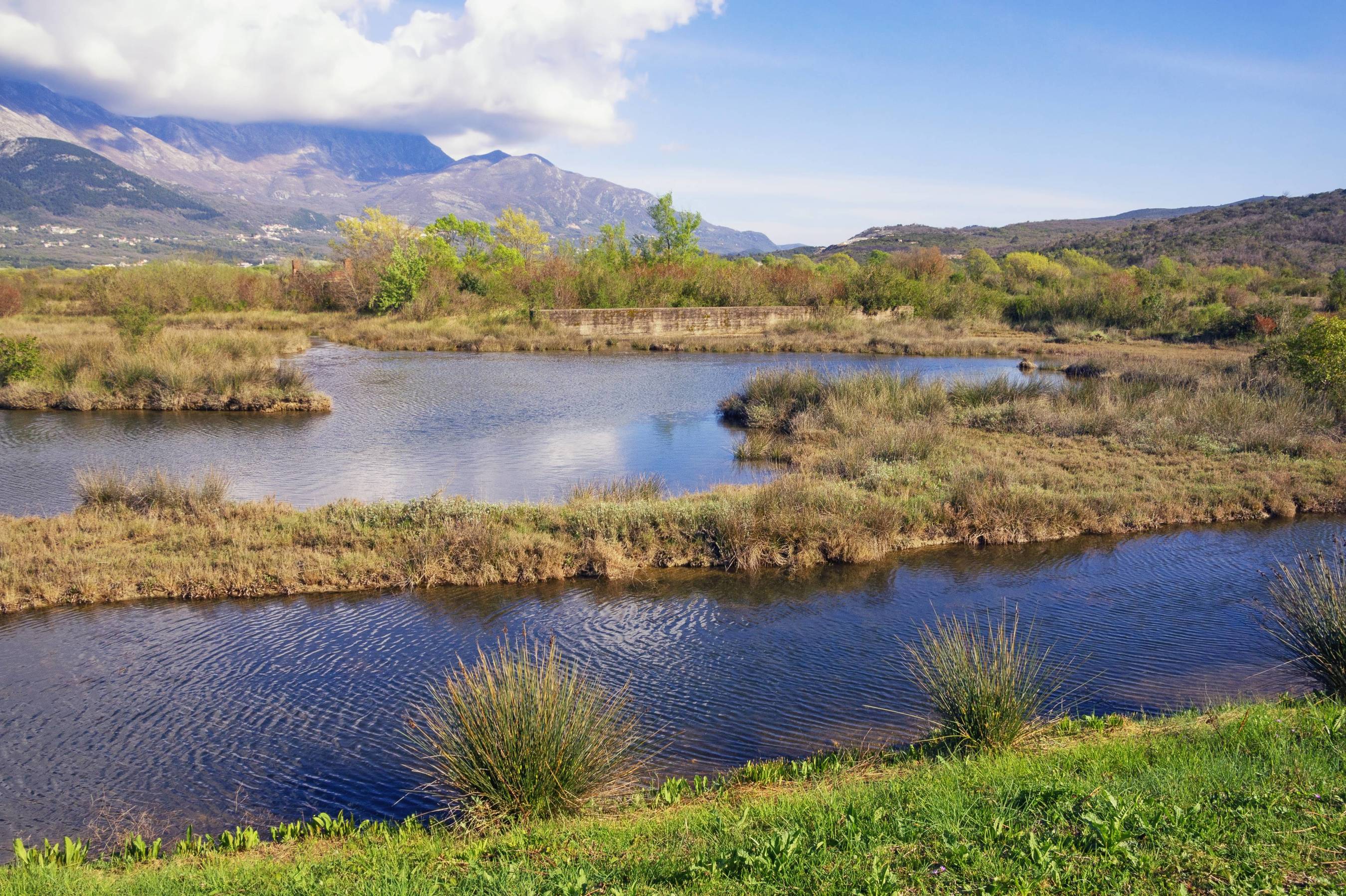
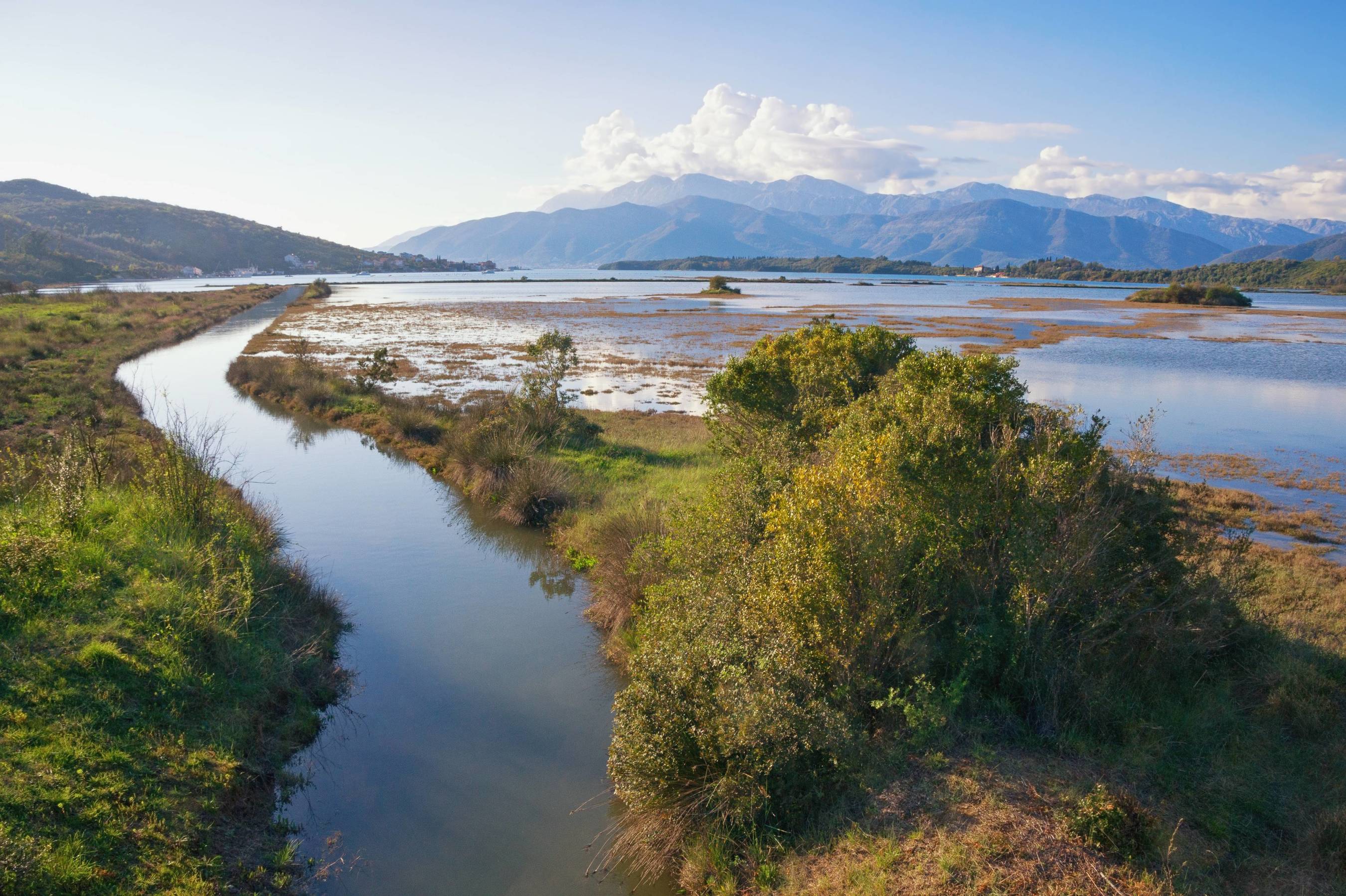
As part of the Tivat salt marshes and a special reserve for bird watching, an ornithological trail has been opened that contains two bird observatories. The immediate proximity to the sea and the relatively well-preserved geomorphology of this lagoon make it of special interest for birds. Shallow salt water rich in marine organisms and muddy bottom, rich in benthos, attracts waterfowl for feeding, wintering, autumn and spring migration. So far, 47 species of aquatic birds have been recorded on Solili, of which 4 species are permanently present, about 35 of them winter, while 6 species probably nest. Together with other groups of birds, songbirds, birds of prey, etc., 111 species have been registered on Solili so far. However, the list is not nearly complete, because every year several new ones are registered for that habitat. Given that 526 bird species have been registered in Europe so far, the number of species present in this lagoon makes up more than 20% of the total number of European bird species, which is not negligible.
The importance of at least 11 species from the Annex and the Birds Directive of the EU, as well as several globally endangered bird species, such as the Fendak, Phalacrocorax pygmeus, is particularly emphasized. The Tivat Salt Flats are a special floristic and faunal reserve. Due to its importance for the survival of flora that can rarely be found anywhere today on the 800 km long eastern coast of the Adriatic, as well as the fact that it is a habitat for numerous endangered species of amphibians, reptiles and birds, Solila was protected in 2007 as a special floristic and faunal reserve, the first of its kind on the Montenegrin coast and the first protected area on the coast after 1968, when a large number of beaches were protected. Salts are the Emerald habitat of the Berne Convention and the Area of International Importance for the Residence of Birds in Montenegro - IBA.
Pine Promenade
It occupies the central part of Tivat and is a great place to enjoy a walk by the sea, with a large selection of restaurants and cafe bars that offer something for everyone, for all tastes and budgets. Pine, as the "older," historical part of Tivat's promenade, gives charm to this beautiful town. The extremely wide and clean promenade has long rows of palm trees, between which there are wooden benches where you can rest after an exhaustive walk along the coast. In the nearby bars, you can sit in comfortable chairs and order your favorite pizza and enjoy local and international specialties, with a fabulous view of the ships and the azure sea.
.jpg)
.jpg)
.jpg)
.jpg)
.jpg)
.jpg)
.jpg)
.jpg)
.jpg)
.jpg)
.jpg&w=2048&q=75)


