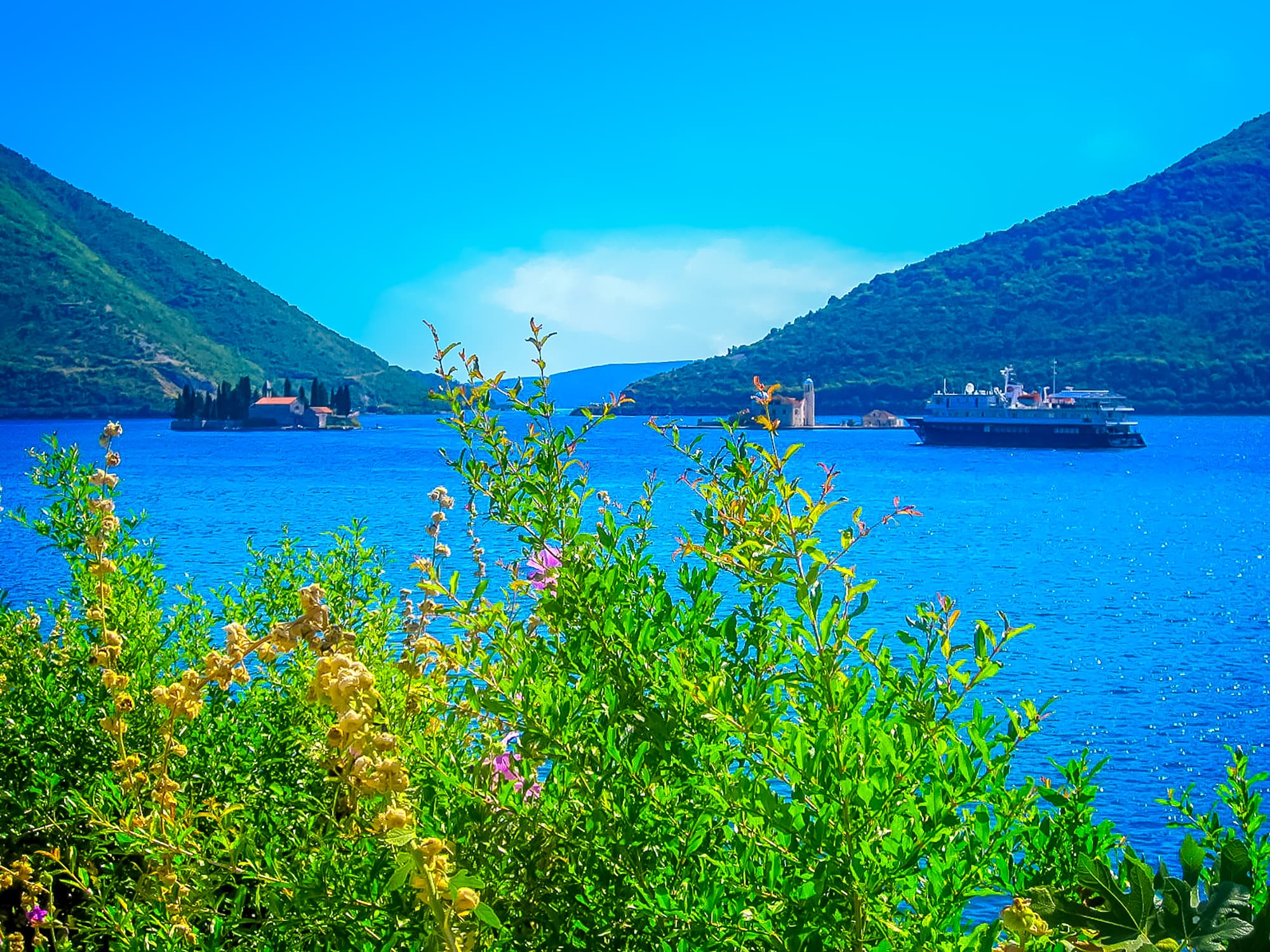
Risan
Risan is the oldest continuously inhabited settlement in the Bay of Kotor, founded in the 3rd century BC as the stronghold of the Illyrian Queen Teuta, who ruled the coast until the Roman legions arrived. Known in antiquity as Rhizon, it lends its name to the inner basin, the Bay of Risan, the widest and most open stretch of the inner fjord. The town sits dramatically beneath the bare grey ridges of the Orjen massif on the northern shore, where the mountains fall almost straight into still, deep water. It is a working Montenegrin town rather than a resort, and that is precisely its appeal: life here moves at its own pace, well away from the tour-bus bustle of Kotor and Budva. The headline sight is the site of the Roman villa, where exceptionally well-preserved 2nd-century floor mosaics survive in situ. Among them is a rare depiction of Hypnos, the god of sleep, reclining in fine tesserae, believed to be the only such mosaic representation on the entire eastern Adriatic. The small excavation site, with multilingual information panels, makes a rewarding short stop. Risan's hot mineral springs have been valued since classical times, and the long pebble waterfront gives easy, uncrowded swimming with the Orjen peaks as a backdrop. A handful of traditional konobas serve grilled Adriatic fish, lamb and veal under the sač (bell), and local wine at honest prices. Risan suits travellers drawn to history, quiet swims and authentic small-town Montenegro rather than nightlife. It makes a calm, affordable base within easy reach of the bay's highlights: Perast and its two islets are minutes away by car, Kotor's old town around 20 minutes south along the shore road, and Herceg Novi a similar drive to the west. Tivat airport is roughly 30 to 35 minutes away by car or taxi, making arrival straightforward. Combine the mosaics with a boat trip on the bay and a long lunch by the water for an unhurried, genuinely local day.
