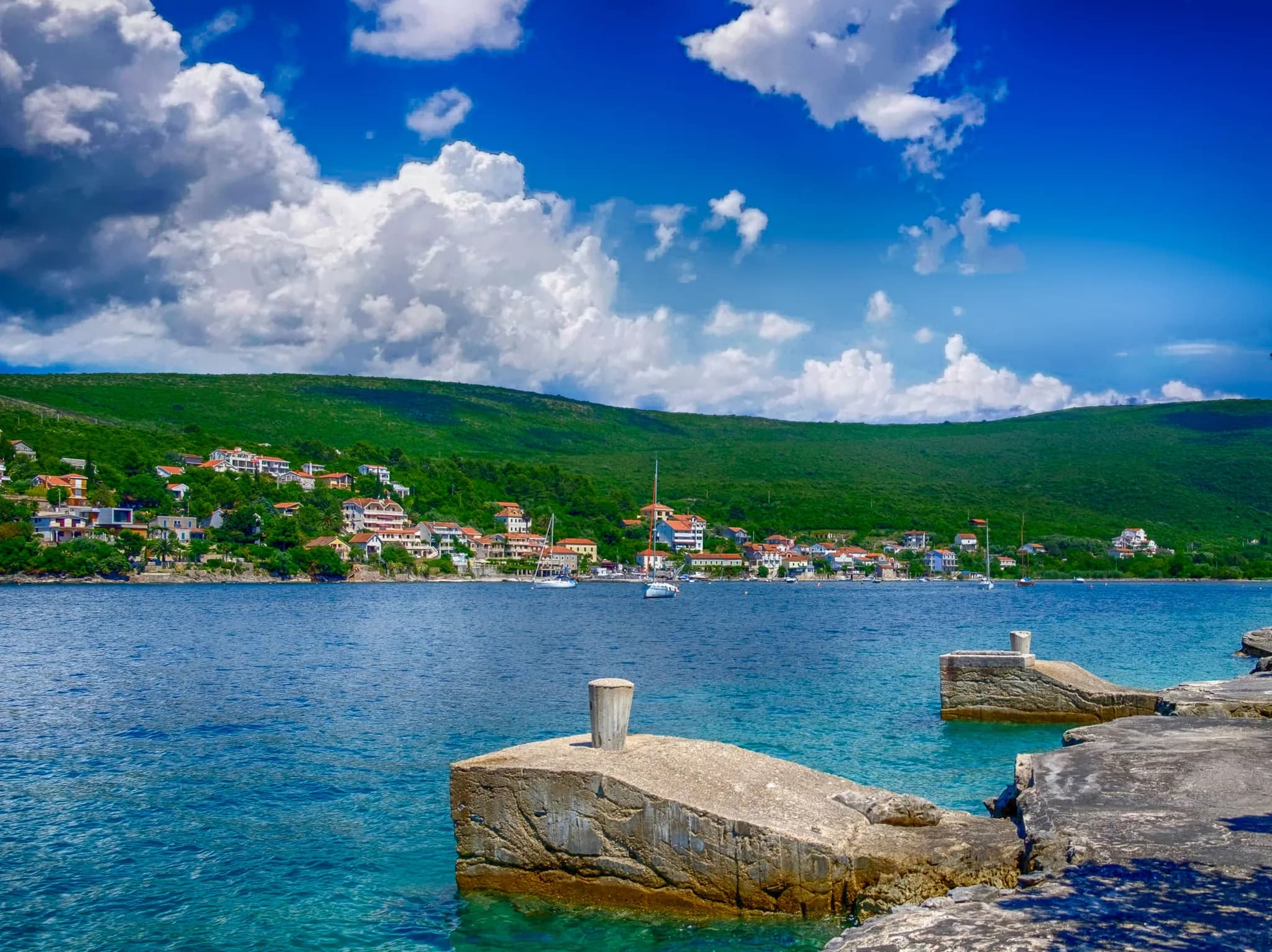
Bigovo
Bigovo is a small fishing village on the northern shore of the Luštica peninsula, folded into a sheltered inlet of Trašte Bay a short drive from Tivat. A few dozen stone houses stand around a shallow harbour where working boats still outnumber pleasure craft, and the village has kept the shape and pace it has had for generations. The bay opens south toward the Adriatic but is protected enough that the water stays calm through most of the summer, which is why boats have used this anchorage since antiquity. The village is known above all for its seafood. A handful of family-run konobas sit almost on the water, and the fish, squid and shellfish they serve generally come off boats moored a few metres away. Eating here is unhurried and unadorned — grilled fish, olive oil, a salad, local wine — and it is the main reason people from Tivat, Kotor and Budva drive over for a long lunch and stay until the light goes. Beyond the harbour, the setting does the rest. The beach at Bigovo is small and pebbly, and the water is clear enough for easy snorkelling straight off the rocks. Coastal paths and old cart tracks lead around the bay toward Trašte and the wider beaches on that side of the peninsula, passing through maquis, olive groves and the dry stone walls that terrace the slopes. Luštica's interior, with its scattered hamlets, wells and small churches, is easy to explore on foot or by bicycle from here. Bigovo suits travellers who want the Adriatic without the crowds of Budva — couples, families with small children, and anyone happier with a quiet cove than a beach club. There is very little in the way of nightlife or shopping, and most visitors treat it as a base for swimming and eating rather than a place with a programme. June and September are the most comfortable months; July and August are warm and busier, though never overwhelming.
No posts found.
View all posts