Njeguši
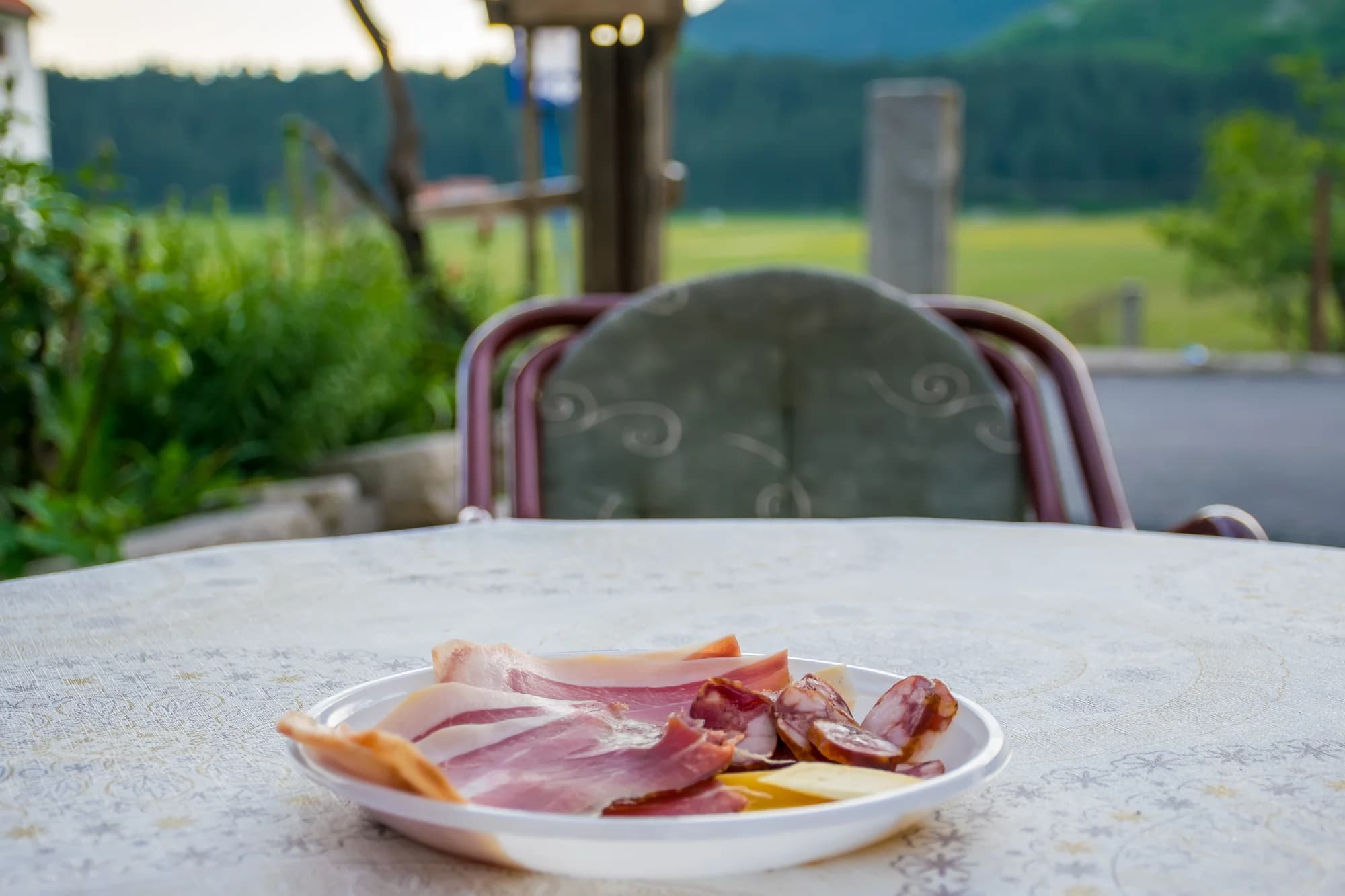
Njeguši is a mountain village on the shoulder of Lovćen, in a shallow karst basin between the summit and the Bay of Kotor, at around 900 metres. Stone houses with heavy slab roofs stand in loose rows among meadows and drystone walls, with the bare grey ridge of the mountain closing the horizon. The village belongs to Cetinje municipality and sits on the old road that links the coast with the old royal capital. Its name runs through Montenegrin history. The Petrović-Njegoš family came from here and ruled the country from 1696 until 1918. Petar II Petrović-Njegoš — bishop, ruler and author of the epic The Mountain Wreath — was born in the village in 1813, and his birth house is preserved as a small museum. King Nikola I, the last sovereign, was born in Njeguši in 1841. For a settlement of a few hundred people, that is an extraordinary concentration of national history. The other reason people stop is food. Njeguši produces the country's best-known smoked ham, njeguški pršut, salted, smoked over beech and then dried in the dry air that moves between the sea and the interior, along with a firm cheese often kept in oil. Family houses along the road sell both, usually with bread, olives and a glass of rakija, and the village fills with cars and vans in season. The road itself is part of the appeal: the Austro-Hungarian serpentine from Kotor climbs the escarpment in twenty-five hairpins, each with a wider view over the bay, while the older stone mule path known as the Ladder of Kotor runs beside it for walkers. Njeguši suits anyone driving between Kotor and Cetinje or heading up to the Njegoš Mausoleum, and it rewards an unhurried lunch rather than a photo stop. Late spring to October is the comfortable season; the basin holds snow in winter and the serpentine can turn icy or close.
No posts found.
View all posts