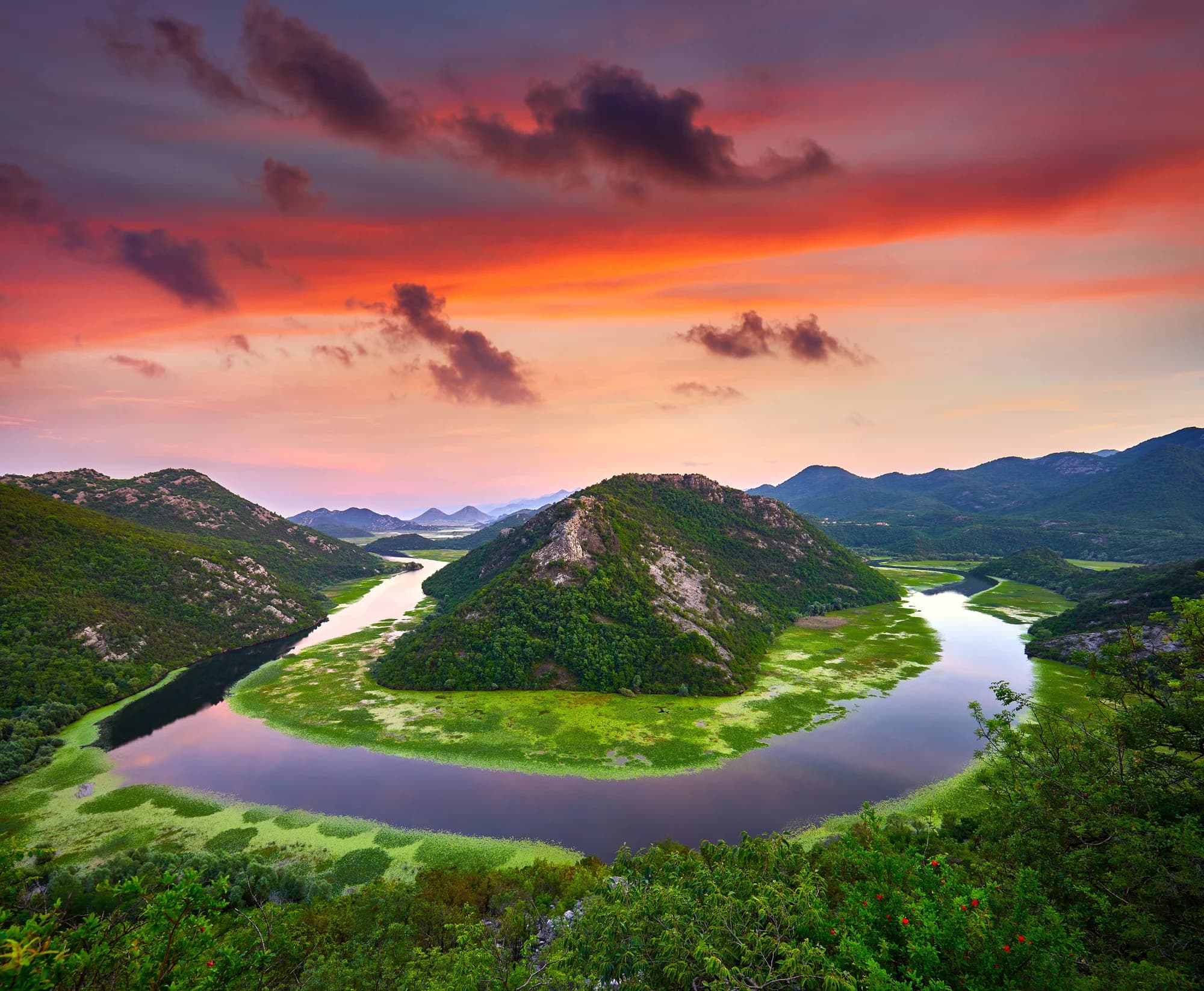
Rijeka Crnojevića
Rijeka Crnojevića sits where a short, deep river of the same name loops through the hills before spreading into the northern arm of Lake Skadar. It amounts to a single street of stone houses along the water, a stone quay, and the arched bridge built in the middle of the 19th century in the reign of Prince Danilo, a span so often photographed that it has become shorthand for the whole lake. The wider view of the river's horseshoe bend is from the road above the town, at Pavlova Strana. The place carries more history than its size suggests. Under the Crnojević dynasty at the end of the 15th century the first printing press in the Balkans was established in this area, traditionally sited at Obod on the heights above the river, producing Cyrillic liturgical books within decades of Gutenberg. Later the town worked as a river port and market where goods moved by boat between the interior and Skadar, and it kept a role in the affairs of the Montenegrin state into the 19th century, when the ruling family maintained a residence here. Today the appeal is slow. Boats leave the quay for trips down the serpentine channel into the open lake, through reed beds and water lily fields where pelicans, cormorants and herons feed; the whole basin is a national park and one of Europe's most important wetlands for birds. Restaurants along the river serve what the lake produces, including carp, eel and the small dried bleak that has been a local staple for centuries, and the old market buildings are gradually being restored. It suits travellers who want a couple of unhurried hours rather than a full day, and it pairs naturally with Virpazar, Cetinje or the drive over to Budva. Spring is best for birds and for the green of the surrounding hills; July and August bring the water lilies into flower along with the heat; autumn is quiet and the light on the bend is at its finest.
No posts found.