_mncom.webp&w=2048&q=75)
Danilovgrad
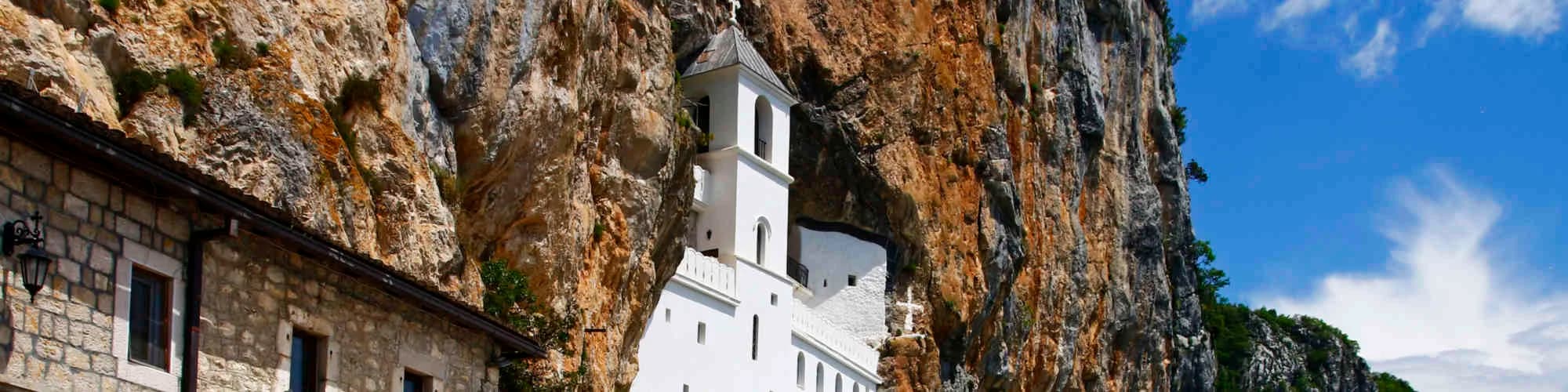
Danilovgrad is a welcoming town in central Montenegro, set along the banks of the Zeta river in the fertile Bjelopavlići plain, cultivated since Roman times. It was laid out in the 1870s by Prince Nikola and named for his predecessor Danilo, planned on a grid with the idea that it might one day serve as the country's capital. That never happened - Cetinje kept the court and Podgorica took the growth - and what remains is an unhurried town of low streets, plane trees and river banks, often overlooked by tourists rushing between the coast and the mountains. It rewards those who pause. The surrounding countryside is a growing wine region producing distinctive Montenegrin varietals, with the red Vranac and the white Krstač as the local signatures, and the mild valley climate fills roadside stands with figs, pomegranates and stone fruit through late summer. Rolling vineyards and walks along the Zeta make for gentle exploration, and the Martinići ruins nearby preserve walls and church foundations from one of the significant settlements of medieval Zeta. The area's biggest draw stands just outside town. Ostrog Monastery is built into a sheer cliff face high above the plain, its whitewashed chapels set directly into the rock, and it draws pilgrims year-round to the relics of Saint Basil of Ostrog. Founded in the seventeenth century, it is the most visited religious site in Montenegro. The lower monastery sits in woodland below, and many pilgrims walk the last stretch up to the upper one on foot; the road delivers views across the whole Bjelopavlići basin. Come for a day, or use the town as a quiet base between Podgorica and the north. Spring and autumn are pleasant; midsummer in this valley is genuinely hot, since it is one of the warmest corners of the country. Danilovgrad suits travellers who want wine, walking and a working Montenegrin town rather than a resort, and it offers a genuine window into everyday life away from the tourist trail.