Montenegro has a reputation as one of the Adriatic's best-value destinations, and for the most part it earns it. Compared with Western Europe — and often with neighbouring Croatia — your money stretches noticeably further here. A good dinner, a comfortable apartment, a bus across the country: all tend to cost less than you'd expect for a place this beautiful.
But "cheap" deserves an asterisk. The coast in peak summer is a different animal from the quiet interior in spring, and a beachfront sunbed in August can cost more than a full meal inland. Where you go, when you go, and how you travel make a bigger difference here than almost anywhere.
This guide gives you realistic 2026 costs, three daily-budget tiers, and the practical money-saving moves that locals and seasoned visitors actually use. All figures are approximate and meant as planning guidance, not precise quotes — prices vary by town, season and venue, and the coast in July and August always runs hotter than the rest.
Table of Contents
- The short answer
- How it compares to its neighbours
- Sample costs in 2026
- Daily budget tiers
- How to save money in Montenegro
- Currency, cards and tipping
- So, is it expensive?
The short answer
No — Montenegro is generally more affordable than Western Europe, and a comfortable trip here costs less than the equivalent in Italy, France or even much of coastal Croatia. Everyday essentials like coffee, bakery food, local beer and bus travel are genuinely inexpensive. Where costs climb is the obvious place: prime beachfront accommodation, restaurants and sunbeds on the coast during the July–August peak, when demand outstrips supply.
The single biggest lever on your budget is timing. Travelling in the shoulder season or heading inland to the north can roughly halve your accommodation and dining costs versus a peak-summer coastal trip. Get those choices right and Montenegro is a bargain; get them wrong and it can feel surprisingly pricey for the Balkans.
How it compares to its neighbours
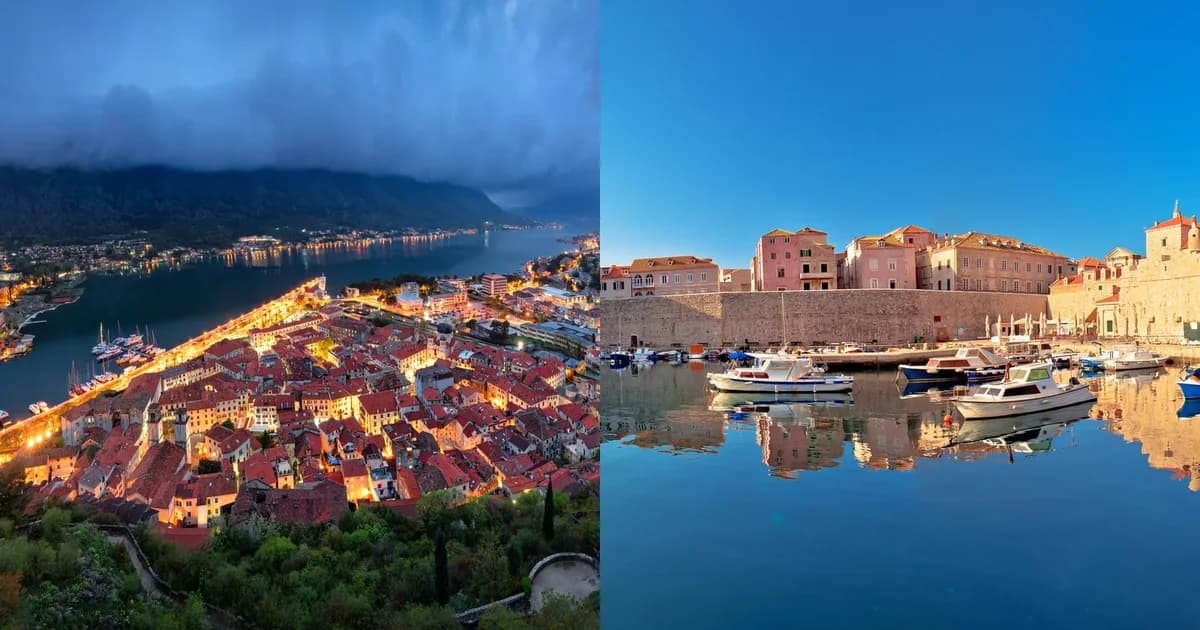
Context helps. Set against Croatia — its glamorous Adriatic neighbour — Montenegro generally comes out cheaper, particularly on accommodation and restaurant dining. Croatia's most popular coast has seen prices climb steadily since it joined the eurozone, and the famous Dalmatian hotspots now command premium rates; Montenegro offers a comparable coastline of dramatic bays, walled old towns and clear water for noticeably less, especially once you step outside its own peak fortnight.
Against Western Europe — Italy, France, Spain's costliest resorts — the gap is wider still. A seafood dinner, a night in a comfortable apartment, a coffee on a historic square: each tends to cost a fraction of the equivalent on the Italian Riviera just across the Adriatic. Within the Balkans, Montenegro sits roughly in the middle: a little pricier than Albania or North Macedonia on the whole, broadly in line with Serbia and Bosnia inland, but with a coast that can spike in summer. The takeaway is that you're getting Mediterranean scenery at distinctly sub-Mediterranean prices, provided you don't confine yourself to the August beachfront.
Sample costs in 2026
Here's a snapshot of typical prices to calibrate your expectations. Montenegro uses the euro (€), so there's no currency conversion to puzzle over. All figures below are approximate ranges as of 2026; the higher end reflects prime coastal locations in peak season, the lower end reflects the interior and off-season.
| Item | Approx. price (2026) |
|---|---|
| Espresso / coffee in a café | €1.50–2.50 |
| Burek or bakery pastry | €1.50–3 |
| Restaurant main course | €8–18 (more at upscale coastal spots) |
| Local beer (0.5L, in a bar) | €2.50–4 |
| Intercity bus, e.g. Kotor–Budva | €3–5 |
| Short taxi ride in town | €4–8 |
| Sunbed rental, peak season | €10–25 per bed (more at premium beach clubs) |
| Museum / attraction entry | €3–10 |
| Supermarket basics (bread, water, fruit, cheese) | €8–15 for a day's groceries |
The pattern is clear: the small everyday things are cheap, while the discretionary coastal extras — beach clubs, marina-front dining, premium sunbeds — are where prices stretch toward Western-European levels. Budget accordingly and the everyday savings comfortably offset the occasional splurge.
Daily budget tiers
What you'll spend per day depends entirely on your travel style. Here are three realistic tiers, per person, assuming you're sharing accommodation costs and travelling outside the absolute August peak. All figures are approximate 2026 guidance.
Backpacker / budget — around €40–60 a day
This tier means hostel dorms or simple guesthouses, self-catering breakfasts and the odd bakery lunch, dinner at a local konoba or bakery, and getting around by public bus. You'll cook some meals, skip the beach clubs in favour of free public beaches, and stick mostly to the interior or shoulder season. It's entirely doable and you won't feel deprived — Montenegro rewards budget travellers handsomely. See our digital nomad guide for tips on living lean here over longer stays.
Mid-range — around €80–150 a day
The sweet spot for most visitors. This buys a comfortable private apartment or a mid-tier hotel, restaurant meals most days, a few paid attractions, the occasional taxi, and a sunbed when you fancy one. You can rent a car at this level and not worry about every coffee. For couples splitting accommodation, this delivers a genuinely relaxed Montenegro holiday without feeling extravagant.
Luxury — €250+ a day
At the top end Montenegro can absolutely meet you. Think boutique boltholes and five-star resorts in places like Tivat's Porto Montenegro, fine dining, private boat trips, premium beach clubs and chauffeured transfers. The marquee coastal addresses charge accordingly — but even here you'll often pay less than the equivalent experience in the South of France or the Italian Riviera.
How to save money in Montenegro
A handful of simple choices make an outsized difference to your bottom line:
- Travel in shoulder season. Visiting in spring or autumn instead of July–August can roughly halve accommodation costs and slash crowds. Our best time to visit guide and off-season guide map out exactly when, and the off-season is cheaper still.
- Stay in apartments, not hotels. Self-catering apartments are widely available, usually cheaper than hotels, and come with a kitchen that lets you avoid eating out three times a day. Browse places to stay to compare apartments against hotels for your dates.
- Head inland and north. The mountain towns and the interior are markedly cheaper than the prime coast. Basing yourself somewhere like Cetinje or up in Kolašin stretches your budget and opens up the national parks.
- Eat at local konobas. The family-run konoba is where you get the best food at the best prices — grilled fish, slow-cooked meats, homemade bread — for a fraction of what the tourist-strip restaurants charge.
- Use the buses. Montenegro's intercity bus network is cheap, extensive and reliable. Our getting around guide covers fares and routes; skipping car rental and parking fees saves a meaningful chunk on a coastal trip.
- Buy from supermarkets and bakeries. A burek breakfast and a picnic lunch from the local market cost a few euros and free up your budget for one good dinner out.
Currency, cards and tipping
Montenegro uses the euro, despite not being in the EU or the eurozone — it adopted the currency unilaterally, so there's no separate local money to exchange. Cards are widely accepted in hotels, larger restaurants, supermarkets and shops, especially on the coast. That said, carry some cash: small konobas, markets, bakeries, taxis, parking and rural spots often prefer or require it.
ATMs are plentiful in towns and at the coast, though they thin out in remote mountain areas, so withdraw before heading into the interior. Watch for ATM operator fees and the "dynamic currency conversion" prompt — always choose to be charged in euros rather than your home currency for a better rate. Tipping is appreciated but modest: rounding up or leaving around 10% for good service in a restaurant is the norm, and there's no obligation to tip for casual coffees or quick bites.
So, is it expensive?
For the great majority of travellers, Montenegro is a value destination — cheaper than Western Europe, frequently cheaper than Croatia, and able to deliver a memorable trip on a modest budget. A backpacker can get by on €40–60 a day, a mid-range traveller will be very comfortable on €80–150, and the luxury tier still tends to undercut the famous Mediterranean rivals.
The only real cost trap is the peak-summer coast, where beachfront everything commands a premium. Sidestep it by travelling in the shoulder season, mixing in the cheaper interior, and leaning on apartments, konobas and buses — and Montenegro stays firmly in bargain territory. When you're ready to price up a trip, browse places to stay across the country and see just how far your euros go.