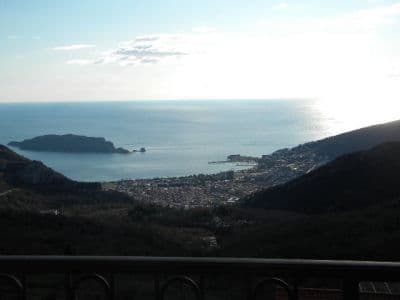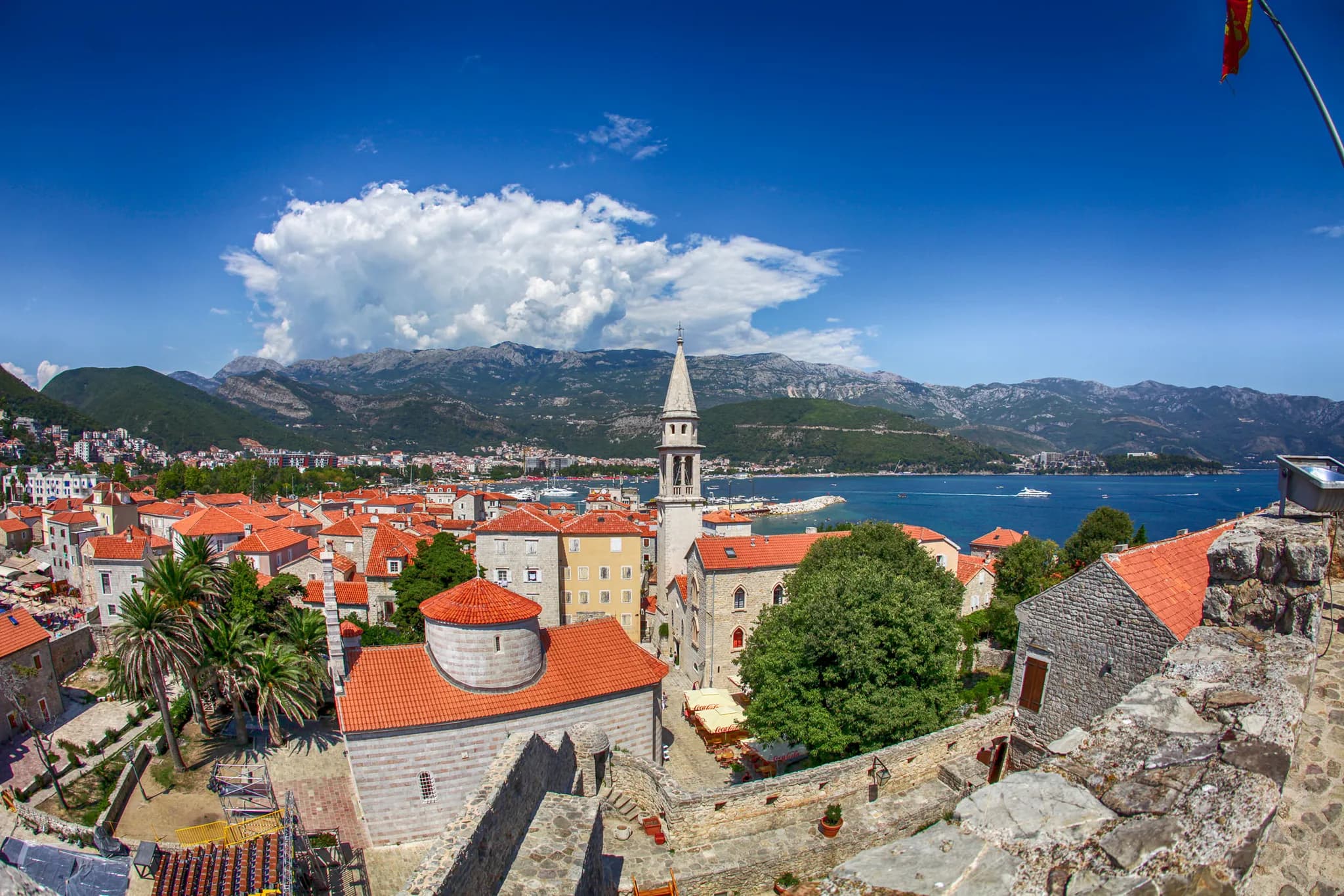
The Budva Riviera is a chain of bays separated by rocky headlands, and for most of history each headland meant the same thing: climb over, or go around. Between Budva's town beach and Bečići stands the Zavala peninsula, a steep wooded knuckle of limestone crowned with pines and hotel terraces. Drivers swing inland around it on the Adriatic highway. Walkers do something much better — they go straight through the rock.
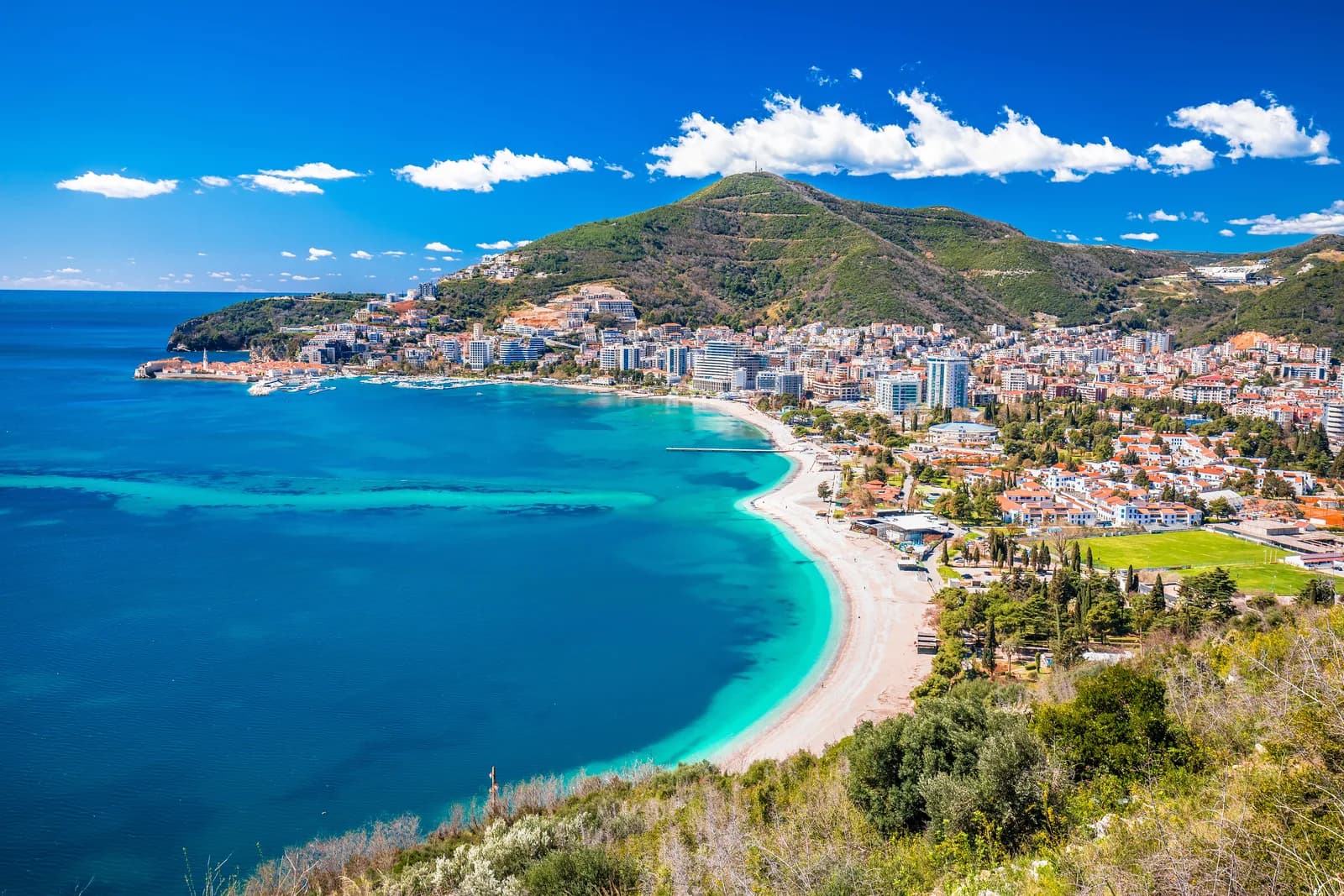
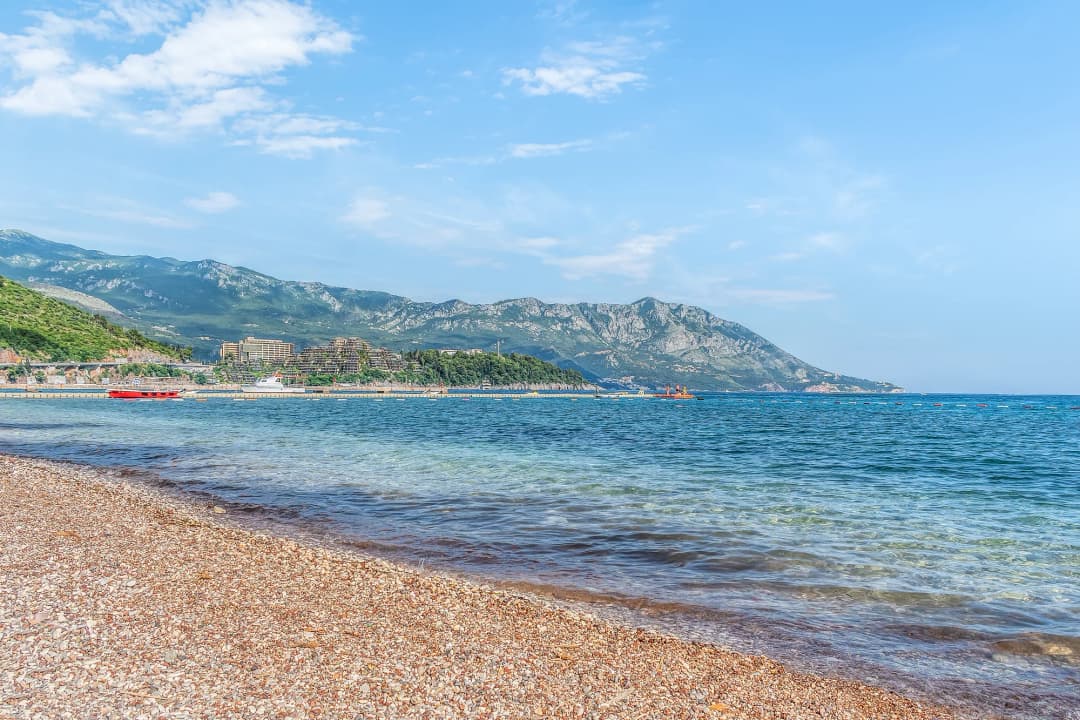
The pedestrian tunnel under Zavala is roughly a hundred metres long, cut through the base of the headland at sea level. It is lit, paved, cool even in August, and it takes about three minutes to walk — three minutes that connect two of the most famous beaches in Montenegro. On one side, the long urban sweep of Slovenska plaža and the promenade running back to Budva's Old Town. On the other, the two-kilometre curve of Bečići, the beach that once charmed a Paris jury into calling it the most beautiful in Europe.
A gallery inside a shortcut
What makes the tunnel more than a shortcut is what happens on its walls. Somewhere along the way, the passage was hung and painted with artwork — canvases and murals of Montenegrin towns and landscapes, illustrated letters, and playful panels explaining local words and local attractions to anyone strolling through. Among the works displayed over the years is a "Montenegrin Alphabet" by the Russian artist Aleksandr Florenskiy, an illustrated A-to-Ž of the country. The effect is of an impromptu gallery that nobody quite planned: you enter a hole in a cliff expecting concrete and echo, and instead get a short curated exhibition with the sound of two different beaches leaking in from either end.
Children love it for the echo anyway. Photographers love the perfect frame each portal makes — a bright disc of turquoise sea and beach umbrellas at the end of a dark passage. And everyone loves it in the heat of the day, when the rock keeps the air ten degrees cooler than the promenade outside.
Slovenska plaža and the Czechs of 1935
The Budva end of the tunnel opens at the southern tip of Slovenska plaža, the mile-long town beach that runs from Budva's marina to the foot of Zavala. Its name puzzles many visitors — it has nothing to do with Slovenia. The beach was named after the Slavic holidaymakers, above all a group of Czech tourists who summered here in 1935, in the first great decade of tourism on this coast, when the Kingdom of Yugoslavia's beaches were being discovered by Central Europe. The "Slavic beach" kept the name through every change of state since, and today it is Budva's great democratic seafront: 1,600 metres of pebble and sand, backed by an unbroken promenade of cafés, palms and pine.
Walking the promenade south from the Old Town, you watch Budva change character metre by metre — marina, hotels, beach bars — until the headland finally blocks the way and the tunnel mouth appears near the last cafés at the beach's end. This is also where the town officially runs out and the riviera proper begins; the stretch is covered on the Slovenska plaža stage of the Seven Bays walk, which funnels straight into the tunnel at its far end.
Out into Bečići
The far portal delivers you beside the Iberostar Bellevue complex at the western end of Bečići beach — and the change of scene is instant. Where Slovenska plaža is urban and busy, Bečići opens wide and resort-calm: two kilometres of famously multicoloured sand and fine pebble, washed down over millennia by four streams, with the wooded slopes of the Paštrovići hills behind. In 1935 — the same year the Czechs were naming Slovenska plaža — Bečići won the Grand Prix in Paris as the most beautiful beach in Europe, and about three decades later it collected a Golden Palm as the most beautiful on the Mediterranean. From the tunnel mouth you can walk its full length at the water's edge, all the way to the old fishing hamlet of Rafailovići and the next tunnel beyond, which continues to Kamenovo. The headlands keep coming; on this riviera, so do the tunnels.
It is worth pausing to appreciate what this small piece of infrastructure quietly does. Because of it, you can walk from Budva's Venetian walls to Rafailovići's fish taverns — two towns, two bays, one headland — entirely on foot, flat, in under an hour, without once meeting a car. There are famous corniche walks on the Mediterranean that offer less.
Visiting. The tunnel is free, open around the clock, lit at night, and step-free at both ends — push-chairs and wheelchairs manage it easily. Find it at the southern end of Slovenska plaža, past the last beach cafés below the Zavala headland; the walk through takes about three minutes, and Bečići's beach promenade begins immediately on the other side. It is at its most atmospheric early in the morning, when you may have the gallery to yourself, and at its most useful at midday, when it is the coolest hundred metres on the entire riviera.