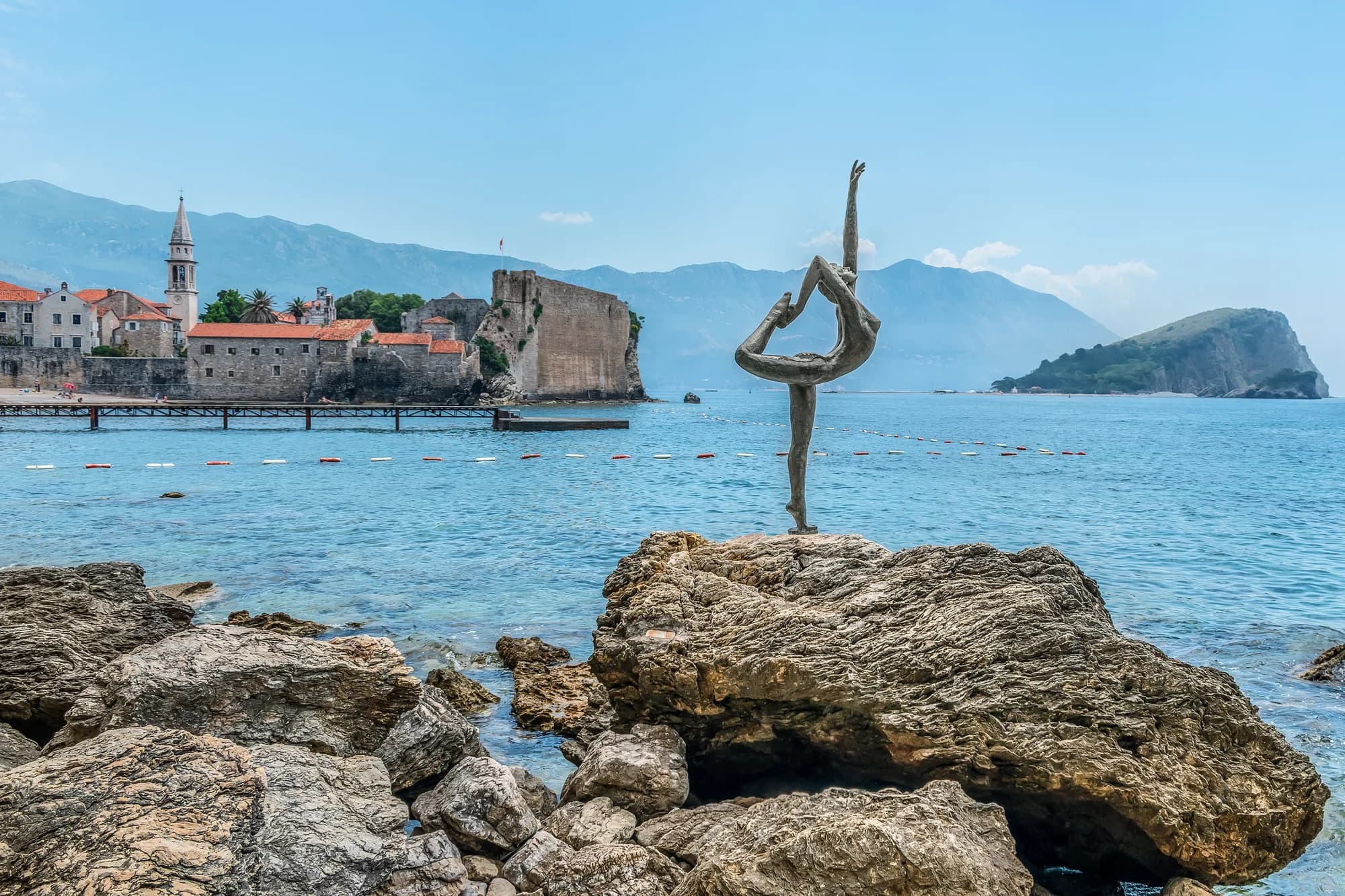
Every town on the Adriatic has a postcard image. Kotor has its walls, Perast has its islands, and Budva — a town with 2,500 years of history, a walled citadel and some of the most famous beaches in Montenegro — has a slender bronze girl balancing on one foot on a rock above the sea. She is small, she is not signposted, and she has no ticket booth. Yet on any summer evening you will find a patient line of people waiting to climb onto her rock, and she is, by general agreement, the most photographed thing in Budva.
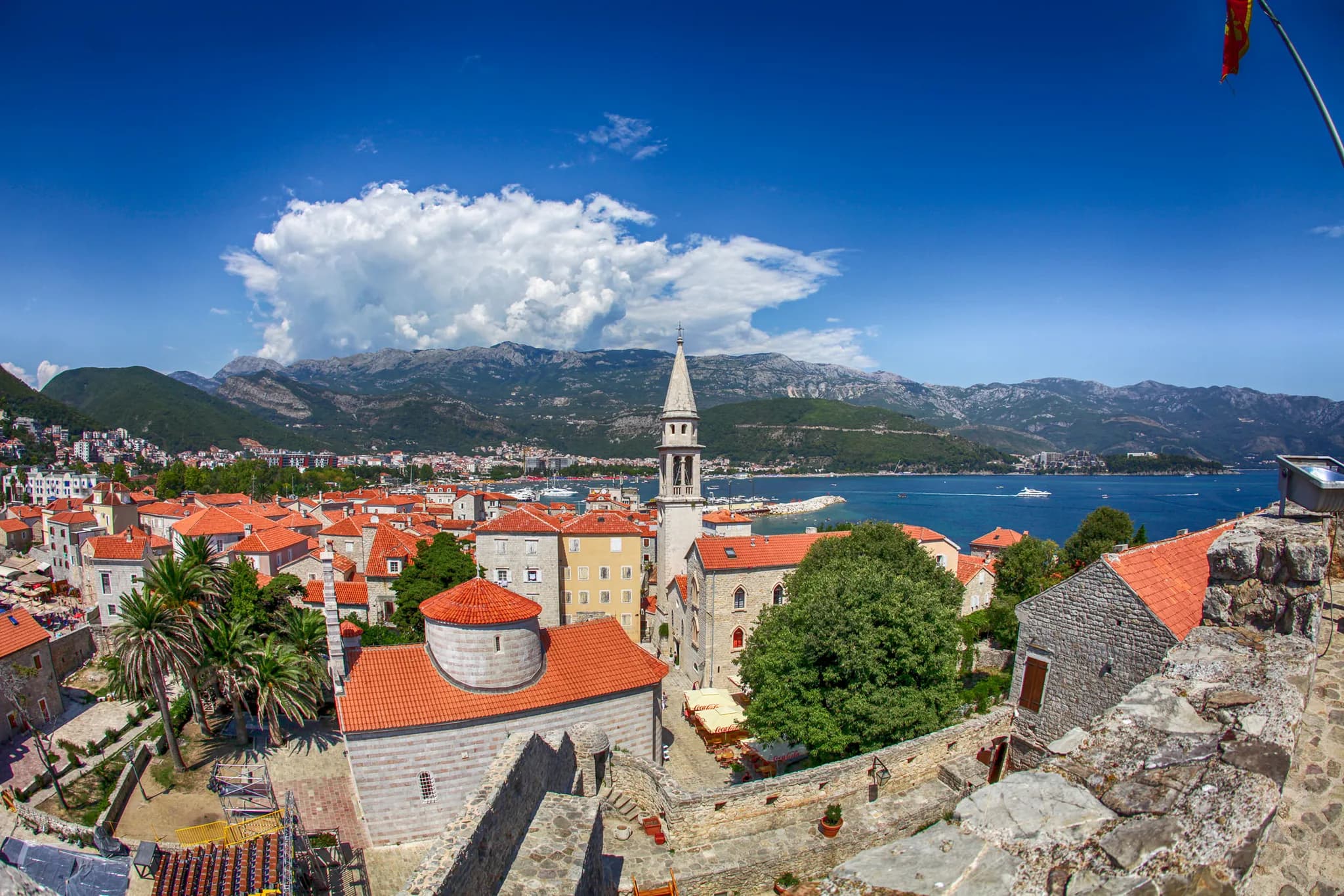
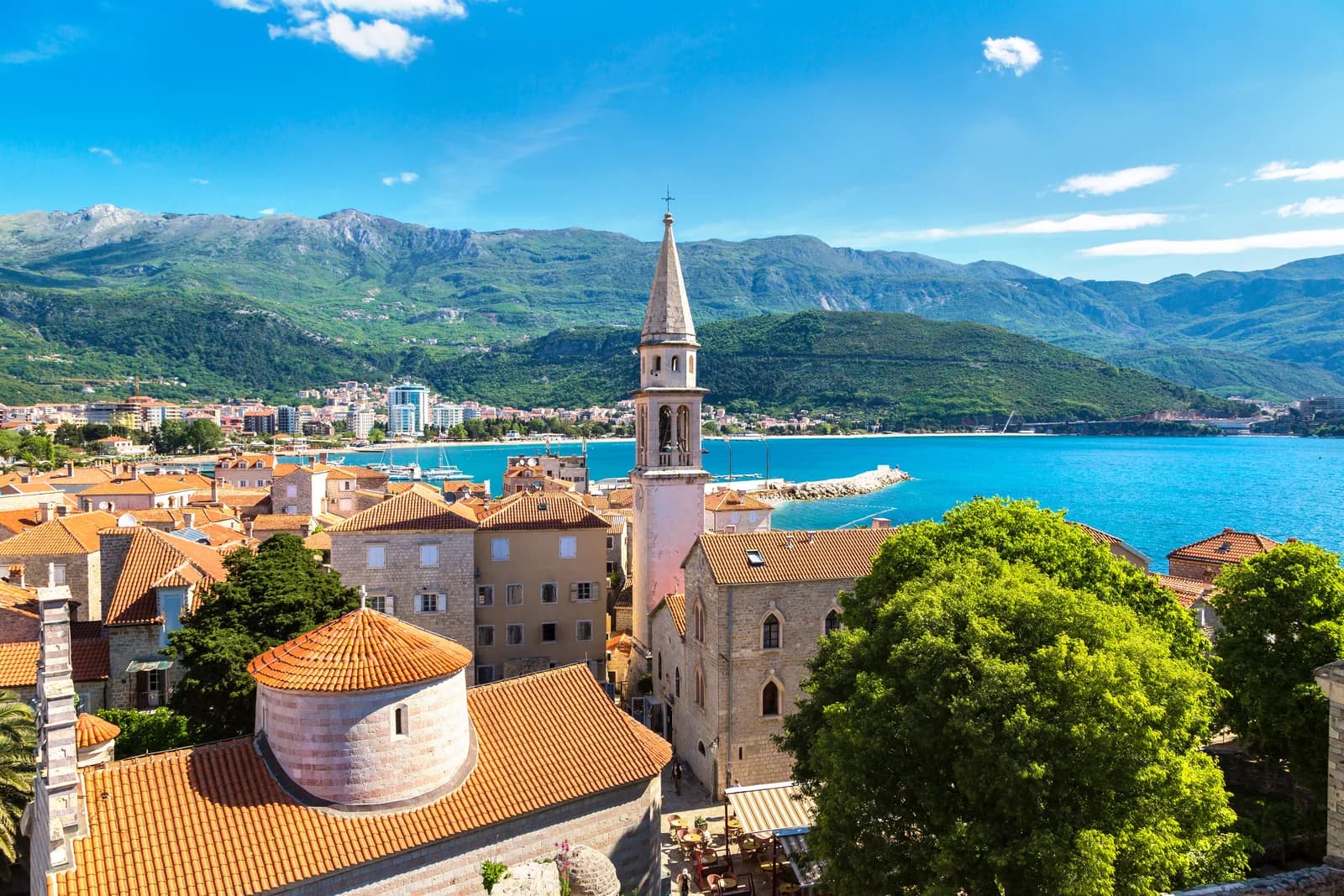
Locals call her the Dancer of Budva — Budvanska igračica — though visitors usually say Ballerina, and pedants point out that she wears no tutu and holds a pose closer to gymnastics than ballet. She stands on a natural rock at the water's edge on the footpath that runs from the Old Town walls toward Mogren beach, with the citadel and the mountains behind her. That backdrop is the secret of her fame: from the little pebble cove beside the path, one photograph captures the dancer, the sea, and the entire silhouette of old Budva at once.
A sculptor, a gymnast, and a pose
The statue is the work of the Yugoslav sculptor Gradimir Aleksić, who placed the bronze on its rock in 1965, in the years when Budva was growing from a small walled town into the capital of Montenegrin tourism. Aleksić is said to have modelled the figure on Olga Kalivoda, a young gymnast from Novi Sad, which explains the athletic arch of the pose — one leg extended behind, arms drawn back, chin lifted toward the horizon. She is naked, poised, and permanently mid-movement, as if she had been caught a half-second before a leap that never comes.
The legend of the waiting girl
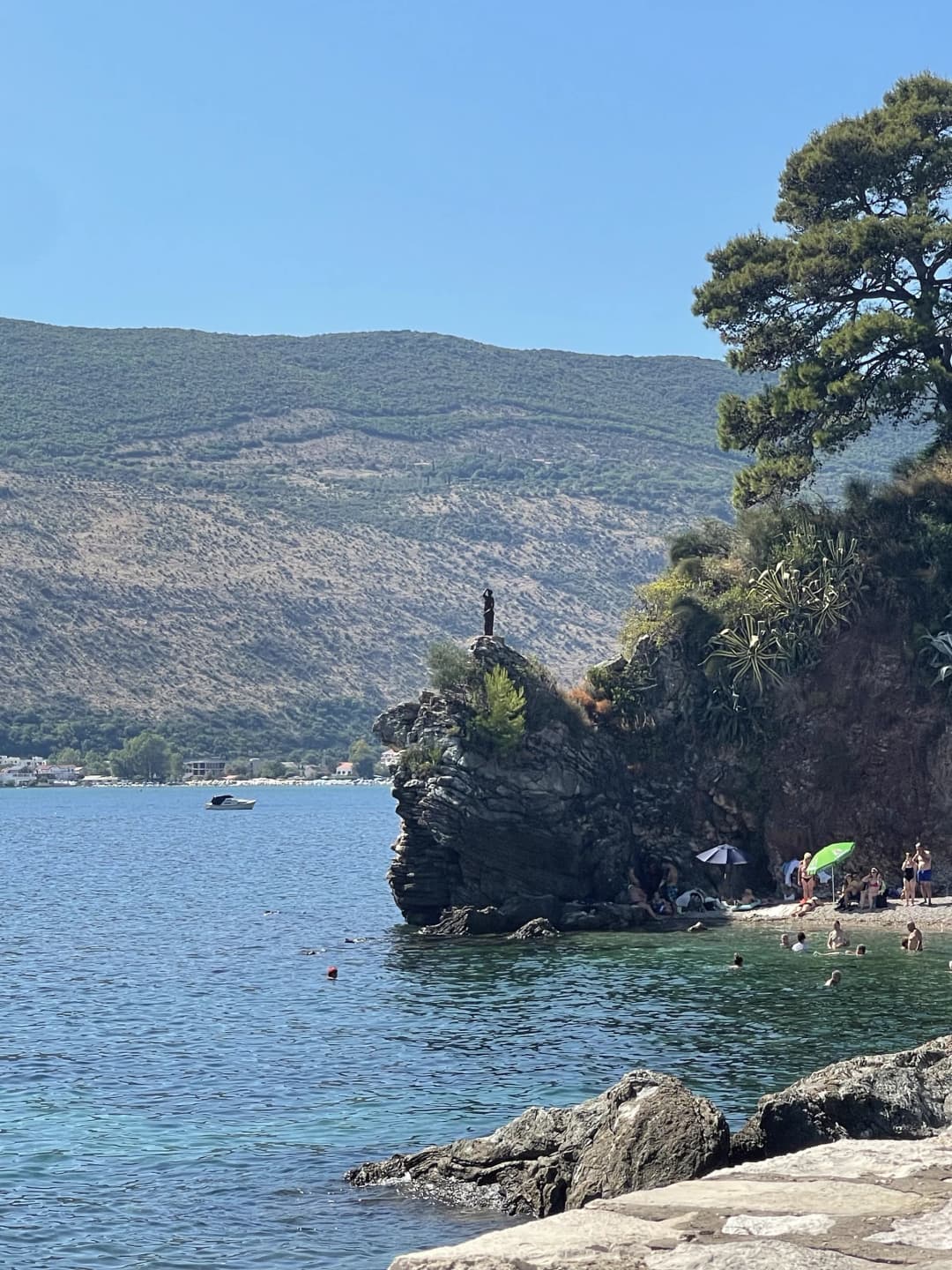
Ask three people in Budva what the statue means and you will get three stories, but the one everyone returns to is the oldest. A girl from Budva was betrothed to a young sailor who shipped out to earn enough money for them to marry. His ship never came back. The girl refused to believe he was lost, and every morning she came down to this stretch of shore to watch the sea for his sail. She waited until the end of her life, and the town remembered her faithfulness long after it had forgotten her name.
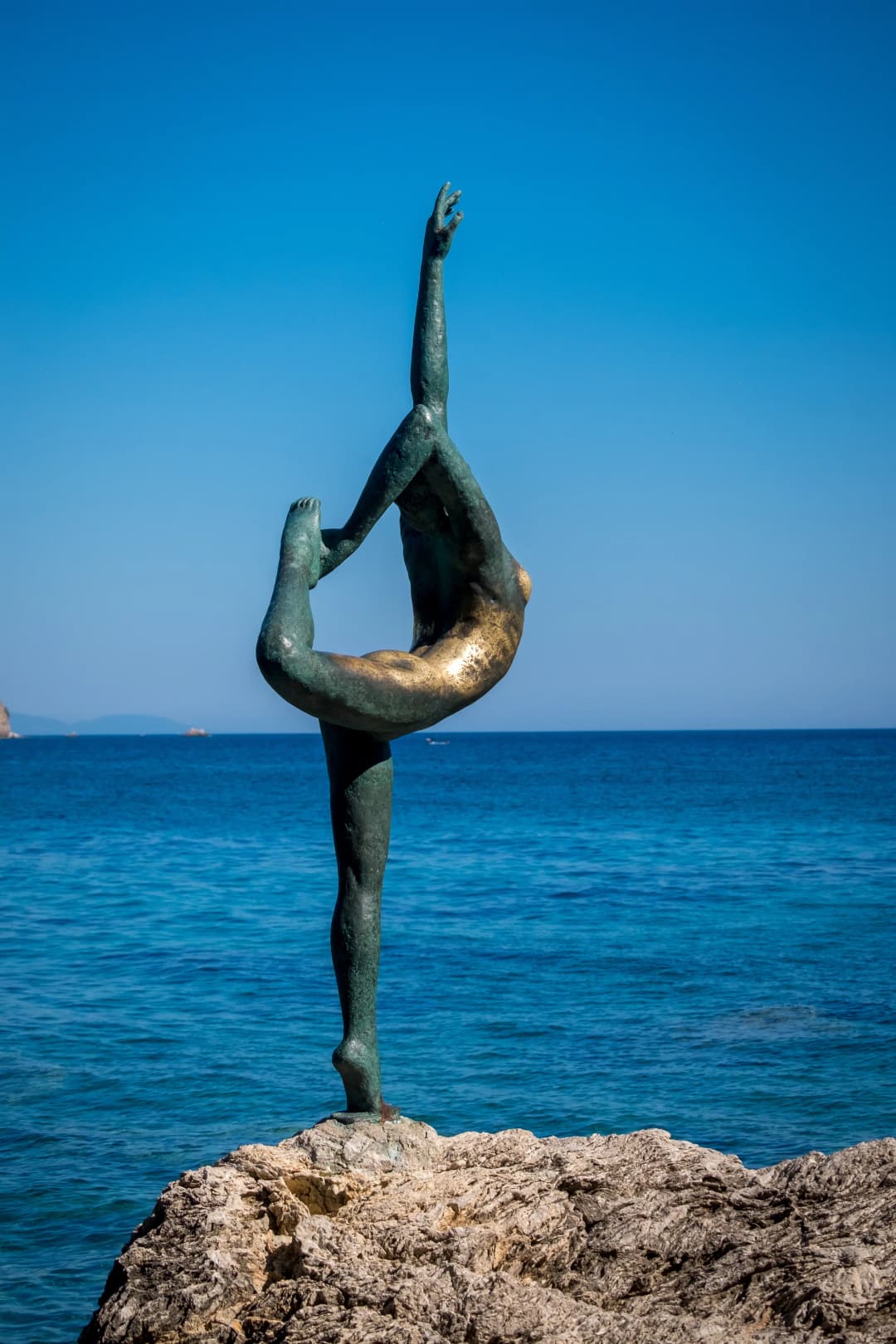
Aleksić's dancer became the monument to that waiting. It is why she faces the open water rather than the town, and why the statue has quietly turned into a shrine for people in love. The custom — nobody can say exactly when it started — is to rub the statue for luck. Her knee, her hand and her foot have been polished to a bright gold by decades of hopeful palms. Couples touch her together; the superstition says the luck is strongest if you are in love, and strongest of all if you are waiting for someone.
Why this spot
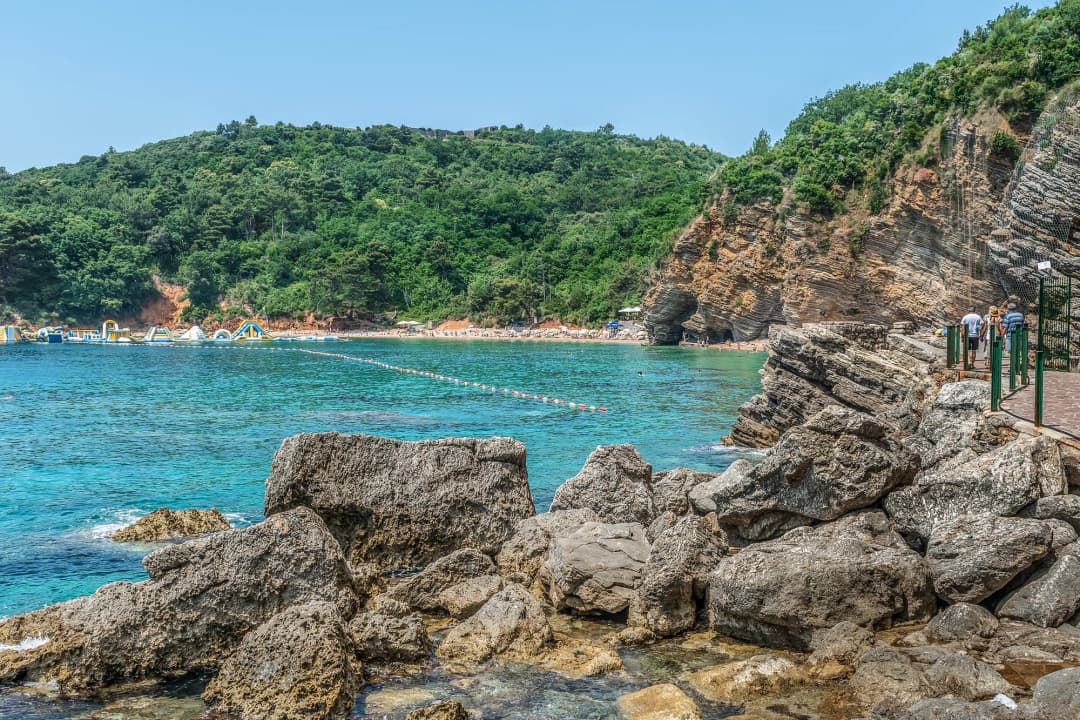
The dancer's rock sits on one of the loveliest short walks in Montenegro. From the southwestern gate of the Old Town, a paved path curls beneath the ramparts, past the little beach of Ričardova glava (Richard's Head), and along the cliff toward Mogren I and Mogren II, the twin sandy coves that are Budva's most beloved beaches. The statue marks the midpoint. In the morning the path is quiet and the light comes soft off the water; at sunset the bronze glows and the queue for photographs grows long. In winter storms, waves break clean over the rock, and the dancer disappears into spray and re-emerges, still balanced — which locals will tell you is exactly the point of her.
She has needed that resilience. The statue stands unfenced a few metres above the open sea, and over sixty years she has survived storms, salt and the attention of several million climbing tourists. She remains where Aleksić set her, unmoved, one of the very few artworks anywhere that you are allowed — encouraged, even — to touch.
Between the walls and the beach
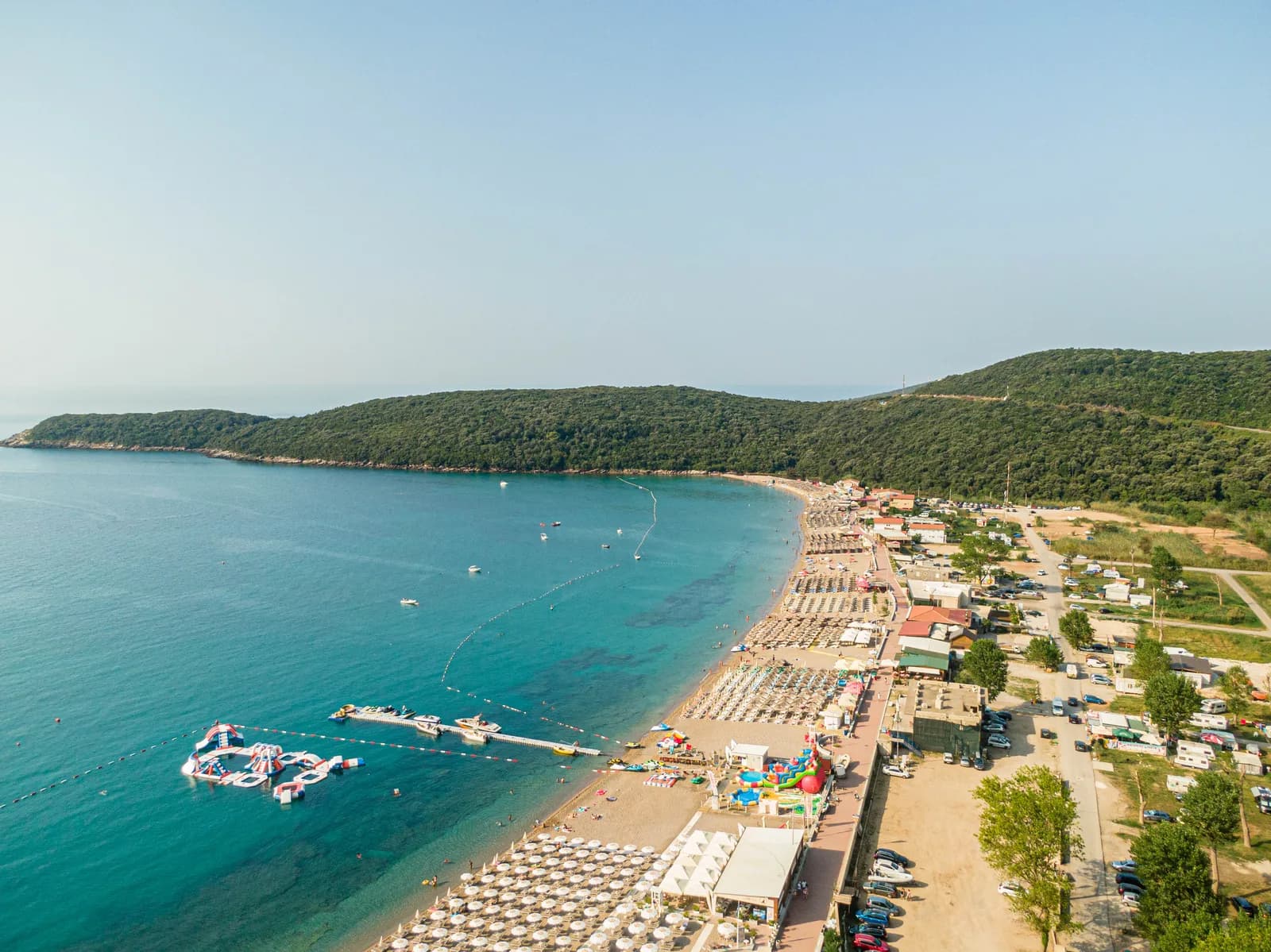
The Ballerina is best understood as part of the seafront promenade that stitches Budva together, from Mogren under the cliffs, past the Old Town and the marina, and on along the great curve of Slovenska plaža. That whole shoreline — and the dancer's place on it — is one of the opening scenes of the Budva Old Town stage of the Seven Bays walk, which begins among the Venetian walls a few minutes from her rock and continues along the riviera bay by bay.
Stand beside her for a moment before taking the photograph everyone takes. The legend she carries is a sailor's-town legend, and Budva was a sailor's town for centuries before it was a resort. A small bronze girl watching the horizon for a ship that never returns says more about the old Adriatic than most museums manage.
Visiting. The statue is free and open at all hours, on the shore path between Budva Old Town and Mogren beach — about five minutes on foot from the Old Town's seaward gate, past Ričardova glava. The path is paved but exposed; skip it in rough seas, when waves can wash the rock. Come at first light for an empty photograph or an hour before sunset for the warmest light — and expect a short, good-natured queue in July and August.