Here is a riddle at the edge of Europe. There is a country that already spends your money — the euro is in every till from Herceg Novi to the Albanian border — yet it has never been in your club. Its people are, on average, the tallest human beings on the planet. It has a living olive tree that was already ancient when Rome was young. And in 2028, it may become the European Union’s newest member. That country is Montenegro, and if you visit now, you get to see it in the last act of a very old story: a mountain nation that spent centuries refusing to be ruled, choosing — on its own terms — to join Europe. Here is what that actually means, and why it should move your next trip up the calendar.
Is Montenegro in the EU yet? (No — and that’s the fascinating part)
Montenegro is an EU candidate, not yet a member. It opened membership negotiations back in 2012. But here is the twist that surprises even seasoned travellers: Montenegro already uses the euro — and it always has, in a sense. It adopted the German mark in 1999 to escape the hyperinflation of the dying Yugoslavia, then switched to the euro the moment it launched in 2002. It did this unilaterally, without permission. To this day, Montenegro and Kosovo are the only two territories in Europe that use the euro without being in the EU or the eurozone.
What does that mean for you, standing at a café in Kotor? Fly in from Frankfurt, Paris or Dublin and you never change a cent — yet you have technically left the European Union. It’s the seamlessness of the eurozone with the thrill of somewhere that isn’t quite in it. You are, in the nicest way, off the map and on it at the same time.
When will Montenegro join the EU? The 2028 timeline
Montenegro is the clear frontrunner of the whole enlargement process, targeting membership at the start of 2028. Progress is measured in 33 negotiating “chapters,” and by mid-2026 the country had 15 open and 18 provisionally closed — the best scorecard in the region. On 14 July 2026, a day Brussels nicknamed enlargement “Super Tuesday,” four candidate countries moved forward at once, with Montenegro closing still more chapters. The European Commission has even drawn up a €3.2 billion welcome package for 2028–2034.
“Montenegro is the frontrunner in the EU’s accession process… more than half-way to the end.”
— Thomas Byrne, Irish Minister of State for European Affairs, speaking for the EU Council presidency at the Accession Conference in Brussels on 14 July 2026, where Montenegro provisionally closed chapters 8 (competition policy) and 29 (customs union).
Now hold that number next to the map. Montenegro has about 620,000 people — fewer than the city of Frankfurt, and smaller than Malta, currently the EU’s tiniest state. This is genuinely a David story: one of the smallest nations in Europe, a place you can drive across in three hours, about to sit at the same table as Germany and France. Travellers love an underdog, and right now you can watch this one cross the finish line in person.
The country that was never conquered — now joining by choice
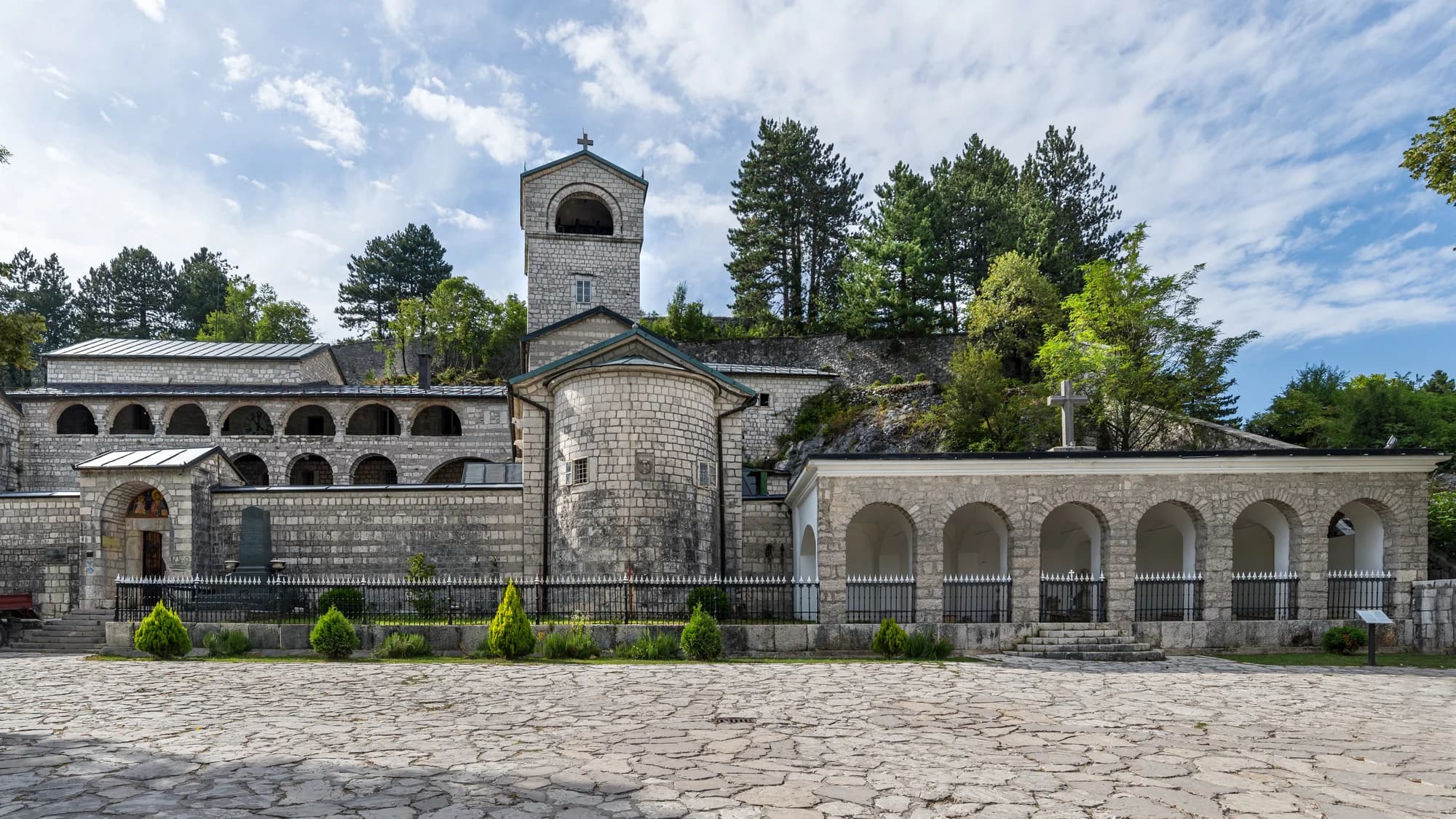
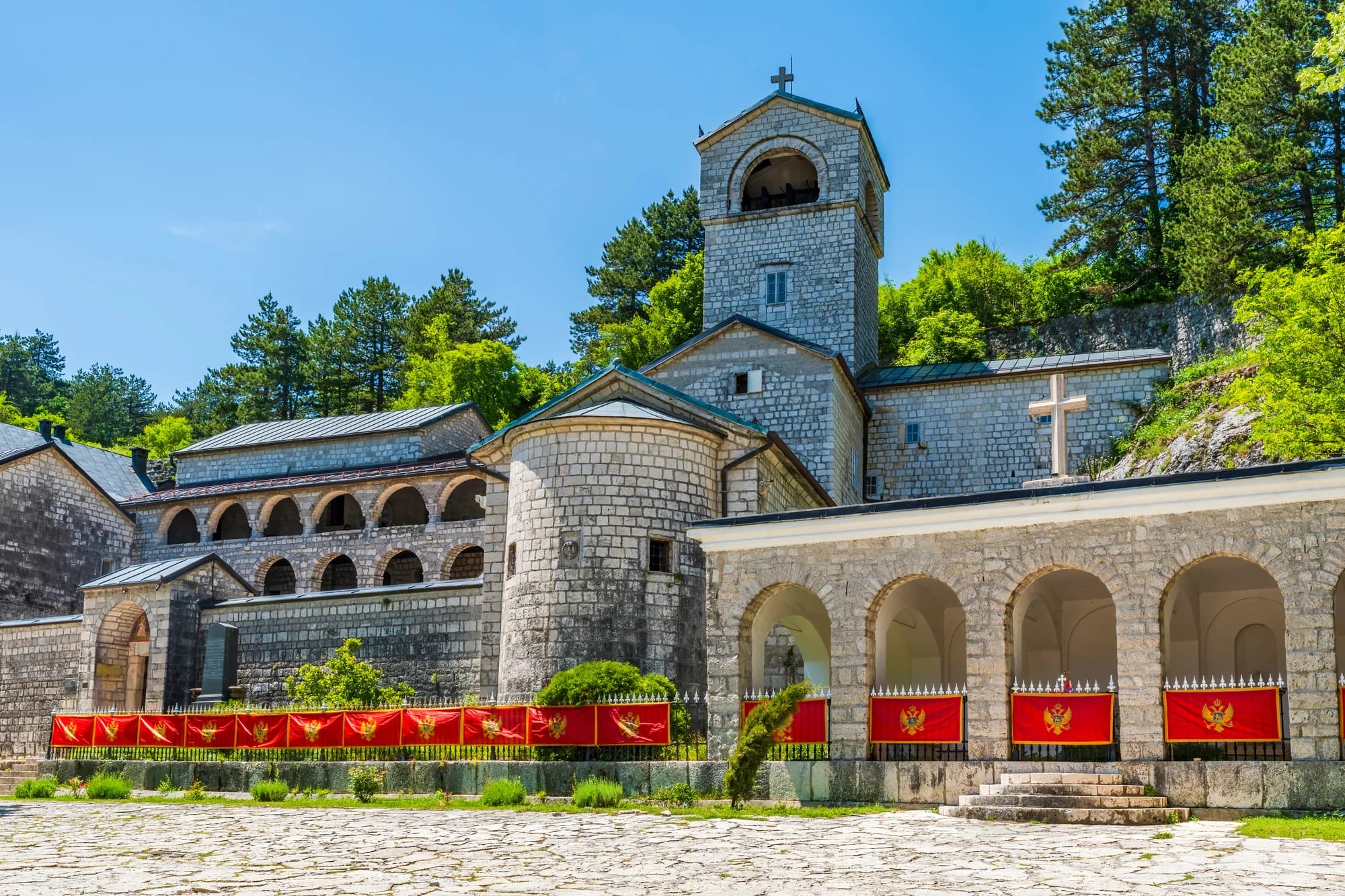
To understand why 2028 matters emotionally here, you have to know what Montenegro spent centuries not doing: surrendering. While the Ottoman Empire swept over the Balkans, these black mountains — Crna Gora, “Black Mountain” — were one of the few corners it never fully subdued. For generations Montenegro was ruled by warrior prince-bishops, poet-priests with swords, governing from the tiny old royal capital of Cetinje. Compare that to almost anywhere else on the peninsula, and the difference is stark: this was Europe’s great refuser.
So when Montenegrins talk about joining the EU, it doesn’t carry the weight of being absorbed — it’s a proud, deliberate handshake between an old free nation and a new one. Climb to Lovćen, the mountaintop mausoleum of the prince-poet Njegoš — one of the highest tombs on Earth, reached by 461 steps — and you’ll feel the whole story in a single view: the Adriatic on one side, the wild interior on the other, and a country that was always its own.
The €1 coffee — and the culture that turns coffee into an afternoon
The line everyone is quoting is a senior EU official’s: welcoming Montenegro will cost each European taxpayer roughly €1 a year — “a very cheap cup of coffee.” It’s a lovely line, but it accidentally reveals something deeper about the place. In Montenegro, a coffee is never one euro’s worth of caffeine gulped at a bar. It is an institution. The local philosophy is polako — “slowly” — and a coffee here can stretch across two hours of conversation, gossip and doing gloriously nothing. Where an Italian downs an espresso standing up, a Montenegrin sits down and cancels the afternoon.
So take the metaphor literally: the price of Montenegro’s EU membership is one coffee — so come and drink yours here, on a stone terrace above a bay, at the pace the locals insist on. It may be the best-value cultural lesson in Europe.
Older than the idea of Europe: things you didn’t know
Every point on the accession timeline has a human, visitable story behind it. A few that tend to make first-time visitors fall in love:
- The tallest people on Earth. Forget the Dutch: Montenegrin men average around 183 cm, and its teenagers are now measured as the tallest in the world. It’s a genetic quirk of the Dinaric Alps documented since the 1880s. You’ll notice it the moment you sit among a local crowd — this nation of 620,000 punches absurdly above its weight in basketball and water polo.
- An olive tree older than Christianity. Near Bar grows Stara Maslina, dated in 2015 to around 2,240 years old — reckoned the oldest olive tree in Europe. It was already centuries old when the Roman Empire peaked, and it still bears fruit. The EU is barely 30; this tree has watched empires come and go and kept quietly making olives.
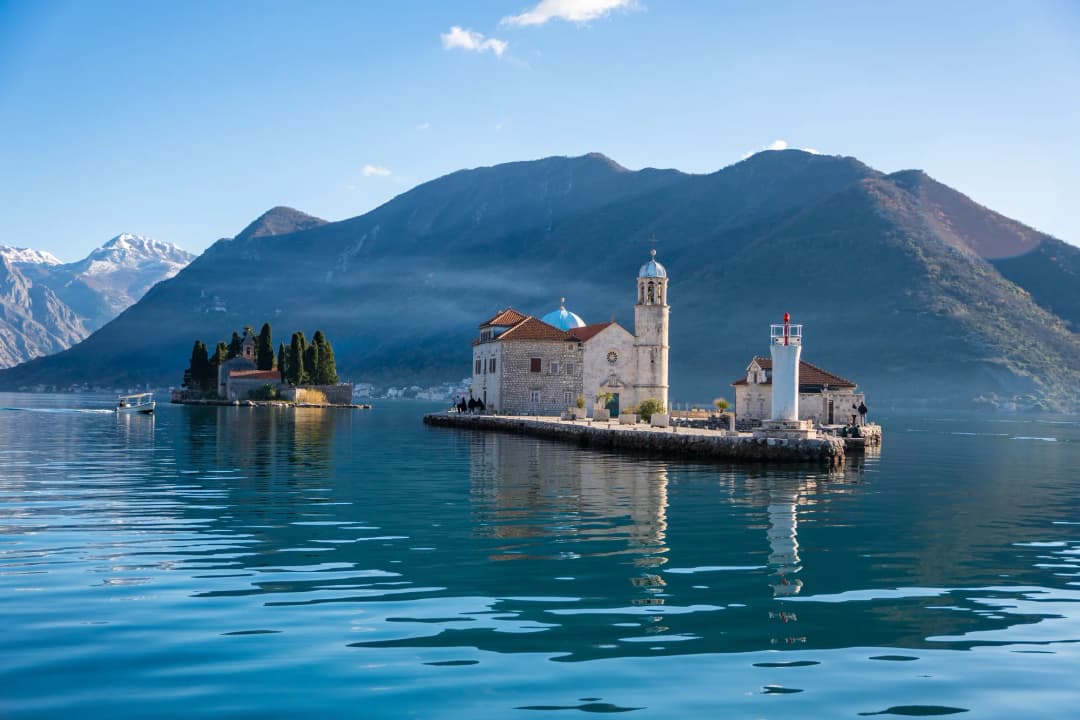
- A hand-built island and a 570-year-old vow. Off Perast sits Our Lady of the Rocks, an island Montenegrins built by sinking ships and dropping stones for five centuries. Every 22 July, locals still row out at sunset to add rocks in a ritual called the fašinada — living folklore you can witness, not just read about.
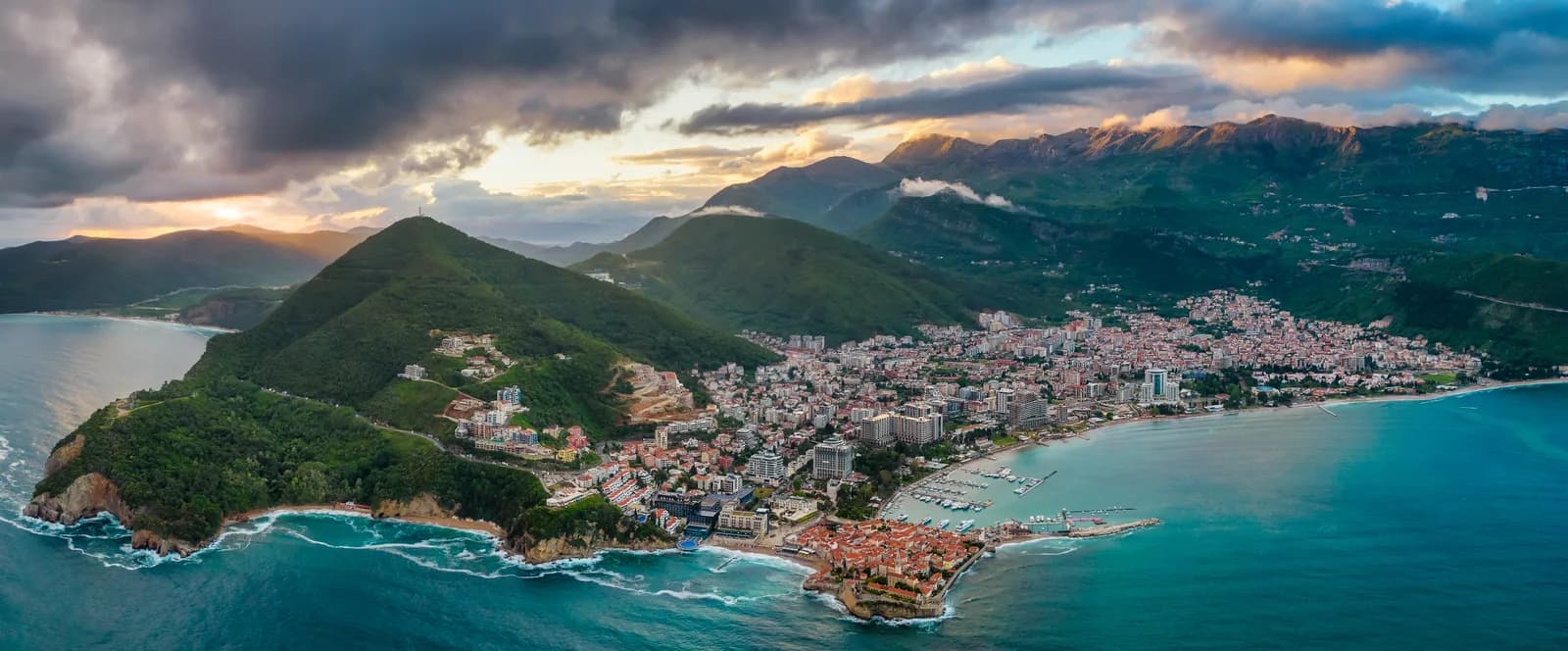
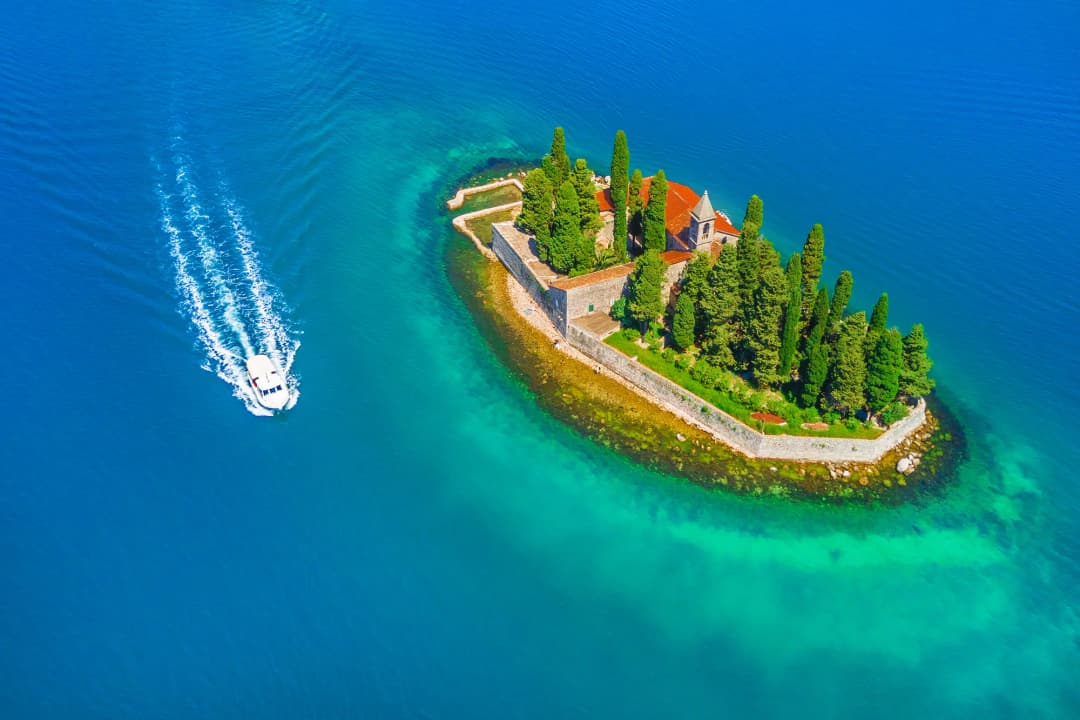
- A fishing village that became a legend. The islet of Sveti Stefan went from a 15th-century fishing hamlet to the playground of Sophia Loren and royalty — the single most photographed silhouette on the Adriatic.
What actually changes for visitors — and why “now” matters
Practically, a 2028 membership won’t upend your holiday: you’ll still pay in euros, the beaches won’t move, and the food will still involve improbable amounts of Njeguški prosciutto and Vranac wine. What accession tends to change is price and popularity. Look at the neighbour: when Croatia joined the EU, its coast grew busier and pricier, and prime property appreciated sharply. Montenegro today feels the way the Dalmatian coast did fifteen years ago — wilder, cheaper, less polished, more yours.
That is the quiet argument for coming in the 2026–2027 window. You get the frictionless euro, an EU-candidate’s improving roads and airports, and the deepest river canyon in Europe (the Tara, in Durmitor) — but still at pre-membership prices and pre-fame crowds. You’re not visiting a finished destination; you’re catching one mid-transformation.
Quick answers
Is Montenegro in the EU yet? No — it’s the leading candidate, targeting membership in 2028.
Does Montenegro use the euro? Yes, since 2002, adopted unilaterally — one of only two non-EU territories in Europe to do so. No currency exchange needed for eurozone visitors.
When will Montenegro join the EU? The working target is the start of 2028, though final dates depend on the last negotiating chapters.
Do I need a visa? Most Western travellers can visit visa-free for up to 90 days today; check your nationality before you fly.
See it before the price of that coffee goes up. Plan your Montenegro trip · browse places to stay.