Montenegro has appeared in major international publications for years, but their stories do not add up to a single verdict. A 2018 business report, a 2019 crowd-avoidance article, a 2024 travel itinerary, a luxury-marina feature and a 2025 wealth report answer different questions. Reading them as one unanimous forecast turns journalism into advertising. This audit returns each claim to its date, evidence and limits, then checks what a traveller can responsibly conclude in 2026.
The useful question is not how many famous mastheads mentioned Montenegro, but what each report measured and whether its conclusion still fits present conditions.
The short answer is less dramatic and more useful. Tourism is large and heavily coastal; Kotor is no longer a dependable escape from crowds; Boka remains a compelling but busy destination; Porto Montenegro represents one luxury segment rather than the national economy; and Montenegro's European Union talks are advanced without a fixed accession date. Context matters more than repetition, however prestigious the masthead. The strongest reason to visit is not that famous publications issued a countdown. It is that the country offers unusually compressed contrasts—historic towns, mountains, lakes and coast—provided you plan for season, pressure and distance. Our broader case for visiting Montenegro now starts from those conditions rather than borrowed prestige.
The coverage at a glance: five lenses, not one consensus
| Step | Stage |
|---|---|
| 1 | Dated media claim |
| 2 | Primary evidence |
| 3 | Qualified conclusion |
Montenegro.com editorial evidence-audit method
| Publication and date | What it examined | What remains useful | What needs qualification |
|---|---|---|---|
| Wall Street Journal, 2018 | Europe's tourism boom and Montenegro's participation | Tourism was already economically consequential | Old totals are not current forecasts and require primary verification |
| New York Times, 2019 | European alternatives to heavily visited places | Kotor and Dubrovnik can be compared as compact historic Adriatic cities | “Shelter from crowds” was a dated planning frame, not a permanent condition |
| National Geographic, 2024 | A short Bay of Kotor itinerary | Boka supports a varied, place-specific trip | A travel feature is not a nationwide capacity or value assessment |
| Forbes, 2018 | Porto Montenegro and superyacht infrastructure | Tivat's former naval site became a major luxury marina district | Contributor travel coverage and operator specifications are not evidence for national property returns |
| Fortune / Henley, 2025 | Growth in estimated resident millionaire population | Henley reported a notable rise from 2014 to 2024 | Figures are proprietary, rounded and limited to a defined wealth population |
| Outlet | Lens |
|---|---|
| WSJ | tourism economy |
| NYT | crowd comparison |
| NatGeo | Bay itinerary |
| Forbes | luxury marina |
| Fortune | private wealth |
| Takeaway | Different questions + different dates = no single verdict |
Source: wsj.com, nytimes.com, nationalgeographic.com, forbes.com, fortune.com
What the 2018 tourism-boom story can—and cannot—tell us
The Wall Street Journal published “Europe's Tourism Boom Is Lifting All Boats, Including Tiny Montenegro” in August 2018. The headline accurately locates the story in a particular European tourism cycle. It does not make the article a standing forecast for prices, arrivals or gross domestic product eight years later. Current tourism conditions require current official statistics rather than figures carried forward from 2018.
What the sources say
The better benchmark is Montenegro's statistical office. MONSTAT's full-year 2025 release records 2,728,564 tourist arrivals and 15,367,166 overnight stays in all accommodation, with foreign guests accounting for 95.8% of nights. Seaside resorts accounted for 92.6% of overnight stays. Those figures establish scale and geographic concentration; they do not show unique people, day visitors, cruise passengers, tourism receipts or GDP contribution.
That concentration changes the practical reading. Montenegro can feel quiet in one municipality and pressured in another on the same day. Annual totals also smooth out the summer peak. Anyone using national coverage to choose dates should compare it with monthly accommodation data and local operating information. The companion Montenegro tourism numbers audit explains why arrivals, nights and border entries should never be substituted for one another.
The New York Times comparison aged faster than Kotor's walls
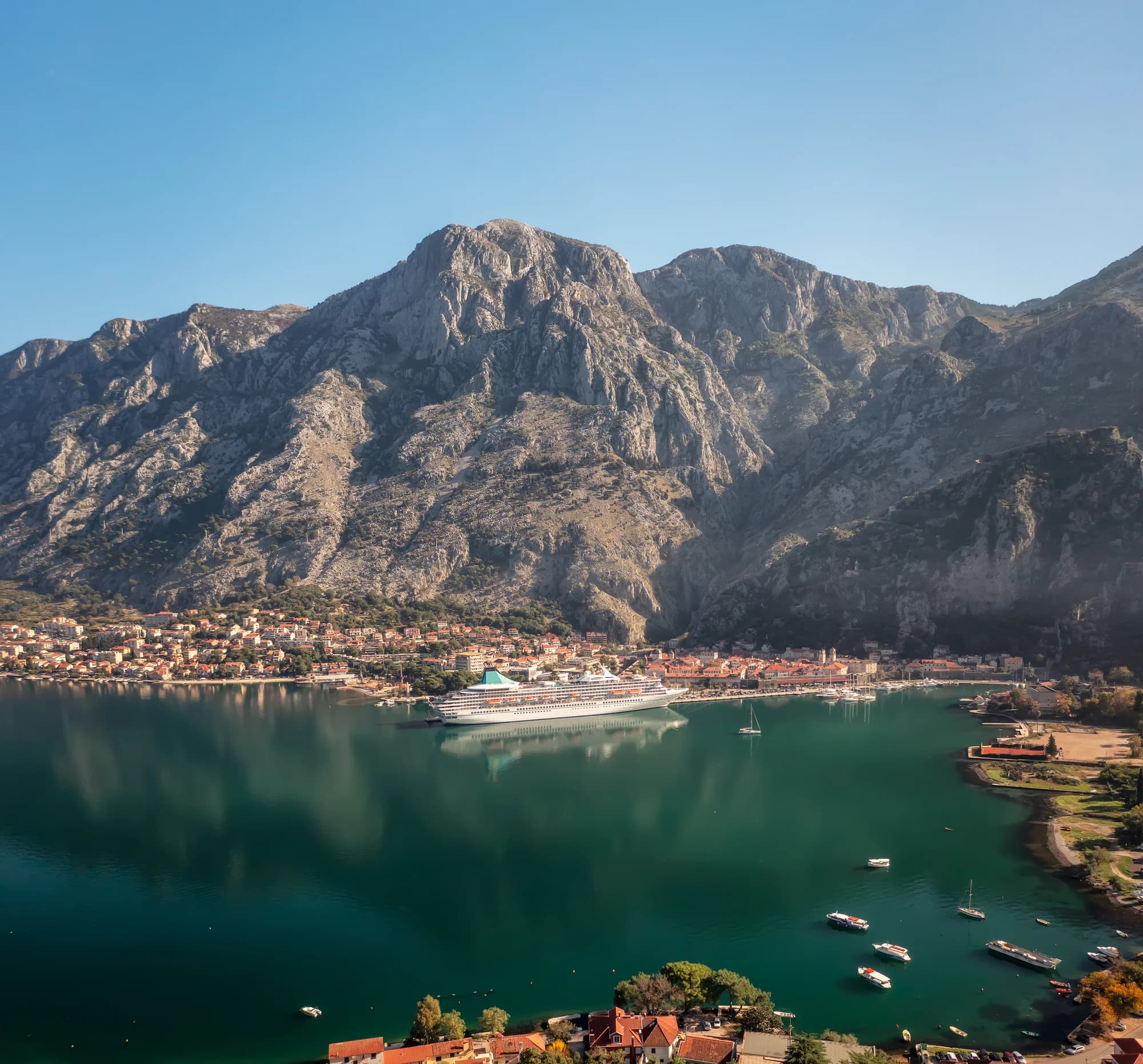
In 2019, The New York Times included Kotor in a feature about European alternatives to crowded destinations. The article framed Kotor as a comparison for travellers seeking alternatives to heavily visited European destinations. That was useful itinerary advice at publication time. It was not a promise that Kotor would remain empty, nor proof that the two places have identical visitor pressure, access or heritage-management systems.
The comparison still helps if used narrowly. Both are compact fortified Adriatic destinations with steep topography, cruise demand and limited old-town space. But the right 2026 question is not “Which is crowd-free?” It is “Which visit fits my dates, transport and tolerance for congestion?” Our Kotor versus Dubrovnik guide treats that as a decision rather than a slogan.
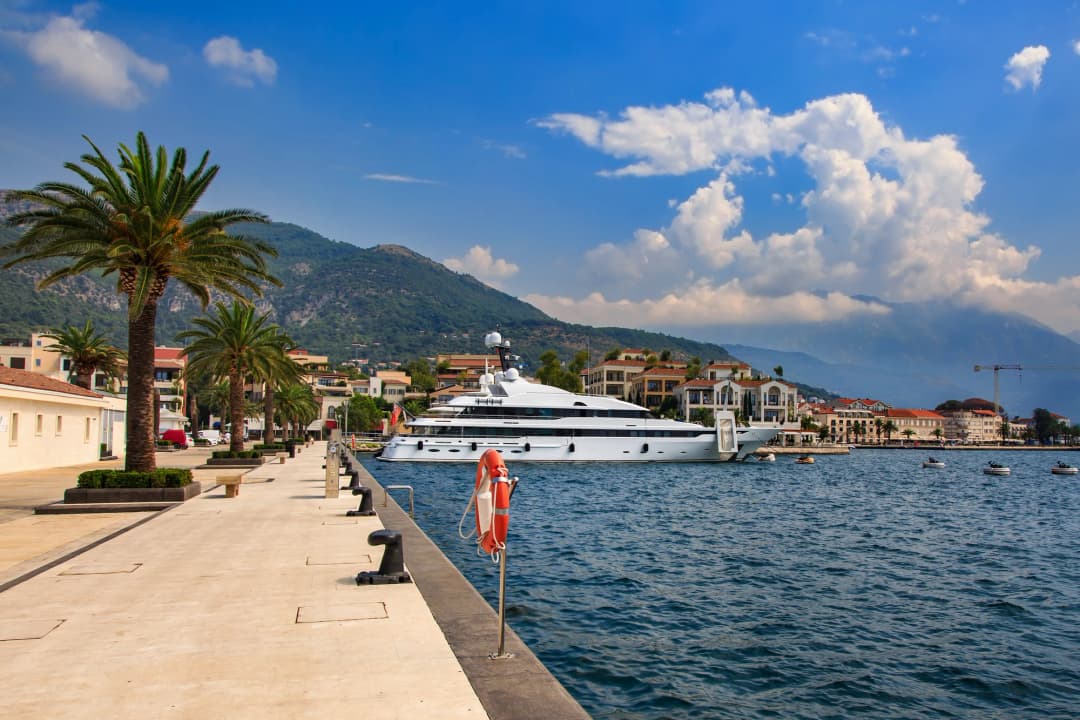
UNESCO's recent conservation reporting adds the missing institutional context. The World Heritage Committee welcomed work on an alternative cruise-ship docking location and continued to request integrated, sustainable tourism management for the Natural and Culturo-Historical Region of Kotor. That does not mean Kotor should be avoided. It means crowd pressure is an active management issue, so a seven-year-old “alternative” label cannot replace present-day planning.
| When | What it says |
|---|---|
| 2019 | alternative framing |
| 2024–2026 | busy destination + management work |
| Your visit | check date, ships, traffic and access |
Source: nytimes.com, whc.unesco.org
National Geographic offered an itinerary, not a national verdict
National Geographic's August 2024 feature is the most useful of the group for trip design. It presents a weekend in the Bay of Kotor, notes the Kotor Cable Car opened in 2023 and combines established coastal bases with activities and food. It also describes popular centres as buzzy in warmer months. That detail matters: the article did not declare Montenegro universally undiscovered or uncrowded. It showed how an editor could assemble a short Boka itinerary at that moment.
Its limits are geographic. A Bay-focused weekend says little about Durmitor trail conditions, Prokletije access, Lake Skadar water levels or winter services. Montenegro's variety cannot be proved by listing one bay's stops, and a short feature cannot establish current opening hours or transport reliability. Travellers who want a genuine pressure release should build a second geography into the trip; our guide to northern Montenegro without the crowd myth explains the trade-offs rather than selling emptiness.
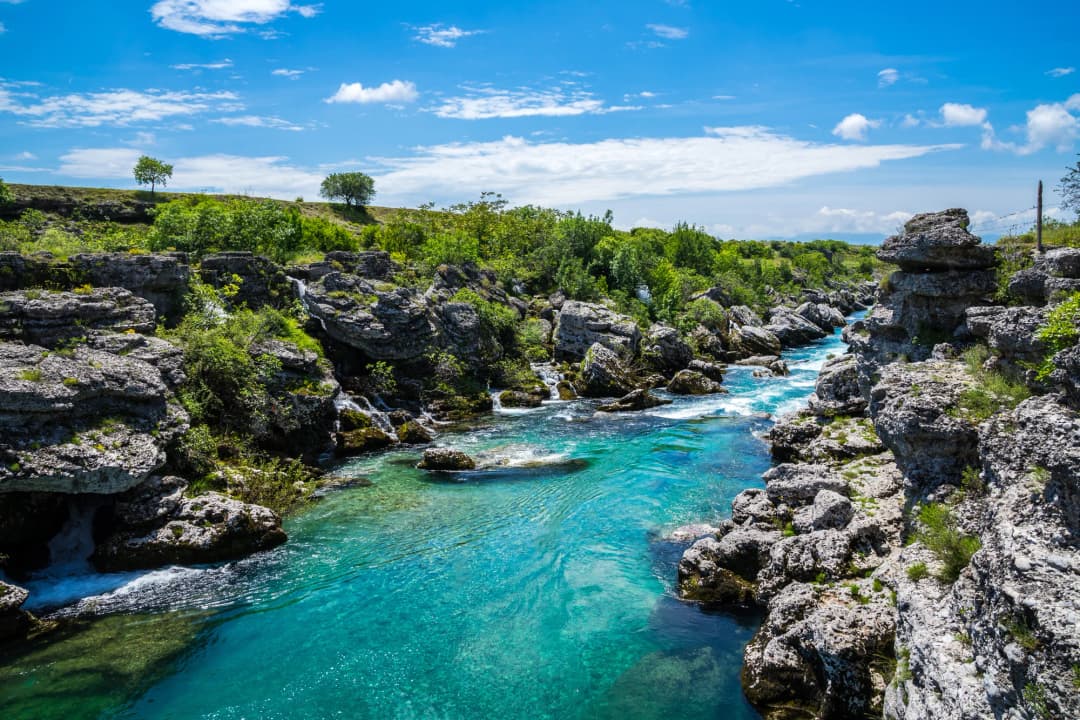
Forbes, Porto Montenegro and the problem with “the next Monaco”
A 2018 Forbes contributor article called Porto Montenegro an “ultimate superyacht sanctuary” and recounted the transformation of Tivat's former Arsenal site after Peter Munk's involvement. The piece is evidence that a luxury-travel writer saw the marina as internationally significant. It is not an independent valuation of every berth, residence or coastal property, and it cannot establish returns for buyers. “The next Monaco” is positioning language, not a statistical category.
Historic operator specifications should not be silently converted into a current marina inventory. Current berth capacity and vessel limits require direct confirmation from the operator. A visitor interested in today's waterfront can use our Tivat attractions guide. Readers comparing large resort narratives can examine the documented development history in our Portonovi audit. Neither article treats one high-end project as a proxy for the whole country.
| Source level | What it supports |
|---|---|
| Official statistics | defined national totals and methods |
| Operator material | dated project specifications and claims |
| Editorial feature | reported observations and framing |
Source: forbes.com, monstat.org
What the 124% millionaire-growth figure actually means
Fortune's October 2025 story drew on Henley & Partners' Private Wealth Migration Report. Henley's fastest-growing wealth-markets table reported Montenegro's resident millionaire population increasing 124% from 2014 to 2024. It listed 2,800 millionaires, 22 centi-millionaires and two billionaires. The table says figures are rounded to the nearest 100 and credits New World Wealth.
The definition is narrower than everyday language suggests: people with liquid investable wealth of at least US$1 million. The result is a private research estimate, not an official population register, tax return count or household-wealth census. A percentage increase also says nothing by itself about affordability, distribution, housing supply or whether a visitor will perceive wealth. Because the base is relatively small, percentage growth can look spectacular while the absolute total remains modest. It would be equally wrong to dismiss the signal or to turn it into a guaranteed property thesis. Our Montenegro value-story audit separates prices, positioning and speculation.
EU accession: advanced negotiations, no booked 2028 date
Montenegro has not been scheduled to join the European Union at the start of 2028. The government has stated membership in 2028 as a strategic goal, and EU institutions have acknowledged the ambition while tying progress to reforms and the negotiation process. A goal is not a treaty date.
The Council of the European Union's Montenegro overview, updated after the 14 July 2026 accession conference, says all 33 screened negotiating chapters are open and 18 are provisionally closed. “Provisionally” matters: the Council states that agreements on individual chapters are not final until an overall agreement has been reached. The chapter record shows advanced preparation, not proof of a fixed entry date.
The claim that accession would cost roughly one euro per EU citizen per year also needs its own context and sourcing; it does not prove the date or economic outcome. Our article on Montenegro, the EU and the “€1 coffee” claim audits that argument directly.
Practical method: how to use international coverage when planning
Start by asking what kind of article you are reading. A reported business feature may explain an economic moment; an itinerary may offer good stops; a contributor article may reveal a luxury brand's positioning; a proprietary report may show a modelled trend. None automatically supplies current opening hours, crowd levels, prices or legal outcomes. Record the publication date and follow its important numbers to the underlying dataset.
- Separate observation from prediction. “A marina attracts superyachts” is observable; “the coast will become Monaco” is a forecast or metaphor.
- Replace old totals. Use current MONSTAT releases for accommodation volume and preserve their definitions.
- Test place and season. National annual data cannot tell you how Kotor feels at 11 a.m. on a particular cruise day.
- Check institutional language. “Opened,” “provisionally closed,” “target” and “member” describe different accession states.
- Verify operations directly. Confirm transport, attraction access and weather close to departure.
A sensible trip built from this evidence uses international coverage for ideas and primary sources for decisions. Allow more time than a weekend feature suggests, avoid assuming the coast represents the whole country, and retain alternatives for weather or congestion. Montenegro can still offer excellent value and striking range, but neither follows automatically from its media profile.
Before booking, save the date of every operational page you consult and recheck it shortly before travel. Archive-era recommendations can inspire a route, but transport disruptions, conservation rules, seasonal closures and local events determine whether that route works. A defensible plan always has a current source and a fallback.
Frequently asked questions
Did major publications agree that Montenegro is “the next big thing”?
No. They covered different subjects across different years: tourism growth, crowd alternatives, a Bay itinerary, a luxury marina and private wealth estimates. Any “consensus” is an interpretation added after publication, not a shared conclusion established by these articles.
Is Kotor still a crowd-free alternative to Dubrovnik?
It should not be described as crowd-free. Conditions depend on month, weekday, cruise calls, road traffic and time of day. UNESCO reporting treats visitor pressure and cruise management as active conservation questions. Compare the two destinations on dates, access and experience rather than a 2019 label.
Does Montenegro officially have 2,800 millionaires?
The number comes from Henley & Partners and New World Wealth, not an official Montenegrin census. It is a rounded estimate based on a definition of liquid investable wealth. Cite it as a private estimate and do not use it to infer housing affordability or investment returns.
Will Montenegro definitely join the EU in 2028?
No fixed accession date has been agreed. Montenegro's government targets 2028, while the Council reports 33 chapters opened and 18 provisionally closed as of July 2026. The full agreement and member-state procedures still matter.