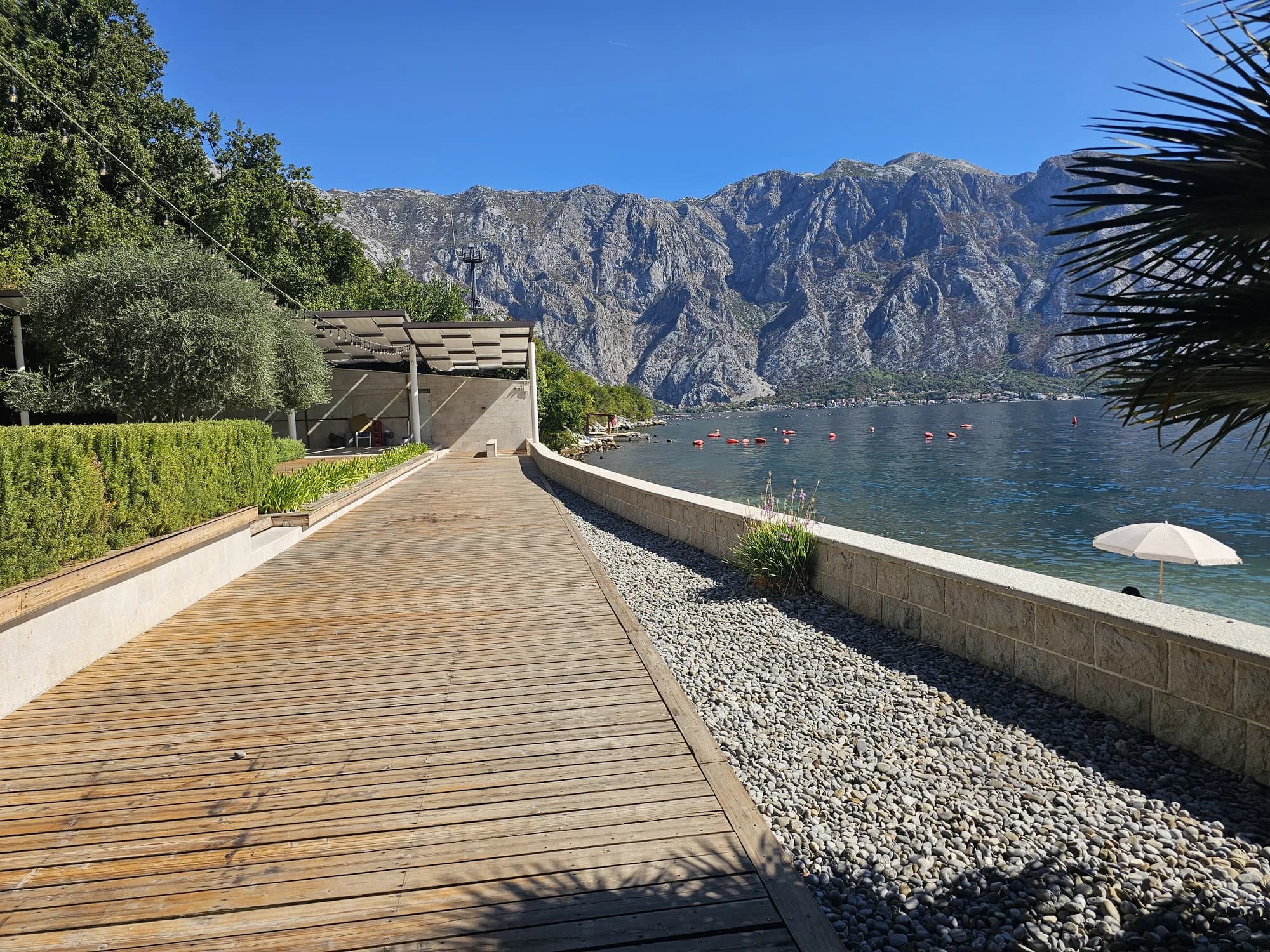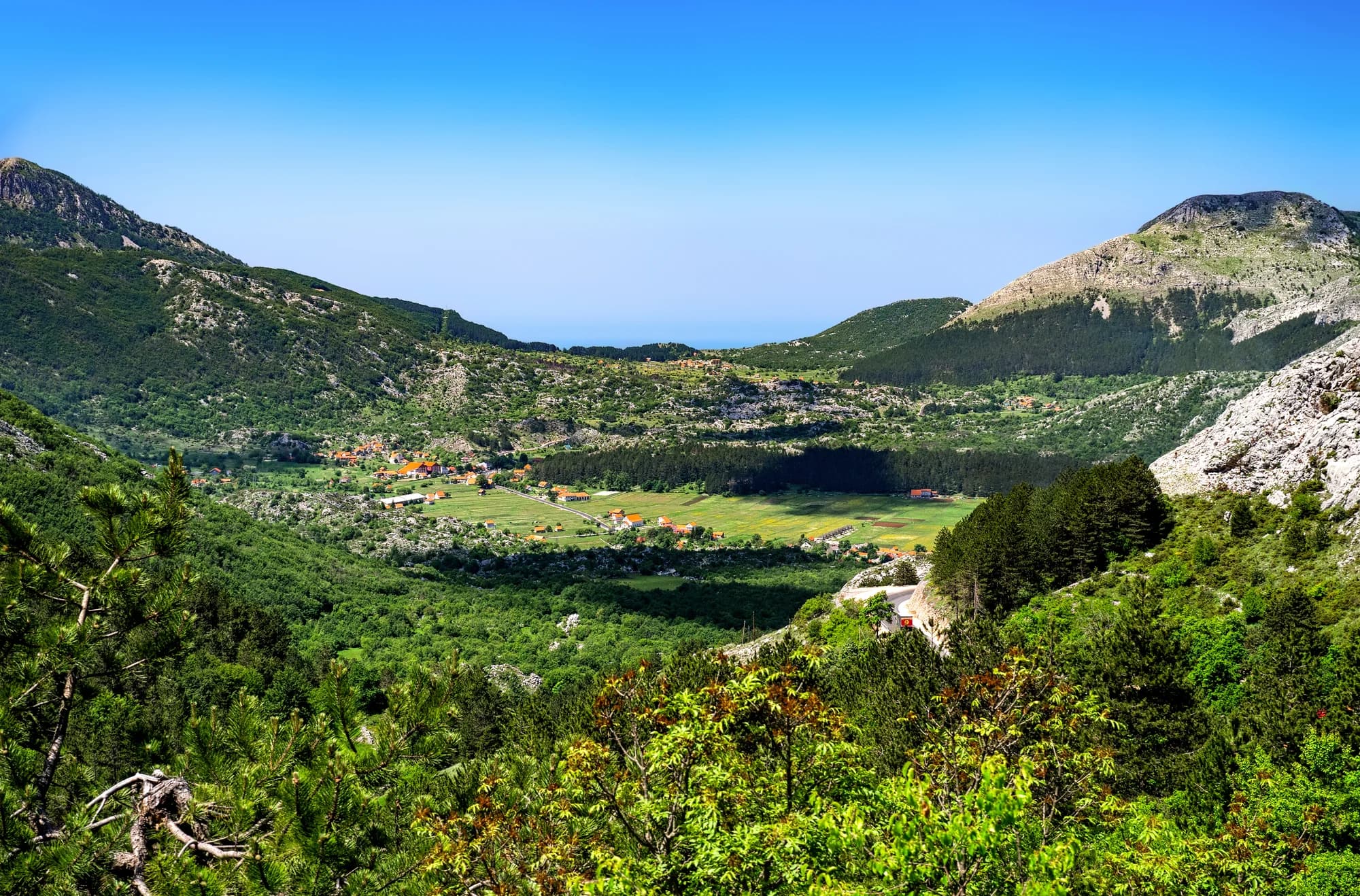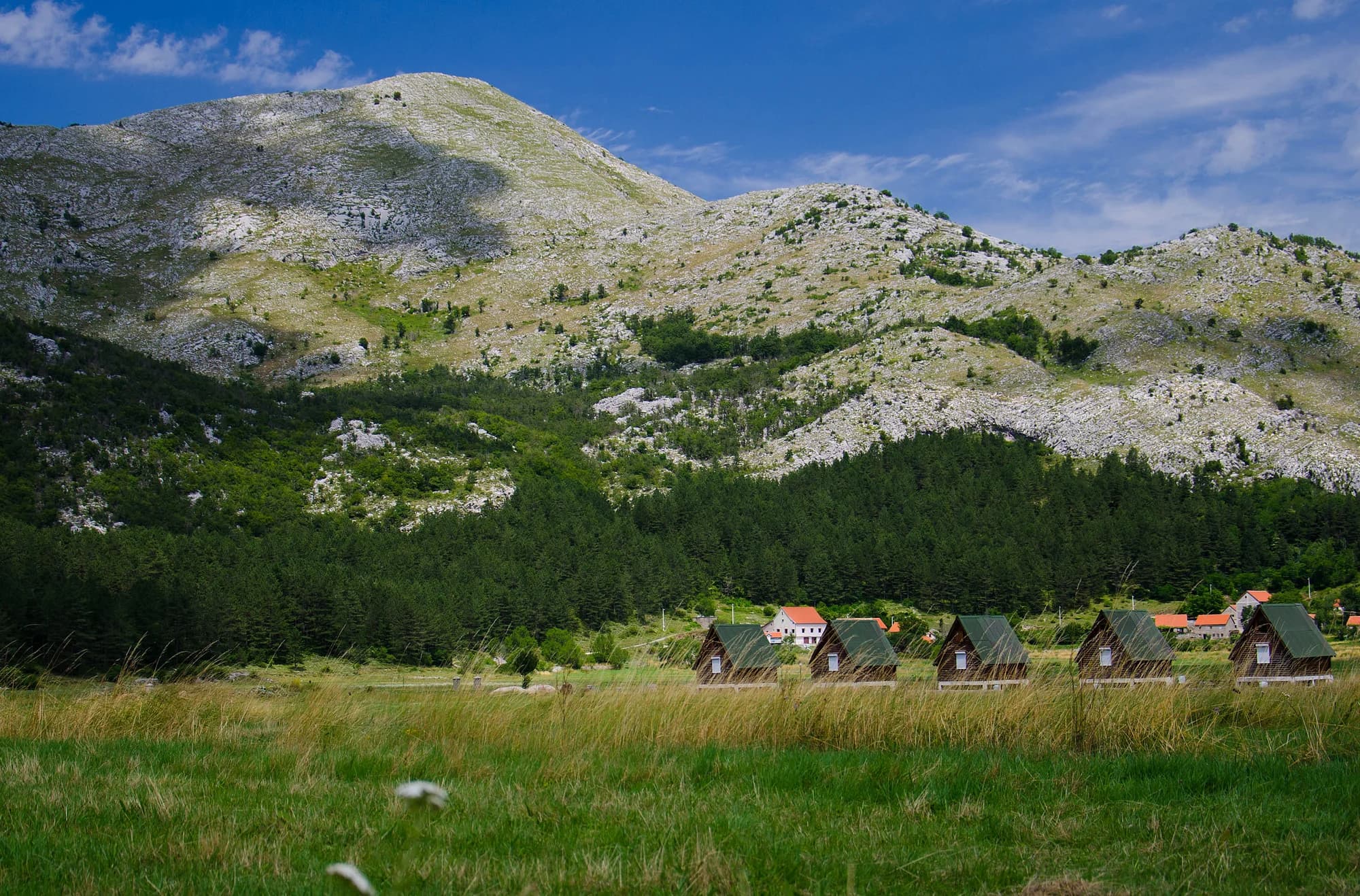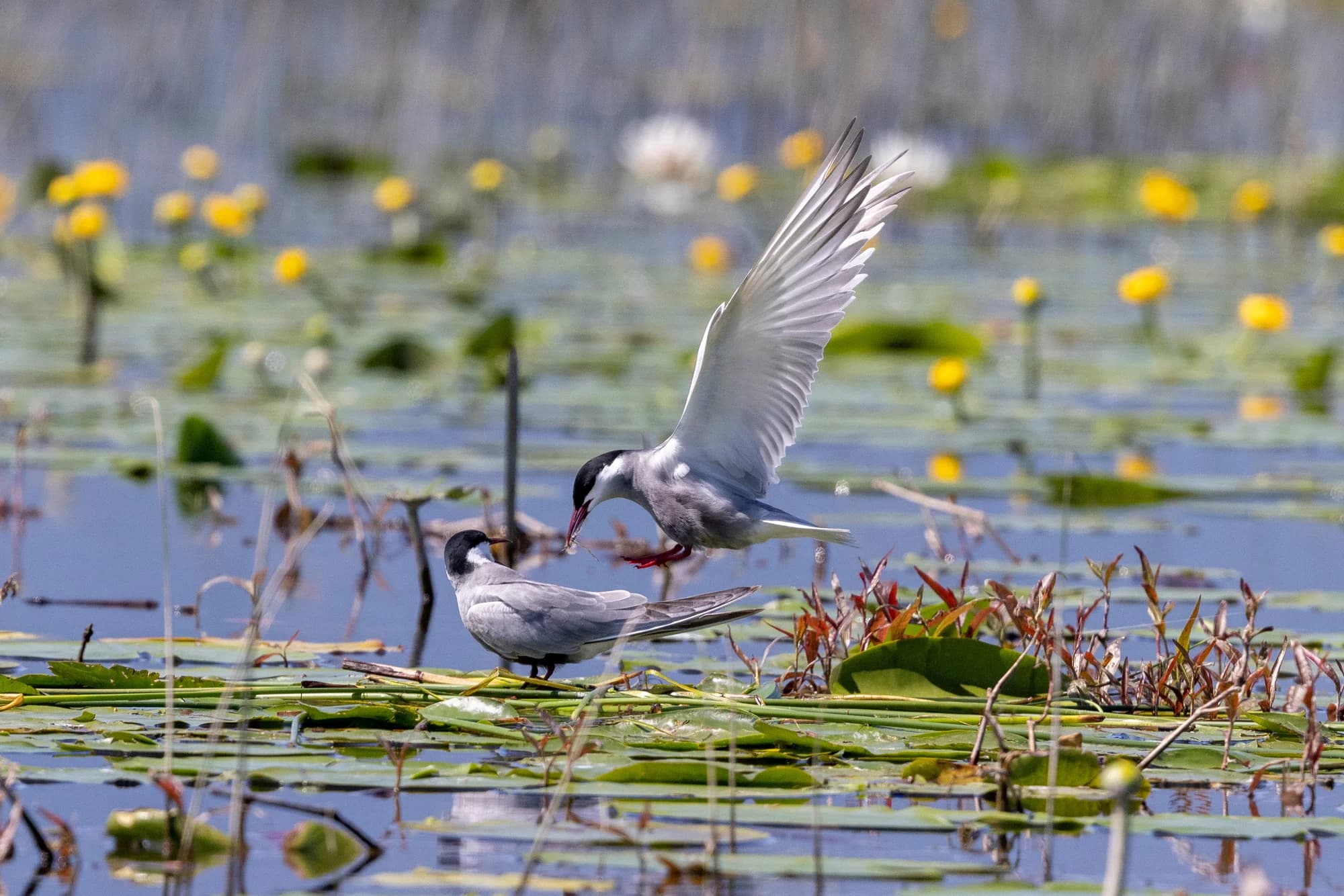
Montenegro · Bay of Kotor
A walled medieval port folded into the deepest corner of the Adriatic — half fjord, half fortress.
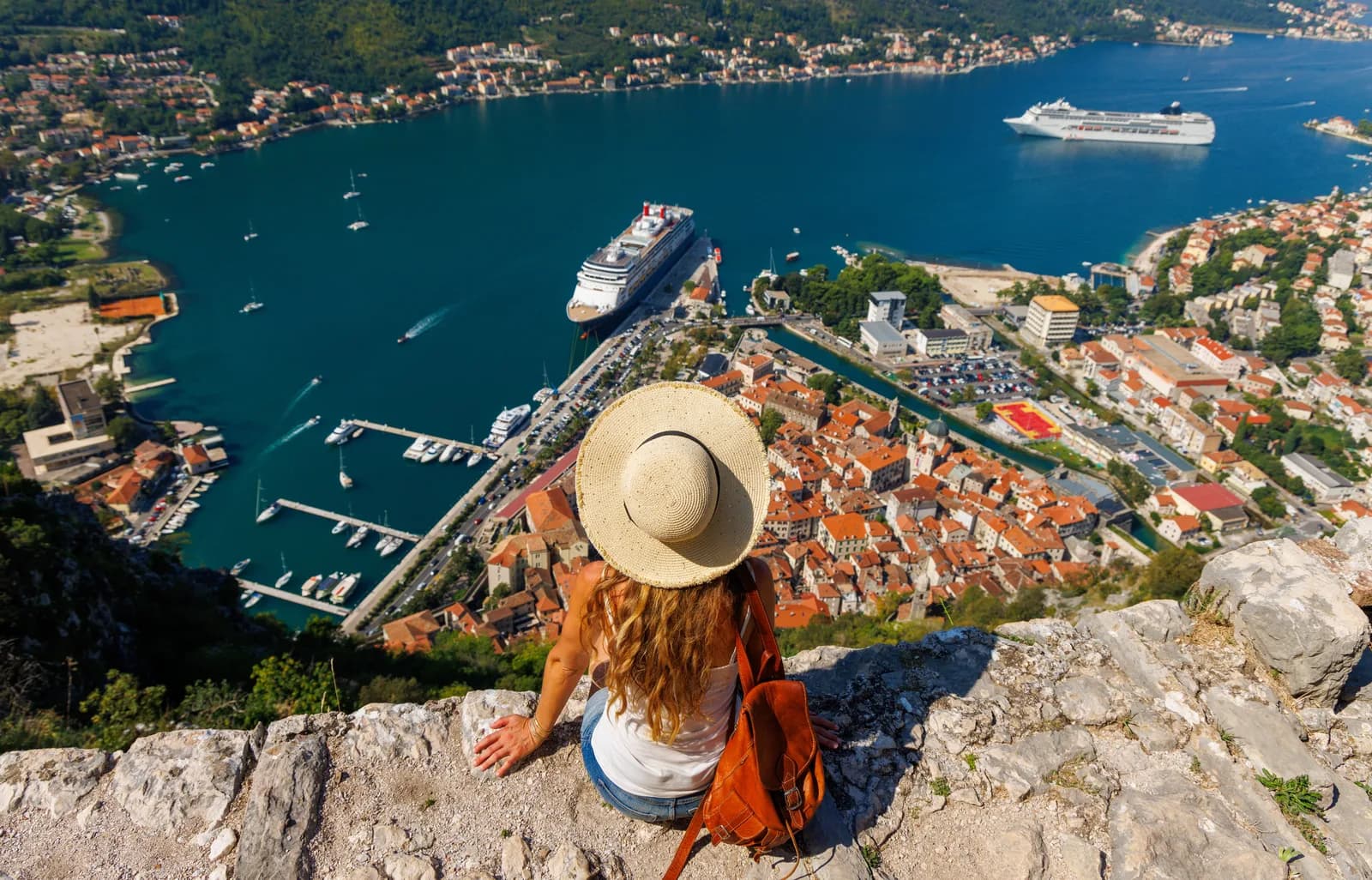
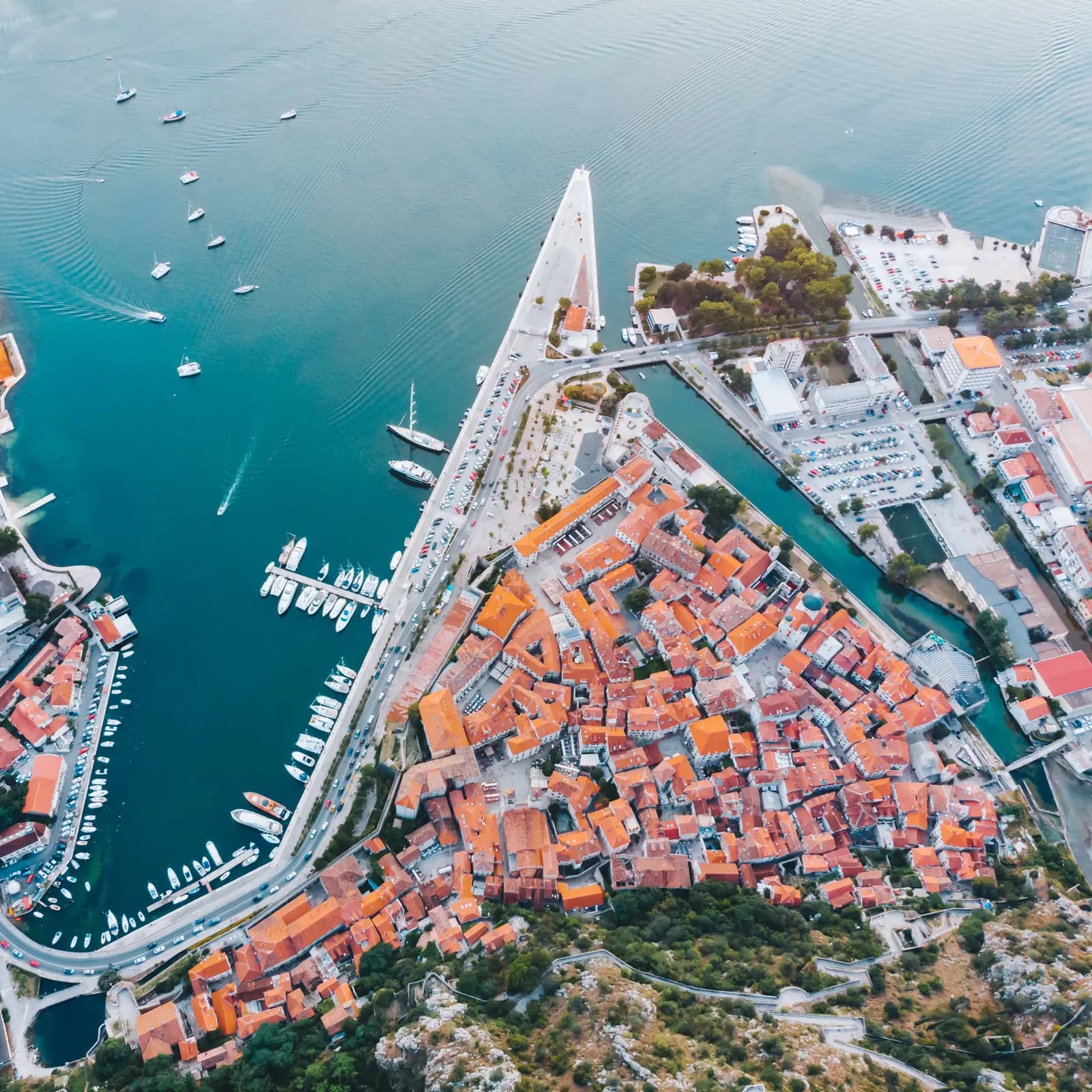
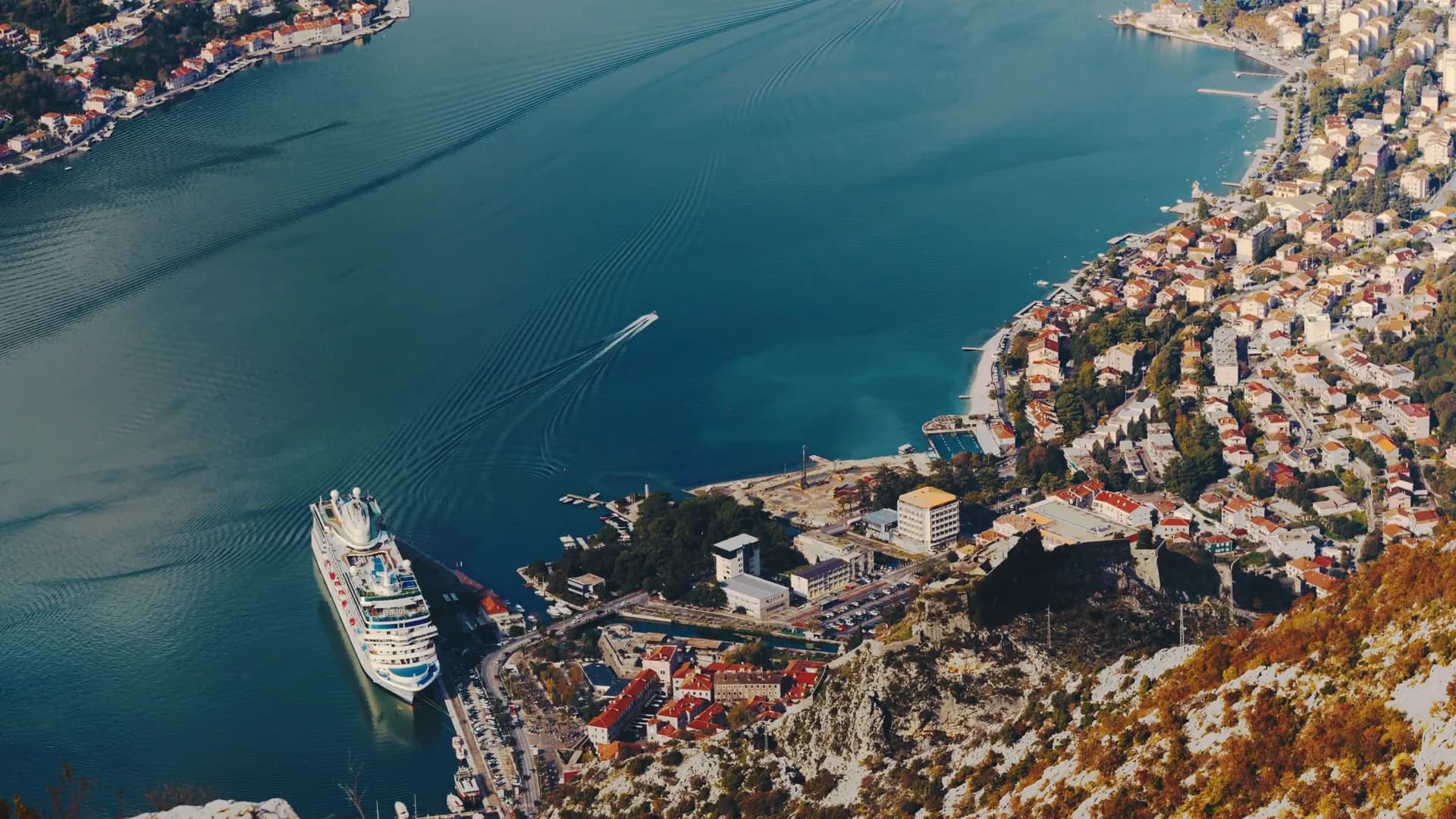
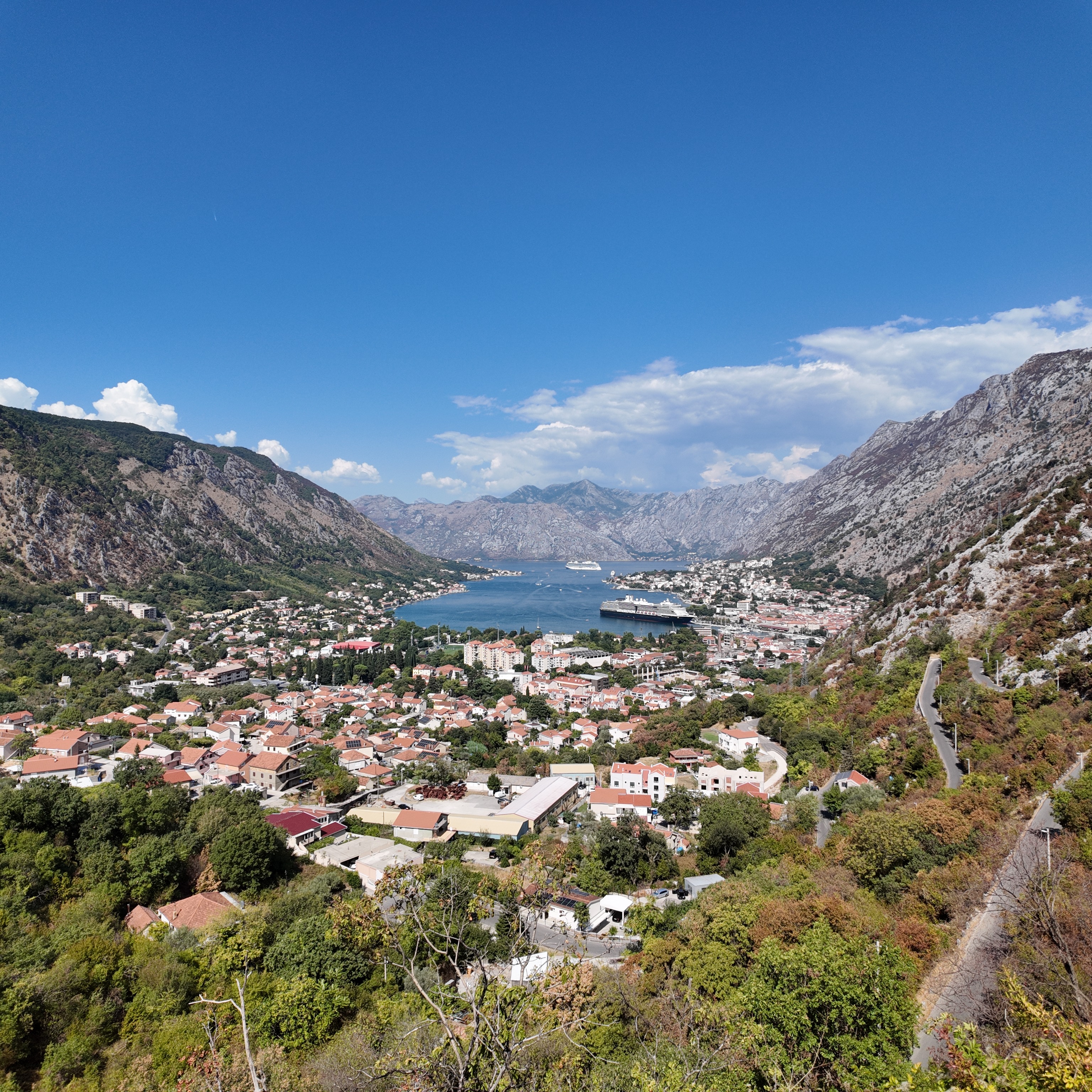
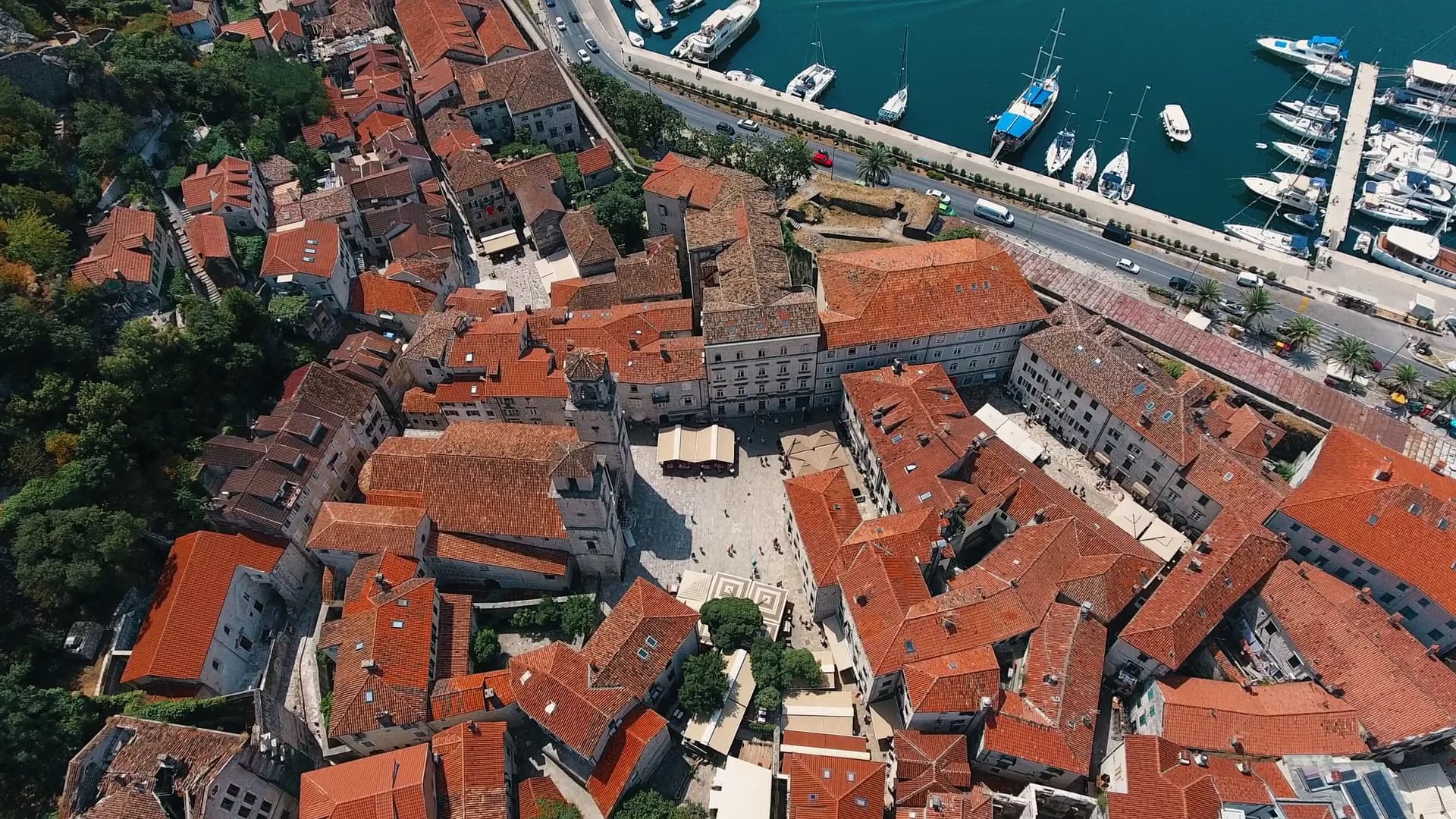
Kotor is a breathtaking medieval town nestled at the innermost point of the Bay of Kotor, a dramatic fjord-like inlet that cuts deep into Montenegro's mountainous coastline. Recognized as a UNESCO World Heritage Site, Kotor's remarkably preserved Old Town is a labyrinth of narrow marble streets, Romanesque churches, and intimate piazzas enclosed by massive stone fortifications that date back to the Venetian era. At its heart stands the Cathedral of Saint Tryphon, built in 1166 and one of the finest examples of Romanesque architecture on the entire Adriatic coast.

c. 1890TodayConsecrated in 1166 and rebuilt after every earthquake since, the twin-towered cathedral holds a Romanesque ciborium and the gilded reliquary chapel that made Kotor a pilgrimage port. The mismatched towers are the 1667 quake’s signature.
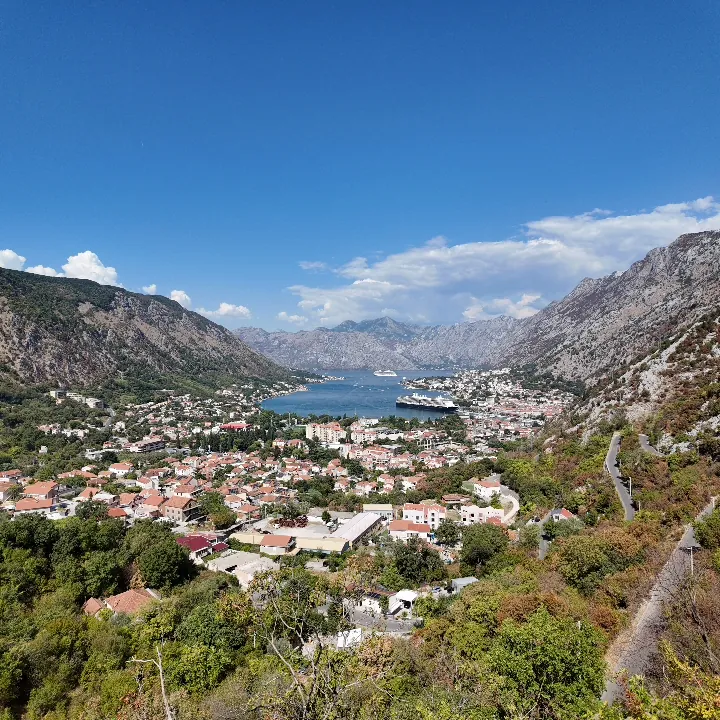
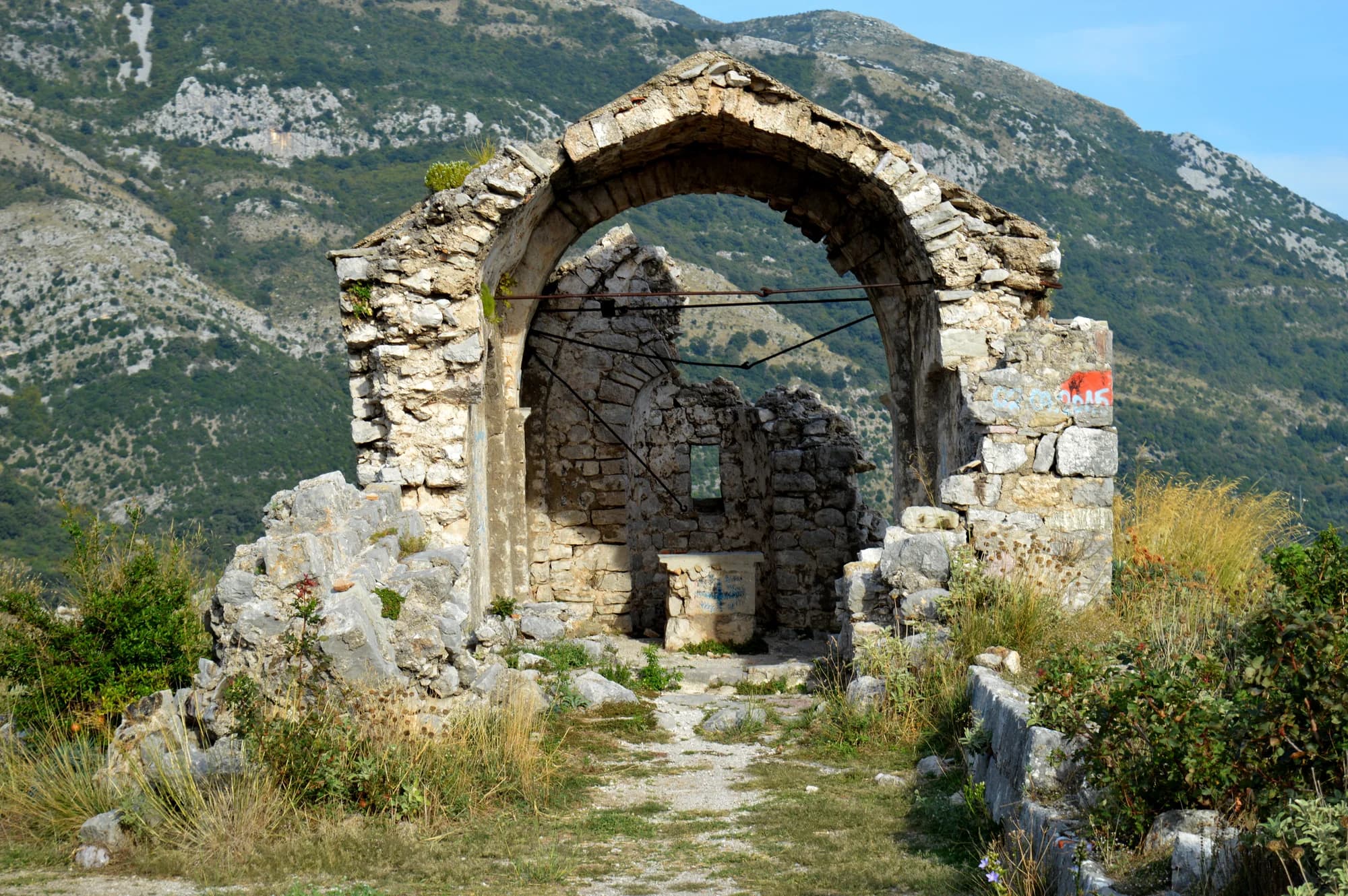
Open in Google MapsFour and a half kilometres of wall climb 260 metres of cliff to the fortress of St John — roughly 1,350 steps. Go at dawn for the bay-and-rooftops view that fills every Kotor postcard; the Ladder of Kotor path returns the long way.
Open in Google MapsThree floors of the Grgurina palace tell how one small bay supplied admirals to Venice, Russia and Austria — model ships, weapons, portraits of captains’ wives who ran the trade while the men sailed.
Open in Google MapsA few hours
Cruise crowds peak 10:00–15:00. Come before nine or after five and the town is yours.
One full day
Old Town
Best for first-timers who want to wake inside a monument — pack earplugs for August
Dobrota
Best for families — waterfront apartments, parking, a pebble beach per house
Prčanj & Stoliv
Best for the quiet sunset side of the bay, fifteen minutes from the walls
Morinj & Risan
Best for budget stays in the bay’s stillest corner, under the mussel farms
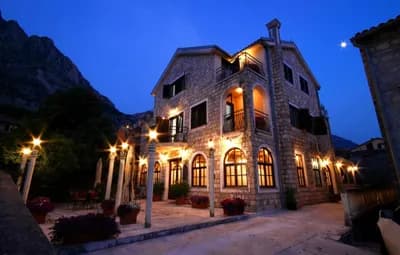
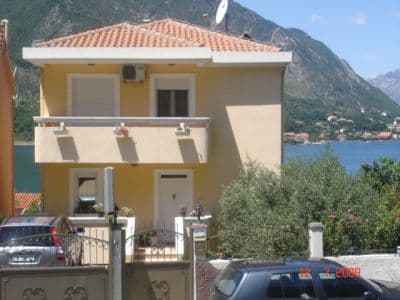
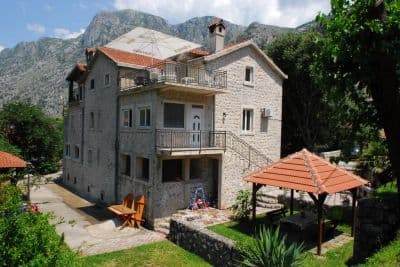
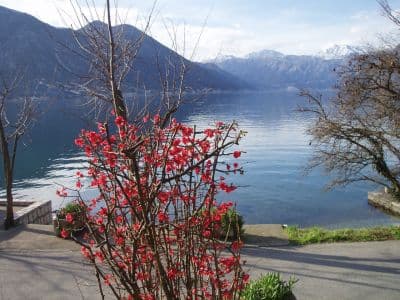
47 accommodations in Kotor
Where the coast sleeps
Overnight stays by municipality, 2025
Six coastal municipalities, 92.6% of the country’s tourist nights — and the most famous of them sleeps the fewest.
How long they stay
Average nights per arrival, 2025
276,000 arrivals but under five nights each: Kotor runs a day-trip economy. Stay past six o’clock and you have it nearly alone.
Who visits Montenegro
Share of foreign overnight stays, 2025
MONSTAT · 2025
What things cost in Kotor
Street prices, summer 2026. The walls are free November–April.
Census population, Kotor municipality
The municipality has barely moved in thirty years — but the people have: most Kotorans now live along the bay in Dobrota and Škaljari, while the Old Town keeps only a few hundred households behind its walls.
Nine flags over one walled town. Widths are to scale: Venice governed longer than Yugoslavia, Austria and independent Montenegro combined.
Years per standard chronology; band widths to scale.
The shape of the bay
Towns at their true positions; the water drawn as a ribbon
The climb: Sea Gate → San Giovanni
1,350 steps, 260 vertical metres, 45–60 minutes up
€15 in season, free November–April. Water at the top costs triple — carry your own. The Ladder of Kotor path brings you down the long, gorgeous way.
A day inside the walls
Crowd pressure by hour, high season
Two decades of the world discovering — then worrying about — one small walled town.
Casino Royale Bond’s casino plot is set in Montenegro; filmed elsewhere, but the glamour sticks to the coast for good.
Financial Times covers the Munk consortium’s €280M bet on turning a rusting naval yard into Porto Montenegro, one bay over.
Lonely Planet names Kotor the world’s No. 1 city to visit for 2016 — the crown that changed everything.
UNESCO demands heritage-impact reviews and a construction moratorium as cranes crowd the protected bay.
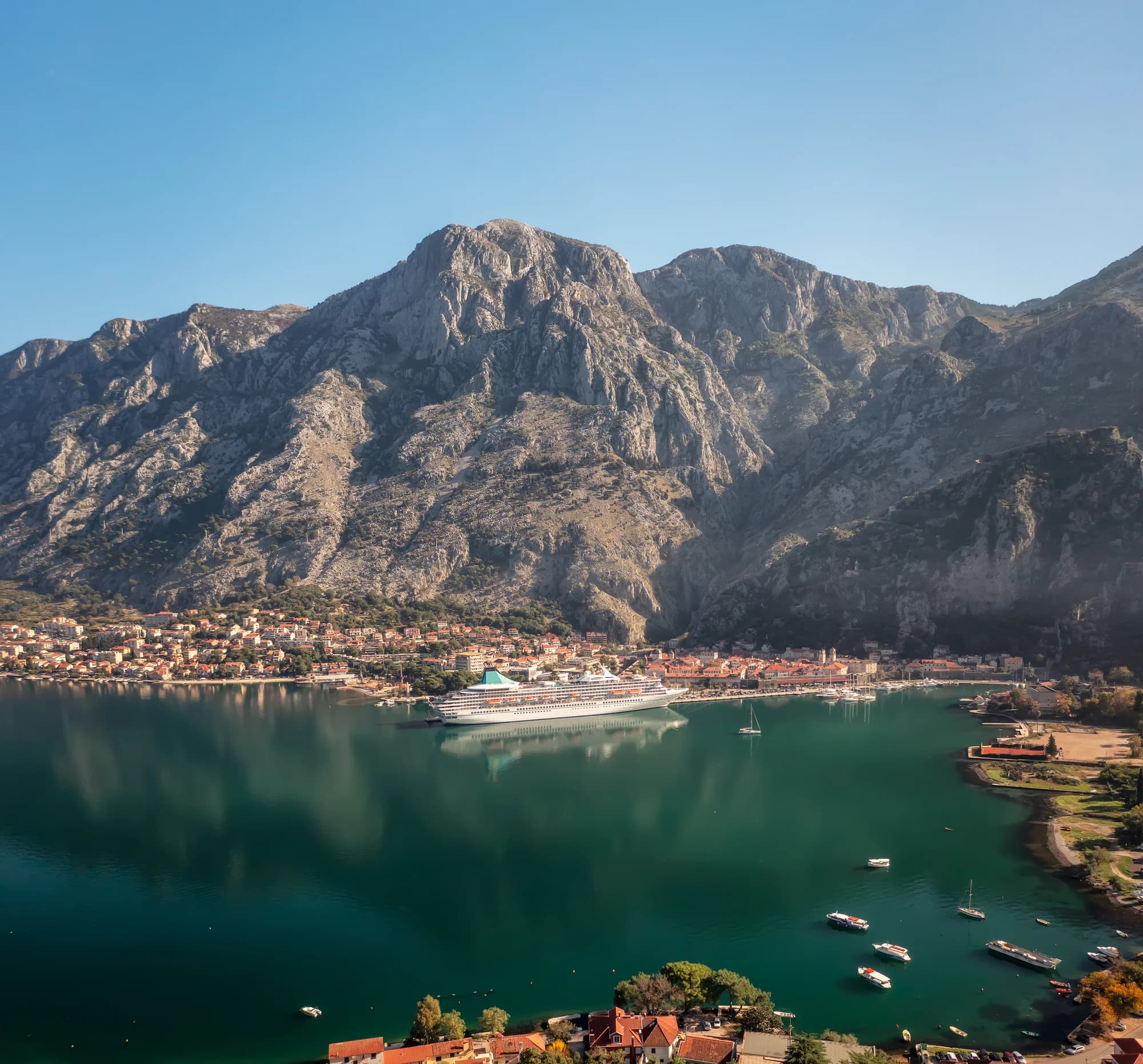
Port records 493 cruise ships and 535,000 passengers in one year — roughly 400 day-trippers for every resident of the town.
NASA Earth Observatory features the bay from orbit, a cruise ship mid-strait — “Cruising through the Bay of Kotor.”
Forbes calls the bay’s marina scene “the ultimate superyacht sanctuary” of the Adriatic.
Meanwhile, in 1979
Kotor, at 07:19 on 15 April 1979, a magnitude-7.0 earthquake tears through the coast; the walls crack, palaces collapse, and the town is evacuated.
Paris — UNESCO answers by inscribing Kotor on the World Heritage List the same year, as an endangered site — the listing that funds a decade of restoration.
London: Margaret Thatcher becomes Britain’s first woman prime minister.
Tehran: the Iranian Revolution topples the Shah and remakes the Middle East.
Space — Voyager 1 sweeps past Jupiter, sending home the first close portraits of its moons.
Tokyo: Sony releases the Walkman, and music becomes something you carry.
“Cattaro, gateway to Montenegro, nestling beneath a barrier of mountains that enclose town and gulf, is one of the most picturesque spots on the Dalmatian coast — the Gibraltar of the Adriatic.”
American Red Cross dispatch, 1920
Caption to a photograph taken from the zig-zag road above the town — Library of Congress archive.
Search thousands of hotels and apartments with live prices.
We may earn a commission from partner links. This helps us keep Montenegro.com free for travelers.
Search hotels, apartments and guest houses with live availability.
We may earn a commission from partner links. This helps us keep Montenegro.com free for travelers.

Bus, private transfer, rental car or day tour from Dubrovnik to Kotor in 2026 — real costs, times, and the border strate

Docked in Kotor for a day? How to walk into the UNESCO old town, climb the fortress, ride the cable car, see Perast — an

Two walled medieval cities, two dramatic Adriatic settings, under two hours apart by road — but Kotor and Dubrovnik deli
Kotor is a UNESCO World Heritage town famed for its perfectly preserved medieval Old Town, the fjord-like Bay of Kotor (Boka), and fortress walls that climb the mountainside to the Castle of San Giovanni. It's one of the Adriatic's most scenic and atmospheric destinations.
Kotor is in Montenegro, on the Adriatic coast at the head of the Bay of Kotor (Boka Kotorska). It sits close to the Croatian border — about a two-hour drive south of Dubrovnik — but is firmly part of Montenegro, not Croatia.
Yes. Kotor combines a compact, car-free medieval Old Town with one of Europe's most beautiful bays and easy day trips to Perast and Our Lady of the Rocks. It's quieter and far more affordable than Dubrovnik, making it one of the best stops on the Montenegrin coast.
They suit different moods. Kotor's Old Town is smaller, quieter, more medieval and much cheaper, with fewer crowds; Dubrovnik is grander but busier and pricier. Since they're only about two hours apart, many travelers happily visit both.
Kotor is one of the most affordable destinations on the Adriatic. Budget travelers can manage on around €30–50 a day, while a comfortable mid-range trip runs roughly €70–120 a day including a guesthouse, meals and activities — well below Croatian or Italian coastal prices.
May, June and September are ideal — warm, swimmable and less crowded. July and August are the hottest and busiest months (and cruise-heavy), while April and October are cooler and quieter but still pleasant for sightseeing.
Wander the walled Old Town and St. Tryphon's Cathedral, climb the city walls to the Castle of San Giovanni for sweeping bay views, take a boat to Perast and the island church of Our Lady of the Rocks, and cruise or kayak the Bay of Kotor.
The nearest airport is Tivat, about 8 km away; Podgorica (~90 km) and Dubrovnik (~2 hours) are also common arrival points. Regular buses link Kotor with Budva, Herceg Novi and the wider region, and many visitors arrive by cruise ship or by car along the bay.
FebWinter Carnival — masked parades in the Old Town, a tradition with Venetian roots
JunBoka Navy Day — the 12-century-old sailors’ brotherhood dances the kolo with St Tryphon’s relics (UNESCO intangible heritage)
JulKotorArt begins — festival season — concerts in squares and churches through August
AugBoka Night — decorated boats and fireworks across the bay; the year’s biggest night
NovThe quiet returns — cruise calls thin out; the walls in November are yours alone
The local plate
The Boka konoba classic: rice slow-cooked in cuttlefish ink until it turns glossy black, sharpened with garlic and local white wine. Order it with mussels raised on the ropes at Orahovac, a ten-minute drive up the bay.
Where Konobas along the Dobrota and Ljuta waterfront
Kotor in numbers
climbing 260 m to San Giovanni fortress
to the top of the walls — count them
World Heritage, listed the year of the earthquake
2023 census, municipality
live in Kotor town itself — fewer than walk the walls on an August morning
MONSTAT 2023 census · UNESCO World Heritage List
Best time: May · June · September
The main gate, cut in 1555 under a Venetian lion, opens straight onto the largest square and its 17th-century clock tower. The pillar of shame at its foot did what the name suggests.
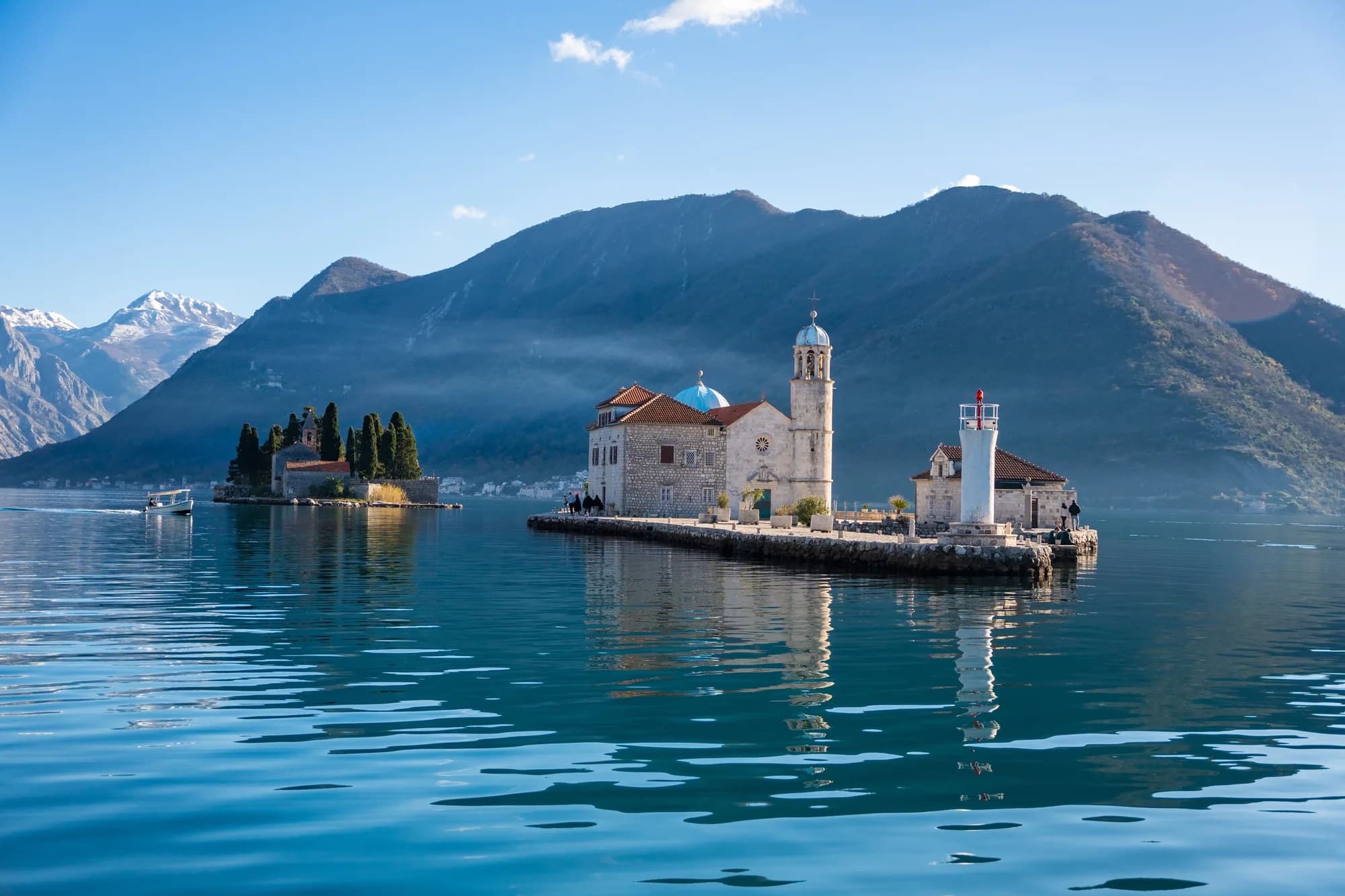
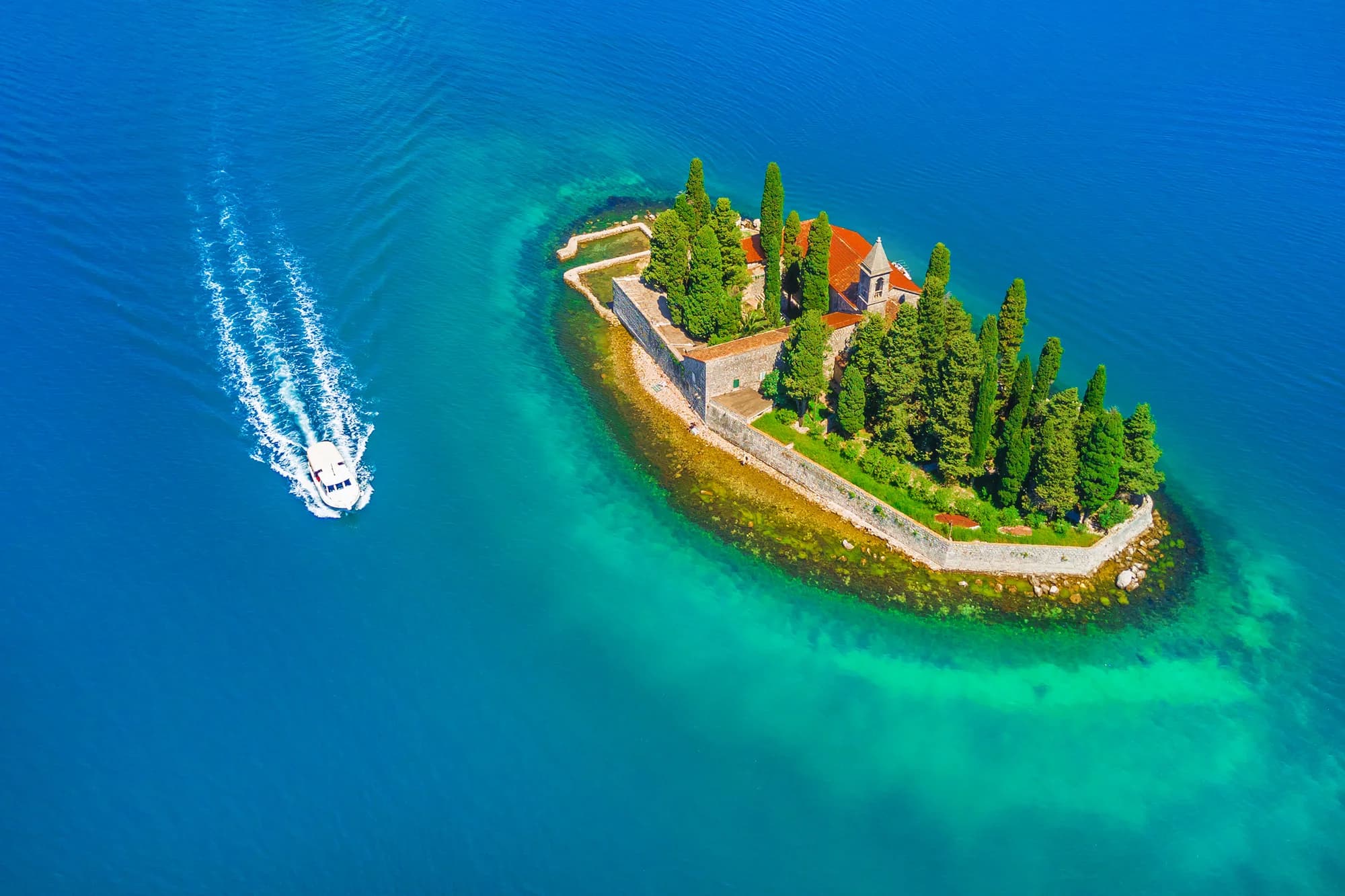
Open in Google MapsTwenty minutes up the bay: the baroque one-street town and the hand-built island church. Boats leave Kotor’s harbour all day in season — the classic half-day out.
Open in Google MapsOne full day covers the town; the bay deserves the second.
A weekend
Sleep inside the walls at least one night — by six the day-trippers are gone and the stone cools.
Schematic — not a nautical chart.
UNESCO urges Montenegro to abandon the cable-car project up the fortress hill and hold the construction line.
The New York Times lists Kotor among “6 Places in Europe Offering Shelter From the Crowds” — the un-Dubrovnik, at a fraction of the visitors.
UNESCO assesses “serious deterioration” and opens the question of the World Heritage in-danger list.
Paraphrased from the cited coverage; quotation marks only where the original wording is used.