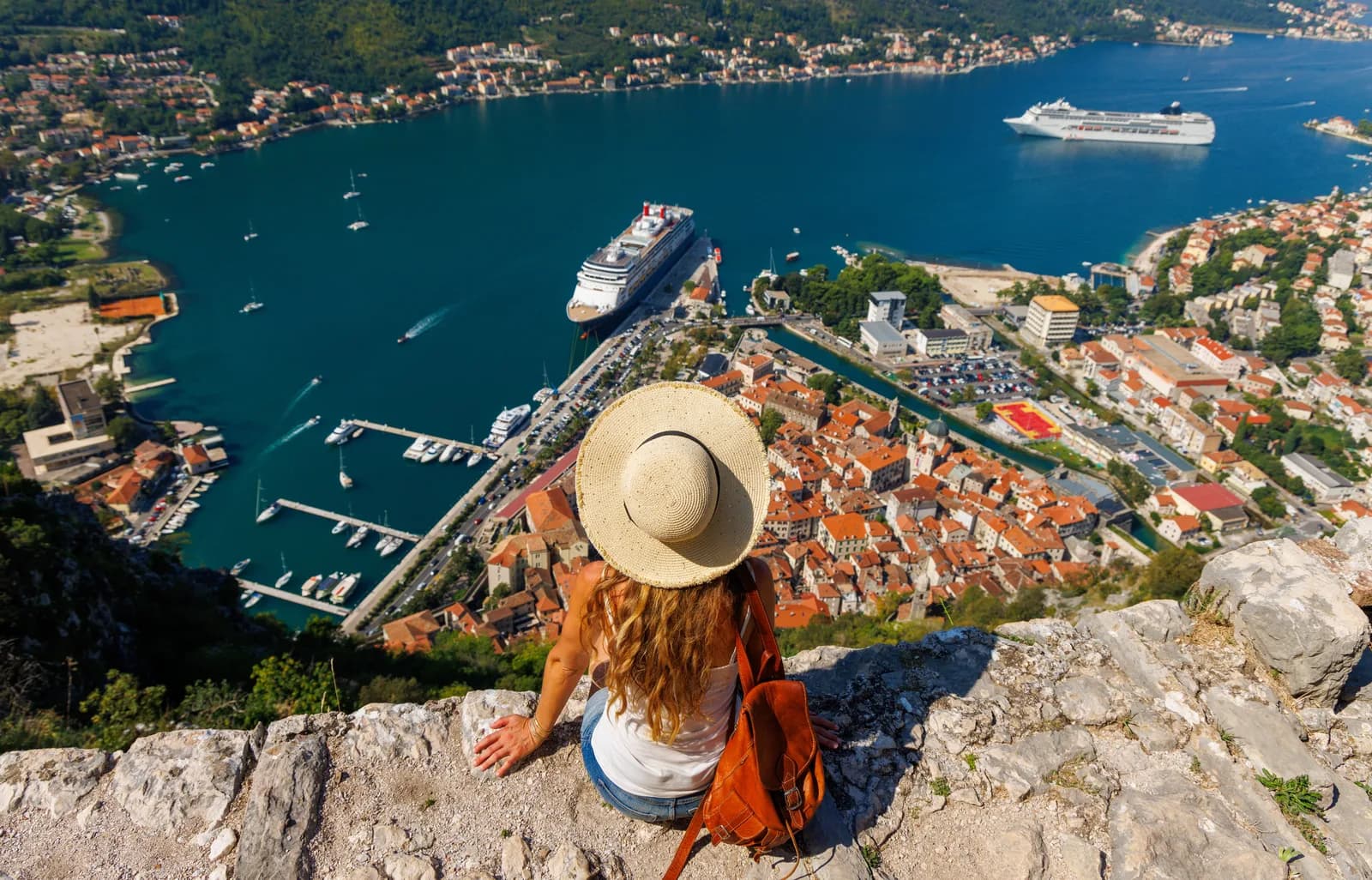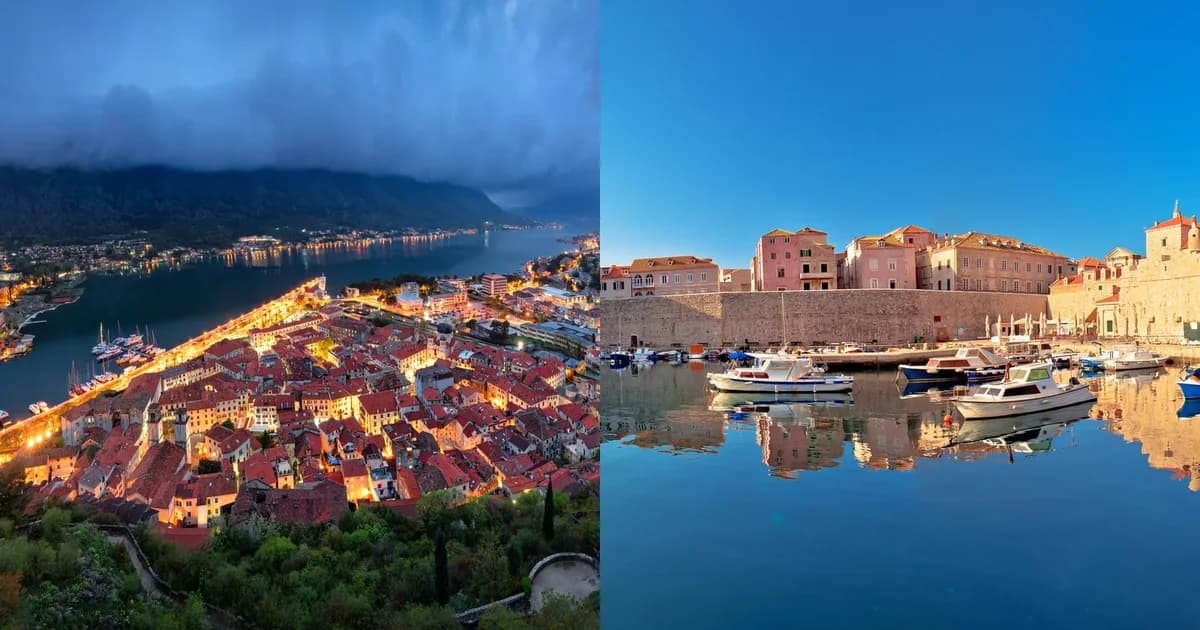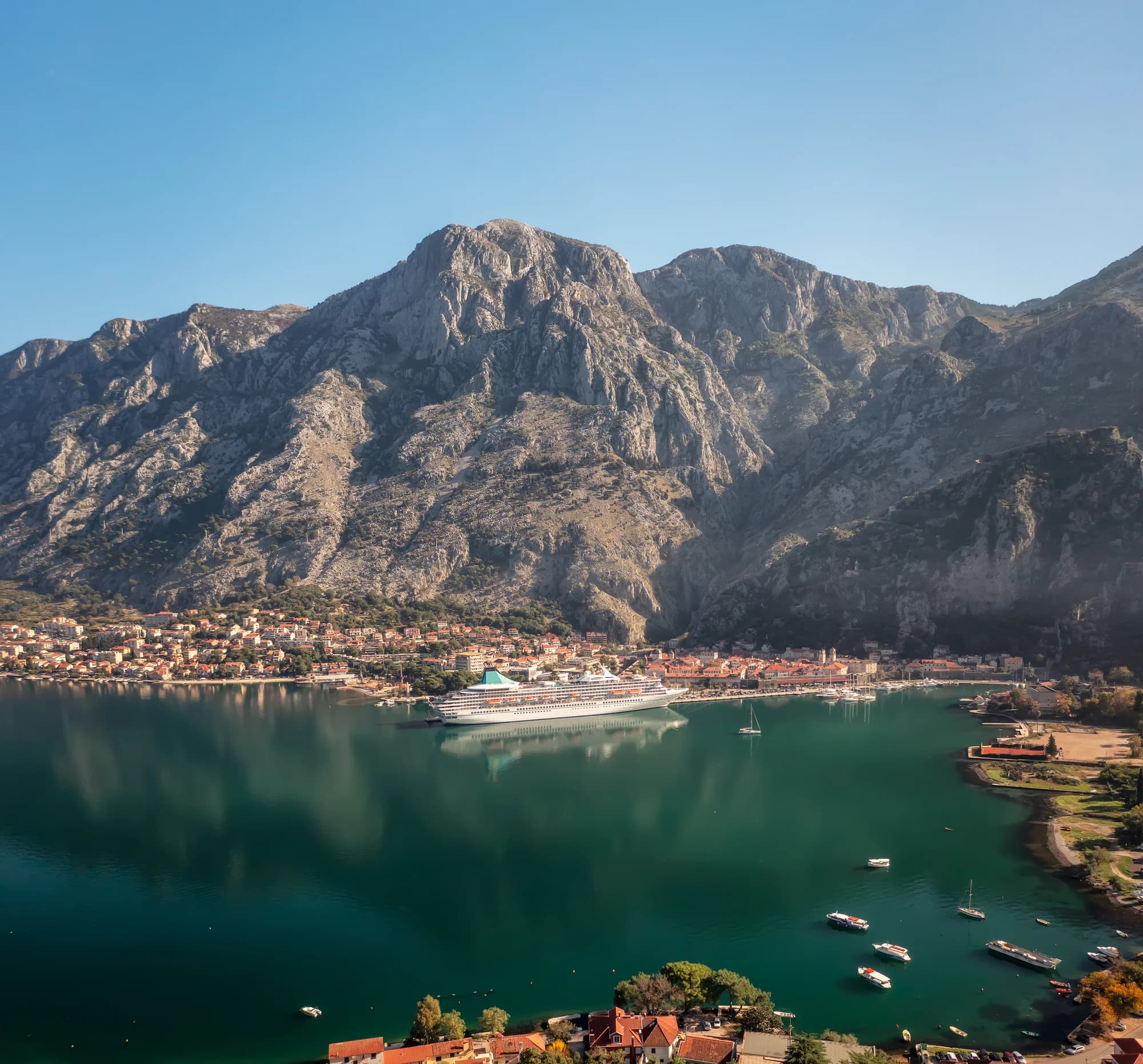
Sailing the Bay of Kotor is not difficult because it lacks infrastructure; it is demanding because a compact, spectacular waterway concentrates ferries, cruise ships, tenders, speedboats, swimmers and changing local controls. A good trip begins with the vessel, skipper and paperwork—not a list of photogenic stops. Inside the bay, short distances can tempt crews to improvise. Outside the entrance, the open Adriatic adds exposure and removes that margin.
This page used to advertise two named sailboats, passenger capacities, catering and a private email address. None of those services was verified as current, so they have been removed. What follows is an independent planning guide built from Montenegro's yacht law, the Ministry of Maritime Affairs' 2026 navigation notices, the national marine forecast and current marina information.
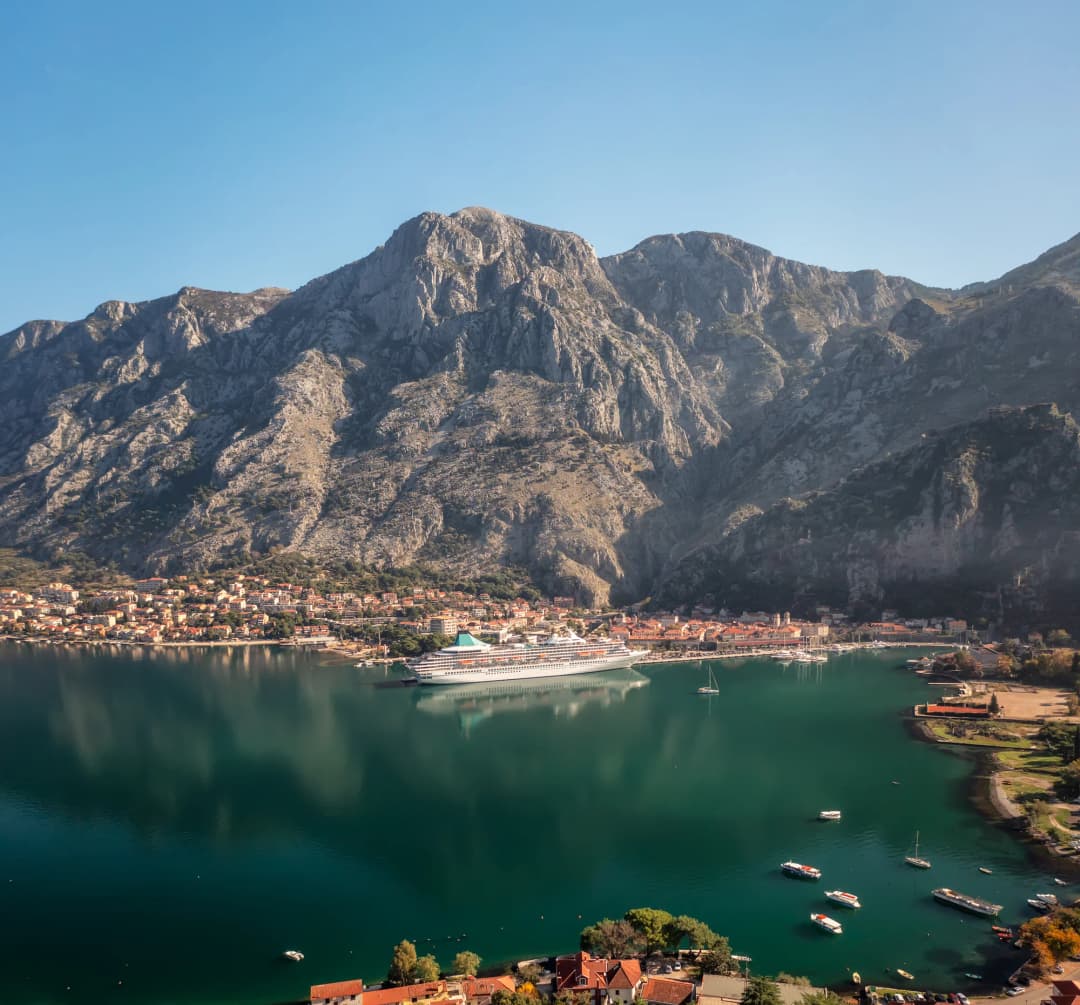
Sailing in Boka: the decision summary
| Decision | Best fit | Verify before paying |
|---|---|---|
| Skippered day sail | First visit, limited time, no recognized qualification | Licensed operator, named vessel, legal capacity, insurance, safety briefing, weather cancellation |
| Crewed multi-day charter | Route flexibility without command responsibility | What crew, fuel, food, berths, taxes and gratuities are included |
| Bareboat charter | Experienced skipper whose documents the operator accepts | Certificate acceptance, VHF qualification, deposit, inventory, area limits, check-in and check-out |
| Own foreign yacht | Skipper prepared for international entry formalities | Open port of entry, vignette evidence, crew/passenger list, insurance, Harbor Master instructions |
| Bay-only route | Shorter distances and more fallback options | Cruise traffic, ferry corridor, local restrictions, berth or mooring permission |
| Open-coast leg | Capable vessel and crew with suitable forecast | Sea state, wind, return window, refuge options and active notices |
First choose who is responsible
A skippered excursion, a crewed charter and a bareboat are different purchases. On a skippered day sail, the provider controls the vessel and supplies the person in command. On a crewed charter, professional crew may also manage meals, berthing and a multi-day route. On a bareboat, the hirer accepts command responsibility and must show qualifications suitable for that vessel and use.
Montenegro's Law on Yachts requires evidence of competence for a foreign yacht. The text recognizes documents issued by a competent flag-state authority, an authority recognized under international arrangements, or under Montenegrin rules. That does not mean one card is automatically accepted for every charter boat. Send scans of the skipper and radio documents to the operator before paying, identify the exact vessel and ask for written acceptance. The Harbor Master, operator and insurer may each have a relevant requirement.
For any commercial trip, ask for the operator's legal name, vessel name or registration, maximum authorized passengers, third-party and passenger insurance, lifejacket provision, toilet arrangements and a written cancellation policy. A social-media profile and a photograph of a boat are not substitutes. Capacity includes crew; a promise that twelve guests fit comfortably says nothing about the legal certificate.
| Charter type | Who commands | Verify |
|---|---|---|
| Skippered day sail | Provider commands | Operator, capacity, insurance and cancellation |
| Crewed charter | Professional crew commands | Inclusions, route, crew terms and berths |
| Bareboat | Hirer commands | Qualifications, radio, deposit and area limits |
Source: gov.me
Arriving from abroad: clear in before cruising
A foreign yacht entering Montenegrin waters cannot simply anchor at the first attractive bay. Article 20 of the official Law on Yachts directs it to a designated port of entry open to international traffic for border control and the required navigation authorization. The documentary set includes the vignette request, registration evidence, competence evidence, third-party liability insurance, proof of ownership or authority to use the yacht, and the applicable administrative and navigation payments. Crew and passenger information is also part of the process.
What the sources say
Do not build a passage around an old blog's list of clearance points. The National Tourism Organisation currently identifies Porto Montenegro, Portonovi/Kumbor and Kotor among Bay ports with border-control functions, while a yacht proceeding to Marina Bar clears first at Pier 5 of the commercial Port of Bar. Hours and availability can change. Contact the intended port and Harbor Master before departure, then proceed as instructed without an intervening swim or anchorage.
Fees and vignette validity depend on current rules and the vessel. This guide intentionally gives no copied tariff. Carry originals as required, keep digital backups, and make sure the registration, insurance, authorization and skipper names agree. If a charter starts in Montenegro, the company normally handles the vessel's domestic legal status; that does not remove the hirer's duty to supply acceptable command documents.
The 2026 Bay map is a briefing tool, not a chart
In May 2026 the Ministry of Maritime Affairs published an informational map for the Bay of Kotor showing zones, corridors and speed restrictions. The Ministry explicitly warns that it does not replace official nautical charts and publications. Use it to understand the pattern of controls, then navigate from current official charts, notices, marks, VTS or Harbor Master instructions and what is actually visible.
| Step | Source checked |
|---|---|
| 1 | Official chart and notices |
| 2 | Current Bay information map |
| 3 | Forecast, wind and sea state |
| 4 | Traffic, ferries and controls |
| 5 | Skipper's go/no-go call |
Source: gov.me
The Ministry's June 2026 enforcement campaign matters because these are active rules, not decorative guidance. Officials reported using inspectors, patrol craft, drones, VTMIS and AIS, and said twelve vessels had been sanctioned near the Blue Cave. Every skipper—private or commercial—is subject to navigation rules. Do not assume a small rental boat is invisible or exempt.
Three recurrent conflicts deserve special attention: the Kamenari–Lepetane ferry corridor, cruise and tender movements around Kotor, and swimmers or small craft close to shore. Keep a proper lookout, avoid crossing ahead of traffic, and follow collision regulations and local controls. Never derive a safe passing distance or speed from this article; use the rule and zone applicable at the vessel's exact position.
Weather: “sheltered” does not mean predictable
The inner Bay often has less ocean swell than the open coast, but its mountains, narrows and thermal effects can produce local changes in wind. A calm breakfast terrace is not a marine forecast. Read the official ZHMS marine forecast, check its issue time, compare it with observations and obtain updates while underway. The person in command decides whether the forecast, vessel, crew and route fit.
A useful briefing separates wind from consequence. Ask what happens if the wind arrives earlier, the sea breeze strengthens outside the Bay, visibility falls, a crew member becomes seasick, or the intended berth is unavailable. Montenegro's Maritime Operations Center gathers meteorological data and transmits forecasts and navigation warnings through maritime radio services. Define a turnaround time and alternative landing before casting off. On a commercial trip, ask who cancels, what weather threshold the operator uses and what refund or rescheduling follows.
| Condition | Requirement |
|---|---|
| Forecast | Fits |
| Vessel | Capable |
| Crew | Fit and briefed |
| Route | Lawful with fallback |
Source: gov.me
September and October are not automatically unsafe, just as July is not automatically benign. Seasonal averages cannot approve a particular departure. Heat, thunderstorms, gusts, smoke, heavy rain and traffic can all change the risk. For a first sail, the more conservative choice is a shorter route with several lawful fallback points rather than a long itinerary sold as guaranteed.
Route templates, not promises
One day inside the Bay
A practical day can start near Tivat, cross toward the inner Bay, view Perast from the water, and return with time in reserve. Whether the boat can stop, moor or land depends on permission, availability, draft, traffic and weather. The Tivat guide helps plan the shore side, while the Porto Montenegro guide explains the marina district. Do not overload a sailing day with timed restaurant bookings at opposite ends of Boka.
Herceg Novi and the Bay entrance
A western route reveals the change from inner basins to the entrance between Luštica and the Herceg Novi side. That geographic transition also changes exposure. The promenade described in the Five Danicas history provides a useful shore visit, but a waterside attraction is not necessarily a legal landing. Agree on the marina, quay or tender arrangement rather than “stopping near the promenade.”
Luštica, Blue Cave and the open coast
The Blue Cave cannot be treated as an automatic add-on. On 17 June 2026, the Ministry announced a new rule prohibiting motor-powered vessels from entering the Blue Cave area. Check the notice in force on your date and obey patrol or Harbor Master directions. A sailboat with an auxiliary engine is not a loophole, and a tour listing does not override regulation. The current Blue Cave planning guide should be read alongside official notices.
Continuing around Luštica toward Budva or farther south creates an open-coast passage. It requires suitable sea state, crew condition, daylight, fuel reserve and refuge planning even if sails are expected to carry the boat. Treat Budva or Bar as a separate passage plan, not a bonus stop after a busy Bay day. Travellers comparing the two national cruising contexts can use the broader Montenegro versus Croatia guide, but border and navigation decisions still come from authorities.
Choosing a marina
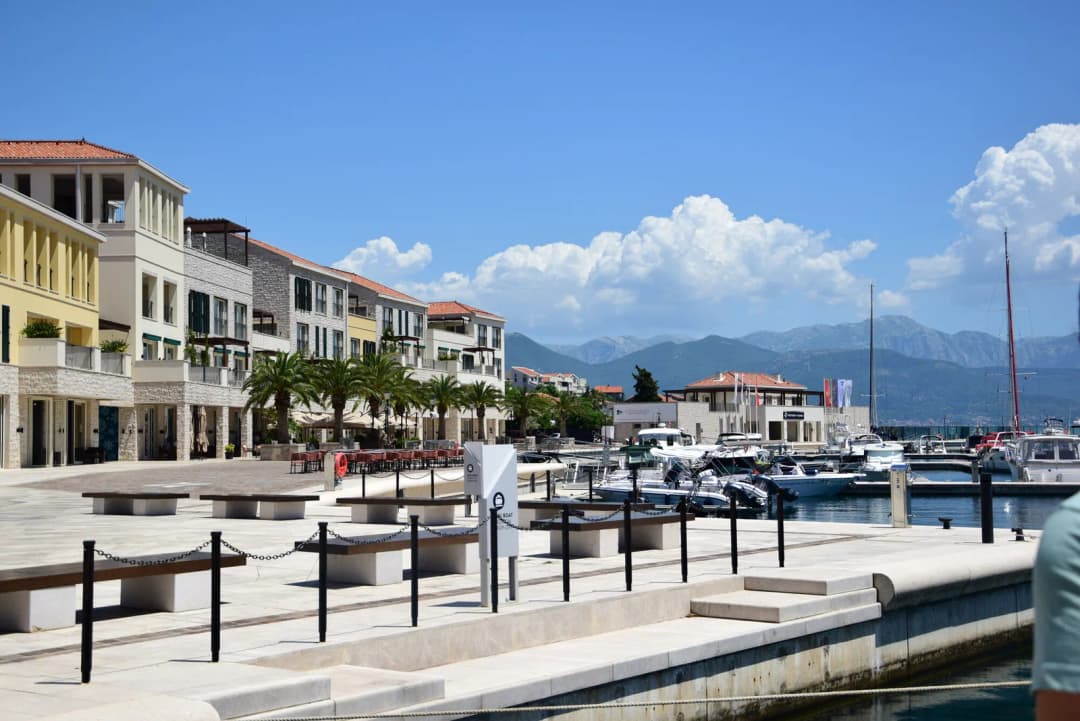
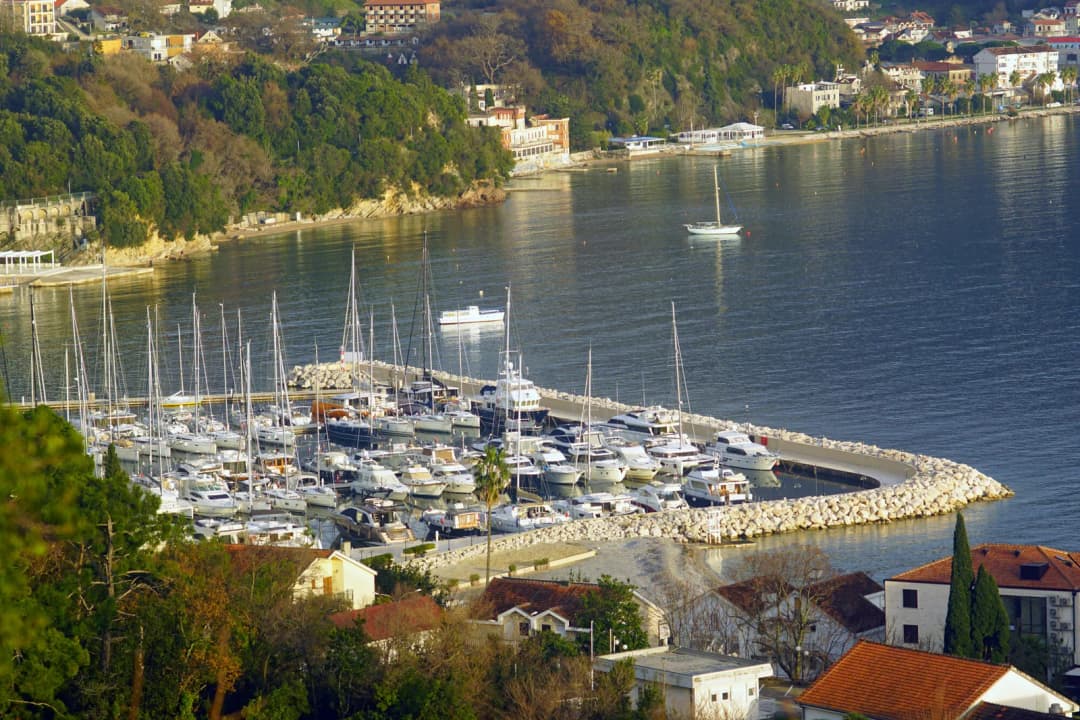
Porto Montenegro in Tivat, Portonovi at Kumbor and Marina Bar are not interchangeable. Their position determines the route; their services, clearance role and accepted vessel dimensions determine whether they fit. Current marina pages list berthing enquiries and arrival procedures. Contact the marina with length overall, beam, draft, arrival time, last port and service needs. “A berth is available” is incomplete unless it is suitable for that vessel.
| Base | Planning advantage | Critical check |
|---|---|---|
| Porto Montenegro, Tivat | Central Bay position and current 24-hour dock-assistance procedure | Advance berth confirmation; marina instructs arrivals to call VHF channel 71 |
| Portonovi, Kumbor | Near the Bay entrance; current page lists border crossing and fuel | Clearance availability, berth dimensions and service booking |
| Kotor | Direct inner-Bay access and port-of-entry function listed by NTO | Cruise movements, berth status and current port instruction |
| Marina Bar | Open-coast base outside Boka with technical services | Foreign arrivals clear first at commercial Port of Bar Pier 5 under current NTO guidance |
Published berth counts disagree even within current and older operator material, so this article does not repeat them. Counts do not guarantee an appropriate visitor berth. Ask for a written reservation, price basis, electricity and water terms, check-in time, cancellation policy and approach instructions. If black-water pump-out, oil disposal or repairs matter, arrange them rather than assuming every berth supplies every service.
Practical charter contract checklist
Ask the provider to itemize the total, not just a headline rate. Relevant lines include skipper and crew, fuel, final cleaning, bedding, food, tourist tax, marina or mooring fees, security deposit, damage waiver, outboard, paddleboard and one-way charges. Record the fuel level, inventory and existing damage at handover. Photograph gauges and hull marks with the representative present.
- Confirm the exact boat, year, engine, safety equipment and authorized operating area.
- Send qualifications early and obtain written acceptance for bareboat command.
- Match legal passenger capacity to guests plus every crew member.
- Ask where lifejackets are stored and whether child sizes fit the actual children.
- Test VHF, engine controls, bilge pumps, navigation lights, anchor gear and heads during handover.
- Write down emergency, base and Harbor Master contacts; do not rely on one phone.
- Clarify who pays after weather cancellation, late return or a change of port.
If the briefing is rushed, the inventory is incomplete or the promised vessel changes, pause. A holiday schedule is not a reason to accept command of an unfamiliar or undocumented boat. For a day trip, the same principle applies: no safety briefing, overcrowding or pressure to depart in unsuitable weather are reasons not to board.
| Stage | What to confirm |
|---|---|
| Booking | Exact vessel and command |
| Paperwork | Documents accepted |
| Terms | Itemized terms in writing |
| Handover | Inspect and record |
| Departure | Final weather and safety call |
Source: gov.me, portomontenegro.com, portonovi.com
Emergency and incident response
The Ministry's 2026 safety notice tells the public to report a maritime accident, injury or missing person immediately on 129. Give the vessel name, position, nature of distress, people aboard and assistance required; follow the operator's questions and preserve VHF watch. If there is immediate danger, issue the appropriate distress call rather than trying to solve everything through messaging apps.
| Item | Report |
|---|---|
| Service | MARITIME |
| Number | 129 |
| 1 | Vessel identity |
| 2 | Exact position |
| 3 | Nature of problem |
| 4 | People aboard |
| 5 | Assistance needed |
Source: gov.me
Before departure, make sure everyone knows where lifejackets, extinguishers and first-aid equipment are. Brief one person other than the skipper to stop the engine, transmit a position and use the emergency contacts. Keep a charged phone protected from water, but do not make mobile coverage the sole communications plan.
Lower-impact sailing without the “eco” label
A sail can reduce engine use when conditions and safety permit, but that alone does not make a charter environmentally harmless. Engines run for manoeuvring and charging; guests travel to the marina; boats create waste and use coatings, water and shore power. Honest practice is specific: sail when the skipper judges it safe, avoid unnecessary idling, use legal pump-out and oil-disposal services, secure rubbish, prevent fuel spills and never discharge waste into the Bay.
Do not anchor on an unknown seabed merely to create a private swim stop. Use authorized berths, moorings or anchorages shown by current navigation information and follow local restrictions. Keep noise down near settlements and wildlife, avoid feeding animals, and bring reusable water containers where hygiene permits. For underwater activities, use the safety principles in the Montenegro diving and snorkelling guide; swimming or diving from a yacht must be controlled against traffic, engine and propeller hazards.
Frequently asked questions
Do I need a license to charter a sailboat in Montenegro?
Not as a passenger on a properly operated skippered charter. To command a bareboat, you need competence evidence accepted for that vessel and use, plus any required radio qualification. Send documents to the operator before paying and confirm current Harbor Master requirements.
Can a foreign yacht enter anywhere in the Bay?
No. The official yacht law requires a foreign yacht to proceed directly to a designated port of entry open to international traffic and complete the required formalities. Confirm the operating clearance point and instructions before crossing into Montenegrin waters.
Can motorboats enter the Blue Cave?
The Ministry announced on 17 June 2026 that motor-powered vessels are prohibited from entering the Blue Cave area. Check current official notices on the day; a commercial tour listing does not supersede the rule.
What is the maritime emergency number?
Montenegro's 2026 Ministry notice gives 129 for maritime accidents, injuries and missing persons. Also know the vessel's VHF procedure and the charter base contact.
Is the Bay safe for beginners?
It offers short distances and sheltered-water options, but it also concentrates traffic and local controls. A beginner is usually better served by a professional skipper. “Inside the Bay” is not a substitute for a forecast, lookout or suitable vessel.
How many days should I allow?
One well-planned day can show part of Boka; several days allow weather flexibility and shore visits. A seven-day charter can include the open coast, but only if conditions, vessel and crew support it. The seven-day Montenegro itinerary can help coordinate land days without turning every port into a deadline.
Should I reserve marina berths?
Yes when a berth is important to the route. Send vessel dimensions and service needs, obtain confirmation, and contact the marina before arrival on its published channel. Never interpret a website's total berth count as availability.