Faith across eras
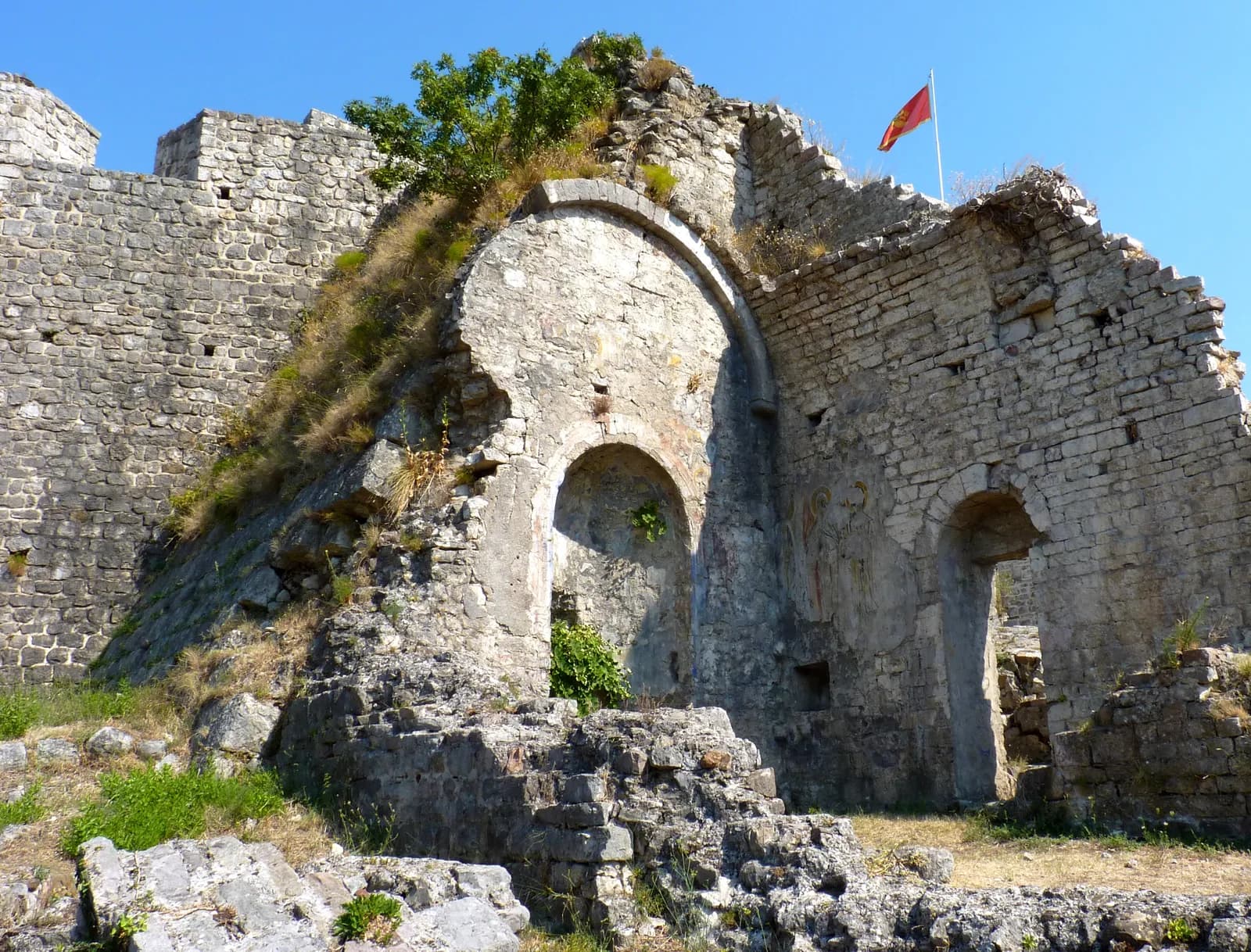
Medieval Antivari was a Catholic archiepiscopal centre in a region with Orthodox communities. Ottoman mosques, baths and houses added an Islamic layer that remains visible among the ruins.
Montenegro then and now · Bar Riviera
Old Antivari and modern Bar are not the same urban site. War, water infrastructure, earthquake and port development shifted the centre toward the coast.
Go deeper
Old Antivari and modern Bar are not the same urban site. War, water infrastructure, earthquake and port development shifted the centre toward the coast.
5 eras · source-linked
Selected chapter · 4 of 5
Old and new Bar are a paired city.
Move through the city’s rule
Medieval Antivari was a Catholic archiepiscopal centre in a region with Orthodox communities. Ottoman mosques, baths and houses added an Islamic layer that remains visible among the ruins.
Old Bar’s hill walls, churches, mosque remains and aqueduct preserve a multi-imperial city. The modern port and railway city grew separately on the coast after siege and abandonment.
Old and new Bar are a paired city.
Historical timeline
Medieval era
The inland hill town developed as an Adriatic commune and episcopal centre while controlling routes from the coast into the interior.
The sea mattered even when the town did not touch it.
1571
Bar passed from Venetian to Ottoman control and its architecture accumulated new religious, domestic and defensive layers.
The ruins preserve several political worlds together.
1878
Montenegrin forces captured Bar after bombardment. Damage to the aqueduct made continued occupation difficult and settlement moved outward.
Infrastructure, not only battle, explains abandonment.
1908–1979
The railway and later port focused growth on the coast; the 1979 earthquake accelerated rebuilding and conservation at Stari Bar.
Old and new Bar are a paired city.
Now
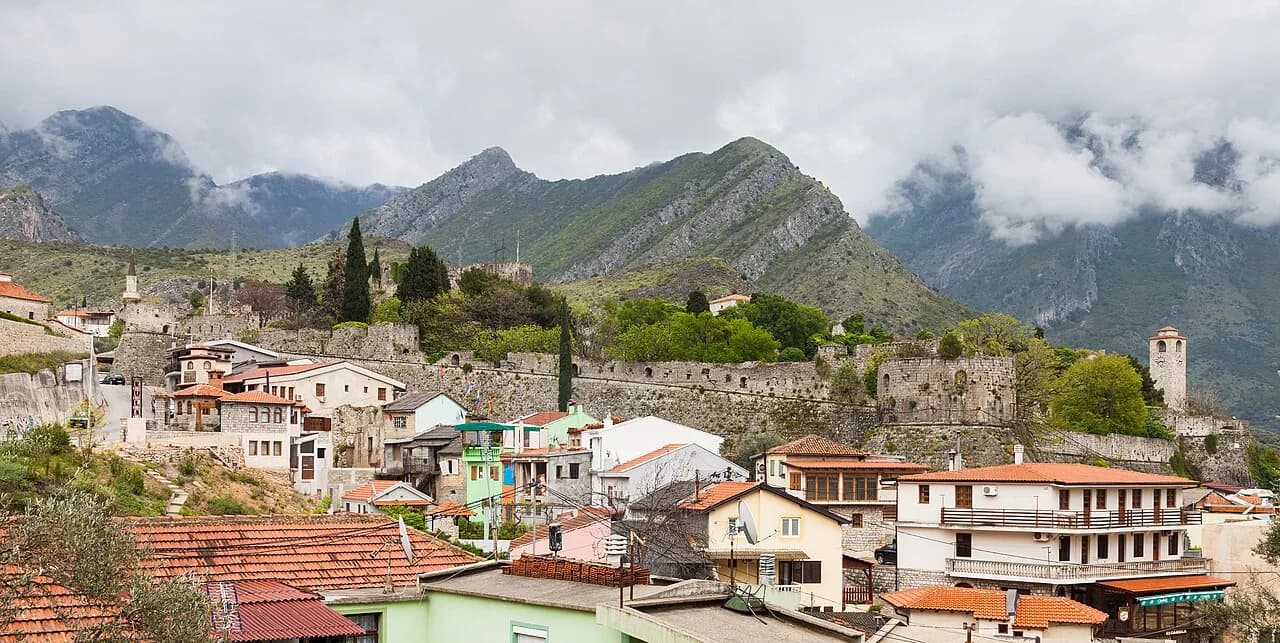
Modern Bar faces the Adriatic while Stari Bar operates as a monumental precinct below Rumija.
Travel between them to understand the full city.
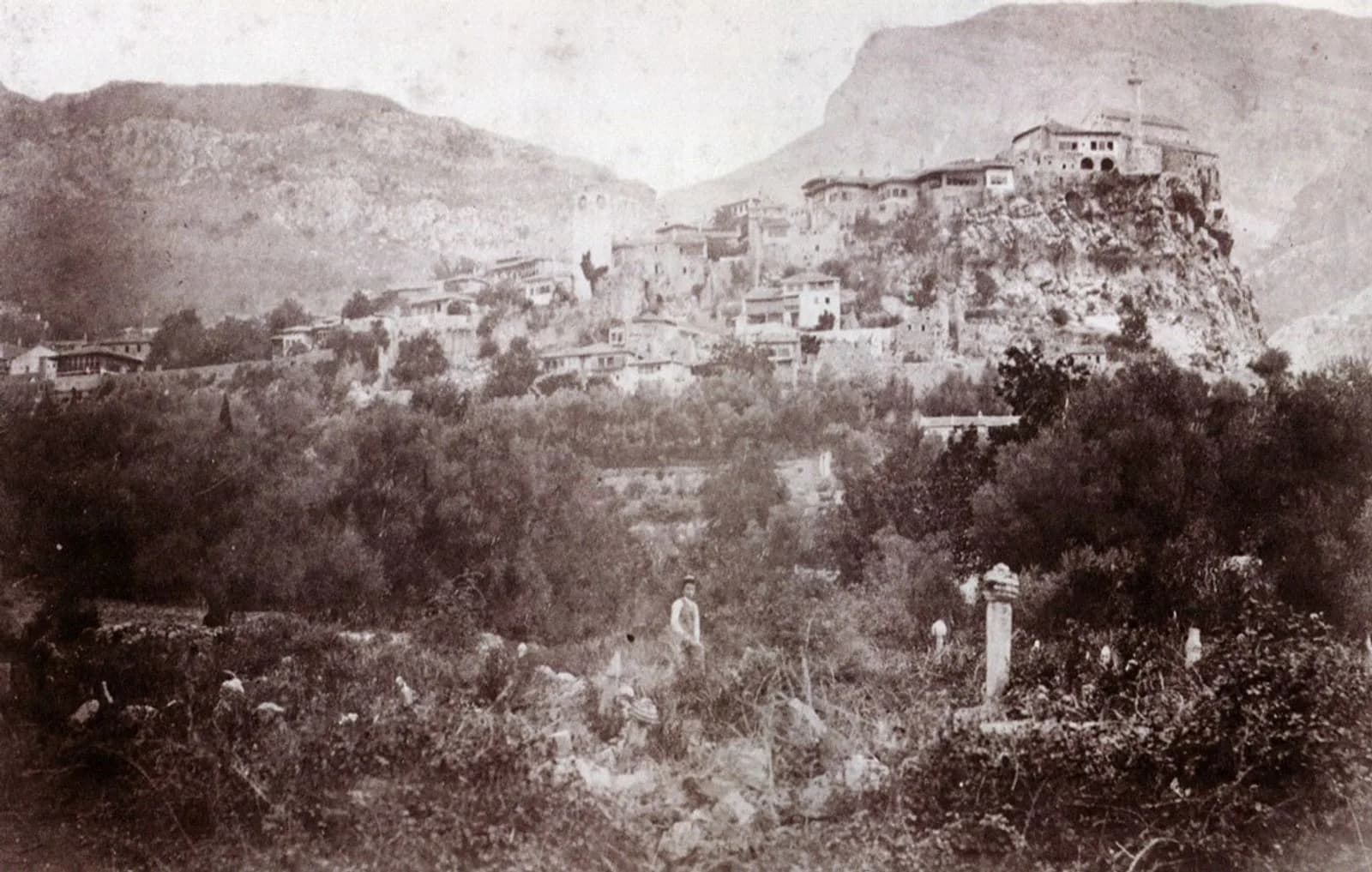
Then: A documented view of the town
Now: A modern city or landscape view from 2014
Then: Antivari grows behind defensible walls
Now: Port city and archaeological landscape coexist
Then: Read terrain, routes and inherited landmarks
Now: Notice new density, infrastructure and use
Dates and interpretations are tied to the archive and research sources below. Image limitations are disclosed in the comparison.