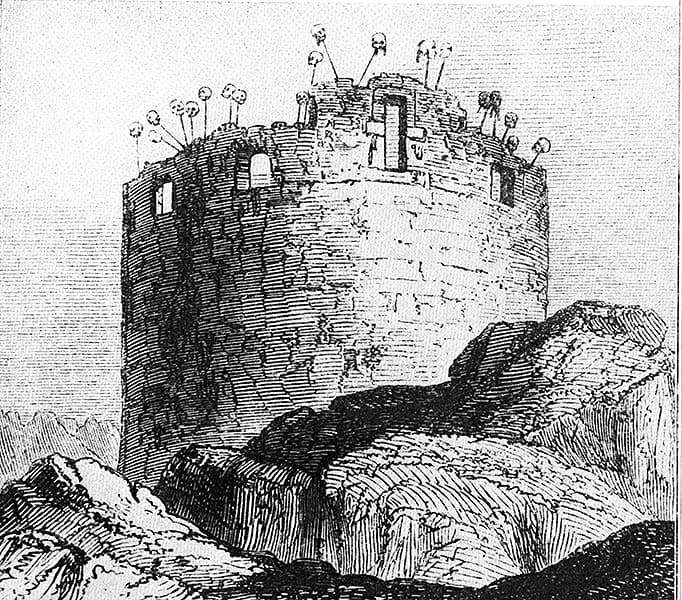
1482
Ivan Crnojević establishes a new capital
Under pressure on the Zeta plain, Ivan Crnojević moved his seat into the Cetinje field and built a court. The basin’s defensible geography became the setting for a new political centre.
The city begins with a strategic move into the mountains.
1494
Oktoih emerges from the Crnojević press
The Crnojević printing house produced Oktoih prvoglasnik, identified by Montenegro’s National Library as the first South Slavic Cyrillic book. Print culture entered the city’s identity almost at its beginning.
Cetinje’s authority was cultural as well as political.
1838
Njegoš builds the Biljarda
Petar II Petrović Njegoš built the Biljarda as a residence and centre of state administration. Its long stone volume remains a key scale marker in the historic core.
Look for institutions growing beside the monastery.
1878
Recognition brings a European capital
After Montenegro gained international recognition at the Congress of Berlin, legations and public buildings gave Cetinje the architectural language of a European diplomatic capital.
Embassies turned international politics into streets and gardens.
1890s
The archive catches a city between fields
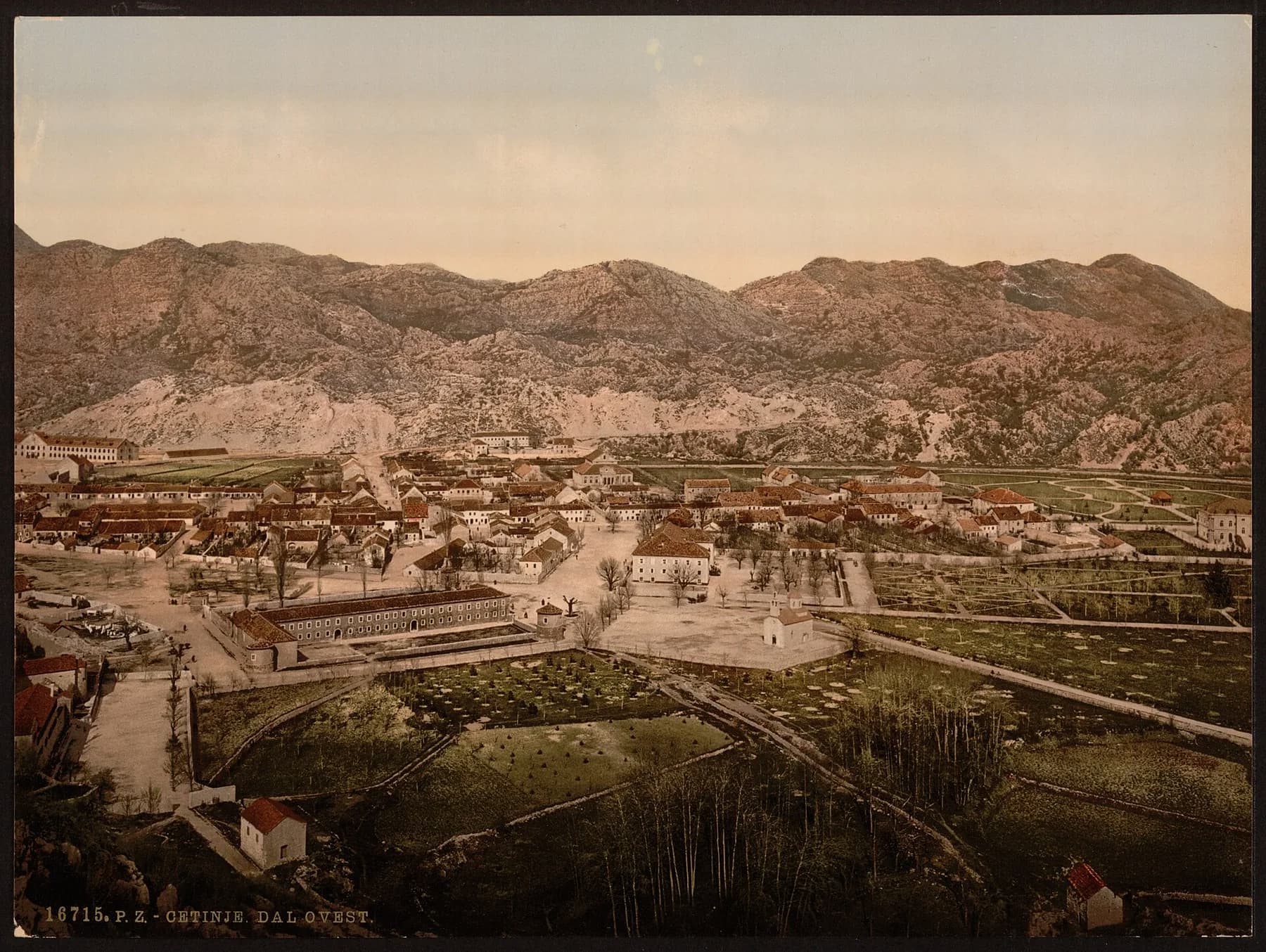
The photochrom shows formal gardens, institutional buildings and a compact centre still surrounded by cultivated land. The future city is present, but its edges remain visibly rural.
Follow the roads as they leave the built town and enter fields.
1910
Kingdom and Government House
Montenegro became a kingdom in 1910, the same year the monumental Government House was completed. Cetinje’s ceremonial role reached its architectural high point just before war transformed the state.
Public architecture enlarges while the skyline stays low.
1946
The administrative capital moves
Post-war Yugoslav Montenegro transferred its republican capital to Titograd, today’s Podgorica. Cetinje lost day-to-day administrative primacy but retained institutions, memory and symbolic status.
A capital can lose government and keep national meaning.
Now
A cultural capital inside a living town
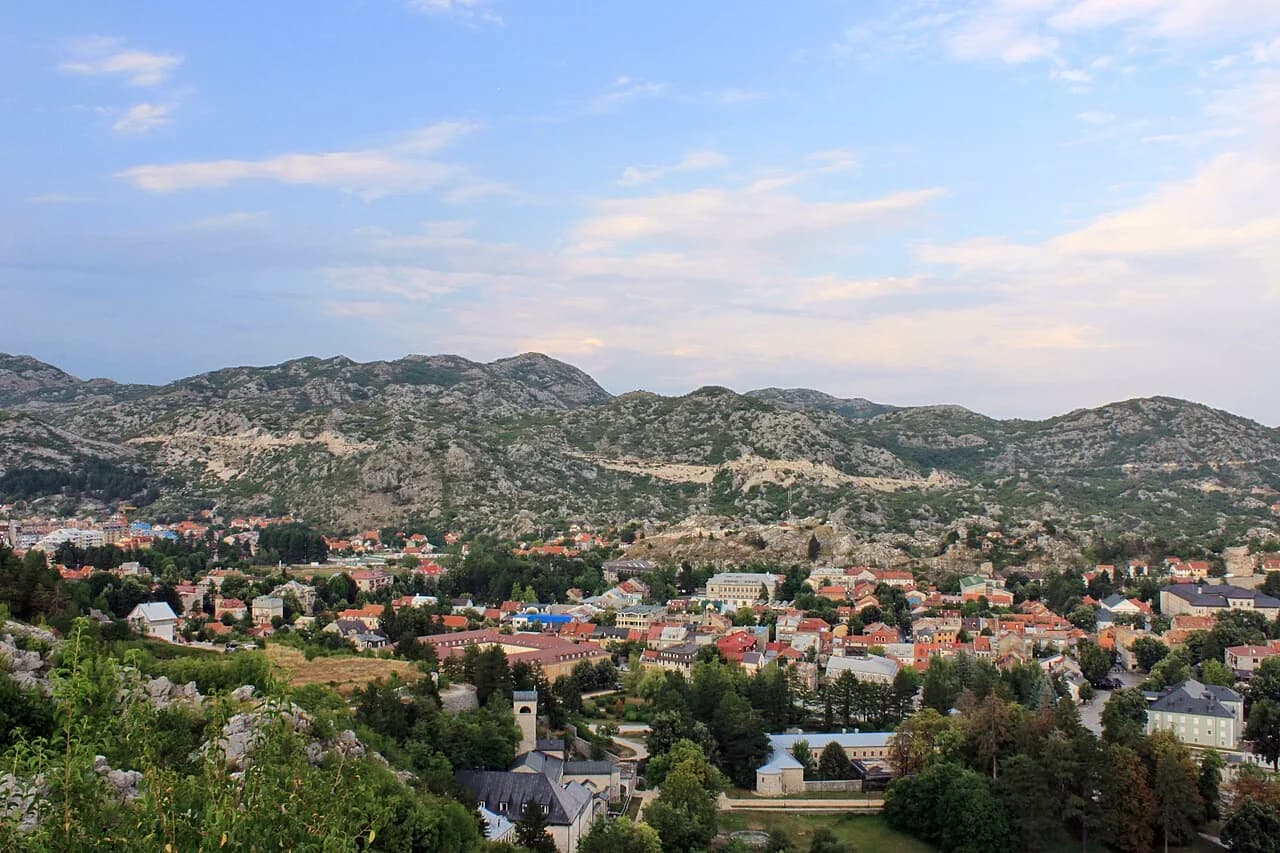
Museums, archives, the presidential residence and the monastery share the city with schools, cafés and neighbourhoods. Its value lies in that overlap—not in becoming a frozen royal set.
Read Cetinje as a functioning city with unusually dense memory.