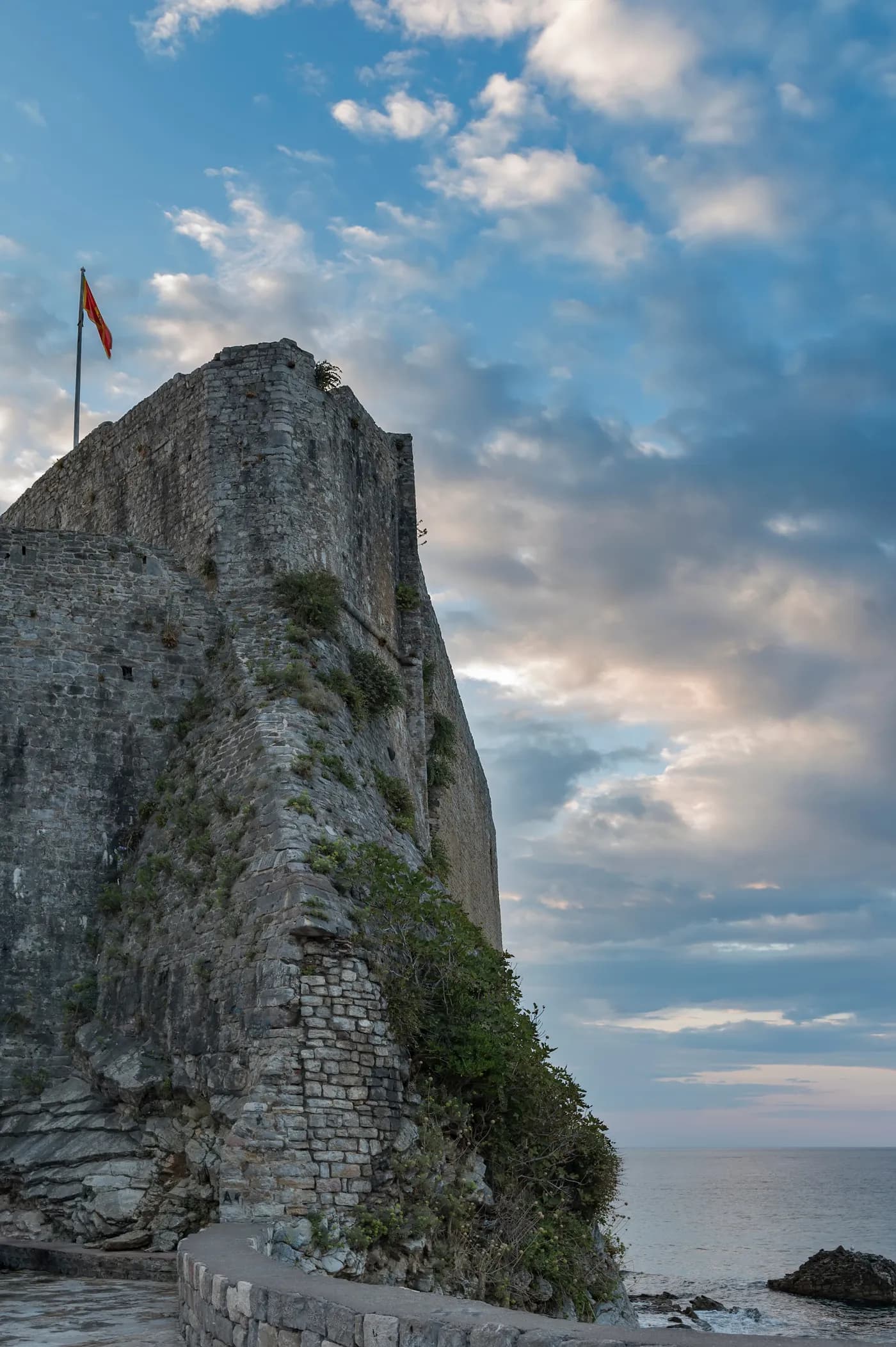
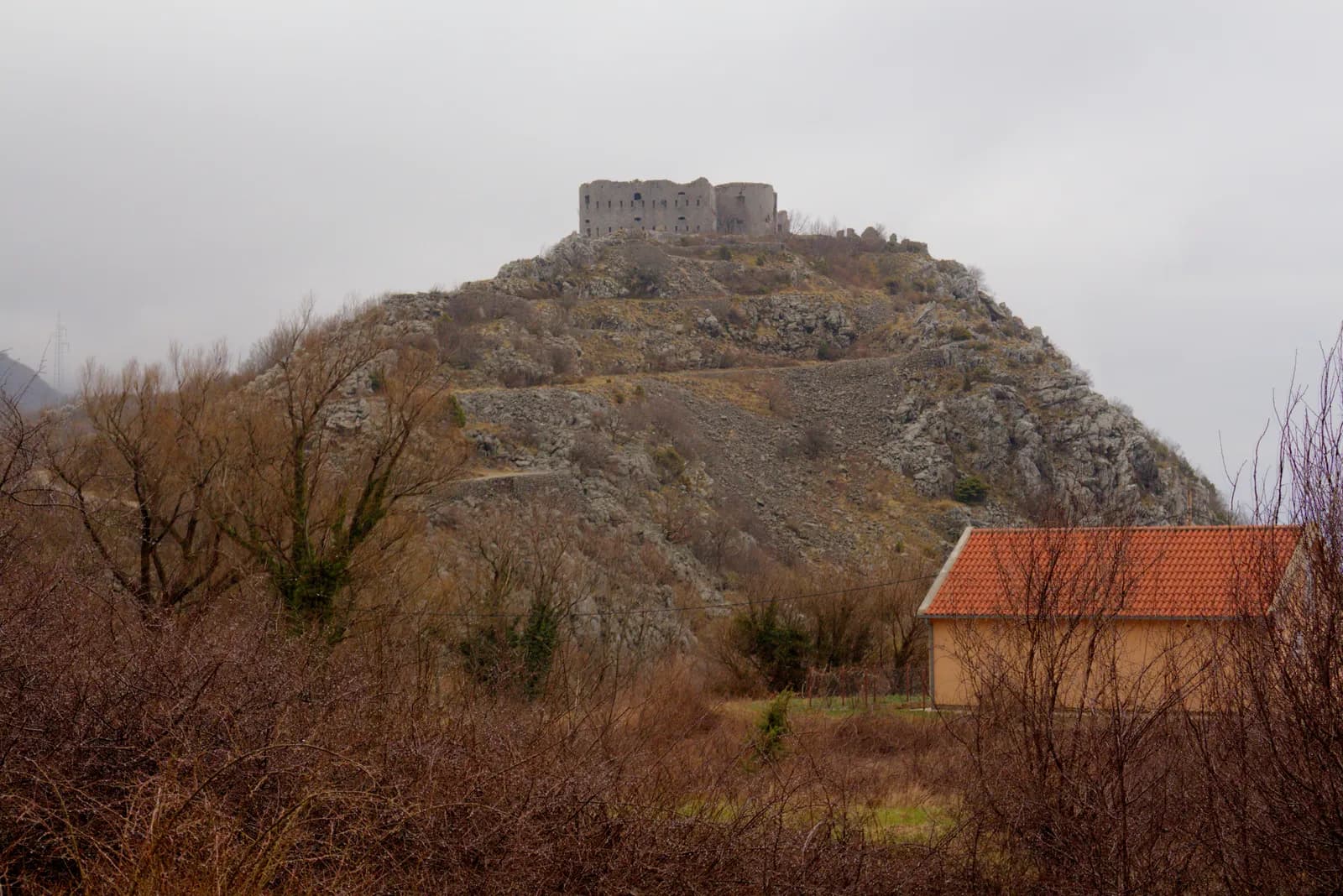
Faith across eras
Ancient burial evidence precedes a tightly packed Christian town. Catholic and Orthodox churches—including Santa Maria in Punta, St John and Holy Trinity—show changing rites inside the same walls.
Montenegro then and now · Budva Riviera
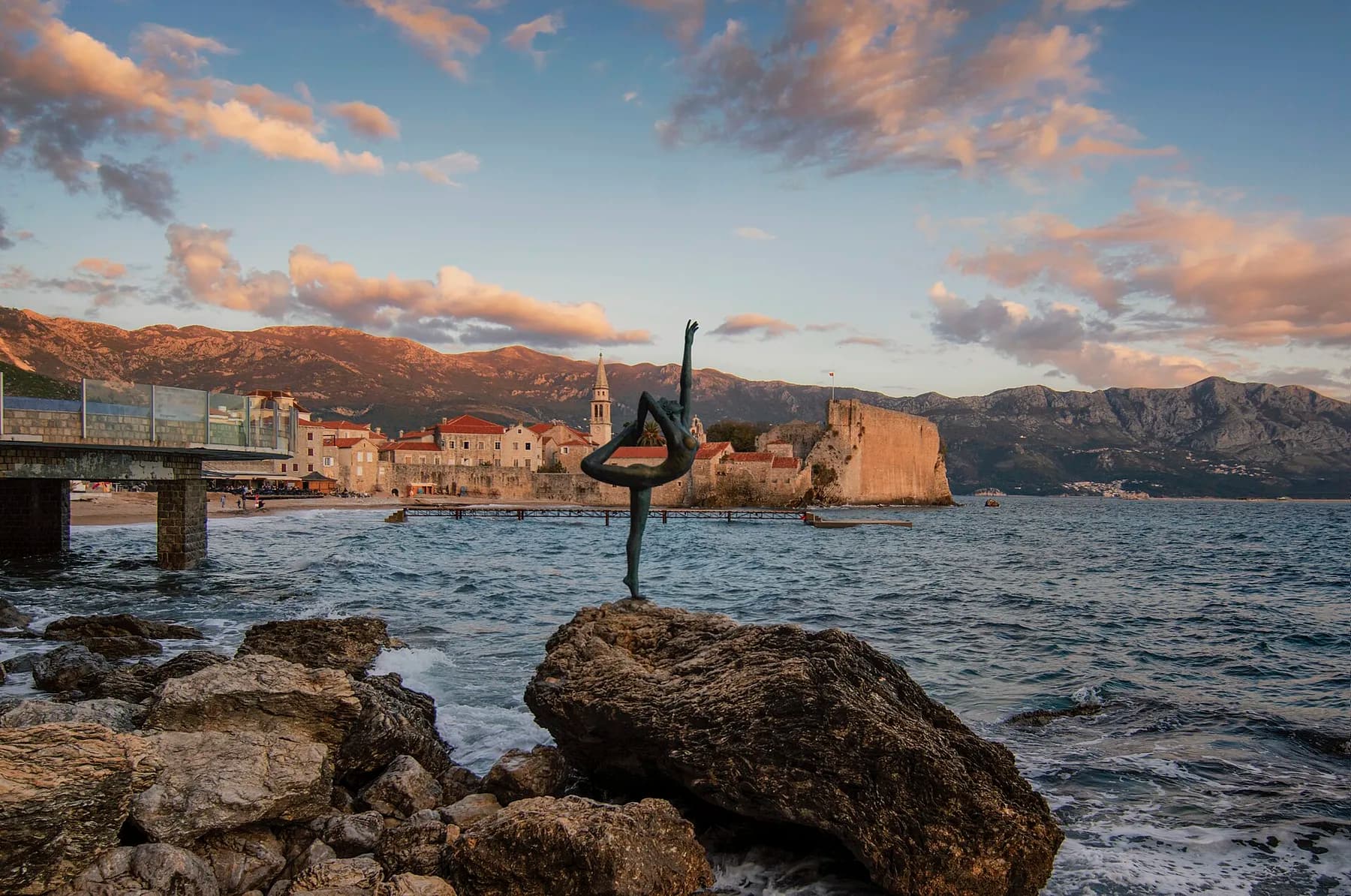
Budva’s stone enclosure survives almost intact in outline. Around it, beach infrastructure, sculpture, hotels and a much larger coastal city reveal how radically the peninsula’s role has changed.
Historical names: Budua
Go deeper
Budva’s stone enclosure survives almost intact in outline. Around it, beach infrastructure, sculpture, hotels and a much larger coastal city reveal how radically the peninsula’s role has changed.
8 eras · source-linked
Selected chapter · 5 of 8
The Old Town is still the town, not its heritage quarter.
Move through the city’s rule
Ancient burial evidence precedes a tightly packed Christian town. Catholic and Orthodox churches—including Santa Maria in Punta, St John and Holy Trinity—show changing rites inside the same walls.
The peninsula, walls and narrow lanes persisted through Venetian rule and two destructive earthquakes. Modern resort growth turned the former whole town into a compact historic core.
The Old Town is still the town, not its heritage quarter.
Historical timeline
Antiquity
Archaeological finds place Budva among the oldest urban settlements on the Adriatic. Greek and Roman material survives beneath a town more often read through its later Venetian walls.
The visible medieval city stands on a much older urban site.
840
Budva Tourism Organisation dates the Benedictine church of Santa Maria in Punta to 840 and notes that one of its walls also served the town’s seaward defence.
Sacred building and fortification occupy the same edge.
1442
Under Venetian rule, Budva joined a maritime network of fortified settlements. The compact lanes, stone façades and defensive outline still express that long coastal relationship.
Read the walls as part of an Adriatic system, not an isolated relic.
1667
The 1667 earthquake destroyed walls and towers. Their reconstruction on older foundations explains why Budva looks coherent while carrying fabric from different periods.
Continuity here includes substantial reconstruction.
1900
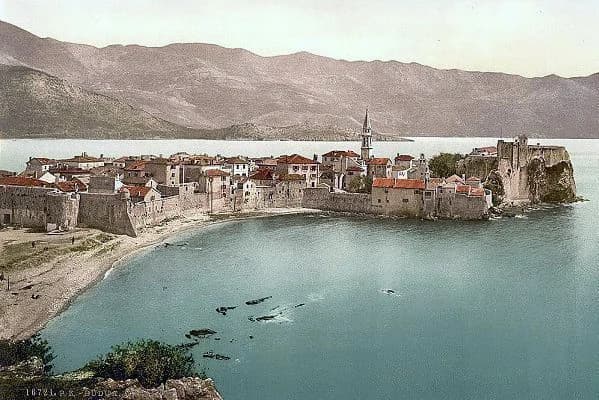
Franz Laforest’s postcard presents an enclosed settlement with a largely open shore. The fortifications dominate because modern Budva has not yet expanded around them.
The Old Town is still the town, not its heritage quarter.
1979
The April 1979 earthquake seriously damaged the Old Town. Budva Tourism Organisation records that the consequences were successfully repaired over the following decade.
The intact walls visitors see are also a conservation achievement.
1987
The Grad Teatar festival began in 1987, using squares, churches and the citadel for performance. Heritage became cultural infrastructure rather than scenery alone.
Public space carries the city’s modern cultural identity.
Now
Budva’s walls now sit inside Montenegro’s busiest resort landscape. The challenge is not visibility—the silhouette remains unmistakable—but balancing everyday life, culture and visitor pressure.
The contrast outside the walls is now part of the historic view.
Then: Walls meet an open, working shore
Now: Promenades, beaches and visitor infrastructure
Then: The peninsula is almost the whole town
Now: Old Town is the historic core of a resort city
Then: Citadel, walls and bell-tower rhythm
Now: The same legible stone silhouette
Dates and interpretations are tied to the archive and research sources below. Image limitations are disclosed in the comparison.