Faith across eras
Illyrian and Roman foundations gave way to medieval Christian institutions; Venetian Catholic and Ottoman Islamic layers followed. Mosques and churches now frame a strongly Albanian, maritime city.
Montenegro then and now · Ulcinj Riviera
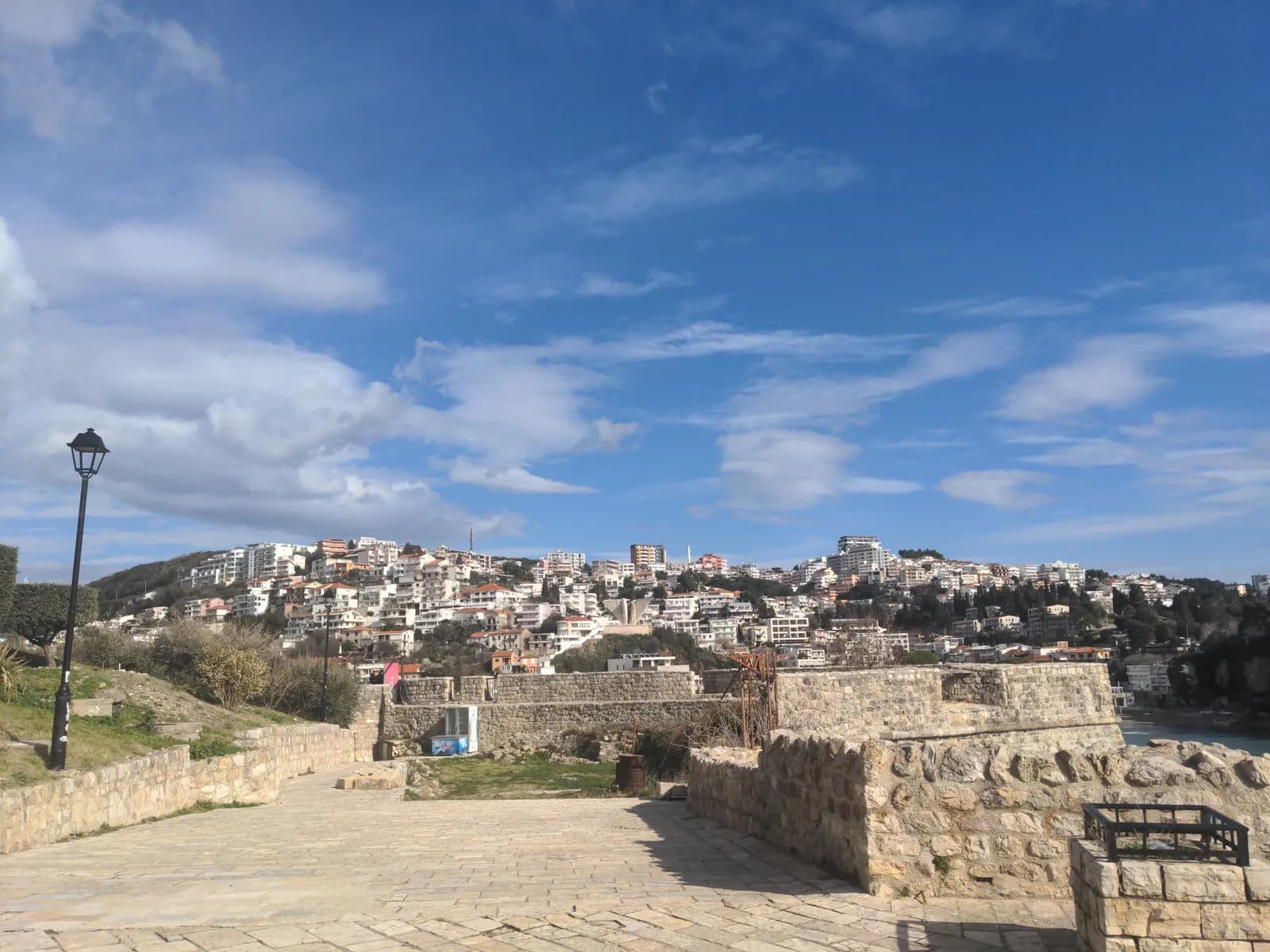
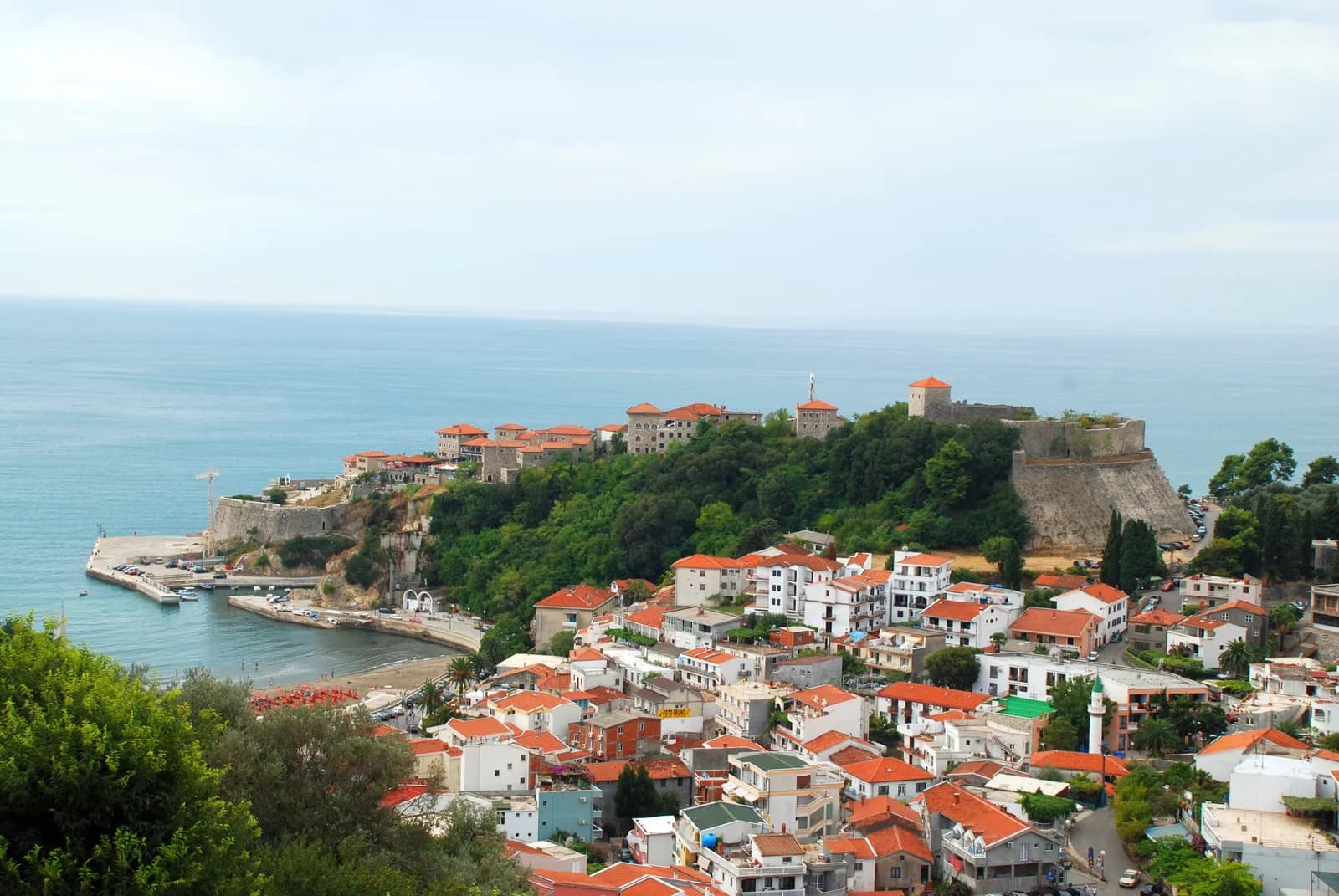
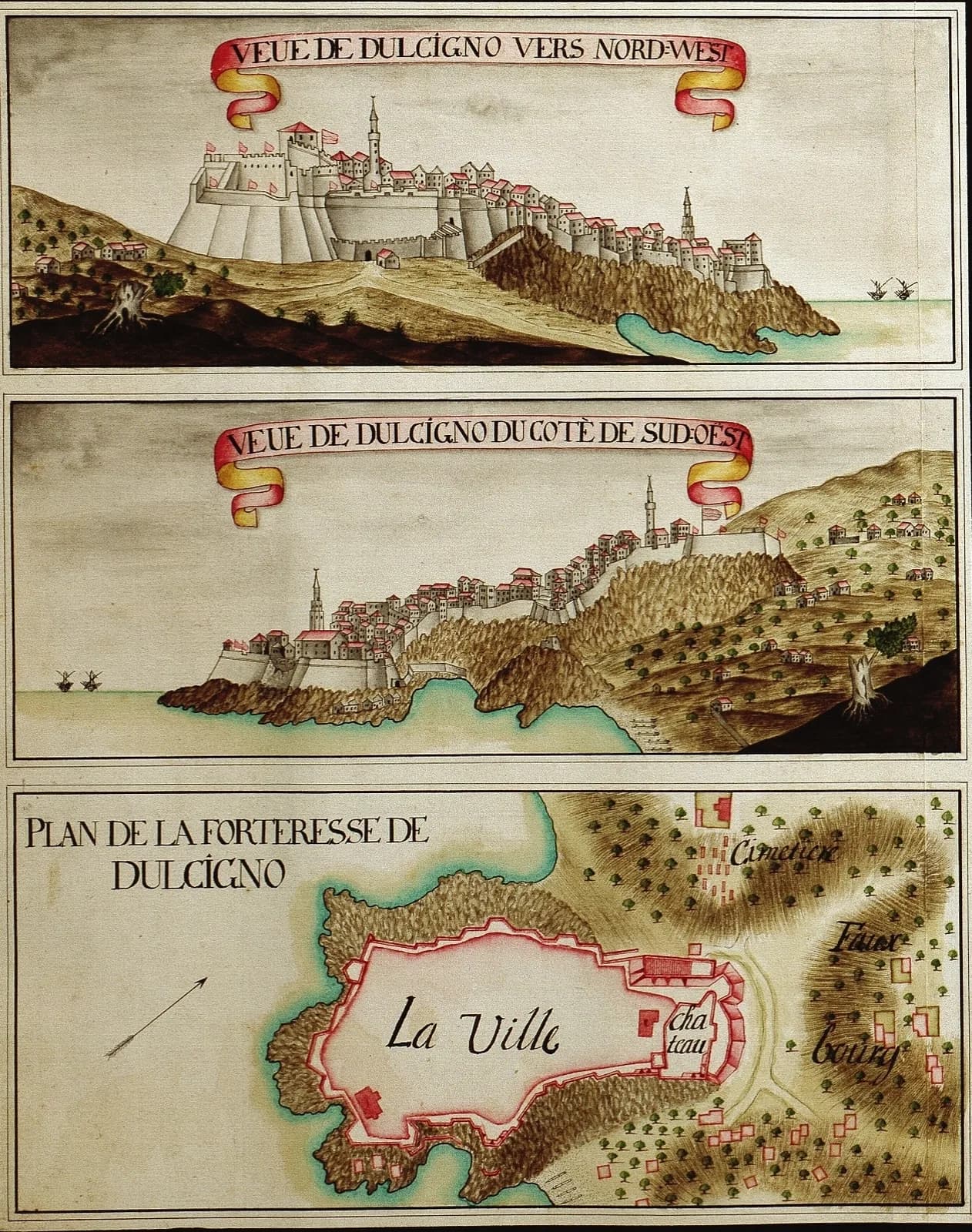
The 1718 siege plan treats Dulcigno as a military object. The modern photograph reveals how the same headland became a dense, inhabited coastal landmark.
Go deeper
The 1718 siege plan treats Dulcigno as a military object. The modern photograph reveals how the same headland became a dense, inhabited coastal landmark.
5 eras · source-linked
Selected chapter · 3 of 5
The image explains military geometry more than daily life.
Move through the city’s rule
Illyrian and Roman foundations gave way to medieval Christian institutions; Venetian Catholic and Ottoman Islamic layers followed. Mosques and churches now frame a strongly Albanian, maritime city.
Citadel, walls and steep lanes kept the old port’s outline while the town expanded toward beaches and the plain. Seaborne trade remains legible in towers, houses and waterfront orientation.
The image explains military geometry more than daily life.
Historical timeline
Antiquity
Archaeological and written traditions place an ancient settlement on this defensible coastal spur.
The headland is the city’s first piece of architecture.
1420–1571
Under Venice, the walled town participated in Adriatic trade and inherited the stone urban language still visible in its lanes.
Look for the maritime city inside later Ottoman layers.
1718
Bröckell’s drawing records the failed Venetian assault on Ottoman Dulcigno during the final phase of the Ottoman–Venetian war.
The image explains military geometry more than daily life.
1880
International pressure produced the town’s transfer to Montenegro, a major rupture for a community tied to Ottoman and Albanian worlds.
Political change did not erase cultural continuity.
Now
The old citadel remains the visual anchor while tourism and housing stretch toward Long Beach and the Bojana delta.
The modern city is larger than its famous headland.
Then: A documented view of the town
Now: A modern city or landscape view from 2010
Then: A fortified headland enters Mediterranean networks
Now: An Albanian-majority coastal city expands south
Then: Read terrain, routes and inherited landmarks
Now: Notice new density, infrastructure and use
Dates and interpretations are tied to the archive and research sources below. Image limitations are disclosed in the comparison.