Montenegro changed the central rule for Blue Cave visits in 2026: motor-powered vessels may no longer enter the cave area. A current booking should therefore explain where the powered boat stops, whether any onward movement occurs, what non-motor method is used, who supervises it, and what happens when conditions make that plan unsafe. An advert that still promises to drive a speedboat inside is not merely outdated; it conflicts with the Ministry of Maritime Affairs' published rule.
This guide is a purchase and decision framework. Our separate Blue Cave entry-rule audit examines the prohibition itself, while the Mirište and Blue Cave route guide focuses on that local approach. Here, the question is broader: how do you compare departures, tour formats, safety answers, swimming choices and cancellation terms without relying on old listings?
| Craft type | Cave area | What must still be explained |
|---|---|---|
| MOTOR VESSEL | does not enter | stop point must be explained |
| NON-MOTOR | only permitted craft type | method + supervision still matter |
| Any craft | Not guaranteed | The rule does not itself guarantee a transfer, swim, landing or entry in every sea state. |
Source: gov.me
The cave, location and light—without invented guarantees
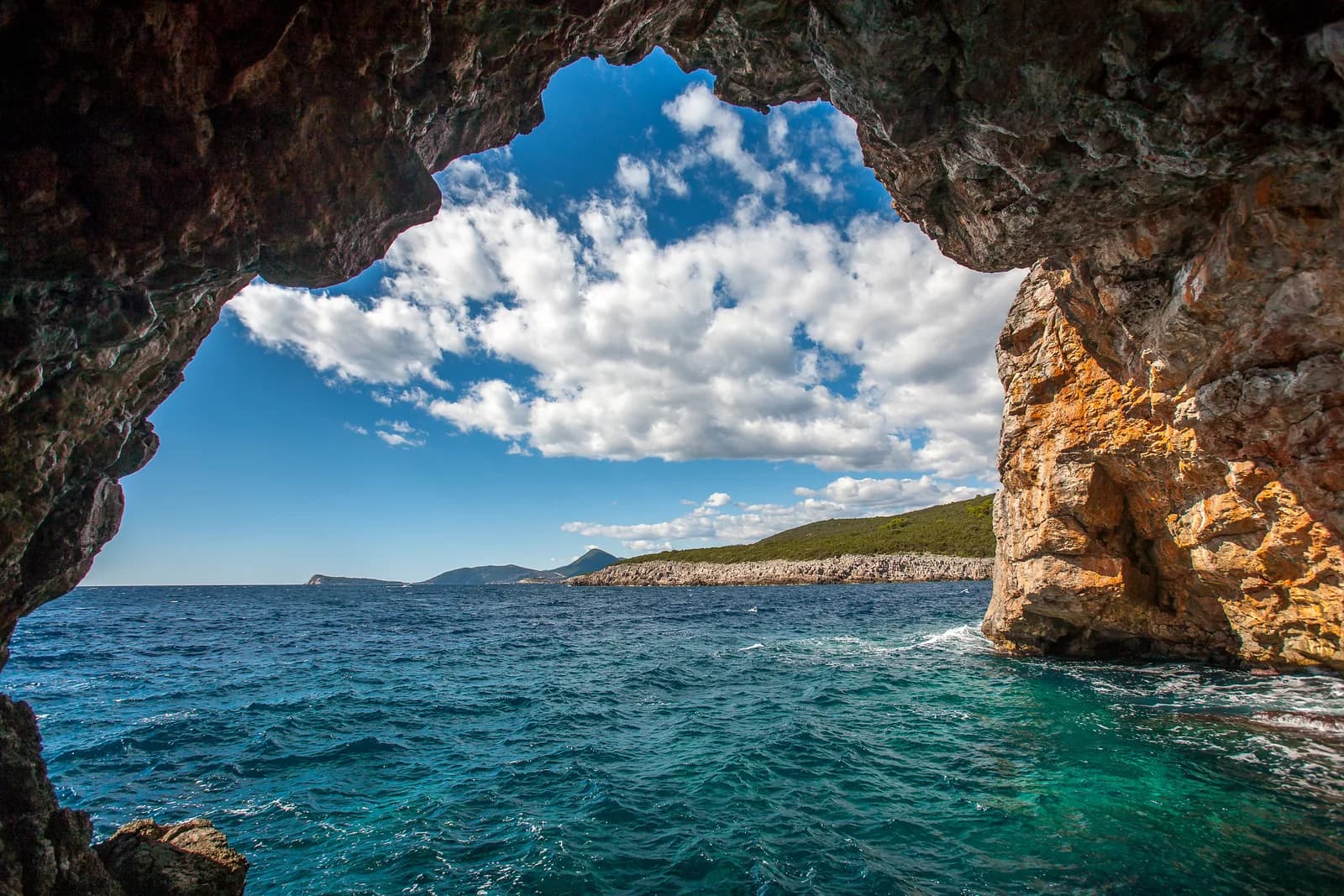
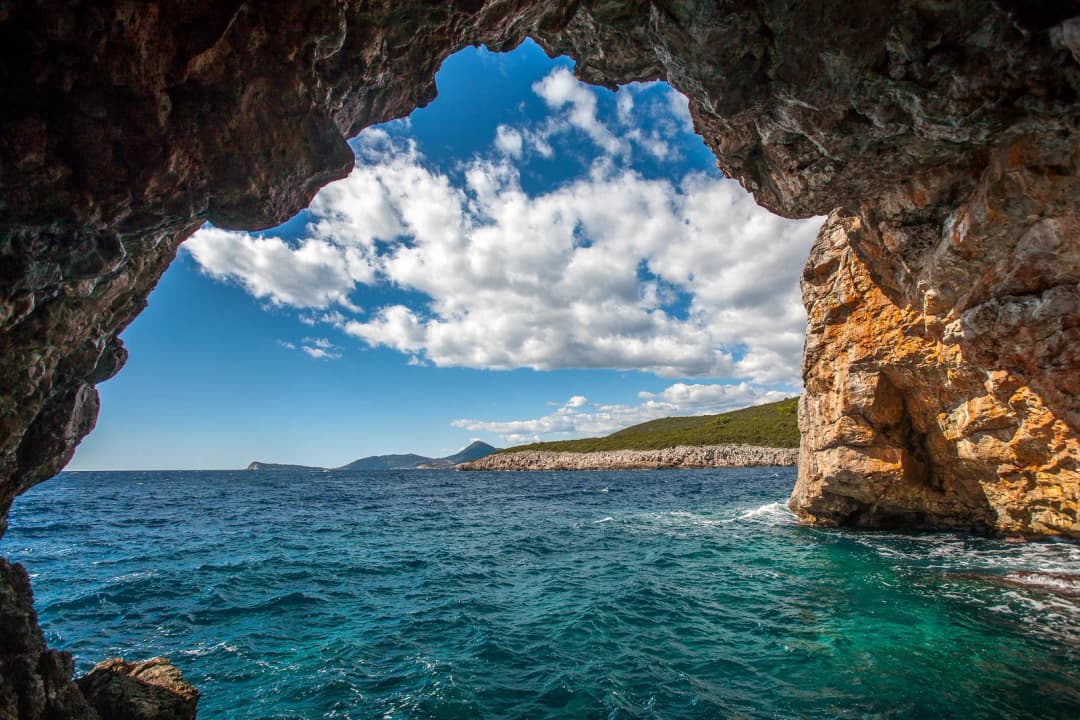
The national tourism organisation places Plava špilja on the Luštica Peninsula close to Herceg Novi. Its Luštica brochure describes the site as reachable only by boat and explains that, on clear days, sunlight refracts and illuminates the water. That is the sound core of the familiar “blue glow” story. The source does not publish a universal best hour, promise turquoise colour on every visit, or state that swimming will be possible.
Sun angle, cloud, surface texture, suspended material and the position from which you look can all change the appearance. A fixed claim such as “the cave is blue from 11:00 to 15:00” turns a variable optical effect into a timetable. Ask what time the operator normally reaches the area, but treat the answer as experience rather than a guarantee. Weather and the new transfer arrangement matter more than a marketing clock.
Location shapes the trip. Herceg Novi and the Luštica-side beaches sit closer to the bay entrance; Kotor lies deep inside the bay; Budva lies on a different open-coast approach. Distance alone does not establish duration because vessel type, legal speed, pickup sequence, stops, traffic, sea state and the motorboat exclusion all intervene. Use our Rose harbour heritage guide and Rose access guide to understand the bay-mouth side without converting them into a boat timetable.
Compare departure products, not unsupported minutes
| Starting area | What you are mainly buying | Main exposure | Confirm before payment |
|---|---|---|---|
| Herceg Novi | Shorter bay-mouth positioning | Open-sea segment and transfer method | Quay, total duration, exact cave procedure |
| Žanjice/Mirište side | Local coastal excursion | Getting to beach departure and return reliability | Road/boat connection, last return, lawful entry method |
| Kotor/Tivat | Longer bay circuit with several sights | More transit, stops and schedule dependencies | Stop list, shore entries, cave priority, late return |
| Budva coast | Open-coast excursion or road-plus-boat plan | Longer exposed run or road transfer | Actual departure, transport responsibility, fallback |
A short product is not automatically better. It may devote a larger share of the outing to the cave area, but it may offer fewer facilities, less shade or a more complicated land connection. A longer Kotor product may make sense when the passenger values the bay journey and verified stops independently of the cave. It is poor value only when sold as a guaranteed cave-entry experience that the sea or rule cannot deliver.
Request a dated itinerary containing the departure point, check-in time, expected return range, named stops, whether passengers go ashore, admission charges, food and drink, toilet and shade availability, maximum passenger count, minimum age, mobility requirements and the precise Blue Cave procedure. For Kotor planning, the day-trips guide helps test whether the wider day still works if the boat returns late.
| Component | What to confirm |
|---|---|
| ROUTE | start + stops |
| CAVE | 2026 method |
| BOAT | capacity + kit |
| FALLBACK | refund + reroute |
| Price | A low price is not comparable until all four fields are known. |
Source: gov.me
The twelve-question operator check
- What is the legal operator name? A marketplace profile or dock salesperson may be an intermediary.
- What vessel will carry us? Ask for type, registration details and maximum passenger number, without pretending you can perform an inspection yourself.
- Who is the skipper? Ask who operates the trip and what passenger briefing occurs.
- Where does the powered vessel stop? The answer must respect the 2026 exclusion.
- Does anyone proceed into the area? If yes, ask by what non-motor craft, with what capacity, equipment and supervision.
- Is swimming planned? Separate optional from required; refusal should not strand or pressure a passenger.
- What cancels the cave portion? Ask who decides and whether wind, wave, visibility, traffic or enforcement can trigger it.
- What happens instead? Obtain the alternate route, partial refund, credit or full cancellation rule.
- Are lifejackets available in usable sizes? Include children and anyone needing additional buoyancy.
- What accessibility support exists? Request boarding step, handhold, seating, shade, spray and toilet details.
- What is included? Establish admissions, transfers, fuel surcharges, food and taxes.
- Who responds in an emergency? The skipper leads onboard response; Montenegro's maritime SAR Call Centre is 129.
These questions do not accuse an operator of noncompliance. They distinguish a verifiable service from a vague promise. Ministry inspections in July 2026 found offences involving distance from shore and swimmers, speed and vessel documentation. Those results do not identify every tour as unsafe; they make documentation, operating behaviour and swimmer separation consequential purchasing criteria.
Weather: separate “tour runs” from “cave works”
A departure can proceed while the cave portion is omitted. Sheltered-bay conditions can also differ from the exposed Luštica coast. Ask whether the operator makes separate decisions for departure, open-sea transit, stopping outside the restricted area, non-motor movement and swimming. “Sunny” answers only the light question; it says little about wind, wave, visibility, temperature or safe transfer.
Do not demand a numeric wave cutoff unless the operator can explain how it applies to the actual vessel and operation. A threshold copied from another boat can create false reassurance. Better questions are: which official forecast and warning do you monitor, when is the final decision made, who has authority to cancel, and how will customers be contacted? Preserve a flexible day rather than forcing a marginal last-afternoon departure.
| Gate | Decision point |
|---|---|
| 1 BAY | departure |
| 2 OPEN SEA | outer coast |
| 3 CAVE | lawful method |
| 4 SWIM | individual choice |
| Rule | Passing an earlier gate does not force the next one. |
Source: gov.me
Swimming is a separate consent decision
The tourism pages invite swimming, but promotional language does not establish that it is available or appropriate today. Under the motorboat rule, ask exactly where a swimmer enters and exits, how the skipper maintains visual contact, whether propulsion is stopped nearby, what flotation is available, how other craft are separated, and how a tired or injured person is recovered. Never assume swimming is the only way to receive the tour sold.
WHO's drowning-prevention work treats safer water transport, swimming skill, water-safety education and rescue readiness as connected but distinct protections. Pool confidence does not reproduce open-sea swell, cool water, glare, confined rock, boat traffic or an awkward ladder. Children and non-swimmers need an explicit plan; alcohol, panic, fatigue and medical conditions can change risk. A passenger may decline without debating their reason.
Morsko dobro's June 2026 results found sampled public bathing sites around Montenegro excellent, good or satisfactory, including 22 sites in Herceg Novi municipality. That is useful regional monitoring, but it is not a Blue Cave sample and cannot guarantee real-time cave water. Avoid swallowing water, cover wounds, and skip swimming after a pollution notice or if the water visibly or odourously seems wrong.
| Check | Requirement |
|---|---|
| LEGAL | permitted |
| ABLE | today |
| CLEAR | water + traffic |
| EXIT | assisted |
| RESCUE | ready |
| If no | A no at any point means stay aboard or use the documented alternative. |
Source: who.int, morskodobro.me
Boarding, children and accessibility
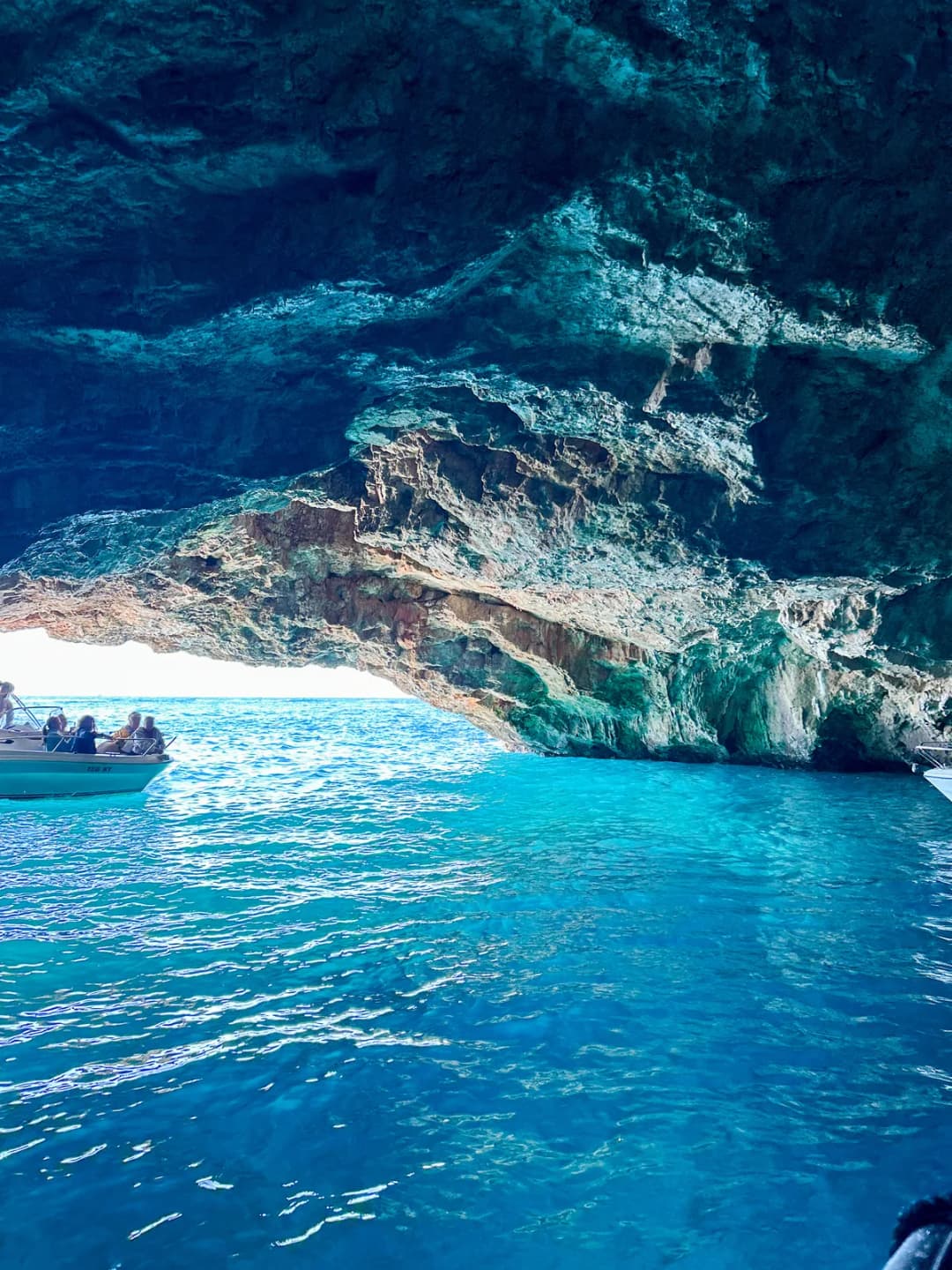
Many injuries happen during boarding and disembarkation, when boat and quay move independently. Ask for photographs or measurements of the actual step, boarding side, rail or handhold, seat and aisle. A person who can walk around town may still be unable to cross a large moving gap or climb a stern ladder. “Accessible” is too vague unless the operator describes assistance and safe limits.
For children, confirm the operator's minimum age, child lifejacket sizes, seating arrangement, sun protection, adult-to-child responsibility and whether a non-motor transfer requires changing craft. An adult holding a child is not a substitute for fitted safety equipment. For pregnancy, recent surgery, back or neck problems, seizures, heart or respiratory conditions, reduced sensation or mobility, ask a clinician about boat motion and swimming, then give the operator enough information to answer honestly.
Bring sun protection that stays secure, drinking water, a dry layer, non-slip footwear and a waterproof method for essential medication. Do not rely on “take cash” as universal advice: establish accepted payment, currency, deposit, receipt and refund method with the seller. Leave valuables ashore when possible; a waterproof phone pouch should not be tied around the neck while swimming.
Stops sold with the cave need their own verification
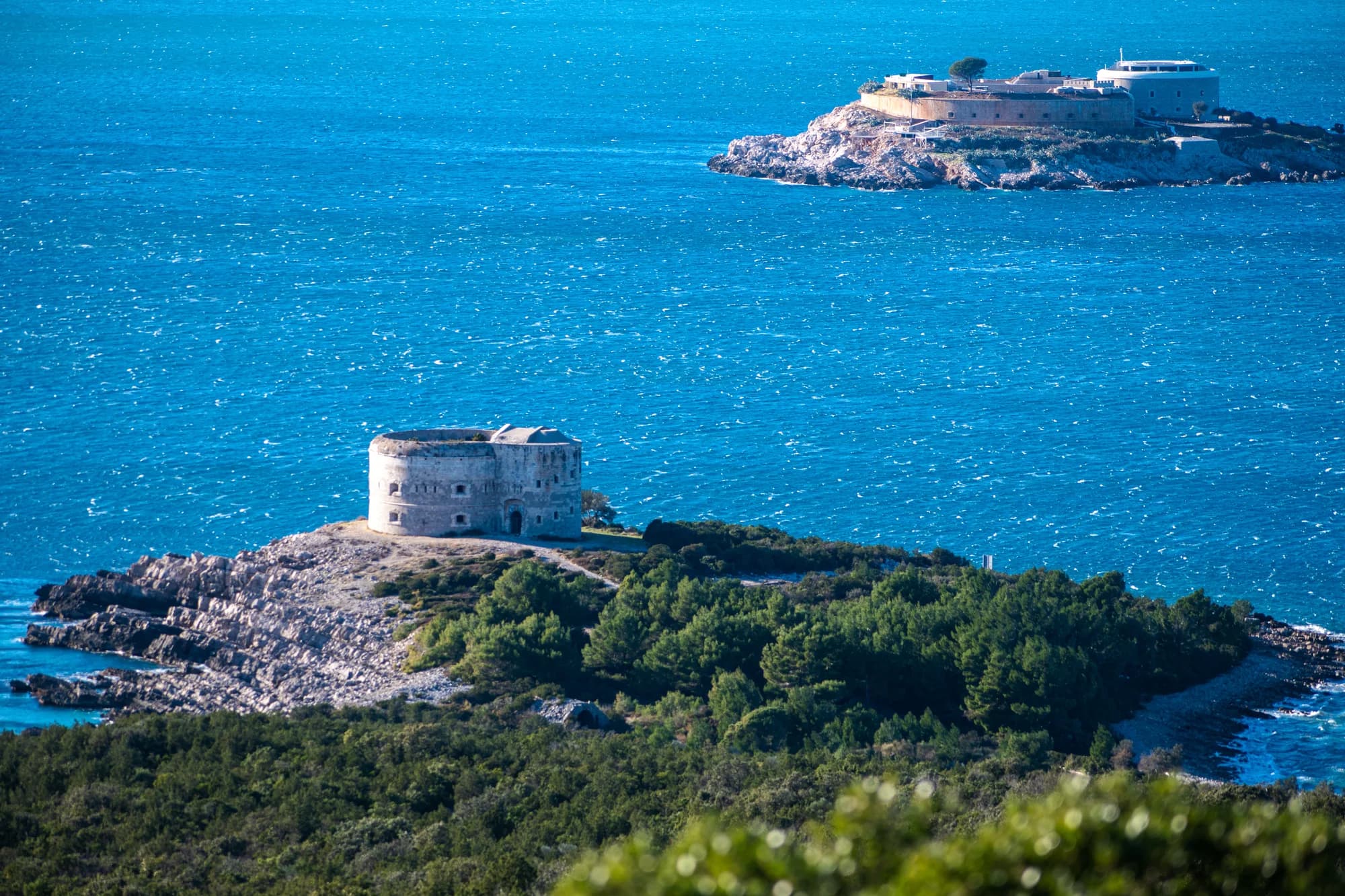
Listings often combine Mamula, former submarine tunnels, Rose, Žanjice, Mirište or an island church. A view from the water, entry by boat and a shore visit are three different products. Ask whether passengers land, who authorises access, how long is allocated, whether admission is included and what replaces a closed stop. Do not infer entry into a tunnel or heritage property from a photograph.
For a shore-based Luštica day, the Dobreč cove guide, Njivice guide and Adriatic beaches overview help compare alternatives. They do not prove same-day transport. If Blue Cave is cancelled, a verified beach or village plan is often better than pressuring a skipper to attempt the exposed coast.
Cancellation and consumer record
Before paying, capture the date, seller, operator, route, vessel, cave method, passenger total, inclusions, total price, deposit, balance, cancellation deadline, weather decision, alternate itinerary and refund mechanism. Ask what happens if the tour operates but the cave portion does not; this is different from total cancellation. A credit may be useless on a final day, while a cash refund may take time.
Read “subject to weather” together with the remedy. Who decides, at what time, using what notification channel? Can the customer reject a materially changed route? Are third-party booking fees refundable? If a salesperson promises something absent from the written terms, ask them to add it. Avoid chargeback threats at the dock; first preserve evidence and use the platform or provider process.
| Rank | Source of claim |
|---|---|
| 1 | CURRENT RULE + OFFICIAL ENFORCEMENT |
| 2 | WRITTEN OPERATOR CONTRACT |
| 3 | DATED SALES LISTING |
| 4 | REVIEW / ANECDOTE |
Source: gov.me
Emergency behaviour and numbers
Attend the briefing and know where the lifejacket is, how it fastens and what the skipper expects if someone falls overboard. Keep clear of controls and do not distract the skipper during manoeuvres. Report unsafe separation from swimmers, dangerous speed or distress immediately to the crew. If the skipper directs evacuation or return, the missed attraction is secondary.
Montenegro's maritime Search and Rescue service publishes 129. Save it before departure. In an emergency, alert the skipper, state that it is a marine incident, give the vessel identity if known, location or last known point, number of people, injury or person-overboard details and a callback number. Do not enter the water for an improvised rescue unless trained and directed; an additional casualty makes response harder.
Practical decision-making from booking to return
At booking, decide what would still make the outing worthwhile if nobody enters the cave. This single test prevents most disappointment. A Kotor circuit may still deliver a long bay journey and confirmed stops; a short Herceg Novi product may have little purpose without the cave area. Neither answer is wrong. It changes the cancellation term you should demand. Write down one “must have,” two acceptable alternatives and one condition that means you will not go.
Next, match the product to the least adaptable passenger. A fast open boat can be attractive to a confident adult and unsuitable for a small child, a passenger with motion sensitivity or someone who cannot transfer between moving craft. Do not average those needs across a group. Ask whether the person can remain on the powered vessel while others use a lawful non-motor option, and whether doing so preserves supervision, shade and a safe return.
Forty-eight hours before
Reopen the written terms and confirm that the operator has not changed the meeting point, time, vessel or route. Ask for the latest cave procedure in one complete sentence: “Our powered boat stops at ___; passengers then ___; if that is unsafe, we ___.” A clear answer exposes whether the seller understands the 2026 restriction. Check your own transport to the quay and the margin after the advertised return; do not place a flight, border transfer or non-refundable dinner immediately behind a weather-dependent sea trip.
Review medication, sun exposure, food and motion-sickness planning early enough to follow professional advice. Do not try a sedating medicine for the first time at the dock. Charge the phone, store the operator and 129, and share the booking with someone ashore. Pack a dry layer even in summer because spray and wind can cool a passenger who is sitting still. Prepare a small bag rather than loose objects that can move around the deck.
On the morning
Look for an operator message, but absence of cancellation is not proof of good conditions. Ask whether the planned cave-area and swimming decisions remain provisional. Weather can change between departure and arrival. Eat and hydrate appropriately, arrive before the check-in deadline, and find the named operator rather than following an unrelated salesperson who says the boats are interchangeable.
At the quay, compare the actual vessel with the description. If the boat, passenger number or procedure materially differs, pause before boarding. Locate lifejackets, including the promised child size, and listen for the briefing. Ask where to sit if motion, spray or mobility is a concern. Keep hands clear when the boat approaches a quay or another craft; passengers should not improvise fendering or jump a gap.
At the cave area
The skipper's decision can become more conservative than the sales plan. Accept that change. Observe whether the powered vessel remains outside the prohibited area and whether other traffic makes the non-motor option or swim unsuitable. A passenger who previously agreed to swim can decline after seeing the conditions. Do not enter because the group is waiting or because the cave is the headline attraction.
If a transfer is offered, wait for a direct instruction, keep three points of contact where possible, and pass bags separately. Establish how you return before leaving the primary boat. During swimming, remain within the supervised area and avoid cave walls, other craft and propulsion. If you lose sight of a companion, tell the crew immediately; the 2026 administration notice explicitly says a person disappearing from view should be reported without delay.
After a changed or cancelled trip
Separate safety from the commercial remedy. A skipper may correctly cancel the cave portion while the customer may still be entitled to whatever the written contract promises. Record the actual route, announcement and return time without obstructing crew. Contact the seller calmly with the booking evidence. A review should distinguish objective facts—motorboat location, whether a transfer occurred, replacement stops—from conclusions about legality that the reviewer is not qualified to determine.
Never punish a safety cancellation by praising an operator who “took the risk anyway.” That incentive is precisely what a regulated high-traffic site does not need. Reward clear communication, fitted equipment, passenger consent and a sensible fallback. Those qualities are more useful to the next traveller than an unverified claim about minutes inside or the exact shade of blue.
Photography should remain secondary to balance and awareness. Secure the device before boarding, never stand or change seats without the skipper's permission, and do not ask a crew member to approach rock or traffic for a cleaner frame. Avoid publishing faces without consent or geotagging a swimmer in a way that suggests an unsafe act is normal. A darker photograph is not proof that the operator arrived at the “wrong” time, just as a vivid image is not proof that the same light and water conditions will recur. Describe the date, cloud and viewing position if those details matter to a review.
| Moment | What to do |
|---|---|
| BOOK | terms saved |
| RECHECK | 48 hours |
| BOARD | boat + briefing |
| REASSESS | cave + swim |
| RECORD | facts + remedy |
| Right to refuse | A yes at booking never removes the right to say no when the facts change. |
Source: gov.me, who.int
Frequently asked questions
Can a speedboat enter Blue Cave in 2026?
No. The Ministry says motor-powered vessels are prohibited from entering the Blue Cave area. Ask where the speedboat stops and how any lawful non-motor continuation works.
Does the ban mean Blue Cave tours are cancelled?
No. It changes the operating model. Tours may approach by powered boat, but the operator must explain a compliant cave-area procedure and its weather fallback.
What is the guaranteed best time for blue light?
There is no official guaranteed hour. National tourism material supports clear-day sunlight as the cause. Ask the expected arrival time while retaining weather and optics uncertainty.
Is Herceg Novi always the best departure?
It is closer to the bay mouth, but “best” depends on meeting point, total route, comfort, stops, transfer method and contract. A longer bay circuit may be the intended experience.
Can I assume swimming inside?
No. Ask whether it is legal and offered that day, where entry and exit occur, what supervision and flotation exist, and whether declining changes the tour.
Are public bathing-water results proof the cave is clean?
No. Morsko dobro monitors named public bathing sites. Those regional results are not a real-time sample of the water inside the cave.
What if the advert still shows a motorboat inside?
Treat it as outdated until the operator gives a written 2026 procedure. Do not accept “everyone still does it” as compliance evidence; June enforcement included sanctions at Blue Cave.
What number handles emergencies at sea?
Montenegro's maritime SAR Call Centre is 129. Follow the skipper's instructions and provide location, vessel and casualty information.
Should first-time visitors make this their only flexible day?
No. Keep a weather alternative. The first-time visitor guide helps protect the rest of the itinerary from one weather-dependent activity.
How does this compare with another island outing?
Use the Sveti Nikola responsible day-trip guide for a separate Budva option; do not assume its access or sea conditions match Luštica.