Montenegro is a wreck-diving country. The Adriatic here is clear, warm from late spring to October, and the mouth of the Bay of Kotor has been a contested naval position for a very long time — which means the seabed off Herceg Novi holds an unusual concentration of sunken ships within recreational reach. Add sea caves, the Yugoslav navy's submarine tunnels and near-guaranteed 20–30 m visibility in summer, and it makes a strong case for a country better known for its beaches.
What the diving is actually like
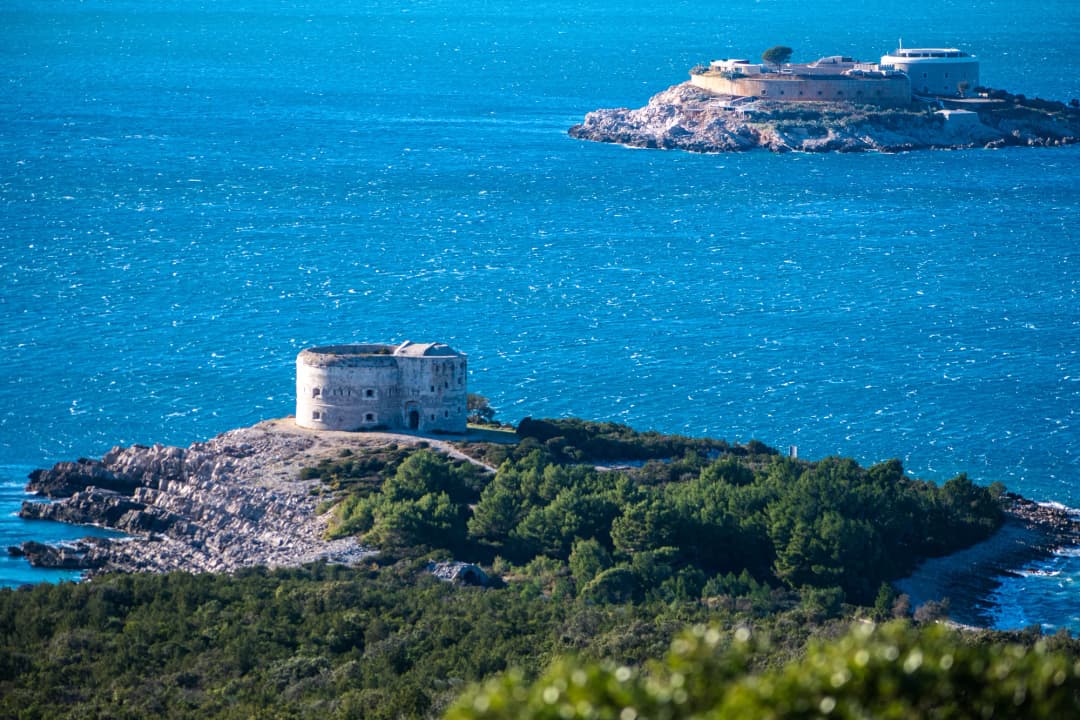
Visibility in summer runs up to 30 metres around Herceg Novi, Budva and Bar, and stays good through much of the year. The water is warm enough for a 5 mm wetsuit from June to September and cold enough for a drysuit either side of that. There is very little current at most sites, no meaningful tide, and no dangerous marine life beyond weever fish in the sand and sea urchins on the rocks.
The season runs May to October, with the best combination of warmth and visibility in June and September. Most sites are reached by boat, typically 30–45 minutes out of Herceg Novi or Tivat.
| Site / base | Type | Detail |
|---|---|---|
| Patrol | Wreck | First wreck, recreational depth |
| Tihany (1917) | Wreck | 34–42 m, advanced only |
| Mamula | Caves & walls | Mamula walls |
| Rose | Caves & walls | Walls, submarine tunnels |
| Luštica | Caves & walls | Caves & swim-throughs |
| Žanjice · Mirišta | Snorkelling | Snorkelling |
| Bigovo | Snorkelling | Bigovo coves |
| Herceg Novi | Dive base | Best base for wrecks |
| Tivat | Dive base | Bay + outer Luštica |
| Budva | Dive base | Reefs, try-dives |
| Bar | Dive base | Quiet southern sites |
| Bay of Kotor | Orientation | ← Bay of Kotor inland |
Schematic positions; boats reach most sites in 30–45 min from Herceg Novi or Tivat. The Cetinje wreck — a war grave — is deliberately unmarked.
The wrecks
Patrol
The most dived wreck in the country and the usual first wreck for visitors. A patrol vessel built in 1952 and sunk in 1983, she sits within comfortable recreational depth off Herceg Novi, largely intact and heavily colonised. Suitable for Open Water divers with a guide.
Tihany
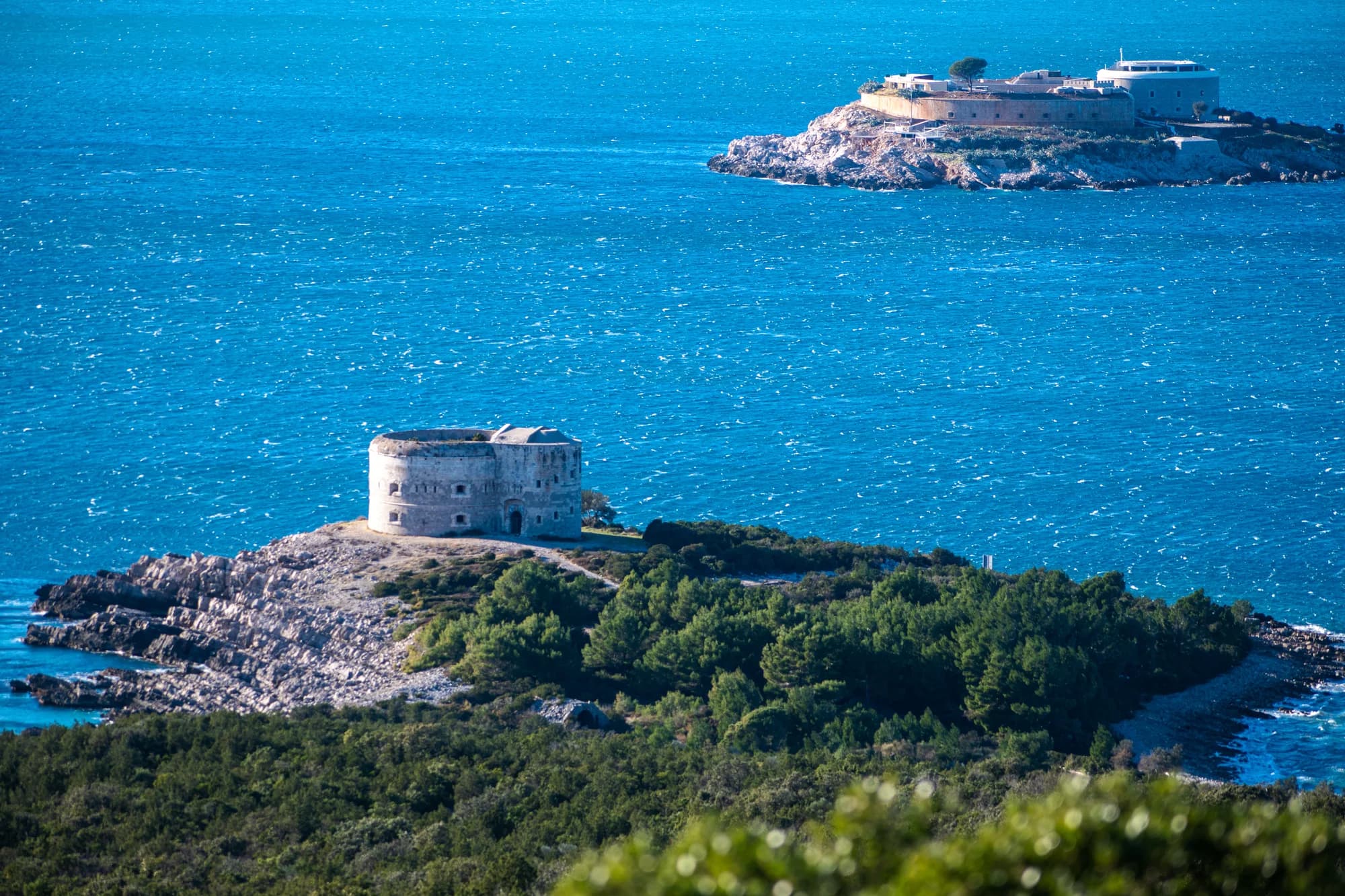
The serious one. An Austro-Hungarian cargo ship of 1917 lying near the fortress island of Mamula, about 6.3 km out from Herceg Novi, at 34–42 metres. She is covered in sponges and soft corals with dense fish life around the structure. This is an Advanced Open Water dive at minimum, and deep enough that most operators will want to see recent logged dives before they take you.
Cetinje
A passenger steamer of the early twentieth century, sunk by a mine on 10 December 1944 with the loss of more than two hundred lives — the worst maritime disaster in Montenegrin history. She is dived, and she is also a grave. Operators treat her accordingly, and divers should.
Caves, tunnels and walls
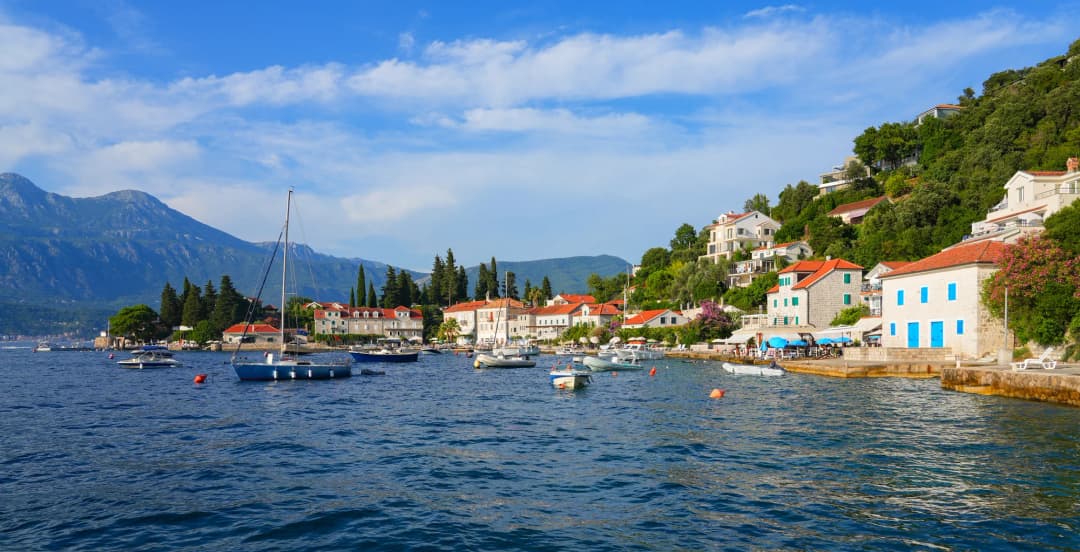
Beyond the wrecks, the outer coast of the Luštica peninsula is the centre of gravity. The limestone is riddled with caves and swim-throughs, several of them shallow enough to be genuinely enjoyable on a single tank.
The submarine tunnels driven into the cliffs to hide Yugoslav navy vessels are the local curiosity — cavernous, man-made and unlike anything else on this coast. Around Mamula and the headlands near Rose, walls drop steeply into clear water with good sponge and gorgonian cover.
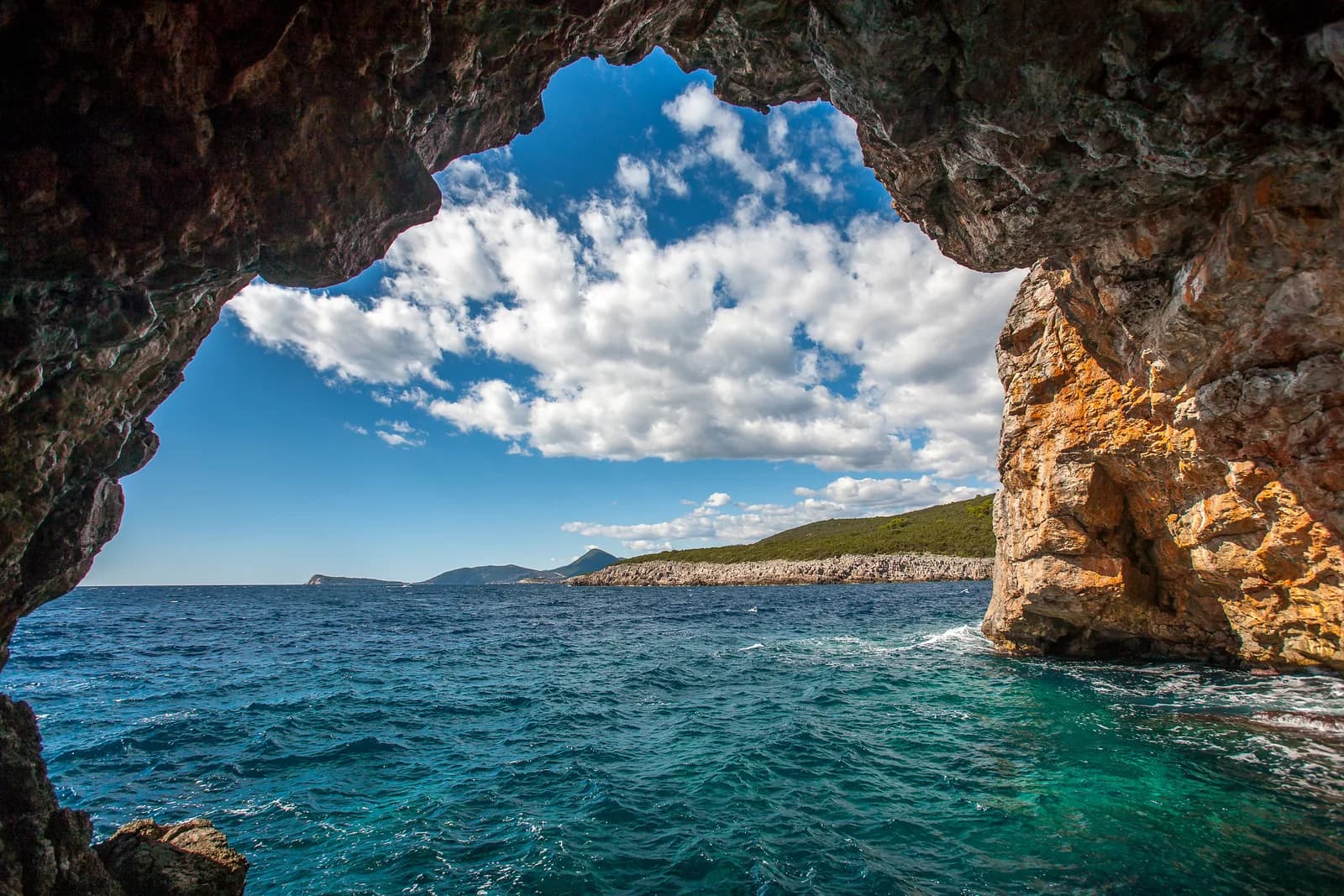
The Blue Cave is snorkelling rather than diving territory in practice: it is busy with tour boats through the middle of the day (since 2026 motorboats must stop outside the cave; you go in only by swimming or in a craft without a motor, per the navigation-safety rule), and operators generally avoid putting divers in the water among them.
Snorkelling without a certification
You do not need to dive to get value out of this water. The best snorkelling is on the open-sea side of Luštica — Žanjice, Mirišta and the coves around Bigovo — where the bottom is rock and seagrass rather than sand, and the visibility is consistently better than inside the bay.
Inside the Bay of Kotor the water is calmer and shallower but less clear, since it is fed by rivers and karst springs. It is fine for a casual look and not the place to judge Adriatic snorkelling.
Expect octopus, moray eels, scorpionfish, bream and wrasse; take a pair of water shoes, because almost every entry point on this coast is rock.
Where the dive centres are
Operators cluster in four places, and where you base yourself decides what you can reach easily:
- Herceg Novi — the best base for wrecks. Closest to Patrol, Tihany, Mamula and the Luštica caves.
- Tivat — well placed for the bay and the outer Luštica sites, and the easiest to reach from the airport.
- Budva — reefs and walls along the riviera, plus try-dives for beginners.
- Bar — quieter, with sites along the southern coast that see far fewer divers.
Practical notes
- Bring your certification and logbook. For anything deep, operators will ask, and Tihany in particular is not a dive anyone should talk their way onto.
- Book try-dives ahead in August. Centres are small and the coast is full; in June or September you can often walk in.
- Nitrox is available at the larger centres and worth it on the deeper wrecks.
- Do not take anything off a wreck. Several of these sites are protected, some are war graves, and the rules are enforced.
- Leave 24 hours before flying — relevant here because Tivat airport is fifteen minutes from the dive centres and the temptation to dive on the last morning is real.
Is it worth planning a trip around?
If wrecks are what you want, yes. Few places in the Mediterranean put a 1917 cargo ship, a 1950s patrol boat and a set of Cold War submarine tunnels within half an hour of the same harbour, in water this clear, at these prices. If you want big pelagic life and coral gardens, the Adriatic is not that sea and no amount of good visibility will make it so.
For most visitors the honest answer is that diving here is an excellent two or three days inside a wider trip — most rewarding from Herceg Novi, in June or September, with at least one wreck on the list.