Ulcinj Salina is worth planning around for its scale, industrial wetland story and importance to migrating waterbirds—but it is not a zoo, and flamingos are never guaranteed. The protected saltworks east of Ulcinj covers 1,477 hectares, or about 15 square kilometres. Its shallow basins can hold remarkable concentrations of birds when water, food and migration timing align. In 2026, however, the site is also in a management transition: Montenegro and the Municipality of Ulcinj created a new management company, government funded priority dyke work, and a draft 2026–2030 plan went to public consultation. Those are meaningful steps, not proof of fixed daily opening hours, completed visitor facilities or unrestricted access.
This guide therefore does two jobs. It explains why an abandoned salt factory became a Ramsar wetland, and it gives a cautious visit framework that does not recycle old entry instructions. Before setting out, confirm the current entrance, permitted route, hours, fee if any, and temporary closures with the Tourism Organization of Ulcinj or the park manager. Build the day around the wetland only after receiving a current answer.
| Strong fit | Use a backup plan |
|---|---|
| You enjoy patient, distant wildlife watching | A flamingo sighting is essential |
| Industrial and conservation history matters | You need verified step-free facilities |
| You can carry water and manage sun exposure | Heat or exposure limits your visit |
| You accept that numbers change daily | You have no confirmation of today's route |
| You will confirm access before departure | Weather or conservation work closes access |
| Ramsar importance is permanent context | An individual bird sighting and visitor access are variable |
Source: ramsar.org, gov.me, ulcinj.travel
What Ulcinj Salina actually is
The salina is a human-made wetland on the former Zoganjsko blato marsh near the Bojana delta. Construction ran from 1926 to 1934, and the first salt harvest followed in 1935, according to an archived official visitor map. Seawater moved through a sequence of ponds: large storage basins, progressively saltier evaporation areas and finally crystallisation pans. Pumps, channels, sluices and dykes controlled the depth and salinity. Salt was the commercial product, but the process also created a mosaic of shallow-water feeding grounds.
That distinction matters. The site did not become ecologically valuable simply because a factory disappeared. Its birds depended in part on a working hydraulic system. Different pond depths and salt concentrations supported different invertebrates and fish, while exposed mud and shallow margins let waders feed. When industrial salt production stopped in 2013, management of the water regime also weakened. A dry pond is not automatically a restored natural wetland, and uncontrolled flooding is not automatically beneficial either.
| Stage | What happens |
|---|---|
| 1 Seawater | pumped in |
| 2 Storage | large basins |
| 3 Evaporation | salinity rises |
| 4 Crystals | salt harvested |
| Result | Changing depth + salinity → changing food and feeding habitat |
| Condition | The ecological value depends on active water control, not abandonment alone |
Source: montenegro.travel, euronatur.org
Why the salina has international importance
Montenegro designated Ulcinj Salina a Nature Park in June 2019. On 9 September that year it became Ramsar Site No. 2399, a Wetland of International Importance. The Ramsar announcement describes it as the largest salina on the Adriatic and records 252 bird species, including 20 considered globally threatened at the time of designation. It identifies the site as an important wintering, nesting and feeding area and as a stop on the Adriatic migration route.
Those totals describe accumulated records and conservation significance; they are not a checklist for one morning. A visitor may see only a fraction of the documented species. Wind, water depth, salinity, disturbance and the stage of migration all influence which ponds birds use. Even skilled birders can have a quiet visit. The honest attraction is the opportunity to read a whole wetland system, not to collect a promised number.
| Figure | What it measures | What it is not |
|---|---|---|
| 1,477 ha | Ramsar site area | A mapped designation, not a walkable visitor area |
| 252 | recorded bird species | An accumulated inventory, not a daily expectation |
| 1,164 | flamingo maximum | Historical Ramsar record, not a forecast for today |
| Rule | designation data establish importance | only a current field observation describes today |
Source: ramsar.org, rsis.ramsar.org
Flamingos: what the evidence supports
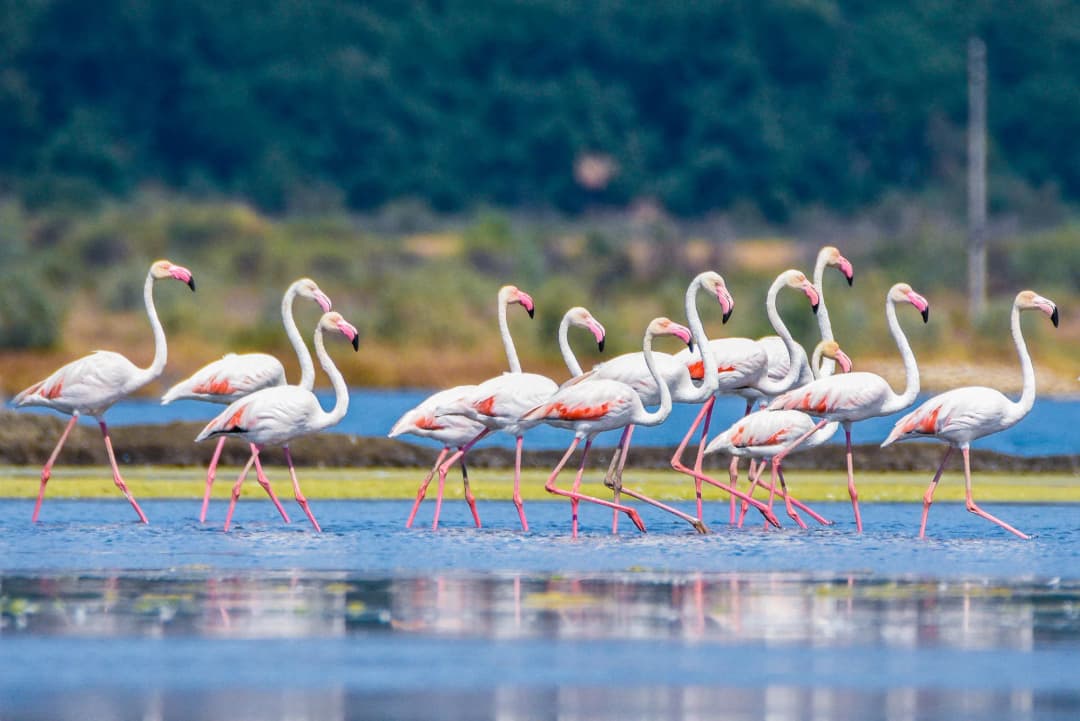
Greater flamingos are a legitimate symbol of Ulcinj Salina. The Ramsar information sheet records a historical maximum count of 1,164 and identifies the site for migration, feeding and nesting use. That supports “flamingos occur here.” It does not support “hundreds are always present,” “spring guarantees nesting activity,” or “you will see juveniles.” Counts are observations from particular dates and conditions.
The breeding story needs even more care. A peer-reviewed account in the Adriatic Flyway report describes a colony of roughly 175 breeding pairs forming in spring 2013. The eggs later disappeared. Further attempts from 2014 through 2016 were abandoned after flooding or human disturbance. The evidence documents nesting attempts, not confirmed production of young. For visitors, the practical consequence is simple: never approach a colony shape, island or incubating bird to solve the mystery yourself. Report an observation through an appropriate recording system without publicising sensitive nest coordinates.
| Confidence level | Claim |
|---|---|
| Supported | greater flamingos use Ulcinj Salina |
| Historical | Ramsar records a maximum of 1,164—not a current count |
| Qualified | nesting attempts occurred; documented attempts failed |
| Unsupported | a guaranteed flock, breeding spectacle or nest location |
Source: rsis.ramsar.org, euronatur.org, support.ebird.org
Which season fits your purpose?
There is no single best month for every visitor. Spring and autumn are valuable because migration changes quickly; winter can concentrate waterbirds; summer brings longer heat exposure and may coincide with sensitive breeding behaviour. Water management can outweigh the calendar. Treat the table as a planning model, then ask a local bird organisation or the manager about recent conditions.
| Period | Why consider it | Main limitation | Question to ask before travel |
|---|---|---|---|
| Spring migration | Rapid turnover of migrants and breeding activity | Sensitive birds need extra distance; water levels vary | Are any routes closed for breeding protection? |
| Summer | Salt-pan structure is visually legible in dry weather | Heat, glare, little shelter and potentially dry ponds | What hours and shaded facilities exist today? |
| Autumn migration | Southbound passage can add diversity | Storms and management work can change routes | Which ponds and dykes are currently permitted? |
| Winter | The Ramsar site is important for wintering waterbirds | Wind, rain, flooded or soft surfaces and short light | Are conditions safe and is the visitor route open? |
If migration is the purpose, the broader Montenegro autumn planning guide helps with weather-led route changes. A winter trip belongs in an off-season itinerary with short daylight and transport contingencies. Neither guide replaces the same-day site check.
The 2026 management transition
The institutional story changed during 2026. On 30 January, Montenegro's environment ministry and the Municipality of Ulcinj signed a contract to establish a limited-liability company to manage the Nature Park. On 3 February, the ministry announced €510,000 in the 2026 capital budget for priority remediation of dykes in the Kneta area. On 4 June, the Cabinet consented to the company's statute, saying this completed the requirements for establishing the manager. Separately, National Parks of Montenegro opened public consultation on a draft 2026–2030 management plan in May.
These events should not be blurred. A signed founding contract, Cabinet consent to a statute, allocated repair funding and consultation on a draft plan are different stages. The draft was not presented by its consultation notice as an adopted final plan. Nor does the creation of a manager prove that every visitor service is operating. This guide uses the official milestones to explain the direction of travel, while leaving current operational details to the manager.
| Date | Milestone |
|---|---|
| 30 Jan | founding contract signed |
| 3 Feb | €510,000 priority dyke budget |
| 11 May | draft plan enters consultation |
| 4 Jun | Cabinet consents to statute |
| What this timeline does not prove | fixed hours, a fee, universal access, completed works or adoption of the draft plan |
Source: gov.me, nparkovi.me
Restoring the water system
Physical restoration predates the new company. EuroNatur reported in February 2024 that 6.6 kilometres of embankments had been restored and that main sluices and pumps were repaired. The aim was to regain control: pumping excess fresh water out in winter and bringing salt water in during spring. That seasonal movement can maintain suitable pond depths and salinity instead of leaving the basin to alternate between uncontrolled flooding and desiccation.
Calling this “the salina saved” would go beyond the evidence. EuroNatur itself described the work as a first step and discussed renewed nature-compatible salt production as a future possibility. Repairs need maintenance, water decisions need monitoring, and plans need implementation. A current CZIP-led bird-ringing programme, scheduled from January 2024 through December 2026 through the Mediterranean Alliance for Wetlands, is one example of ongoing ecological data collection rather than a finished conservation endpoint.
| Cycle element | Action |
|---|---|
| Managed water regime | the central loop |
| Winter | remove excess fresh water |
| Spring | bring salt water inward |
| Infrastructure | dykes, pumps, sluices |
| Evidence | ringing and field monitoring |
Source: euronatur.org, medallianceforwetlands.org
Practical planning for a responsible visit
1. Confirm access, not just the map pin
Online maps and old brochures can show where the saltworks is, but they cannot establish which gate or dyke is legal and safe today. The old official map contains useful industrial history, yet its access information belongs to an earlier protection and management phase. Do not copy an old registration process, assume a gate is staffed, or drive onto a dyke because a satellite image looks passable.
Ask four specific questions: Is visitor access available on your date? Where is the authorised entrance? Which route is open, and must it be guided? Are there fees, time limits, construction zones or weather closures? If the answer remains unclear, use a coastal alternative instead of improvising entry.
2. Prepare for an exposed working landscape
The pond grid is flat and open, which means long sightlines but also sun, glare and wind. Carry drinking water, a brimmed hat, sunscreen and a charged phone. Closed footwear is more sensible than beach sandals where surfaces may be dusty, muddy or uneven. Binoculars let you keep a respectful distance; a spotting scope is useful only if you can carry and position it without blocking a route.
Do not infer step-free accessibility from flat terrain. Gates, rough dyke surfaces, drainage channels, temporary works and the distance between observation points may create barriers. Ask the manager for current surface, distance, toilet, seating, shade and parking details if any of these determine whether the visit is feasible.
3. Make a go/no-go decision before leaving Ulcinj
A useful confirmation is specific enough to act on. “The park exists” or “people usually go there” is not enough. A go decision means you have a current authorised entrance, a permitted route, an opening window and a clear answer about whether independent visits are allowed. It also means the weather suits an exposed wetland and everyone in the group can manage the stated surface and distance. Save the contact reply or write down the name of the office that confirmed it, because a driver or companion may otherwise navigate to an obsolete gate.
Choose no-go when the entrance is uncertain, a closure is reported, thunderstorms or extreme heat make an exposed dyke unsafe, or accessibility needs remain unanswered. This is not a wasted birding day. Shift to the coast or Ulcinj's heritage core, then try again only after a fresh confirmation. Do not resolve uncertainty by following another vehicle, moving a barrier or using a track that looks public.
4. Pack for observation rather than pursuit
Binoculars are the most useful tool because they improve views without reducing the distance birds need. If sharing one pair, agree to stop only where the route safely widens. A field guide or offline identification app helps separate similar waders after the visit; photographs can be reviewed later rather than chased in the moment. Carry more water than a town walk would require, plus sun and rain protection appropriate to the forecast. Keep food sealed and take every item out with you.
Muted clothing may make observation more comfortable, but fieldcraft matters more than colour: move slowly, keep voices low, avoid silhouettes on exposed banks when birds are close, and never surround a flock from two directions. Dogs should not be brought unless the manager explicitly permits them and gives a restraint rule; even a calm dog can be perceived as a predator. Children can enjoy the geometry and machinery story if adults set a quiet-watching game and are ready to shorten the visit.
Treat the basins, channels and machinery as protected infrastructure, not recreational water. Do not swim, wade, climb equipment or step onto salt crust: depth, mud and structural condition cannot be judged from the bank. Stay together where phone coverage, route markings or staffing are uncertain. If someone becomes unwell in heat, return by the known route instead of seeking a shortcut across a dyke.
5. Record what you actually observed
Note date, approximate time, weather, permitted observation area and broad habitat before listing birds. Counts should be conservative and labelled as estimates. If a flock is too large, count a small block and estimate how many blocks fit rather than publishing a precise-looking guess. Separate “heard,” “seen” and “possible” records. This makes a personal list more useful and prevents a distant pale bird from becoming an unsupported rarity claim.
For a sensitive or nesting species, submit through a platform that obscures locations and follow its guidance; do not add a pin, route screenshot or landmark description to social media. Photos of industrial remains also need honest captions. A rusting rail, pump or timber structure may show the saltworks legacy, but it does not by itself prove current ownership, operating condition or restoration status.
6. Watch behaviour, then back away
Ethical birdwatching is based on the bird's response, not the photographer's lens length. If feeding stops, heads remain raised, alarm calls spread, birds walk or swim away, or a flock takes flight, you are too close. Return quietly along the permitted route. Do not use playback, drones, bait or repeated approaches. BirdLife's guidance emphasises staying on formed paths and avoiding disturbance; its nest-protection advice is even simpler—leave nests alone. eBird also suppresses sensitive locations and asks observers to minimise disturbance.
| Stage | Bird behaviour | Your response |
|---|---|---|
| WATCH | Normal feeding; resting continues; you stay on route | Keep quiet and distant |
| PAUSE | Heads stay raised; feeding stops; birds edge away | Increase distance now |
| RETREAT | Alarm calls spread; flock takes flight; nest may be nearby | Leave without investigating |
| Never | drones, playback, bait or public nest coordinates | Do not use to get a closer record |
Source: birdlife.org.au, birdlife.org, support.ebird.org
A flexible Ulcinj day without overplanning
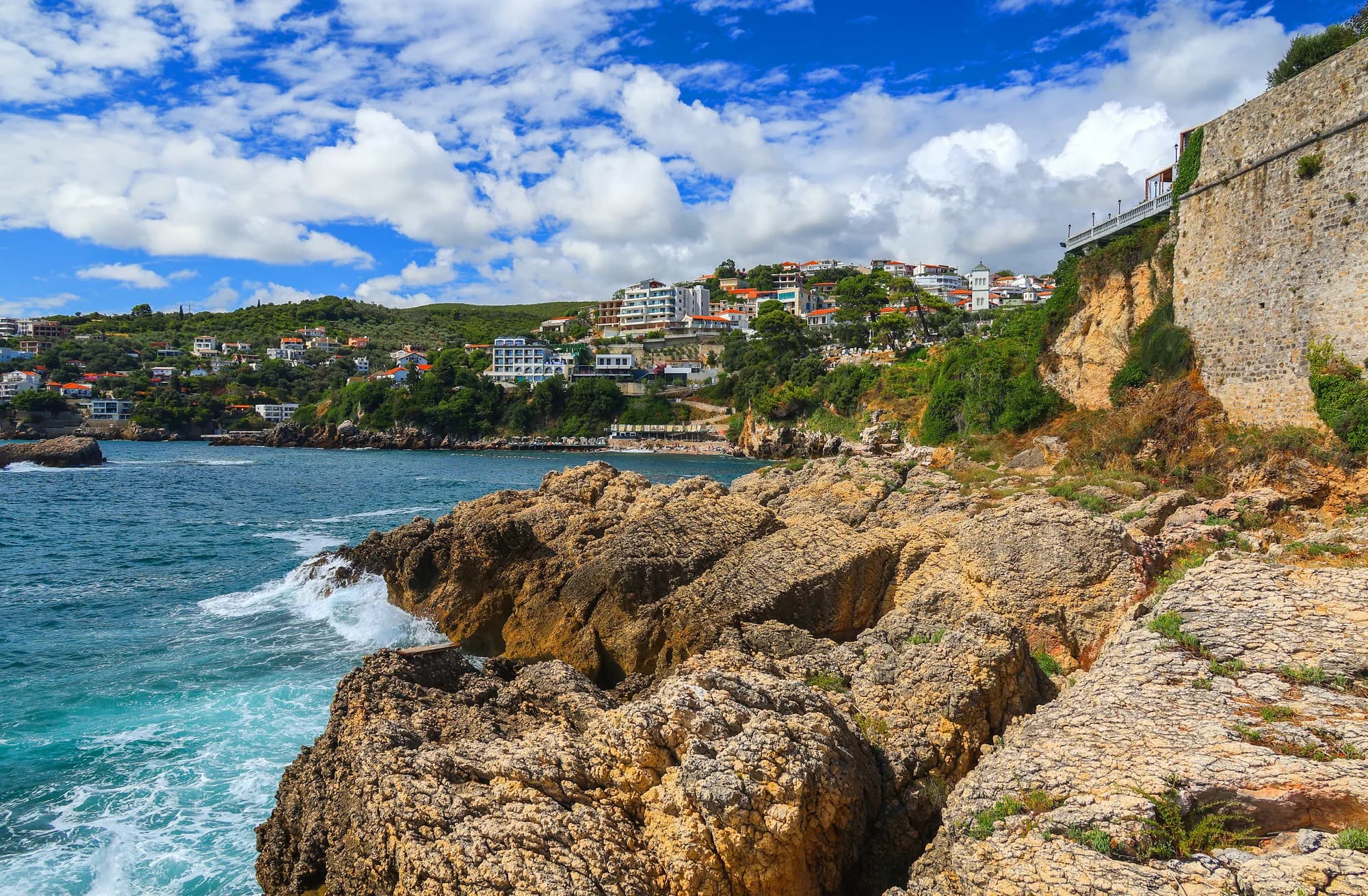
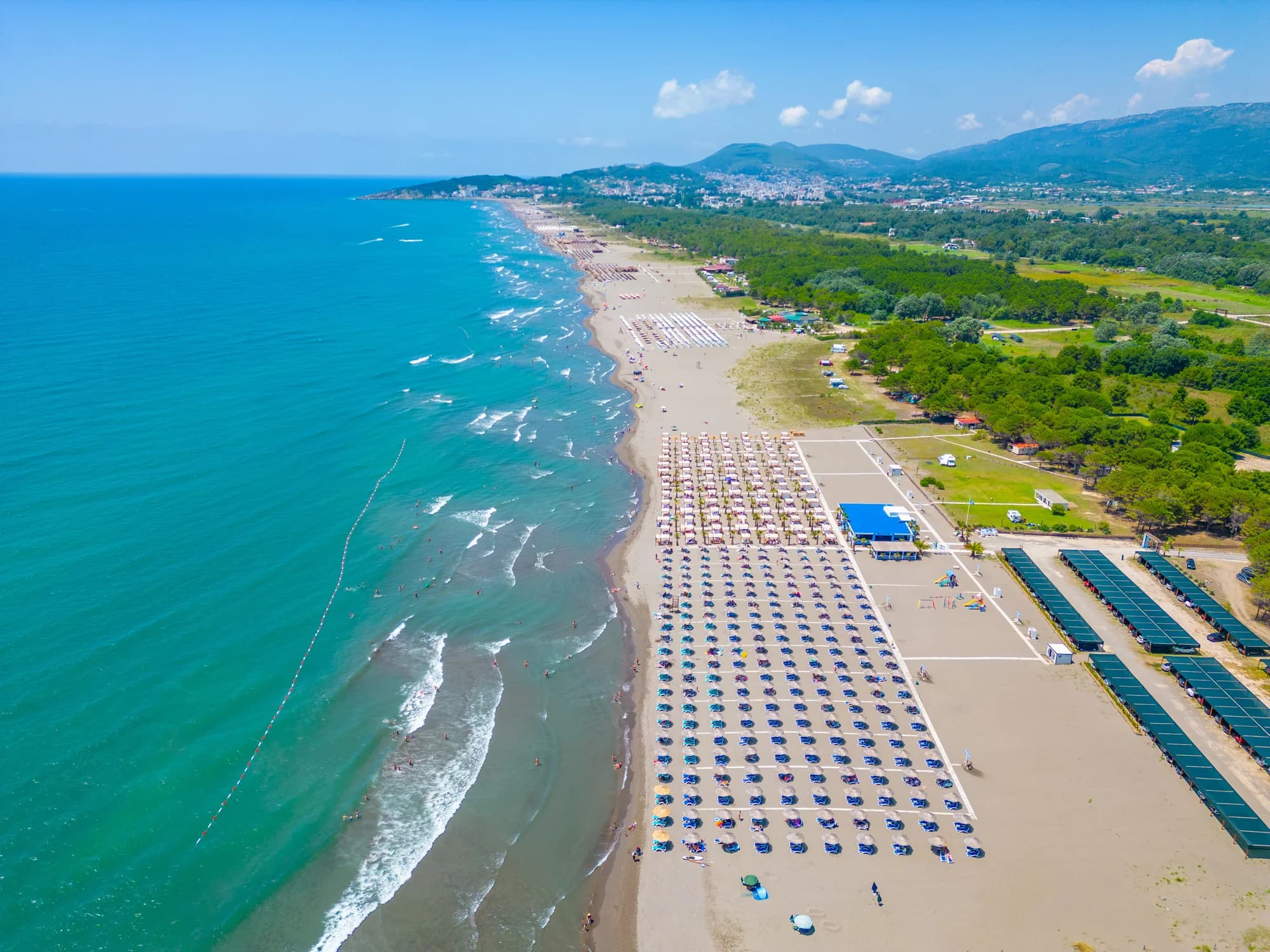
If access is confirmed, keep the wetland as the day's main commitment. Patient observation takes longer than a photo stop, and midday heat can end a visit early. Afterwards, the wooden fishing structures at Port Milena provide a related water-and-work landscape, but they have their own access and conservation context. The licensed photograph below shows the neighbouring coast; it is not a photograph of the salina basins.
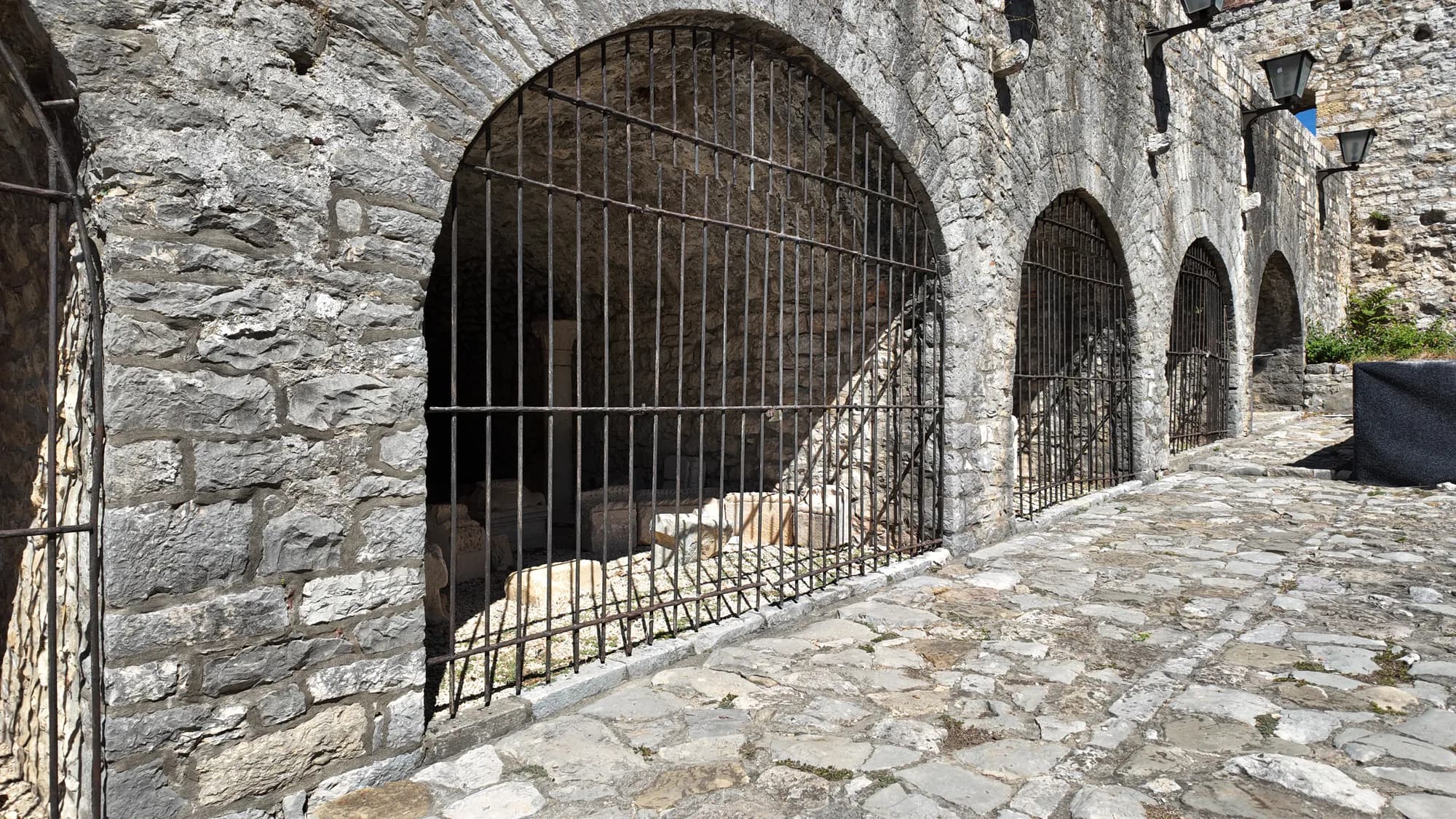
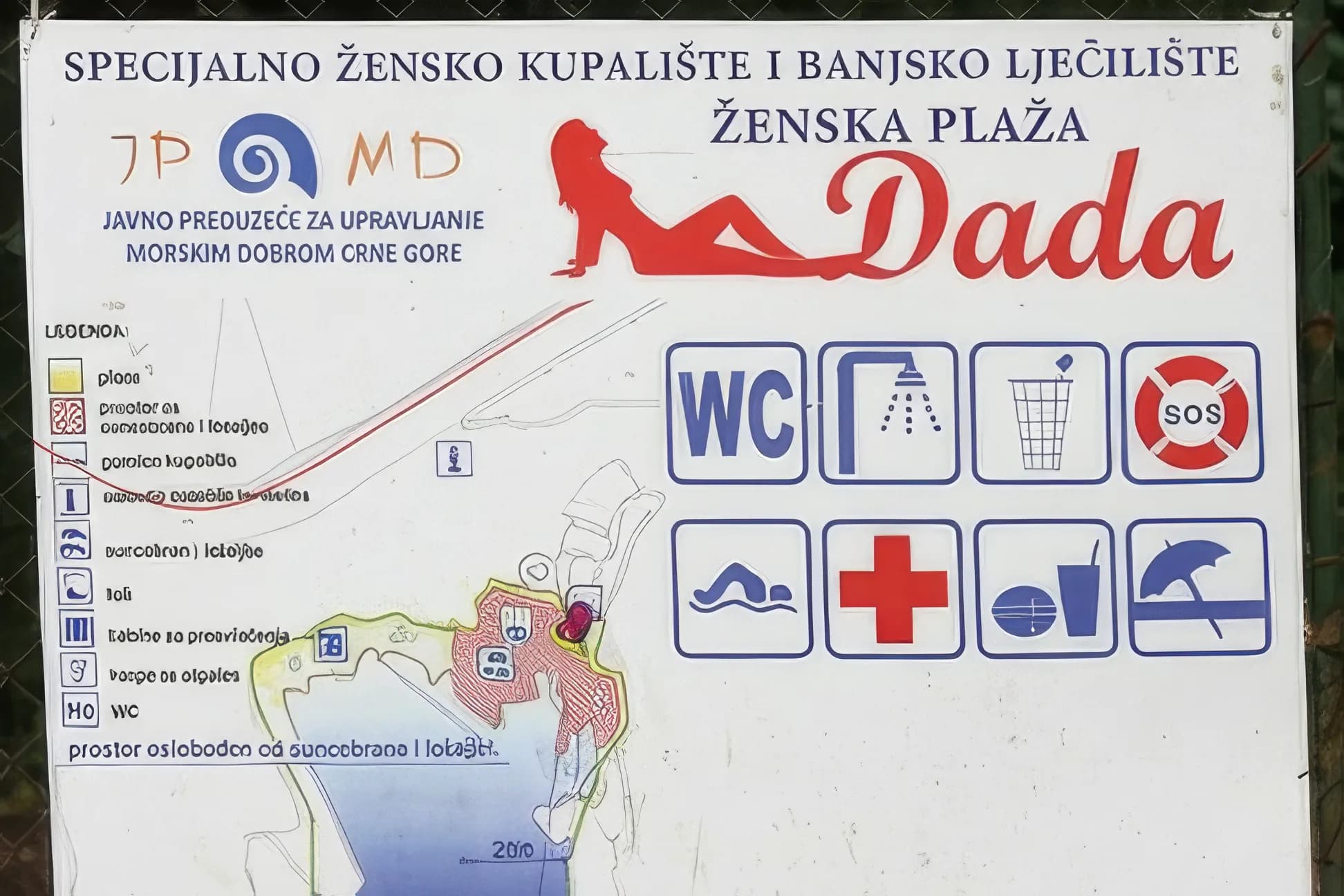
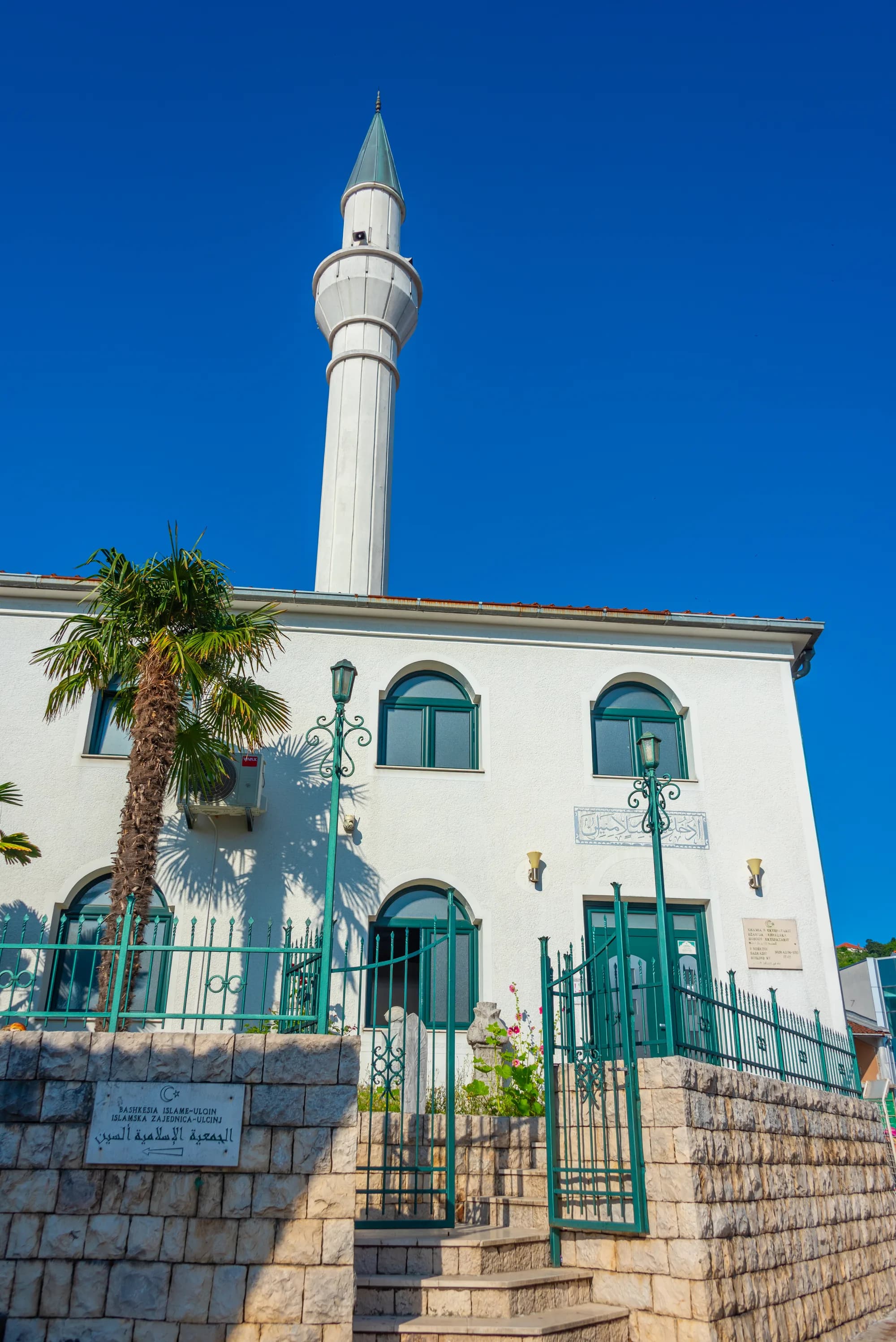
Velika Plaža is the logical open-coast alternative if the salina is closed, though beach conditions and facilities require their own check. Travellers choosing a base can compare areas in the Ulcinj accommodation guide. A small town visit can add the history behind Ulcinj's Slave Square and Cervantes legend, while Ženska Plaža is a distinct, women-focused bathing tradition rather than an extension of the birding route.
For a wetland comparison elsewhere in Montenegro, choose one additional site on another day. Tivat Solila's saltworks history explains a smaller protected coastal wetland, and the companion Tivat Solila field guide focuses on birdwatching decisions. Buljarica presents a different relationship between beach, wetland and development pressure. These are comparisons, not fallback claims that access or species are identical.
What not to rely on
- A fixed flamingo count: the published maximum is historical, and birds move.
- A successful breeding claim: the documented 2013–2016 nesting attempts in the cited study failed.
- An old entry procedure: management changed in 2026, so archived maps cannot confirm today's gate or rules.
- A promised time or price: this guide found no current official public schedule or fee table to reproduce.
- Universal accessibility: flat terrain does not prove smooth surfaces, open gates, toilets or short distances.
- Completed restoration: repaired infrastructure and new governance are progress markers, not proof that every ecological or operational problem is resolved.
Getting there, entry and the best time of day
This is the question readers ask most often, and it deserves a direct answer — with the necessary caveat first. No official notice sets fixed opening hours for 2026: neither the Tourism Organization of Ulcinj nor the park manager publishes a schedule (checked September 2026), and management passed to a new company during 2026. What does exist is consistent reporting from birdwatchers who visit the site regularly. Treat the following as field experience to confirm before you set out, not as a guarantee.
- Where is the entrance? In Ulcinj, follow Solanski put to its end, to the old Solana administration building, and report to security at the gate.
- From what time? The gate is consistently reported to open around 07:00.
- Cost: a small fee, reported in the region of €2.50.
- Identification: may be requested; announce your visit in advance where possible.
- Getting around: bicycles can be hired from security — the pond grid is too large to cover on foot.
- On site: no shade, no toilets, no shops.
- Best time of day: early morning, roughly 07:00 to 10:00.
Three reasons favour the early morning, and all point the same way: the gate does not open before about 07:00 in any case, birds feed most actively in the cool hours, and heat haze builds over a flat, open salt pan through the morning until it renders binoculars or a scope nearly useless at distance. Combined with the absence of shade, that gives a window of roughly 07:00 to 10:00. Late afternoon is the second-best choice.
For season: the most productive periods are spring migration from about March to June and autumn passage from the second half of August into November. Flamingos are recorded year-round, but their numbers vary considerably.
What the sources say
If there is no opportunity to confirm access beforehand, Tivatska solila is the more dependable alternative. The Tourism Organization of Tivat states that entry to the nature reserve is free of charge; there is no gate and no registration, there are two wooden observation towers and a lookout on the road to Krtoli, and the reserve lies minutes from the centre of Tivat. Flamingos returned there in 2020 after more than a decade and have been recorded seasonally since — in smaller numbers than at Ulcinj. In short: Tivat for a spontaneous visit, Ulcinj for abundance.
Frequently asked questions
Will I definitely see flamingos at Ulcinj Salina?
No. Greater flamingos are well documented at the site, and the Ramsar record includes a historical maximum of 1,164. Neither fact predicts the number present, visible or reachable from an authorised route on your day.
Where is the entrance, and what is the procedure?
Consistent reporting from birdwatchers describes the same route: in Ulcinj, follow Solanski put to its end, to the old Solana administration building, and report to security at the gate. Identification may be requested, and announcing the visit in advance is advisable. The same sources give a gate opening around 07:00, a small fee in the region of €2.50, and bicycles available to hire from security. This is field experience rather than an official notice — no official page sets fixed hours for 2026.
What is the best time of day to visit?
Early morning, roughly 07:00 to 10:00. The gate does not open before about 07:00 in any case, birds feed most actively in the cool hours, and heat haze builds over the flat, open salt pan through the morning until it severely limits observation at distance. With no shade, toilets or shops on site, an early and relatively short visit is also the more practical choice. Late afternoon is the second-best window.
I simply want to see flamingos. Which site should I choose?
If the visit is at short notice and there is no time to resolve access, Tivatska solila is the more dependable option: entry free according to the Tourism Organization of Tivat, no gate, no registration, two observation towers, and minutes from the centre of Tivat. Flamingos have been recorded there seasonally since their return in 2020, in smaller numbers. Ulcinj Salina is by far the more significant wetland with many more birds, but it requires resolving access first.
Did flamingos breed successfully here?
The research cited in this guide documents a colony forming in 2013 and further nesting attempts through 2016, but it reports failure through egg disappearance, flooding or disturbance. This article therefore does not claim confirmed production of young.
Is Ulcinj Salina open every day?
No official notice establishes fixed daily opening hours for 2026; neither the Tourism Organization of Ulcinj nor the park manager publishes a schedule (checked September 2026). Independent birdwatching sources consistently report a staffed gate opening around 07:00 and year-round access on foot or by bicycle. Treat that as field experience rather than a guarantee, and confirm the authorised entrance and route before departure.
Do I need a guide?
That depends on current park rules and access arrangements. A knowledgeable guide can improve identification and reduce accidental disturbance, but booking one does not override closures or permit access outside authorised routes.
Is the site suitable for wheelchairs or limited mobility?
No universal claim is possible from the evidence reviewed. Ask about the exact open route, surface, gate width, gradients, distances, seating, toilets and parking. If those details are unavailable, do not assume the flat-looking landscape is accessible.
Can I fly a drone for flamingo photographs?
Do not. Drone approaches can disturb resting and nesting birds, and ethical birding guidance advises against them. Park rules may impose additional restrictions. Use binoculars or a long lens from an authorised route.
Has salt production restarted?
The sources reviewed describe repairs that restored some water-control capacity and discuss nature-compatible salt production as a possibility. They do not establish regular commercial salt production as a current 2026 visitor experience.
What is the best backup if access is unavailable?
Choose a publicly accessible Ulcinj stop whose current conditions you can verify, such as Velika Plaža or the town's heritage areas. Do not enter through an unstaffed gate or follow unofficial tracks.