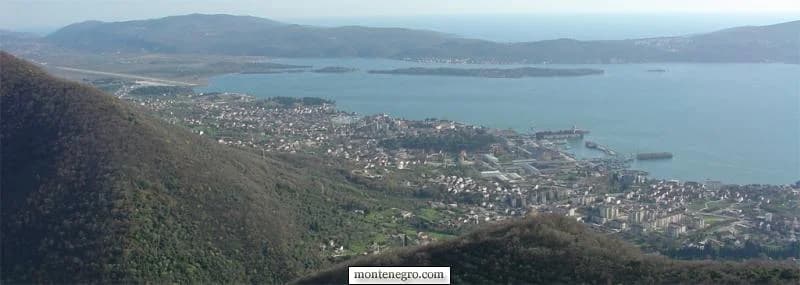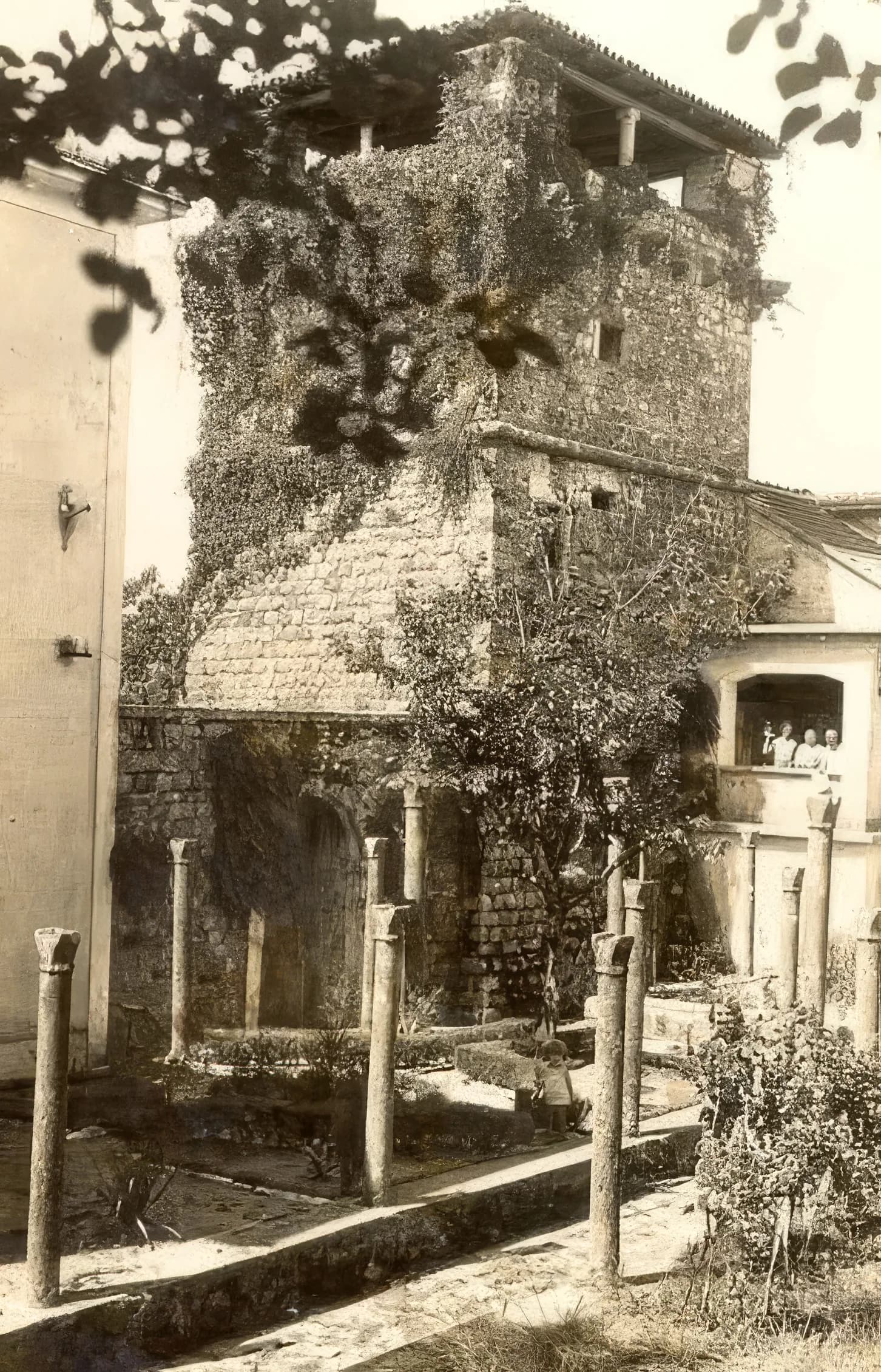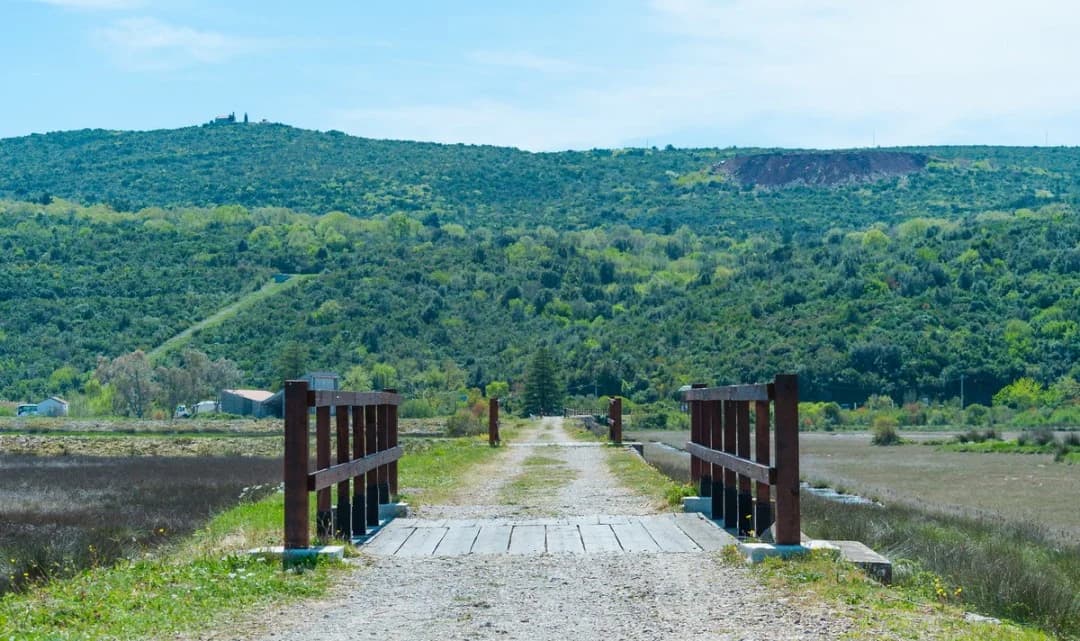
Tivat Solila rewards quiet, patient observation rather than a species-count chase. This 150-hectare former saltworks is both a nationally protected reserve and Ramsar wetland. Plan for exposed paths, distant birds and changing water levels; use the observation structures, keep every bird's welfare ahead of the photograph, and treat any facility detail as something to verify.
This 2026 field guide complements our Solila history and conservation guide. It focuses on how to observe responsibly, how to read seasonal evidence and what current public records do—and do not—promise.
Practical snapshot
| Question | Evidence-backed answer | Live check |
|---|---|---|
| Why protected? | Special reserve since 2008; Ramsar Site 2135 since 2013 | Obey current signs and staff |
| How large? | 150 hectares | Do not infer a walkable 150-hectare circuit |
| Entry and structures? | Tourism page advertises free entry, benches, trails, two towers and a lookout | Hours, staffing, surfaces, repairs, toilets |
| Best observation? | Early or late light, migration and winter often productive | Weather, water, disturbance, recent sightings |
| What is guaranteed? | The wetland and its protected purpose | No particular species or close view |
Allow two to three hours for a first visit, more only if shade, weather and the group support it. Bring binoculars, water, sun and rain protection, quiet footwear and a notebook or offline checklist. A telescope helps with distant waterbirds but should never block a narrow platform.
| Layer | Year | Detail |
|---|---|---|
| NATIONAL | 2008 | special nature reserve |
| RAMSAR | 2013 | Site 2135 · 150 ha |
| Why it matters | — | Protected status raises the standard of visitor behaviour. |
Source: rsis.ramsar.org, morskodobro.me
What the official records establish
Ramsar's current Montenegro summary lists Tivat Saline as Site 2135: 150 hectares, designated 30 January 2013. It identifies the former saltworks between the Odoljenštica and Koložunja watercourses as feeding and resting habitat on migration, with shallow-water and salt-tolerant plant communities.
The government's 2023 report traces national protection to a decision dated 26 August 2008. A government summary adopted in February 2025 says the reserve's 2024 conservation and protection state was retained relative to designation and improved through active management. This is strong site-level evidence; it does not mean every path, hide or bird population is unchanged.
Ramsar's underlying site sheet was compiled in 2013. Its ecological description remains authoritative for designation, but old operational statements—about threats, management preparation or permitted activities—must not be treated as 2026 rules. Current signs, the reserve manager and Montenegro law control today.
| Record | Question it answers |
|---|---|
| DESIGNATION | why protected |
| MONITORING | what surveys found |
| MANAGEMENT | dated work |
| TODAY | signs + staff |
| Caution | Never ask an old document to act as a live noticeboard. |
Source: gov.me, wapi.gov.me
Why 45, 111 and 114 are not the same count
The inherited article said 111 species had been registered. A newer Tivat Tourism Organisation cultural-landscape publication gives a broader inventory of 114 bird species. By contrast, the official 2023 management report says CZIP monitoring registered 45 species across seven survey dates from January to November.
There is no necessary contradiction. An inventory accumulates records across time and methods; an annual monitoring table reports what defined surveys recorded during that period. Neither number predicts a visitor's list. Weather, tide, water level, season, observer skill and disturbance all change detectability.
The 2023 table includes Eurasian Teal, Mallard, Great and Little Egrets, Grey Heron, Eurasian Coot, Eurasian Wigeon, Pygmy Cormorant, gulls, terns and several shorebirds. It is especially useful because it shows different assemblages across dates. It should not be turned into a “top species guaranteed today” list.
Seasonal strategy without species promises
Autumn and spring are migration windows. Expect turnover rather than a stable cast: waders, herons, ducks, raptors and passerines may use different parts of the wetland briefly. Visit more than once if possible, and let changing water levels determine where you scan.
Winter can concentrate ducks and coots, as the 2023 monitoring table illustrates, but wind and rain can make exposed observation uncomfortable. Summer may offer resident and breeding activity, yet heat, glare and disturbance demand shorter sessions and extra distance from any territorial or nesting behaviour.
Early and late light often improves visibility and comfort, but no hour is universally best. A low sun can produce severe glare across shallow water; cloud can improve colour and reduce heat. Start by looking with the naked eye, then binoculars, then a telescope. Moving slowly between fixed observation points usually finds more than walking continuously.
| Season | What to expect |
|---|---|
| SPRING | migration turnover |
| SUMMER | heat + nesting care |
| AUTUMN | migration turnover |
| WINTER | waterbird potential |
| Caveat | Weather, water and disturbance can rewrite any day. |
Source: wapi.gov.me, ramsar.org
Arrival, paths and current infrastructure limits
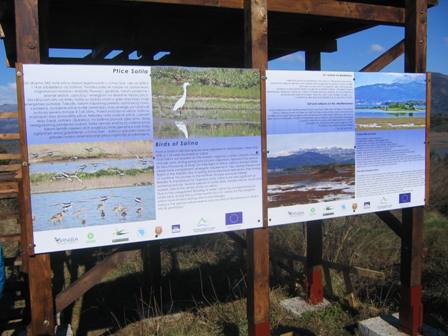
The Tivat Tourism Organisation advertises free entry, benches along hiking and cycling paths, two observation towers and a lookout from the road toward Krtoli. The official 2023 report documents repairs to 10 bridges, two viewpoints and six information boards. It also says a new interpretation centre was completed in January 2023.
What the sources say
A 2025 Morsko dobro report describes an educational group using the interpretation centre and VR equipment, evidence that the centre was in use then. None of these records publishes reliable 2026 opening hours or certifies every structure today. Confirm a staffed-centre visit directly; inspect bridges and platforms before committing weight; follow temporary closures.
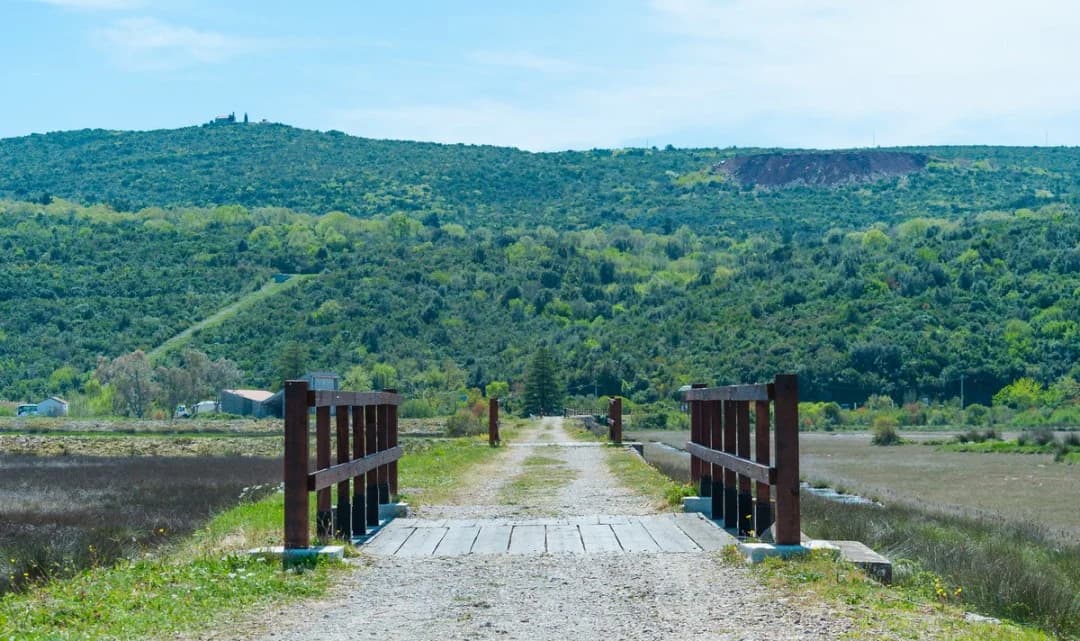
Use the named public entrance and marked route. Do not improvise access through private land, channels or airport-adjacent operational areas. A cycling route may be permitted without being comfortable for walkers at the same moment; slow down, yield and keep narrow structures clear.
For a Tivat base, compare the Tivat town guide and where-to-stay guide. Reserve observation works best before a waterfront meal or museum, not between fixed bookings with no weather margin.
| Evidence layer | Items |
|---|---|
| LISTED | paths · benches; towers · lookout |
| DOCUMENTED 2023 | 10 bridges · 2 viewpoints; centre · 6 boards |
| VERIFY TODAY | hours · staffing; surface · closures |
| Caution | Completion is not a permanent condition report. |
Source: tivat.travel, wapi.gov.me, morskodobro.me
Fieldcraft: see more by doing less
Stop before each open basin. Scan the near edge, vegetation line, exposed mud, open water and sky in that order. Listen before moving. A heron can disappear against reeds; small waders can feed below the line of a dyke; raptors may be easiest to detect by other birds' reactions.
Use a field guide or identification app after making notes on size, shape, bill, legs, flight, voice and behaviour. Record uncertainty honestly. A photograph can help, but a distant blur should remain “unidentified shorebird” rather than a rare claim forced from one pixel.
Do not feed birds. Food changes behaviour, concentrates animals and can attract predators or litter. Do not handle nests, feathers, eggs or injured wildlife. Report a welfare concern to reserve staff or the competent authority with a precise location; do not conduct an improvised capture.
Use a two-pass observation protocol
On the first pass, build a habitat map rather than a long list. Note which basins hold open water, exposed mud or dense vegetation; where glare is strongest; which observation points are quiet; and whether people, bicycles or maintenance work are changing bird behaviour. Log time and weather before recording species.
On the second pass, return only to productive points and stay still. Count obvious large birds first, then scan edges for smaller species. If a flock moves between basins, record the movement instead of automatically adding a second count. Separate birds heard from birds seen, and distinguish an exact count from an estimate. These habits make personal notes more useful without pretending they are a formal monitoring survey.
Photograph information boards and your notebook, not only birds. A record such as “small wader, feeding on exposed mud, 08:10, overcast” is more honest and often more valuable than a forced species name. If another observer supplies an identification, ask which field marks support it and preserve your original uncertainty.
Finish with a negative-evidence note: areas not visible, routes closed, glare, wind, disturbance and time not surveyed. This protects future comparisons from the false conclusion that an unrecorded species was absent from the reserve.
| Pass | What to note |
|---|---|
| PASS 1 · MAP | water · mud · vegetation; light · people · disturbance |
| PASS 2 · RECORD | count · movement · behaviour; uncertainty · unseen areas |
| Caution | A personal checklist is not a monitoring survey. |
Source: wapi.gov.me, aba.org
| Zone | Order |
|---|---|
| EDGE | 1 |
| REEDS | 2 |
| MUD | 3 |
| WATER | 4 |
| SKY | 5 |
| Method | Scan fully · note quietly · move once |
Source: aba.org
Ethical photography: distance is part of the image
The ABA Code of Birding Ethics puts bird and habitat welfare first, urges restraint near nests, roosts and feeding sites, and limits recordings used to attract birds. At Solila, use the stricter rule: no playback, bait, flushing or off-trail pursuit.
Audubon's photography guidance advises against playback and drones around birds and urges special distance around nests. A protected wetland is not a studio. Use a longer lens, crop later, keep groups compact and stop immediately if a bird changes posture, calls repeatedly, leaves food or moves away because of you.
Do not disclose a sensitive nest location. Remove precise geotags from images of rare or vulnerable breeding birds. Include honest captions; never imply a close encounter was harmless merely because the picture is sharp.
| DO | DO NOT |
|---|---|
| use hides and long lenses | play calls · bait · use drones |
| stay on marked routes | approach nests or roosts |
| back away from stress | trample habitat for an angle |
| A missed frame is the correct result when distance protects a bird. | — |
Source: aba.org, audubon.org
Families, accessibility and bad-weather alternatives
Give children one simple search at a time: a bird on open water, a long bill, a white heron, a bird in flight. Keep voices low and sessions short. Platforms are shared spaces; leave room for telescopes, mobility aids and other visitors.
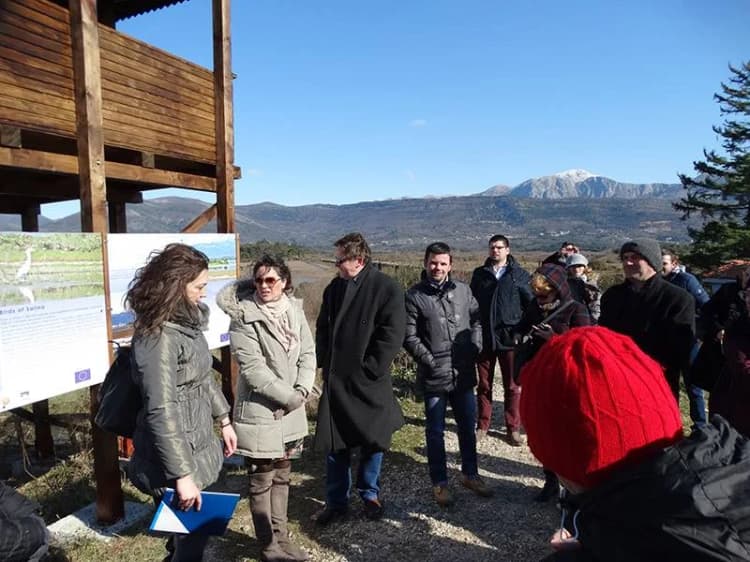
Do not assume the full route is step-free. The photograph and reports show gravel, wooden bridges, viewpoint stairs and repaired structures. Ask the reserve manager for current surface, gradient, bridge width, seating, toilet and centre access. A roadside lookout may reduce distance but still needs safe parking and a legal pedestrian position.
Strong wind, lightning, extreme heat or flooding defeats the field plan. Move the wetland visit to another window and use Tivat's urban waterfront instead. The Montenegro hiking guide explains broader outdoor preparation, while the winter road and weather guide helps when a cool-season birding trip crosses mountain terrain.
If staying overnight, verify registration responsibilities through the tourist-tax guide. The winter Tivat lodging audit is useful when seasonal operation matters. Travellers combining Croatia and Montenegro can use the Dubrovnik–Kotor transport guide and country comparison, but border timing should never compress a reserve visit into the last light.
| Option | Level of exposure |
|---|---|
| FULL MARKED ROUTE | full visit |
| ONE SAFE OBSERVATION POINT | reduced |
| CENTRE / TIVAT URBAN DAY | fallback |
| Principle | Weather cancellation is better than disturbance or injury. |
Source: tivat.travel, aba.org
Why published bird totals differ
A 2013 designation-era account listed 111 species. Later publications list 114, 178 or 185 because their dates, survey effort and taxonomic scope differ. Cumulative occurrence says nothing about how many species will be present on a particular day.
The reserve manager now reports 185 bird species recorded at Solila. A 2025 environmental assessment citing 2023 monitoring gives the same cumulative total and says 43 are on Annex I of the EU Birds Directive. A Tivat tourism page gives 178; a cultural-landscape publication gives 114. Each figure is most useful when read with its publication date and scope.
Birds to look for—without turning records into promises
The Ramsar site account highlights black-tailed godwit, Eurasian curlew and ferruginous duck as migratory or wetland species for which Solila provides feeding or resting habitat. It also identifies the site as important for the regional pygmy cormorant population. These are worthwhile species to study before a visit, not a guarantee that each one will be present.
In shallow water, first look for structure rather than rarity: long-legged herons along margins, compact coots on open water, cormorants resting or feeding, and waders probing exposed mud. The reserve manager says grey heron, great egret and little egret can be seen through summer. Ducks and grebes become more relevant in cooler periods. Raptors such as marsh harrier may work low over reed and wetland edges during migration.
Flamingos deserve special caution. Morsko Dobro documented two birds in September 2020 after an absence of more than ten years. That makes the sighting interesting precisely because it was unusual. Marketing Solila as a dependable flamingo stop would turn an exceptional record into a false expectation.
What changes through the year
Late winter and spring bring movement. Tivat's tourism organization recommends February through the end of April for spring migration, when turnover can be more valuable than raw abundance. Weather fronts may produce a good morning after a quiet day, while high water can move feeding birds away from exposed margins.
Summer is not empty, but it asks different questions. Herons remain visible and Mediterranean scrub or reed-edge species breed around the reserve. Heat, glare and visitor movement make early morning more comfortable. Stay far from any bird giving alarm calls or carrying food.
Autumn brings southbound migration and changing vegetation. The manager identifies glasswort, Salicornia europaea, as a typical salt-tolerant plant that reddens in autumn. Winter favors waterbirds using Solila to feed or overwinter. Wind and rain can be productive for birds but uncomfortable for observers, so protect optics and avoid exposed structures in unsafe weather.
A saltworks before it was a reserve
Solila means a place associated with salt. The wetland's straight banks, pans and channels are not a pristine geometry; they are a cultural landscape shaped by extraction. Ramsar describes a centuries-old former saltworks. Morsko Dobro says archival records place salt activity in the Middle Ages, production ended in the eighteenth century and a twentieth-century revival attempt failed.
The Ramsar documentation also records archaeological fragments in and around the site, including Hellenistic-Roman ceramics and Corinthian skyphos fragments dated to the sixth century BCE. These finds do not prove continuous salt production across every era, but they show the shore was used long before modern conservation categories.

Practical visit: access, facilities and time
Tivat's tourism organization says entry is free and describes walking and cycling paths with benches, two observation towers and a roadside lookout toward Krtoli. Morsko Dobro documented repairs to paths, bridge decking, signs and tower roofs in 2021. No official page supplies a reliably current daily opening schedule, so check on-site notices and the reserve manager before a special early or late visit.
Ramsar coordinates place the site at approximately 42°23′37″N, 18°42′55″E in Krtoli Bay, opposite the urban side of Tivat Bay. Use the official reserve entrance rather than navigating to the center of the mapped polygon. A wetland boundary can include water and inaccessible habitat. Never improvise a route across banks or through vegetation.
Allow at least an unhurried hour; keen birders may want longer if migration is active. A full day is unnecessary for most visitors, which makes Solila easy to pair with the city. The Tivat guide covers the broader municipality, while Buća Palace and the Great Park provide a cultural and botanical contrast.
Where Solila fits in a Tivat stay
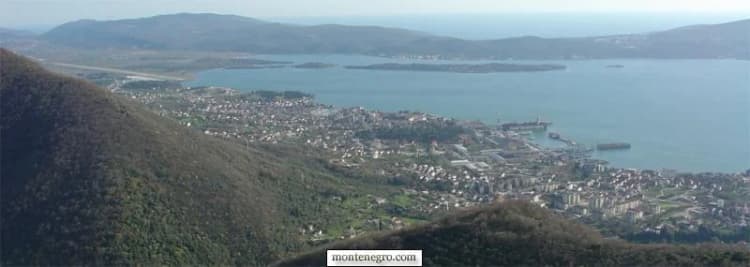
Solila reveals the coast before luxury development became Tivat's dominant international image. Pairing it with Porto Montenegro makes the contrast especially clear: a working wetland and former salt landscape on one side of the day, a redeveloped naval-industrial waterfront on the other.
For accommodation, the Tivat area guide compares central and outlying bases. Winter visitors can use the older winter hotel overview as orientation but should verify every current property detail. The short Tivat background article provides additional place context.
Why this wetland matters
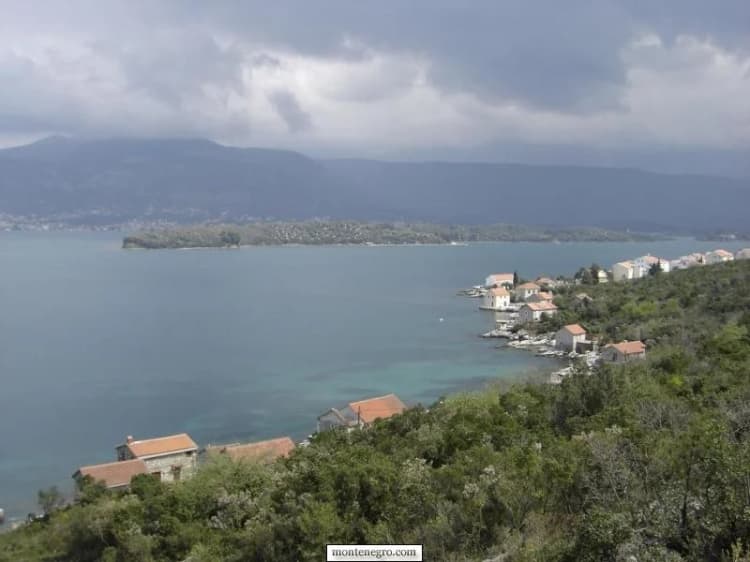
The Ramsar Sites Information Service records Tivat Saline at 150 hectares and gives 30 January 2013 as its designation date. Its official description places the site in the coastal strip of Krtoli Bay between two watercourses and includes the old saltworks and underwater Jankove Vode area. Montenegro had already protected Solila as a special nature reserve in 2008.
Shallow brackish and saline water exposes feeding ground that deeper bay water cannot provide. Mud supports benthic life; small fish and invertebrates feed waders, herons, ducks and cormorants. Dry banks, scrub and reed margins add niches for songbirds and raptors. The reserve manager calls Solila one of the last eastern-Adriatic sites for halophytic—salt-adapted—vegetation and a key stop on the Adriatic Flyway.
This importance is functional rather than decorative. Migrants need places to rest and rebuild energy between longer flights. Wintering birds need reliable feeding areas when conditions elsewhere are poor. Disturbance at a compact wetland can therefore matter even when no rare species is visible.
| Source/date | Reported total | What the figure represents | How to read it |
|---|---|---|---|
| Ramsar/EPA, 2013 | 111 species | Inventory used around international designation | Historical baseline, not a permanent ceiling |
| Tivat tourism overview | 178 species | Later cumulative visitor-facing inventory | Page date and taxonomic scope are not explicit |
| Reserve manager/current page | 185 species | Birds recorded at the site to date | Current cumulative total, not a one-day expectation |
| 2023 monitoring cited in 2025 assessment | 185 cumulative; 43 Annex I | Current conservation context plus one monitoring-year list | Cumulative richness and annual observations answer different questions |
What to bring
An 8× or 10× binocular is more useful than a long equipment list. Add a field guide or offline identification app, water, sun protection, a quiet waterproof layer and closed shoes that tolerate mud. A telescope helps with distant waterbirds but is optional. A small notebook makes it easier to compare sightings by time, habitat and weather. Keep phone and camera alerts silent.
Record time, location, habitat and behavior before forcing an identification. A distant silhouette may remain “large egret” or “unidentified sandpiper,” and that is acceptable. Photographs can support later review, but heat shimmer and backlight distort color and shape. The British Trust for Ornithology cautions against relying solely on automatic identification tools when reporting records.
Ethical birdwatching in a compact reserve
Stay on paths and use hides or towers. Do not play bird calls, approach nests, flush feeding flocks or reveal a sensitive breeding location online. The American Birding Association's birding ethics code advises restraint around nests, roosts and feeding sites and limits audio lures; the BTO goes further by saying never use playback during breeding season.
The reserve's own legal context is decisive. Morsko Dobro states that fishing is prohibited in the protected fishing area and that tourism or educational visits must not disturb wild populations or habitat. Keep dogs controlled according to posted rules, carry out all waste and yield observation space to quieter users.
Frequently asked questions
How many bird species are at Tivat Solila?
A broader publication reports 114 species in the site inventory. The defined 2023 monitoring cycle recorded 45 species. Neither is a guaranteed day list.
When is birdwatching best?
Spring and autumn offer migration turnover; winter can concentrate waterbirds. Summer may still be productive but requires heat and nesting caution. Conditions matter more than a slogan.
Is entry free?
The public Tivat tourism page advertises free entry. It does not publish a current inspection date or full opening schedule, so verify if access is essential to the day.
Are the interpretation centre and towers open?
Official records document their construction, use or repair in 2023–2025. This guide does not infer 2026 staffing or condition; check directly and follow closures.
Can I cycle through the reserve?
The tourism page describes hiking and cycling trails. Use only marked permitted routes, yield to walkers and wildlife, and obey current signs.
Can I play bird calls?
Do not. Playback can stress birds and disrupt feeding or breeding; observe quietly instead.
Should I feed birds here?
No. This is a protected wetland, not a backyard feeding station. Keep food contained and remove all waste.
What if I find an injured bird?
Record the location from a safe distance and contact reserve staff or the competent authority. Do not chase or capture it unless directed by qualified responders.
Methodology and source limits
This guide was checked on 29 August 2026 against the Ramsar site summary and designation record; government 2023 monitoring and infrastructure reporting; the adopted 2024 conservation assessment; Morsko dobro protected-area and 2025 visitor-centre evidence; Tivat Tourism Organisation visitor and cultural-landscape publications; and current ABA and Audubon ethics guidance.
The source set has different dates and purposes. The 2013 Ramsar sheet explains designation, the 2023 report documents seven monitoring dates and completed works, the 2024 assessment describes conservation status, and current visitor signs control behaviour. No old statement is promoted into a live rule.
The inherited generic feeding, nest-box and water-dish advice was removed. So were the obsolete 111-species comparison, incorrect description of Pygmy Cormorant as a plover, and unsupported promise that two observatories are open. One visually verified, repository-licensed reserve image is used; diagrams carry the distinctions the archive cannot show.