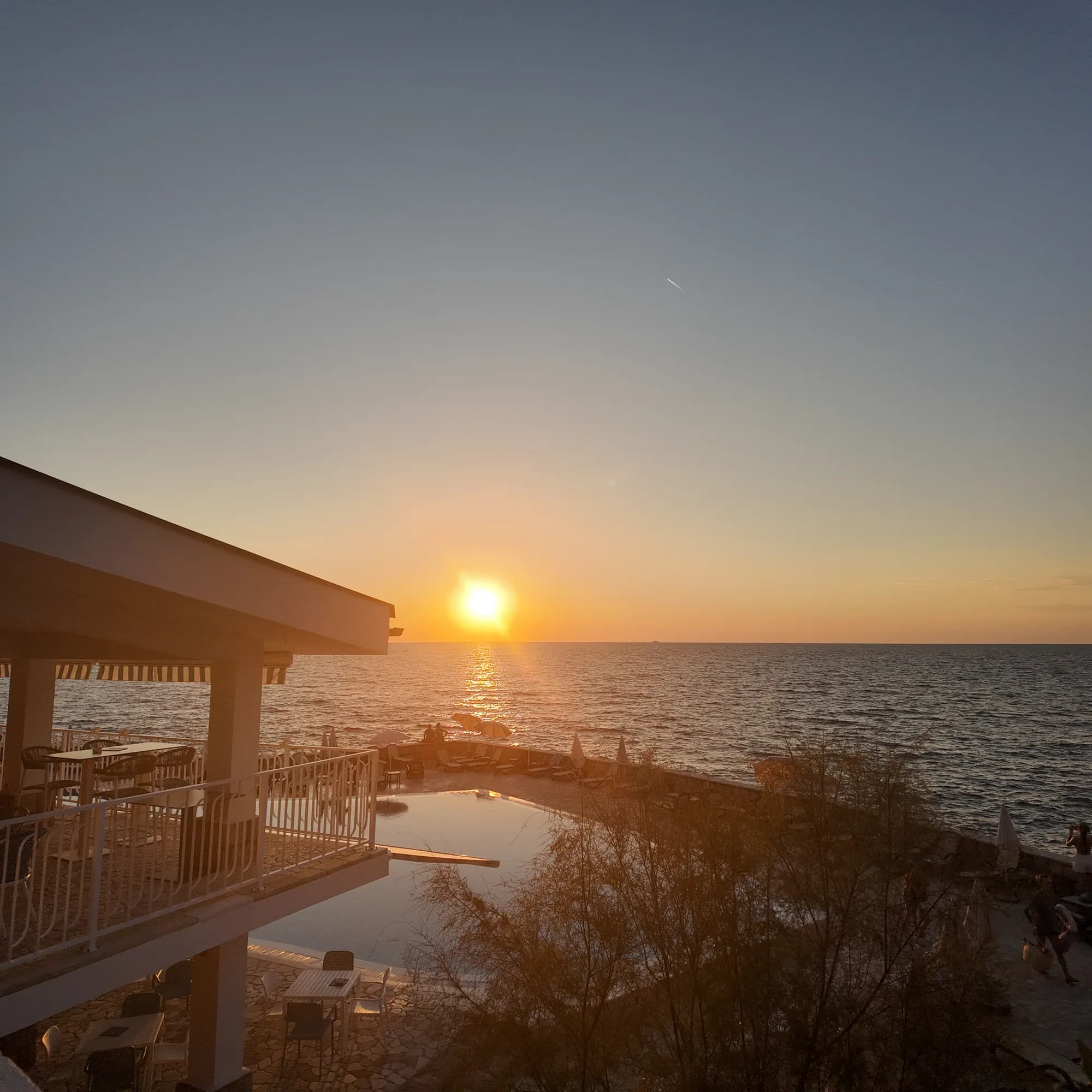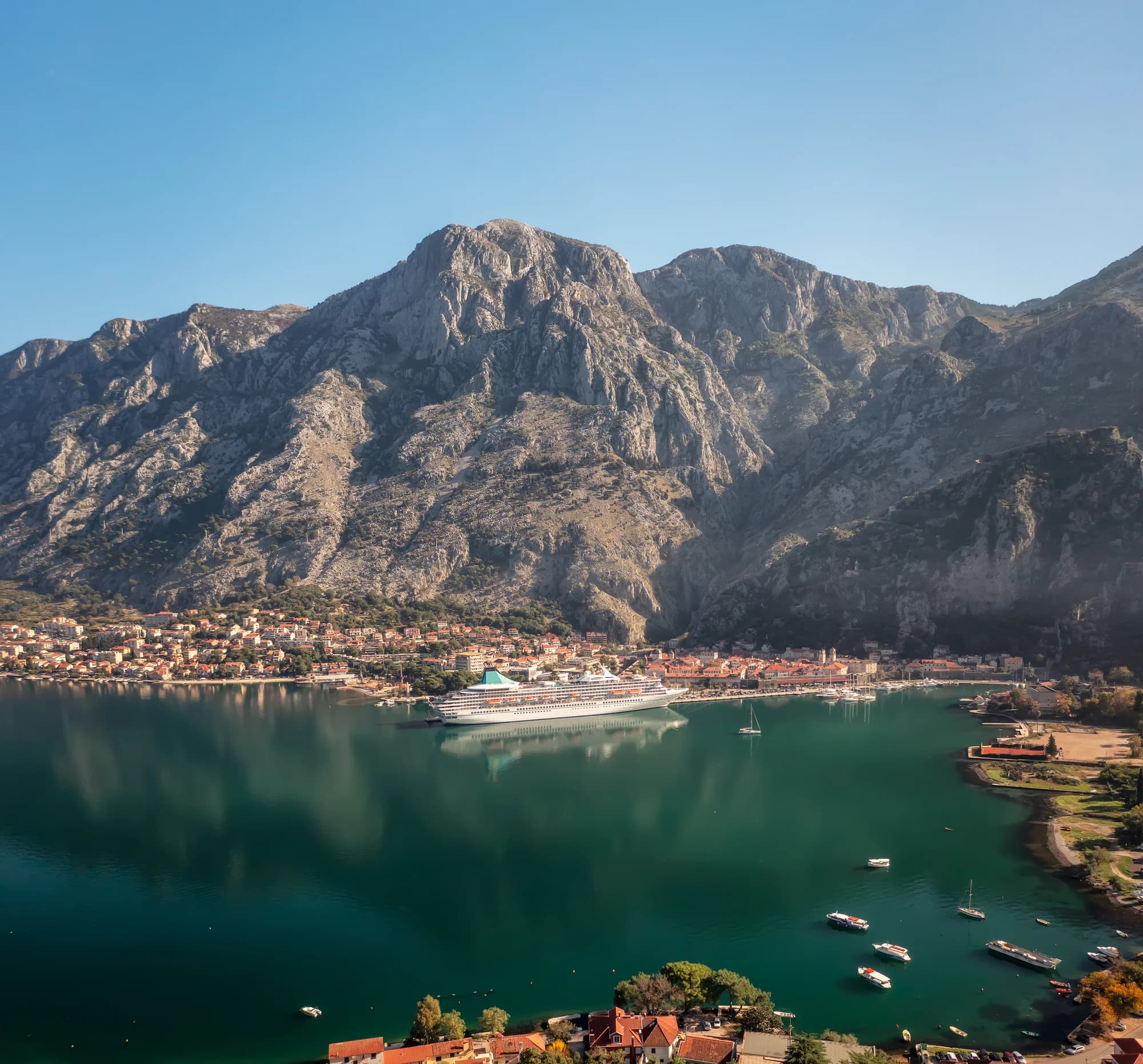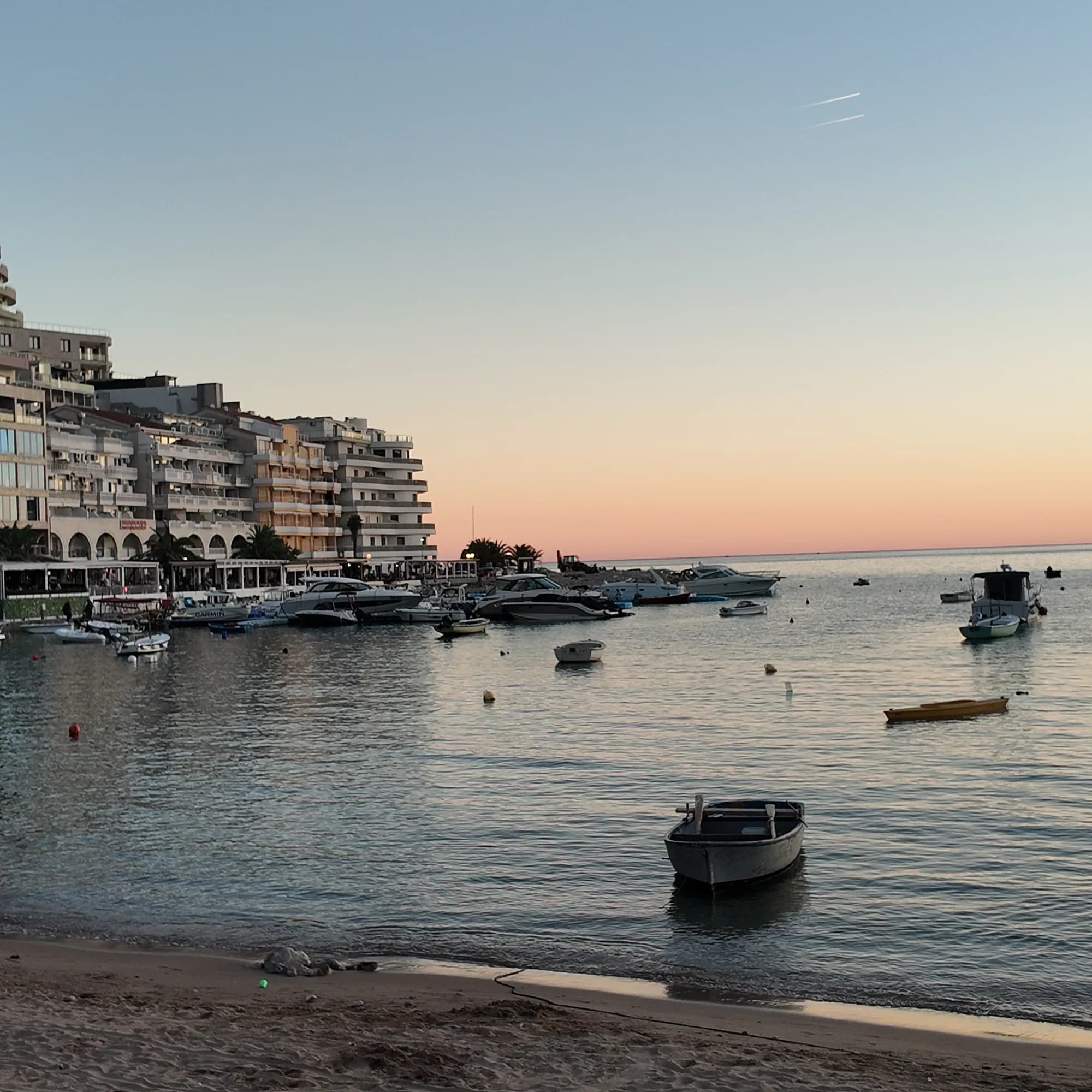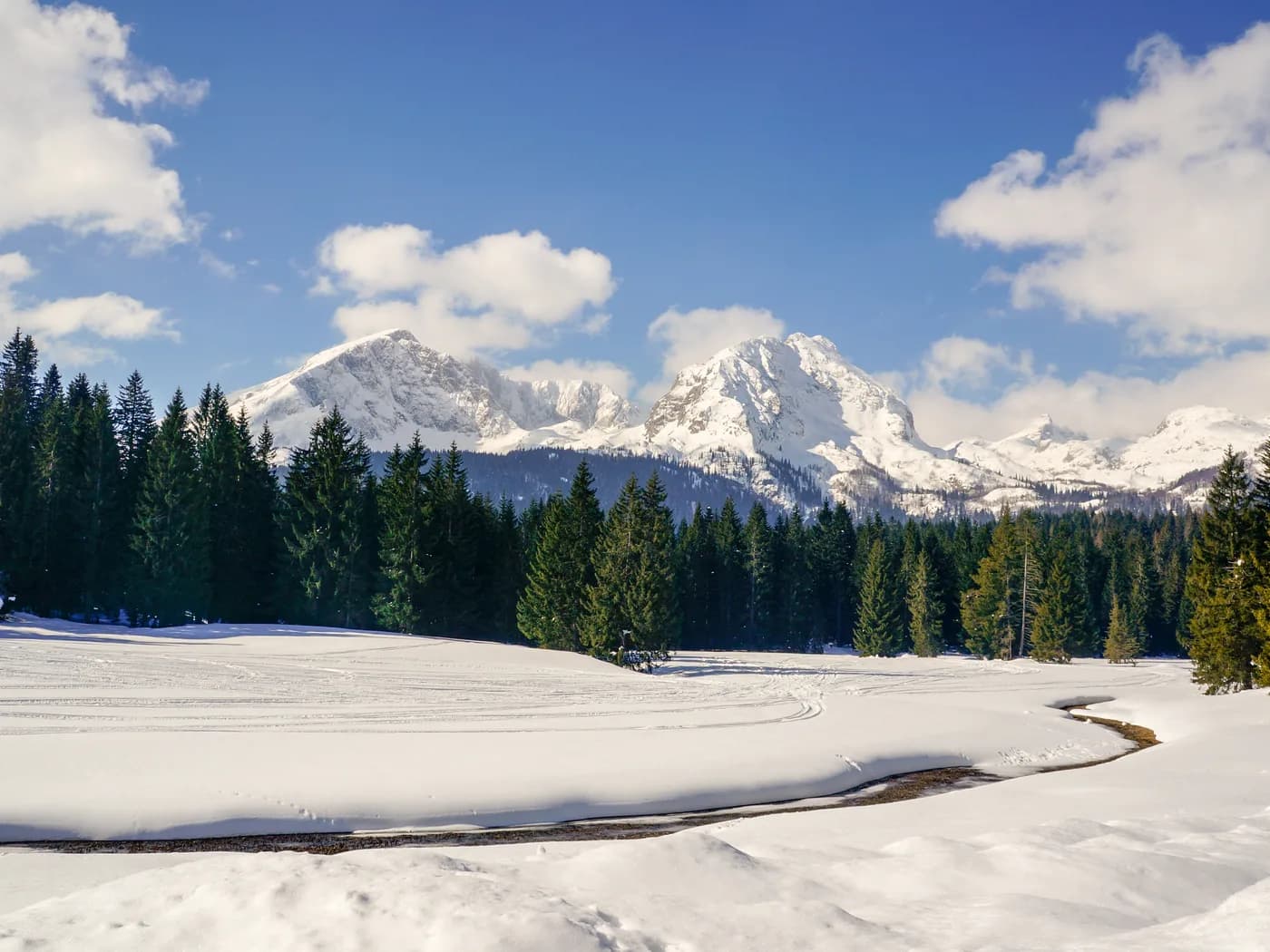
Montenegro does not have one winter. Podgorica's long-term December–February means sit near 6–7°C, while Žabljak's are below freezing. The coast can be wet and green as snow closes or slows northern routes. Rain can fall on the Bay of Kotor while snow shuts a northern road; a ski centre can run its beginner lift while wind stops an upper chair; Žabljak can look calm while an exposed Durmitor route remains a serious winter undertaking. That compression is the attraction—and the planning risk.
This page is for planning a winter trip safely: climate, tyre rules and roads, mountain safety and when to go, delay or switch plans. For ski resorts, lift prices, winter activities and a month-by-month guide, see skiing in Montenegro.
The useful question is therefore not "Is the season open?" but "Which place, road and activity are workable today?" For winter 2026–27, separate climate from forecast and terrain inventory from open terrain. In August 2026, operators had not published everything a skier needs for the coming season. This guide uses official climate normals, the last verified season, current legal rules and live-check steps. It covers lift-served skiing around Kolašin and Žabljak, low-commitment snow days, winter hiking and snowshoeing, road preparation, protected-area restrictions and emergency decisions. It does not invent lift prices, opening dates or a coast-to-ski drive time, and it does not promise snow, open lifts, rental stock or safe trails from a calendar date.
| Zone | Plan and live check |
|---|---|
| Kolašin | Ski network; verify lifts, snow and road. |
| Žabljak | Savin Kuk and snow activities; verify operator and park. |
| Rožaje | Local winter centre; contact the operator that day. |
| Podgorica | Year-round base; check weather and transport. |
| Coast | Old towns; verify rain, venues and event dates. |
| Winter plan | What must be true | Main failure point | Safe fallback |
|---|---|---|---|
| Lift-served ski day | Access road, ticket desk and intended lifts are operating | Wind, thin cover or a partial lift opening | Beginner area, town walk or another date |
| Snow play near town or resort | Legal parking and a clearly bounded area | Traffic, sledging into roads or untested ice | Pedestrian town plan |
| Marked snowshoe or Nordic route | Current route confirmation, equipment and visibility | Buried markings and a slower-than-expected return | Short out-and-back with a fixed turnaround |
| Winter hiking or ski touring | Competence, navigation, avalanche-aware route choice and a reliable partner or guide | Summer-route assumptions in winter terrain | Qualified guided objective or lift-served day |
| Scenic mountain drive | Winter-equipped vehicle and current road information | Ice, snow, fog, rockfall or no safe place to turn | Stay on the main corridor and stop in town |
What "two climates" actually means
The national climate report gives a useful controlled comparison. For 1981–2010, mean temperatures at Podgorica station, 49 metres above sea level, were 6.8°C in December, 5.8°C in January and 6.9°C in February. At Žabljak, 1,450 metres above sea level, the corresponding means were −2.3°C, −3.5°C and −3.5°C.
Those are monthly means, not expected daytime highs and not a forecast for 2026–27. They average warm and cold days, nights and major events. They also do not describe every coastal inlet, karst basin or mountain summit. What they prove is the scale of the altitude contrast: packing and transport decisions cannot be made from a single "Montenegro weather" icon, and a mild valley forecast does not describe a 2,000-metre ridge.
Cetinje and the karst behind the Bay add another complication: proximity to the sea does not guarantee a coastal winter. Our Lovćen guide explains the elevation and exposure behind the old royal capital, while the Orjen guide covers the exceptionally wet mountain wall above Boka.
The four checks that decide the day
1. Weather. Read the forecast for the mountain area and elevation, not only Podgorica or the coast. Temperature, precipitation, wind, visibility and the freezing level matter differently. A sunny icon does not reveal overnight ice.
2. Roads. Confirm the intended route and any restrictions before departure, then keep enough fuel, warm clothing, water and phone charge to wait safely. A mapping app estimates movement under ordinary conditions; it is not an inspection of black ice, drifting snow, rockfall or a snowplough queue. The first-time Montenegro guide covers the wider transport and communications basics.
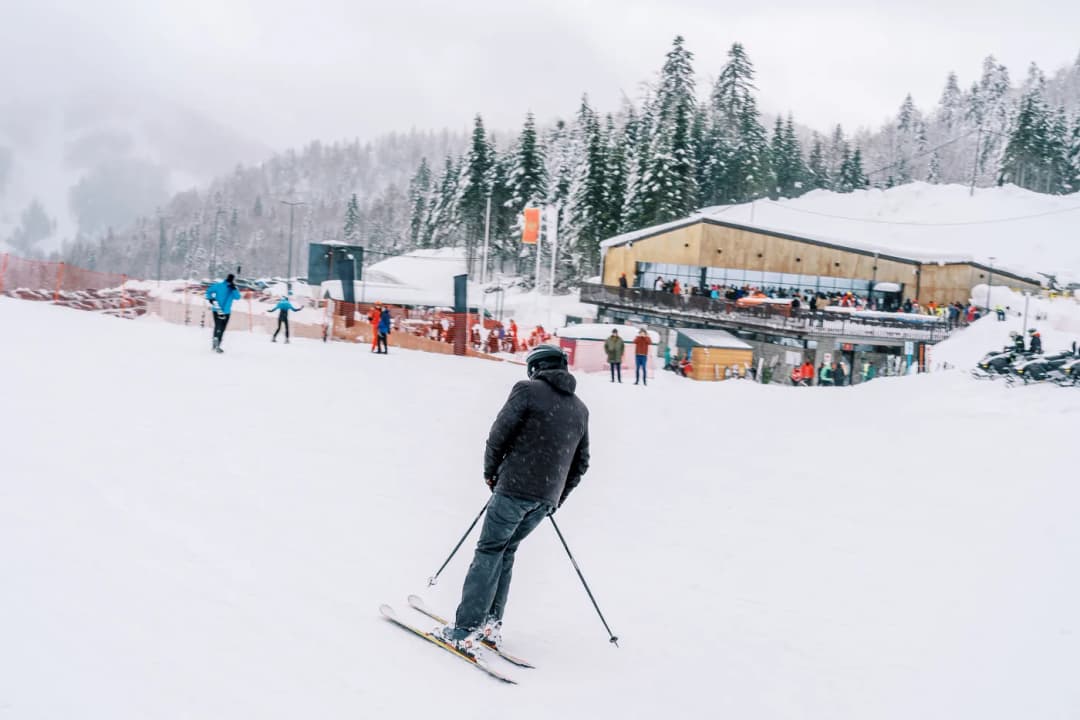
3. Operator. For skiing, identify the specific lift and piste you need. "Open" can mean a limited beginner offer rather than the full linked domain. Kolašin 1600 publishes an operator status panel, cameras and the on-mountain rescue number +382 67 00 1600 on its official website. The panel itself is untimestamped and was still displaying winter-style operating entries when checked in August 2026, so do not treat it as self-authenticating live evidence. Require a dated notice, a demonstrably current camera, or direct operator confirmation for the day you intend to ski.
4. Land manager. National-park notices can close a road, visitor area, cave or route even when an old guide still recommends it. Treat signs, fences and ranger instructions as the current rule. A photograph, saved GPX track or earlier trip report never overrides a closure.
| Check | What to confirm | If uncertain or no | If yes |
|---|---|---|---|
| 1 · Weather | wind · visibility · freeze | Reduce exposure: town, visitor hub, beginner area or postpone. Do not "drive up and see." | Use the planned route, preserve a turnaround time and keep the fallback available. |
| 2 · Road | equipment · restriction | Reduce exposure or postpone | Proceed on planned route |
| 3 · Status | lift · piste · park notice | Reduce exposure or postpone | Proceed on planned route |
| 4 · Group | skill · kit · turnaround | Reduce exposure or postpone | Proceed on planned route |
| After arrival | Re-check wind, visibility and operations | Operations can change during the day | A ticket, booking or long drive is never a reason to continue into worsening conditions. |
Source: skijalista.me, nparkovi.me, gov.me
The photographs and the extreme winter record
The inherited page originated in 2005 and carried an extensive snow gallery—around twenty mountain photographs followed by plain-text labels—without capture dates or a weather-station ledger. Visual review showed that the sequence had shifted: several labels described the next image, while some filenames and captions pointed to incompatible subjects. This revision therefore removes unsupported precise identifications and does not silently relabel those photographs as February 2012. Captions state what is visible and use only an archival filing label where it is defensible; the remaining archive image of the coast is presented only for what can be seen, a snow-covered Rumija above the sea.
That restraint matters in winter. A mislabelled lake can send a traveller toward the wrong access road; a historic cave photograph can appear to endorse a prohibited visit; and a patch of old snow can be mistaken for a current piste. Images illustrate landscape and seasonal change. They never establish today's access, snow depth, ice strength or operating status.
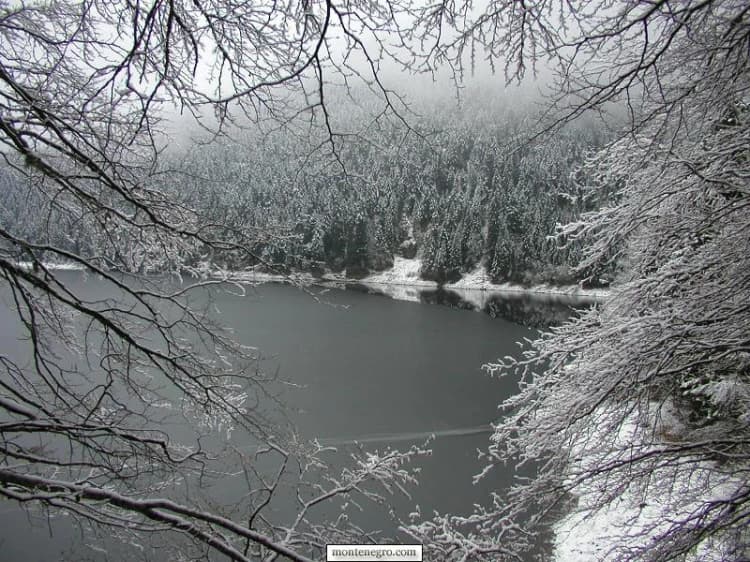
February 2012 is independently documented. A regional meteorological analysis records exceptional snow depths: 180 cm at Kolašin, 210 cm at Žabljak and 58 cm at Podgorica. Government records independently document the resulting national emergency and transport disruption.
Those records show the operational consequences. A state of emergency led to school closures across many municipalities. Seventy-two people were evacuated from a train stranded on the Kolašin–Podgorica railway; rural areas were cut off, authorities discouraged nonessential travel, and Montenegro requested international assistance. This is why a rare snow photograph should inspire respect, not a promise that ordinary infrastructure will function normally in an extreme event.
What is known for skiing—and what is not
What the sources say
The National Tourism Organisation lists Kolašin 1600, Kolašin 1450 and Savin Kuk as the principal centres, with smaller options at Vučje, Hajla and Lokve. Its published descriptions are useful for location, operator contact and the designed terrain. They are not a live lift board.
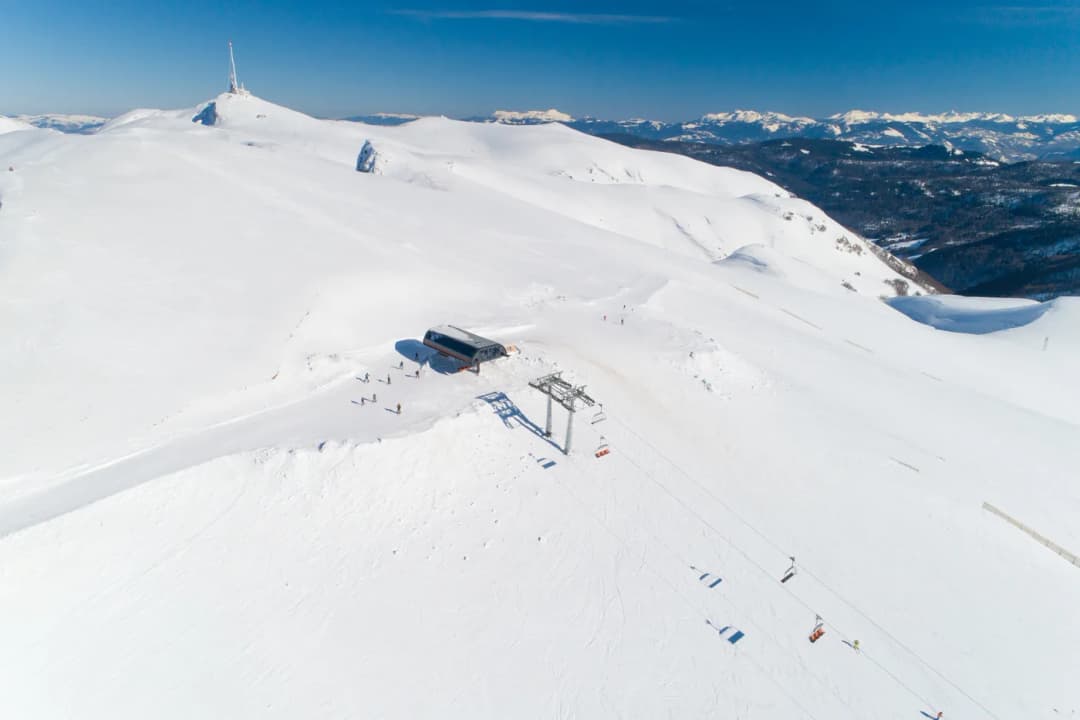
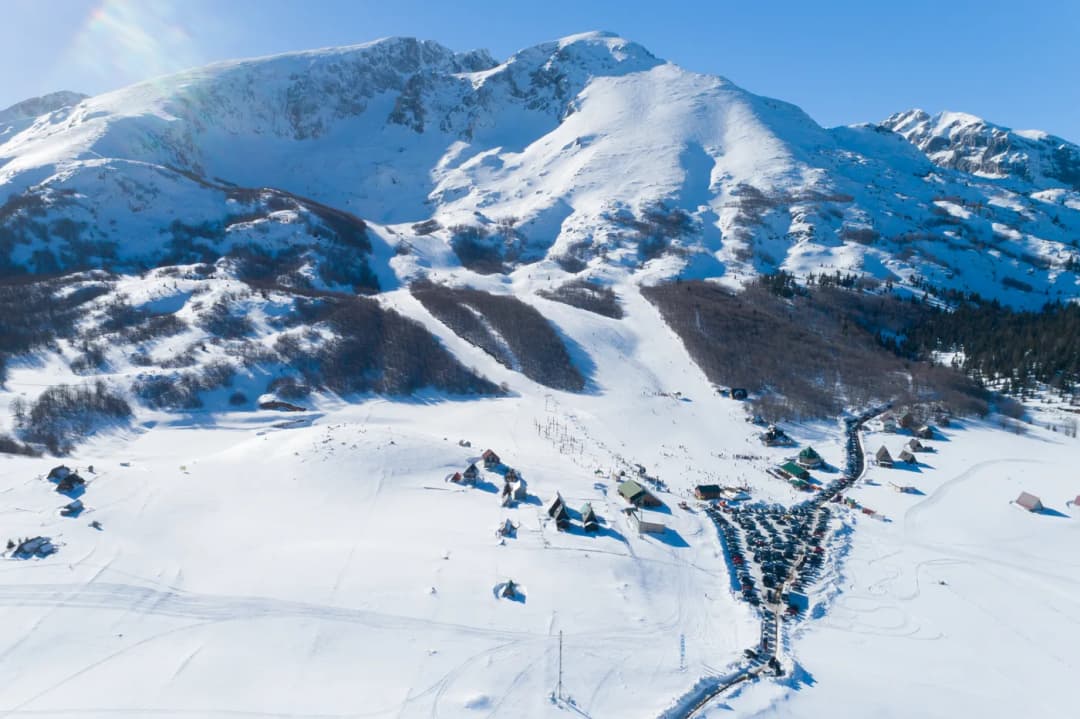
Kolašin's main ski area combines Kolašin 1600 and Kolašin 1450 on Bjelasica, and the National Tourism Organisation describes about 45 km of trails across the two centres. The public operator says Kolašin 1600 is 12 km from Kolašin town, its K8 chair reaches 2,035 metres, and the K7 chair opened in February 2022 to connect the two centres and their piste networks. These are infrastructure facts—not evidence that every link, piste or service is operating today.
Savin Kuk is the principal lift-served option near Žabljak. National tourism material describes 4.6 km of pistes, while its detailed snow-sports page separates a lower 3.8 km network from an upper 800 m black piste. Those figures explain scale, not current grooming or access. Confirm the lower and upper lifts separately, especially in wind or limited snow.
The strongest recent operating snapshot is dated 31 January 2026. The Ministry of Tourism reported eight runs, the Sidro and Tanjir drag lifts, and a beginner conveyor operating at Kolašin 1600. It reported two Sidro-type drag lifts operating at Savin Kuk. The statement also gives ticket-sales counts for Kolašin 1600, proving that the centre was receiving visitors at that point in the 2025–26 season.
Do not project that snapshot onto December 2026. Snow, wind, inspection, power, staffing and maintenance can change the open footprint. A July 2026 public-works notice for reservoirs and pipelines serving Kolašin 1600 snowmaking is evidence of ongoing investment, not proof that a finished system will cover a particular run by opening day.
Plan from the lift you actually need. A beginner should confirm the beginner belt or surface lift, lesson and rental before travel. An intermediate skier should check which return pistes are open rather than assuming the linked kilometre total is skiable. An advanced skier should not interpret marketing about freeride terrain as a snow-stability assessment. For equipment, technique and the distinction between piste and off-piste risk, use the Montenegro snowboarding guide.
| Horizon | What it tells you |
|---|---|
| 31 Jan 2026 | verified operating snapshot |
| July 2026 | snowmaking procurement |
| Travel day | operator + weather + road check — only this step answers "what is open now?" |
Source: gov.me, skijalista.me
Use a three-stage booking rule. First, reserve accommodation with cancellation terms you understand. Second, wait for the operator's 2026–27 tariff and operating notice before budgeting lift access. Third, check the morning lift report before driving uphill. The Kolašin hotel booking-status audit shows why a familiar property name is not enough to establish current operation.
Choose the right winter base
Kolašin and Bjelasica: best for a resort-first plan
Choose Kolašin when lift-served skiing is the priority and you want the largest published network. Treat 1450 and 1600 as named areas whose real connection depends on the lifts and trails open that day. Confirm parking, equipment hire, lessons and the last uplift directly. A trail-map total is not the same as skiable kilometres after wind or low snow.
Kolašin is also the clearest choice for a lift-focused trip because the town and the two Bjelasica bases can support separate fallback plans. Stay in town if restaurants and a pedestrian evening matter; stay near a confirmed base if first-lift convenience matters more. Do not assume a hotel shuttle covers both ski centres or operates outside its published timetable. The guide to northern Montenegro helps place Kolašin within a wider trip without treating the mountains as empty scenery.
Žabljak and Durmitor: best for a mountain-first plan
Choose Žabljak for Durmitor atmosphere, Savin Kuk and access to managed snow activities. National Parks of Montenegro documented a February 2026 guided snowshoe outing on a marked route from Savin Kuk toward Black Lake. That supports snowshoeing as an organised activity; it does not make every summer path winter-safe or any frozen lake safe to cross.
Žabljak can support a resort day, a town-based snow day or a national-park visit, but those are separate plans. Black Lake access, Savin Kuk operations and a high Durmitor route may have different status on the same morning. Use the Durmitor and Black Lake guide for park context, then check current notices. Never walk onto a frozen lake because footprints are present; ice thickness can vary with springs, inflows, snow insulation and recent temperature.
Rožaje, Prokletije and smaller centres: verify before moving
Hajla, Vučje and Lokve can offer a more local experience, but a small centre has less redundancy when snow, machinery or staffing changes. Contact the operator the same day and carry a non-ski fallback. Our Rožaje 2026 guide explains border-road and Hajla planning.
Prokletije offers dramatic winter terrain with fewer lift-served fallbacks. A summer valley road or trail photograph does not establish ploughing, marking or safe snow. Confirm access with the park or local tourism organisation, and use a guide for objectives beyond a clearly operating visitor area. The lower-commitment decision may be a valley viewpoint rather than a summit.
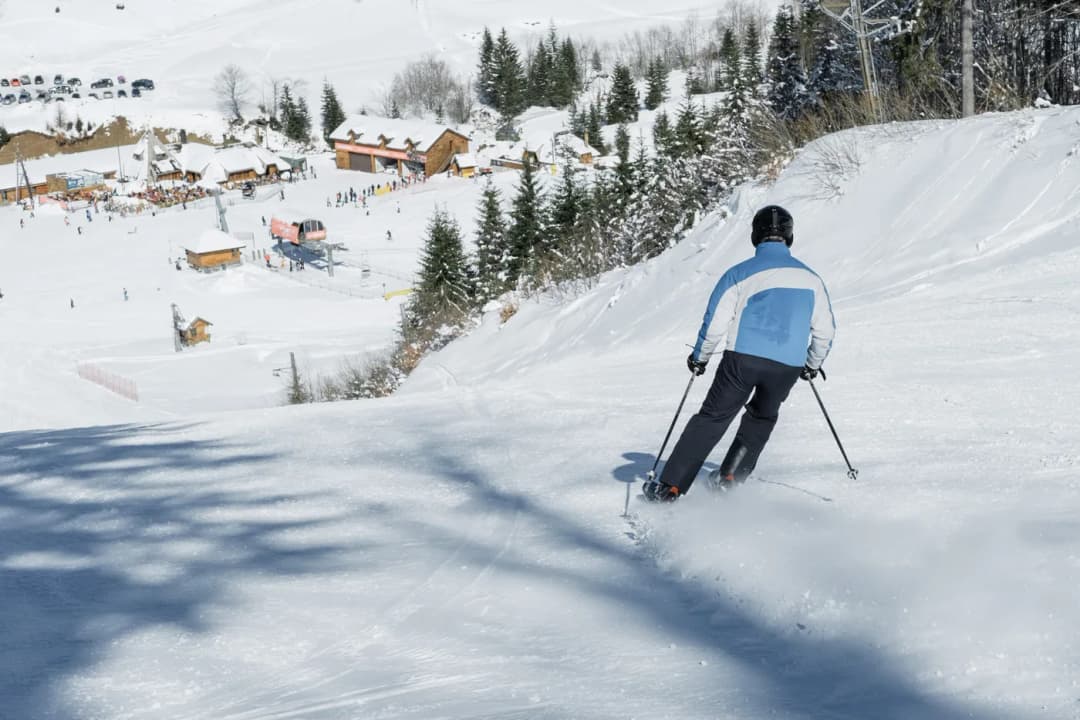
| Base | Plan | Verify |
|---|---|---|
| Kolašin | lift-network plan | verify open footprint |
| Žabljak | Durmitor plan | verify route + lifts |
| Smaller centre | local flexible plan | call same day |
| Every base | non-ski weather fallback | required |
Source: montenegro.travel, nparkovi.me
Driving: the tire rule is conditional and specific
Police guidance sets out the framework clearly. From 15 November to 1 April, passenger and goods vehicles in winter conditions—snowfall or snow, ice or black ice on the carriageway—must have winter tires on all wheels. Designated roads or sections can require them during the order's period even without visible winter conditions. Police state a minimum tread depth of four millimetres and prohibit studded tires. Read the police explanation and the current order for the route you intend to drive.
This is more precise than "winter tires are always mandatory everywhere from November to April," but it is also only a compliance floor. It does not guarantee traction on a steep untreated lane, clearance in deep snow or control on polished ice, and it is not a reason to rent an unsuitable car. A winter itinerary should start with compliant tires on all wheels, verified tread, an ice scraper and a plan that does not depend on a marginal pass. A rental booking must explicitly cover the vehicle, tyres and any equipment needed for the planned roads; "winter package" and "winter ready" are marketing labels, not technical specifications. Ask the rental desk to show the tires, inspect the markings and tread before accepting the vehicle, and ask how roadside assistance works outside towns.
On the road, keep the windscreen, lights and roof clear; use smooth inputs; increase following distance; and avoid stopping where another vehicle cannot pass. Do not park in a plough turning area or narrow the approach to a resort. If snowfall intensifies, visibility collapses or traffic begins sliding, turn back at the first safe place. A paid room or lift pass is not evidence that the final access road is safe.
On 8 January 2026, police reported traffic slowed or interrupted by snow cover, rockfall, overflowing rivers and fog. The lesson is compound risk: winter driving is not only snow. Check the ZHMS forecast, police or recognised road information, and the operator serving your destination immediately before departure. If official advice discourages travel, change the plan.
| Question | Answer | What applies |
|---|---|---|
| 15 Nov–1 Apr? | Yes | winter tires — all wheels, ≥4 mm tread |
| Winter conditions or designated section? | Yes | winter tires — all wheels, ≥4 mm tread |
| Neither | No | check current law — conditions may still change |
| Studded tires | — | prohibited |
Source: gov.me
Rail and public transport
The Bar–Podgorica–Bijelo Polje railway can remove driving from part of a mountain itinerary, and the Railway Transport of Montenegro website presented an online passenger search when checked on 30 August 2026. That interface does not prove a particular service will operate: the 2012 evacuation shows that rail can also be affected during an exceptional event. Check the operator again for your travel date, leave connection margin and avoid treating an old schedule as a guarantee.
Local ski buses, hotel transfers and taxis are seasonal services. Confirm the exact pickup, return time, luggage or ski policy and what happens if lifts close. A timetable announced for 2025–26 is not automatically renewed. If the return depends on one vehicle, keep the dispatcher's contact and enough clothing to wait safely.
The coast in winter
The coast is the low-snow alternative, not a no-weather zone. Winter can bring heavy rain, wind, rough sea and local flooding. The reward is cultural time in Kotor, Herceg Novi, Perast or Budva without summer heat. Verify museums and restaurants individually because seasonal closures are normal and opening directories lag reality.
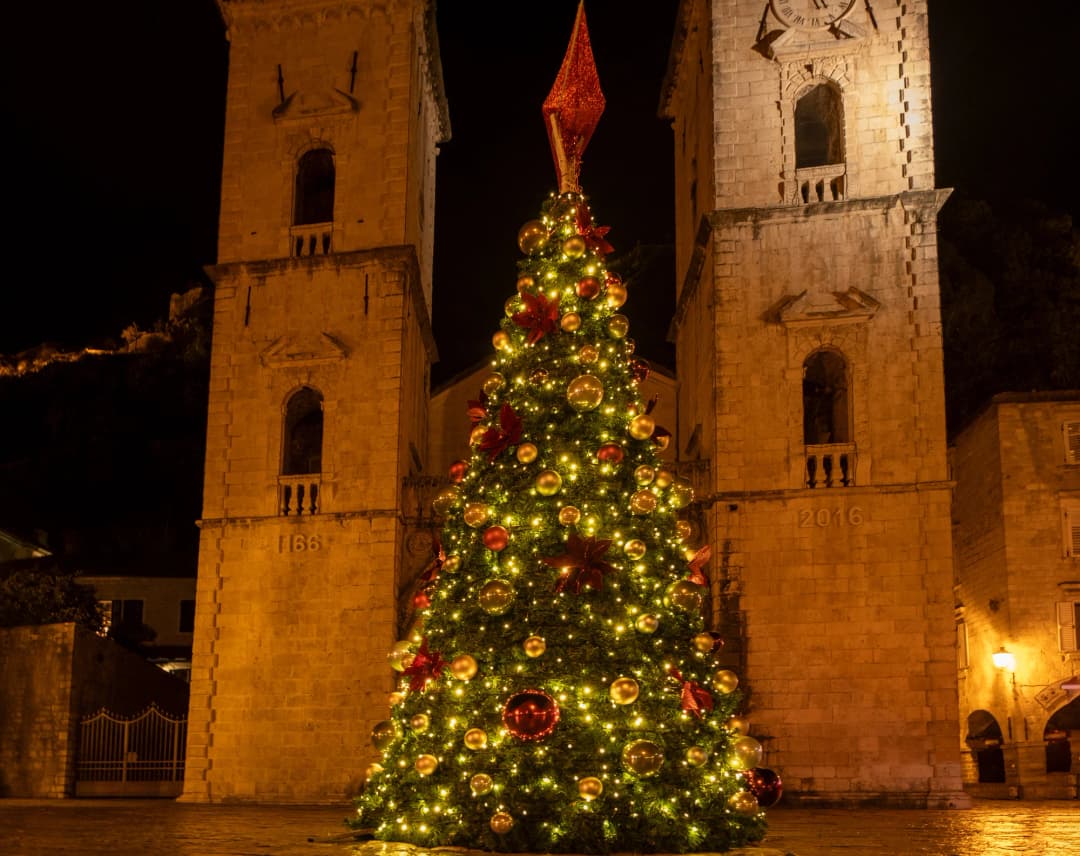
Our off-season guide covers the wider November–March trade-offs, and Kotor versus Dubrovnik compares the two cities. For Kotor, the Mimosa Festival in Herceg Novi and Budva out of season, see our winter guide to the ski resorts and the coast. Do not plan the coast and skiing on the same day unless weather, roads, lift hours and daylight all allow it; geographic closeness is not a safety margin.
Snowshoeing, Nordic skiing and winter hiking
Winter hiking is a different activity from following the same line in summer. Snow can hide trail markings and holes, ice changes fall consequences, and wind can erase tracks. The National Tourism Organisation explicitly warns that Montenegro's hiking routes become harder to navigate in winter and require suitable equipment, warm clothing and guide advice. Its snow-sports page lists snowshoe rental points at selected visitor centres, ski centres and local tourism organisations, and describes a Nordic loop near the Žabljak Sports Centre. These listings are useful leads, but stock, marking and grooming still need same-day confirmation.
Snowshoes prevent some sinking; they do not make steep terrain non-technical. They add no special protection against avalanche release, cornice collapse, weak lake ice or whiteout. A summer path can traverse a loaded slope, disappear under drifted snow or become an icy runout. Start with a verified low-angle route, carry poles and traction appropriate to the actual surface, and turn around while the return is still obvious.
Independent winter hikers need offline navigation, spare insulation, headlamp, food, water, emergency shelter and the judgment to use them. A phone GPX is one layer, not the plan. Batteries drain faster in cold; touchscreens fail with wet gloves; and a straight line to a waypoint may cross terrain the summer trail avoids. Tell someone the route and return time, carry offline navigation and power, and turn around early. Never infer that a lake is load-bearing from footprints or photographs. The broader hiking guide to Montenegro is a summer-and-shoulder-season foundation, not permission to repeat every route in snow.
Ski touring is backcountry travel. It requires the ability to evaluate snow and terrain, make conservative route choices, manage transitions in cold and rescue a partner. The tourism board recommends professional guides and notes that weather can change even a well-built plan. For snowshoeing, ski touring or an exposed walk, use a qualified local guide when terrain, avalanche exposure or navigation exceeds your competence; if those competencies are not already part of your group, book a qualified guide and discuss the exact objective rather than purchasing a generic "adventure" label.
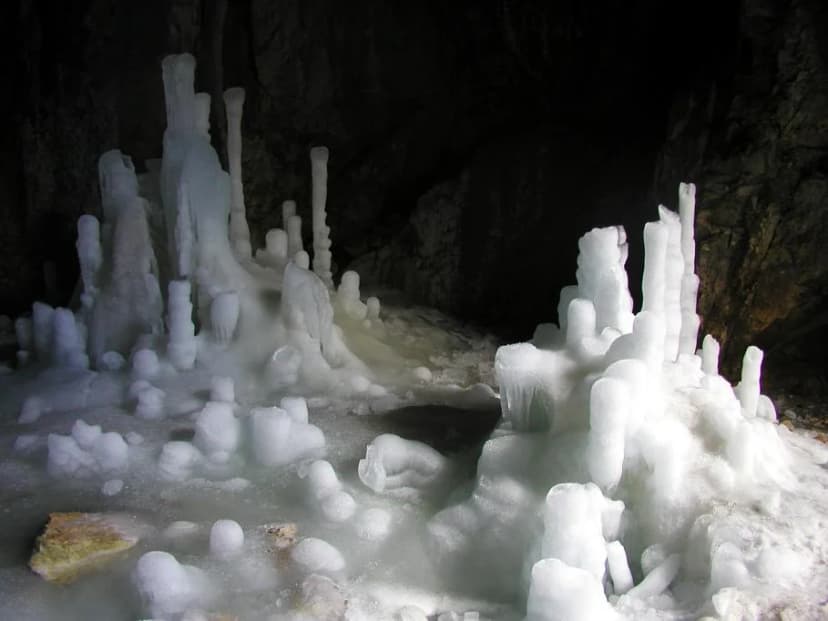
Ice Cave is closed: the archive is not an invitation
Durmitor's Ledena pećina, or Ice Cave, requires unusually clear wording. Following July 2026 research into its sensitive microclimate and ice formations, National Parks of Montenegro says staff closed the entrance on 22 August 2026 with fencing and prohibition signs. After those protections were damaged or removed, the park announced reinforced closure and monitoring. Its 27 August notice says entry is explicitly prohibited.
Do not enter if a fence is down, a sign is missing or another hiker says the cave is "open." Damage to the barrier does not cancel the rule. Do not publish directions that encourage entry, move protective material or touch the ice formations. This closure exists to protect a fragile cave environment, and it also removes a hazardous underground objective from the visitor itinerary.
Late winter and spring thaw are not an easier version
Longer daylight can create a tempting mixed season: dry coast, green valleys and snow remaining high above. Thaw adds its own hazards. Firm morning snow can become wet and unstable; shaded paths remain icy after open ground melts; streams rise; and rockfall or small slides can affect roads and trails. The Durmitor spring-thaw guide explains how to read that transition, and the off-season guide above helps build a trip that still works when a mountain day is cancelled.
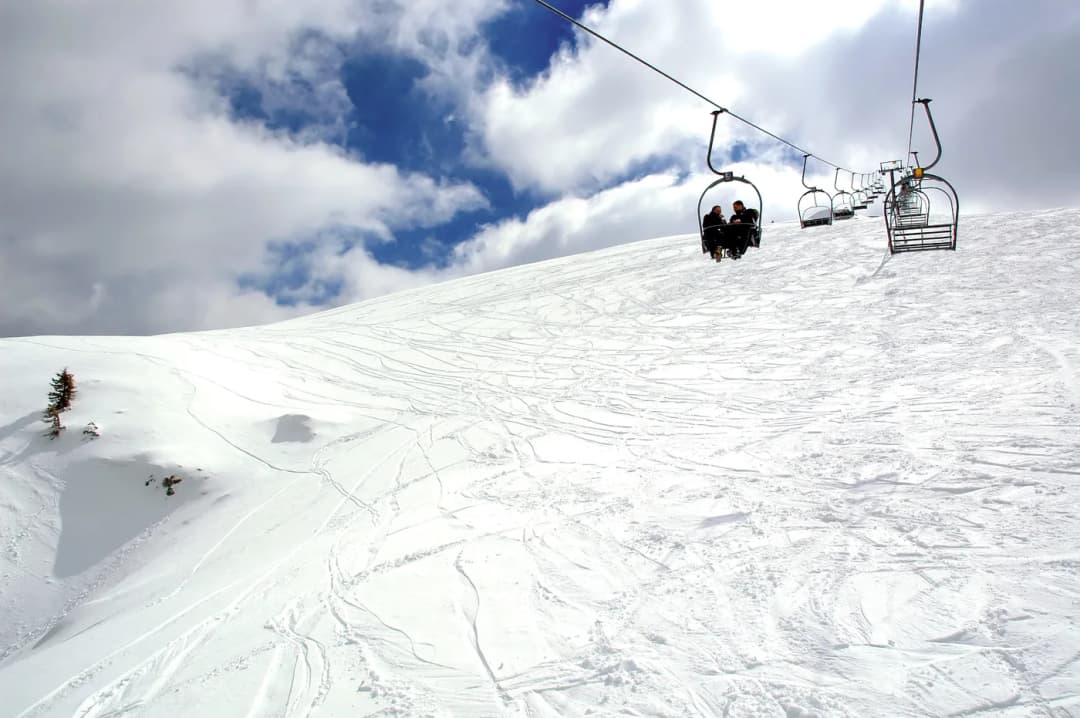
Mountain safety, emergencies and rescue
For an emergency in Montenegro, call 112. The service is nationwide and operates 24/7. The Ministry of the Interior says it operates continuously, coordinates relevant responders including medical, fire, police and mountain-rescue resources, and can receive calls in several foreign languages. At Kolašin 1600, the operator also publishes its resort rescue number, +382 67 00 1600; confirm it from the operator before the ski day. Resort patrol is not a substitute for 112 away from the managed ski area, and emergency response is never a substitute for preparation or a reason to assume mobile coverage throughout mountain terrain.
Give coordinates, route, last known landmark, group size, injuries, exposure, remaining battery and what shelter you have. Preserve phone power and follow the dispatcher's instructions. Do not keep moving merely to improve reception unless directed; movement can make coordinates stale and take the group into worse terrain. Before leaving town, tell a reliable person the route, vehicle, return time and what to do if you miss it.
| Step | Action |
|---|---|
| 1. Check | weather + route |
| 2. Match | gear + guide |
| 3. Share | route + return |
| 4. Turn | before marginal |
| 5. Call 112 | real emergency |
| Before departure | offline navigation and warm waiting layers |
Source: montenegro.travel, gov.me
| Tell them | Detail |
|---|---|
| location | where you are |
| problem | what happened |
| people | how many |
| condition | state of the injured |
| hazards | on-scene risks |
| callback | a number that works |
| When to call | a genuine emergency |
Source: gov.me
Practical winter-day sequence
- The evening before: choose one primary plan and one lower-exposure fallback; verify equipment, fuel, insurance, offline map and cancellation terms.
- Before departure: check mountain weather, road information, resort or park status, and the exact lift or route. Screenshot critical contacts, but keep checking live information.
- At the vehicle: inspect tyres, clear snow and ice, test lights and confirm that chains or other equipment—if carried—fit and can be installed safely.
- At the destination: read signs and ask staff what is operating. Compare the visible weather with the forecast; abandon the plan if they diverge materially.
- During the activity: protect the turnaround time, keep the group together, and reassess wind, visibility, temperature and fatigue.
- Before dark: return with margin. Winter daylight is not the place to spend every remaining minute because conditions were "almost perfect."
A robust seven-day winter outline
- Days 1–2, coast: use a year-round base, verify interiors, and keep a rain plan.
- Day 3, transfer: move to Kolašin or Žabljak in daylight after road and forecast checks.
- Days 4–5, mountain: choose skiing or a managed snow activity from that morning's operating report.
- Day 6, weather reserve: preserve this day rather than prepaying every activity; use it for a delayed ski day, rail journey or town programme.
- Day 7, departure: avoid a high-risk mountain transfer immediately before a flight.
The reserve day is the most important feature. For a longer national route, adapt our 10-day Montenegro itinerary; for a deeper safety complement, use Montenegro snow, roads and mountain safety.
Practical packing and booking checklist
- Waterproof shell, insulating layers, warm hat and gloves for every mountain visitor.
- Footwear with winter grip; wet coastal stone can also be slippery.
- Sun protection for snow glare even in cold weather.
- Cancellation terms for accommodation, lessons and passes.
- Winter tires on all wheels when required; verify tread rather than asking only for the tire brand.
- Current operator, ZHMS and road-information links saved before departure.
- Offline route and accommodation contact details, plus spare power, headlamp, food, water and emergency shelter for independent winter walking.
- A non-ski plan for every mountain day.
| Layer | Function |
|---|---|
| shell | wind + precipitation |
| insulation | warmth |
| base | moisture |
Source: montenegro.travel
| Item | Requirement |
|---|---|
| winter tire | all wheels |
| winter tire | ≥4 mm when rule applies |
| winter tire | no studs |
| winter tire | inspect each one |
Source: gov.me
Decision rule: go, delay or switch
Go only when the route is open, the forecast fits the vehicle and driver, and the operator confirms the activity. Delay when a forecast warning, fog, ice or road notice makes timing uncertain. Switch to the town or coast plan when lifts close, the route degrades or the group lacks the equipment for changed conditions. A prepaid booking is never evidence that travel is safe.
| Decision | Trigger |
|---|---|
| GO | three checks pass |
| DELAY | conditions uncertain |
| SWITCH | closure or mismatch |
Source: gov.me
| Horizon | What it decides |
|---|---|
| Climate | pack + choose zone |
| Forecast | choose day |
| Observation | leave or wait |
Source: gov.me
| Source | What it shows |
|---|---|
| trail map | full designed extent |
| dated snapshot | status on one past date |
| open now | today's usable footprint |
Source: gov.me
| Layer | What to hold |
|---|---|
| Primary | live timetable |
| Fallback | missed / closed |
| Margin | onward connection |
Source: zpcg.me
| Alternative | Condition |
|---|---|
| town walk | if surfaces safe |
| indoor venue | verify open |
| rest / reschedule | protect next day |
Source: montenegro.travel
Frequently asked questions
Will Montenegro have reliable ski snow in winter 2026–27?
No responsible source can guarantee that in August. Book flexibly, watch the ZHMS forecast and snow reports, and confirm open lifts and runs with the operator immediately before travel.
When does Montenegro's ski season start?
There is no reliable national start date. Operators open lifts when snow, preparation, staffing and weather allow. Marketing pages commonly describe winter or December, but the live operator notice is the decision source.
Are Kolašin 1450 and 1600 always fully connected?
No. Published connected terrain describes the network design, including the K7 chair that opened in February 2022 to link the two centres. Wind, snow, lift status and maintenance determine whether the practical connection operates on a given day.
Which is better for beginners: Kolašin or Savin Kuk?
Choose the centre that confirms a suitable beginner area, lesson and rental for your date. Kolašin has the larger linked infrastructure on paper; Savin Kuk may suit a Žabljak-based trip. Neither is "better" if the needed beginner facility is closed.
Are winter tires mandatory?
From 15 November to 1 April they are mandatory on all wheels for the specified vehicle categories when winter conditions exist, and on roads covered by the seasonal order regardless of visible conditions. Police state a minimum tread depth of four millimetres and prohibit studded tires. Check the current order applying to your dates and exact route.
Can I walk around Black Lake in winter?
Only when the park permits access and the route, light and equipment suit current conditions. Do not assume the summer circuit is safe: snow can bury markings and ice can make ordinary sections hazardous. A marked, organised snowshoe event was documented in 2026, but snow, ice and navigation change independently. Ask the national park what is open, use suitable guidance and equipment, and do not step onto the lake surface.
Can I visit Durmitor Ice Cave?
No. National Parks of Montenegro announced an explicit entry prohibition in August 2026 to protect its sensitive microclimate and ice formations. A damaged or absent barrier does not make entry lawful.
Is snowshoeing safe without a guide?
Only on a currently confirmed, low-commitment route that the group can navigate and assess. Snowshoes do not remove avalanche, ice, weather or navigation hazards. Use a qualified guide when route choice or winter judgment exceeds the group's competence.
Does it snow in Montenegro?
Yes in the mountains, every winter; on the coast only exceptionally. Northern towns such as Žabljak (1,450 m) have December–February means below freezing, so snow is the normal winter condition there, but how much falls and when changes from year to year, which is why ski days are never guaranteed. Podgorica's winter means sit near 6–7°C, and the coast mostly gets rain rather than snow.
Does snow reach the coast?
It can, but it is exceptional at low elevation. The archive shows snowy Rumija above Dobre Vode, and official records document major national snowfall in 2012. Plan the coast for rain, wind and cool weather rather than guaranteed snow.
Can I ski in the morning and visit the coast the same day?
Sometimes a carefully planned trip may combine mountain snow and a mild coast, but there is no dependable one-hour formula. Lift status, road conditions, traffic and daylight decide whether the itinerary is sensible.
What number should I call in an emergency?
What the sources say
Call 112. The Ministry of Interior says the service operates nationwide, 24 hours a day, and can coordinate the appropriate emergency service in several languages. At Kolašin 1600 the operator also publishes a resort rescue number, +382 67 00 1600, for incidents inside the managed ski area.
The best Montenegro winter trip is not the one that forces every contrast into one day. Give the coast its weather, the mountains their uncertainty and the road its own decision point. With flexible bookings and live checks, winter's dramatic compression becomes a strength instead of a trap.