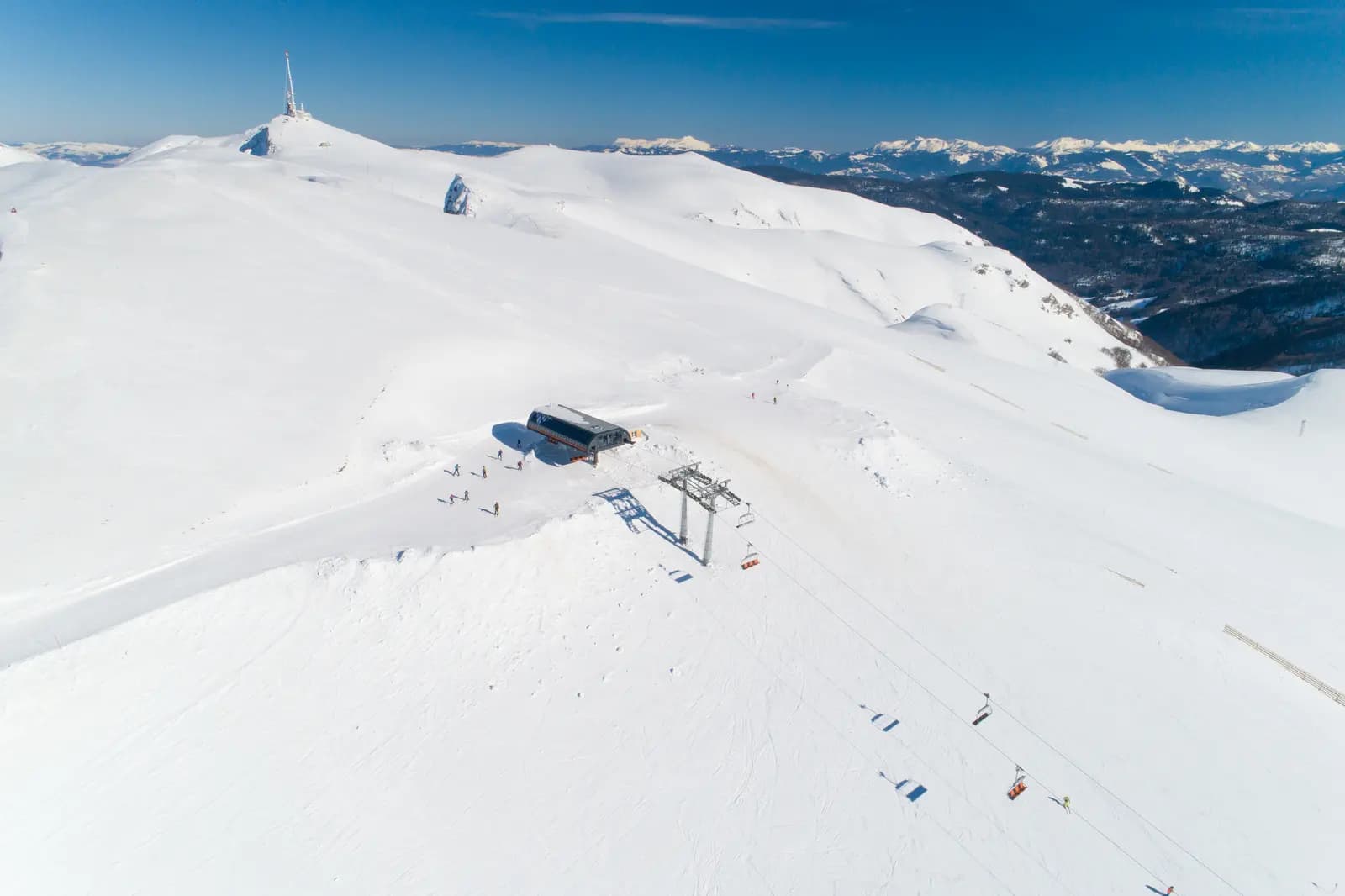
Montenegro can make a rewarding snowboard trip, but it should not be sold as a small Alpine system with guaranteed connections, deep snow and predictable parks. Its advantage is different: compact mountain towns, lift-served options on Bjelasica and Durmitor, smaller local centres, and the chance to build a trip around what is actually open. Its limitation is equally important: published terrain inventory can be much larger than the terrain operating on a given day.
As of 31 August 2026, the 2026/27 season has not supplied a complete verified operating plan. The strongest recent public evidence is a Ministry of Tourism snapshot from 31 January 2026: Kolašin 1600 then had eight runs, two drag lifts and a beginner conveyor operating, while Savin Kuk had two drag lifts operating. That is useful history, not a forecast. Every rider still needs current lift, run, wind, surface, lesson, rental and road confirmation.
| Clock | What it shows | Limit |
|---|---|---|
| INVENTORY | mapped lifts + runs | not same-day access |
| 31 JAN 2026 | verified snapshot | not next-season promise |
| TODAY | operator + patrol | controls your ride |
Source: gov.me, skijalista.me
Choose a base by verified fit, not resort superlatives
For most multi-day riders, Kolašin is the most practical first base. The national tourism organisation publishes Kolašin 1600’s K8 lift as serving eight runs—two blue, four red and two black—totalling 10.5 kilometres, and Kolašin 1450 as having 17 kilometres of trails. It also markets the linked Kolašin inventory at approximately 45 kilometres. Those figures describe infrastructure; do not add them together again or assume all links and runs are open.
Žabljak and Savin Kuk suit riders who value Durmitor scenery and accept a smaller lift-served product. The tourism site publishes 4.6 kilometres of Savin Kuk trails across blue, red, black and beginner terrain. Its 31 January 2026 operating snapshot was narrower—two drag lifts—so a snowboarder must ask which uplift, not simply whether “the resort is open.” Surface lifts may be tiring or technically awkward for a beginner who has not learned to unload cleanly.
Vučje, about 20 kilometres from Nikšić according to the national tourism site, is the only listed centre whose public inventory explicitly includes a snowboard park, along with a 1,200-metre recreational run and two 120-metre small runs. That makes it worth a direct call for park-focused riders, not a guaranteed park trip. Confirm snow cover, feature count, grooming, opening status and whether features are inspected that day. Use the Nikšić guide to judge the town base separately.
Hajla and Lokve also appear in the national inventory. Their smaller scale can be attractive, but this research did not find a sufficiently current 2026/27 operating report to recommend either on a fixed plan. Treat them as call-first alternatives after an operator confirms lifts, access road, rental and the terrain that is genuinely open.
| Centre | Published inventory | Latest specific evidence used here | Snowboard-critical check |
|---|---|---|---|
| Kolašin 1600/1450 | Approx. 45 km linked inventory; individual-area figures also published | 1600: 8 runs, 2 drag lifts, beginner conveyor on 31 Jan 2026 | Open link, uplift type, board rental, lesson and wind |
| Savin Kuk | 4.6 km; blue, red, black and beginner runs | 2 drag lifts on 31 Jan 2026 | Which slopes those drags serve; surface-lift suitability |
| Vučje | 1,200 m run, two 120 m runs, snowboard park | No same-day 2026/27 operation verified | Park built/open, features inspected, landing condition |
| Hajla | 1,019 m trail, baby lift and anchor lift | No same-day 2026/27 operation verified | Lift, access road, rental and instruction |
| Lokve | 5 km published; chair and surface lifts described | No same-day 2026/27 operation verified | Actual operating uplift and terrain, not historic plant |
| Constraint | Base | Action |
|---|---|---|
| MULTI-DAY | Kolašin first | verify open links |
| DURMITOR | Savin Kuk | smaller product |
| PARK | Vučje listing | confirm features |
| EXPLORER | Hajla/Lokve | call first |
Source: montenegro.travel, gov.me
The six-part daily operating check
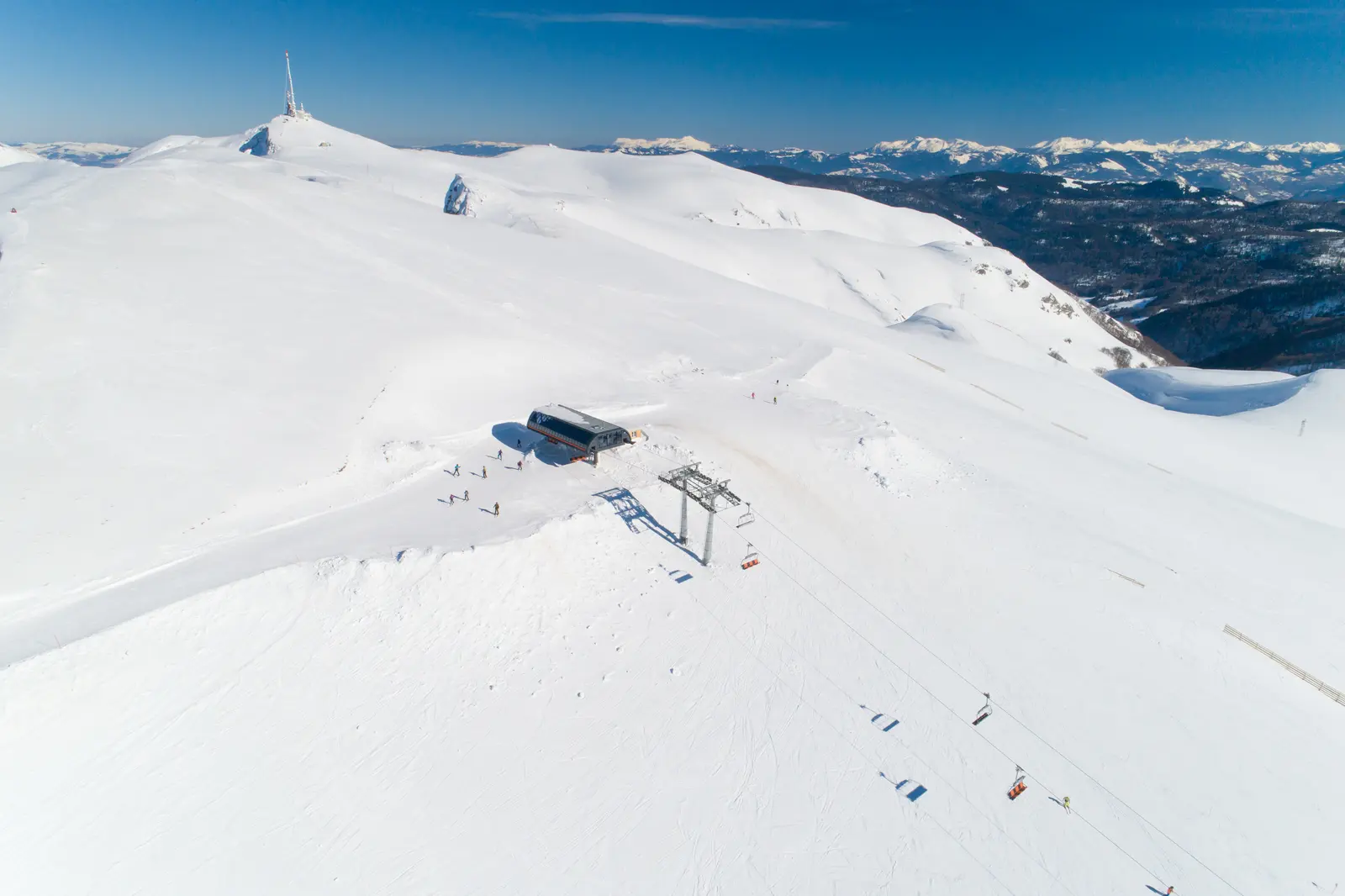
“Open” is too weak a question for a snowboarder. A base restaurant can open while uplift is limited; a beginner conveyor can run while upper terrain is wind-held; a park can be listed but not built. Contact the operator on the morning you ride and ask six separate questions: which lifts are turning, which named runs are open, whether connecting lifts operate, whether the beginner area is available, whether snowboard lessons and your rental size exist, and whether a park is built and inspected.
Ask how the information will be updated if wind or visibility changes. On arrival, read the piste map, patrol notices and closure signs again. Buy a product only after you understand what it accesses. The Kolašin 1600 operator page was still showing a 2025/26 price-list reference when checked on 31 August 2026, so this article deliberately gives no 2026/27 price or hours.
| Fact | Confirm |
|---|---|
| LIFTS | which ones? |
| RUNS | named + open |
| LINKS | operating? |
| LEARN | area + lesson |
| RENTAL | board + boots |
| PARK | built + checked |
Source: skijalista.me, montenegro.travel
Practical rental and lesson checks for snowboarders
Reserve by measurement, not “adult medium.” Send boot size in Mondopoint if known, ordinary shoe size, height, weight, riding level and preferred stance. Ask whether the shop has snowboard boots—not ski boots—in the right size, a board appropriate to your weight and ability, bindings that match the boots, a helmet, wrist protection, and any child-specific equipment required. Do not accept heel lift, numb toes, pressure pain or a binding that does not close securely.
Tell the technician whether you ride regular or goofy, but let them check stance width and angles rather than copying an advanced rider’s setup. Photograph the board and damage form before leaving. Clarify overnight storage, swap policy if boots hurt, closing time, and whether damage cover excludes base or edge impact. Rental availability on a tourism page is not an inventory promise for a specific size.
A first lesson is particularly valuable where surface lifts dominate. Ask for an instructor who teaches snowboarding, the lesson language, meeting point, group size, included lift access and cancellation rule. Beginners need a gentle learning surface, room to stop, and uplift they can use—not merely a blue run somewhere on the map.
| Step | Check |
|---|---|
| BOOTS | secure, no pain |
| BINDINGS | compatible |
| BOARD | weight + level |
| STANCE | checked |
| RECORD | damage + swap |
FIT FROM THE FOOT OUTWARD. Editorial checklist; final setup belongs with a competent rental technician. Montenegro.com editorial snowboard rental framework
Snow and snowmaking: procurement is not coverage
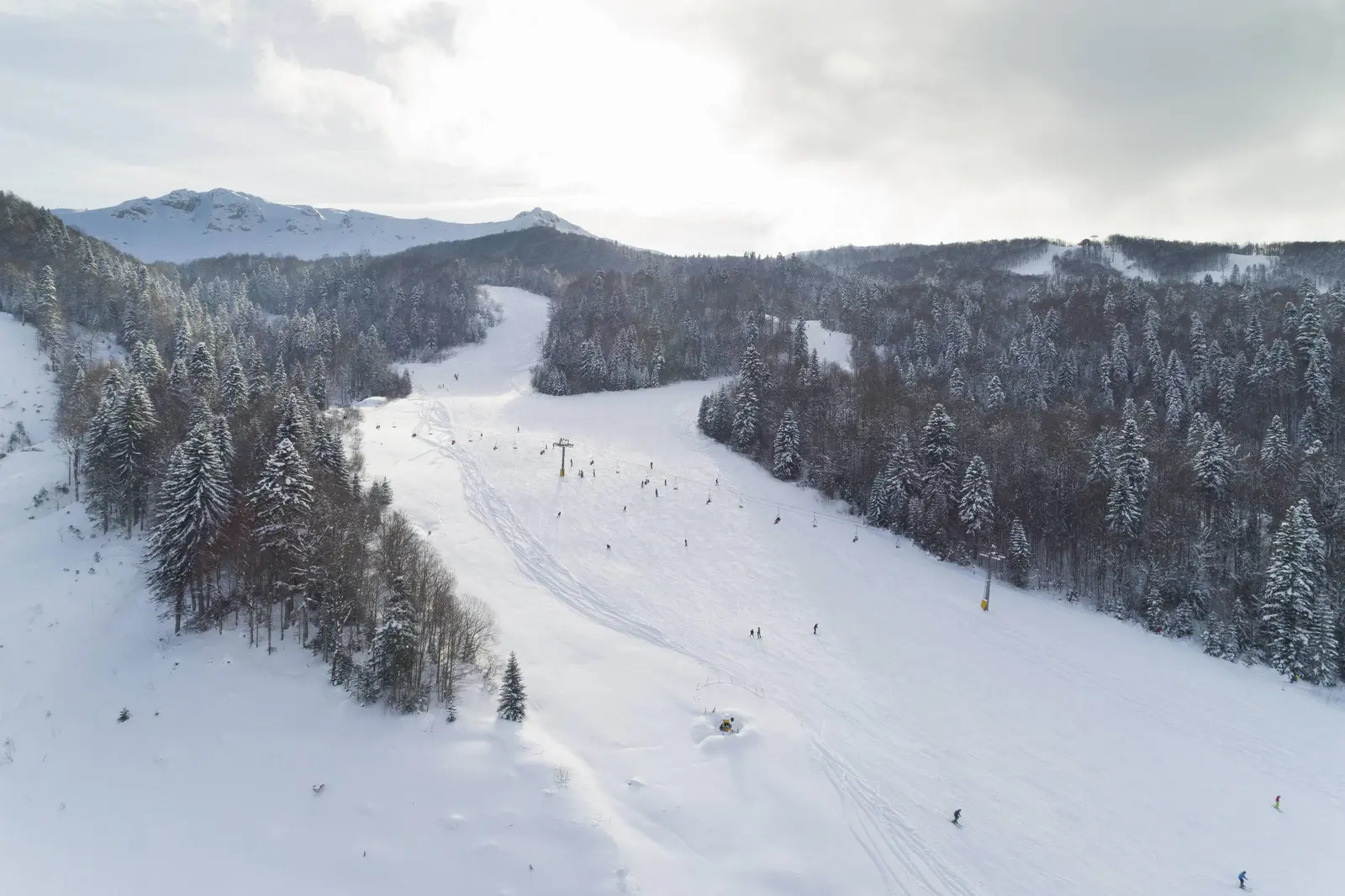
Do not choose dates from a generic “December to March” sentence. A winter storm can improve coverage rapidly; wind, thaw and rain can remove quality or close uplift just as quickly. A resort’s elevation and mapped terrain do not tell you the base depth, surface or visibility on your day. Use recent observations, operator cameras if available, named-run status and the local forecast close to departure.
In July 2026, the Ministry of Public Works published a design-and-build notice for reservoirs and pipelines serving a Kolašin 1600 artificial-snow system. It is legitimate evidence of planned investment. It is not evidence that the system is complete, that every run has coverage, or that the 2026/27 season is protected from warm weather. Ask which open runs are using natural or made snow only if that distinction affects your decision; the practical question is the current surface and width.
For deeper winter context, use Montenegro Winter 2026–27. Its climate and road framing helps set expectations, but even long-term averages cannot forecast a particular week.
| Status | Outcome |
|---|---|
| PROVES | procurement |
| NOT YET | completion |
| NOT YET | operation |
| NOT YET | coverage |
| NEVER | weather guarantee |
Source: gov.me
The piste boundary is a safety boundary
A run being closed, ungroomed or just beyond a marker does not make it “sidecountry.” Once you leave an open, controlled piste, you may enter avalanche terrain, lose patrol coverage, cross cliffs or streams, or be unable to return to uplift. This research found no official nationwide Montenegro public avalanche bulletin that would let a visitor apply a daily local danger rating. That absence does not mean low danger.
The European Avalanche Warning Services publishes a standard five-level danger scale and common avalanche-problem resources. UIAA’s 2026 education stresses choosing routes for current snow conditions. These are useful frameworks, but neither supplies a Montenegro slope assessment. If you want to tour or splitboard, use a locally competent winter guide who can explain the route, current snowpack evidence, emergency plan and turnaround points. Verify credentials and scope rather than accepting “knows the mountain.”
A transceiver, shovel and probe are companion-rescue tools, not permission to enter avalanche terrain. Every member needs functioning equipment, training, a pre-departure check and practiced rescue skills; navigation, shelter, insulation, communication and first-aid planning also matter. A solo beacon does not rescue its wearer. If current local assessment is unavailable, remain on open controlled pistes.
National Parks of Montenegro documented a February 2026 snowshoe event on a marked Savin Kuk–Black Lake route, led with educators and children. It proves that a staffed event occurred; it does not make all summer trails safe in winter or turn that route into an independent bad-weather recommendation. For protected landscape context, read the Biogradska Gora National Park guide before assuming forest access equals ski access.
| Terrain | Requirements |
|---|---|
| OPEN CONTROLLED PISTE | follow signs + patrol; respect closures; recheck changes |
| UNCONTROLLED TERRAIN | local assessment; trained partners + rescue; guide or do not enter |
Source: avalanches.org, theuiaa.org, nparkovi.me
Winter roads and rail: keep the mountain day conditional
Police guidance states that winter tires are required on all wheels from 15 November to 1 April when winter conditions exist and on designated road sections, with at least four millimetres of tread. Check the order for your season. At rental pickup, inspect the sidewall marking, tread and all four wheels yourself; ask for chains and a demonstration where required. “Winter equipped” in an email is not a physical inspection.
A Police Directorate warning from 8 January 2026 described snow, rockfall, flooding and fog affecting roads at once. That dated event is not today’s condition, but it shows why a dry-valley forecast does not settle a mountain drive. Check police/road notices before departure and again before descent. Carry fuel, charged phones, warm clothing, water and a plan to turn around. Never build a flight connection around a last lift-to-airport dash.
Kolašin is also on the rail network. Railway Transport of Montenegro provides a live timetable search, so rail can reduce driving exposure for the town leg. It does not reach the ski base and it cannot guarantee that a future service will run through disruption. Search the exact date, confirm station-to-accommodation transfer, and arrange the separate mountain-centre connection. The transport guide helps compare buses, rail, rental and transfers.
| Stage | Action |
|---|---|
| INSPECT | tires + chains |
| CHECK | road / rail |
| TURNAROUND | set threshold |
| RECHECK | before descent |
Source: gov.me, zpcg.me
Emergency planning and 112
Montenegro’s 112 service operates nationwide around the clock and handles calls in several foreign languages. Save 112, but do not treat a phone number as a route plan. Mobile coverage can fail; response takes time; weather can limit access. Tell someone where you are going, with whom, by what route and when you will report back.
At a resort, save the operator or patrol number displayed that day and learn the nearest named lift, run and marker. In an emergency, give location, number of people, mechanism of injury, hazards, weather and callback number. Do not move an injured person unless remaining in place creates greater danger. Keep the group warm and follow dispatcher or patrol instructions.
A three-day plan that survives changing operations
Day 0: arrive before a riding morning. Collect equipment while the shop has time for swaps, verify boots and bindings, buy food and check the next morning’s transport. Review the operator’s latest report and define a no-go threshold for road, wind or visibility.
Day 1: use open groomed terrain to understand signage, uplift and surfaces. Beginners take a snowboard lesson; experienced riders resist using “easy first lap” as permission to cross a closure. Recheck boots after an hour and adjust only with competent help.
Day 2: choose from actual operations. If the Kolašin link and suitable runs operate, expand the lift-served day. If upper terrain is closed, use lower slopes, instruction or a non-riding option rather than chasing another centre over uncertain roads. Read Kolašin’s four-season tourism test for alternatives beyond lift counting.
Day 3: keep flexible. A second snowboard day is worthwhile if surface and access fit; otherwise choose a staffed snowshoe activity, town day or safe onward travel. The north Montenegro planning guide explains why “uncrowded” does not remove transport and service constraints.
| Day | Focus | Backup |
|---|---|---|
| DAY 0 | fit + report | transport check |
| DAY 1 | groomed terrain | lesson / system |
| DAY 2 | expand if open | adapt if not |
| DAY 3 | ride or staffed | alternative |
Source: gov.me, nparkovi.me
Frequently asked questions
Which Montenegro resort is best for snowboarding?
Kolašin is the strongest first candidate for a multi-day lift-served trip because it has the largest published inventory. It is not automatically the best on your date. Compare open runs, uplift type, lessons, rentals, wind and access. Vučje deserves a direct check if a park is your priority; Savin Kuk trades scale for Durmitor setting.
Will Kolašin 1450 and 1600 be fully linked in 2026/27?
Published tourism material describes linked inventory, but this article found no complete 2026/27 operating plan. Ask whether the connecting lift and connecting runs are open that day. A combined ticket or map does not prove physical access.
Is Vučje’s snowboard park open?
The national tourism organisation lists a snowboard park at Vučje. That is inventory, not a daily status report. Contact the centre and ask whether the park is built, which features are open, when they were inspected and what the landing condition is.
Can beginners snowboard at Savin Kuk?
Published inventory includes beginner and blue terrain, but the last government snapshot used here reported two drag lifts operating. Ask which terrain those lifts served, whether the beginner area and snowboard instruction are available, and whether the rider can use the uplift safely.
When does the snowboard season start?
No fixed date is reliable before operators publish and snow permits. Do not book non-refundable travel from a generic December opening claim. Look for named lifts and runs, not a promotional season label.
Is off-piste snowboarding safe in Durmitor or Bjelasica?
No uncontrolled winter terrain is inherently safe. This research found no official nationwide Montenegro avalanche bulletin. Use a locally competent guide and current local assessment, trained partners and complete rescue/navigation preparation—or stay on open controlled pistes.
Can I reach Kolašin by train?
Yes, Kolašin is on the rail network and the passenger operator has a live timetable search. Recheck the exact service and disruption status. The station-to-accommodation and town-to-ski-centre legs still need separate planning.
What number should I call in an emergency?
Call 112 for a genuine emergency. At a ski centre, also use the patrol or rescue contact displayed by the operator that day. Give a precise location and follow instructions; do not rely on guaranteed mobile coverage.
Bottom line
Montenegro’s snowboard proposition is credible when it is kept conditional. Kolašin offers the strongest published lift-served inventory; Savin Kuk offers a smaller Durmitor product; Vučje has the country’s clearest published park claim; Hajla and Lokve are direct-check alternatives. None of those descriptions says what will turn tomorrow.
Build the trip around a flexible base, a proper board fit, an operator conversation and a road fallback. Separate mapped terrain from open terrain, snowmaking procurement from finished coverage, and rescue equipment from competence. If local backcountry assessment is unavailable, ride the open piste. For a broader road-and-weather checklist, compare Montenegro in Winter: Snow, Roads and Mountain Safety.