Getting Around Montenegro: Buses, Car Hire, Ferries & Transfers (2026)
Montenegro is small — barely 180 km top to bottom — but its mountains, serpentine coastal roads and patchy public transport make getting around Montenegro less straightforward than the map suggests. This guide compares every option — rental car, intercity bus, taxis and local ride-hailing apps, the Bay of Kotor ferry, the scenic train, and private transfers — with honest notes on reliability, sample routes and travel times, so you can pick the right mode for the coast, the cities and the wild north.
Transport at a Glance
| Mode | Best for | Typical cost | Reliability | Notes |
|---|---|---|---|---|
| Rental car | Freedom, the north, multi-stop trips | From ~€25–45/day + fuel | High (you control it) | Min age usually 21; serpentine roads; parking tight in old towns |
| Intercity bus | Budget travel between main towns | €3–€12 per leg | Medium — frequent on coast, sparse inland | Comfortable coaches; buy at the station; small luggage fee |
| Taxi / Bolt | Short hops in and around cities | €4–€10 city; agree fare otherwise | High in cities | Use Bolt or licensed meters; agree price for long trips |
| Ferry (Kamenari–Lepetane) | Skipping the long Bay of Kotor drive | ~€4–€5 per car | High, very frequent | Saves ~40 min around the bay; runs day and night |
| Train | Scenery (Bar–Bijelo Polje line) | A few euros | Low frequency, slow | Great views, not useful for the coast/Kotor |
| Private transfer | Airport runs, groups, no hassle | €25–€70 typical | High | Fixed price, door to door, book ahead |
The short version: a rental car wins for most itineraries, buses are excellent value between major coastal towns, and ferries and transfers fill specific gaps.
Renting a Car: The Default Choice
For most visitors, a hire car is the single best decision. Montenegro rewards spontaneity — a viewpoint over the bay, a mountain village, a quiet beach down an unmarked lane — and only a car gives you that.
Why a car wins:
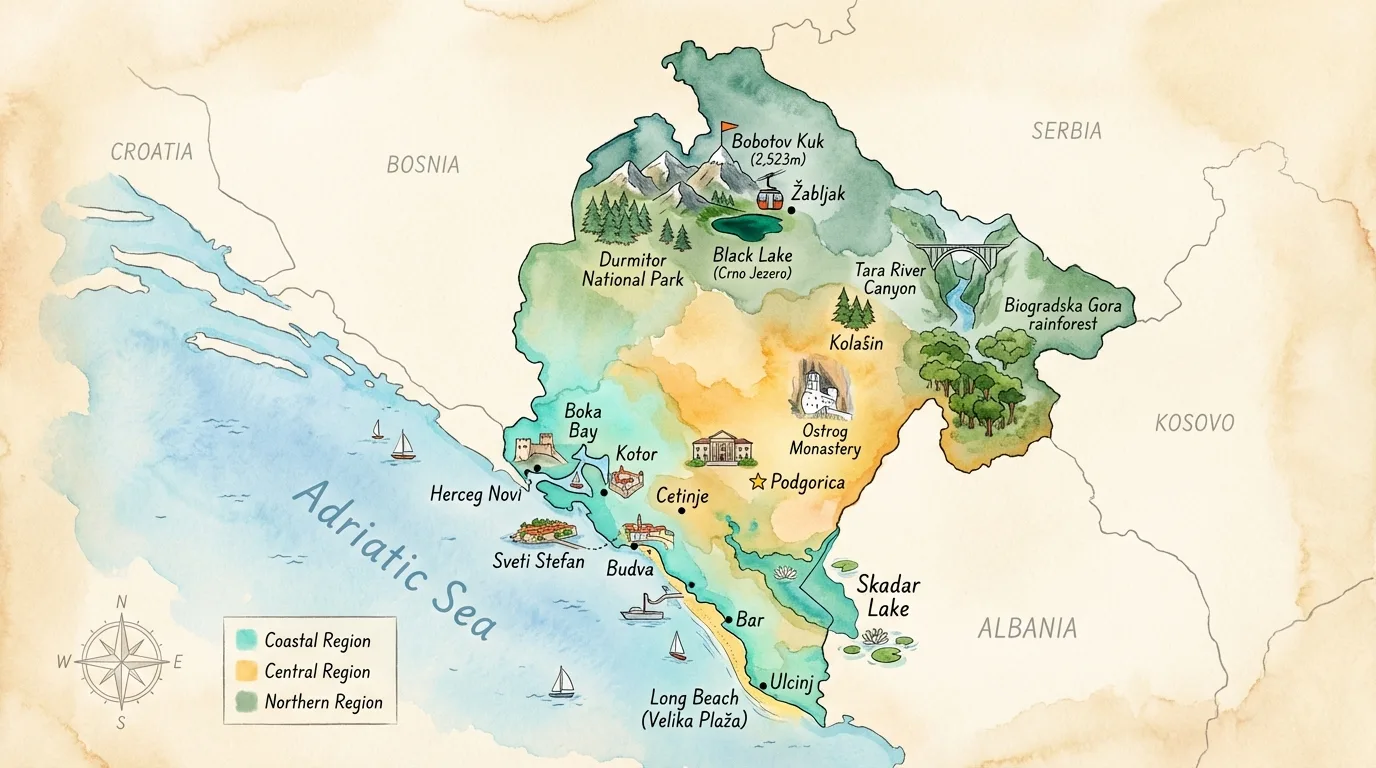
- The north is effectively car-only. Durmitor, the Tara Canyon, Žabljak and the high mountains have thin, slow bus service. Without a car you'll spend more time waiting than exploring.
- The coast is a string of small towns — Herceg Novi, Kotor, Budva, Sveti Stefan, Bar — that a car lets you hop between on your own schedule.
- Distances are short, so fuel costs stay low. You can see a lot in a week.
The trade-offs: coastal and mountain roads are narrow and twisting, summer traffic around Kotor and Budva is heavy, and parking in walled old towns is limited and metered — you'll usually park outside the walls and walk in. Rental basics: drivers are usually at least 21 with a licence held 1–2 years. We cover the rules, tolls and tips in depth in our guide to renting a car and driving in Montenegro.
One recent change the mental map often misses: Montenegro opened its first motorway in July 2022 — the 41-kilometer A-1 section from Smokovac, just north of Podgorica, to Mateševo near Kolašin. A €3.50 toll for cars buys a tunnel-and-viaduct run that bypasses the old white-knuckle Morača canyon road and cuts the drive from the capital toward Kolašin and Biogradska Gora to roughly half an hour — a meaningful shortcut if your itinerary includes the northern mountains.
If you're basing yourself somewhere walkable and only making the odd day trip, you can rent for part of the trip rather than the whole stay. Many guests staying in apartments in Kotor walk the old town and bay on foot and hire a car for just two or three days of mountain exploring.
Intercity Buses: Cheap but Imperfect
Montenegro's intercity buses are genuinely good value and the backbone of coastal travel for budget travelers. Modern coaches link the main towns, fares are a few euros, and on the busy coastal corridor (Herceg Novi–Kotor–Budva–Bar) departures are frequent.
What to expect:
- Buy tickets at the station counter or kiosk; on busy summer routes it's worth arriving 20–30 minutes early. There's usually a small fee per piece of stowed luggage (€1–€2).
- Coastal service is dense and reliable; the Kotor–Budva run alone has buses roughly every 30 minutes in season.
- Inland and northern service is thinner. Getting to Žabljak or smaller mountain villages by bus is possible but slow and infrequent — plan around fixed departure times.
Honest reliability note: schedules can be approximate, a posted bus occasionally fills up or runs late, and English at smaller stations is hit-or-miss. For point-to-point coastal travel buses are excellent; for a flexible multi-stop or northern itinerary they become frustrating. Use them for predictable corridors, not for chasing waterfalls in the mountains.
Taxis and Ride Apps
In the towns and cities, taxis are cheap — but note that, contrary to a persistent myth in travel guides, neither Uber nor Bolt operates in Montenegro. Local apps fill the gap: TeslaGo runs an all-electric, app-priced fleet in Podgorica, MonteGO covers Podgorica and the main coastal towns (Kotor, Budva, Tivat, Herceg Novi, Bar), and licensed phone-dispatch taxis remain the standard everywhere else.
Tips:
- Use the meter or a local app. For metered city rides, a short hop is typically €4–€8.
- Agree the fare in advance for any non-metered or longer trip (e.g. between towns or to an airport) before you set off.
- Licensed taxis have proper company markings and a visible price list; avoid unmarked cars touting at airports and bus stations.
Taxis are perfect for the last mile, late nights, or a one-off trip you don't want to drive. They're not a substitute for a car on a touring holiday, but they smooth out the gaps.
The Kamenari–Lepetane Ferry
One of Montenegro's most useful little shortcuts: the Kamenari–Lepetane car ferry crosses the narrow Verige strait at the mouth of the inner Bay of Kotor. Taking it saves the long drive all the way around the bay through Kotor and Risan — roughly 40 minutes of serpentine road.
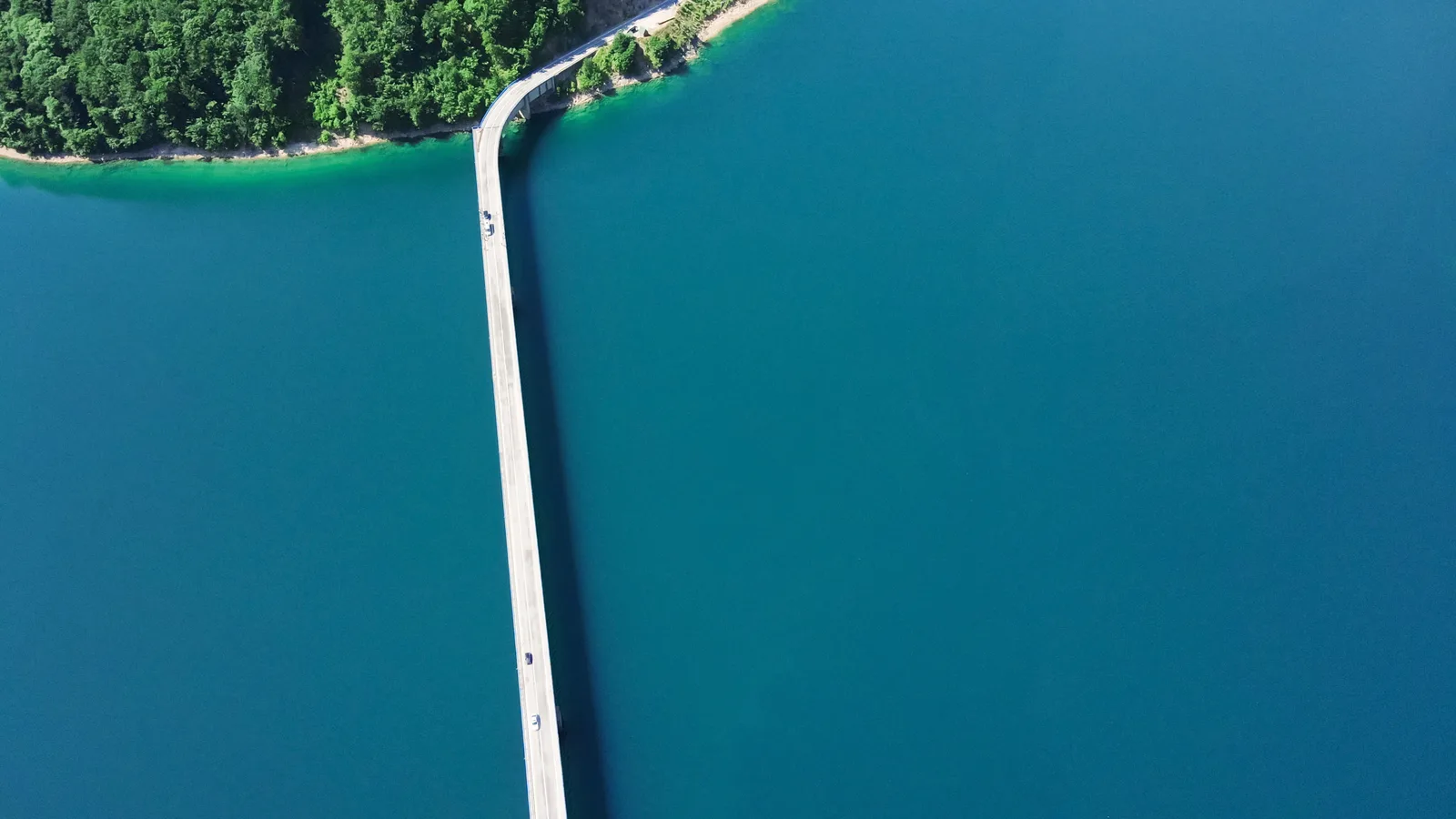
- Cost: €5 per car and €2.50 per motorcycle on the unified year-round tariff; foot passengers and cyclists cross free.
- Frequency: very frequent, running day and through the night in season — you rarely wait long.
- When to use it: travelling between Herceg Novi / Tivat and the southern coast (Budva, Bar), or simply to skip bay traffic. When you specifically want to see Kotor and Perast, drive the bay road instead.
It's a quick, scenic five-minute hop and a genuine time-saver. For more on the area, see our Bay of Kotor guide.

Trains: Scenic, Not Practical for the Coast
Montenegro has one passenger railway worth knowing about: the line running Bar–Podgorica–Kolašin–Bijelo Polje (continuing toward Serbia). It is one of the most scenic train rides in Europe, climbing through gorges and over the dramatic Mala Rijeka viaduct.
The engineering matches the scenery. Completed in 1976 after a quarter-century of construction, the full Belgrade–Bar line threads 254 tunnels and crosses 435 bridges in 476 kilometers, and the Mala Rijeka viaduct carries the rails nearly 200 meters above the riverbed — the highest railway bridge in the world when it was finished in 1973, a title it held until 2001.
But be realistic about what it does:
- It does not serve the main coastal resort towns (no Kotor, Budva, Tivat by rail).
- Departures are infrequent and slow compared with buses or driving.
- Fares are very cheap — a few euros.
Verdict: ride it for the experience — Podgorica to Kolašin is a beautiful, inexpensive journey — but don't build your holiday transport around it. For getting between beaches and old towns, the train isn't the tool.
Airport Transfers and Private Drivers
Montenegro's two airports are Tivat (TIV) and Podgorica (TGD). Tivat sits right on the coast — about 8 km / 15 minutes to Kotor — while Podgorica is roughly 82 km / 1h20 to Kotor. Many northern-bay visitors also fly into Dubrovnik (DBV) in Croatia, under three hours from Podgorica and a common gateway to the upper bay (it crosses the border).
Private transfers are popular for the airport run and for groups:
- Fixed, door-to-door price agreed in advance — no meter anxiety, help with luggage, and a driver who knows the roads.
- Typical fares run from around €25 for short hops (Tivat–Kotor) up to €60–€70+ for longer or cross-border routes.
- Ideal when you arrive late, travel with family or lots of bags, or simply want a stress-free first leg before picking up a rental car later.
If you'd rather not drive at all, a combination of arrival transfer + buses + occasional taxis covers a coast-focused trip comfortably.
Sample Routes and Times
Approximate driving times by car (buses run a little longer; ferry can shorten bay routes):
| Route | Distance | By car | By bus | Notes |
|---|---|---|---|---|
| Tivat Airport → Kotor | ~8 km | ~15 min | ~25 min | Closest airport to the bay |
| Podgorica Airport → Kotor | ~82 km | ~1h20 | ~2h+ | Via Sozina tunnel (tolled) |
| Kotor ↔ Budva | ~22 km | ~30–40 min | ~30 min, frequent | Busy in summer |
| Herceg Novi → Budva | ~45 km | ~1h (or less via ferry) | ~1h15 | Ferry skips the bay loop |
| Kotor → Žabljak (Durmitor) | ~145 km | ~3h | slow, infrequent | Car strongly recommended |
| Podgorica → Bar | ~55 km | ~50 min | ~1h | Sozina tunnel route |
| Dubrovnik (DBV) → Podgorica | ~139 km | under 3h | bus options exist | Crosses the border |
Times balloon in July and August around Kotor and Budva — add a buffer in peak season.
Which Mode Wins, by Trip Type
- Coast-only beach holiday (Kotor, Budva, Sveti Stefan): buses + the odd taxi/Bolt work well; add a one-day car hire if you want flexibility. Browse holiday rentals in Budva within walking distance of the beach.
- Bay of Kotor explorer (Perast, Kotor, Tivat): rental car, with the Kamenari–Lepetane ferry to dodge traffic — or stay central and walk. See our Kotor complete guide.
- North and mountains (Durmitor, Tara Canyon): rent a car — public transport here is too thin to rely on.
- One big road trip (coast + north in a week): a car is the clear winner; follow a route like our 7-day Montenegro itinerary.
Ready to plan where to stay? Browse verified apartments and villas across Montenegro and base yourself somewhere that suits how you want to travel — walkable and bus-friendly on the coast, or a convenient launchpad for the mountains.
Frequently Asked Questions
Do I need a car in Montenegro?
Not for a coast-only holiday — buses, taxis and Bolt cover the main towns well. But for the northern mountains (Durmitor, the Tara Canyon) and for flexible multi-stop trips, a rental car is by far the best option. Many travelers stay car-free on the coast and hire a car for a few mountain days.
Are buses in Montenegro reliable?
On the busy coastal corridor (Herceg Novi–Kotor–Budva–Bar) they're frequent, comfortable and good value. Inland and northern routes are sparse and slow, and schedules can be approximate. Use buses for predictable coastal hops, not for chasing remote sights.
How much is the Kamenari–Lepetane ferry?
€5 per car and €2.50 per motorcycle, with foot passengers and cyclists crossing free; the fare has been unified year-round since February 2025. It runs very frequently, day and night in season, and saves roughly 40 minutes versus driving around the inner Bay of Kotor.
Does Bolt work in Montenegro?
No — despite persistent claims in older guides, neither Bolt nor Uber has ever launched in Montenegro. For an app-priced ride, use the local alternatives: TeslaGo's all-electric fleet in Podgorica, or MonteGO in the capital and the main coastal towns. Elsewhere, call a licensed metered taxi and agree the fare in advance for longer trips.
Which airport is closest to Kotor and the coast?
Tivat (TIV) — about 8 km and 15 minutes from Kotor. Podgorica (TGD) is around 82 km (1h20). Some northern-bay visitors fly into Dubrovnik (DBV) in Croatia, under three hours away across the border.
Is the train worth taking?
For scenery, yes — the Bar–Podgorica–Kolašin–Bijelo Polje line is one of Europe's most beautiful rides and very cheap. But it doesn't serve the coastal resorts and runs infrequently, so it's an experience rather than a practical way to get around.
References
- National Tourism Organisation of Montenegro — getting around & transport — https://www.montenegro.travel/en
- Railways of Montenegro (Željeznički prevoz Crne Gore) — passenger rail — https://zpcg.me
- UK Foreign, Commonwealth & Development Office — Montenegro travel advice — https://www.gov.uk/foreign-travel-advice/montenegro
- U.S. Department of State — Montenegro International Travel Information — https://travel.state.gov/content/travel/en/international-travel/International-Travel-Country-Information-Pages/Montenegro.html
- Tivat Airport / Podgorica Airport (Airports of Montenegro) — https://www.montenegroairports.com/en
Related: High-season traps: bookings, hire cars and the border