Montenegro · Bay of Kotor
The oldest town on the bay — Queen Teuta’s last refuge, with Roman mosaics under its floors and no crowds over them.
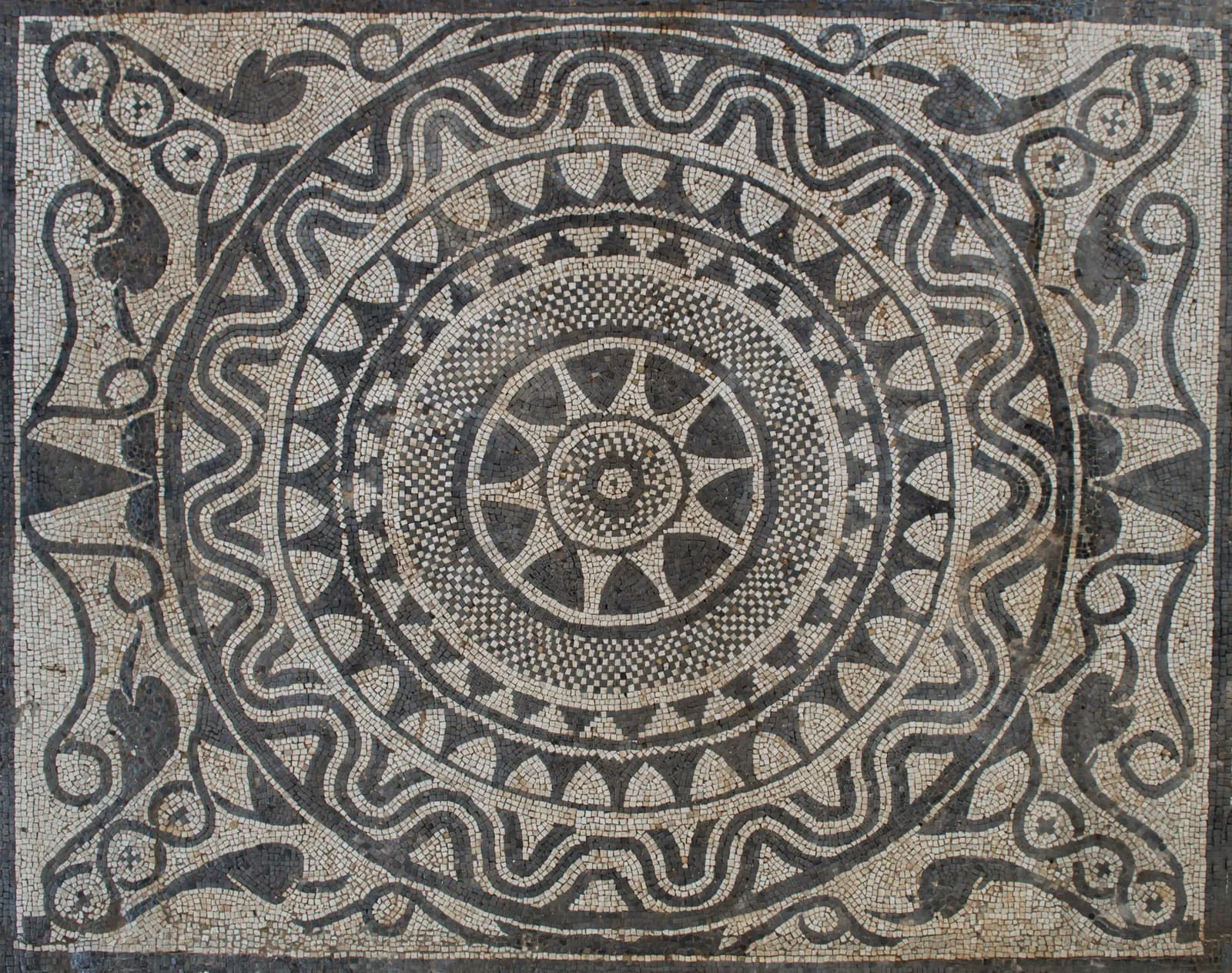
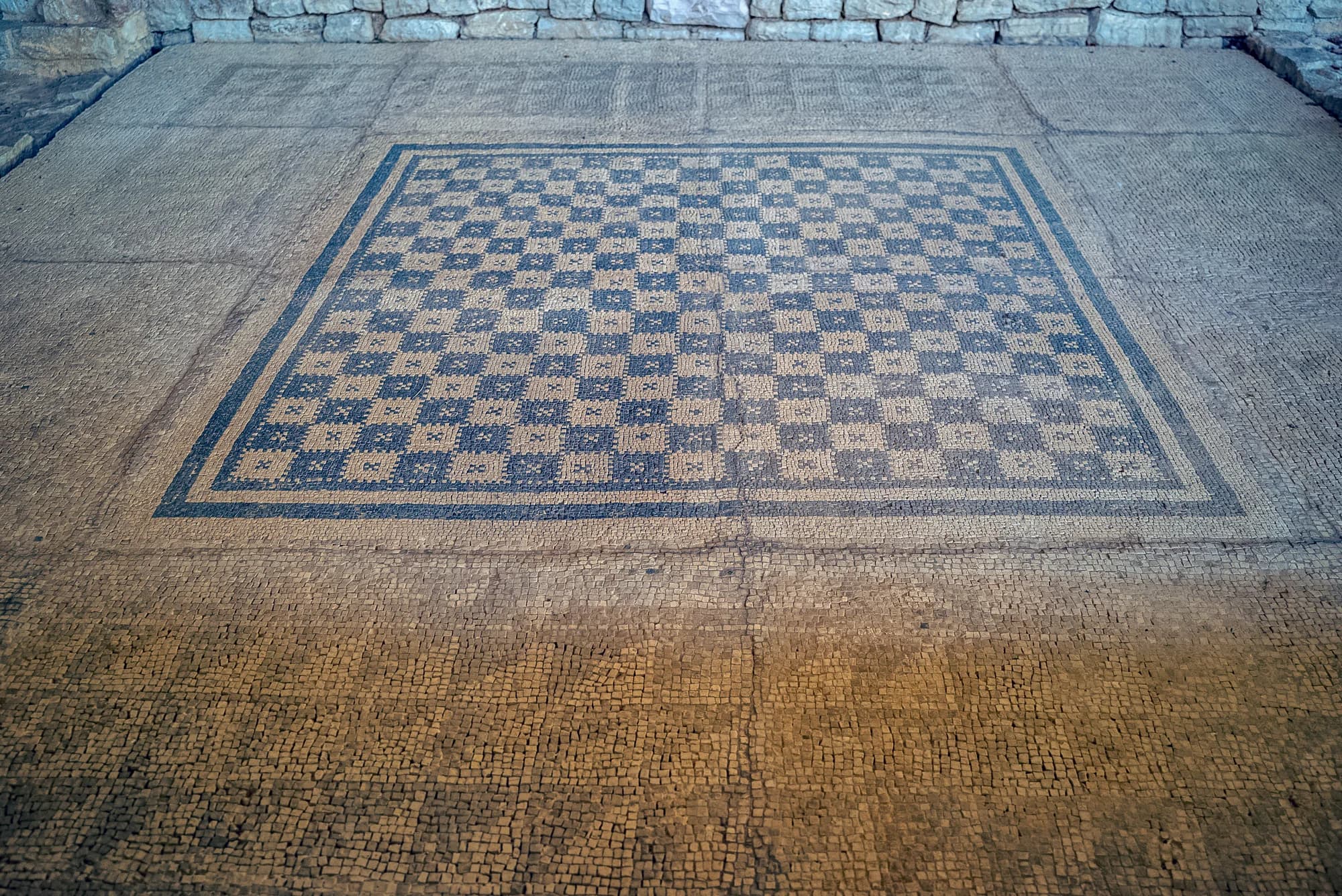
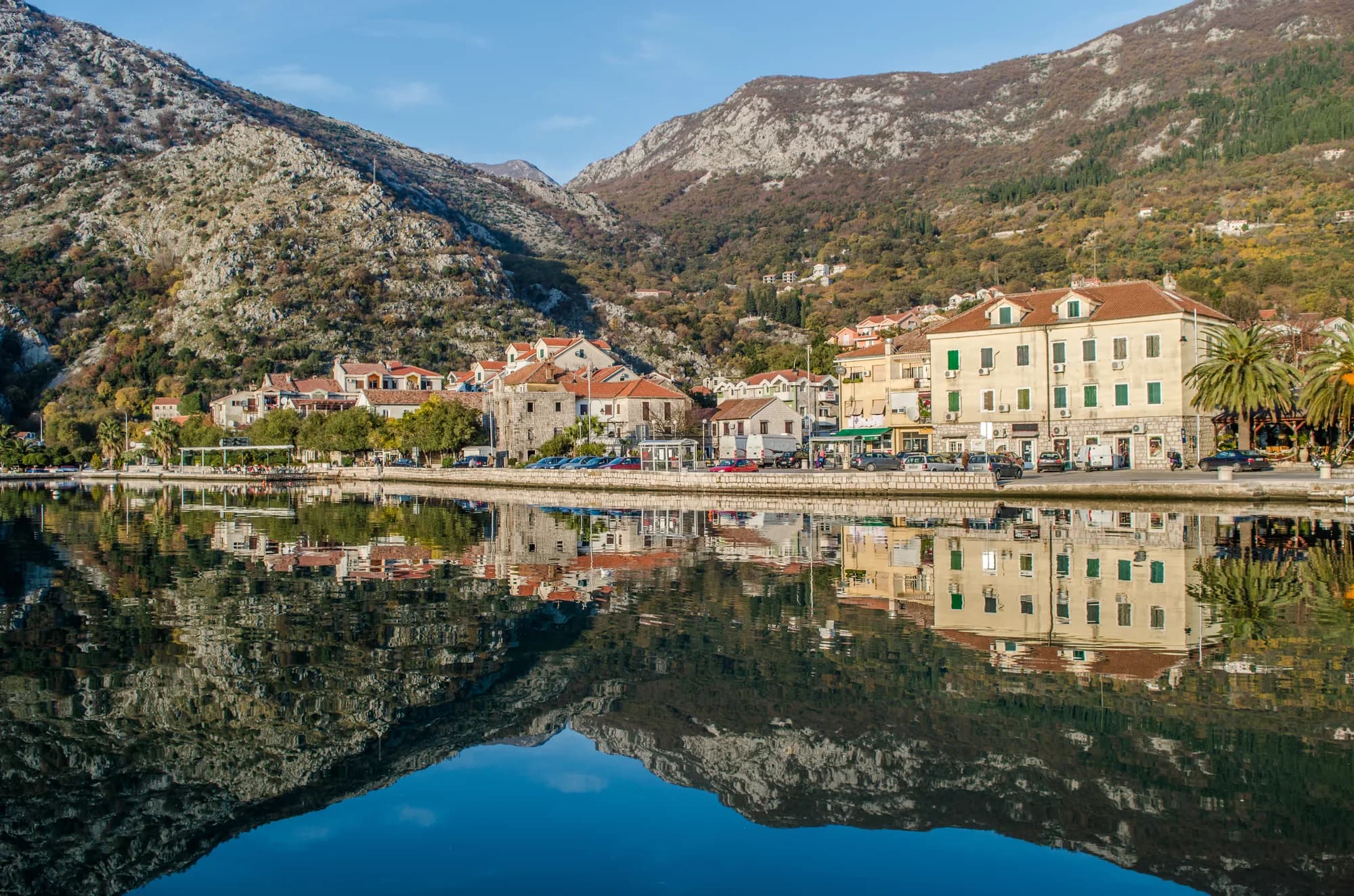
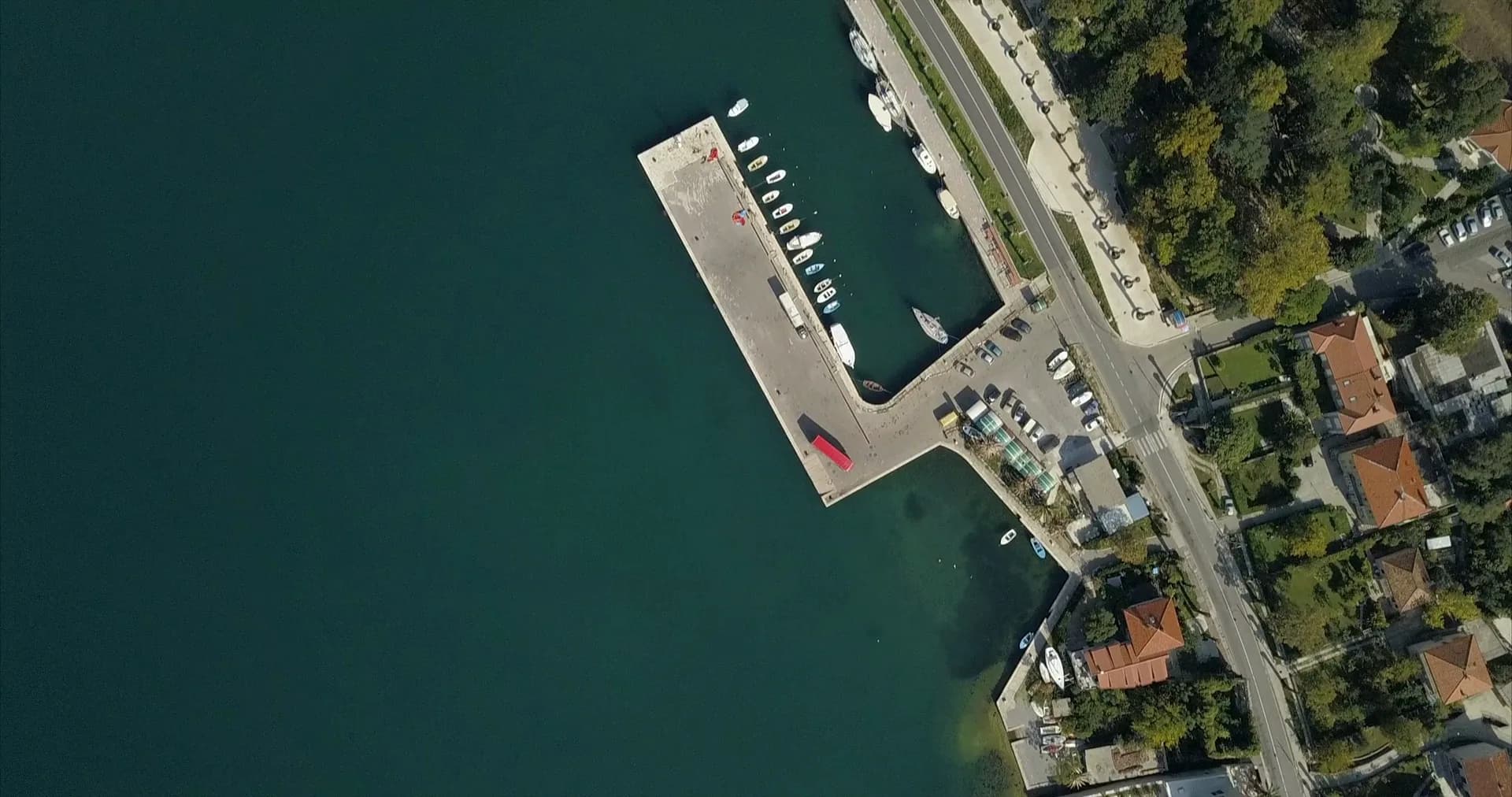
Risan is the oldest continuously inhabited settlement in the Bay of Kotor, founded in the 3rd century BC as the stronghold of the Illyrian Queen Teuta, who ruled the coast until the Roman legions arrived. Known in antiquity as Rhizon, it lends its name to the inner basin, the Bay of Risan, the widest and most open stretch of the inner fjord. The town sits dramatically beneath the bare grey ridges of the Orjen massif on the northern shore, where the mountains fall almost straight into still, deep water. It is a working Montenegrin town rather than a resort, and that is precisely its appeal: life here moves at its own pace, well away from the tour-bus bustle of Kotor and Budva. The headline sight is the site of the Roman villa, where exceptionally well-preserved 2nd-century floor mosaics survive in situ. Among them is a rare depiction of Hypnos, the god of sleep, reclining in fine tesserae, believed to be the only such mosaic representation on the entire eastern Adriatic. The small excavation site, with multilingual information panels, makes a rewarding short stop. Risan's hot mineral springs have been valued since classical times, and the long pebble waterfront gives easy, uncrowded swimming with the Orjen peaks as a backdrop. A handful of traditional konobas serve grilled Adriatic fish, lamb and veal under the sač (bell), and local wine at honest prices. Risan suits travellers drawn to history, quiet swims and authentic small-town Montenegro rather than nightlife. It makes a calm, affordable base within easy reach of the bay's highlights: Perast and its two islets are minutes away by car, Kotor's old town around 20 minutes south along the shore road, and Herceg Novi a similar drive to the west. Tivat airport is roughly 30 to 35 minutes away by car or taxi, making arrival straightforward. Combine the mosaics with a boat trip on the bay and a long lunch by the water for an unhurried, genuinely local day.
A few hours
An unhurried half-day in the bay’s oldest town — and likely its emptiest.
The waterfront
Best for harbour apartments a lane from the mosaics
Above the magistrala
Best for hillside rooms with the stillest water in the bay below
Toward Perast
Best for the shore road between the two — quiet, with the postcard next door
4 accommodations in Risan
What things cost in Risan
Kotor’s bay at half Kotor’s prices, twenty minutes up the shore.
Census population, Risan municipality
The one shore of the bay that tourism forgot — which is why the Illyrian queen’s town still feels like a town.
Risan was a town when Kotor was a rock — Illyrian Rhizon gave the whole bay its ancient name. Widths are to scale.
Polybius on Teuta; standard chronology.
A day in the quiet gulf
The bay’s stillest water keeps slow time
Meanwhile, in 229 BC
Rhizon, 229 BC: Queen Teuta retreats to this fortified inlet as Rome’s first war on the eastern Adriatic closes around her fleet.
The bay — the deep, defensible water that sheltered pirates would define the region for two thousand more years.
Rome: the First Illyrian War is the Republic’s first step across the Adriatic — the Balkans enter Roman history.
Carthage — Hamilcar Barca dies in Iberia; his son Hannibal, twelve, inherits the grudge.
China: the Qin state grinds toward unification; the First Emperor is a decade away.
“When Rome closed in, Queen Teuta withdrew to Rhizon — and, the legend insists, sank her treasure in the bay rather than surrender it. Divers still look.”
Local legend
Teuta’s treasure
Search thousands of hotels and apartments with live prices.
We may earn a commission from partner links. This helps us keep Montenegro.com free for travelers.
Search hotels, apartments and guest houses with live availability.
We may earn a commission from partner links. This helps us keep Montenegro.com free for travelers.

Trace the whole story of the Boka in a single day, from ancient Risan's Roman mosaics through baroque Perast to UNESCO-l

A source-led route through Risan, Perast and Kotor that connects Roman mosaics, maritime heritage and the UNESCO cultura

Explore Risan’s second-century mosaics, the villa-versus-inn debate, Hypnos imagery, floor patterns and practical planni
Risan is the oldest settlement on the Bay of Kotor and the site of Montenegro's finest Roman mosaics, preserved in a 2nd-3rd century villa urbana. It was an Illyrian capital before becoming a Roman town, and legend ties it to the Illyrian queen Teuta.
They are the floors of a Roman villa urbana from the 2nd-3rd century, uncovered in the 1930s and sheltered on site. The best known shows Hypnos, the god of sleep, reclining — the only depiction of him found in this form in the region, and the reason the site is Montenegro's most important Roman remain.
About 17 km around the inner bay, roughly 20 to 25 minutes by car. Buses along the coastal road connect it with Kotor, Perast and Herceg Novi, and Perast is only about 8 km away.
Yes, mainly for the mosaics and the quiet. Risan is a working town rather than a resort, so it has few tourists, and it pairs naturally with Perast and the inner bay on a day out from Kotor or Herceg Novi.
MayMosaics in the quiet season — the site to yourself, custodian included
AugBay swimming — the locals’ pebble coves either side of the harbour
The local plate
The stillest water in the bay grows its sweetest shellfish. Buzara-style at a shore konoba, with bread for the sauce and the ropes of the farm visible from your table.
Where Bayside konobas on the Risan–Perast road
The nearest places to Risan, at their true positions — Dragalj is about 12 km away in a straight line.
Schematic. Positions and straight-line distances from the coordinates we hold for each place; mountain roads make the drive longer. Coastline and Lake Skadar © OpenStreetMap contributors.
Risan in numbers
Rhizon, capital of the Illyrian kingdom before Rome came
the villa floors include the only known mosaic of Hypnos, god of sleep
2023 census — quietly shrinking while the bay booms
MONSTAT 2023 census · Risan archaeological site
Best time: May · June · September
| Place | By road | Driving |
|---|---|---|
| Perast | 3.9 km | about 7 min |
| Lipci | 4.8 km | about 8 min |
| Morinj | 5.9 km | about 9 min |
| Kotor | 17.5 km | about 28 min |
| Budva | 39.3 km | about 57 min |
| Podgorica | 89.4 km | about 1 h 58 min |
| Žabljak | 146.1 km | about 3 h 4 min |
Road distances routed over OpenStreetMap data, © OpenStreetMap contributors. Driving times are free-flow and take no account of summer traffic or a queue at the ferry ramp.
Teuta was an Illyrian queen of the 3rd century BC who, according to tradition, made Risan her stronghold and clashed with Rome over Adriatic piracy. The connection is legendary rather than firmly documented, but it remains part of the town's identity.
Risan has modest pebble and concrete bathing spots along the bay rather than resort beaches. The water is sheltered and calm, and most visitors come for the archaeology and the setting rather than for a beach day.
No — the nearest is Tivat Airport (TIV), 22 km away by road.
From about 13 °C in February to 25 °C in August. It holds above 22 °C from June to September, which is the swimming season. Regional normals from the Herceg Novi station, not a city-precise reading.
The UK Foreign, Commonwealth & Development Office (FCDO) has no advisory against travel to Montenegro; it last reviewed its guidance on 13 August 2026. That is their assessment of the country as a whole, not ours and not a judgement about Risan, so read it yourself before you travel. The emergency number in Montenegro is 112.