A capital bombed flat and rebuilt twice over — the youngest-feeling city in the Balkans, with Roman ruins at the edge of town.
Podgorica is the capital and largest city of Montenegro, a modern urban center that serves as the country's political, economic, and cultural hub. While often bypassed by tourists heading straight to the coast, Podgorica rewards those who spend time here with a growing culinary scene, lively cafe culture, and superb access to some of Montenegro's most spectacular natural attractions. The city sits at the confluence of the Ribnica and Morača rivers, and its landscape is defined by these waterways.

1912Today
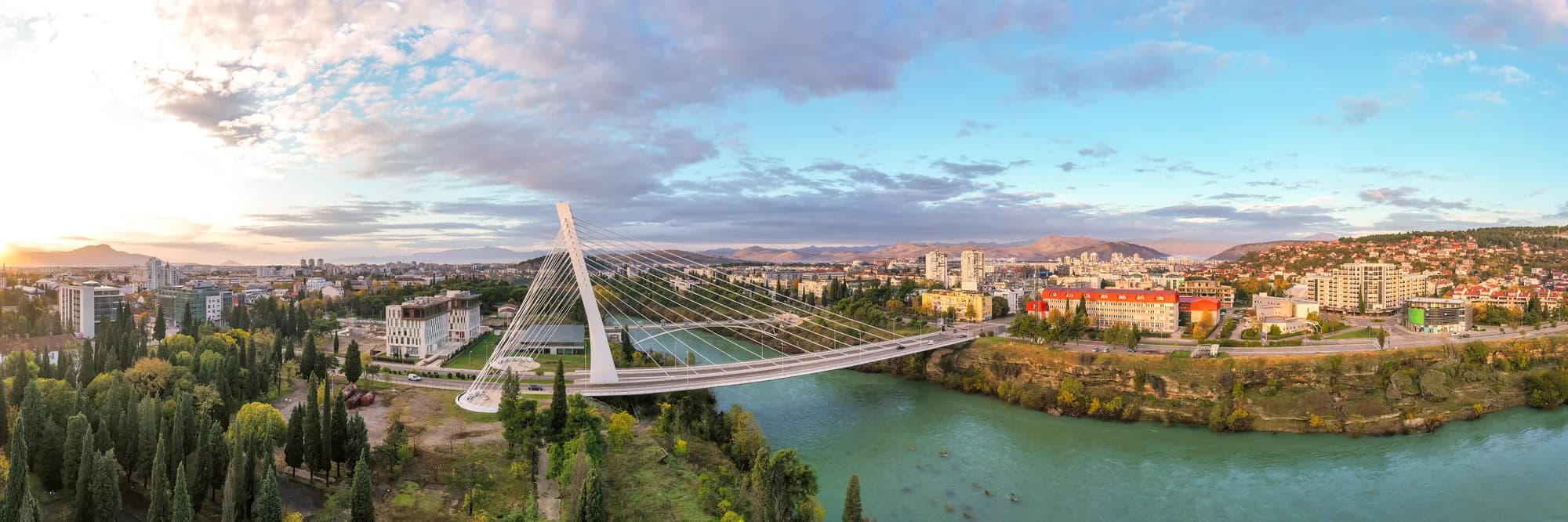
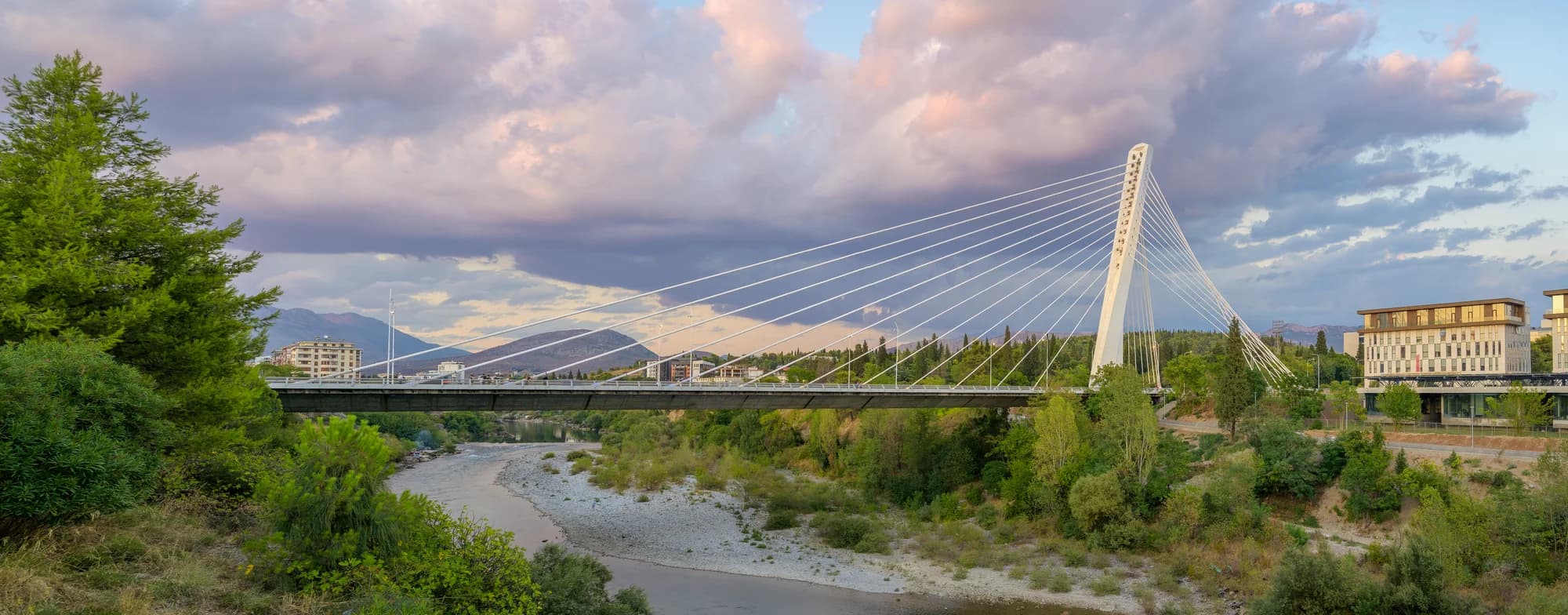
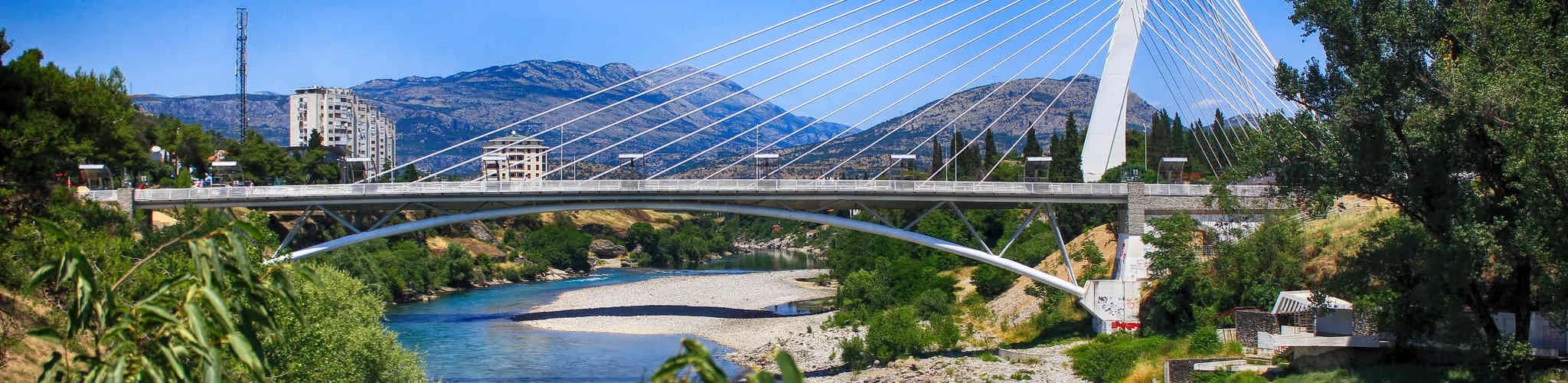
The 140-metre cable-stayed pylon over the Morača, opened in 2005, that gave the young capital its skyline signature. Best walked at golden hour, with the riverside paths connecting both banks below.
Open in Google Maps
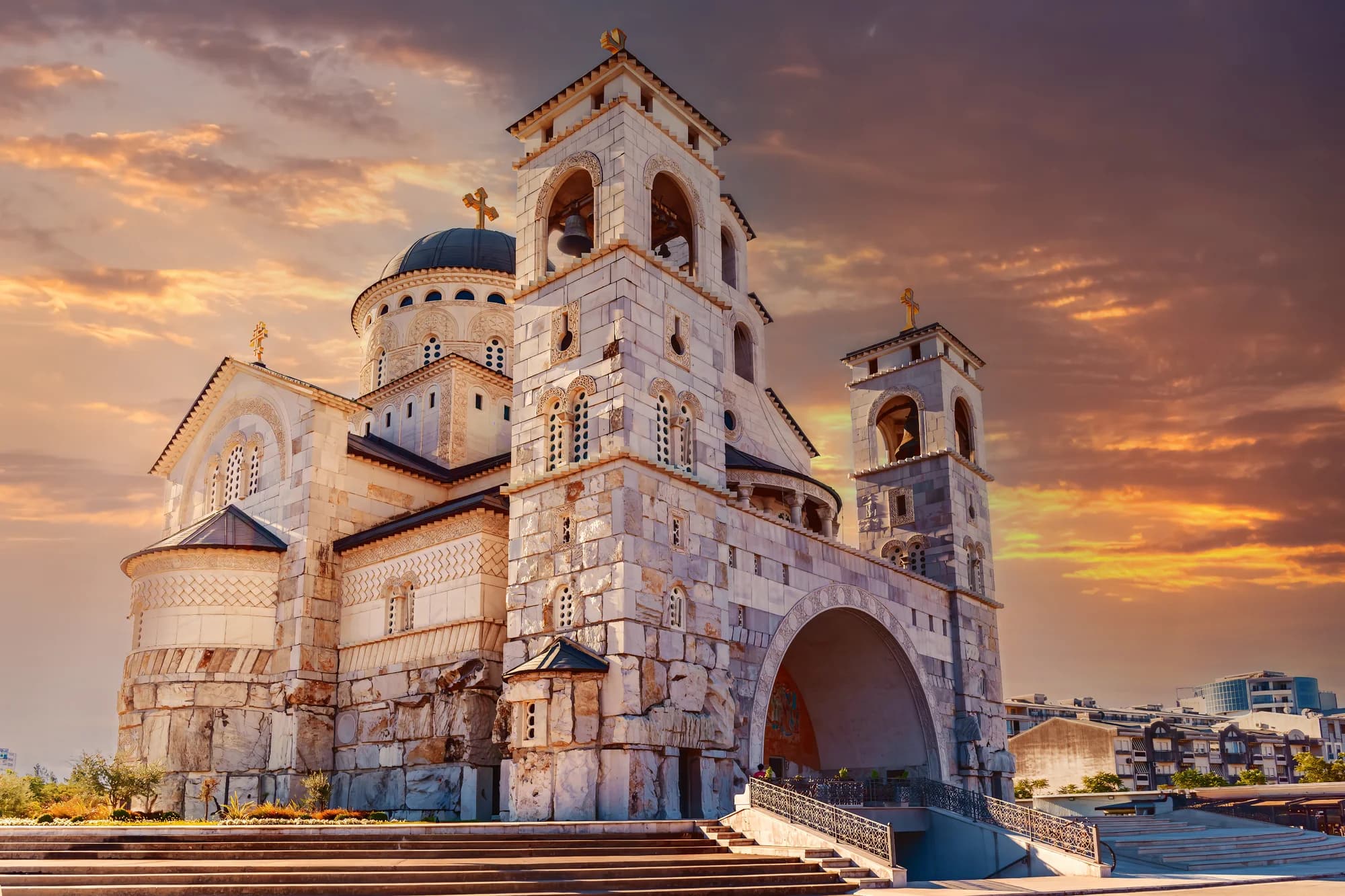
The massive stone Serbian Orthodox cathedral consecrated in 2013 after two decades of building — rough-hewn towers outside, gold-ground frescoes within, and the capital’s most striking interior.
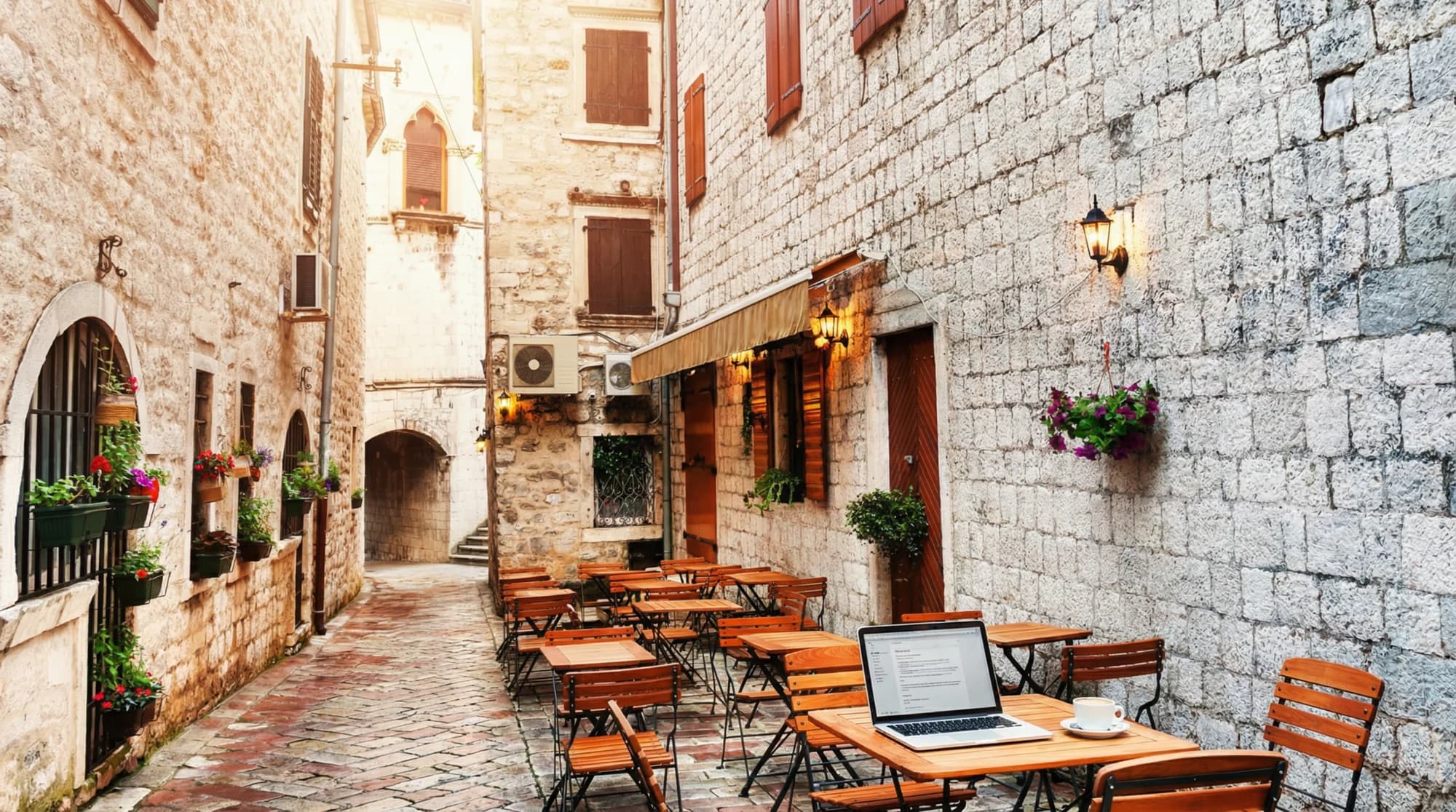
Open in Google MapsThe surviving Ottoman quarter: low houses, two working mosques and the 17th-century sahat-kula clock tower that stood through more than eighty wartime air raids.
A few hours
Two hours cover a thousand years — mostly because so little of them survived.
One full day
Rome, Tito and a waterfall in one city day — the capital is better than its reputation.
City centre
Best for Njegoševa, the squares and every špica café on foot
Stara Varoš
Best for the Ottoman remnant — low houses, minarets and the clock tower
Across the Morača
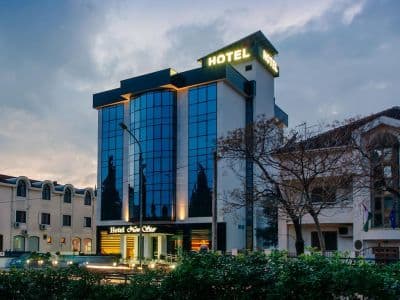
Best for new-town hotels near the Millennium Bridge and the government quarter
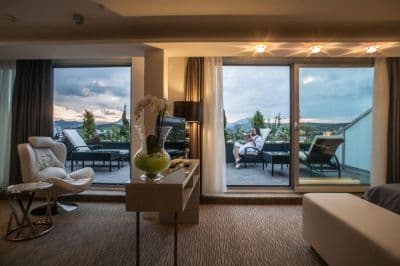
15 accommodations in Podgorica
The capital and everyone else
Settlement populations, 2023 census
Ten times the next town on this chart — Montenegro is a capital with a country attached, and the chart is why.
Who visits Montenegro
Share of foreign overnight stays, 2025
MONSTAT · 2025
What things cost in Podgorica
Capital prices that would count as village prices two hours west.
Census population, Podgorica municipality
Twelve times bigger than in 1948 — no European capital of its size grew faster; the whole country’s twentieth century funnelled into this valley.
Podgorica has been Ottoman for four centuries, Montenegrin for one, and Titograd for a generation. Widths are to scale.
First mention 1326; standard chronology.
A day in the capital
Café country with government hours
Meanwhile, in 1944
Podgorica, 1944: by war’s end the town has been bombed more than eighty times — the Allied raid of 5 May alone kills around 400 civilians. Little of Ottoman and royal Podgorica is left standing.
The toll — some 1,700 dead in the raids, and a town centre reduced to rubble between two rivers.
Normandy: a month later the Allies land in France; the war that flattened the valley is finally turning.
Then — 1946: the ruin is renamed Titograd and rebuilt as a socialist capital — boulevards, blocks and factories where the bazaar had been.
Today — a clock tower and a handful of Stara Varoš lanes are all that survive of the old town; everything else is younger than your grandparents.
“The Ottoman clock tower kept time through more than eighty air raids — almost everything around it fell, and the sahat-kula still rings over Stara Varoš.”
Local legend
The tower that survived
Search thousands of hotels and apartments with live prices.
We may earn a commission from partner links. This helps us keep Montenegro.com free for travelers.
Search hotels, apartments and guest houses with live availability.
We may earn a commission from partner links. This helps us keep Montenegro.com free for travelers.

Read Podgorica through Doclea, medieval records, Stara Varoš, wartime destruction and Titograd while distinguishing docu

A practical, evidence-led route from Podgorica through the Zeta plain to Virpazar, with train and road choices, responsi
For a day, yes. Podgorica is a working capital rather than a resort — modern, green and inexpensive — with the Millennium Bridge, the Ribnica confluence ruins, the Cathedral of the Resurrection and a good cafe and wine scene. Most travellers use it as a gateway to Skadar Lake and the north.
Walk the old Turkish quarter of Stara Varos with its clock tower, cross the Millennium Bridge, visit the Museums and Galleries of Podgorica and the Cathedral of the Resurrection, relax in Gorica park or along the Moraca river, and eat around the Njegoseva cafe strip.
About 12 km south, roughly 15 to 20 minutes by car. It is Montenegro's main year-round airport, while Tivat handles more summer traffic. Trains and buses also connect Podgorica to Bar, Kolasin and Belgrade.
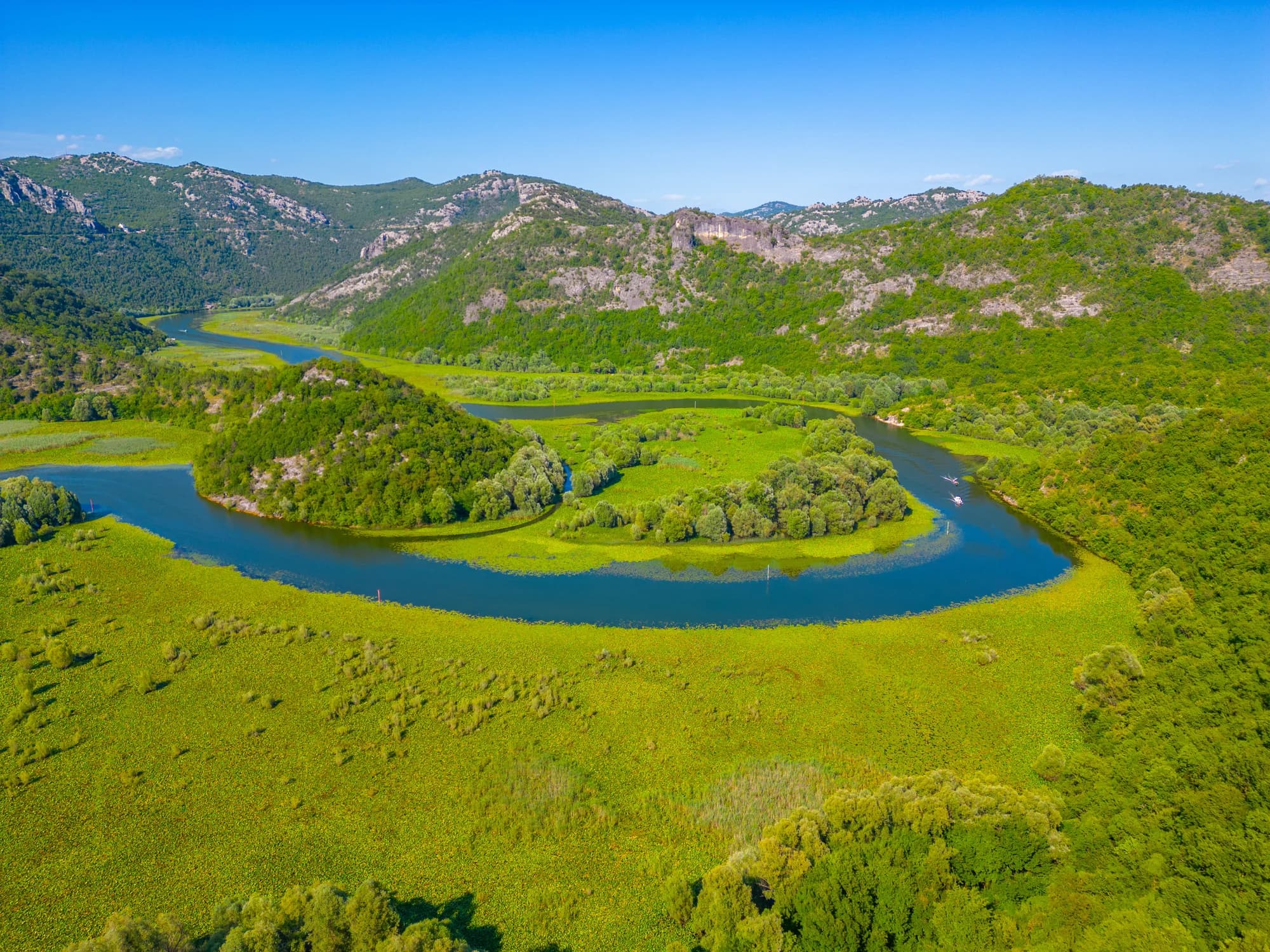
Very good. Skadar Lake at Virpazar is about 30 minutes away, Cetinje 40 minutes, Ostrog Monastery around an hour, and the Moraca canyon and Kolasin roughly 90 minutes. The coast at Budva is about an hour by car.
Very hot. The city sits in a river basin and is regularly the hottest in the Balkans, with July and August afternoons often above 35 C and occasional spikes past 40 C. Life moves outdoors in the evening, and spring and autumn are far more comfortable.
Yes, and cheaper than the coast in summer. Coffee runs about 1 to 1.50 euros, a full restaurant meal 10 to 15 euros, and accommodation sits well below Budva or Kotor high-season rates. It is also where most local shopping and services are.
JulPodgorica Cultural Summer — open-air stages across the squares and riverbanks
JanDecember on the squares — the capital’s open-air New Year programme
The local plate
Podgorica eats between lake and mountain: smoked carp and bleak from Skadar half an hour south, and the Balkans’ grill canon done at volume in town. The špica coffee before and after is non-negotiable.
Where Bokeška street bistros; lake-road konobas toward Virpazar
Podgorica in numbers
the name Podgorica first enters the record
2023 census — nearly three in ten Montenegrins live here
Roman Doclea, the city’s ancient ancestor, ruins at the edge of town
a valley floor that brews Europe’s hottest capital summers
the Millennium Bridge gives the young capital its postcard
MONSTAT 2023 census · standard chronology
Best time: April · May · October
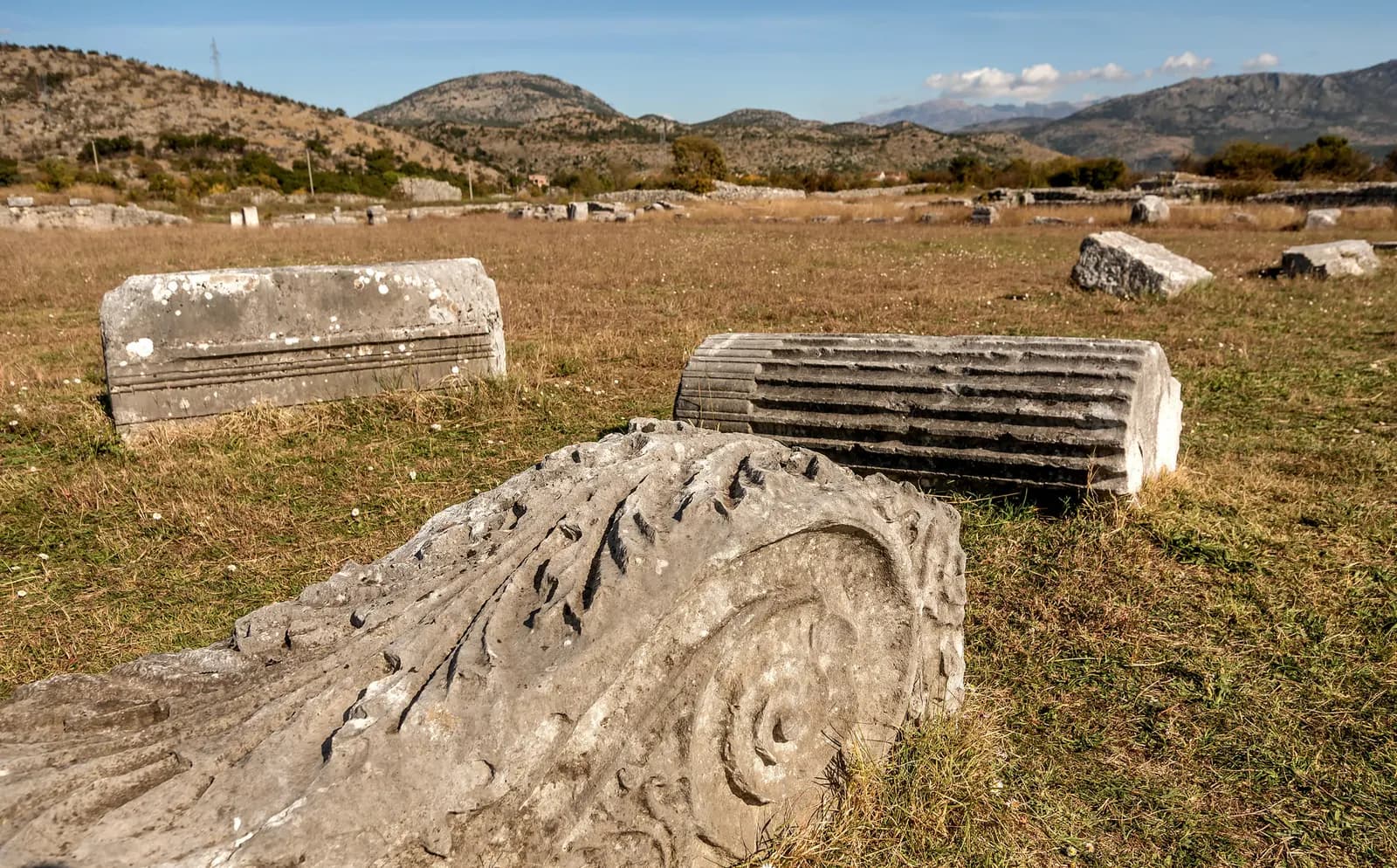
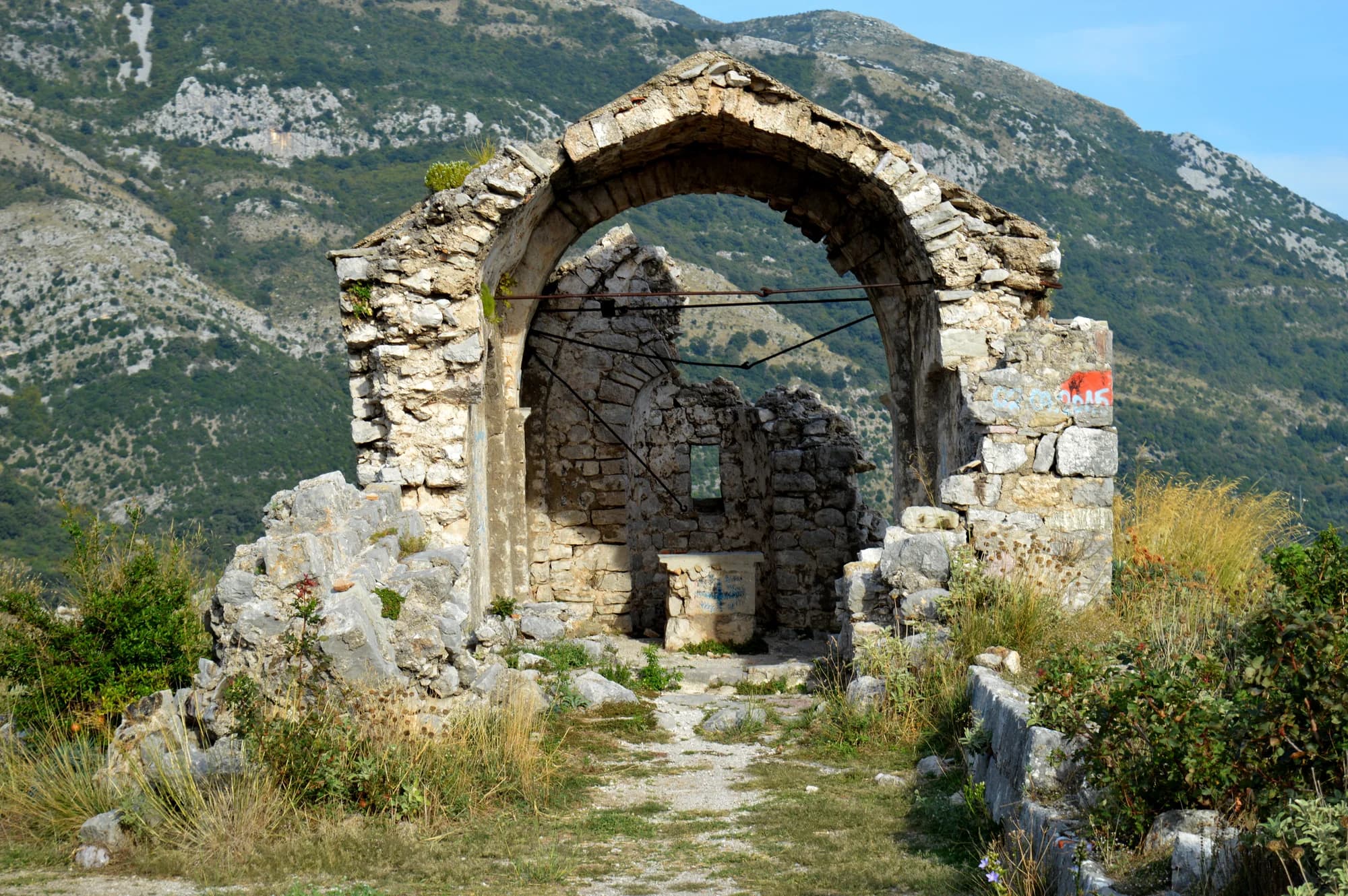
The Roman city that preceded Podgorica, a field of ruins at the northern edge of town — forum, basilica foundations and street grid, free to wander and usually empty.
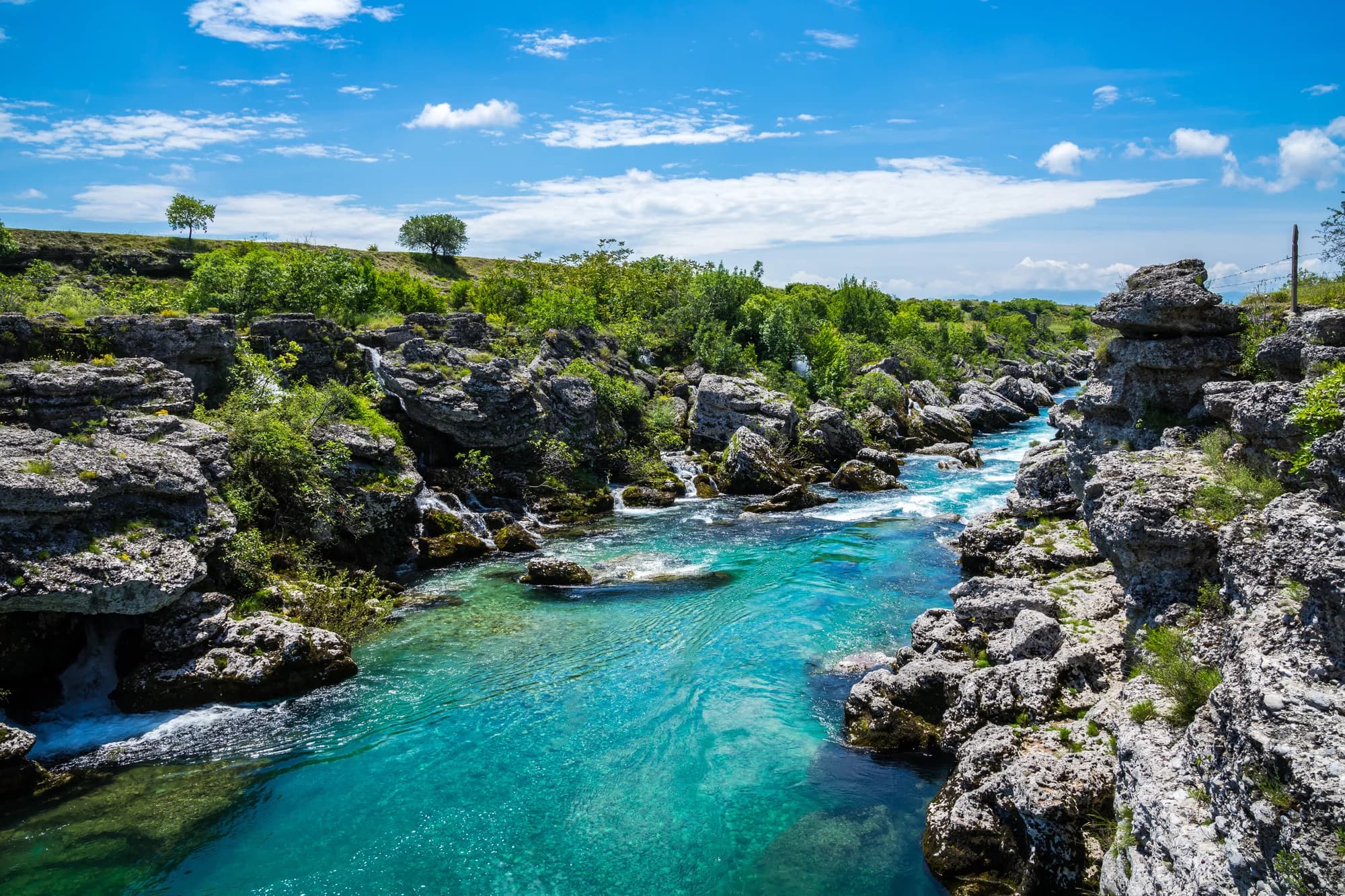
Open in Google MapsThe turquoise Cijevna river dropping over travertine ledges ten minutes from downtown — at their loudest in spring, with a konoba terrace facing the falls.
Open in Google Maps