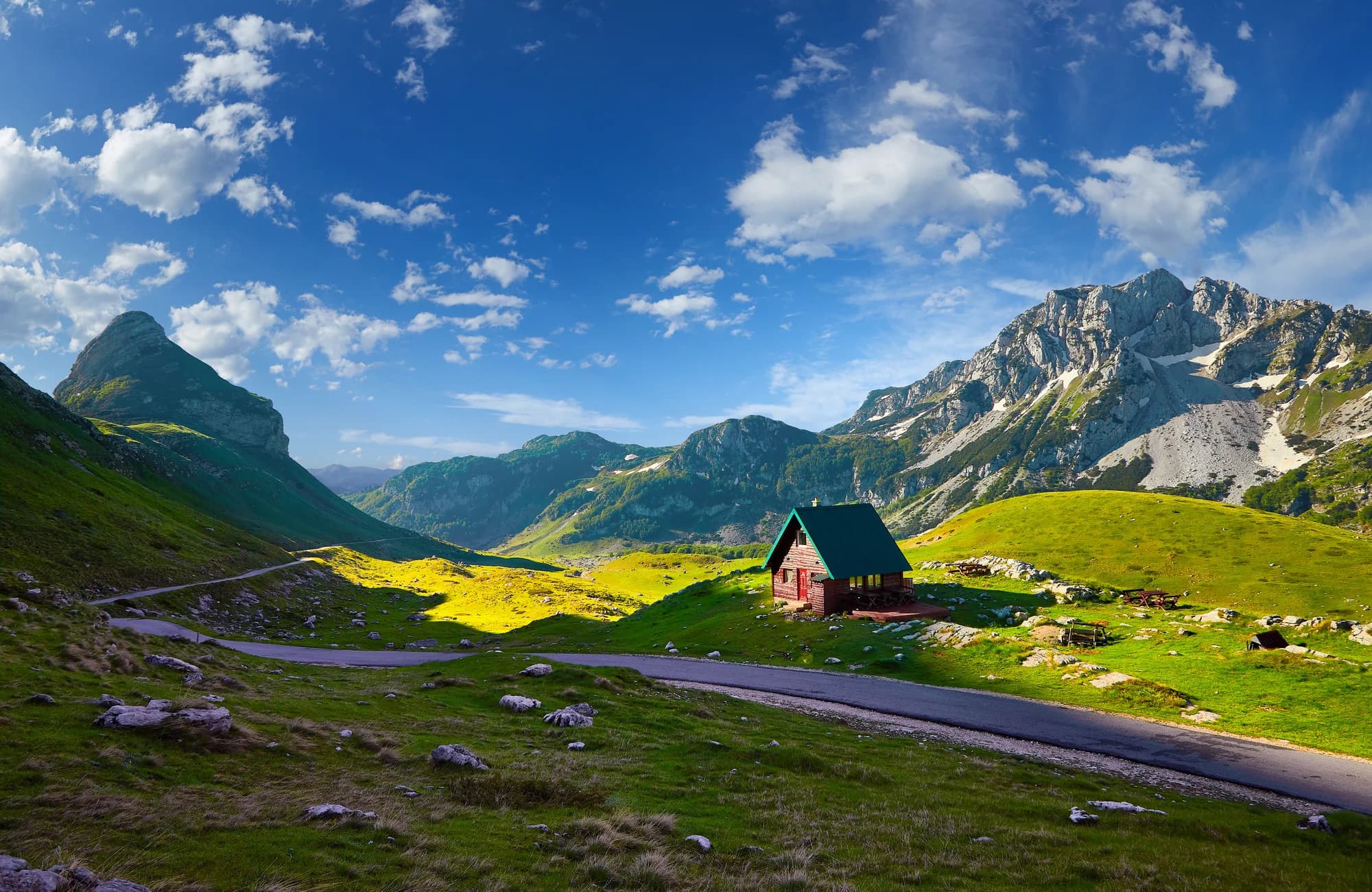
Northern Montenegro can be a smarter alternative to the coast's peak-season concentration, but “go north and have it to yourself” is not a plan. Popular lake shores, trailheads and rafting departures can still bunch visitors into the same hours. Snow can outlast a calendar promise, a park can close after bad weather, and a route that looks short can become the day's hardest decision.
The evidence supports a better claim. Montenegro's stays are heavily concentrated in seaside resorts, while the government's 2026 tourism program explicitly emphasizes more year-round and regionally balanced supply. Travelers can support that direction by staying longer inland, choosing locally delivered services and spreading visits across time and place. They still need live park, road and operator checks.
What the 94.8% statistic actually means
What the sources say
MONSTAT reports that 94.8% of individual-accommodation overnight stays in 2025 were recorded in seaside resorts. Mountain resorts accounted for 2.6%, other tourist resorts 1.9% and the capital 0.7%. That is a powerful concentration signal, but it covers individual or “private” accommodation only. It is not 94.8% of every hotel, campsite, apartment and guest night in the country.
Collective accommodation tells a compatible but distinct story. In July 2025, seaside resorts received 92.9% of nights and mountain resorts 2.2%. In December, the seaside share fell to 65.9%, while mountain resorts rose to 9.4%. Those are resort-type categories, not a perfect geographic division between “north” and “coast.” They show seasonality and concentration; they do not count trail users or prove that any particular northern site is empty.
| MONSTAT frame | Seaside resorts | Mountain resorts | What it can show |
|---|---|---|---|
| Individual accommodation, full year 2025 | 94.8% | 2.6% | Annual private-accommodation concentration |
| Collective accommodation, July 2025 | 92.9% | 2.2% | Peak-summer hotel and similar stays |
| Collective accommodation, December 2025 | 65.9% | 9.4% | A winter month with a larger mountain share |
The 2026 incentive program is not a traveler rebate
What the sources say
The Government adopted a seven-measure 2026 tourism incentive program with €1.35 million projected across calls administered by the Ministry of Tourism and National Tourism Organisation. The Ministry's measures I–IV account for €630,000 and support events, rural tourism, infrastructure, camps and digitalization. That subset states an objective of year-round diversification with an emphasis on northern Montenegro, more balanced regional development and stronger participation by young people and women as service providers.
That is supply-side development. Ministry and National Tourism Organisation calls support eligible projects and providers; they do not promise a discount, refund or cash benefit to a visitor who books a northern room. “Montenegro wants you in the mountains” is a useful editorial shorthand only if that distinction remains visible.
A traveler can align with the program without pretending that every trip is automatically sustainable: book registered local accommodation, pay for qualified local guides, spend more than a single photo stop, use established trails, and treat closures as conservation and safety decisions rather than obstacles to defeat.
| Frame | Amount | Scope |
|---|---|---|
| Adopted full program | €1.35 million | 7 measures · Ministry + NTO calls |
| Ministry subset | €630,000 | measures I–IV · northern emphasis |
Source: gov.me
Choose one northern anchor, not every icon
A short trip improves when it is built around one anchor and one weather-dependent activity. The three anchors below serve different decisions; they should not be compressed into a checklist.
Durmitor and Žabljak: best for a mountain-first plan
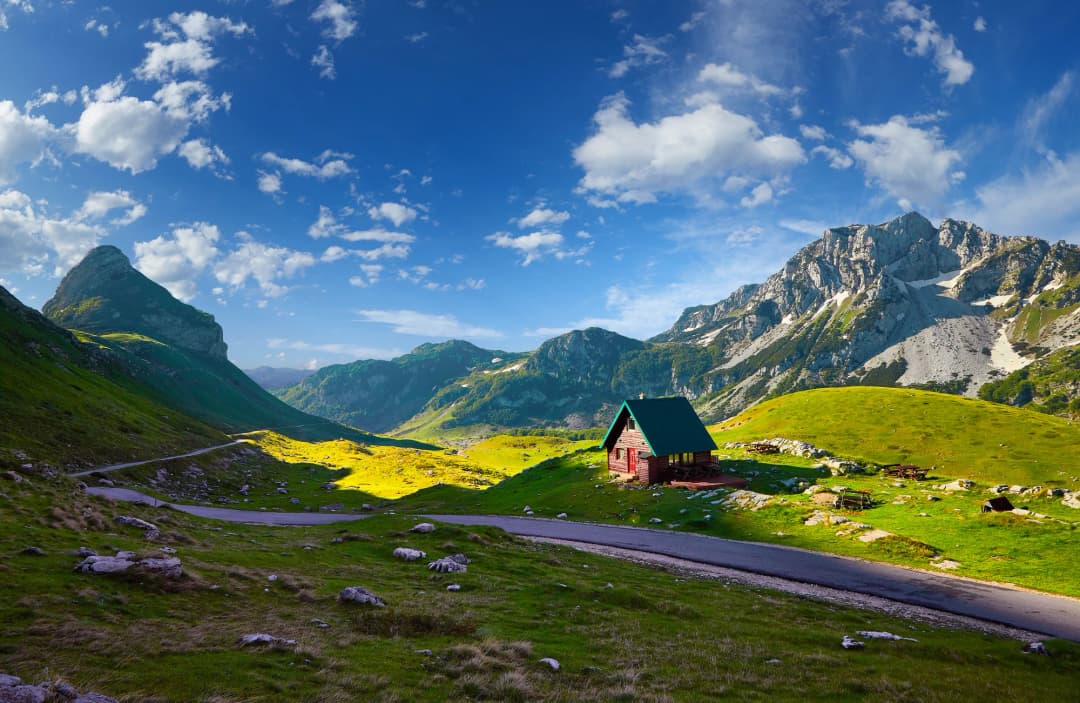
UNESCO describes Durmitor as a glacier-shaped limestone landscape with numerous glacial lakes, high peaks and river canyons. It also calls the Tara gorge Europe's deepest. That language is strong enough; the inherited “second-largest canyon in the world” ranking and a fixed 1,300-metre figure are unnecessary.
Use Žabljak as a base if the priority is walking, scenery or access to several parts of the park. Start with the Durmitor and Black Lake evidence guide, then match any higher trail to current snow, weather, daylight and ability. The broader Montenegro hiking guide helps compare route demands rather than selecting by photograph.
Biogradska Gora and Kolašin: best for forest-and-rail logic
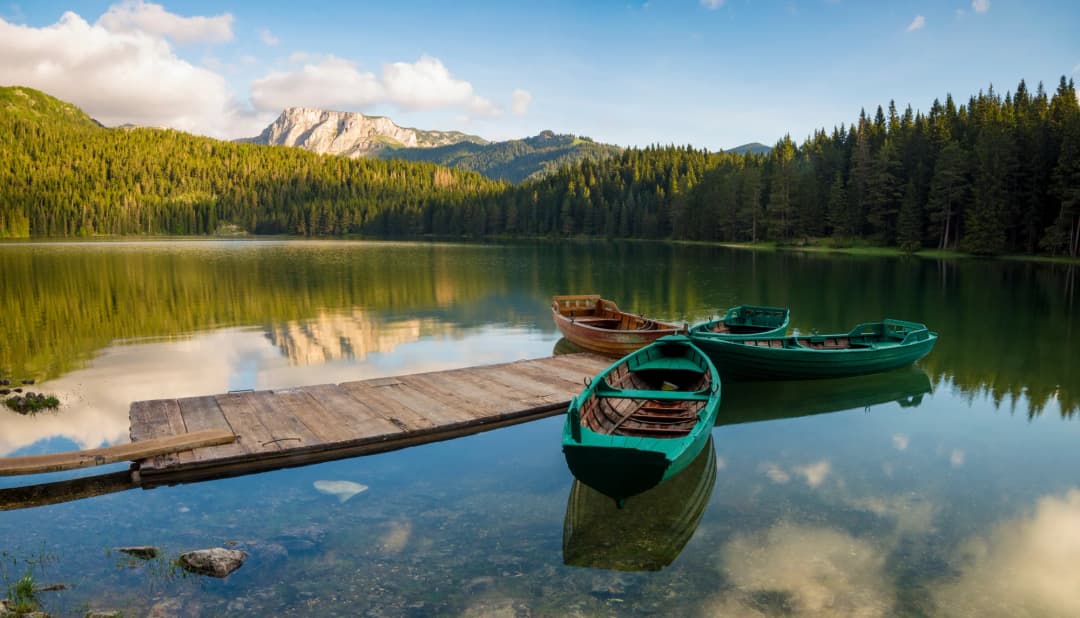
Biogradska Gora pairs an accessible lake-and-forest focus with higher routes on the surrounding massif. Official park language calls its core one of Europe's last primeval forests. This guide does not convert that into the brittle claim that it is one of exactly three “untouched” forests or that every tree has never been logged.
The park announced reopening on 16 March 2026 because weather allowed an unusually early start, after a 9 January closure caused by storm conditions, snow and ice. That sequence is the lesson: opening is an operating decision, not a date that can be copied into every year's itinerary. Use the Biogradska Gora park guide for conservation context and the Biogradsko Lake guide for a focused visit.
Kolašin is the most practical northern anchor for a rail-based plan because it sits on the passenger railway. Use the railway operator's live timetable; then arrange the last mile separately. A train reaching town does not imply a shuttle to the park gate or a guaranteed taxi at the platform.
Tara and Šćepan Polje: best for a regulated river day
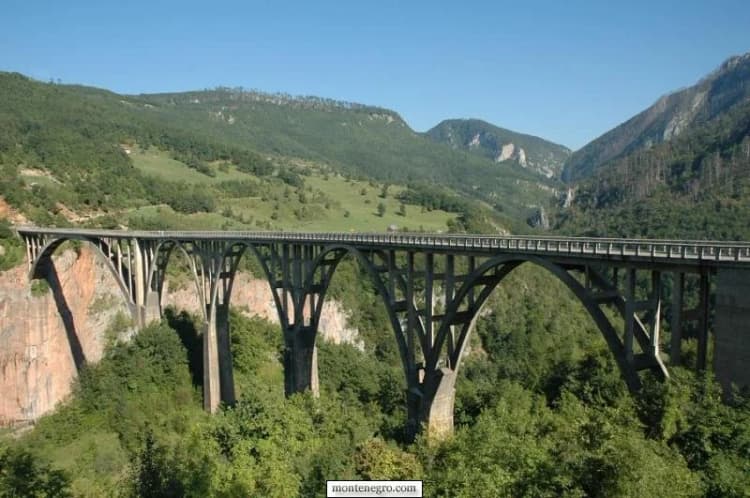
The Tara is both a protected river landscape and a commercial activity corridor. If rafting is the priority, build the day around the operator's route and meeting point instead of attaching it to a long morning drive and a high trail. The Tara Canyon safety guide distinguishes viewpoints, rafting sectors and current checks.
Commercial providers in Montenegro need official approval, qualified or IRF-licensed boat leadership, insurance and vessel documentation. Ask the provider to identify the leader, route, included protective equipment and cancellation rule. Water level and weather need a same-day assessment; a seasonal booking calendar is not a safety certificate.
| Anchor | Best for | Live checks | Do not assume |
|---|---|---|---|
| Durmitor | mountain-first stay | snow · trail · storm | high routes are open |
| Biogradska Gora | forest + rail logic | park · train · last mile | annual opening date |
| Tara | one regulated river day | operator · route · water | booking means safe |
Source: whc.unesco.org, nparkovi.me, zpcg.me, gov.me
Seasonality: replace month rules with condition rules
The inherited advice says late May means snow has gone and trails are open. In 2026, Durmitor's park authority was still asking visitors on 30 April to avoid mountain trails and summits because snow and field conditions were unfavorable. That does not mean late May is always closed. It means elevation, exposure and recent weather matter more than a generic date.
There is also a difference between a lower lake circuit, a forest visit, a high summit route and a river trip. A base can be fully operating while one trail remains unsafe. On 27 August 2026, the park announced that entry to the Ice Cave was explicitly prohibited to protect its microclimate and ice formations. The closure remains a rule even if someone has damaged a fence or removed a sign.
| Activity | Park status | Weather / snow | Operator / route | Explicit closure |
|---|---|---|---|---|
| Lake walk | ● | ● | — | ● |
| High trail | ● | ● | guide? | ● |
| Rafting | ● | ● | ● | ● |
| Cave entry | ● | — | — | decisive |
Source: nparkovi.me, amscg.org
Practical two-, three- and four-day plans
Two days: one base, one flexible activity
Day one is arrival plus the lowest-complexity experience near the base: a town walk, legal viewpoint or lower lake circuit after a park check. Day two is one condition-dependent activity. If weather cancels it, substitute another low route or a cultural and food day; do not transfer to a distant anchor simply to salvage a checklist.
Three days: add recovery and local spending
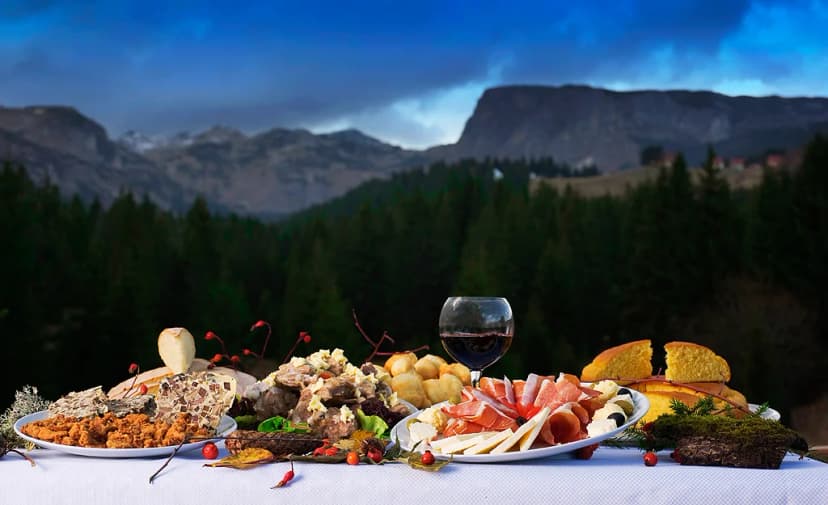
Use the middle day for the most demanding activity and keep the third for a different local layer: a shorter signed route, a registered food producer, a museum or a second park sector confirmed open. The five-stop evidence guide can generate alternatives, but it should not turn three days into five transfers.
Four days: connect two anchors only
Four days can support two bases if the transfer is part of the experience and each gets at least one full day. Keep one half-day unassigned. A north-plus-coast route may still work, but the five-day itinerary is a better frame when a coastal stay is essential. The goal is not to maximize pins; it is to preserve useful time when mountain conditions change.
| Day | Plan | Note |
|---|---|---|
| Day 1 | arrive | live checks · low route |
| Day 2 | main activity | go / no-go made that day |
| Day 3 | buffer | local food or recovery |
| Day 4 | second anchor | only if route is confirmed |
Source: nparkovi.me, zpcg.me, amscg.org
Arrival and same-day checks
- Park: read the latest National Parks news, not only a destination landing page.
- Road: check AMSCG for restrictions, closures and works affecting the exact route.
- Weather: compare the base forecast with the elevation and exposure of the activity.
- Rail: use the live railway timetable and verify the last mile before boarding.
- Guide or operator: reconfirm meeting place, route, credentials, equipment and cancellation terms.
- Fallback: decide in advance which low-risk local activity replaces the main plan.
Do not use “the road is open” as proof that a trail is safe, or “the park is open” as proof that every feature is accessible. Status exists at several levels. The August 2026 Ice Cave closure is a concrete example: the surrounding park and trails may be visitable while entry to one fragile feature remains prohibited.
| Check | Answer | Action |
|---|---|---|
| Explicit closure or prohibition? | yes | Do not enter |
| Explicit closure or prohibition? | no | Continue to access check |
| Road, rail and park access confirmed? | no / unclear | Pause, confirm or reroute |
| Conditions and support fit today? | yes | Proceed conservatively — carry fallback and turnaround rule |
Source: nparkovi.me, zpcg.me, amscg.org, gov.me
What “less visited” can and cannot tell you
Overnight statistics measure registered stays, not how many people stand at one viewpoint at noon. A day visitor sleeping elsewhere does not add a night to the destination. A guest staying four nights adds four. Someone using unrecorded accommodation may be absent from the series. The numbers are valuable for understanding where accommodation demand is concentrated, but they are not a live crowd counter.
Scale matters too. A small lake shore or narrow path can feel busy with far fewer people than a large coastal municipality. Conversely, a region can record modest overnight totals while traffic converges on one road, parking area or departure window. “Only 2.2% in mountain resorts” therefore cannot tell you where to park, whether a trailhead is full, or whether a licensed rafting departure has capacity.
Use three evidence layers. First, MONSTAT describes the national and seasonal distribution of accommodation nights. Second, the park authority reports closures, conservation restrictions and field warnings. Third, an operator or accommodation host can describe a local meeting point or service—but safety-critical advice should still be checked against the responsible authority. Each layer answers a different question.
This approach also avoids a common overtourism trap: moving everyone from one famous place to one famous alternative at the same time. The practical objective is not simply “north instead of coast.” It is a longer stay, fewer transfers, lawful access, locally delivered services, and enough flexibility to use a different signed route or activity when pressure or conditions make the first choice unsuitable.
For your own trip, record observations rather than inventing certainty: note the time a parking area filled, the date of a park notice, or the exact route an operator canceled. Those facts can improve tomorrow's choice. They should not become universal promises about every weekend, month or future season.
How to reduce your own crowd pressure
- Stay at least two nights in one northern base instead of making a long return drive for one photograph.
- Ask accommodation staff which low routes and local services are currently operating; then verify safety-critical information with the responsible authority.
- Use legal parking and signed trails. Do not create a new verge pull-off or shortcut because a popular site looks busy.
- Move the activity, not just the clock. An early arrival can help, but choosing a different signed route or a different day spreads pressure more effectively.
- Keep groups small where possible and use regulated local operators for technical activities.
- Carry out waste and respect no-entry zones. A broken barrier is still a closure.
The north is not a consolation prize and does not need a myth of permanent emptiness. Its value lies in distinct landscapes, communities and operating rhythms. The case for visiting Montenegro now becomes stronger when it includes those limits rather than selling unlimited access.
Frequently asked questions
Are 94.8% of all Montenegro tourist nights on the coast?
No. MONSTAT's 94.8% figure applies to 2025 individual-accommodation nights in seaside resorts. Collective accommodation is reported separately. In July 2025 its seaside share was 92.9%; in December it was 65.9%.
Will the 2026 program pay me to travel north?
No direct traveler rebate is described. The program supports eligible tourism projects and providers, with a policy emphasis on year-round and northern development.
Is northern Montenegro crowd-free?
No. It receives a far smaller share of recorded overnight stays, but visitors can still concentrate at the same lake shore, viewpoint, trailhead or departure time. Use one base and flexible alternatives.
When do the high trails open?
There is no responsible universal date. Snow, exposure, storms and park assessment determine route conditions. Read current park notices and select the exact trail only after a same-day check.
Can I enter the Ice Cave?
No under the park notice current on 30 August 2026. The park announced an explicit no-entry closure on 27 August to protect the cave's sensitive microclimate and ice formations. Follow any later official update.
Can I reach the north by train?
The passenger railway serves Kolašin, but the timetable changes and the last mile to a park is separate. Check the operator's live timetable and arrange onward transport before departure.