Montenegro’s last town before Kosovo and Serbia: an Ottoman market called Trgovište until 1912, at 1,000 metres on the Ibar, under the 2,403 m wall of Hajla.
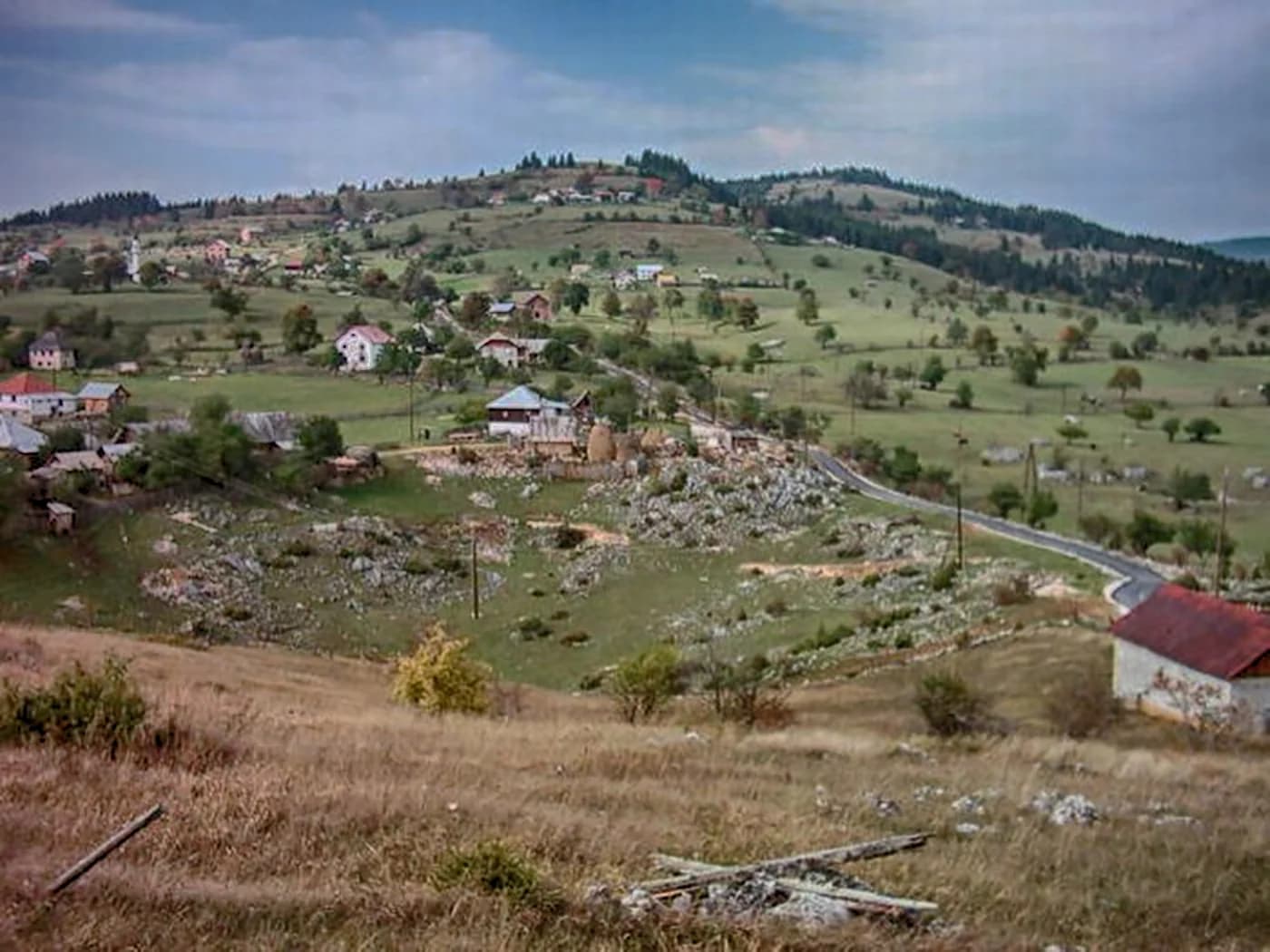
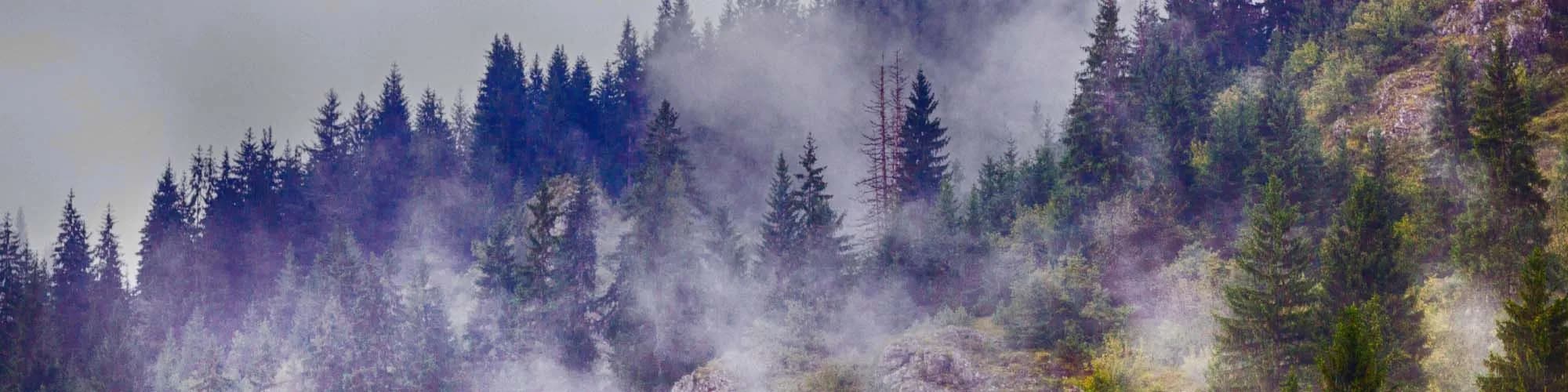
Rožaje is the easternmost town in Montenegro, set in a high valley below Hajla mountain a short distance from the Kosovo border. The Ibar rises in the mountains above it and runs through the town on its way north, and beech forest covers the slopes on every side, some of the densest and least disturbed woodland left in the Balkans and still home to bear, wolf and the rare Balkan lynx. The ruins of Turjak fortress on the hill above are a reminder that this valley has always been a route between places. The town is majority Bosniak and its culture belongs to the wider Sandžak world: mosques, a busy market, coffee taken slowly, and a kitchen built on dairy, pies and grilled meat. The Ganića Tower, a fortified stone house from the 19th century, now holds the town museum and is the best surviving example of the local defensive architecture. Woodworking and wool are still practised here, and Rožaje is known within Montenegro for its dairy and its bakers. The mountains are the reason to come. Hajla rises above 2,400 metres and gives a long ridge walk, with the Kosovo plateau on one side and the Montenegrin highlands on the other, and the meadows below it are covered in wildflowers through June and July. In winter the valley holds deep, reliable snow, and the small ski slopes near the town are used mainly by locals. Katun settlements, the summer huts where families still bring livestock up to graze, remain in use across the massif. Rožaje suits hikers, budget skiers and travellers interested in a side of Montenegro that almost no international itinerary includes. It is an easy stop on the road between Podgorica and Serbia or Kosovo. Come in summer for the mountains, in autumn for the beech colour, or in winter if snow and a wood stove are the point. English is not widely spoken, and hospitality is offered readily.
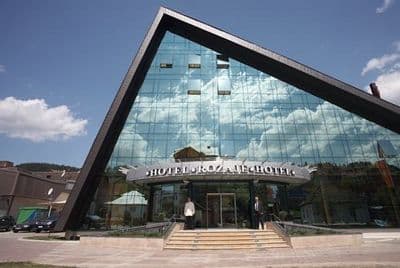
1 accommodation in Rožaje
The only one going up
Population change 2011 to 2023, Rožaje and seven northern neighbours
All thirteen municipalities of the north shrank between the two counts except this one. Rožaje added 220 people — small, but the only plus sign on the map.
The youngest municipality in the country
Average age of the population, 2023 census
Eleven and a half years younger than Plužine, nearly four younger than the country. In a north that is emptying and ageing, Rožaje is doing neither.
Who visits Montenegro
Share of foreign overnight stays, 2025
MONSTAT · 2025
Census population, Rožaje municipality
The one northern municipality that came out of the 2011–2023 count larger than it went in: 22,964 to 23,184, up 220. Its average age, 35.83 years, is the lowest of any municipality in Montenegro — the national figure is 39.73.
Three and a half centuries between the town’s first appearance in the Ottoman tax books and the autumn the flag and the name changed. Widths are to scale.
Ottoman registers of 1571 and 1585 · Zavičajni muzej Ganića kula · Treaty of London, 1913.
A day in the basin
A working town of ten thousand, not a resort
Meanwhile, in 1912
Rožaje, 1912: Montenegrin forces take the town from the Ottomans in the First Balkan War, and the Treaty of London confirms the transfer the year after. The administrative name Trgovište — market place — goes out of use with the administration that coined it.
What stood then — the Sultan Murat II mosque with the turbe Huršid-paša raised beside it in 1854, and the Ganića kula of 1798, a house built for living in and for defending. Neither survives as it was: the mosque was pulled down in 2004 and rebuilt by 2008, and today’s tower is a reconstruction begun in 2001.
The road — a modern road to Novi Pazar and Berane is still twenty-two years away. Until 1934 the valley moves at the speed of a pack horse.
Elsewhere in 1912: the Titanic goes down in the North Atlantic in April, and Stockholm holds the fifth Olympic Games from May to July.
“The village of Rožaje is entered in the nahiya of Trgovište, in the census register of the Prizren sanjak for 1571.”
The Ottoman defters
Rožaje is first mentioned in the registers of 1571 and 1585; Trgovište — market place — stayed the settlement’s name until 1912 (Wikipedia, Serbian and English editions, citing the Ottoman registers).
“The literature cannot agree who founded it: 1450, 1455, the middle of the 16th century — or 1629, when Sultan Murat IV is said to have raised it in memory of his mother.”
Local legend
The Sultan Murat II mosque
Search thousands of hotels and apartments with live prices.
We may earn a commission from partner links. This helps us keep Montenegro.com free for travelers.
Search hotels, apartments and guest houses with live availability.
We may earn a commission from partner links. This helps us keep Montenegro.com free for travelers.
Rozaje is in the far east of Montenegro, on the upper Ibar close to the Serbian and Kosovan borders, at about 1,000 m. It is roughly two and a half hours from Podgorica, in the mountains between Hajla and Mokra Gora.
Snow, and wool. It is one of the coldest and snowiest inhabited places in Montenegro, and the town has a long tradition of knitted and woven woollen goods sold at markets across the region.
Yes, at the small Turjak centre just outside town. It is modest — a handful of runs and lifts — but the snow is reliable and lasts longer than at more famous resorts, and lift tickets cost a fraction of Kolasin's.
A high ridge on the border above Rozaje, reaching around 2,400 m, with open pasture, summer huts and one of the best long views in the country. It is the main summer walking objective from the town.
Predominantly Bosniak and Muslim, with mosques rather than monasteries, and a food culture to match — pies, dairy and lamb rather than seafood. It feels closer to the Sandzak than to the Montenegrin coast, which is part of what makes it interesting.
For skiing on a budget, for Hajla in summer and for travellers crossing between Montenegro, Serbia and Kosovo. It is not on the usual tourist circuit at all, and it is among the least expensive places in the country.
No — the nearest is Podgorica Airport (TGD), 175 km away by road.
32.2 km by road, about 46 min by car.
The UK Foreign, Commonwealth & Development Office (FCDO) has no advisory against travel to Montenegro; it last reviewed its guidance on 13 August 2026. That is their assessment of the country as a whole, not ours and not a judgement about Rožaje, so read it yourself before you travel. The emergency number in Montenegro is 112.
MarLast of the pistes — the season closes towards the end of March, though the peaks of Hajla carry snow into the summer months
JulWalking season on Hajla — the 9 km up to Bandžov katun at 1,460 m, then Grope at about 1,800 m and the 2,403 m summit above it
DecThe lifts start turning — the Hajla season opens in mid-December; the day pass is €7 and the lifts run 10:00–15:00, with limited opening midweek
The local plate
Small baked pastries filled with minced meat: the dish the Sandžak kitchen here is known for, and the one that is always on the table. Beside it, burek and tirit pie from under the sač; after it, homemade blueberry and forest-berry jam from the mountain.
The nearest places to Rožaje, at their true positions — Gusinje is about 41 km away in a straight line.
Schematic. Positions and straight-line distances from the coordinates we hold for each place; mountain roads make the drive longer. Coastline and Lake Skadar © OpenStreetMap contributors.
Rožaje in numbers
the town in the 2023 census (preliminary) — 23,184 in the municipality
the town and its suburbs, ringed by mountains over 2,000 m
the Ibar rises from six springs on Hajla and runs on into Serbia — Black Sea water, not Adriatic
Sultan Murat II, also called Kurtagića: pulled down in 2004, reopened in 2008 with two minarets
8 km up from town: 1,158–1,385 m, 1.2 km of piste, €7 a day
Podgorica by road; Priština is 130 km, and the Kosovo border 23 km
MONSTAT 2023 census · citypopulation.de · National Tourist Organisation of Montenegro · Skiresort.info
A few hours
Two hours cover the town. The mountains are the reason to stay longer.
One full day
Town in the morning, mountain in the afternoon.
A weekend
The north-eastern Prokletije on Saturday, a border road on Sunday — Rožaje is the base for both.
The centre
Best for the square, the Stara čaršija, the museum and the mosque all within a few minutes on foot
Bandžovo Brdo and Hurije
Best for the slopes just above the centre — counted with the town in the census, quieter than it
Bandžov katun, 9 km up
Best for the PAK Jelenčica mountain hut at 1,460 m: thirty beds, water and power, under the Hajla ridge
Best time: June · July · September
| Place | By road | Driving |
|---|---|---|
| Berane | 32.2 km | about 46 min |
| Andrijevica | 45.8 km | about 1 h 2 min |
| Murino | 61.5 km | about 1 h 25 min |
| Bistrica | 62.6 km | about 1 h 34 min |
| Podgorica | 123.9 km | about 2 h 20 min |
| Budva | 182.9 km | about 3 h 36 min |
| Kotor | 194.8 km | about 3 h 48 min |
Road distances routed over OpenStreetMap data, © OpenStreetMap contributors. Driving times are free-flow and take no account of summer traffic or a queue at the ferry ramp.