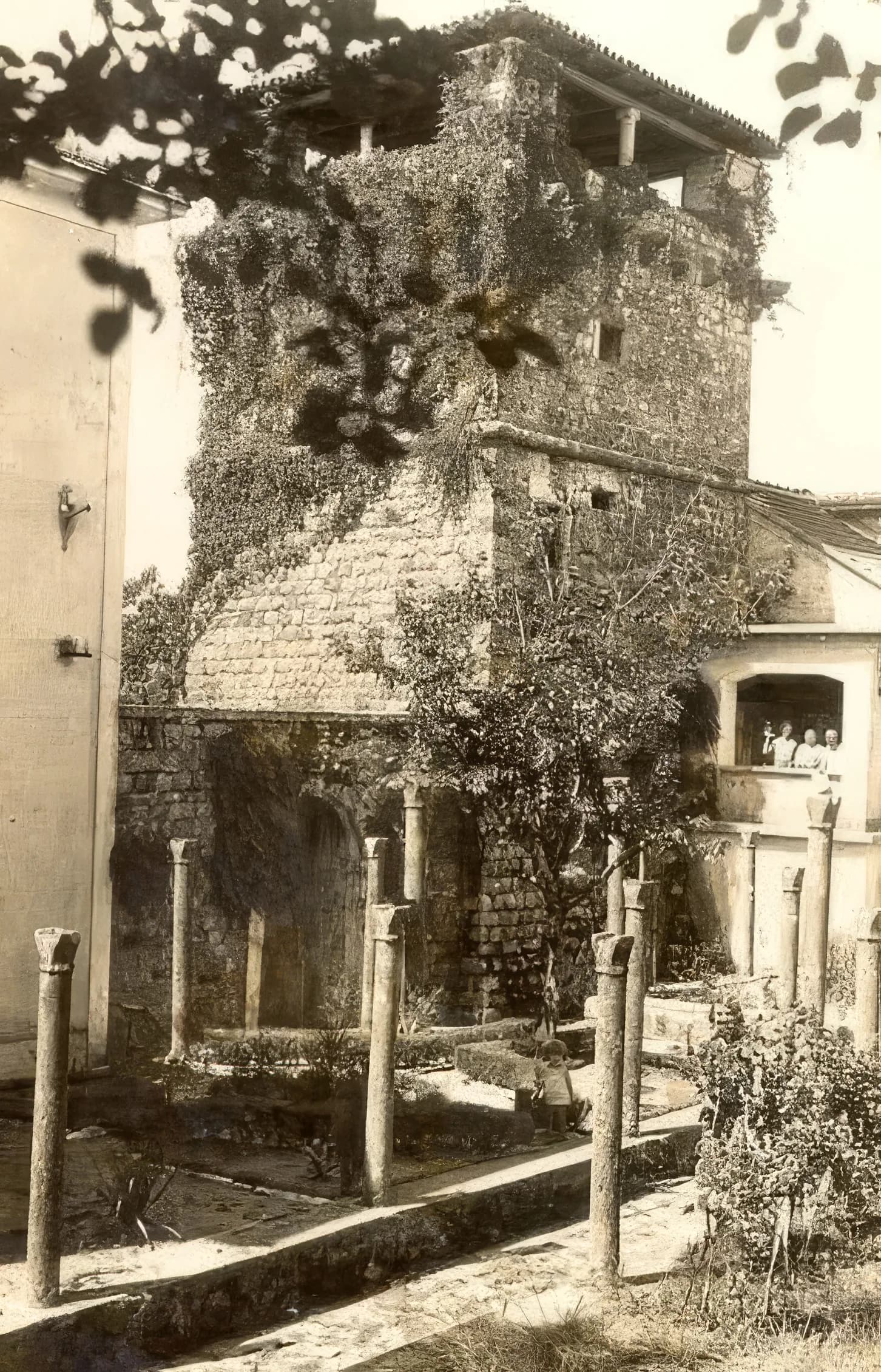
Miholjska Prevlaka deserves a visit, but it also deserves more care than its “Island of Flowers” nickname suggests. This low piece of land in Tivat Bay contains the foundations of a major medieval church, the small nineteenth-century Holy Trinity church, an active Orthodox monastery, homes, beaches and new public recreation space. It is reached across a narrow land-and-bridge connection that can be affected by high tide.
The most dramatic story attached to the site—72 monks killed with arsenic in fish soup in 1452—is not a simple documented fact. A church tradition, archaeological remains, a reported toxicology result and a recorded period of Venetian conflict have often been merged into one seamless narrative. They are different kinds of evidence. This guide separates them, then explains how to make a respectful visit using information checked through 30 August 2026.
| Period | What the evidence supports | Important limit |
|---|---|---|
| 9th–12th c. | Competing dates for the earlier basilica; CANA prefers completion in the 11th century | Tourism shorthand gives a simpler 6th-century origin |
| 13th c. | New church and seat of the Zeta bishopric | Built from an older sacred landscape, not a blank site |
| Mid-15th c. | Venetian destruction; artillery damage reported in 1452 | Does not prove every poisoning-story detail |
| 1754 | Earliest identified written recording of the poisoning tradition | About three centuries after the alleged event |
| 1833 | Holy Trinity church built by Vlastelinović | Not a reconstruction of the medieval basilica |
| 1997 | Reported testing found elevated arsenic in remains | Exposure alone cannot identify plot, date or victims |
| 2024 | Property implementation review and draft planning process documented | No basis to claim final resolution or completed works |
| Jun 2026 | Sports court and playground reported complete | Check present condition and local rules on arrival |
First orient yourself: island, peninsula or prevlaka?
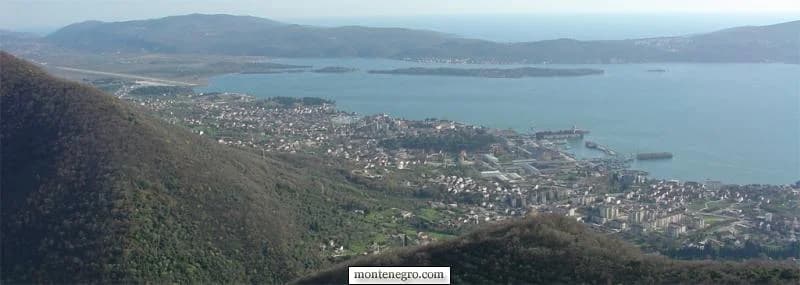
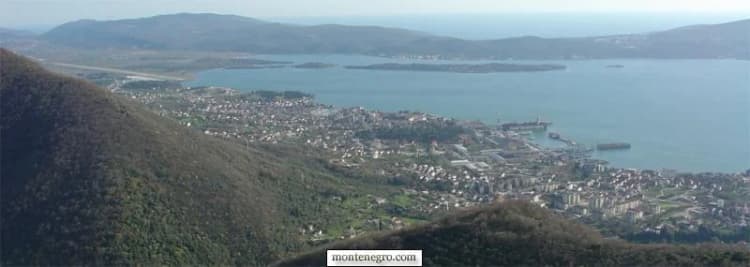
The official Tivat Tourism Organisation description calls the landform roughly 300 metres long and 200 metres wide. A strip of sand and a bridge connect it to the mainland, but the authority cautions that high tide can cover the connection. That explains the apparent contradiction in its names. Ostrvo Cvijeća means Island of Flowers; prevlaka describes a narrow connecting strip or isthmus.
Do not turn the dimensions into a promise of a five-minute attraction. The archaeological area rewards slow reading, worship may be under way, and residential space is not visitor space. The mainland approach also sits near Tivat Airport, Kalardovo and the wetland landscape of Tivat Solila. For the larger setting, start with the Tivat city guide, then treat Prevlaka as a distinct half-day cultural stop rather than an extension of the marina.
| Element | Detail |
|---|---|
| Miholjska Prevlaka | about 300 m × 200 m |
| Mainland | sand + bridge |
| High tide | May affect link |
| Advice | Check conditions; never force a flooded crossing |
Source: tivat.travel
The archaeological church is older—and less certain—than the slogan
The strongest concise architectural account comes from the Montenegrin Academy of Sciences and Arts. It identifies the ruins as a spacious three-aisled basilica with three eastern apses. Decorative stone fragments have pre-Romanesque characteristics broadly associated with the ninth through eleventh centuries. Researchers have dated construction variously to the ninth, eleventh or twelfth century; the Academy entry considers completion in the eleventh century under Zeta’s King Mihailo the most acceptable proposal.
That is more cautious than the local tourism page, which says a monastery was built in the sixth century. Both sources are useful, but they do different jobs. The tourism page communicates a long Christian association; the Academy distinguishes excavated fabric, stylistic dating and scholarly disagreement. The responsible conclusion is not “the sixth-century monastery definitely survives here.” It is that Prevlaka is an old Christian site whose investigated medieval architecture has several proposed phases and dates.
The Academy says the earlier complex fell into ruin—possibly in the twelfth century—and that a new church was built from existing material in the thirteenth century for the seat of the Zeta bishopric established by Saint Sava. This is the period that gave Prevlaka its exceptional institutional importance. It was not merely a picturesque chapel beside a beach; it was an episcopal centre connected to the organisation of the medieval Serbian Church.
| Evidence layer | What it shows |
|---|---|
| Decorative fragments | Pre-Romanesque features broadly typical of the 9th–11th centuries |
| Earlier basilica | Proposed 9th, 11th or 12th century; CANA prefers 11th-century completion |
| 13th-century episcopal church | New building using older material for the seat of the Zeta bishopric |
| Takeaway | Archaeology supports phases and debate—not a single neat construction story |
Source: leks.canu.ac.me
What happened in the fifteenth century?
The Academy states that Venetians destroyed the younger church in the middle of the fifteenth century. The Orthodox Encyclopedia adds two separate strands. First, it reports that Venetian artillery seriously damaged the monastery during suppression of the Grbalj uprising in 1452. Second, it recounts a tradition in which a merchant poisoned 72 monks with arsenic during a feast.
The encyclopedia explicitly says the tradition’s historicity is doubtful. It gives variant dates around 1433 or 1445, not one secure 1452 date, and identifies its first written recording in Metropolitan Vasilije Petrović’s 1754 History of Montenegro. That gap matters: a source written roughly three centuries later can preserve collective memory, polemic, devotion and literary shaping at once. It is not eyewitness testimony.
The familiar fish-soup detail, the merchant’s alleged antidote, the cry of plague and the exact number 72 belong to this devotional narrative. They should be heard respectfully because the Orthodox Church venerates the Prevlaka martyrs. They should also be labelled as tradition because visitors of every belief deserve to know what kind of claim they are hearing.
What does the arsenic result prove?
The same encyclopedia reports that a grave containing numerous remains was found in the church and that chemical-toxicological analysis in 1997 detected elevated arsenic. This is important evidence of exposure. It is not a laboratory certificate for the complete story.
Without a published chain of custody, individual identification, secure dating, baseline comparison and a full peer-reviewed interpretation available in the reviewed material, elevated arsenic cannot tell a visitor who the people were, how many died together, whether poison was administered in one meal, who supplied it or which year it happened. Nor does artillery damage prove the poisoning mechanism. The responsible version holds the findings and the limits together.
| Evidence level | What it covers |
|---|---|
| Documented context | mid-15th-century destruction; 1452 artillery damage reported |
| Material evidence | multiple remains; elevated arsenic reported from 1997 testing |
| Later tradition | first identified written record: 1754; variant alleged dates |
| Not established | fish soup, perpetrator, 72 identities and exact year |
Source: pravenc.ru
Holy Trinity church and the nineteenth-century return
The small church visitors see beside the ruins belongs to a much later chapter. The Orthodox Encyclopedia identifies its patron as Elena Vlastelinović, later known in monastic life as Ekaterina. With the blessing of the Dalmatian bishop Josif Rajačić, she built the Holy Trinity church near the medieval remains in 1833, lived at Prevlaka and died in 1847. A bell tower was added above the west façade in 1893.
This distinction prevents another common compression. Holy Trinity is not the intact medieval cathedral, and the exposed foundations are not proof that a reconstruction has already occurred. The nineteenth-century church, excavated footprint and newer monastic buildings are separate parts of the ensemble. Read them in order instead of imagining one continuous structure.
A living monastery in 2026
The Metropolitanate’s directory lists a brotherhood at the Monastery of Saint Michael the Archangel, while a March 2026 report records a liturgy there. Those are strong signs of active religious life. They do not establish tourist hours. No dependable official page reviewed for this guide published fixed daily opening times, an admission fee, a photography policy or a step-free route.
Approach as a guest at a religious site. Cover shoulders and knees before entering a church; remove hats where customary; silence phones; never photograph worshippers, clergy, relics or interiors without permission. If a service is in progress, remain quiet and follow local direction. Do not climb or sit on archaeological masonry, move stones, enter residential paths or treat gardens and homes as a public park.
The official monastery directory publishes the local contact number 032 671 191. Call ahead if access to a particular church or a group visit is important. A phone number is not a guarantee of an English-speaking answer or an appointment. Current signs, barriers and monastic instructions override any travel article.
| Zone | What applies |
|---|---|
| Public approach | Follow open paths; read current signs; dress before church; keep voices low |
| Ask first | Interior photos; group access; service movement; any uncertain route |
| Do not enter | Monastic homes; closed gates; excavation barriers; unmarked property |
| Priority | Active worship and residential life take priority over sightseeing |
Source: mitropolija.com
The island is not entirely a monastery garden
Government documents complicate the romantic image of one open sacred garden. A 2023 information paper describes a 2002 property exchange involving roughly 10,000 square metres, 13 residential buildings and a small hospitality building. Transfer of possession was tied to resolving the housing status of people using the units, including former military personnel displaced by the wars of the 1990s.
A quarterly government report published in December 2024 said an interdepartmental team was reviewing the documents and implementation obligations. This article does not infer that the matter has since been completely resolved. For visitors, the practical rule is simple: monastery grounds, public coastal space, recreation facilities and occupied homes are not interchangeable. Respect fences, doors, private yards and residents.
| Space | Character | Access rule |
|---|---|---|
| Monastery | worship + community | follow host direction |
| Archaeology | protected fabric | no climbing or moving |
| Recreation | signed public facilities | check current rules |
| Residences | homes and yards | private by default |
| Guide | Use signs and boundaries | not the “island attraction” label |
Source: gov.me
Reconstruction plans are plans, not a finished cathedral
A 2023 expert round table organised by the Metropolitanate, monastery and Municipality of Tivat discussed archaeology, conservation, spatial planning and possible reconstruction. The Government also ran a 2024 public consultation on draft amendments to the Kalardovo–Ostrvo Cvijeća–Brdišta location study. These are evidence of active debate and planning work.
They are not evidence that a full medieval church reconstruction has been authorised and completed. Visitors should expect ruins, the Holy Trinity church and a living monastery—not an announced future visualisation made real. Conservation decisions can involve archaeology, religious use, planning law and contested ideas about how much reconstruction is appropriate. The article therefore avoids a completion date or promise.
What changed for families in 2026?
RTCG reported on 24 June 2026 that Morsko Dobro completed a sports court and children’s playground at Miholjska Prevlaka, with works valued at about €80,000. That is a concrete current addition and distinguishes the wider site from the monastery alone. It does not answer whether equipment is open every hour, shaded, maintained after storms or accessible to every mobility level. Inspect it before use and supervise children near roads, water and archaeological areas.
The Tivat tourism authority describes natural beaches along the island coast. It separately identifies Kalardovo as a sandy family beach near the airport. Do not assume every piece of shoreline is a managed bathing beach or that monastery etiquette stops at a particular invisible line. Use established access, avoid private piers, and check current bathing-water notices and weather rather than relying on adjectives such as “warm” or “clean.”
Getting there by bus: current published timetable
The tourism authority’s bus page currently lists a dedicated Ostrvo Cvijeća route. The times below were visible on 30 August 2026; they are a planning aid, not a guarantee. Verify the official timetable on the travel day, especially on Sundays, holidays and outside summer.
| Direction | Departure 1 | Departure 2 | Departure 3 |
|---|---|---|---|
| Tivat → Ostrvo Cvijeća | 12:00 | 13:40 | 18:30 |
| Ostrvo Cvijeća → Tivat | 07:00 | 12:15 | 18:45 |
The published pattern is sparse and awkward for a conventional half-day trip: one outward departure is only fifteen minutes before a listed return, while the late-afternoon pair is similarly close. Confirm whether the schedule is aligned to local commuting rather than sightseeing and identify a backup before leaving Tivat. The page gives the Tivat bus-station information number as 032 66 33 66 and hours of 07:00–21:30.
By car or taxi, use current navigation to the signed approach; do not infer parking rights from an empty patch of ground. Airport proximity does not mean a safe pedestrian shortcut across operational or unsigned land. If staying in town, the Tivat accommodation-area guide helps compare a central base with quieter surroundings.
| Step | Action |
|---|---|
| 1 · Verify | same-day bus or taxi |
| 2 · Check | tide, weather, footwear |
| 3 · Respect | worship + boundaries |
| 4 · Return | before last safe option |
| If the link is flooded or access is unclear | wait, turn back or choose another stop—never improvise through water |
Source: tivat.travel
A practical, respectful sequence on arrival
Pause before crossing and inspect the connection. If water, waves, work vehicles, barriers or poor visibility make it uncertain, do not proceed. On the island, identify the route that is clearly open to visitors. Begin with the exterior relationship between Holy Trinity and the excavated basilica; it makes the chronology easier to understand. Enter a church only if open and appropriate, then use signed public facilities without wandering into homes.
Carry water, sun protection and shoes suitable for uneven stone. Modest clothing that can cover beachwear solves the monastery-versus-swimwear conflict. Take litter away. Avoid drones unless every aviation, privacy, monastery and local restriction has been checked; the site’s proximity to Tivat Airport makes casual assumptions especially unwise. For urgent danger in Montenegro, the official emergency number is 112.
Peak-season traffic and heat can transform a short map distance into a poor plan. The Montenegro high-season guide explains why early starts and flexible transport matter. If the island is crowded or worship is under way, give it space and return later.
Pairing Prevlaka with nearby Tivat
Do not rush from sacred archaeology straight into a checklist. A contrasting second stop can make the day more coherent. The Buća Palace and Great Park guide follows another layer of Tivat history, while the Porto Montenegro guide explains the radically different naval and marina landscape north of the centre.
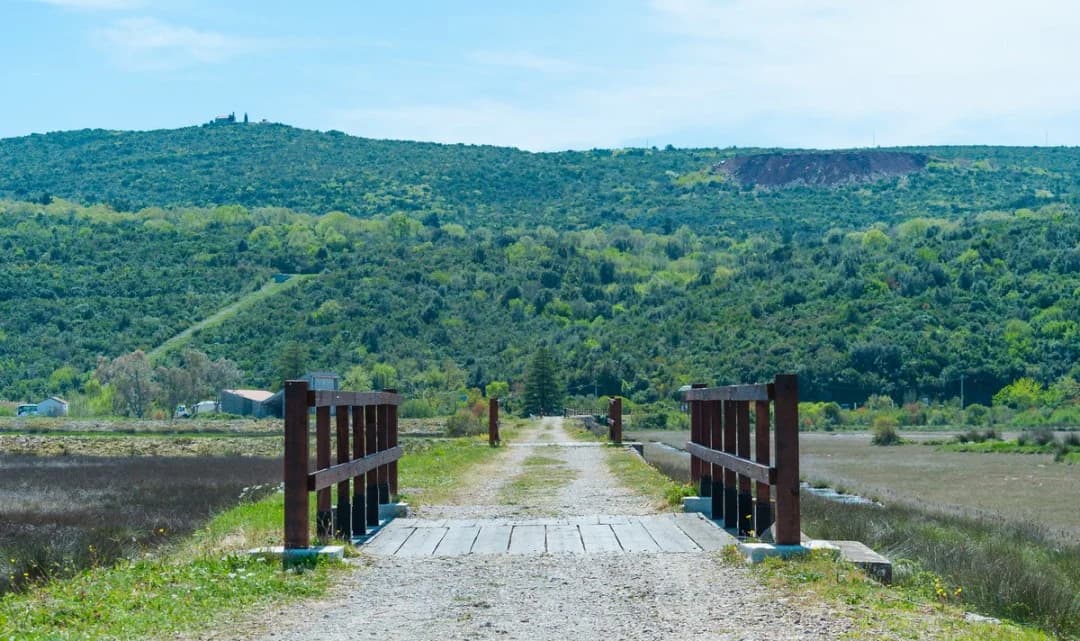
For nature, Tivat Solila lies in the same southern geography but is a protected wetland with its own access rules. The photograph below shows its trail environment, not Prevlaka. Do not merge the sites or wander cross-country between them. Visitors comparing other island experiences can use the Sveti Nikola responsible day-trip guide; unlike causeway-linked Prevlaka, that trip depends on boat access. For wider Bay heritage, the Pet Danica history offers a useful western-Bay counterpart, while Kotor versus Dubrovnik helps place Venetian-era claims in broader Adriatic context.
What “Island of Flowers” should mean now
The nickname is attractive, but it can flatten a complicated place into fragrance and scenery. Prevlaka is more valuable when its layers remain visible: debated early architecture, a thirteenth-century episcopal seat, fifteenth-century destruction, a powerful but historically uncertain martyr tradition, nineteenth-century revival, twentieth-century residential history, active worship and present-day public use.
Deep history does not require false certainty. The poisoning tradition can be treated with religious respect without being presented as courtroom fact. Archaeology can demonstrate a major basilica without resolving every construction date. A 2026 playground can be welcomed without turning occupied homes into an attraction. And a narrow causeway can make the place easy to reach on one day and inappropriate to cross on another.
FAQ
Is Miholjska Prevlaka really an island?
It is commonly called an island, but a strip of sand and a bridge connect it to the mainland. Tivat’s tourism authority says high tide can cover the connection, so “island” and “peninsula” both describe part of its character.
Was the monastery founded in the sixth century?
The tourism authority uses a sixth-century date. CANA gives a more complex archaeological picture: pre-Romanesque remains, competing ninth- to twelfth-century dates for the earlier basilica, and a thirteenth-century church for the Zeta bishopric.
Were 72 monks poisoned in fish soup in 1452?
That is church tradition, not a securely documented contemporary account. The Orthodox Encyclopedia says its historicity is doubtful, identifies a 1754 written record and gives variant alleged dates. Reported arsenic in remains does not prove every narrative detail.
What can visitors see?
The ensemble includes excavated medieval foundations, the 1833 Holy Trinity church and active monastic buildings. Open access to particular interiors can vary; follow current signs and instructions.
Is there an entrance fee or fixed opening time?
No dependable official fee or daily tourist timetable was found in the reviewed sources. The monastery directory lists 032 671 191 for advance enquiries. Do not assume that no ticket means unrestricted access.
Can I go in beachwear?
Use modest clothing around the monastery and cover shoulders and knees before entering a church. Keep swimwear to clearly appropriate public bathing space and respect worshippers and residents.
Does a bus go from Tivat?
The Tivat Tourism Organisation page lists three departures in each direction, but the pattern is limited and may change. Check the official page and arrange a backup return before travelling.
Can I cross if the causeway is under water?
No. Wait or turn back. Depth, current, surface condition and contamination cannot be judged reliably from appearance, and a return crossing may be worse.
Has the medieval cathedral been rebuilt?
No completed reconstruction was verified. Expert discussions and a draft planning process are not the same as authorised, finished construction.
Is the whole island public monastery land?
No such assumption is safe. Government records describe residences, occupants and property-transfer implementation issues. Stay on clearly open routes and respect homes and boundaries.