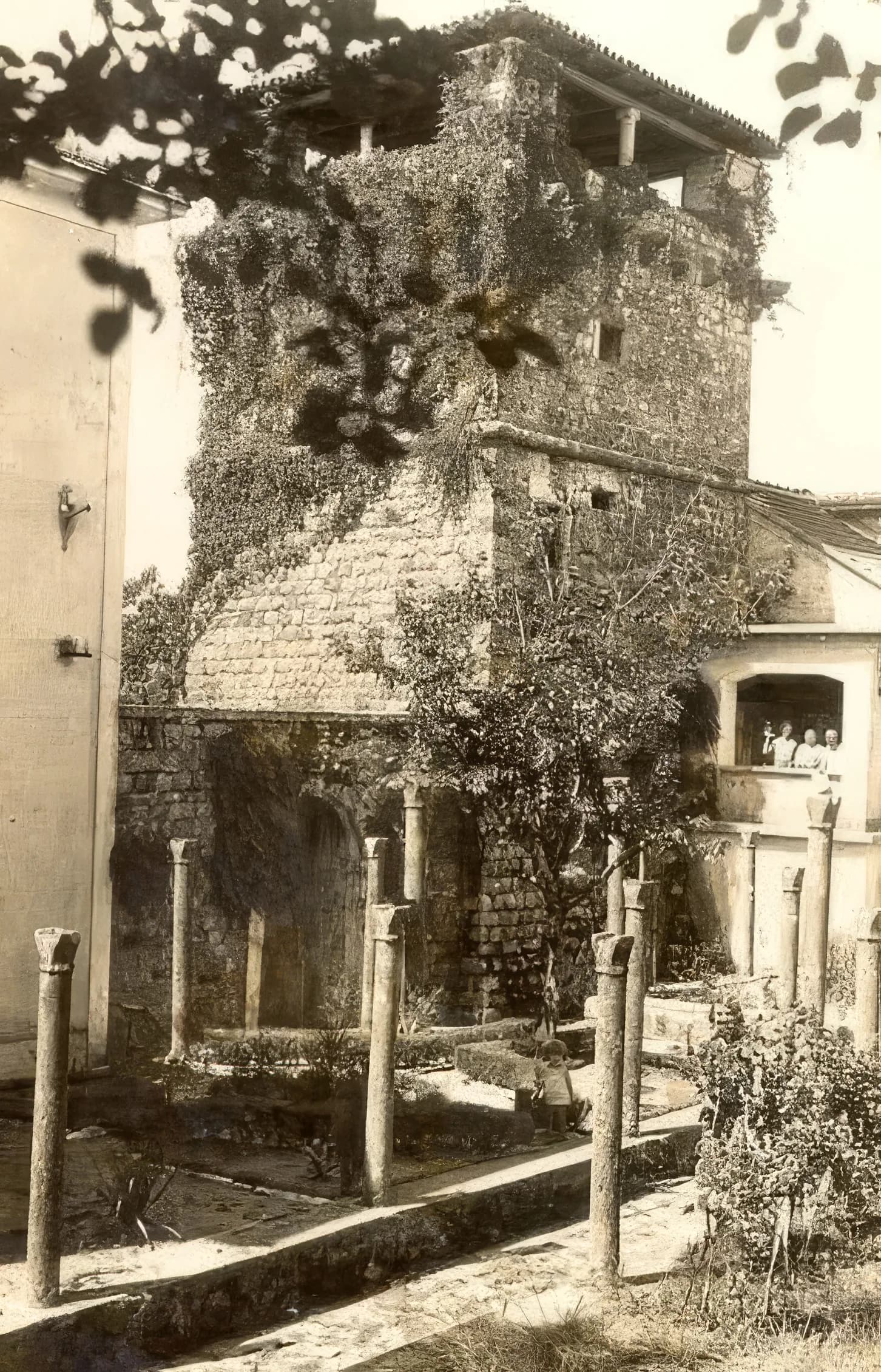
Two places in central Tivat explain the town more clearly than another marina panorama. The Buća-Luković complex preserves the layered remains of a noble summer residence; the nearby Great City Park preserves a nineteenth-century landscape shaped beside the naval Arsenal. One belongs to the story of Kotor families using the Tivat plain for estates. The other belongs to the military-industrial town that grew around the fleet. Both now function as public cultural space, but neither is a frozen period set.
This guide treats them as a single, slow walk while keeping their institutions separate. Museum and Gallery Tivat occupies the palace complex. Komunalno Tivat manages the protected park. The Centre for Culture runs performance programming at named venues around town. That distinction matters when checking hours, exhibitions and tickets.
| Layer | Period / character | Features | Status today |
|---|---|---|---|
| BUĆA-LUKOVIĆ | medieval estate | tower • chapel • garden | museum today |
| GREAT PARK | 1892 landscape | trees • paths • memorials | natural monument |
| Link | short walk | — | — |
Source: tivat.travel, muzejigalerijativat.me, komunalnotivat.com
What survives at the Buća-Luković complex
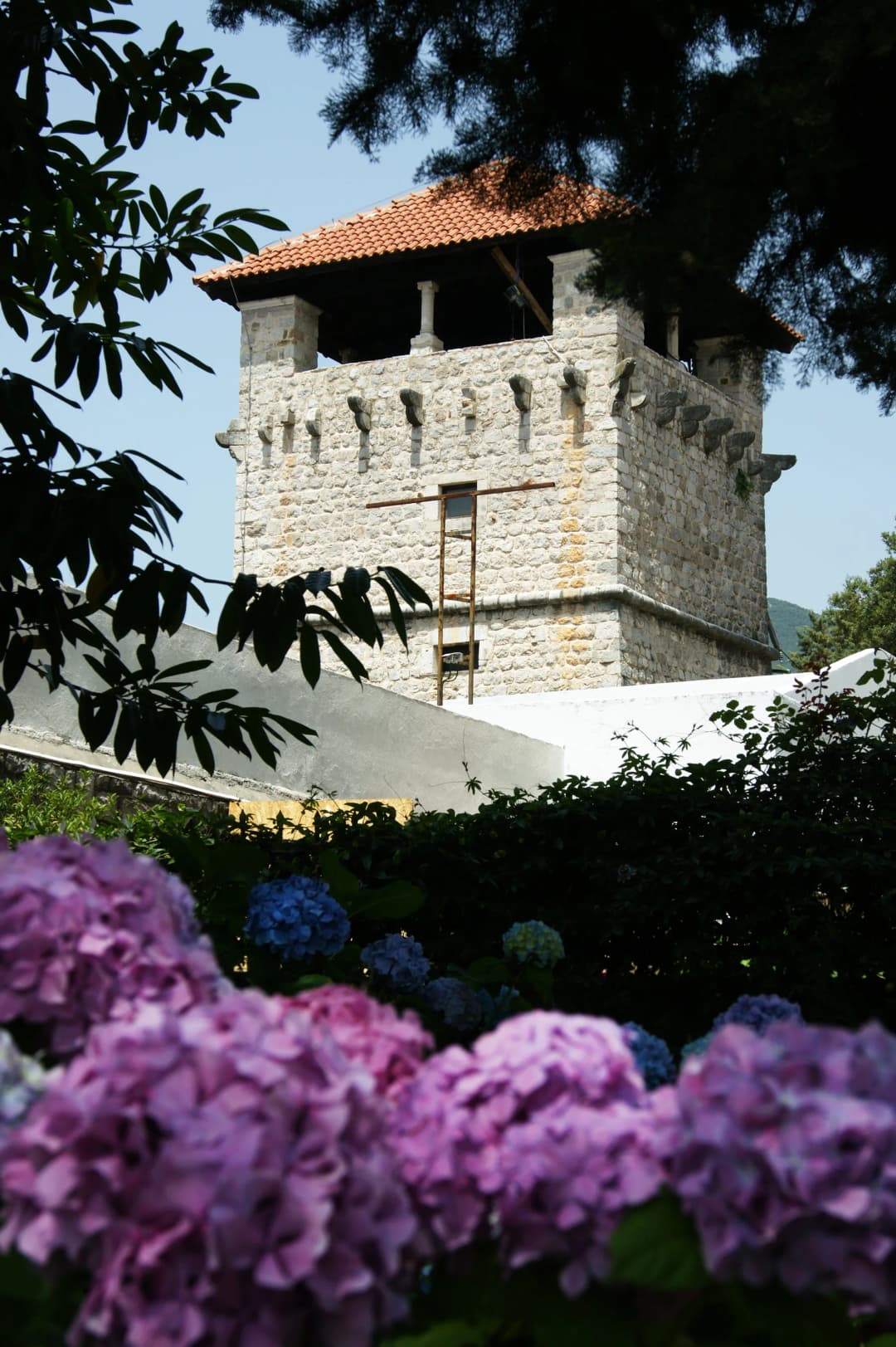
The official museum describes Buća as a medieval summer residence built in Renaissance spirit with traces of late Gothic style. The tourism organisation places the estate’s origin in the fourteenth century but dates the fortified tower specifically to 1548. These statements fit a complex assembled over time; they do not support a single neat construction date for every wall.
The documented ensemble included a residence, farm building, St Michael chapel, tower and gate, with a vineyard and large garden. The Buća family owned it until the nineteenth century; the official destination history records transfer to Tripo Luković in 1812. Part of the Luković property went to the municipality in 1888 and was used in the development of the Austro-Hungarian naval Arsenal.
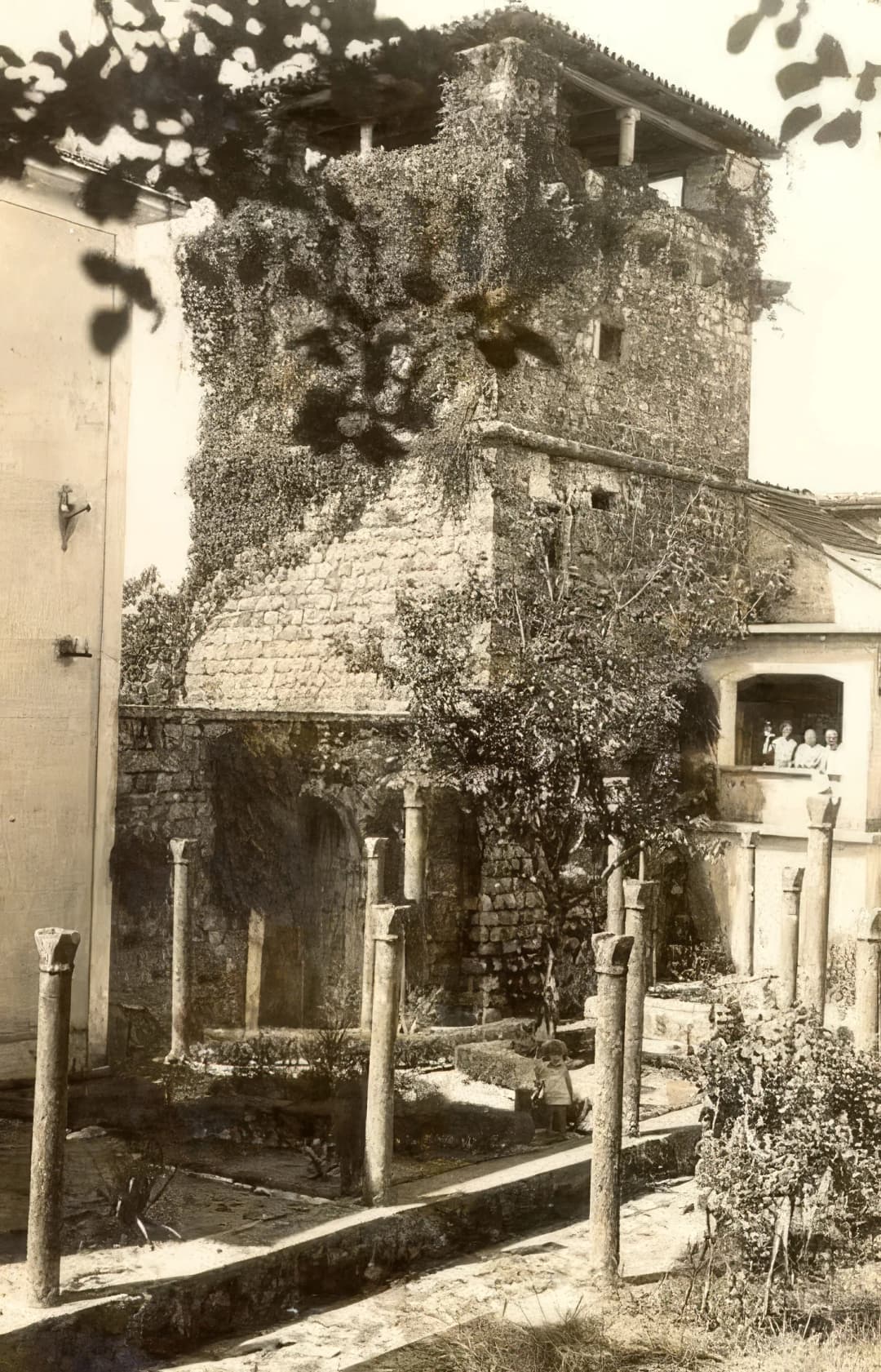
The fortified character is easy to romanticize, but it also records uncertainty: a rural estate near the shore needed status, storage and defence. Compare that combination with the smaller residence described in our Tre Sorelle article, then widen the view with the Prčanj maritime-village guide. Boka’s summer houses were not interchangeable; their later alterations matter as much as their founding stories.
| Date | Event |
|---|---|
| 14th c. | estate origin |
| 1548 | tower date |
| 1812 | Luković ownership |
| 1888 | property transfer |
| 2017 | museum founded |
Source: tivat.travel, opstinativat.me, muzejigalerijativat.me
A monument still used for culture
Museum and Gallery Tivat was founded in late 2017 and operates in the former summer-residence complex. Its own 2026 site shows exhibitions and programmes continuing there. That is the most useful modern fact: the estate is not simply viewed from outside, but access depends on museum operations, installations and events.
The museum’s documents page currently lists Tuesday–Sunday, 10:00–16:00, with Monday closed. Treat that as a live planning reference rather than an eternal schedule. Holiday hours, exhibition changeovers and private work can intervene; confirm through the official museum page or its published phone before making a special trip.
The Centre for Culture is a separate institution. Its history notes that the restored residence entered cultural use in the early 1980s as a gallery and developing museum collection. Its 2026 repertoire identifies venues event by event. “Tivat Summer Stage,” “Donja Lastva Summer Stage” and the Buća atrium are not synonyms. Read the venue line before buying a ticket.
The Great City Park in verified numbers
The park’s 2022–2026 management plan is more precise than tourist superlatives. It gives a protected area of 59,158 square metres, or about 5.92 hectares, and calls it Tivat’s largest planned green space. It does not establish that this is Montenegro’s largest park or the botanically richest garden on the southern Adriatic.
The park developed beside the Austro-Hungarian naval base and retains a founding inscription from 1892. Local sources connect its plant diversity with sailors returning from distant voyages, but describe the practice partly as oral tradition or an unwritten obligation. The careful conclusion is that maritime networks shaped the collection—not that every surviving tree has a documented ship and captain.
| Measure | Documented value | How to read it |
|---|---|---|
| Protected area | 59,158 m² | About 5.92 hectares inside the protected boundary |
| Dendroflora | 133 species | Plus 1 subspecies, 3 varieties and 18 cultivars |
| Origin | 1892 inscription | A memorial date tied to the planned park |
| Current category | Natural monument, category III | Protection regime II and local significance |
| Earlier protection | 1968 | Originally protected as a horticultural object |
| Milestone | Designation | Detail |
|---|---|---|
| 1968 | horticultural object | first recorded protection |
| 2015 decision | natural monument | category III · regime II |
| Note | — | Reclassification is not the beginning of the park’s protection history. |
Source: komunalnotivat.com, opstinativat.me
How to read the botanical collection
The inventory counts 133 species, one subspecies, three varieties and 18 cultivars. Of the species total, 89 are non-native and 44 native. Notable trees in the plan include bunya pine, Monterey cypress and European bird cherry; it also identifies nationally protected box, yew and bird cherry. Those numbers make the park important without needing an unprovable regional ranking.
Look for composition as well as labels. The plan describes a mixture of classical, geometrically ordered design and freer English landscape style. It also records a fountain, pergolas, nursery, rainwater channels, memorials and the original path plan. Some elements survive only in traces or require restoration. A missing label or altered bed is part of the conservation story, not permission to identify plants by guesswork.
Practical combined route
Start at the museum, if confirmed open. Give the stone complex enough time to distinguish the residential building, economic building, chapel, tower and garden rather than photographing only the tower. Check the current exhibition and ask whether every component is accessible.
Continue into the Great City Park. Follow existing paths, read memorials and botanical labels, and do not leave the route to approach old trees. After wind or maintenance work, obey temporary barriers. The manager publishes a 2026 annual programme and internal-order documents; these are better evidence of active management than a generic “always open” promise.
Finish at the waterfront. Our Tivat before-and-after guide connects the estate and Arsenal story. The Porto Montenegro guide explains the current waterfront, while the P-821 Heroj article preserves a tangible naval chapter. For the wider shipyard transition around Boka, continue with Bijela’s shipyard history.
| Stop | Action |
|---|---|
| 1 · MUSEUM | check hours |
| 2 · PARK | stay on paths |
| 3 · WATERFRONT | read the Arsenal |
Source: muzejigalerijativat.me, komunalnotivat.com
Access, conduct and timing
The park is a public green space and protected natural monument, while the museum has controlled opening hours. Paths may be uneven, wet or obstructed by maintenance. The palace’s historic thresholds and stairs can create mobility barriers; contact the museum for a current step-free route rather than assuming the whole complex is accessible.
Do not climb masonry, touch exhibits, pick plant material or cross tree-work barriers. Use a quiet voice around events and exhibition spaces. Early or late daylight can improve the atmosphere, but opening hours and park notices take priority over photography plans. In hot weather, the tree canopy offers shade without eliminating heat risk.
If a performance is the main reason for visiting, save the dated confirmation and venue name offline. Arrive with enough time to distinguish the Buća atrium from Tivat’s other summer stages. A museum visit and an evening performance may also follow different entrances and access arrangements.
Frequently asked questions
Is Buća Palace one building from the fourteenth century?
No. Official sources describe a complex developed in stages. The estate is broadly dated to the fourteenth century, while the fortified tower is dated to 1548.
Is the palace still the Tivat Cultural Centre?
Museum and Gallery Tivat occupies the complex. The Centre for Culture is a separate institution that publishes performances at several named venues. Check which organisation and venue apply to your visit.
What are the museum hours?
The official site currently lists Tuesday–Sunday 10:00–16:00 and Monday closed. Confirm before travel because holidays, installations and special programmes can change access.
Is Great City Park the largest park in Montenegro?
The official plan establishes it as Tivat’s largest planned green space and gives its protected area as 59,158 square metres. It does not substantiate a national ranking.
Did naval captains bring every exotic tree?
Local tradition connects sailors and distant voyages with the plant collection, but the record does not document a ship-by-ship origin for every surviving tree.
How long should I allow?
Allow enough time to inspect the museum programme and walk the park without rushing; do not rely on a fixed duration because exhibition access, events, heat and mobility needs change the visit.