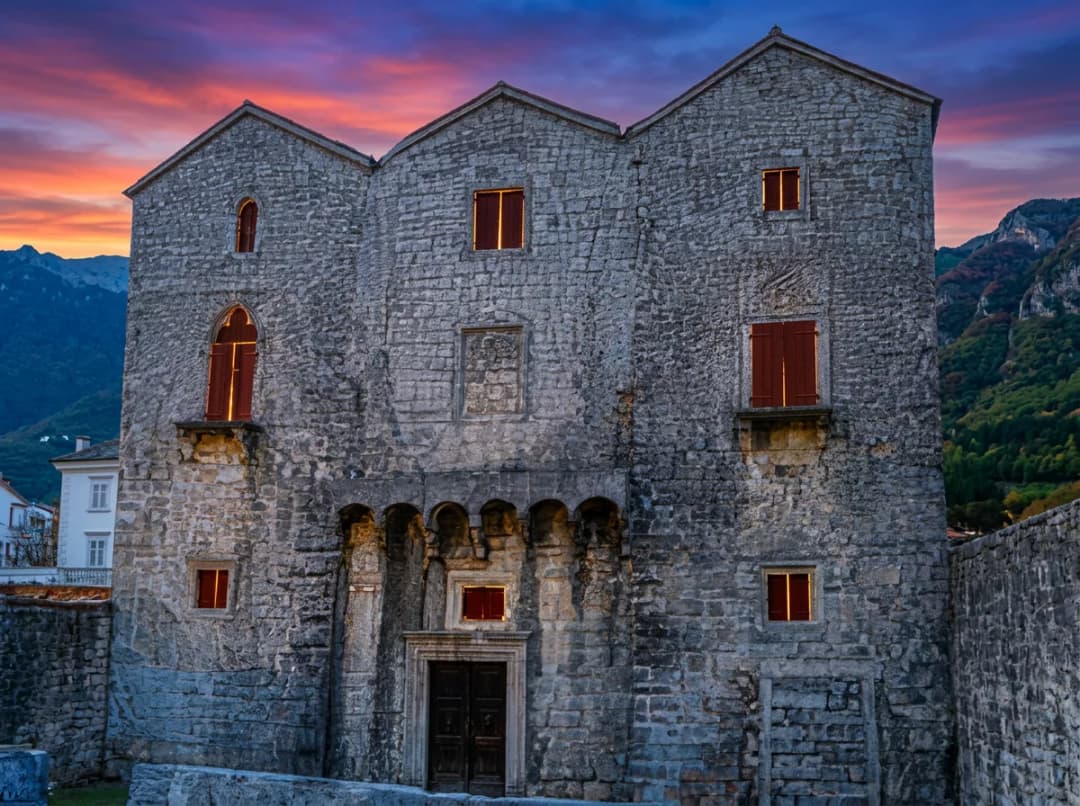
Tre Sorelle is both a documented medieval waterfront residence and a vessel for one of Boka's most durable legends—but the two evidence streams are not the same. Municipal heritage material supports a fifteenth-century date, a sixteenth-century written name, a Buća-family connection and a distinctive three-part form. It does not name three historical sisters, identify their sailor or prove that blocked openings mark their deaths.
This source-led guide shows what to look for from outside, how the legend changed through retelling, and why the Glavati setting matters to the World Heritage landscape. For the wider settlement, use our Prčanj guide; for the shore as a connected cultural route, continue with Muo, Prčanj, Stoliv and Lepetane.
| Evidence layer | What it supplies |
|---|---|
| DOCUMENT | 15th-century dating · 16th-century name · Buća association |
| OBSERVATION | three joined bodies · Gothic openings · heraldic details |
| LEGEND | three sisters · absent sailor · windows sealed in mourning |
Source: kotor.me, hnv.me
What the record establishes
| Topic | Evidence | Supported conclusion | Not established |
|---|---|---|---|
| Date | Kotor heritage assessment | Assigned to the fifteenth century | Exact construction year or single building phase |
| Name | Written-source synthesis | Villa trium sororum appears in the sixteenth century | Why the name arose |
| Family | Planning and heraldic record | Buća summer residence; arms on fabric | Which individuals lived there |
| Legend | Cultural-memory account | Long-lived Boka story with artistic afterlife | Historical sisters, sailor or death sequence |
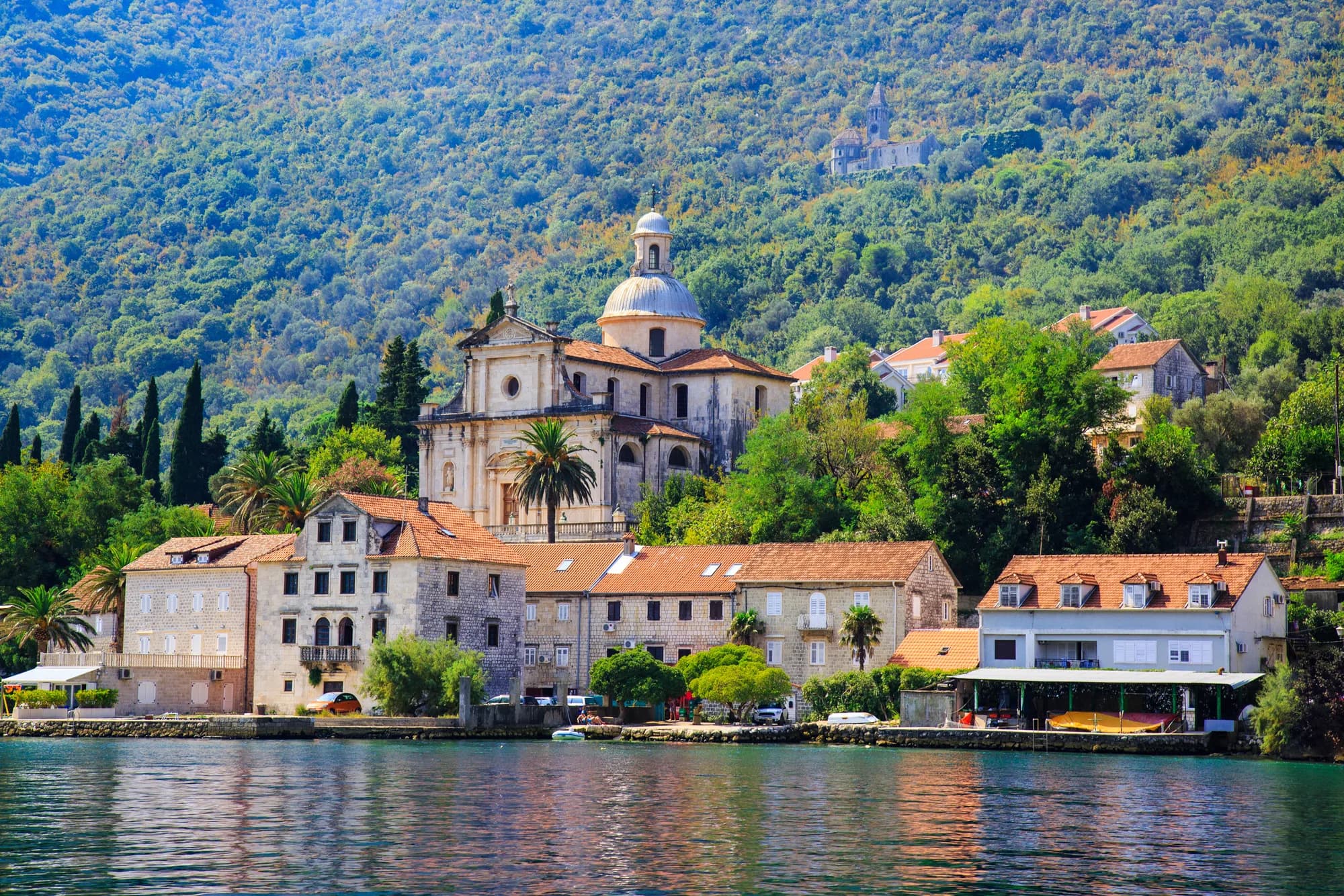
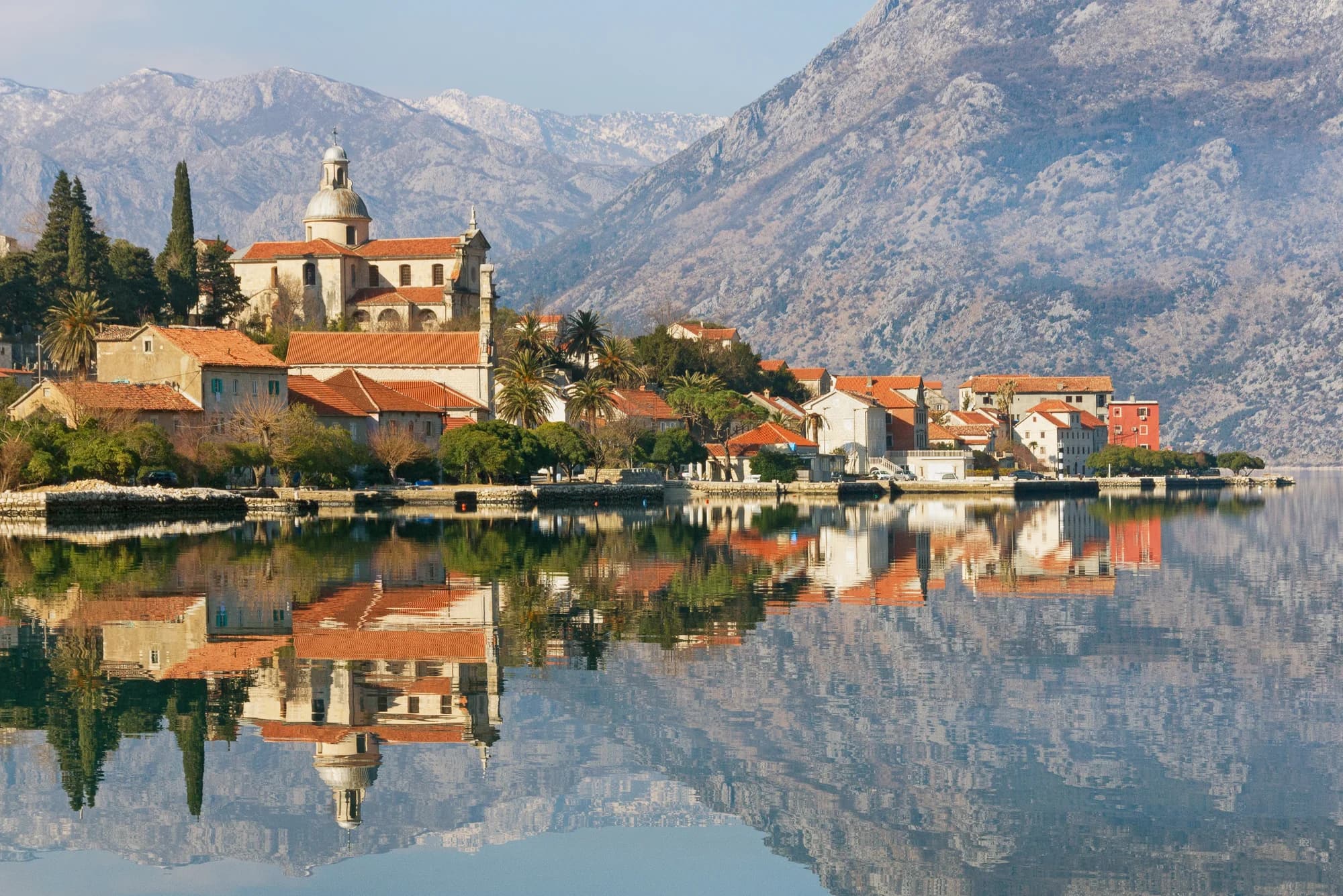
Kotor's Glavati–Prčanj heritage impact assessment places the palace immediately beside the shore in southeastern Prčanj. It dates the building to the fifteenth century, reports its first written mention in the sixteenth as Villa trium sororum, and describes it as a summer residence of the Kotor noble Buća family. The document also records the family's arms at several points on the building.
That is already an unusual density of evidence: a medieval date, an old three-sisters name and surviving heraldic association. The adopted local study separately identifies Tre Sorelle as a cultural-historical monument and former Buća summer house. It recommends protecting the remaining unbuilt land around it because later settlement has reduced an earlier more isolated setting.
None of those official statements supplies a biography of sisters. “Villa of the three sisters” proves that the name was old by the sixteenth century; it does not explain whether the name arose from owners, occupants, architectural appearance or a story already in circulation. That gap is where folklore operates.
How to read the architecture without making it illustrate the tale
The palace's force comes from repetition. Three adjoining rectangular bodies, separate roof forms and vertically ordered openings encourage the eye to assign one section to each sister. Gothic openings, stone construction and heraldic details connect it to elite building culture around medieval Kotor. Yet apparent symmetry should not be treated as a frozen original design.
The municipal impact assessment compares an archival 1938 photograph with later views. That supports cautious observation of change, not a claim that every visible difference is dated or understood. Buildings accumulate repair, reuse and alteration; a blocked opening can be material evidence of change without being the death marker from a legend.
| Step | Reading |
|---|---|
| Look | Three-part appearance |
| Classify | Three-part appearance ≠ proof of three biographies |
| Qualify | Look, classify, then qualify |
Source: kotor.me
The legend and its changing names
The stable core is compact: three sisters love or wait for the same sailor; he leaves; the sisters watch the sea; as each dies, an opening associated with her is sealed; the final opening remains because nobody survives to close it. Names, motives and relationships change. Some versions name Roza, Nera and Bjanka. Others use different names, make one sister the sailor's chosen love, or turn his delay into indecision.
Variation is not evidence that the story is worthless. It is evidence of oral and artistic transmission. The Croatian National Council of Montenegro presents Tre Sorelle as living Boka cultural memory and traces interpretations in painting and theatre. In that setting, the palace does not merely “prove” a tale; its three-part form gives artists a repeatable structure for grief, waiting and maritime absence.
That maritime theme fits Prčanj without requiring the characters to be historical. The coast developed through navigation, captains, merchants, shore estates and households structured by departure and return. The legend compresses the uncertainty of seafaring into three windows. Explore that documented maritime world through our Prčanj church and Ivo Visin guide.
Tre Sorelle within the Kotor cultural landscape
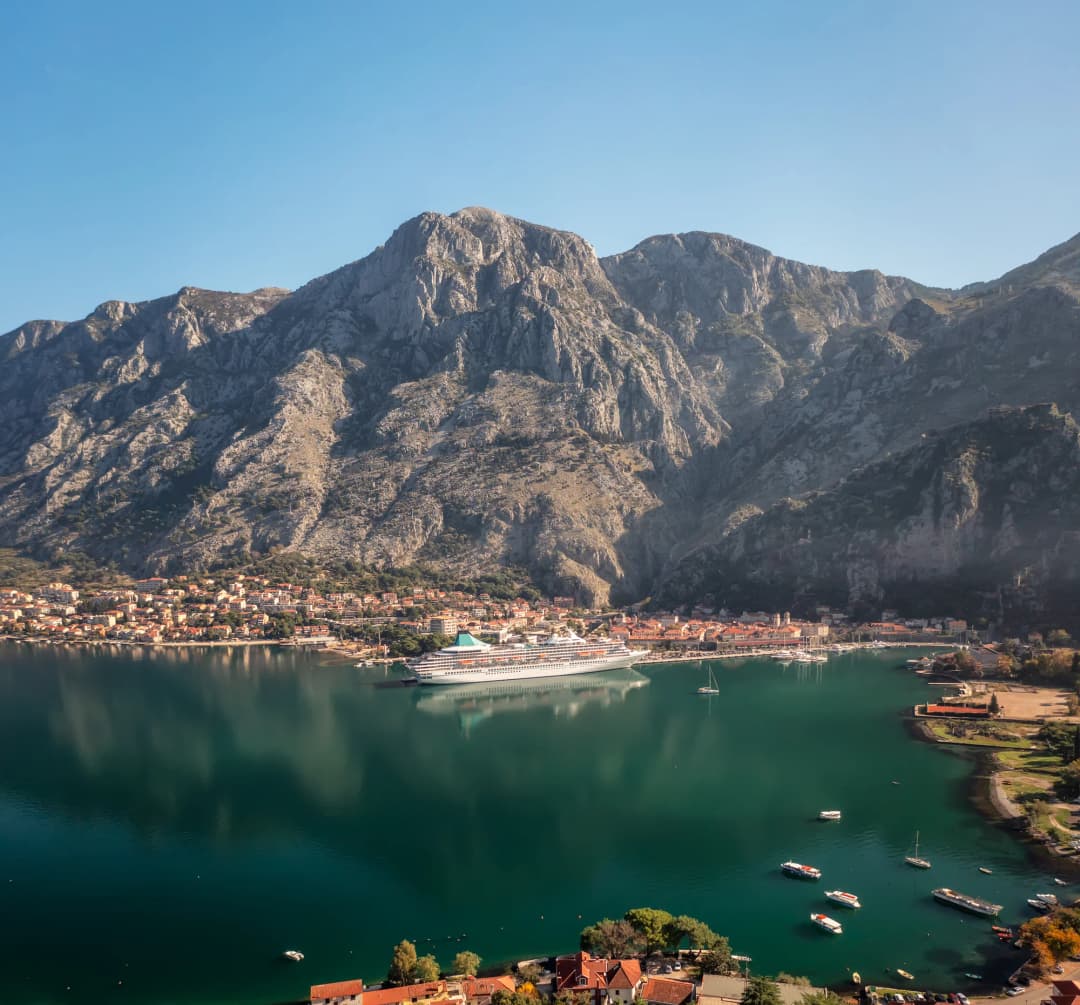
UNESCO describes Kotor's Outstanding Universal Value through the integration of settlements, palaces, roads, coastline and cultivated terraces. It also warns that development and urbanisation can irreversibly transform that coastline. Tre Sorelle should therefore not be treated as an isolated photogenic facade: the narrow shore, remaining open land, gardens and the relationship between sea and settlement are part of how it is understood.
This is especially important at Glavati. The World Heritage Committee requested an independent heritage impact assessment for a planned tourist facility at Glavati–Prčanj in 2016. Municipal planning material identifies a buffer behind the palace and calls for preserving remaining unbuilt space. These records document planning pressure; they do not mean that every later proposal proceeded or that the palace itself became a visitor facility.
What the sources say
The 2025 UNESCO–ICOMOS mission reviewed wider governance and conservation across the Kotor property. Use that as current regional context, not a Tre Sorelle condition report. Likewise, a government page records a 2021 adaptation filing associated with Tre Sorelle, but a filing does not prove approval, completion or present condition. A responsible article stops where the evidence stops.
For the same reason, compare photographs cautiously. A municipal impact assessment includes an archival 1938 image and later views, which can help identify broad changes in setting and openings. It cannot by itself diagnose hidden structure, date every repair or decide which phase deserves removal. Conservation is not the act of making a building resemble the legend. It requires research, fabric recording, authorised intervention and attention to the landscape around the walls. Visitors can contribute by recording the date and viewpoint of a photograph while avoiding claims about damage, restoration quality or ownership that require specialist inspection and current records.
| Element | Relationship |
|---|---|
| SEA | arrival, trade, absence and principal view |
| ROAD | historic connection and current traffic constraint |
| GREEN | remaining setting and development buffer |
| PALACE | architecture, memory and non-public fabric |
Source: whc.unesco.org, kotor.me
Practical exterior visit
Treat Tre Sorelle as an exterior heritage stop unless a current authorised source explicitly says otherwise. The research does not establish public interior access, opening hours, tickets, a visitor centre or a dedicated parking place. Do not enter a courtyard, doorway, garden or waterside area merely because no barrier is obvious. Do not touch heraldic or Gothic stonework, lean on walls, move objects or peer into residential openings.
The shore road is narrow and active. Before stopping, identify a place where your whole group can stand without entering traffic or non-public land. Keep children beside an adult and do not step backward for a photograph. A 2026 municipal service report near Tre Sorelle records complaints about cars and furniture around nearby pontas; the response discusses periodic public-space enforcement. It proves current pressure, not a guaranteed viewing platform or parking entitlement.
Arrive without a vehicle when practical, but do not translate a map distance into a promised walking time. Road width, traffic, heat and mobility change the experience. The Kotor day-trip guide helps decide whether Prčanj fits a larger day, while the Muo guide supplies context for the adjacent shore. Confirm the return plan before walking far along the coast.
| Check | Test |
|---|---|
| TRAFFIC | clear? |
| PUBLIC | space? |
| OBSERVE | no touch |
| FRAME | no blocking |
| LEAVE | no trace |
| If none apply | If no safe lawful viewing position exists, continue rather than improvise. |
Source: sistem48.kotor.me, whc.unesco.org
Frequently asked questions
Was Tre Sorelle built for three sisters?
The documents support a fifteenth-century building and a sixteenth-century “villa of three sisters” name. They do not explain whether three historical sisters caused either the design or the name.
Did all three sisters love the same sailor?
That is the legend's best-known core, not an archival finding. Names and motives vary across versions.
Are the blocked windows authentic memorials?
They are architectural features interpreted through the story. No cited document assigns each opening to a named sister or death.
Can visitors enter?
No public interior access, opening hours or ticket system was verified. Plan an exterior view and do not enter non-public areas.
Is the building unchanged since the fifteenth century?
No such claim is justified. Architectural interpretation identifies differing techniques and possible change; a 2021 adaptation filing also exists, without proving completed works.
Why does the Glavati setting matter?
UNESCO treats settlements, palaces, roads, shore and green space as an integrated cultural landscape. Municipal planning material specifically seeks protection of remaining space around the palace.
What else should I see in Prčanj?
Use the Prčanj church and Ivo Visin guide for documented maritime and ecclesiastical heritage, then compare the Buća name with our Buća-Luković Palace guide without assuming the two buildings share the same history.