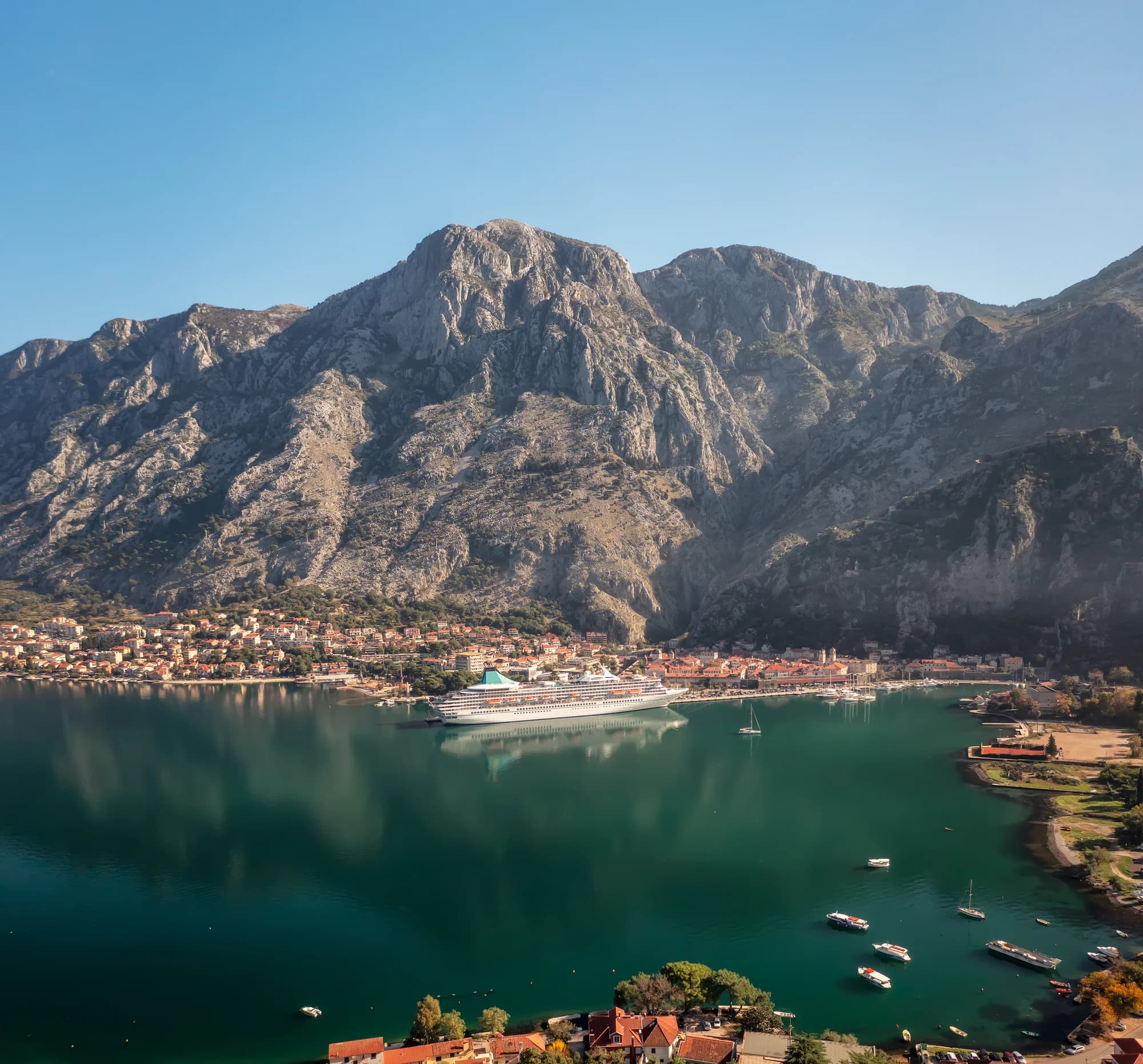
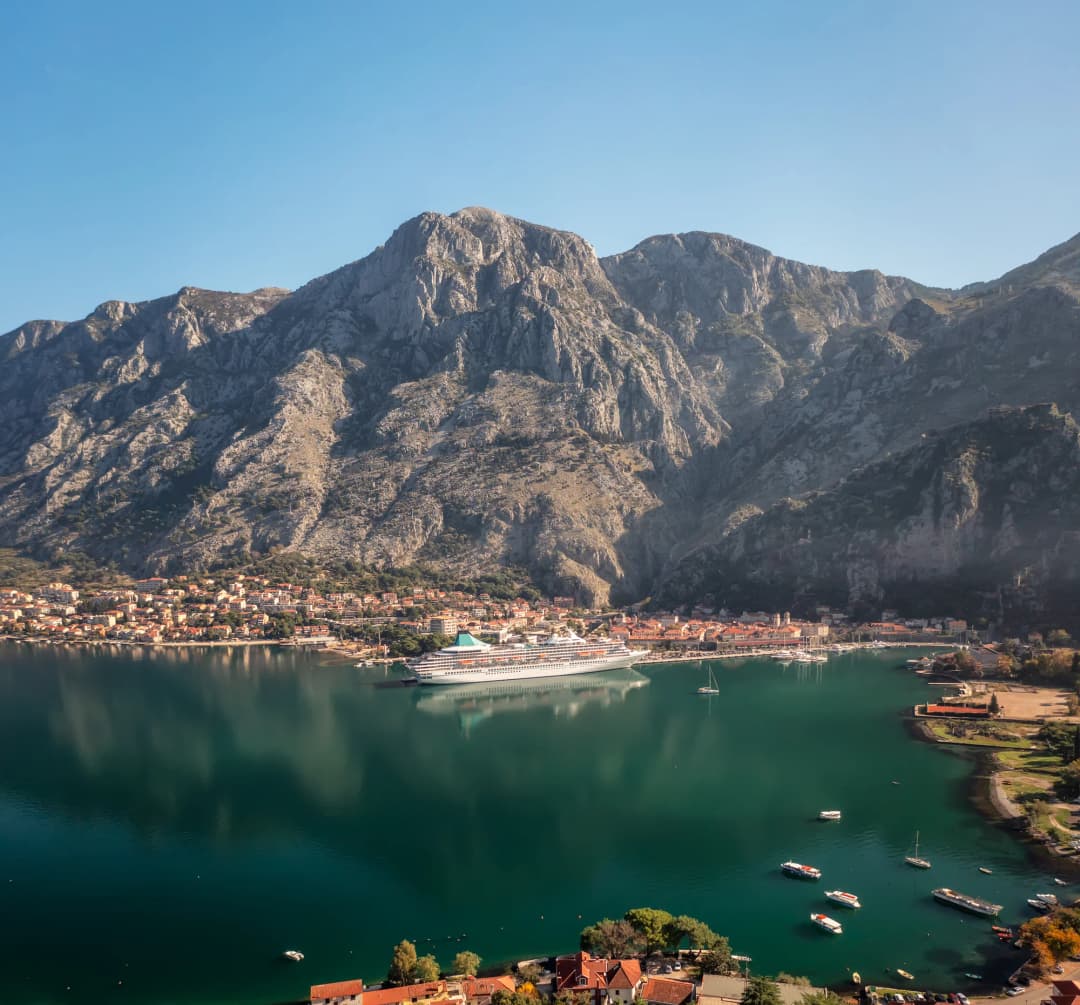
The road out of Kotor toward Muo does not announce a new attraction every hundred metres. It does something more useful: it reveals how the Bay of Kotor worked before it became a sequence of viewpoints. Stone houses face the water, small piers project from the shore, churches occupy carefully chosen ground and the carriageway squeezes through villages shaped when the sea was the easiest route between them.
Muo, Prčanj, Stoliv and Lepetane are often treated as the space between Kotor and the ferry. That misses the point. Together they form the quieter western shore of the inner bay—a compact journey through fishing memory, maritime ambition, sacred architecture and the daily compromises of living inside a protected cultural landscape. The route works as a half-day drive, a demanding bicycle ride or a deliberately slow series of short walks.
The shore in one glance
| Stop | Why pause | Best way to experience it | Planning note |
|---|---|---|---|
| Muo | Working-shore atmosphere and the first broad views back to Kotor | Short waterfront walk | Little formal parking; do not block gates or piers |
| Prčanj | Maritime houses, Tre Sorelle and the monumental waterfront basilica | Walk the central waterfront | Church access varies; dress respectfully |
| Stoliv | Lower-village waterfront and the old path toward Gornji Stoliv | Waterfront stop or uphill hike | The climb is steep and exposed in heat |
| Lepetane | The Verige narrows and the cross-bay ferry | Ferry crossing or shoreline pause | Check the official seasonal timetable |
This shore lies within the wider Natural and Culturo-Historical Region of Kotor. UNESCO’s description is important because it does not isolate the walled city from its surroundings. The value comes from settlements, palaces, churches, cultivated slopes, paths, piers and water arranged as a coherent whole. That is why the best way to travel here is observant rather than acquisitive: notice relationships, not just monuments.
Muo: the threshold between town and village
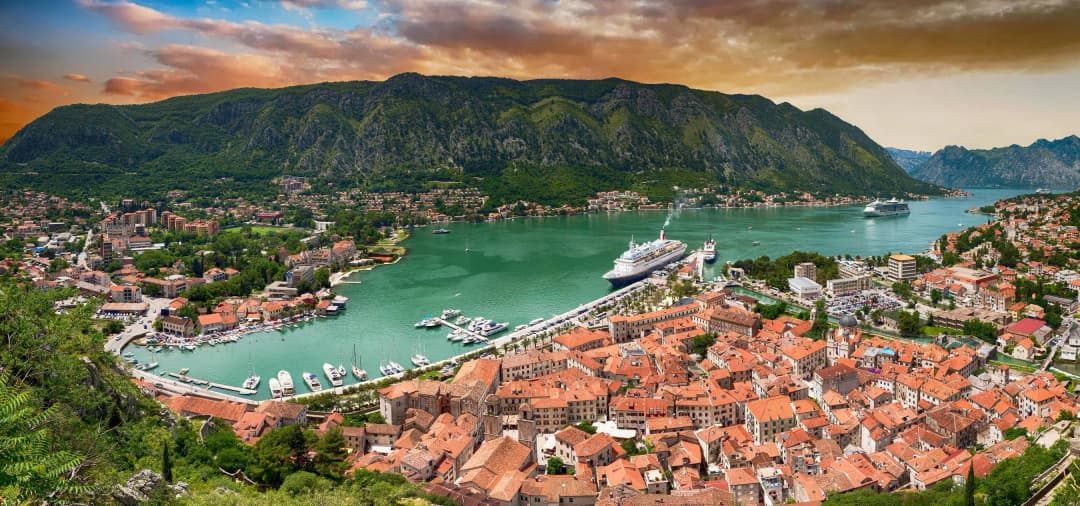
Muo begins almost as soon as the urban fabric of Kotor loosens. Its appeal is not a single headline sight. The village provides a reverse view of the city: walls and roofs across the water, boats tied close to houses and Mount Lovćen’s lower mass rising behind the old centre. Early morning is especially revealing, before traffic occupies the narrow strip between doors and sea.
The original Montenegro.com report remembered old wooden boats and fishermen working the same water as earlier generations. That observation remains the right lens, but it should not be romanticised into a claim that nothing changes. UNESCO’s conservation record warns that urbanisation, infrastructure and the loss of traditional practices can erode the bay’s integrity. Muo is both lived-in heritage and a modern residential shoreline.
Walk only where there is a safe margin. The road is narrow, pavements are intermittent and blind bends are common. A car lets you cover the whole shore, but stopping opportunistically is a poor strategy. Use an established parking space, keep private pontas clear and treat every driveway as active. For a broader introduction before setting out, read our complete Kotor guide.
Prčanj: a village built on maritime horizons
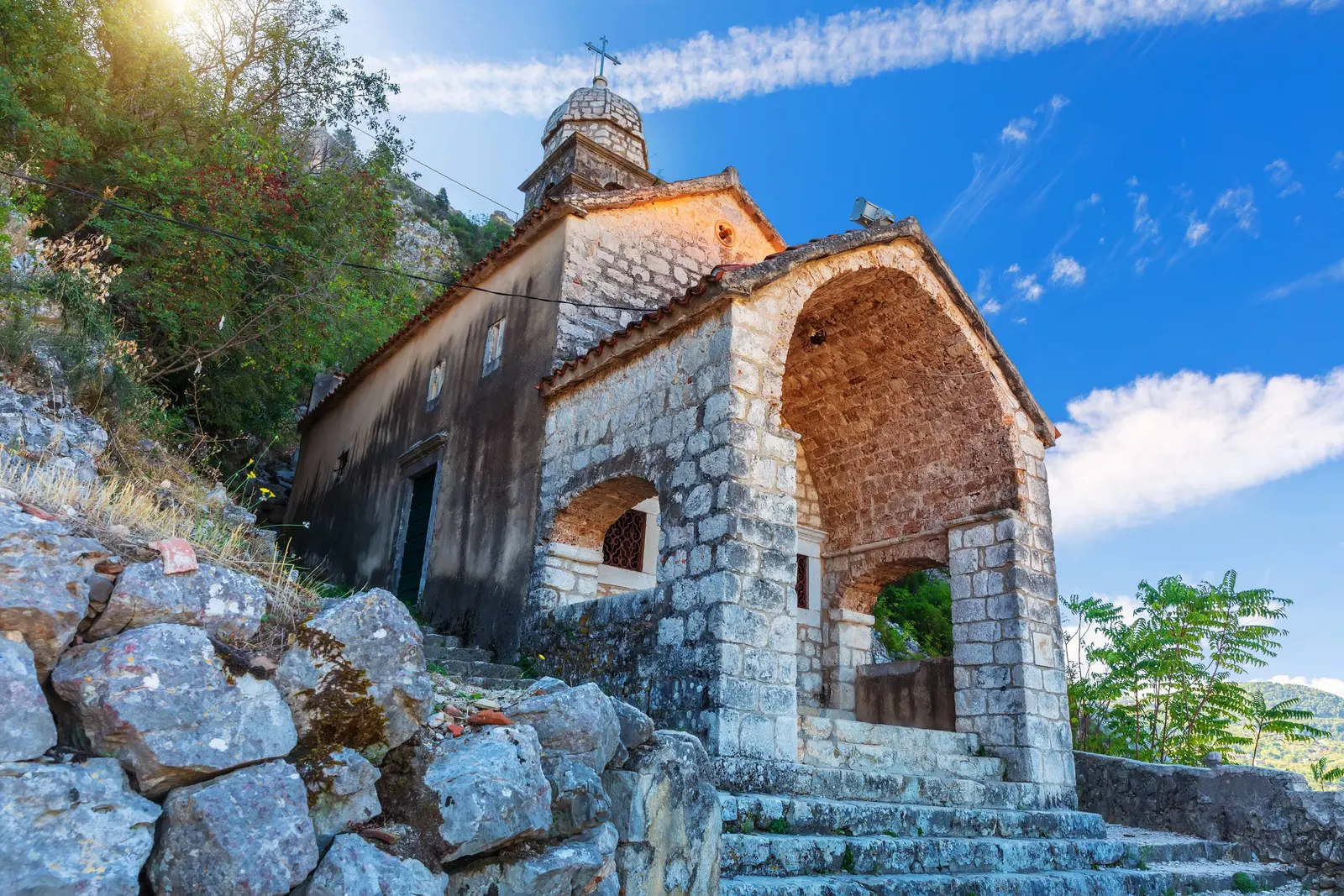
Prčanj is the route’s architectural centre of gravity. Captains and seafaring families invested wealth earned beyond the bay into houses and churches along it. The result is not an enclosed old town but a stretched maritime settlement. Its façades are best read from the water or during a patient waterfront walk, when changes in stonework, garden walls and private landing stages become visible.
The dominant landmark is the Church of the Nativity of the Blessed Virgin Mary, commonly described as the Prčanj basilica. Its scale feels surprising until the village’s maritime history is understood. Our separate account of the Prčanj basilica and Captain Ivo Visin explains how local navigation and civic ambition meet at this site. The full Prčanj guide adds beaches, food and a longer walking plan.

Tre Sorelle: keep the legend and the evidence separate
Near Prčanj, the Tre Sorelle house carries one of the bay’s most persistent legends. In the familiar telling, three sisters loved the same sailor and waited for his return. As each sister died, her window was sealed until one remained. Versions differ in names, details and ending. The responsible way to tell the story is as local legend attached to a real three-part Gothic house—not as documented biography.
That distinction does not weaken the place. It explains why it lasts. A maritime community in which departure was ordinary and return uncertain created a story about waiting, loyalty and the horizon. Read the architecture and the tale together in our focused history of the Tre Sorelle palace.

Stoliv: two levels, one settlement
Stoliv has a lower waterfront settlement and an older upper village on the slope. The official Kotor visitor brochure places Gornji Stoliv at about 240 metres, within chestnut woodland. That vertical arrangement matters: the lower shore connected people to boats and trade, while the upper settlement used defensible, cultivable ground.
The old ascent rewards walkers with changing views across the bay, but it is not a casual pavement stroll. Wear shoes with grip, carry water and avoid the hottest part of a summer day. After rain, polished stone and leaf litter can be slippery. Allow time to descend before dark and do not assume that a mapped church or hamlet provides refreshments.
For a deeper route plan, use the Stoliv village guide. The municipality reported road repairs on the Kotor–Prčanj–Stoliv corridor in June 2026, but a repaired surface does not turn the historic road into a wide modern highway. Drive slowly and expect buses, bicycles, pedestrians and opposing cars to negotiate the same constrained space.
Lepetane and the Verige narrows
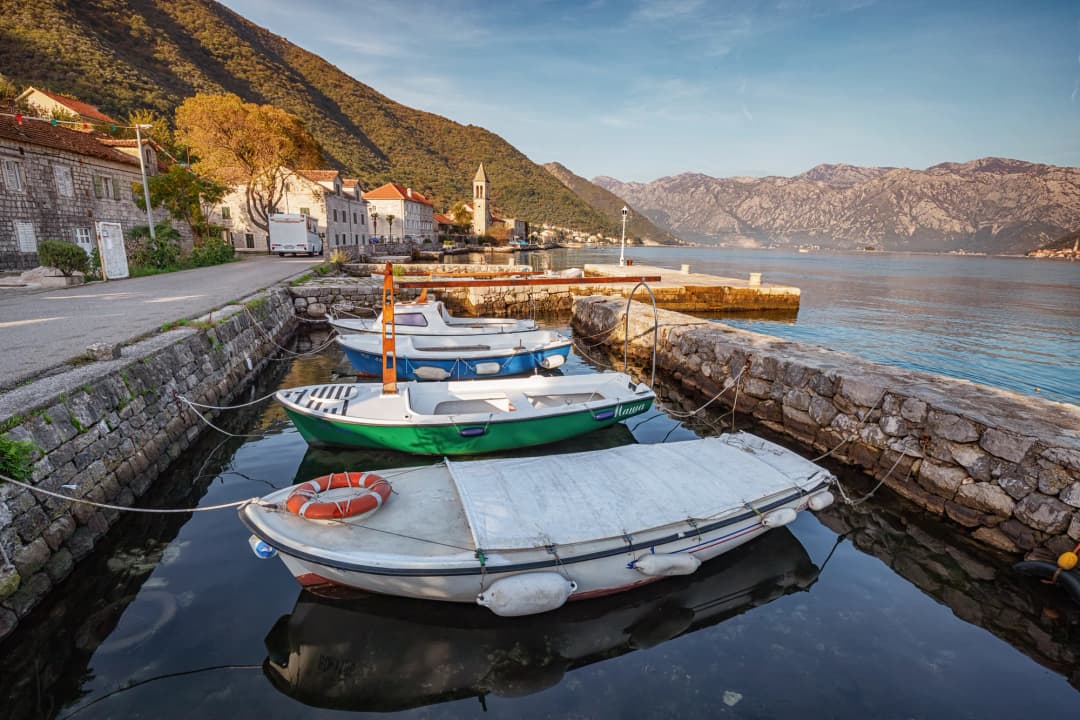
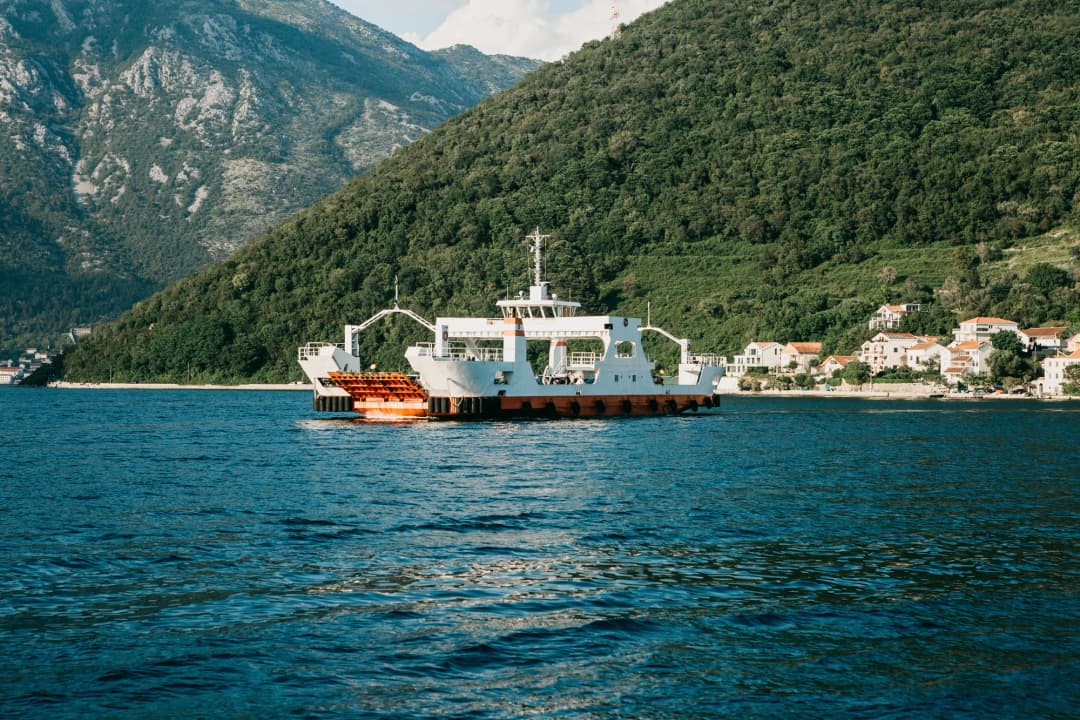
At Lepetane the journey reaches the narrowest strategic passage into the inner bay. The ferry to Kamenari turns that geography into infrastructure, shortening the road journey between the two shores. It is also a useful moving viewpoint: from the deck, the mountains overlap and the protected inner bays briefly appear as a single composition.
The operator publishes separate seasonal schedules. Its current timetable shows frequent daytime service, with different overnight patterns, but intervals and effective dates can change. Check the official Kamenari–Lepetane timetable on the day of travel. Pedestrians and cyclists should also consult the operator’s information and fare pages; do not rely on an undated screenshot.
| Village | Character |
|---|---|
| Muo | Working shore |
| Prčanj | Maritime heritage |
| Stoliv | Upper village |
| Lepetane | Ferry narrows |
Source: whc.unesco.org
What the original journey still tells us
The short report that first appeared on Montenegro.com was written as a passage by water. Its reporters moved past Muo, Prčanj and Stoliv, noticed a working wooden boat, recalled Tre Sorelle and Captain Ivo Visin, then met the ferry at Lepetane. That perspective is worth preserving because the villages were composed to be seen from the bay. A road-only account can overemphasise traffic and miss the rhythm of façades, gardens, piers and church towers facing the water.
Yet memory needs labels. The age and uninterrupted ownership of a particular boat cannot be confirmed from the surviving caption, so it is retained as an eyewitness impression rather than upgraded into a documented fact. Likewise, the reporters’ emotional version of Tre Sorelle belongs to the story’s reception, while the present guide distinguishes the physical house from the legend attached to it. Good heritage reporting keeps both: the human observation that makes a place memorable and the evidence that tells a reader what can safely be claimed.
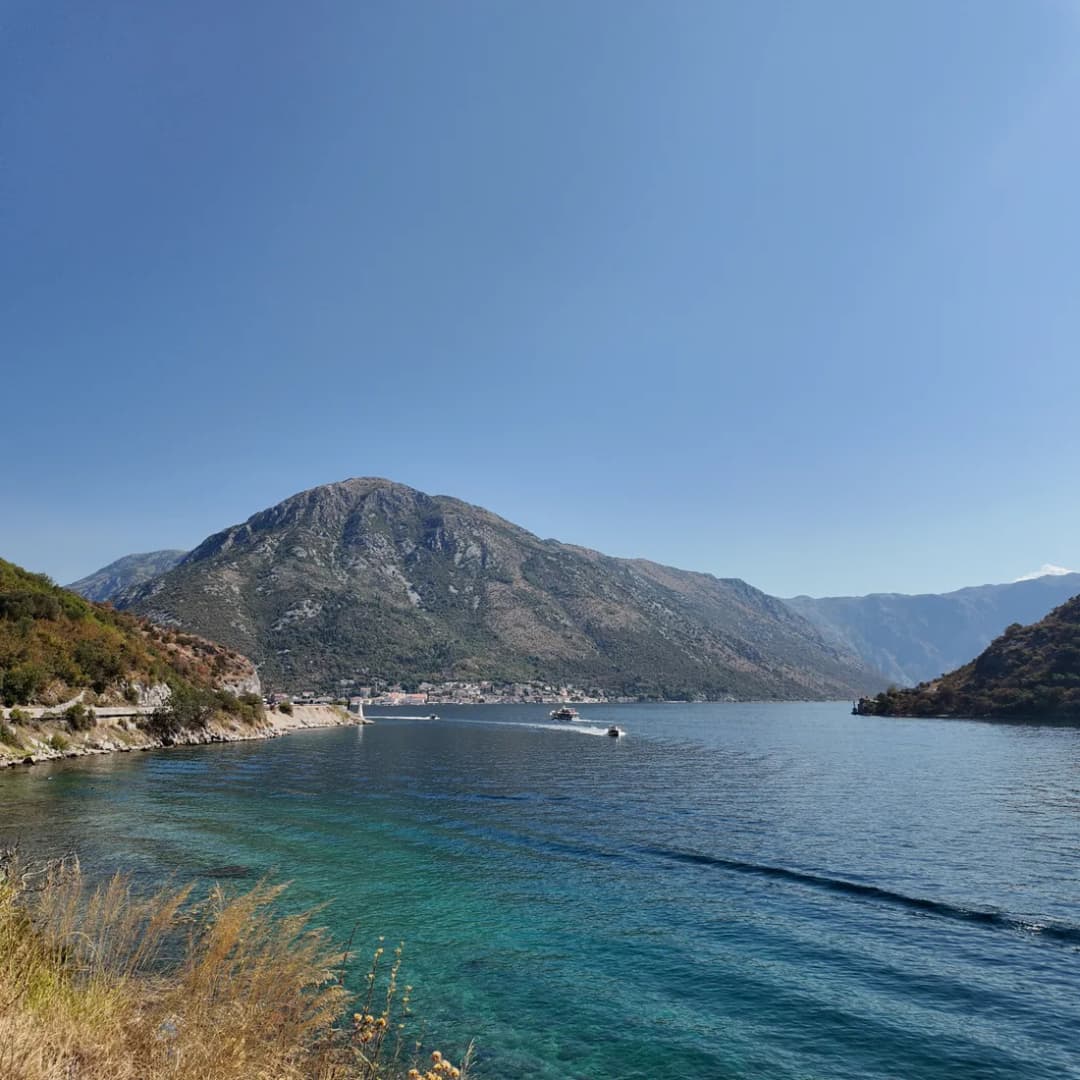
If possible, make one leg of this itinerary by boat. It need not be a private tour; even the short ferry crossing changes the angle of view. From water level, the shoreline becomes continuous and the mountain backdrop stops feeling like scenery placed behind separate destinations. That visual relationship is the core of UNESCO’s description of the bay.
Practical route plan
Start early. Morning brings softer light, lighter traffic and a better chance of finding legitimate parking. From Kotor, pause in Muo, make Prčanj the main walking stop, choose either the lower Stoliv waterfront or the Gornji Stoliv climb, then finish at Lepetane. Return the same way for different light, cross by ferry to continue around the bay, or arrange a point-to-point transfer.
Do not time the route by distance alone. The road is slow because of width, local traffic and stopping decisions. A half-day is realistic without the upper-village hike; allow most of a day if walking to Gornji Stoliv or eating along the shore. In midsummer, separate driving time from parking time and add a margin for congestion.
Use the car selectively. Cycling gives continuity but demands confidence in mixed traffic. Walking the entire road exposes you to sections without pavement. A boat provides the clearest view of the linear settlements, while a car is best for linking carefully chosen walks. If this is one part of a larger circuit, compare it with our Perast guide rather than trying to compress every bay town into one afternoon.
Frequently asked questions
Can I visit all four places without a car?
Yes, but plan around current local transport and safe walking sections. A taxi or boat can link selected stops more comfortably than walking the full road. Cycling suits experienced riders who are comfortable with narrow lanes and traffic.
Which stop deserves the most time?
Prčanj has the densest combination of architecture and maritime history. Stoliv deserves equal time if you intend to climb to the upper village. Muo works best as a short observational walk, while Lepetane is a geographic and transport finale.
Are the churches always open?
No. Small churches may open for services or arranged visits, and hours can vary. Appreciate closed buildings from public space, avoid interrupting worship and never treat a private courtyard as an entrance route.
Is the Tre Sorelle story historically proven?
The house is a recognised local landmark, but the tale should be understood as legend. Retellings vary. Its value lies in the way it expresses the bay’s experience of seafaring separation, not in a verifiable record of three sisters.