Montenegro · Bay of Kotor
The village that carried Venice’s mail and sailed a brig around the world — a cathedral-scale church keeps the receipts.
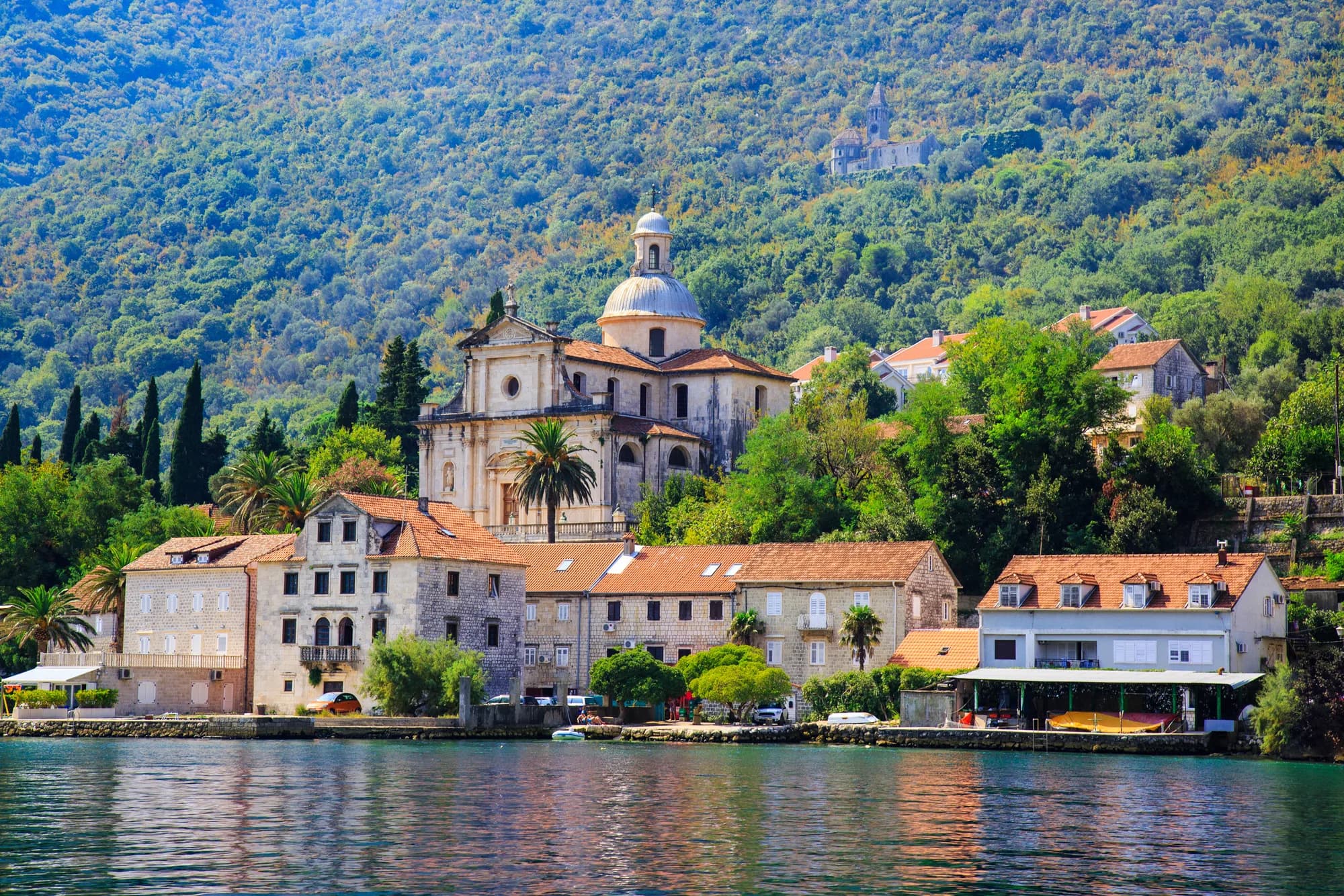
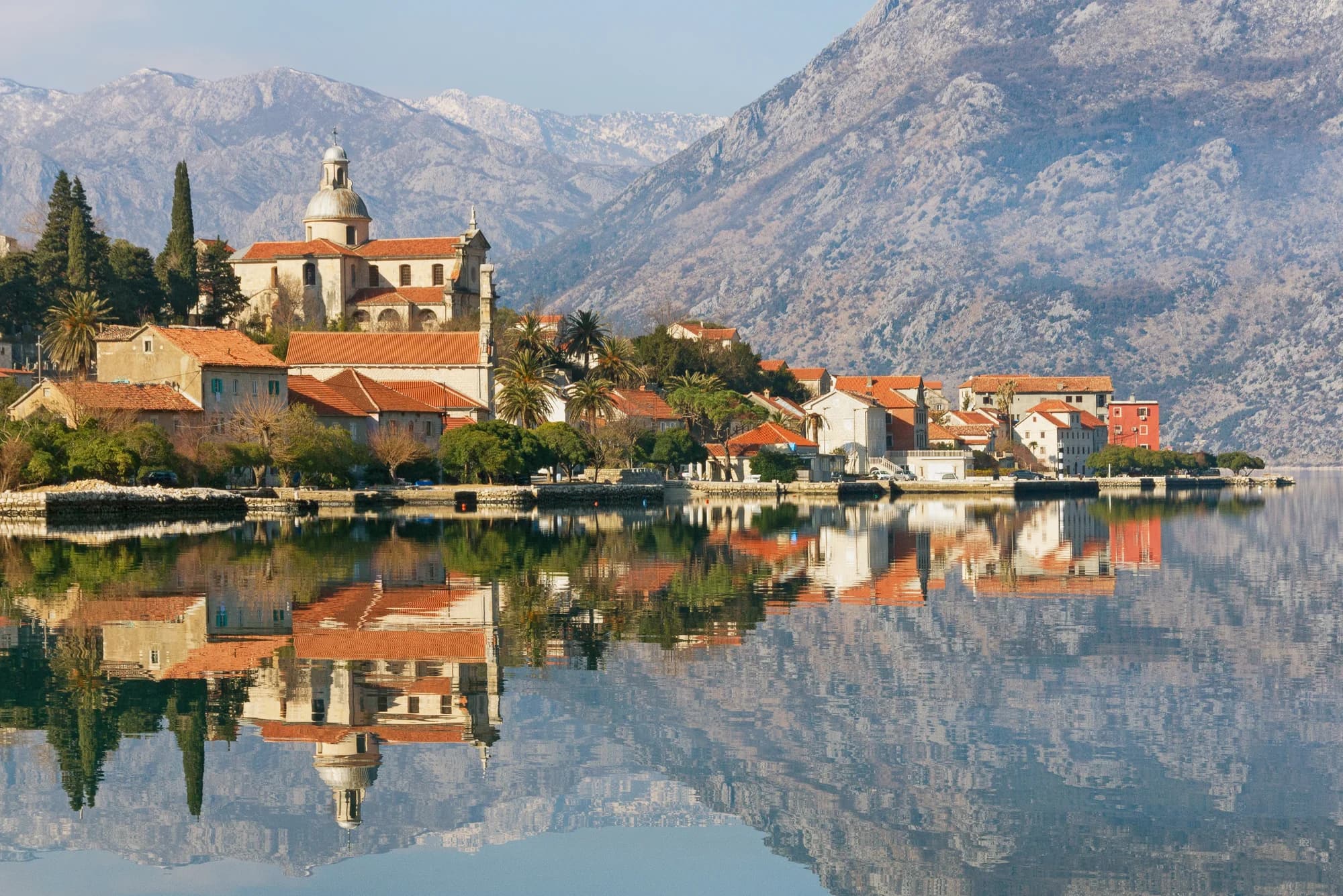
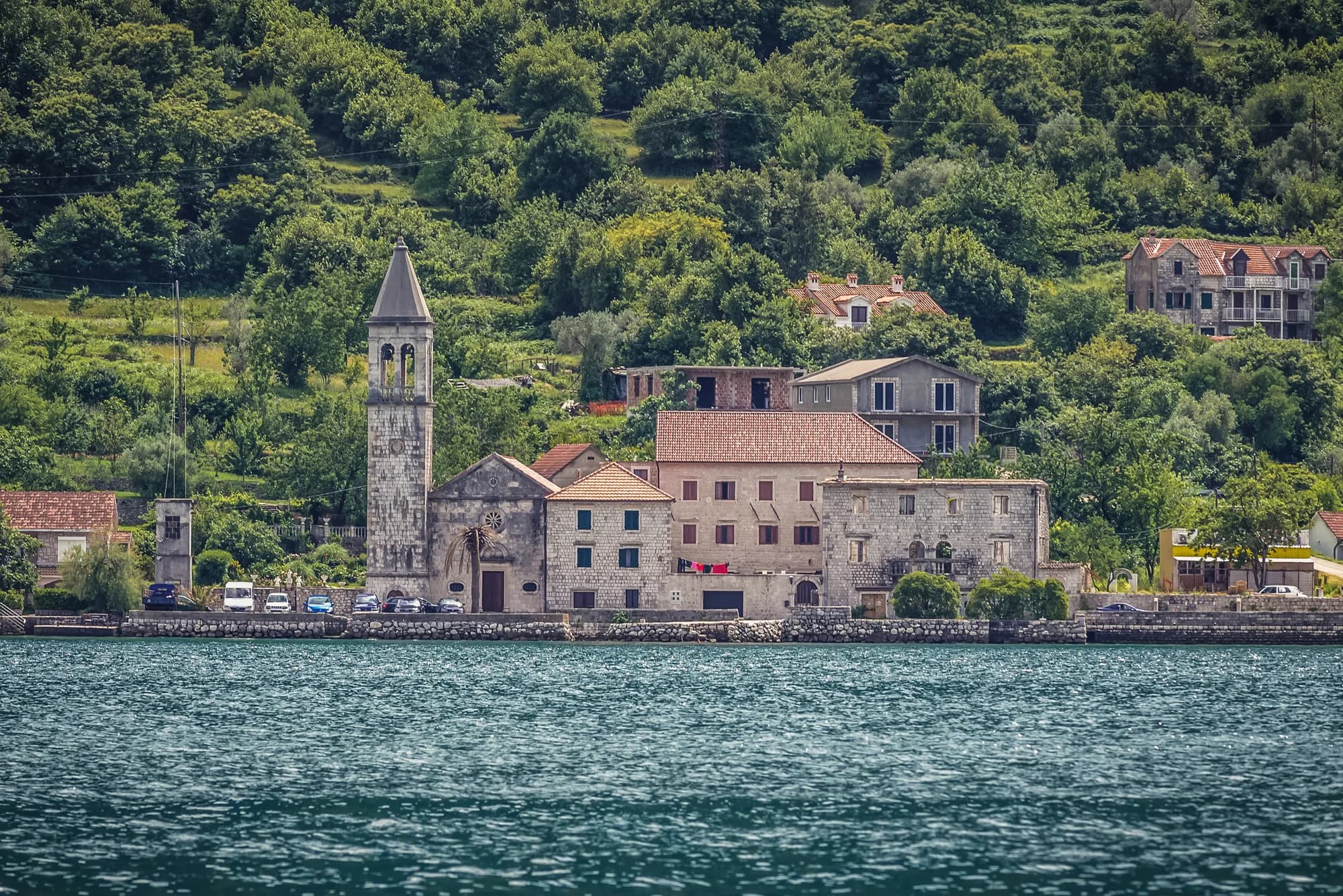
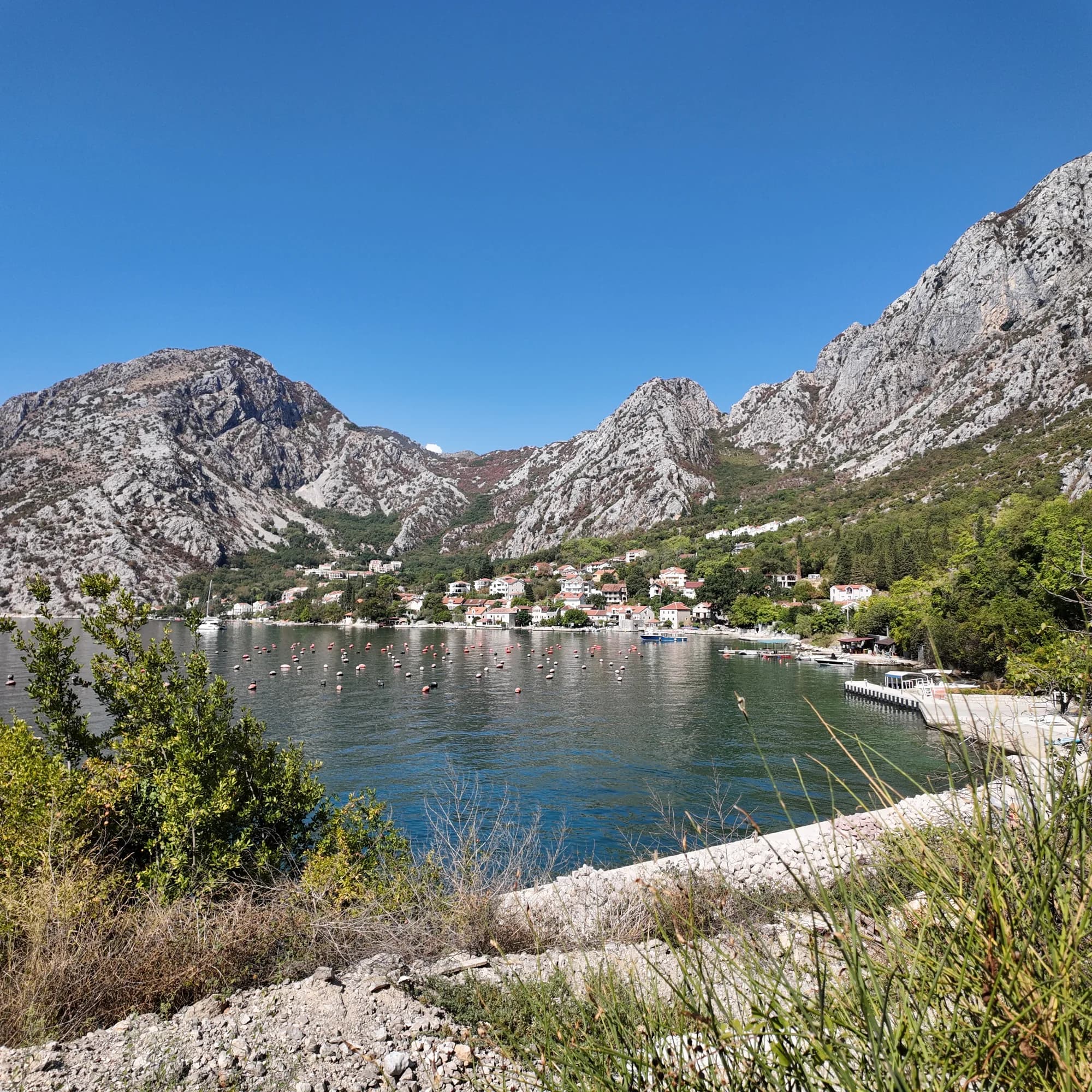
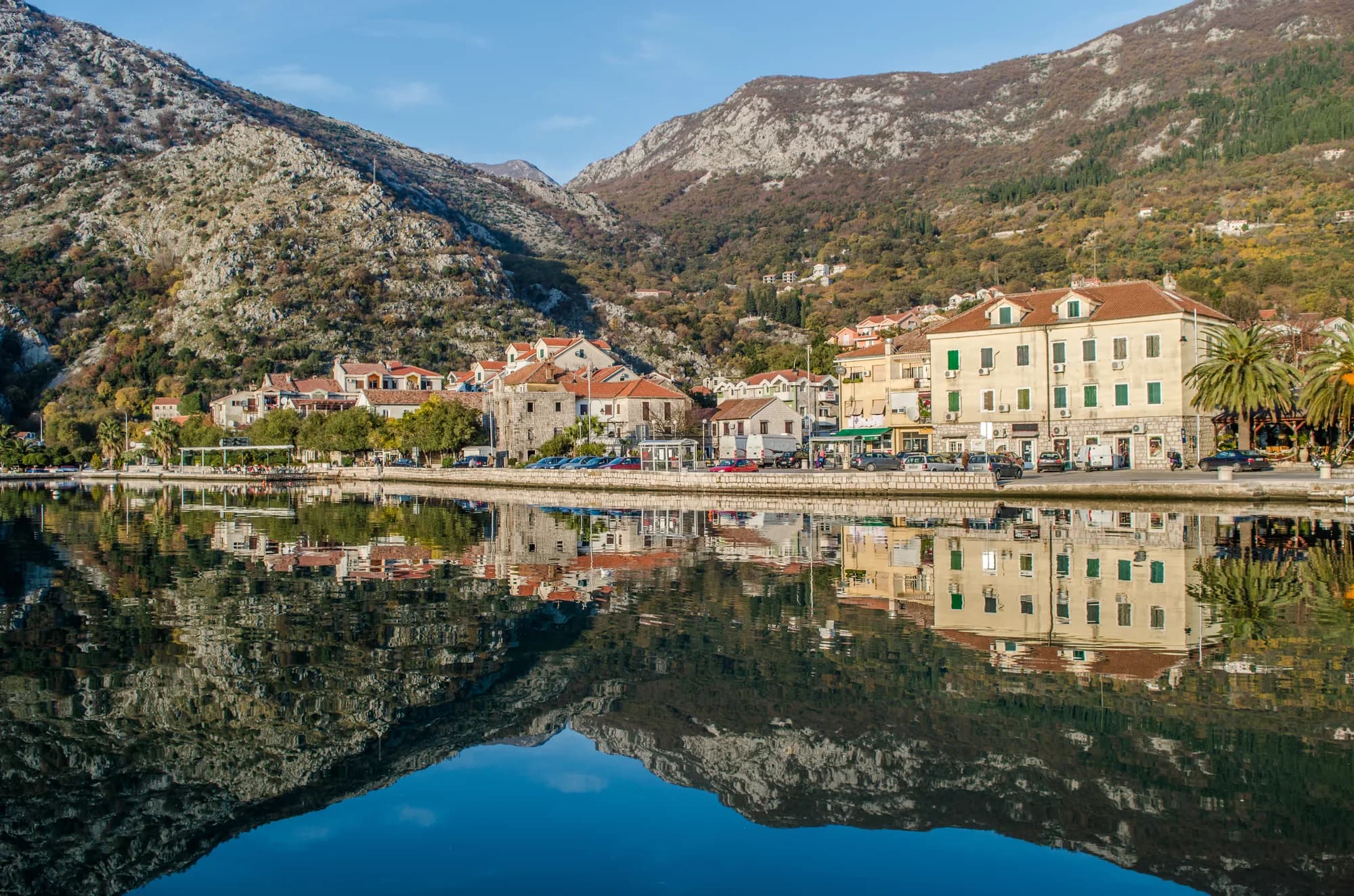
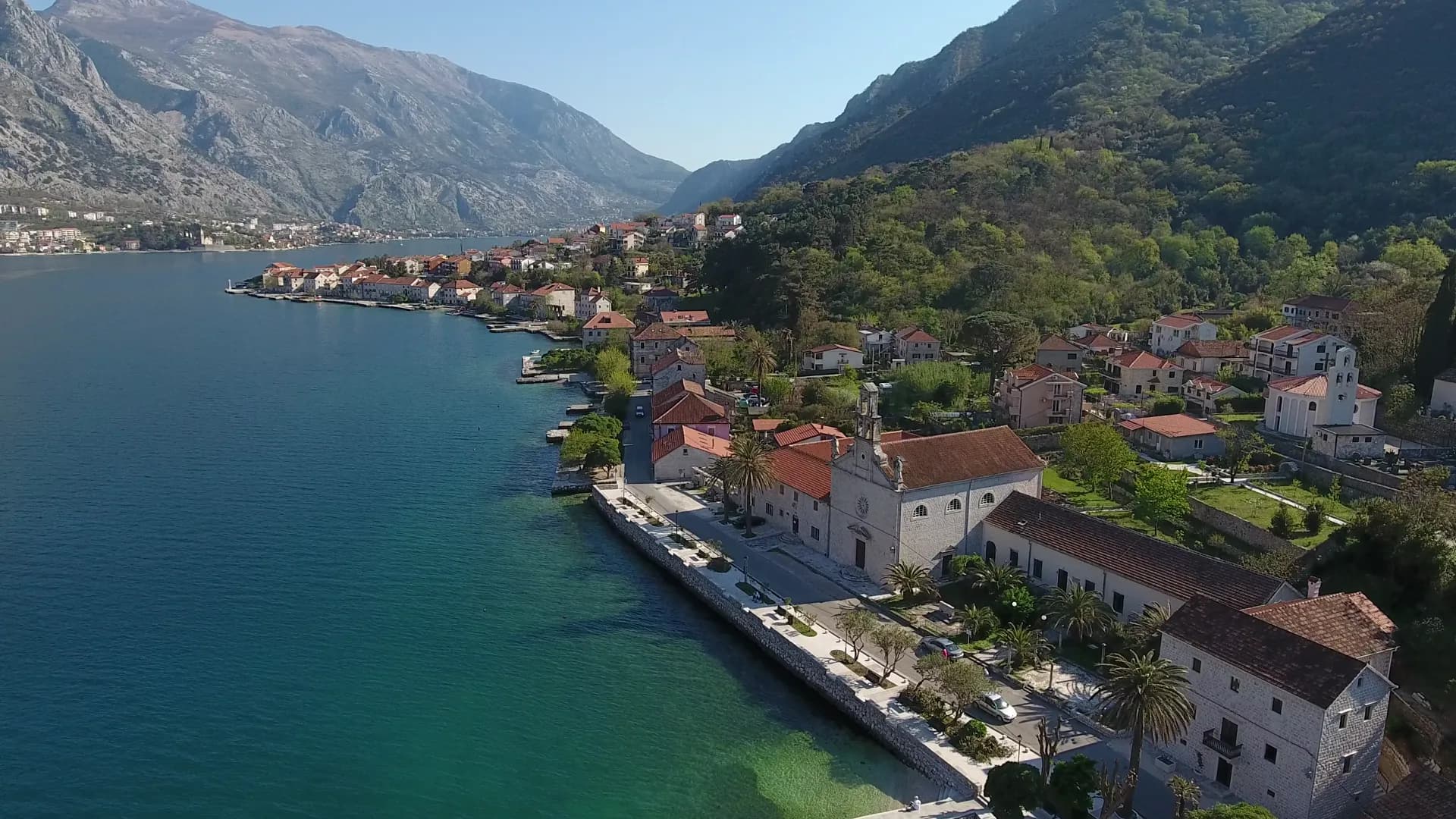
Prčanj unfurls along the bay's western shore as a long ribbon of stone, its grandeur a legacy of the seafaring captains and shipowners who once commanded a merchant fleet out of all proportion to the village's size. Their fortunes built the elegant palaces and noble houses that still line the waterfront, lending the village an air of faded maritime aristocracy. The crowning glory is the Church of the Birth of Our Lady (Bogorodicin Hram), widely held to be the largest church in the Bay of Kotor and among the grandest on the Adriatic coast. Built of pale Korčula stone over more than a century to a design by the Venetian architect Bernardino Maccaruzzi, its monumental Baroque facade rises above a broad staircase climbing some 25 metres from the water's edge. Inside, a collection of paintings and sculptures rewards the climb, with works attributed to Venetian masters. Prčanj is a tranquil, residential place rather than a resort, and that is precisely its charm. A scenic seafront promenade runs the length of the village, perfect for an unhurried stroll with views across the water towards Perast and the bay's two islets. Swimming is from rocks, ladders and small jetties rather than sandy beaches, and the water is wonderfully clear. A handful of family-run konobas serve fresh fish, grilled squid and local Vranac wine on terraces almost at sea level. The village sits a short drive of roughly ten minutes north-west of Kotor's Old Town, and around twenty minutes from Tivat airport, making it an easy yet peaceful base. It suits travellers drawn to heritage, quiet and authentic Boka life, who are happy to dine locally and watch the bay change colour through the day rather than chase nightlife or crowds.
Around the great church
Best for the monumental heart — jetties, palaces, the treasury next door
Glavati
Best for the northern hamlet end — gardens and green quiet
The Muo end
Best for closest to Kotor: the walled town is a shoreline stroll away
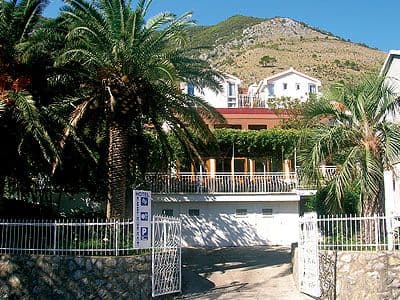
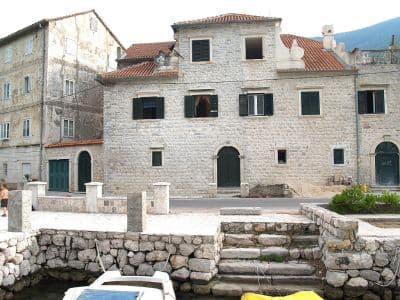
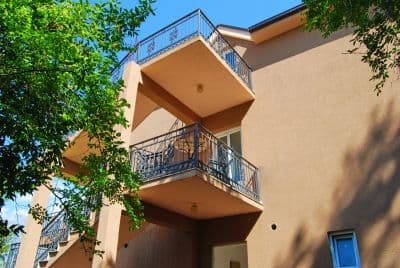
4 accommodations in Prčanj
The small shores
Settlement populations, 2023 census
Eleven hundred people keep a church built for a fleet — the smallest of the bay’s famous shores, and the least changed.
Who visits Montenegro
Share of foreign overnight stays, 2025
MONSTAT · 2025
What things cost in Prčanj
Kotor’s bay at village prices, fifteen minutes from the Sea Gate.
Census population, Prčanj municipality
Prčanj has held near its size for two centuries — the fleet money froze the shoreline at its most handsome hour.
A Venetian decree of 1625 put Prčanj on the empire’s postal map; its captains did the rest. Widths are to scale.
Venetian decree 1625; parish chronology.
A day on the quiet shore
The west bank keeps village hours
Meanwhile, in 1859
Trieste, 1859: after seven years at sea, captain Ivan Visin of Prčanj brings the brig Splendido into harbour — 101,297 nautical miles, westward round the world by Cape Horn.
The route — Antwerp, Valparaíso, San Francisco, Honolulu, Bangkok, Hong Kong, the Cape of Good Hope. A thirty-metre brig from a village of a thousand people.
Vienna — Emperor Franz Josef decorates the voyage with the Merito Navale, an honour flag granted for feats of navigation.
London: the same year, Darwin publishes On the Origin of Species — the age is redrawing every map at once.
Today — the flag hangs in the Birth of Our Lady church, a short walk from the jetty Visin sailed from.
““Splendido!” — the word Visin let slip when he first saw the brig at her Rijeka slipway. The name stuck to the ship that would carry it around the world.”
Local legend
The naming of the Splendido
Search thousands of hotels and apartments with live prices.
We may earn a commission from partner links. This helps us keep Montenegro.com free for travelers.
Search hotels, apartments and guest houses with live availability.
We may earn a commission from partner links. This helps us keep Montenegro.com free for travelers.

A source-led guide to Prčanj's Tre Sorelle Palace: what documents establish, how the three-sisters legend evolved, and h

Read Prčanj’s monumental Church of the Nativity through verified construction records, current conservation work and Ivo

Follow the old waterfront road from Kotor through Muo, Prčanj and Stoliv to the Lepetane ferry, with maritime history, p
Prcanj is a long, quiet waterfront village on the Bay of Kotor, best known for the Church of the Birth of the Virgin Mary — an unusually large neoclassical church that took more than a century to build. It was a wealthy seafaring settlement, and captains' houses still line the shore.
About 5 km along the bay, roughly ten minutes by car and a little longer by the frequent local bus. The waterfront road is also walkable and popular with cyclists, though it is narrow in places and shared with traffic.
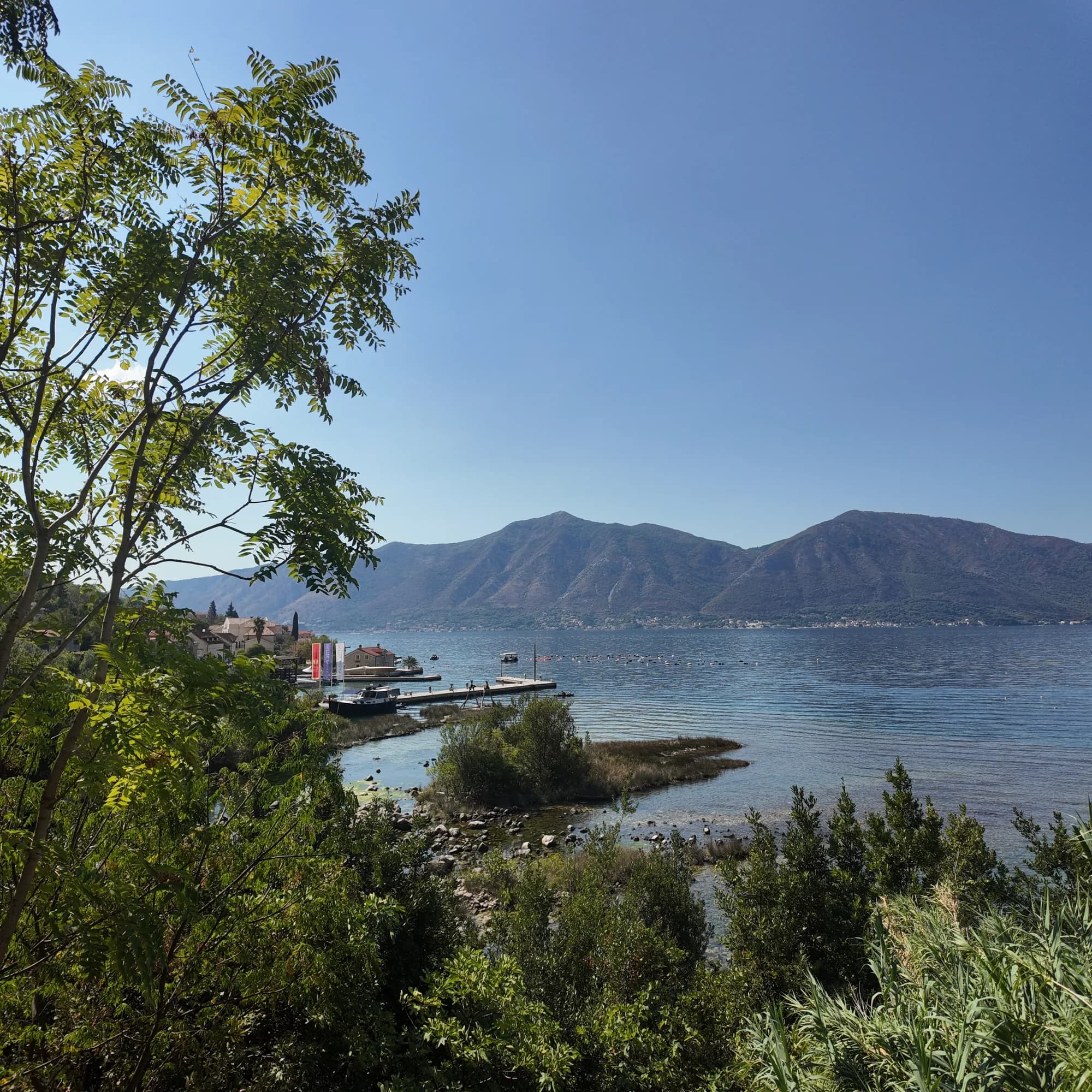
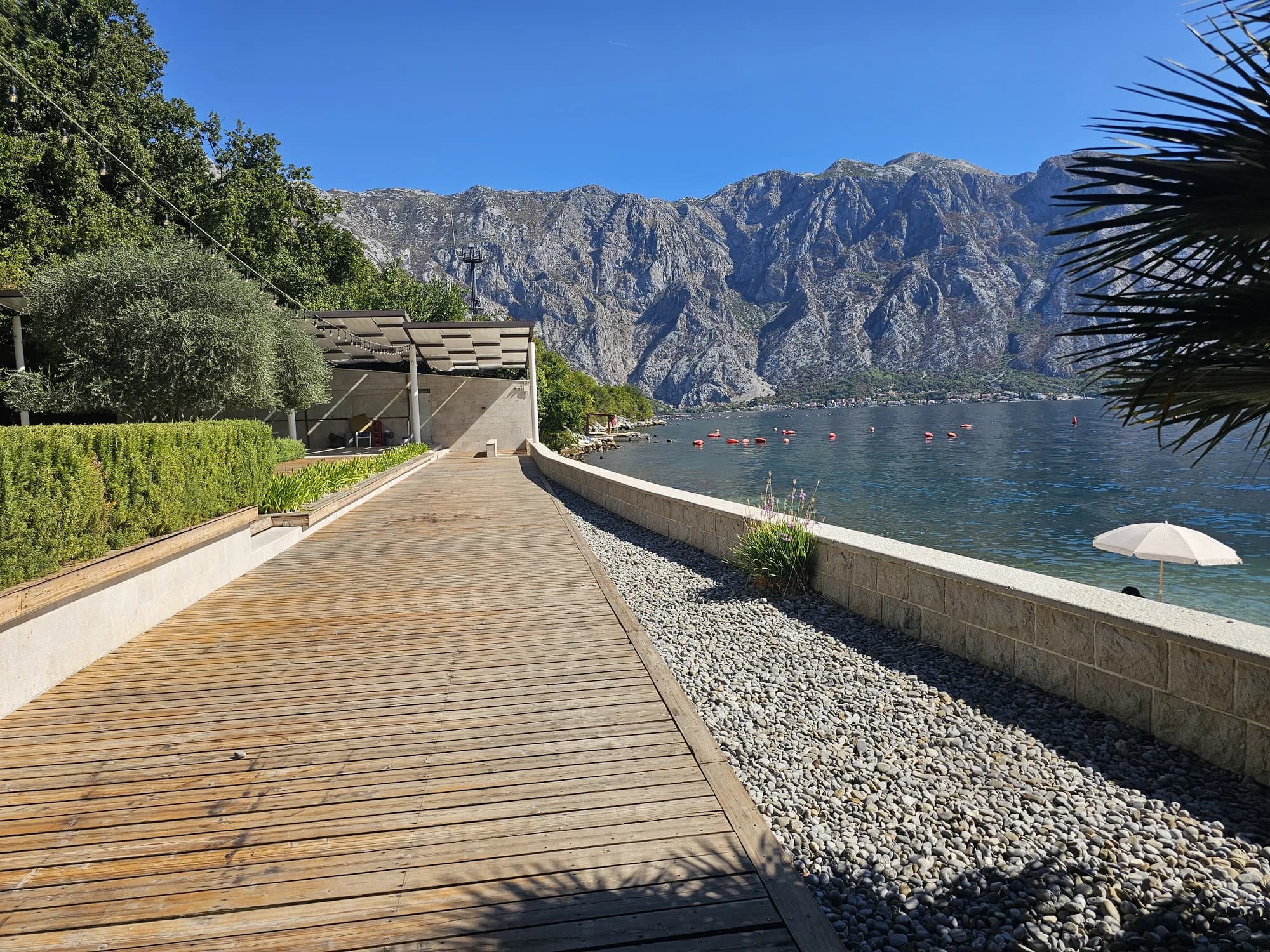
Prcanj has concrete bathing platforms and small pebble strips along the waterfront rather than a big sandy beach. The water is calm and clean, and the setting — mountains rising straight out of the bay — is the main reason people swim here.
The Church of the Birth of the Virgin Mary, locally Bogorodicin hram, is a monumental neoclassical church begun in the 18th century and finished in the early 20th. Its scale reflects the wealth Prcanj's sea captains brought home, and a broad stone stairway climbs to it from the waterfront.
AugJetty season — the shore road becomes one long swimming platform
OctBirth of Our Lady feast — the village’s day — 8 September at the great church
The local plate
Cuttlefish ink, bay-caught, served a metre above the water at family konobas that never needed a menu in more than two languages. The captains provisioned here; the kitchens remember.
Where Waterfront konobas along the Prčanj riva
Prčanj in numbers
the Venetian decree that made Prčanj the bay’s mail port
tall ships under Prčanj masters at the fleet’s late-1700s peak
nautical miles of Visin’s 1852–59 circumnavigation
to build the Birth of Our Lady church, 1789–1909
2023 census — a village with a basilica’s ambitions
MONSTAT 2023 census · parish records · standard chronology
The shape of the bay
Towns at their true positions; the water drawn as a ribbon
Schematic — not a nautical chart.
Best time: May · June · September
| Place | By road | Driving |
|---|---|---|
| Muo | 2.6 km | about 5 min |
| Kotor | 4.6 km | about 9 min |
| Stoliv | 4.9 km | about 9 min |
| Dobrota | 8.6 km | about 17 min |
| Budva | 25.7 km | about 36 min |
| Podgorica | 75.8 km | about 1 h 38 min |
| Žabljak | 156.9 km | about 3 h 19 min |
Road distances routed over OpenStreetMap data, © OpenStreetMap contributors. Driving times are free-flow and take no account of summer traffic or a queue at the ferry ramp.
A few hours
Prčanj is two unhurried hours — longer if the water is warm.
One full day
Sleep on the quiet bank, borrow Kotor’s views — Prčanj’s oldest trick.
It suits travellers who want the bay without Kotor's crowds and cruise-ship days. Prcanj is residential and calm, with a handful of restaurants and apartments along the water, and Kotor's old town is close enough for evenings out.
Walk the waterfront promenade between the captains' houses, visit the great church and the older Church of St Nicholas, swim from the bathing platforms, take a boat across the bay, and drive or hike up towards Vrmac for views over the whole inlet.
No — the nearest is Tivat Airport (TIV), 13 km away by road.
From about 13 °C in February to 25 °C in August. It holds above 22 °C from June to September, which is the swimming season. Regional normals from the Herceg Novi station, not a city-precise reading.
The UK Foreign, Commonwealth & Development Office (FCDO) has no advisory against travel to Montenegro; it last reviewed its guidance on 13 August 2026. That is their assessment of the country as a whole, not ours and not a judgement about Prčanj, so read it yourself before you travel. The emergency number in Montenegro is 112.