Behind the most reproduced silhouette in Montenegro is a place that has repeatedly changed its meaning without changing its outline. Sveti Stefan began as a Paštrovići refuge and seat of judgement, became a tightly inhabited stone town, reopened on 13 July 1960 as Yugoslavia’s audacious “town-hotel”, and entered its Aman era in the twenty-first century. On 1 July 2026, after five closed seasons, guests crossed the causeway again.
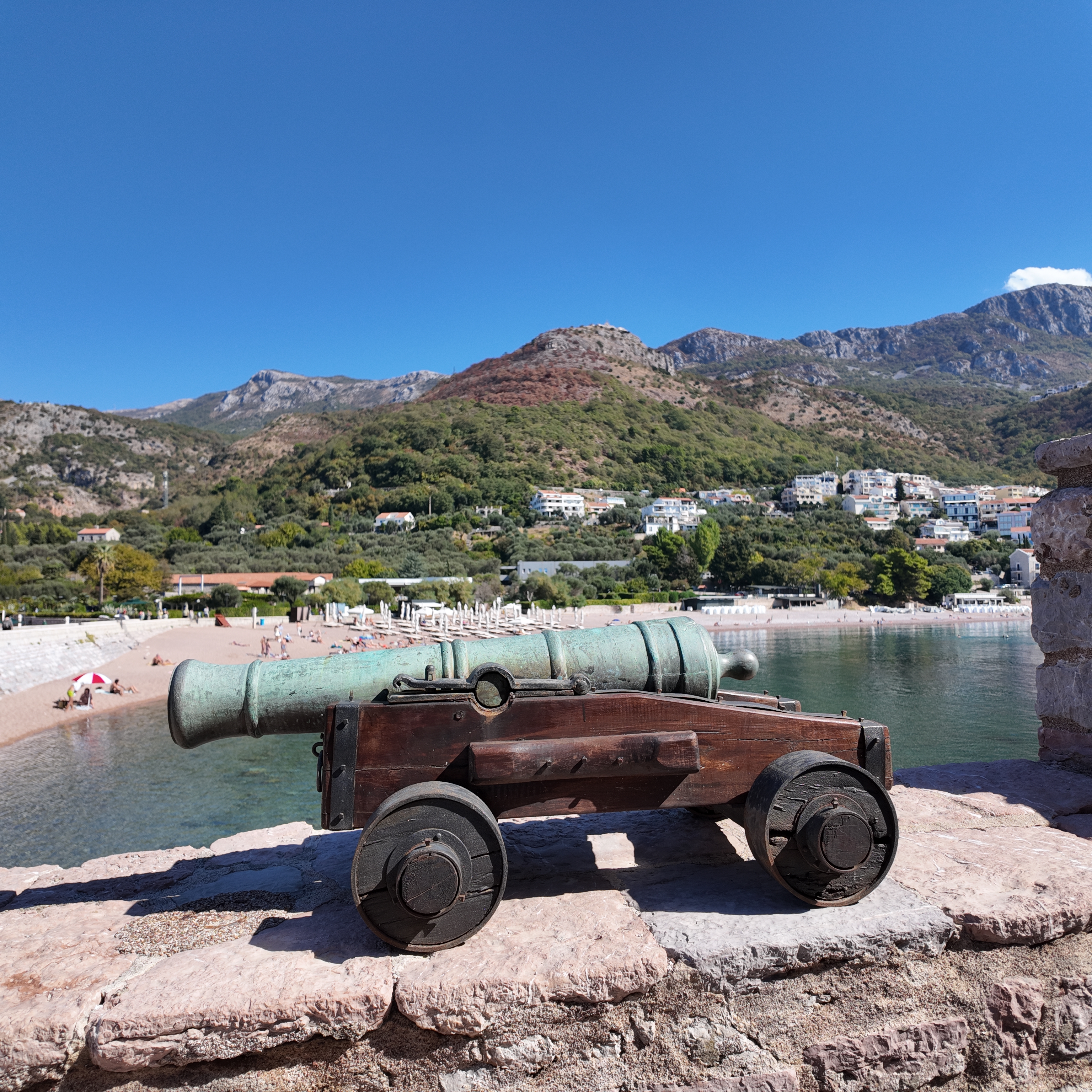
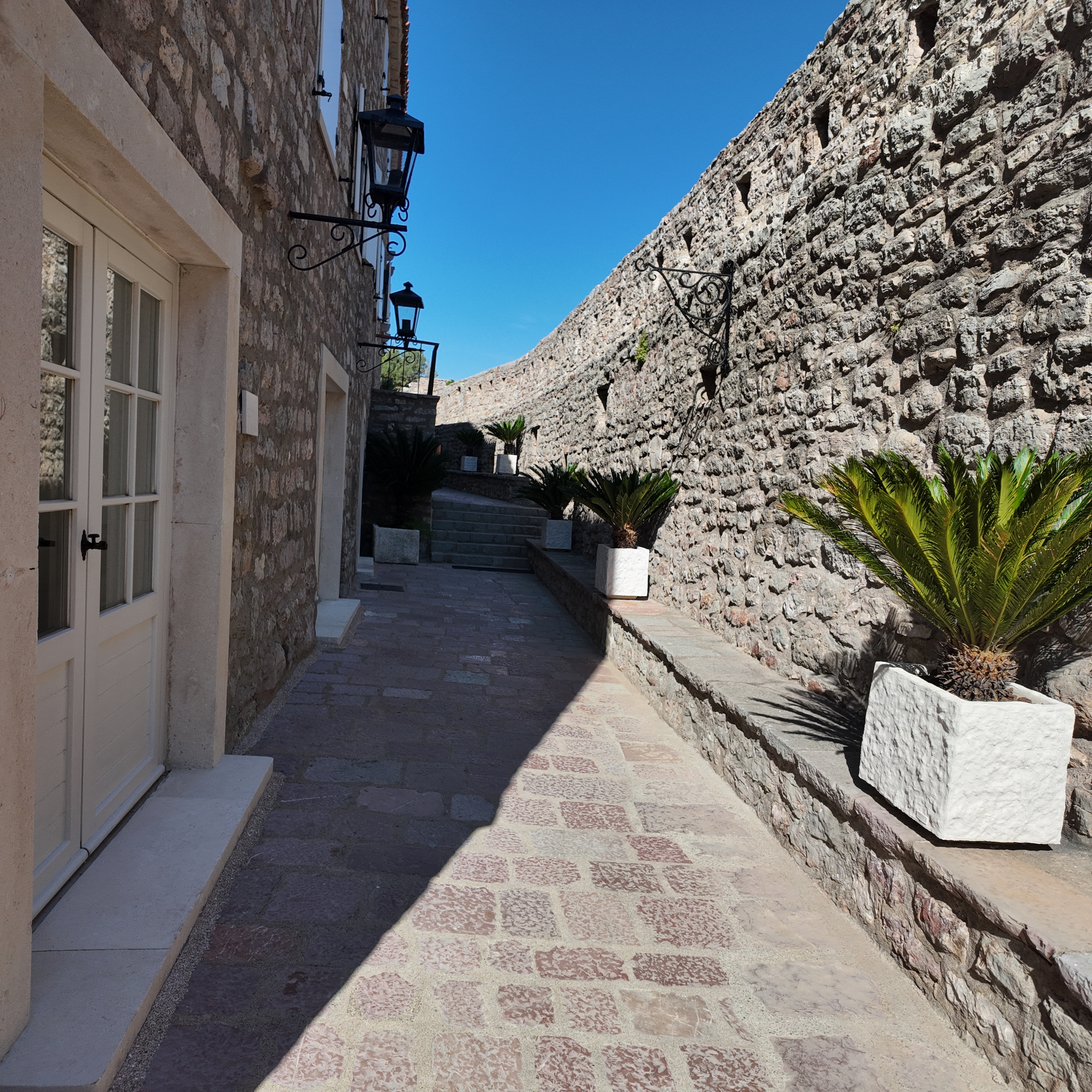
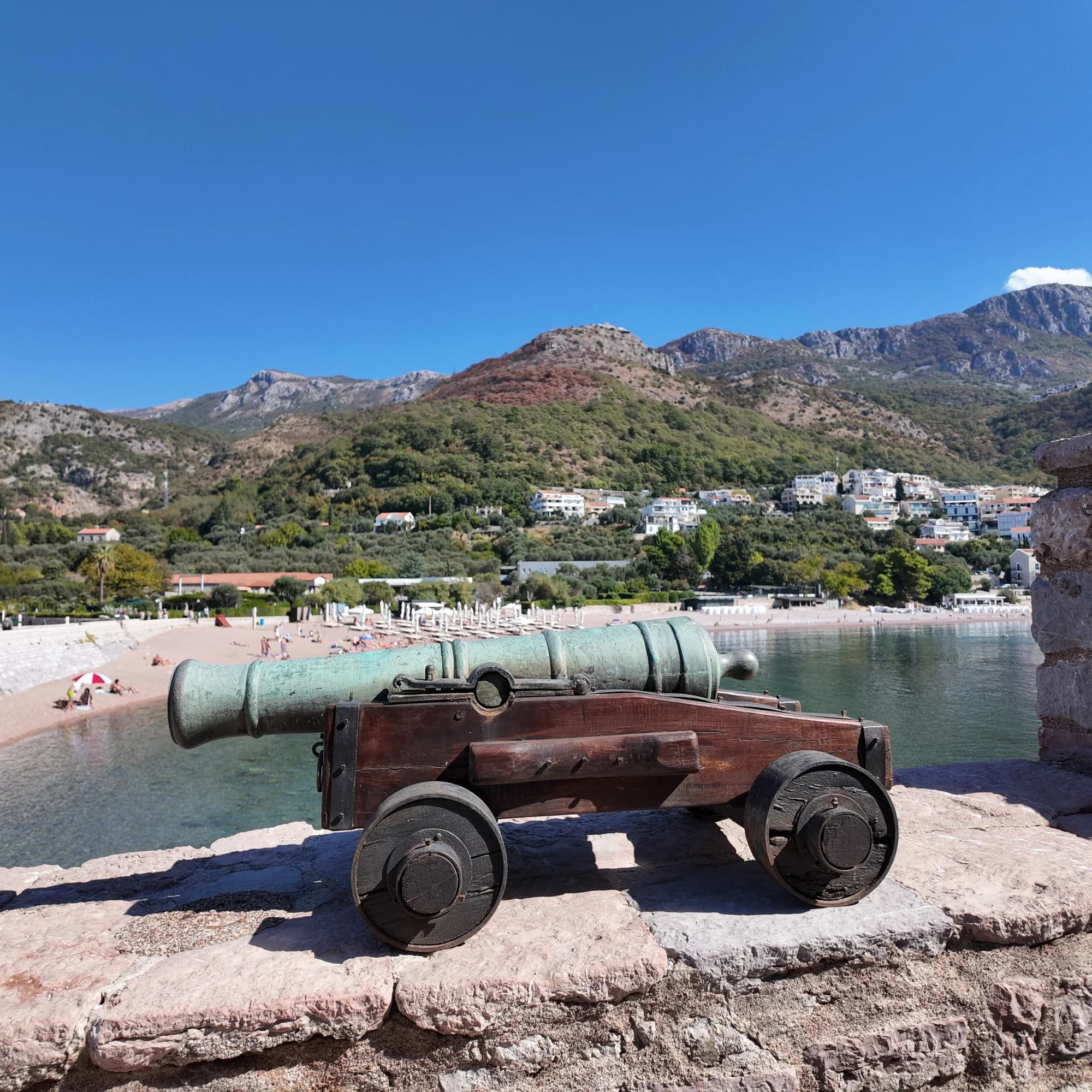
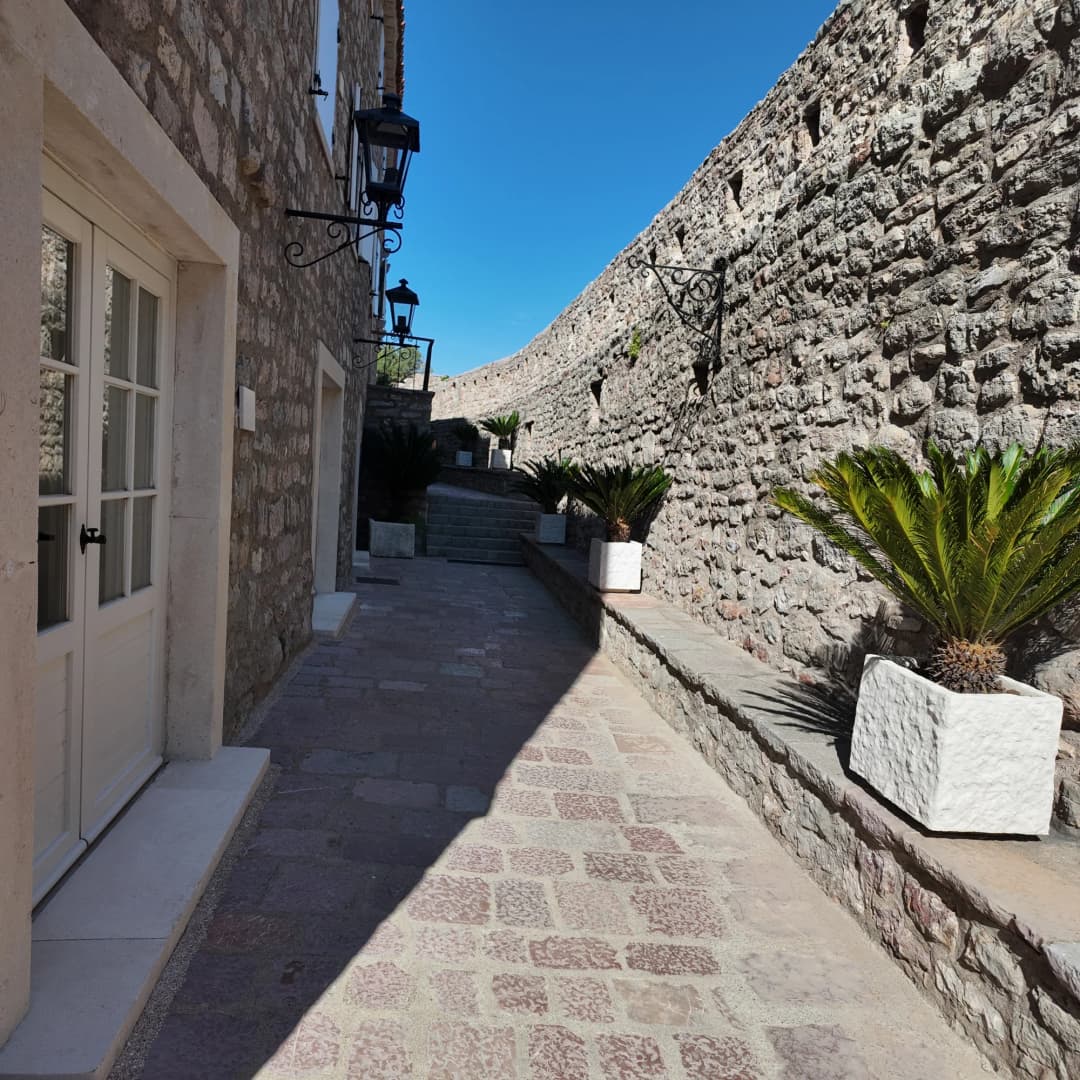
This is the island from inside: the cannon at the wall, lanes that bend instead of running straight, four small churches, cottages fitted into inherited masonry and terraces suspended between stone and sea. We visited the island on 5 October 2026. The historical account separates the archive from the legends that have accumulated around the island—because Sveti Stefan is interesting enough without making it simpler than it was.
Sveti Stefan in seven dates
| Date | What changed |
|---|---|
| 1442 | First known written mention, during the conflict between Radič Paštrović and Herceg Stjepan Vukčić Kosača |
| 1464 | The Church of St Stephen was built at the summit, according to the archaeological literature |
| 1423–1797 | Paštrovići lived under Venetian sovereignty while retaining local assembly, judges and customary law |
| 1955–60 | The remaining residents were transferred and the settlement converted into a town-hotel |
| 13 July 1960 | Hotel Sveti Stefan received its first guests |
| 2007–11 | Lease and restoration introduced the Aman-managed resort |
| 1 July 2026 | The island hotel reopened after five years closed |
What the postcard hides
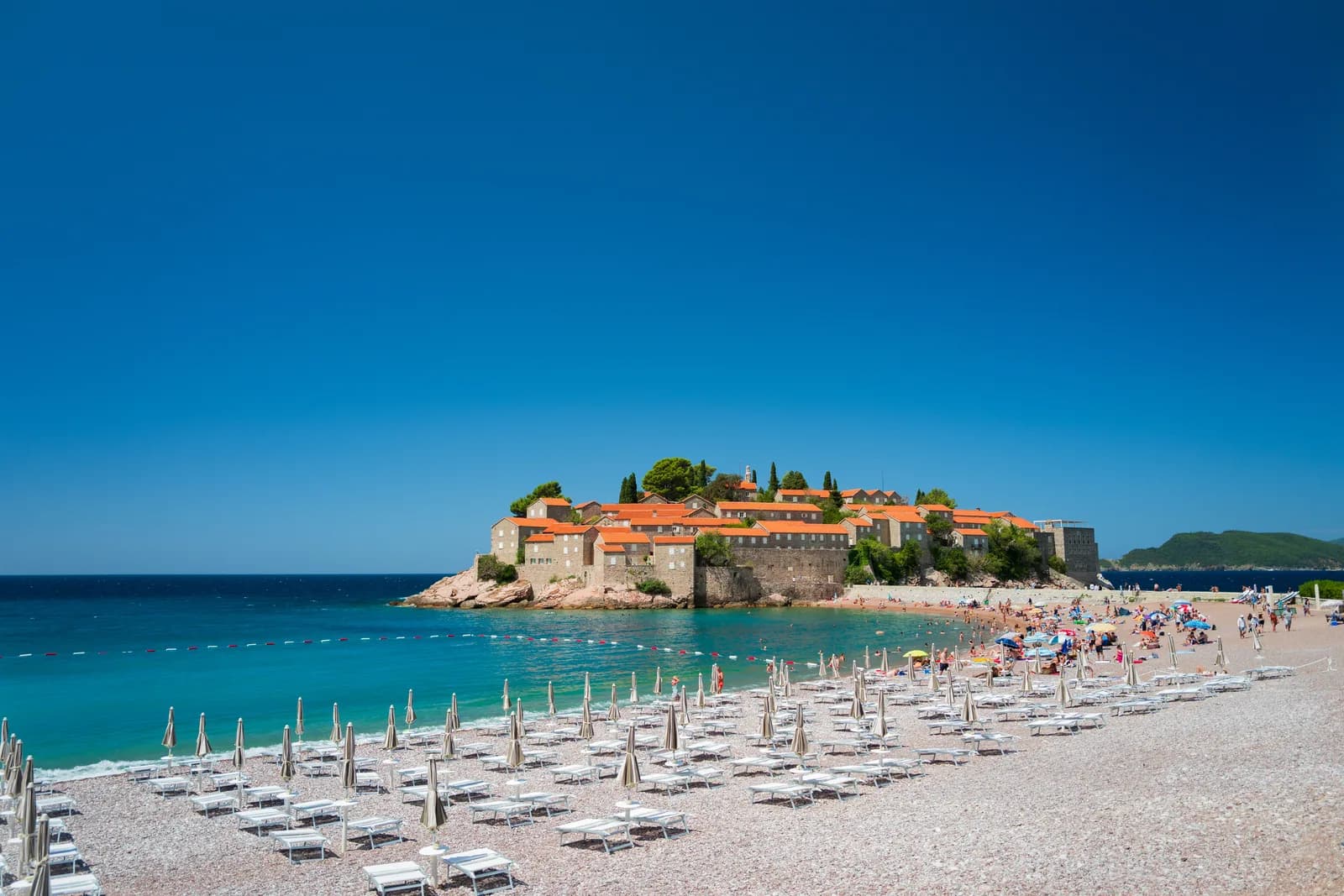
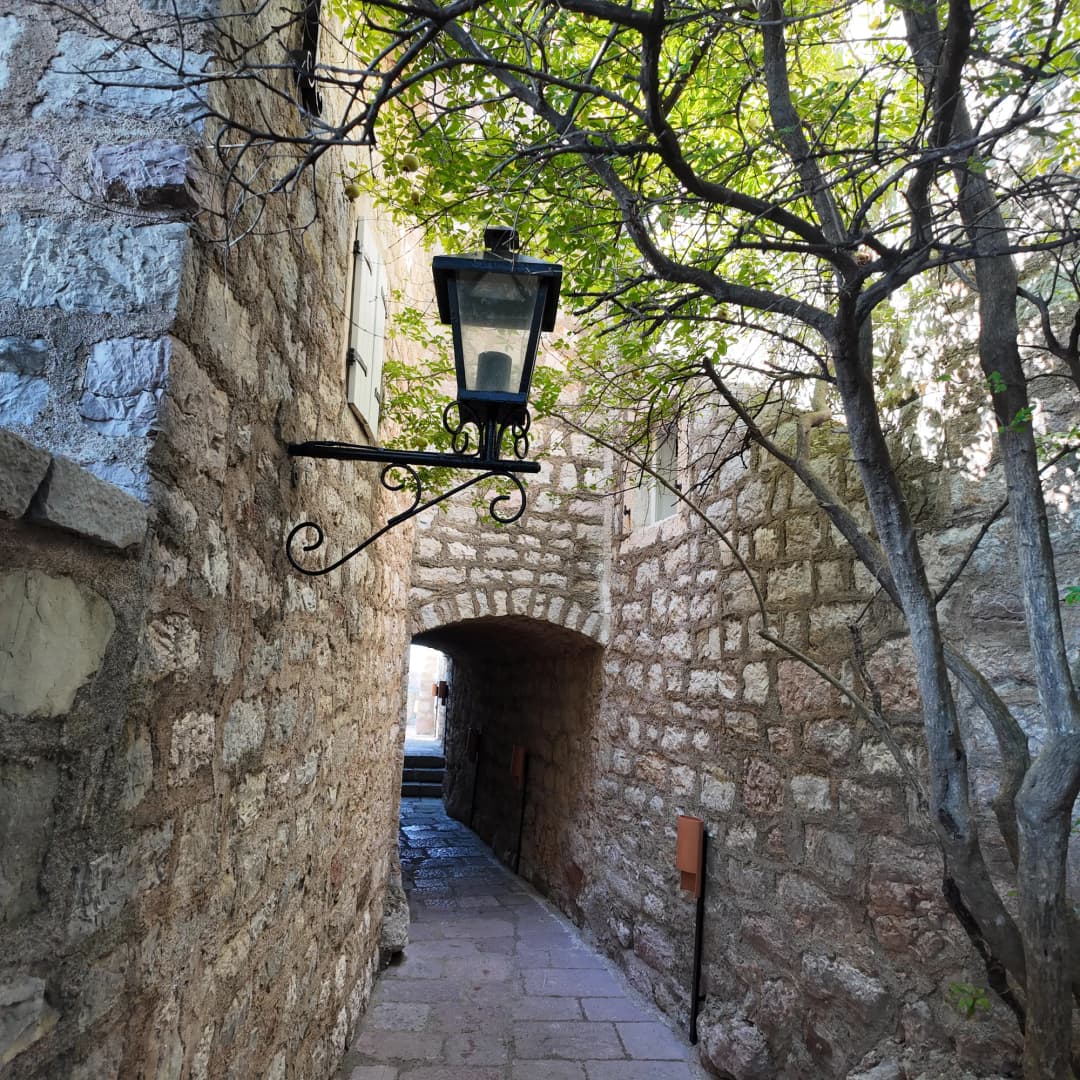
From the mainland, Sveti Stefan looks almost diagrammatic: an oval of rock, one gate, a red roofline and a sandy neck. Inside, it refuses the diagram. Steps double back. A wall closes the view and then releases the whole bay. Roofs meet at different levels because the builders followed the rock rather than flattening it. Shade comes from pines, figs, vines and masonry thick enough to hold the morning cool.
The island is often called an island, an islet and a peninsula. All three describe something true. The rock was offshore; a tombolo—a bar of deposited sand and gravel—joined it to the mainland, and the modern causeway fixed that connection. The narrow approach is scenic now. In a defensive town it was also control: one exposed way in, watched from the gate and walls.
1442: the document and the legend
The secure starting point is modest. Montenegro’s archaeological lexicon and the heritage literature identify 1442 as Sveti Stefan’s first appearance in written sources, in the struggle of Radič Paštrović against the Bosnian lord Herceg Stjepan Vukčić Kosača. That record tells us a fortified place existed and mattered. It does not tell the island’s most famous origin story.
Tradition says the twelve Paštrovići tribes captured Ottoman galleys, used the booty to fortify the rock and built one house for each tribe so women, children and older people could shelter there during attack. The Budva Tourism Organisation still tells the story, and the twelve houses explain the island with irresistible neatness. But tradition and the 1442 document are not the same evidence. The responsible version keeps both: a documented fortress in a local power struggle, and a community memory of victory at sea.
Paštrovići: a small polity with its own court
Paštrovići was not merely a surname or a picturesque “tribe.” It was a coastal community of clans occupying the shore between Budva and Petrovac, with monasteries, villages, elected officers and a body of customary law. From 1423 until the fall of Venice in 1797, the district accepted Venetian sovereignty, supplied military service and retained striking local autonomy. Its assembly elected judges; Venice did not maintain a resident official inside the community.
Sveti Stefan became the community’s political and commercial centre and, for centuries, a seat of the Bankada, the Paštrovići court. The image matters: disputes decided within sight of the gate, on an islet whose twelve-house tradition made the clans physically present. The town was refuge, market, court and home before the tourism language of privacy and exclusivity arrived.
The uneasy link to Gian Marco Betti
A century later, around 1755–56, the Bolognese servant Gian Marco Betti was seized near a place an Italian pamphlet calls Pastruich—almost certainly Paštrovići. His captors sold him for no more than 27 Venetian zecchini. He escaped after about a year, was recaptured on the Bojana, sold twice in Ulcinj, exchanged for another captive and sent to Tripoli before a Bolognese confraternity ransomed him.
There is no evidence Betti set foot on Sveti Stefan, and we will not place him here for dramatic convenience. The connection is the district and its difficult frontier history: a self-governing community under Venice, next to Ottoman territory, capable of shelter and collective law but also caught in violence, raiding and human traffic. Read the documented reconstruction in The River Takes Me Back. It preserves uncertainty where the record leaves questions unanswered.
Four churches on 1.64 hectares
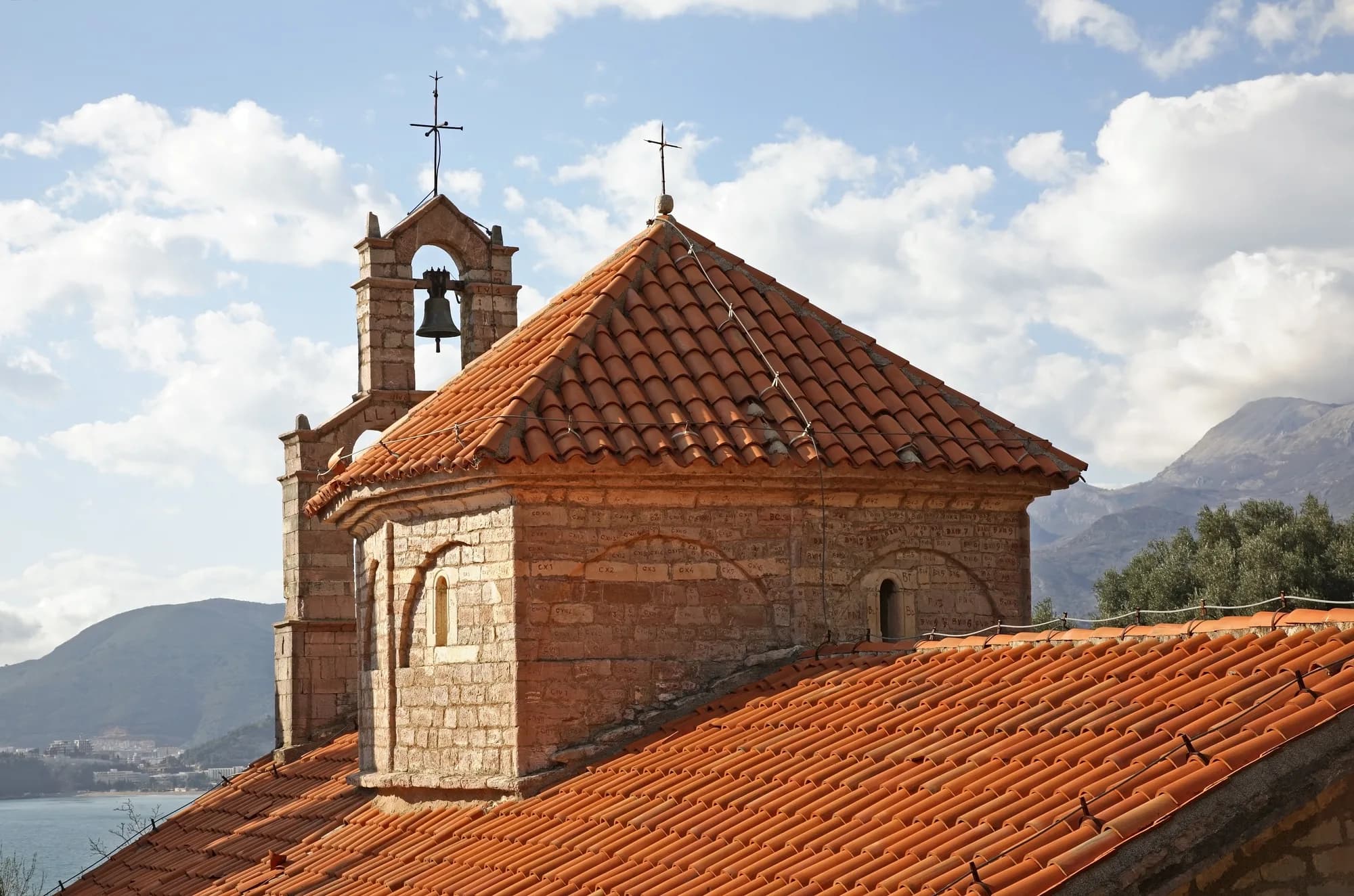
Modern scholarship counts four churches on the tiny islet, built between the fifteenth and nineteenth centuries. The Church of St Stephen at the high point, dated to 1464 in the archaeological literature, gave the settlement its name. Small sanctuaries sit among houses rather than apart from them. Their scale belongs to a community that had little level ground to spare.
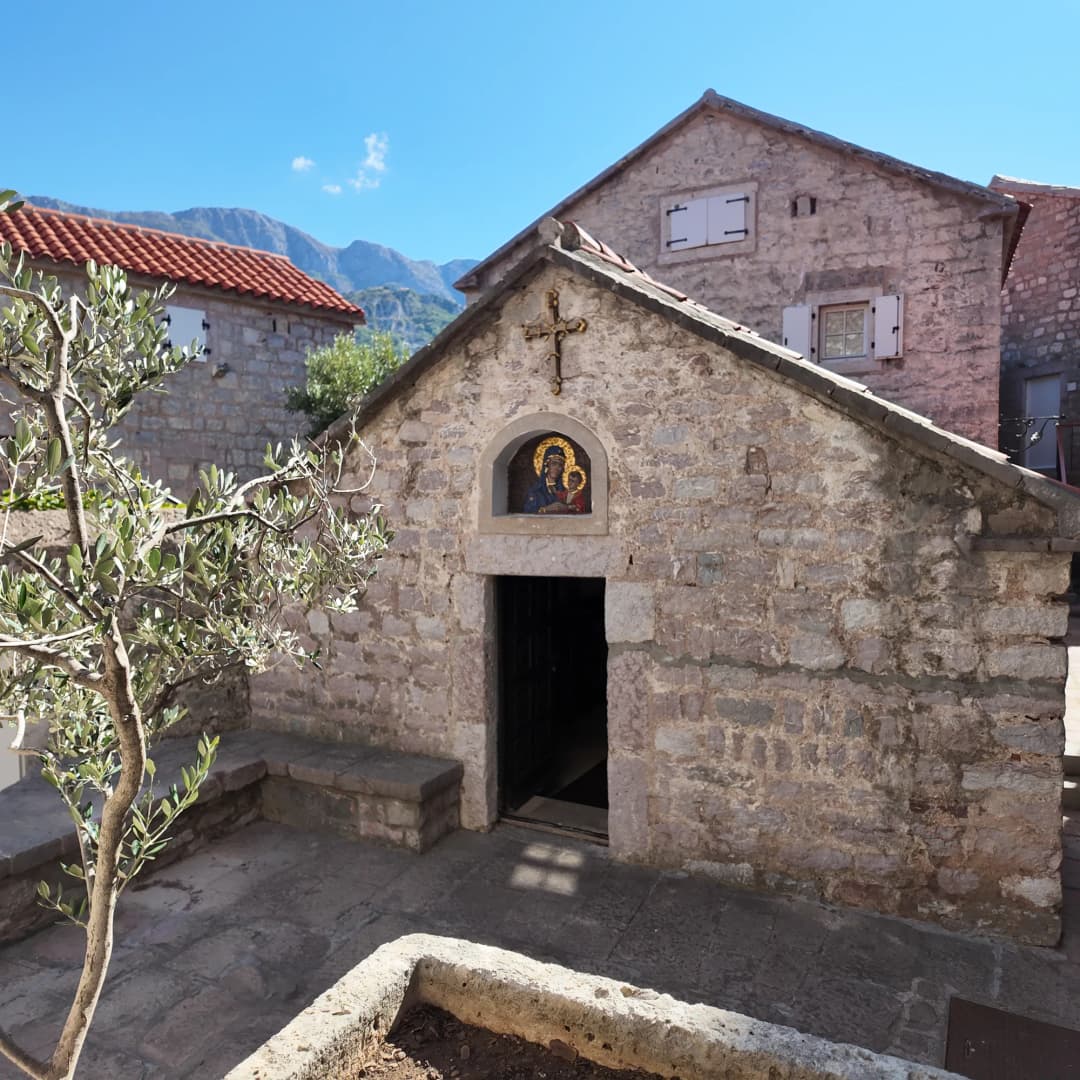
The most disputed church history belongs to the building known as Alexander Nevsky. An older church associated with the Nativity of the Virgin was restored and consecrated under the royal Yugoslav period in 1938, later disappeared beneath hotel works, and was rebuilt after ruins emerged during twenty-first-century construction. That argument—archaeology, worship, conservation and hotel operation competing on a few square metres—is Sveti Stefan in miniature.
1960: when a town became a hotel
By the mid-twentieth century the settlement was poor and losing population. Socialist Yugoslavia answered with one of the Adriatic’s boldest acts of adaptive reuse: transfer the remaining residents to the mainland, preserve the exterior townscape and rebuild the interiors for tourism. Architects Branko Bon, Vojislav Đokić and Radmilo Zdravković led the conversion; the Crna Gora construction company from Nikšić executed it. The hotel opened on 13 July 1960, Statehood Day.
A contemporary description counted 80 restored houses, 110 apartments and 237 beds. Those numbers are not comparable with today’s room count—houses were combined and hotel standards changed—but they reveal the first project’s scale. The radical idea was that the town itself would be the hotel: reception behind a fortified gate, cottages instead of a slab block, public rooms in old squares, a guest’s route following lanes already worn into the rock.
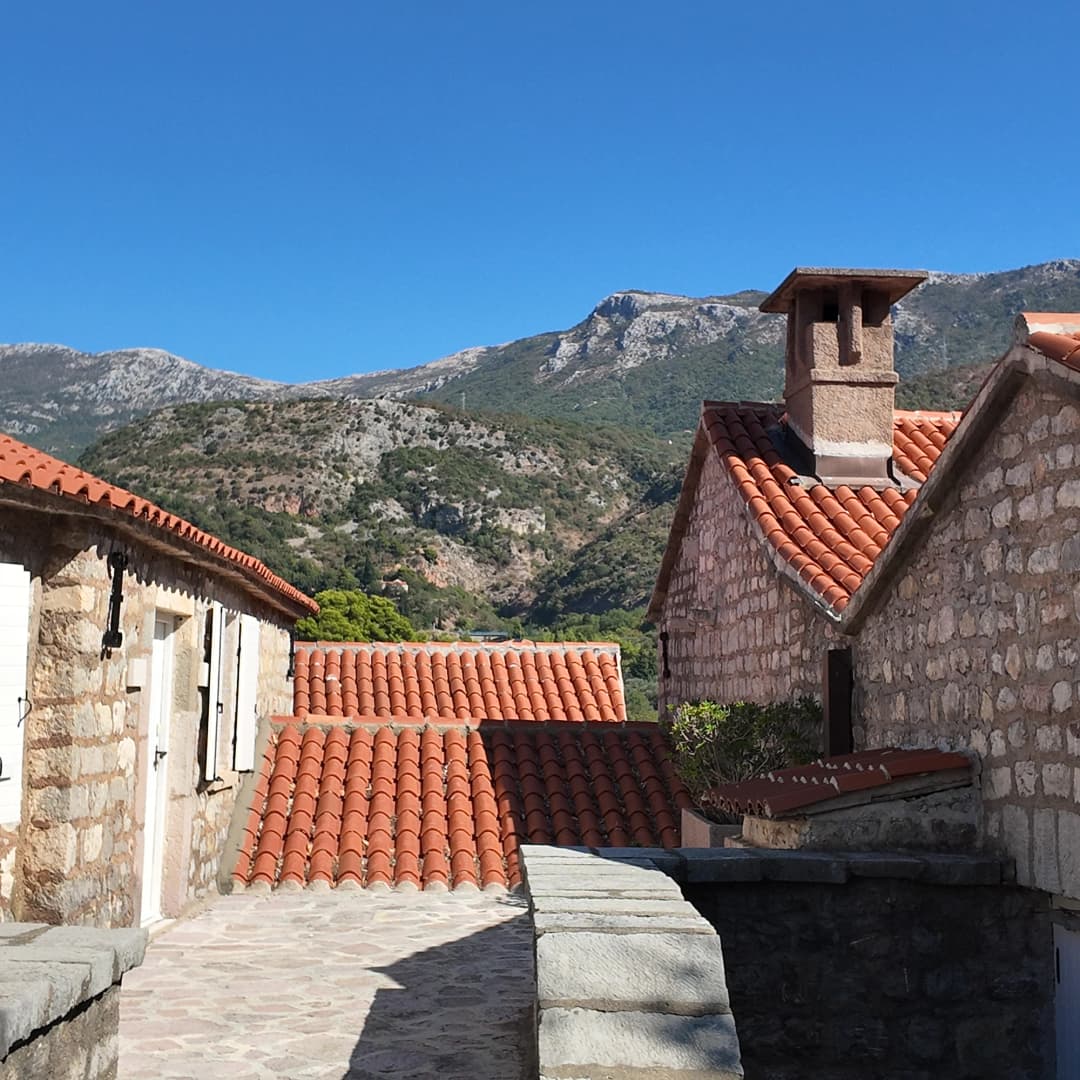
The achievement and the cost must be held together. The conversion preserved a settlement that might otherwise have emptied and decayed, created work and made Sveti Stefan an international emblem. It also ended ordinary residence on the island. A living community became scenery and service space. The newest academic work treats Sveti Stefan not as an uncomplicated conservation triumph, but as a place where architectural survival, displacement and commercial image are inseparable.
Glamour, carefully fact-checked
Sveti Stefan did attract the people its mythology promises. Budva’s official tourism history names Sophia Loren and Carlo Ponti, Alberto Moravia, André Malraux, Kirk Douglas, Monica Vitti, Yuri Gagarin, Sylvester Stallone, Bobby Fischer and Boris Spassky among its guests. In 1992, the first half of Fischer and Spassky’s controversial rematch was played here, Fischer’s first public competitive match in twenty years, before play moved to Belgrade.
Some repeated accolades grow less certain on inspection. Countless articles say Life placed Sveti Stefan among the world’s ten most exclusive hotels in 1964. A recent peer-reviewed study instead traces a 1966 Life feature that called the island poetic and picturesque; we have not found the supposed 1964 top-ten list. The 1972 Golden Apple is firm: FIJET, the international federation of travel journalists and writers, records Sveti Stefan among that year’s recipients.
Aman Sveti Stefan
Adriatic Properties took the long lease in 2007 and Aman became the operator. Villa Miločer on the mainland opened first in 2008; the island followed in stages from 2010. The new restoration combined cottages, reduced the density of accommodation and brought the pared-back interiors associated with designer Jean-Michel Gathy and Denniston. Aman’s current description is accurate in one important respect: no two cottages can be identical because the inherited shells are not identical.
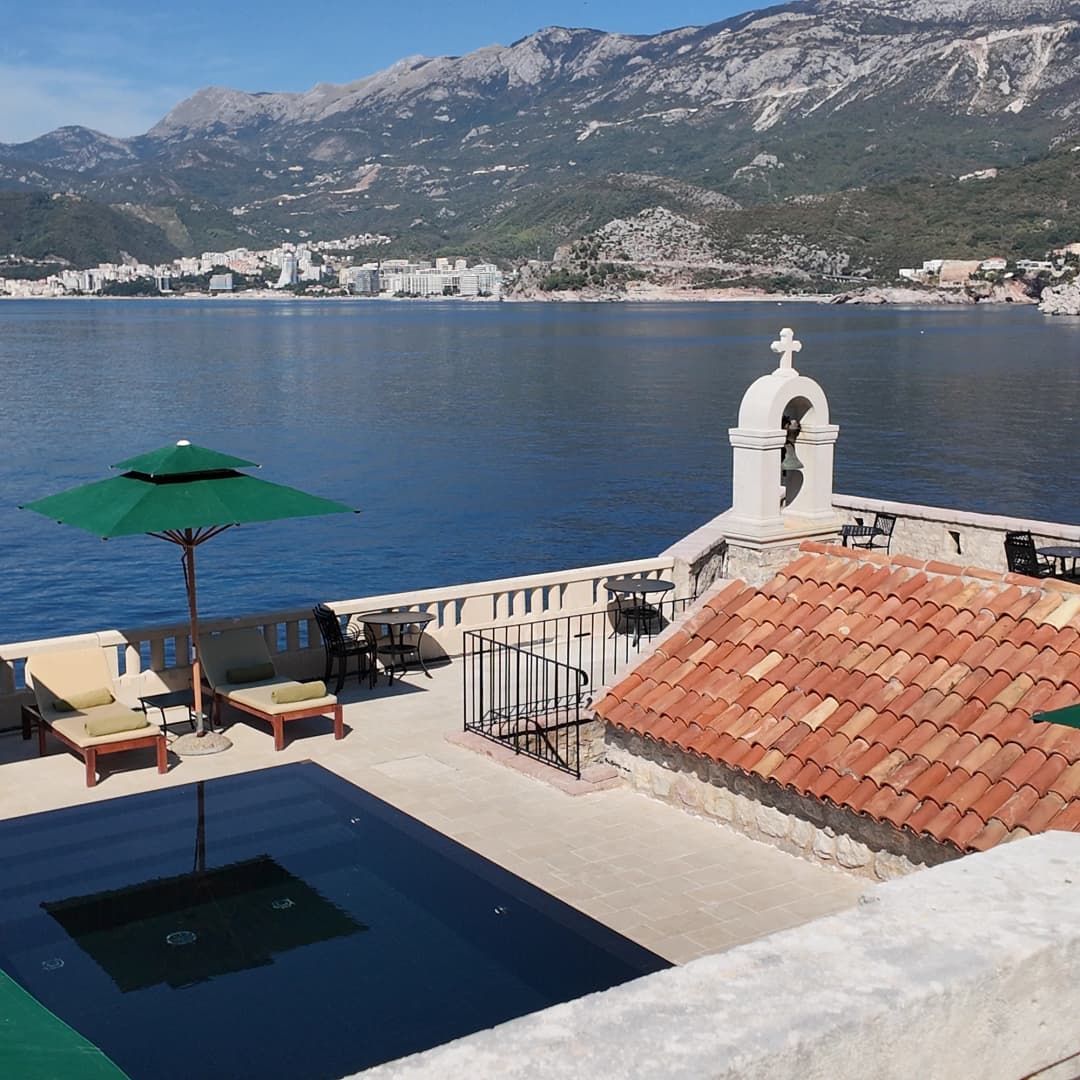
The resort is larger than the island. Aman Sveti Stefan also includes Villa Miločer, the former royal summer residence across the bay, and its landscape of cedar, pine and old olives. That distinction matters for search and for travellers: “Aman Sveti Stefan,” “Aman St Stefan” and “St Stefan hotel” are often used as if they mean the island alone, while bookings and facilities may refer to either the seasonal island or the mainland villa.
Five closed seasons, then a return
The island closed in 2021 during a dispute over beach and pathway access and remained shut as the tenant and state entered arbitration. The conflict exposed a question present since 1960: how can a privately operated luxury resort occupy a cultural emblem whose beaches, paths and memory are public? Europa Nostra placed the Sveti Stefan cultural landscape among Europe’s seven most endangered heritage sites in 2023, citing restricted public access, dismantled public facilities, development pressure and conservation concerns.
In April 2026 the Government of Montenegro announced a comprehensive settlement: withdrawal from arbitration, higher rent and a state profit share, a five-year lease extension corresponding to the closure, and no construction in Miločer Park beyond the existing permit and dimensions. Villa Miločer resumed first; the island reopened on 1 July. Reopening did not dissolve every access argument—local disputes continued that summer—but it returned the town-hotel to use after five years of stasis.
Visiting in 2026
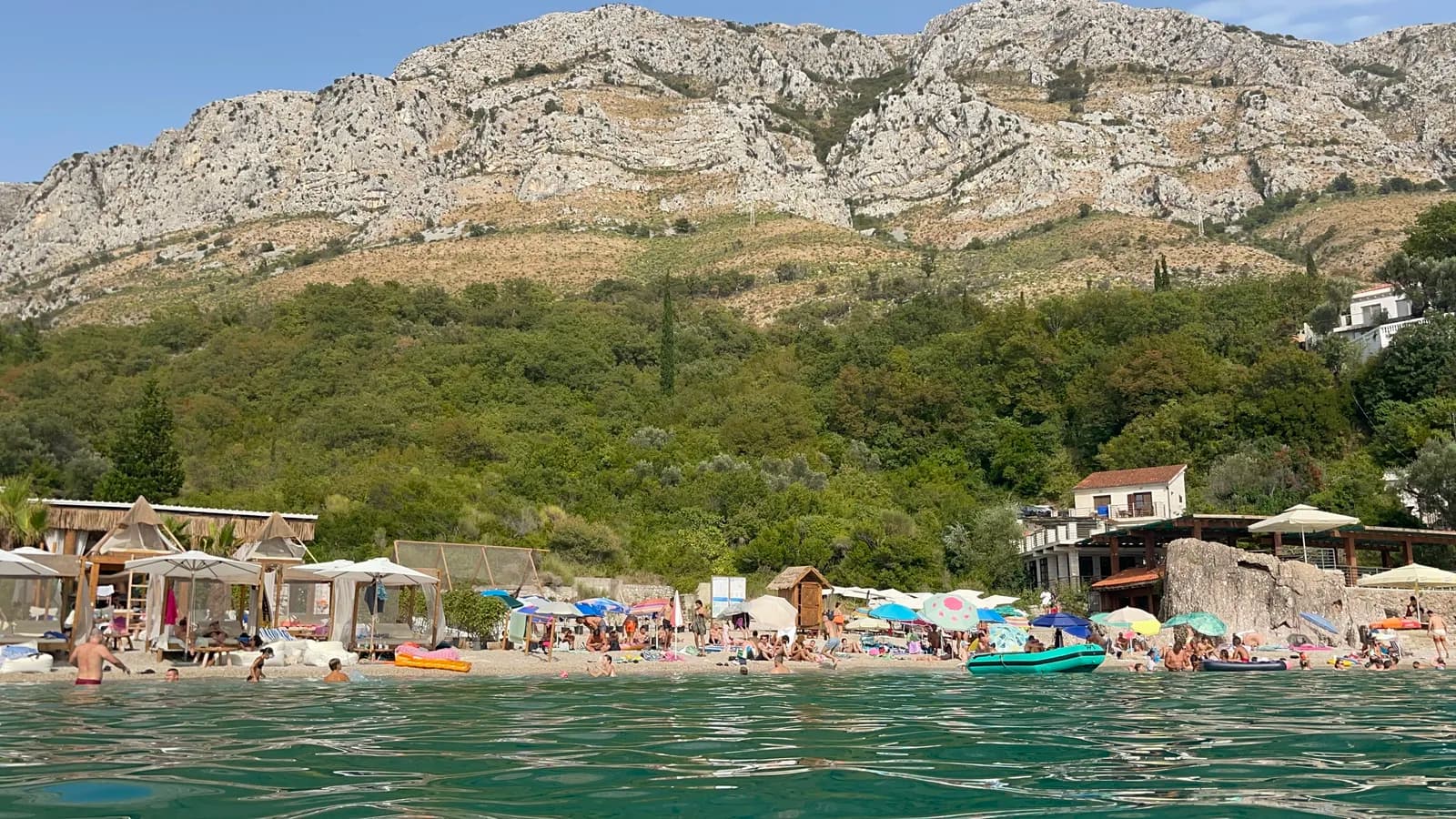
Aman’s island is a working private hotel, not an open old town. Hotel guests and people with confirmed resort arrangements enter under the property’s rules. At reopening in July 2026, the operator also announced two organised tours daily at €25 per person; schedules and availability can change, so confirm directly before travelling. The causeway viewpoints and the public side of Sveti Stefan beach remain the simplest way to see the famous profile.
For current access, beaches, transport and the best public viewpoints, use our practical Sveti Stefan guide. For the royal landscape across the bay, see King’s Beach, Queen’s Beach and Miločer. This page is the long history; those pages answer the trip.
Two originals you can reuse
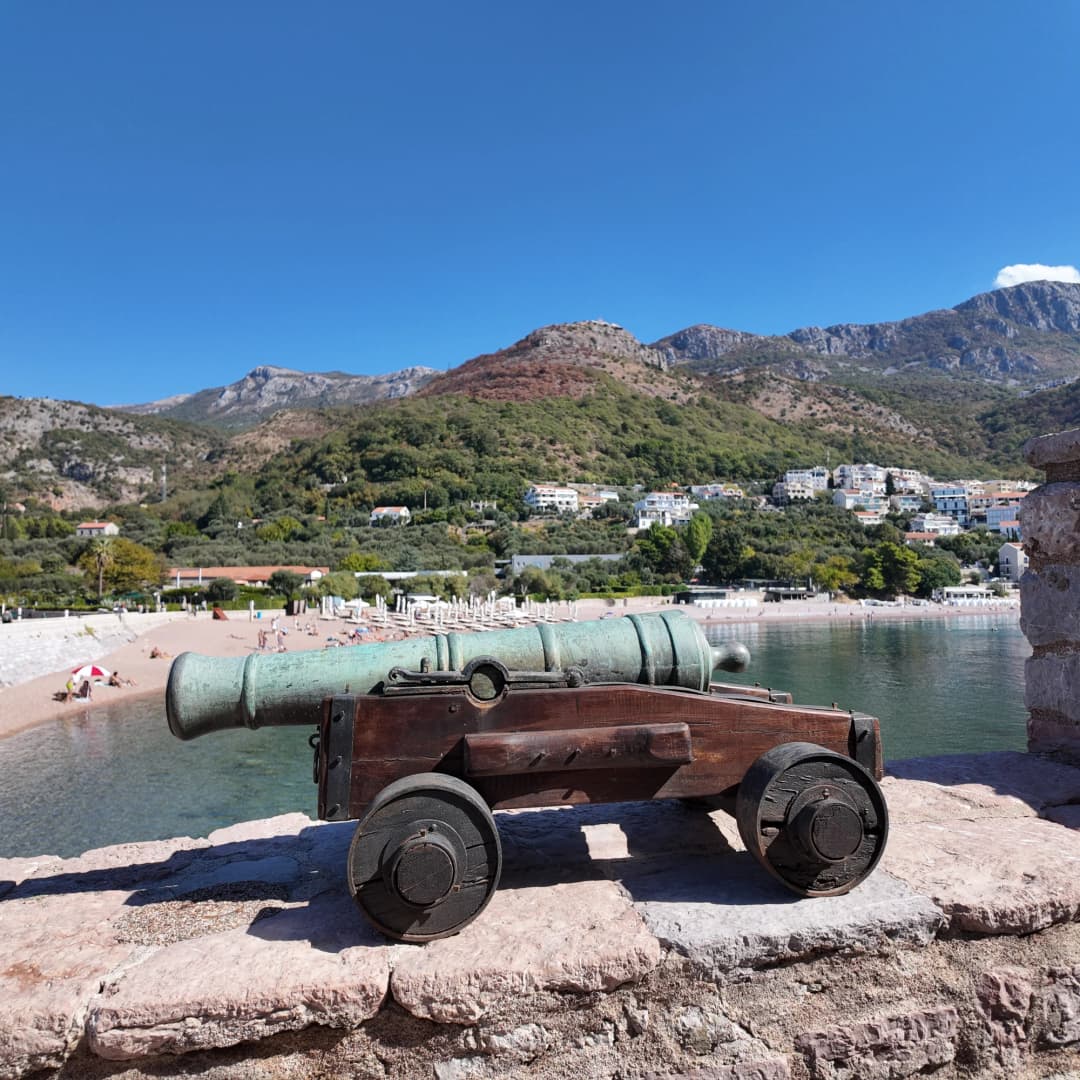
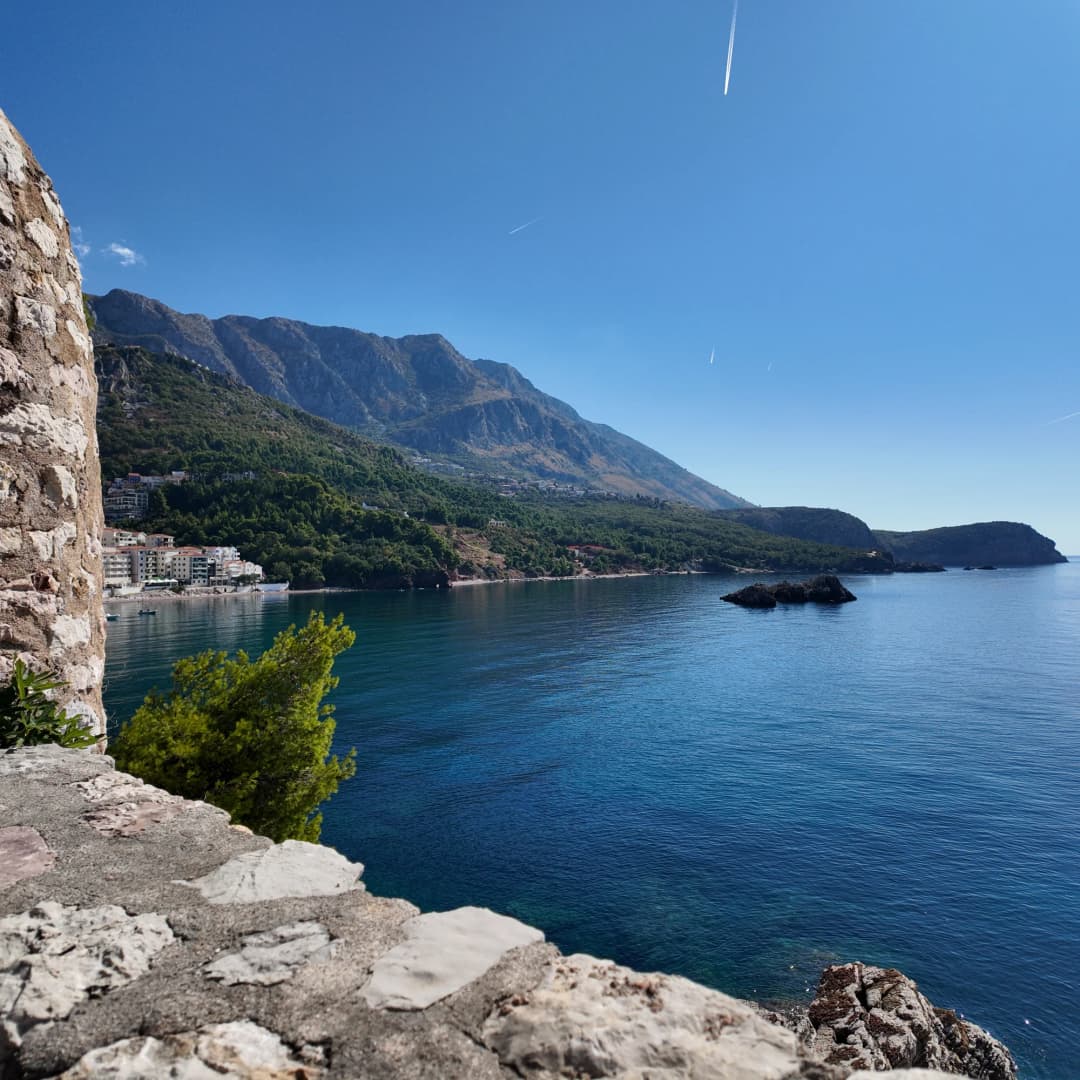
We are keeping the majority of this new Aman Sveti Stefan collection unpublished at full resolution for Montenegro.com’s premium coffee-table book. Two documentary originals are released here under Creative Commons Attribution 4.0: the cannon on the wall and the lane inside the island. You may copy, adapt and print them, including commercially, with credit to Montenegro.com and a link to this feature where practical.
- Download the cannon original — 3072 × 3072, original JPEG with EXIF
- Download the stone-lane original — 3072 × 3072, original JPEG with EXIF
Licence: CC BY 4.0. Creator and required attribution: Montenegro.com. Montenegro.com, 5 October 2026. All other visual media on this page are © Montenegro.com, all rights reserved.
Frequently asked questions
Is Sveti Stefan the same as Aman Sveti Stefan?
Not exactly. Sveti Stefan is the historic fortified islet and the modern settlement on the mainland. Aman Sveti Stefan is the resort operation comprising the seasonal island hotel and Villa Miločer across the bay.
Is Aman Sveti Stefan open?
Yes. The island reopened for the summer season on 1 July 2026 after five years closed. Villa Miločer operates separately on the mainland and is described by Aman as year-round. Always check current seasonal dates directly.
Can non-guests visit the island?
At the July 2026 reopening, two guided visits daily were announced at €25 per person. Access is controlled and can change; a walk to the gate does not guarantee entry. Public viewpoints on the mainland give the classic complete view.
Was Sveti Stefan built as a hotel?
No. It was a fortified Paštrovići settlement first recorded in 1442. The remaining residents were transferred during the 1955–60 conversion, and the town-hotel opened on 13 July 1960.
Did Gian Marco Betti live on Sveti Stefan?
No source says that. Betti was seized around 1755–56 near “Pastruich,” probably the wider Paštrovići district. Connecting him to the island itself would go beyond the evidence.