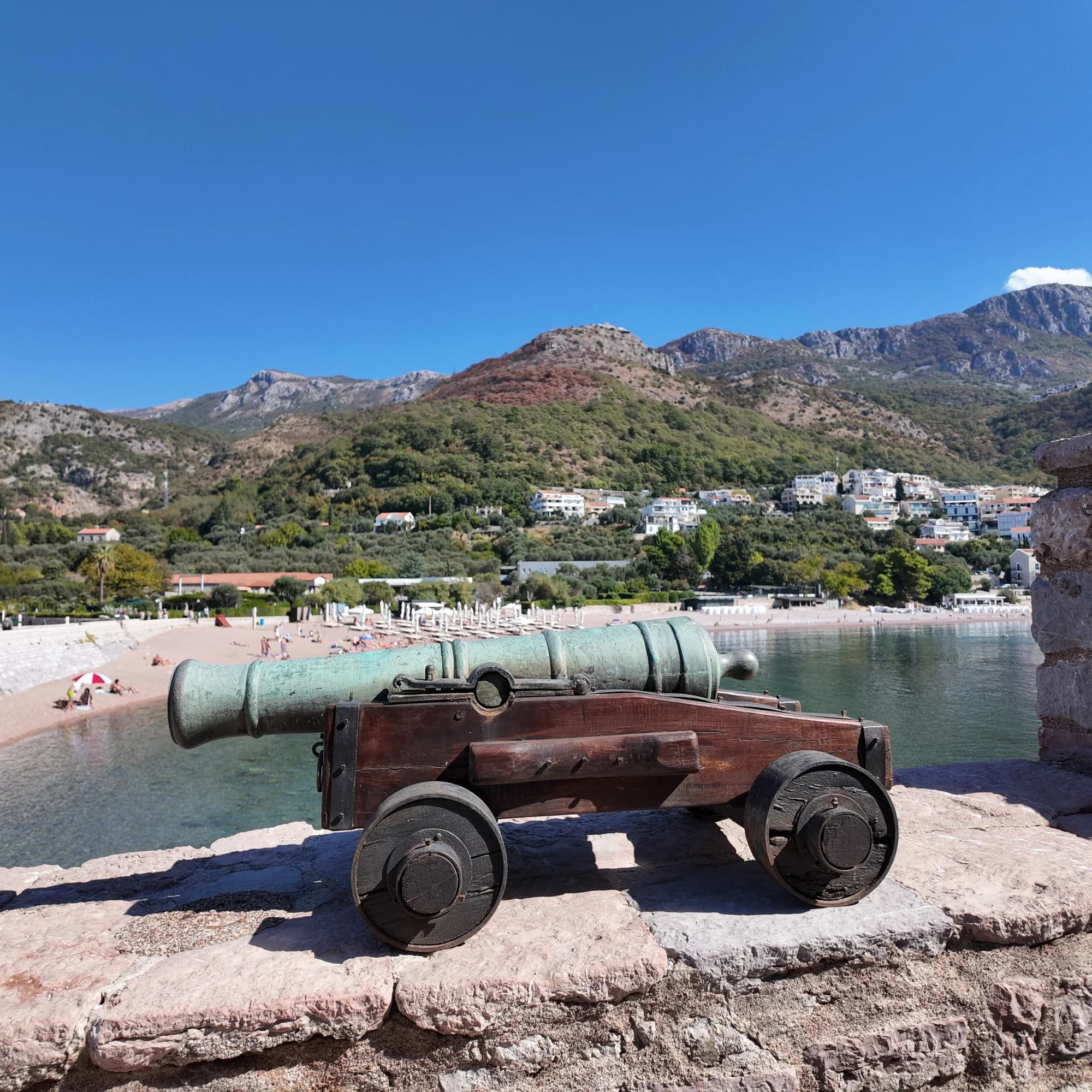
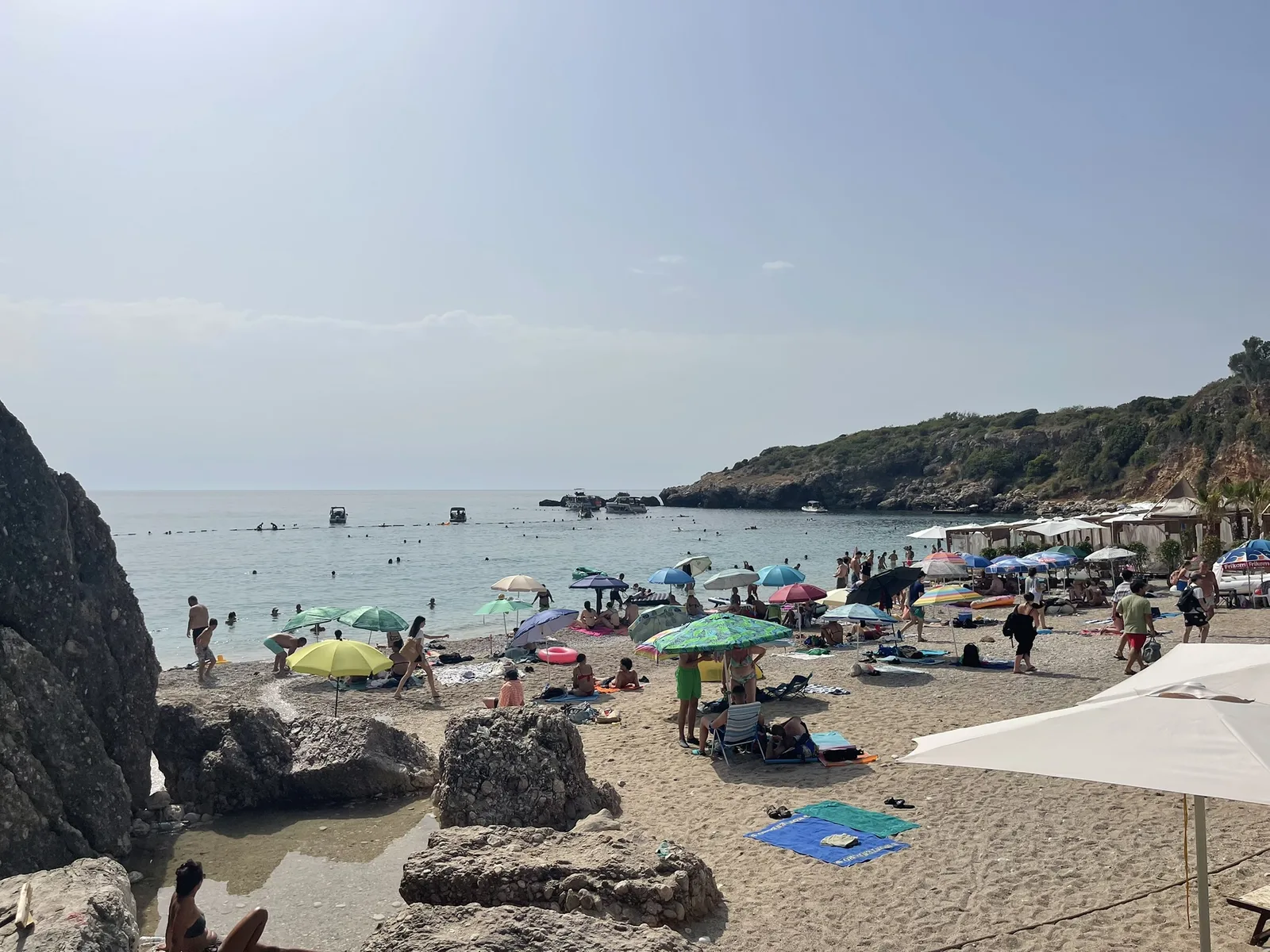
Drobni Pijesak is both a beach and a test of how carefully we tell history. The cove is real and measurable: Budva’s tourism organization lists 250 m of yellow-white sand mixed with small pebbles, backed by olives and Mediterranean vegetation. The Paštrovići assembly tradition is also real. But the surviving 1423 charter does not say it was signed on this beach. A good visit begins by keeping those facts in their proper layers.
This guide does that while answering the practical 2026 questions. The cove lies on the coast between Sveti Stefan and Petrovac, land access is officially described as difficult, and daily services can change. Treat it as a place to verify on arrival, not a resort whose parking, loungers, lifeguards or sea conditions are guaranteed.
| Source-supported | Do not assume |
|---|---|
| About 250 m long and 5,000 m² | Identical usable width after every storm |
| Yellow-white sand with small pebbles | Soft sand along the entire waterline |
| Most accessible from the sea | A scheduled boat or safe unsignposted footpath |
| Three named bathing units in current records | Every unit is staffed and serviced today |
| Protected landscape reserve | Anything found on the shore may be removed |
| Historical Bankada meeting place | The 1423 charter was signed on the beach |
What kind of beach is Drobni Pijesak?
What the sources say
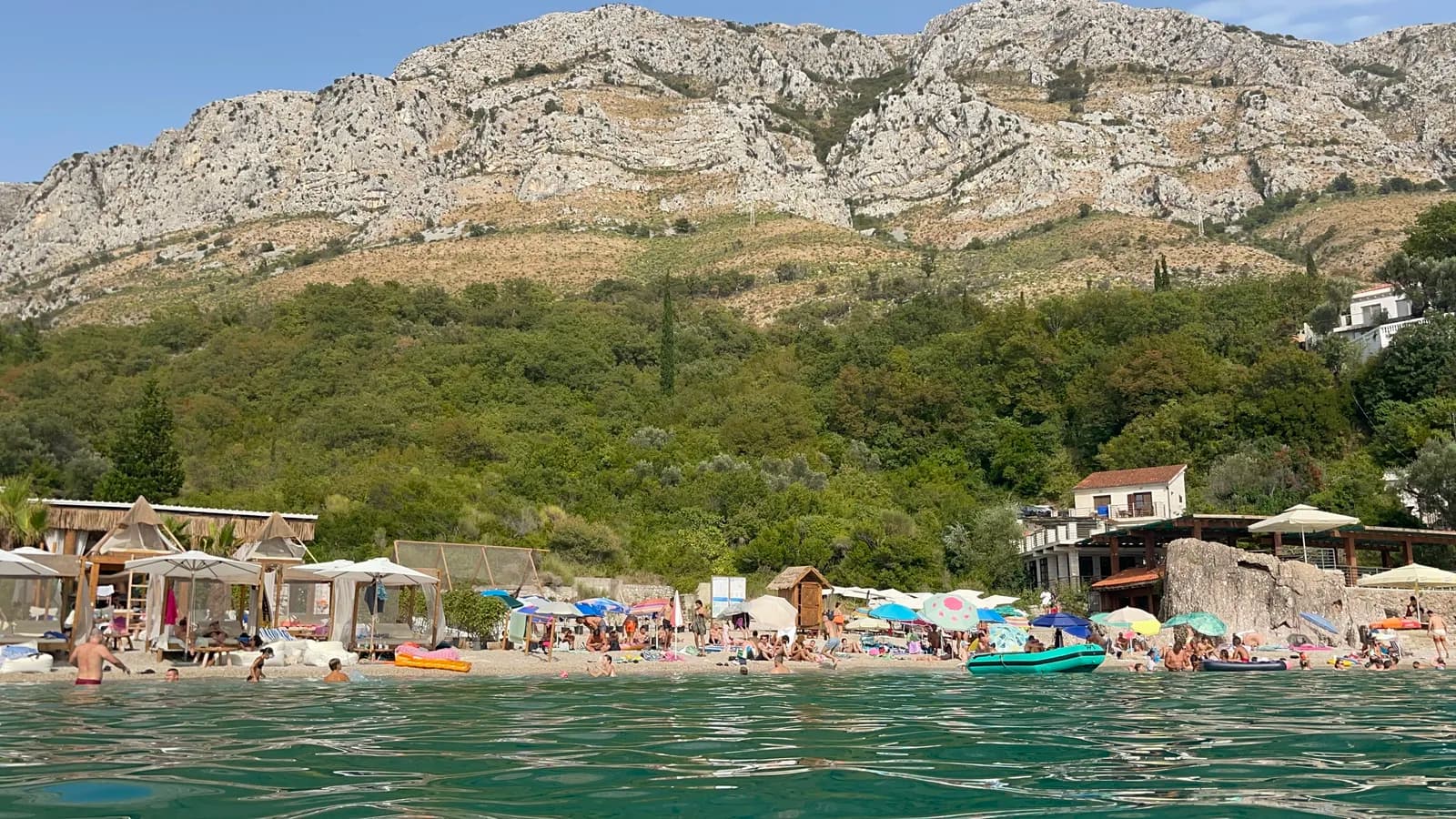
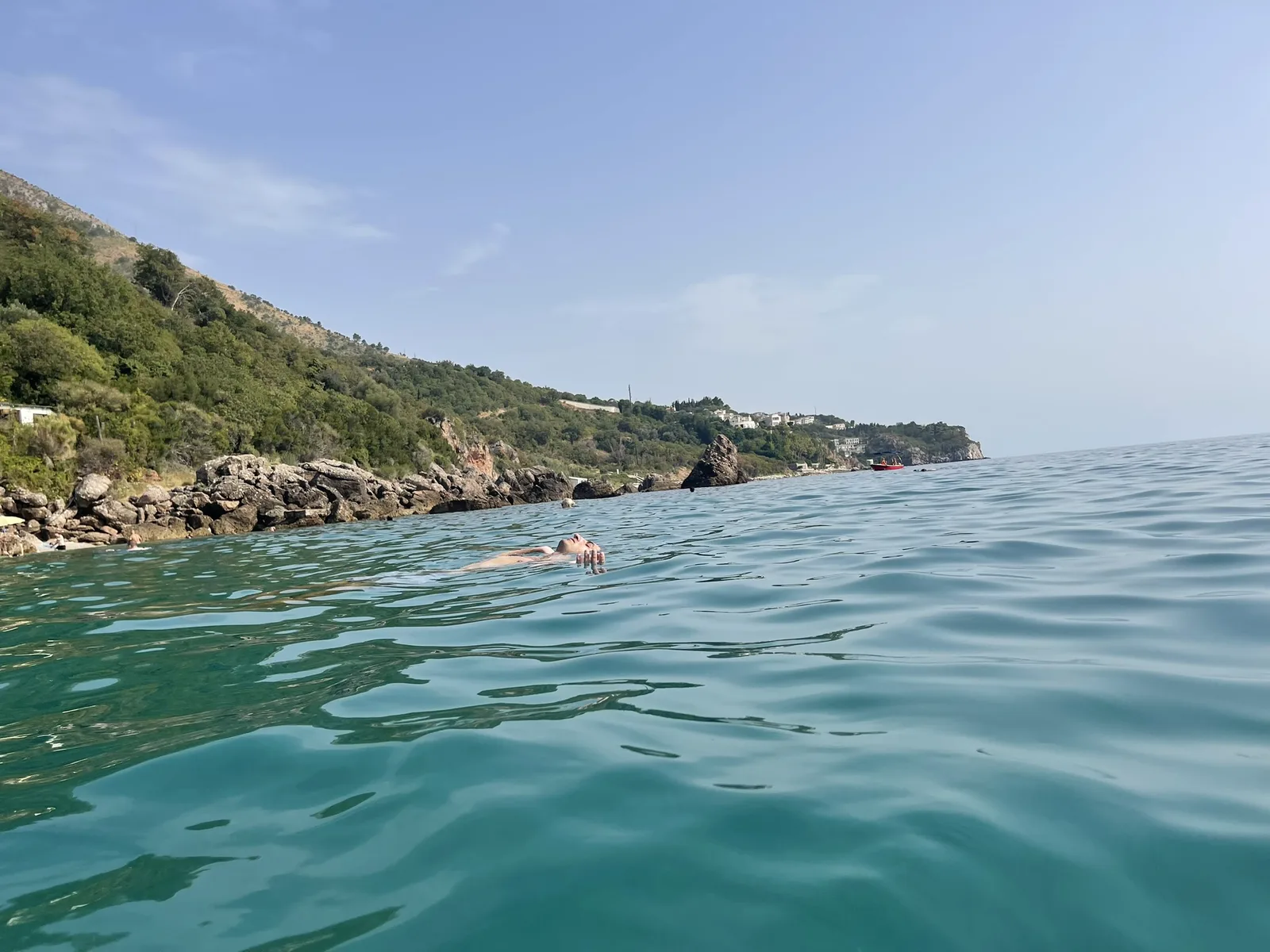
The Budva Tourism Organization gives the clearest official visitor description. Drobni Pijesak occupies a secluded cove off the road from Sveti Stefan toward Petrovac. Its sand is predominantly yellow-white and mixed with small rounded pebbles. Olive groves and Mediterranean vegetation rise behind it. The authority lists a length of 250 m and area of 5,000 m².
Those figures describe scale, not a promise about today’s shoreline. Waves, storms and seasonal preparation can move sediment and alter the usable strip. Bring footwear that works on pebbles and hot ground. Never read an old photograph as evidence of the current entry profile, water depth or sea state.
The name is often translated as “fine sand,” but a name should not overrule observation. The official description explicitly includes pebbles. What makes the beach distinctive is the small cove, pale mixed shore and green hinterland—not a guarantee of powder-soft sand.
| Feature | Value | Note |
|---|---|---|
| Listed beach length | 250 m | Official dimension |
| Listed area | 5,000 m² | Official dimension |
| Surface | sand + pebbles | check the surface today |
| Protected landscape listing | 1 ha reserve | Official dimensions are context, not a daily-condition report |
Source: budva.travel, morskodobro.me
A protected landscape, not a souvenir shelf
What the sources say
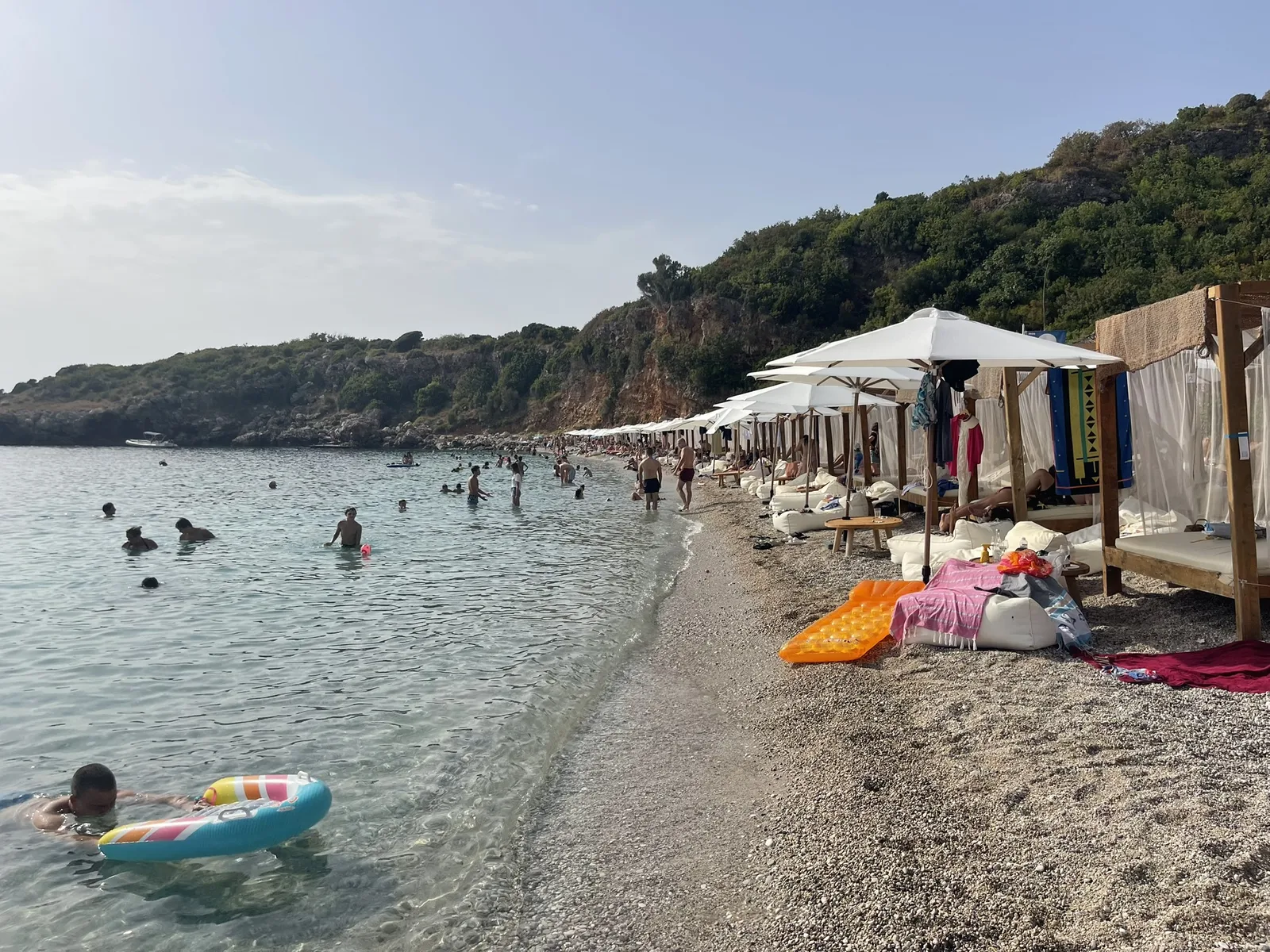
The public coastal manager lists Drobni Pijesak among beaches protected since 1968 and records it as a landscape reserve of 1 hectare. The Coastal Area Spatial Plan also identifies the Crvena Glavica–Drobni Pijesak–Skočiđevojka section and emphasizes the natural rocky coast and Mediterranean vegetation.
For a visitor, the useful interpretation is simple. Use established access, keep off planted and eroding slopes, take all waste out, and leave pebbles, plants and natural material where they are. Do not create a shortcut because a map appears to show a line. A track can cross private ground, unstable terrain or protected vegetation without being a public path.
Protection does not mean the beach has no managed use. The current Budva bathing-area records list Drobni Pijesak units 23A1, 23A and 23C, with contract or organization documents attached. That administrative fact should not be converted into a claim that three complete sets of services operate every day. The board and staff visible on arrival are the evidence for today.
The 1423 Paštrovići charter: what the archive proves
On 4 April 1423, Paštrovići nobles set out conditions for accepting Venetian authority. This is not folklore. The Monasterium archival catalogue identifies an authentic copy in the Venice State Archives, Commemorialium 11, folios 117r–117v, number 328. Its original dating clause places the act on the galley of Francesco Bembo.
That record matters because it gives a documentary anchor to Paštrovići political history. It also sets a boundary. The catalogue does not locate the act at Drobni Pijesak, so this article does not call the cove “the beach where the 1423 charter was signed.” A dramatic sentence is not worth collapsing separate sources.
Historical scholarship in Acta Histriae discusses the community’s legal relationship with Venice and continuation of its assembly or court, known as the Bankada, in 1424. What is certain is that the institution formed part of Paštrovići self-government under Venetian authority. It does not follow that every sitting occurred at one beach, or that later descriptions reproduce fifteenth-century procedure unchanged.
| Source | Date | Claim |
|---|---|---|
| ARCHIVE | 4 April 1423 | Conditions for Venetian authority; dated on Bembo’s galley |
| SCHOLARSHIP | 1424 | Institutional continuation of the Paštrovići Bankada |
| PLACE TRADITION | later accounts | Drobni Pijesak identified as an older meeting place |
| Caveat | — | None alone proves the charter was signed on this beach |
Source: monasterium.net, dlib.si, budva.travel, butua.com
The Bankada on Drobni Pijesak
Budva Tourism states that the Bankada—the court or assembly of Paštrovići clan leaders—once sat at Drobni Pijesak. A local heritage chronicle by Milenko Ratković gives a fuller version: it calls the cove the older meeting place and says sittings moved to Sveti Stefan from the beginning of the nineteenth century. Ratković describes annual selection of judges and officials in June and supplies an exact composition for the body.
Those details are valuable, but they remain attributed to that chronicle. Sources can differ on composition, terminology and chronology, particularly when a long-lived institution changed under different rulers. The responsible visitor takeaway is not a theatrical reconstruction. It is that documentary history confirms Paštrovići negotiated corporate rights with Venice, scholarship confirms their legal assembly, and official and local heritage sources connect an older phase of that assembly to this cove.
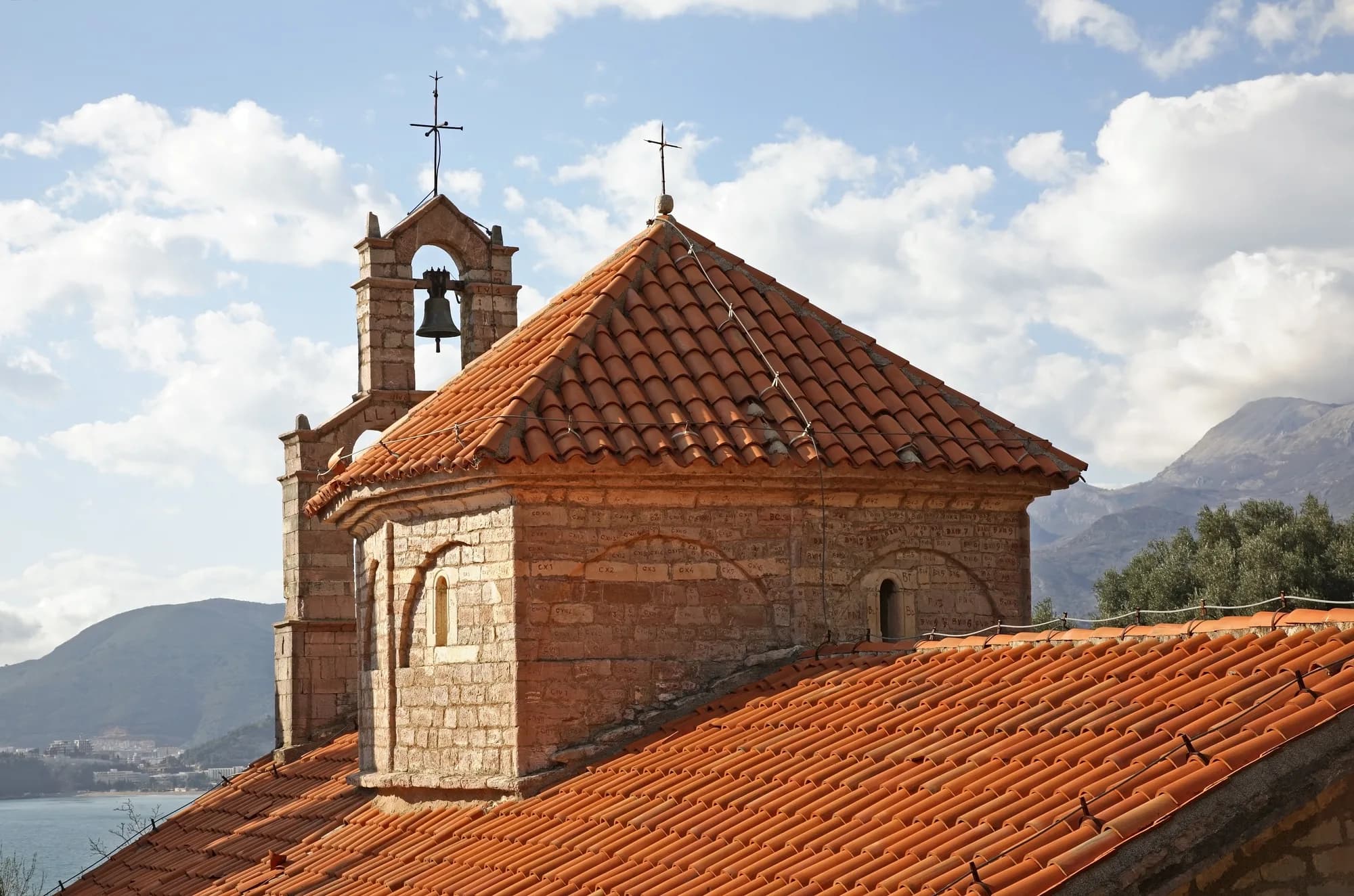
Drobni Pijesak therefore belongs in a wider cultural route. Praskvica Monastery is central to Paštrovići religious and community memory. Reževići Monastery connects the landscape south of Sveti Stefan with another major institution. Read together, beach, monasteries and fortified settlements show that political life did not belong only inside urban walls.
Practical access in 2026
Budva Tourism calls land access difficult and says the beach is most accessible from the sea. That description should shape the plan. It does not mean every visitor can find a scheduled boat, nor does it license improvisation on the Adriatic Highway.
Arriving by land
Use a signed, lawful access road and confirm the final approach with your accommodation, taxi driver or a current local operator. Expect a steep coastal descent and a corresponding climb or drive out. Road surface, passing space, turnaround room and parking availability may change. If the final road looks unsafe for your vehicle, do not continue simply because another car did.
Do not walk along a highway shoulder or follow an unsigned online shortcut. A route that looks short on a map may combine fast traffic, heat, steep gradient and no protected pedestrian space. This article cannot verify a continuous public footpath from Sveti Stefan or Petrovac. For a base nearby, compare the logistics in where to stay around Sveti Stefan.
Arriving by sea
A sea approach can avoid the steep land descent, but it creates different checks. Use a licensed operator, confirm the exact landing point, return time, cancellation policy, passenger limits and weather decision before departure. Ask whether boarding requires stepping through shallow water. Do not assume the cove has a pier or that a boat can land in every sea state.
If the operator cancels for weather, treat that as safety information rather than a problem to solve with an unlicensed alternative. Sea access also does not remove the need to carry water, sun protection, footwear and any essential medication.
| Question | Land arrival | Sea arrival |
|---|---|---|
| Who verifies it? | Current local host, taxi or driver | Licensed boat operator |
| Main uncertainty | Road, turning and lawful parking | Weather, landing and return |
| Do not assume | Safe highway walk or open space | Pier, fixed schedule or guaranteed landing |
| Fallback | Turn back before unsafe descent | Accept cancellation and use another beach |
Swimming and facilities: check the beach you find
The presence of administrative bathing units does not guarantee a lifeguard at every point. On arrival, find the information board for the organized sector, identify its boundary and check the current safety flag and duty hours. If no board, marked area or lifeguard is visible, treat the water as unsupervised. Never infer calm conditions from the cove shape or a sunny photograph.
The coastal manager’s 2026 reporting illustrates why current notices matter: repeat analyses and temporary restrictions can concern particular sectors elsewhere on the coast. That report did not establish a Drobni Pijesak result, so it is not used to label this water good or bad. It supports the method—read the displayed status and obey any restriction today.
Budva Tourism mentions restaurants and cafés behind the beach. The current contract page confirms managed units, but neither source guarantees a particular venue, menu, price, opening month, shower, toilet, lounger or card terminal on your date. Carry enough essentials to remain self-reliant and take waste away.
The tourism page also calls the natural spring potable. No current public microbiological result for that spring was located in this review. Do not depend on it for drinking water. Bring sealed water; natural-source safety can change after rainfall, contamination or infrastructure work even when an older description uses the word “potable.”
| Step | Check |
|---|---|
| 1 | Use signed, lawful access |
| 2 | Find the organized-sector board |
| 3 | Read flag, notices and lifeguard duty |
| 4 | Bring sealed water and essentials |
| 5 | Keep a safe exit plan; emergencies: 112 |
| If unclear | No current sign or operator confirmation? Do not invent certainty |
Source: budva.travel, morskodobro.me, gov.me
Who should choose another beach?
Difficult land access makes Drobni Pijesak a poor default for anyone who needs step-free access, guaranteed nearby parking, a continuous paved route or confirmed medical support. Families should decide from the actual access, supervision and sea state, not from the beach appearing on a generic family-beach list. “Family beach” is a theme, not an individual safety assessment.
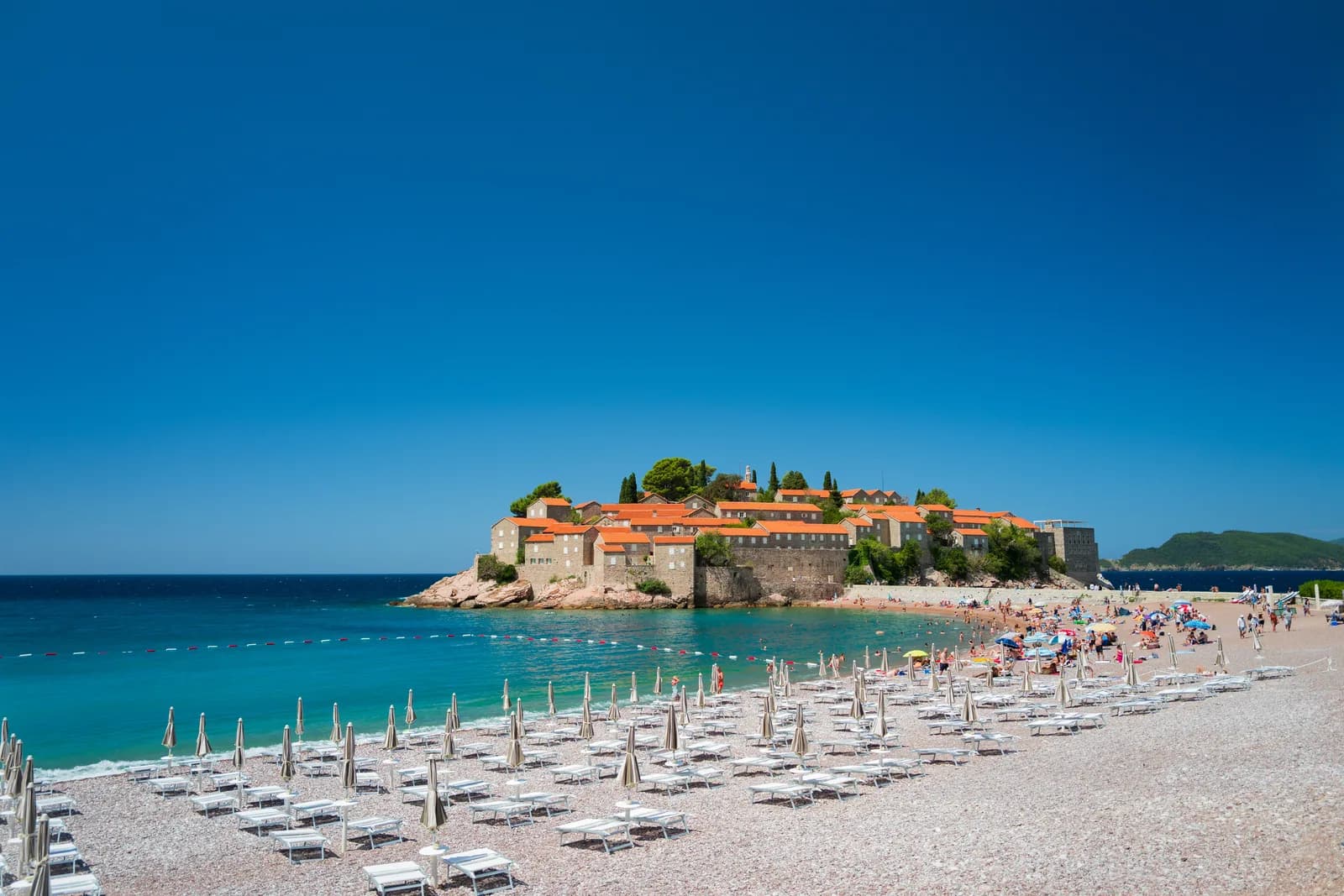
Have a fallback. Lučice Beach near Petrovac is a separate cove and still requires its own on-arrival checks. Sveti Stefan’s wider visitor guide helps with beaches and viewpoints farther north. For a cultural alternative when swimming conditions fail, Kastello fortress in Petrovac keeps the Paštrovići coast in view without forcing a difficult beach day.
Frequently asked questions
How long is Drobni Pijesak Beach?
Budva Tourism lists it at 250 m long and 5,000 m². Treat the dimensions as official visitor information rather than a live shoreline survey.
Is Drobni Pijesak sandy?
It has predominantly yellow-white sand mixed with small rounded pebbles. Bring footwear suitable for a mixed and potentially hot surface.
Was the 1423 Paštrovići agreement signed here?
The surviving catalogue record dates the act to Francesco Bembo’s galley and does not name Drobni Pijesak. Other sources identify the beach as an older Bankada meeting place. Those are connected but separate claims.
Can I walk from Sveti Stefan?
This review found no official source establishing a continuous safe pedestrian route. Do not use the highway shoulder or an unsigned shortcut. Confirm lawful current access locally.
Is parking available?
Do not count on a particular lot, price or capacity. Confirm before descending and turn back if there is no lawful space or safe turnaround.
Can I drink from the spring?
Budva Tourism describes it as potable, but no current microbiological test was found. Bring sealed water and do not rely on an untested natural source.
Are there lifeguards and restaurants?
Current records show managed bathing units, and tourism information mentions food venues, but daily operation is variable. Read the organized-sector board and verify services on arrival.
What is the emergency number?
Call 112 for a genuine emergency in Montenegro. It operates nationwide, 24 hours a day. It is not a beach-information or transport line.
Drobni Pijesak deserves both curiosity and restraint. Its shore is protected, its access demands a current check, and its political history becomes more interesting when archive, scholarship and local tradition are not forced into one legend. Bring what you need, leave the landscape intact, and let the evidence—not the marketing—shape the day.