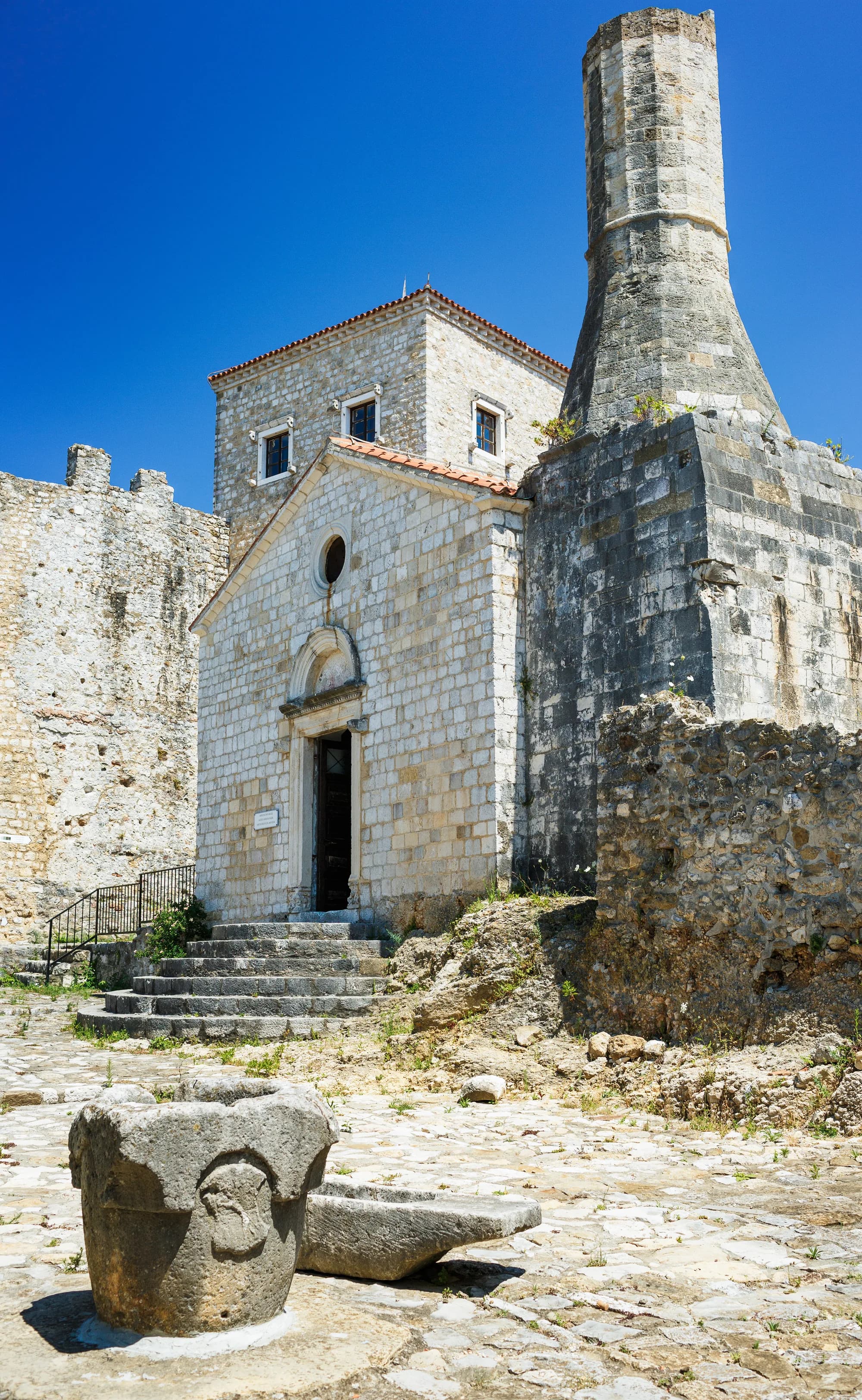
Ulcinj's Church-Mosque is best understood as one building with sequential lives: church, mosque, then archaeological museum. It is not evidence that Christian and Muslim congregations worshipped there simultaneously. Its value lies in physical and documentary layering—a 1510 church date, an Ottoman conversion tradition after 1571, a cut-stone minaret dated 1693, earlier fabric beneath the church and collections that extend far beyond the building's religious phases.
A careful 2026 visit also needs operational humility. The Ministry funded a roof conservation project in 2025, yet the reviewed public records do not say whether work is complete or whether it affects access now. No current official hours or admission schedule was found. Confirm directly before climbing into the Old Town, and regard any printed historic timetable as archival rather than live.
Evidence at a glance
| Evidence | Supported conclusion | Do not infer |
|---|---|---|
| Ulcinj tourism profile | 1510 church; Ottoman conversion tradition; 1693 minaret; museum now | Current hours or an exact last worship date |
| Austrian Academy spatial database | Earlier church beneath St Mary; later mosque and museum phases | A complete excavation sequence |
| UCG historical journal | Ulcinj cession convention signed 25 November 1880 | That worship ended on the same day |
| Institutional museum guide | Archaeology here; ethnology and art in other complex buildings | Every listed object is displayed today |
| 2025 Ministry decision | €25,000 allocated for conservation design and roof works | Work finished or museum closed |
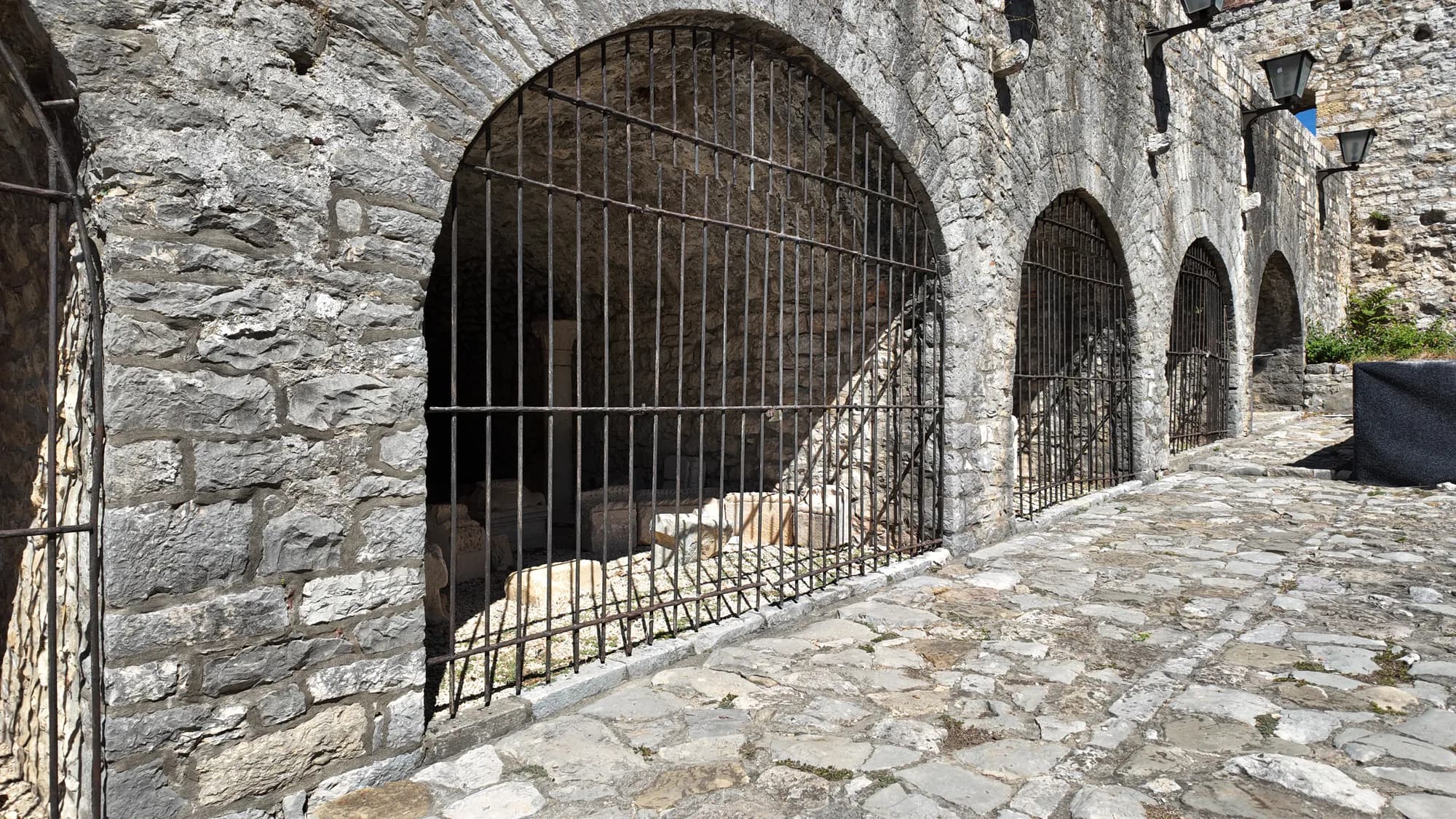
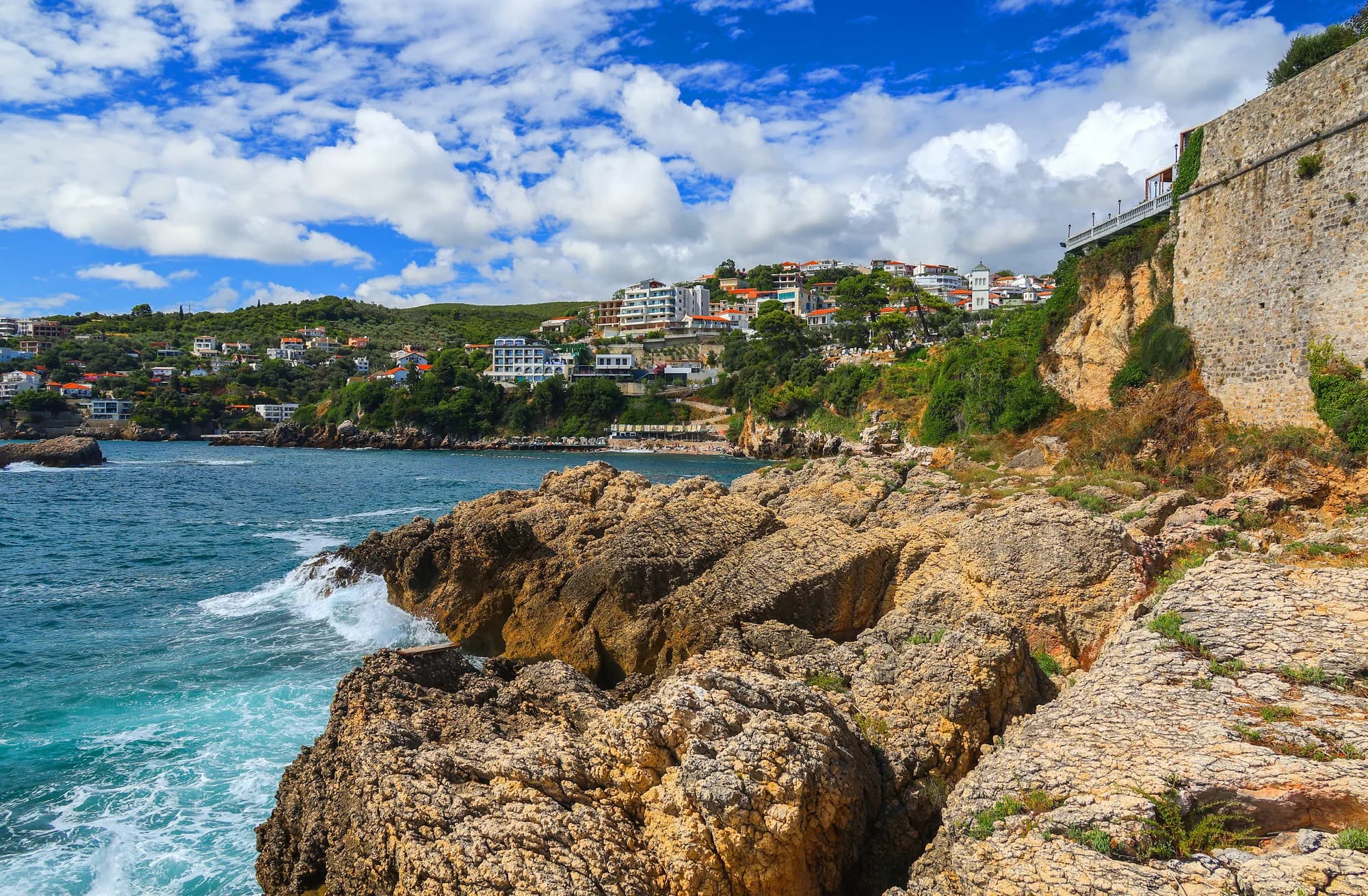
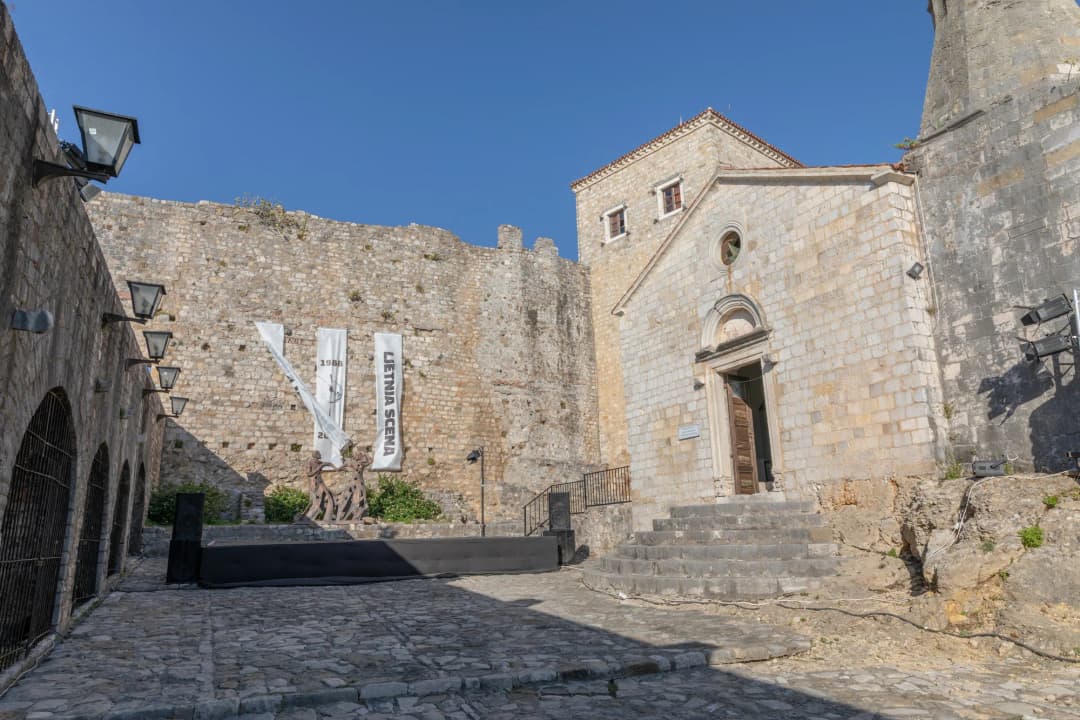
The building is inside the museum complex near the northern side of Ulcinj's fortified Old Town. A 2025 integrated-coastal tourism baseline describes archaeological, ethnographic and artistic collections and places the museum in the Church-Mosque. That distinction matters when asking what is open: “the museum” can refer to collections and spaces beyond one doorway.
Before 1510: an earlier church below
The visible story does not begin with Venice. The Austrian Academy of Sciences' Tabula Imperii Byzantini database records the Church of Christ the Saviour beneath the Romanesque Church of St Mary. It also notes that St Mary was later transformed into a mosque and now serves as Ulcinj's archaeological museum. This source turns a simple three-date tale into stratigraphy: an earlier sacred structure, the later church, Ottoman adaptation and museum reuse occupy the same place.
That does not make every stone legible to a visitor. Without an excavation plan and conservation labels, it is unsafe to point at a wall and assign it to a particular century. Read the overall mass, openings and minaret relationship first. Use museum interpretation for individual fragments, and do not climb or touch masonry to test a theory.
| Phase | Detail |
|---|---|
| Earlier Christ the Saviour church | Beneath |
| St Mary church | 1510 tourism date |
| Mosque phase | Minaret dated 1693 |
| Archaeological museum | Present use |
Source: tib.oeaw.ac.at, ulcinj.travel, th.cepf.net
1510, 1571 and 1693: three different claims
Ulcinj Tourist Organisation says St Mary's Church was built in 1510 during Venetian rule. It says the building became the Mosque of Sultan Selim II after the Ottoman conquest of Ulcinj in 1571, and that it was an imperial mosque whose staff initially received state funding because it lacked a supporting waqf. The same page records a maktab, or school, and meetings of Ulcinj's maritime captains.
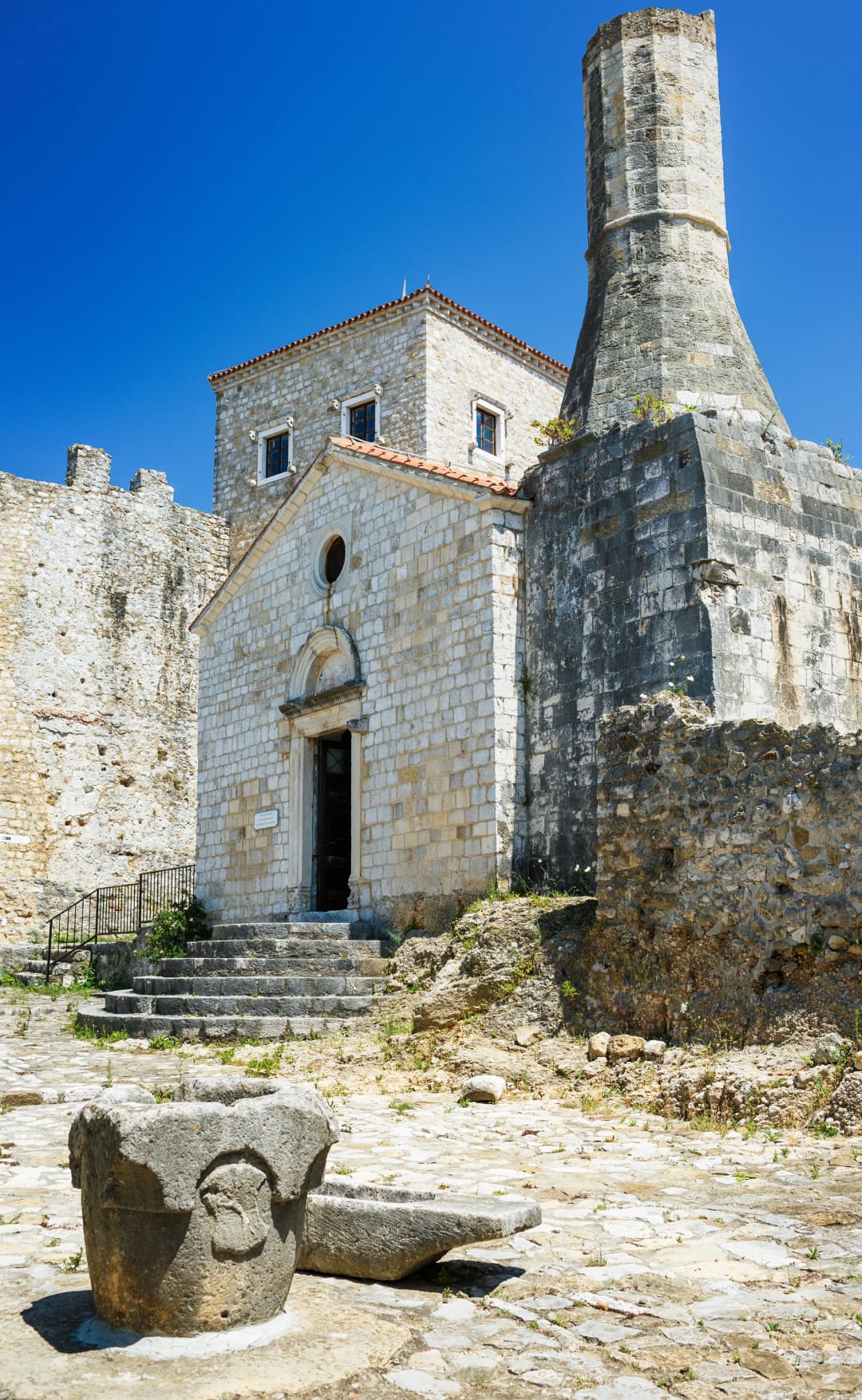
The dates should not be collapsed. 1510 is the tourism authority's church date. 1571 is the conquest and conversion anchor in its narrative. 1693 is the specific date assigned to Hajji Halil Skura's minaret of dressed stone, rising from a rectangular base that narrows upward. Saying only “converted in 1693” would confuse a later architectural intervention with the earlier change of religious use; saying every Ottoman feature appeared in 1571 would make the opposite mistake.
| Year | Event |
|---|---|
| 1510 | St Mary date |
| 1571 | Conquest + conversion, in tourism account |
| 1693 | Skura minaret |
| 1880 | Cession convention |
| Later | Museum reuse; current operations need a live check |
Source: ulcinj.travel, tib.oeaw.ac.at, mjss.ucg.ac.me
The Ottoman layer belongs in Ulcinj's wider religious landscape, not as an isolated curiosity. The Sailors' Mosque guide distinguishes documented history from later maritime legend, while the Sabbatai Zevi history explains another, very different strand of the town's religious memory.
1878 or 1880? Preserve the discrepancy
The tourism page says the mosque's religious function ended in 1878, associating that with the first Montenegrin entry into Ulcinj. A University of Montenegro historical journal gives a more precise political milestone: the convention on ceding Ulcinj to Montenegro was signed at Kunj on 25 November 1880, after the territorial settlement following the Congress of Berlin.
Those statements do not automatically cancel one another. Religious use might cease before formal transfer, or the tourism text may have compressed Congress of Berlin chronology into a convenient date. The reviewed sources do not provide a service register, closure decree or conversion inventory that identifies the last prayer. Therefore this guide uses 1880 for the documented cession and reports 1878 only as the tourism page's claimed religious endpoint.
| Source | Claim |
|---|---|
| Tourism page: 1878 | Claimed end of religious use |
| UCG journal: 25 Nov 1880 | Cession convention signed |
| Defensible conclusion | Cession known; last service unknown |
Source: ulcinj.travel, mjss.ucg.ac.me
What the museum collection adds
The Church-Mosque now frames a much longer history than its own walls. A 2025 integrated-coastal tourism baseline treats the Homeland Museum as Ulcinj's museum visitor-count reference, locates it in the Church-Mosque and describes archaeological, ethnographic and artistic collections extending from the fifth century BC through the Ottoman period. The Oriental Museum portal of the University of Montenegro Historical Institute independently characterises the museum as presenting multiple cultural-historical layers.
These are collection-level statements, not a promise that every named object is mounted today. Displays rotate; conservation can remove objects; a gallery can close while another opens. Ask which buildings and collections are accessible. Compare this layered archaeological presentation with the Risan Roman Mosaics guide, where the visitor question concerns a different site, chronology and interpretation problem.
The square around the museum has its own legends, especially the “slave market” and Cervantes story. Do not use those tales as labels for archaeological objects without provenance. The Slave Square evidence review separates archival support from repeated tourism narrative.
Conservation is part of the 2026 story
Old masonry is not a finished exhibit. Montenegro's Ministry of Culture and Media allocated €25,000 in its 2025 programme to the Ulcinj Centre for Culture for a conservation project and roof works at the Church-Mosque and Customs House, both identified as parts of the Homeland Museum. An earlier UNESCO thematic study had already listed roof and carpentry maintenance among conservation actions for the Museum-Church-Mosque.
This continuity shows a real maintenance need; it does not prove that the funded work began, ended or requires closure on your date. Do not convert a budget allocation into a completion claim. Scaffolding, barriers, damp control or temporarily absent objects may be evidence of care rather than neglect. Follow staff instructions and never lean on protected fabric.
The building also sits within Old Town Ulcinj, which the Ministry says was revalued and published as immovable cultural property. Area status gives the setting formal heritage importance, but it does not validate every story told inside the walls. A good visit keeps three categories separate: protected fabric, curated collection and local interpretation.
Getting there and current visit checks
The museum is in the upper Old Town, reached through stone lanes and changes of level. Choose footwear for worn paving, allow more time than a map distance suggests and avoid planning a tight connection. Heat, rain, crowds and deliveries affect the climb. If mobility is limited, ask the museum or local tourism office about the exact entrance, steps and accessible rooms before setting out.
No current official operating calendar or fee schedule was located during the 31 August 2026 research. Old guidebooks publish seasonal hours and an old admission amount, but those details are unsuitable for a current promise. Contact the Ulcinj Centre for Culture or Tourist Organisation and ask: Is the Church-Mosque building open on my date? Which museum buildings are included? Are roof works affecting entry? What is the current fee and last admission?
Base choice affects the climb and return. The Ulcinj accommodation-area guide distinguishes Old Town atmosphere from flatter or beach-oriented bases. If combining the museum with the wider coast, the Velika Plaža guide is a separate transport and weather plan, not an easy extension to assume.
| Step | Check |
|---|---|
| 1. Confirm date | Hours + last entry |
| 2. Ask scope | Which buildings |
| 3. Check works | Roof + displays |
| 4. Plan climb | Steps + weather |
| 5. Visit | Or use fallback |
Source: ulcinj.travel, gov.me, th.cepf.net
Respect and safety
The building no longer functions as either church or mosque in the reviewed official description, but its religious histories deserve accurate language. Avoid costumes, staged prayer poses and claims that one phase erased the other completely. Ask before photographing objects, staff or temporary exhibitions. Commercial photography may require separate permission.
On the approach, stone can become slick and the Old Town has edges, stairs and uneven surfaces. Keep children close near walls and drops. In an emergency call 112 and state Ulcinj Old Town, the museum complex and the nearest gate. The national number coordinates services, but response access and mobile reception may vary.
Frequently asked questions
Was the Church-Mosque used by Christians and Muslims at the same time?
The reviewed sources support sequential phases: an earlier church site, St Mary, Ottoman mosque adaptation and present archaeological museum use. They do not establish simultaneous shared worship.
When was the building constructed?
Ulcinj tourism dates St Mary's Church to 1510. The Austrian Academy database records an earlier church beneath it. The Ottoman minaret is separately dated to 1693, so “built in 1510” does not describe every surviving element.
Did mosque use end in 1878 or 1880?
The tourism page says religious function ended in 1878; a UCG journal dates the cession convention to 25 November 1880. Without a last-service record, use 1880 for the political transfer and leave the exact end of worship open.
Is it still a mosque?
No in the current official tourism description: it hosts the town museum. Treat the mosque fabric and name respectfully, but use live museum information for entry.
What can I see inside?
Institutional guides describe archaeological material in the Church-Mosque, with ethnology and art in other complex buildings. Displays and accessible spaces can change, so ask what is open rather than expecting every catalogued item.
What are the 2026 opening hours and admission fee?
No reliable current official schedule or price was found at the research cutoff. Contact the Ulcinj Centre for Culture or Tourist Organisation directly and ask whether conservation work affects the Church-Mosque building.