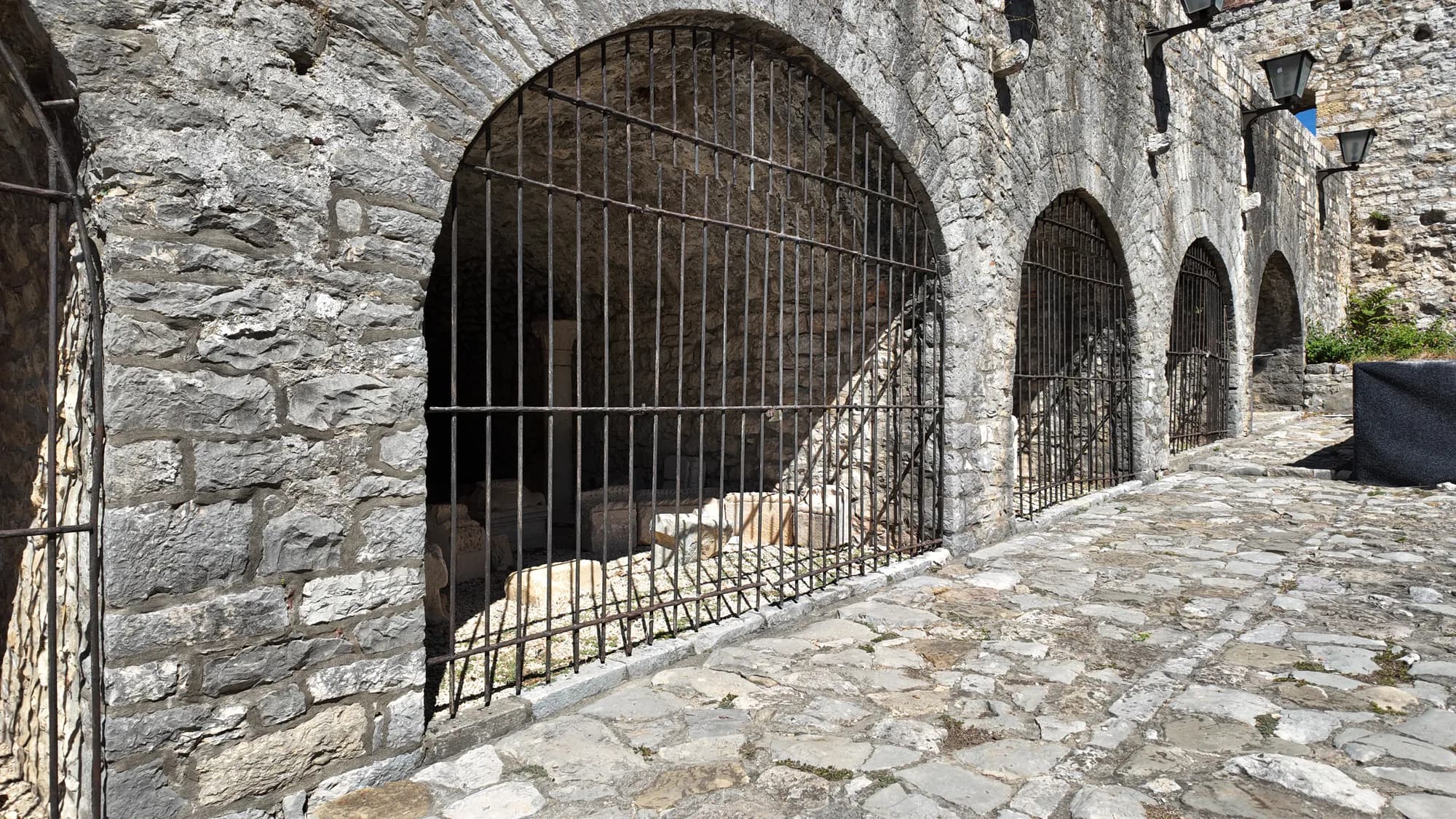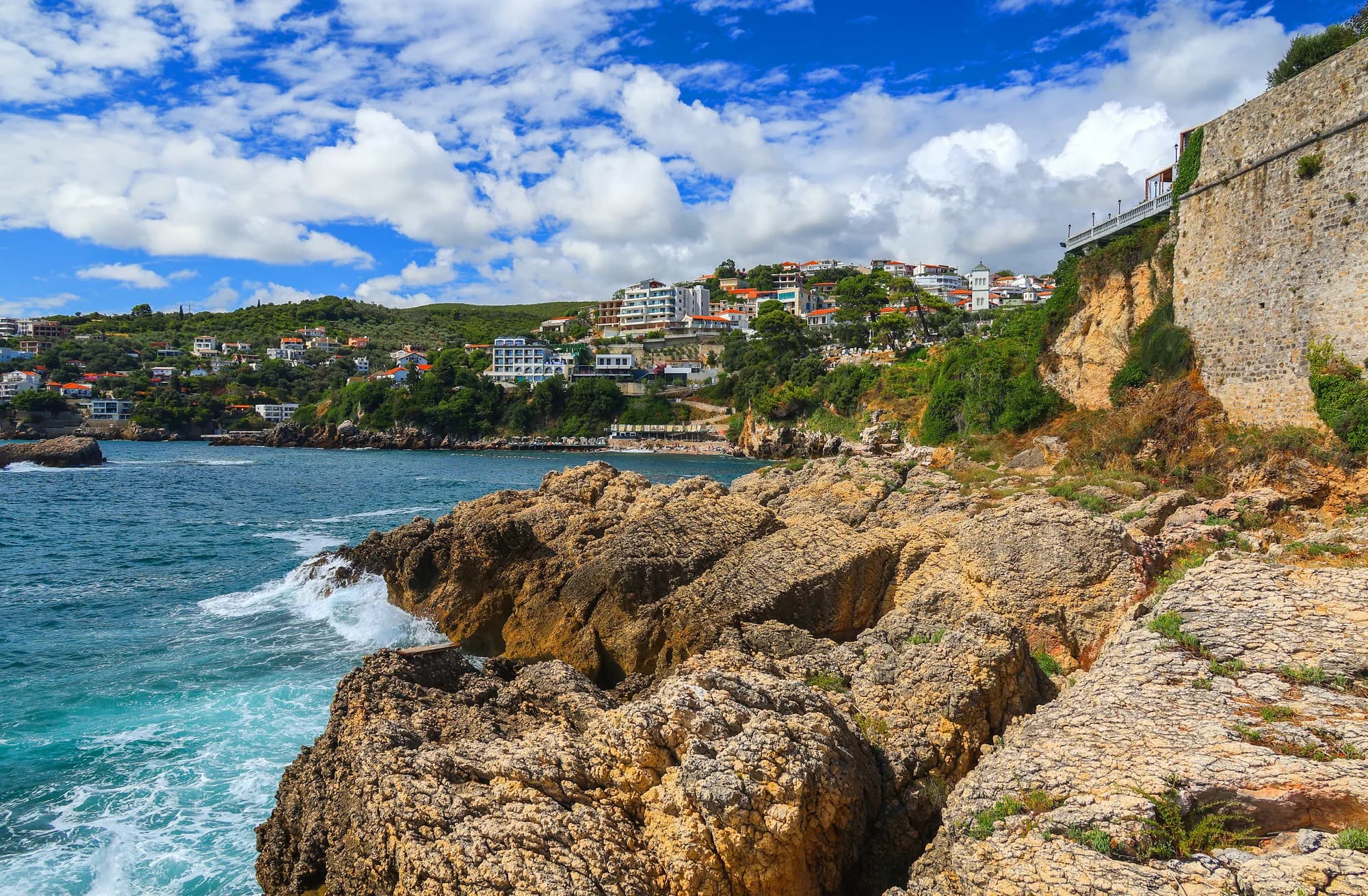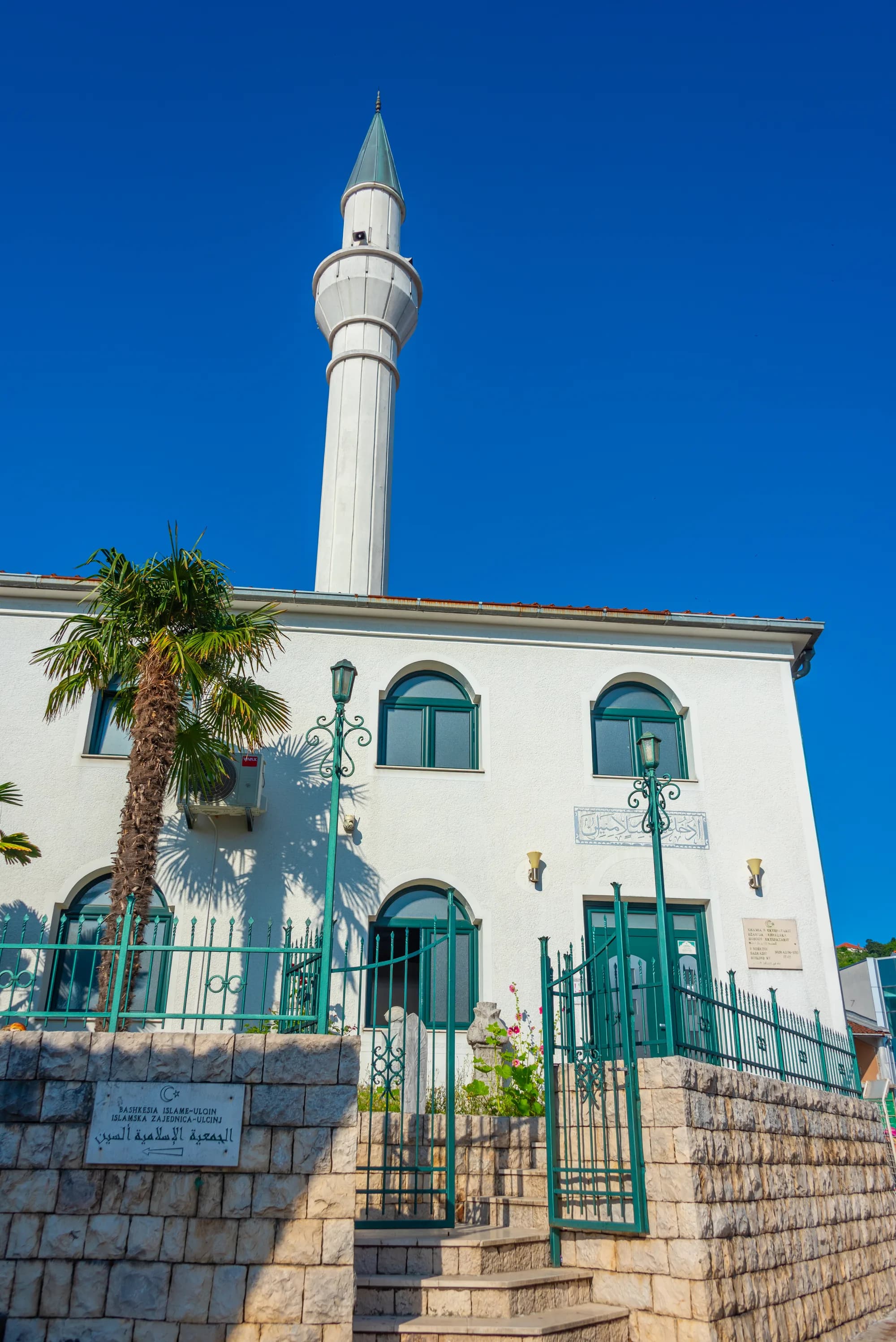
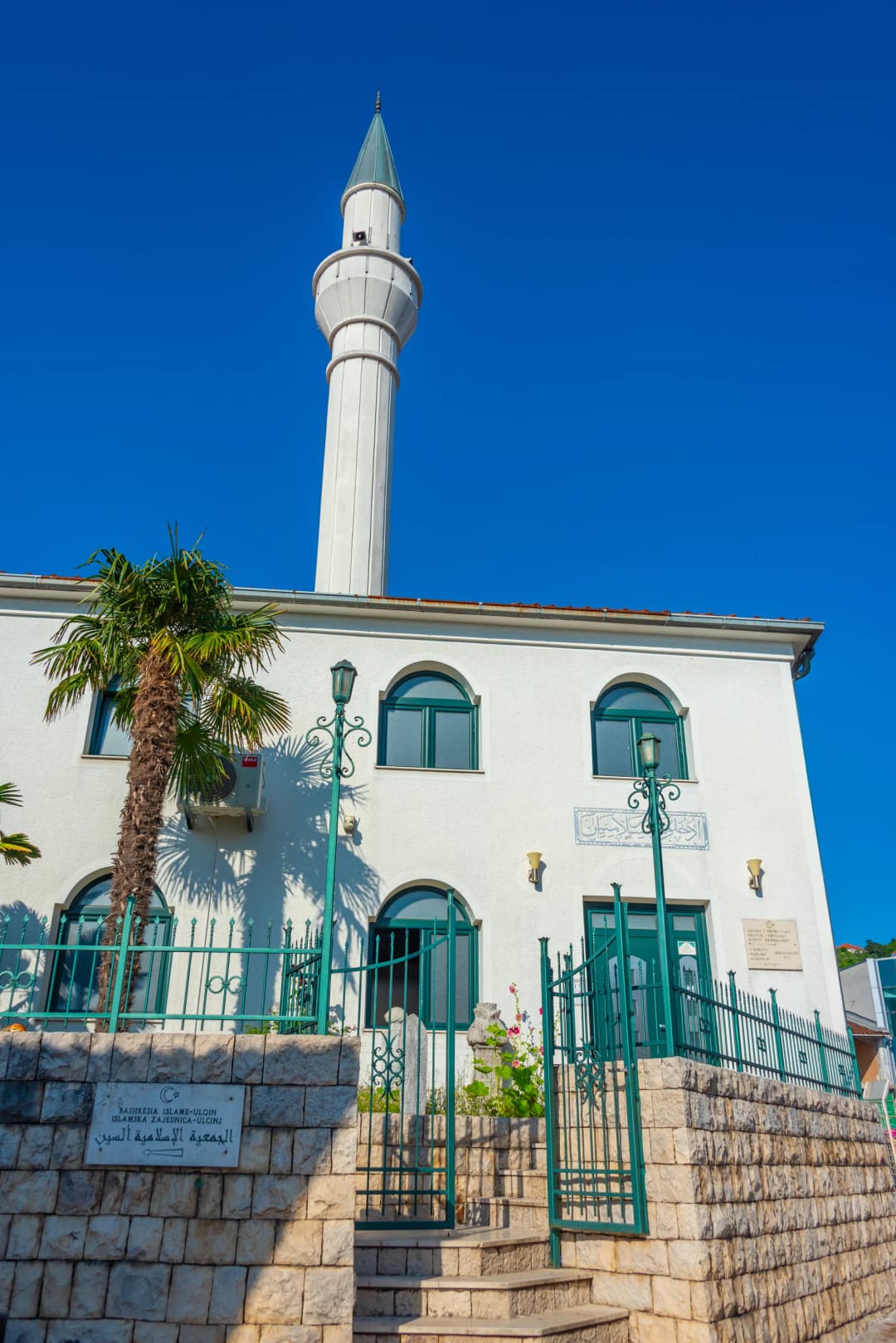
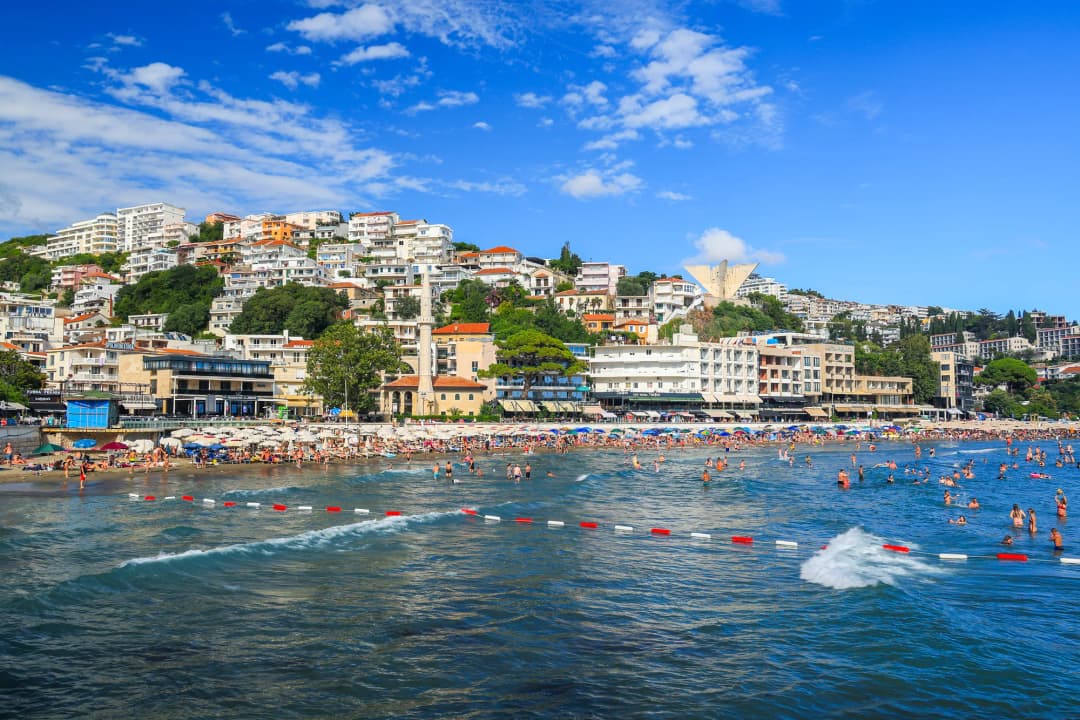
The Sailors’ Mosque stands at Ulcinj’s Pristan waterfront, immediately below the fortified Old Town and beside Mala Plaža. Its white minaret is easy to recognise; its history is harder. The safest account is not “a fourteenth-century mosque survived here.” It is this: a mosque associated with sailors has a widely repeated link to Ibrahim Pasha around 1798, was demolished in 1931, and returned as a modern reconstruction opened in 2012. Both the earlier origin and the exact identity of Ibrahim Pasha’s documented Ulcinj mosque require qualification.
Why the fourteenth-century date needs a label
The popular version says Moorish merchants built a mosque here in the fourteenth century, before the Ottoman capture of Ulcinj in 1571. That possibility fits a maritime town exposed to many Mediterranean contacts, but fit is not proof. A contemporaneous 2008 Mešihat report from the Islamic Community in Serbia quotes Ulcinj Islamic Community board president Avdo Gorana calling the pre-Ottoman origin an oral tradition accompanied by written traces that had not been researched. Ali Bardhi’s source-critical account likewise says the lack of written historical sources prevents a precise date and presents several hypotheses rather than a verdict.
The surrounding chronology sharpens the problem. Montenegro’s submission for the Ulcinj Old Town Tentative List dates Venetian rule to 1421–1571 and Ottoman rule from 1571. A fourteenth-century mosque would therefore be an unusually early Islamic foundation on this shore and requires unusually strong evidence. None of the reviewed accessible sources supplies a dated deed, inscription or archaeological layer proving that century. This guide preserves the tradition while refusing to turn it into a fact.
| Claim tier | What it rests on |
|---|---|
| Documented chronology | 1931 demolition · 2003 foundations · 2008–2012 reconstruction |
| Attributed late-18th-century link | Ulcinj mosque record · Rana identity unproved |
| Origin tradition | Fourteenth-century Moorish foundation |
| Note | Respecting tradition includes stating where documentation stops |
Source: mesihat.org, ul-info.com, ulcinj.travel
The Ibrahim Pasha attribution around 1798
Ulcinj’s Tourism Organisation attributes the mosque on Pristan to Ibrahim Pasha Bushatlija of Shkodra, brother of Mahmud Pasha. Its account says Ibrahim was badly wounded at the Battle of Krusi in 1796, built this mosque in gratitude around 1798, dedicated it to Ulcinj’s sailors, and ordered income from four Shkodra shops to cover its expenses. This is the official tourism narrative, not the full documentary conclusion.
Bardhi’s source-critical account narrows what the cited Ottoman evidence proves: an 1890 document concerns an Ibrahim-Pasha mosque in Ulcinj and income from four Shkodra shops, but does not identify that building as the mosque at Rana. Linking the record, the Krusi gratitude story and this exact site is an authors’ hypothesis that needs more research. Montenegro’s Islamic Community has also described several versions. The honest formulation is therefore “attributed to Ibrahim Pasha around 1798,” not “documented as his waterfront foundation.”
Why sailors are central to the name
The name appears in Montenegrin as Džamija pomoraca and in Albanian as Xhamia e Detarëve. The 2008 Mešihat report notes that local media had often used Marinarëve, while language consultation favoured Detarëve. Another name, the mosque at Rana, refers to sand or the beach setting. These are not rival monuments: they are names for the same waterfront mosque and its relationship with seafarers, shore and neighbourhood.
Local heritage records say sailors prayed here before departure and after return. They also describe a lamp—feral—atop the old stone minaret whose light signalled proximity to Ulcinj. That makes “lighthouse” a meaningful shorthand, but it needs limits. The evidence describes a visible maritime signal attached to the old minaret; it does not establish a formally charted lighthouse service, continuous operation across centuries, or any navigation function for the rebuilt minaret today.
| Place | Position |
|---|---|
| Fortified Old Town | Above; UNESCO Tentative List entry |
| Sailors' Mosque · Pristan | Below the walls |
| Mala Plaža | Adjacent shoreline |
Source: ulcinj.travel, scan-discover.me, whc.unesco.org
1931: loss without an invented perpetrator
Tourism, Islamic Community and local heritage sources agree that the old mosque was demolished in 1931. Some later retellings say “the military”; others attribute the act more broadly to the authorities or ideology of the Kingdom of Yugoslavia. The reviewed material does not consistently document the executing unit, order or legal process. The defensible statement is that the authorities removed it in 1931. Naming a more specific perpetrator requires the missing archival order.
That distinction does not soften the loss. The working mosque disappeared from the seafront, and the site later became parking. But precision matters especially in a layered town. Our guide to Ulcinj’s Church-Mosque shows how quickly a simplified label can hide several successive uses; the story of Sabbatai Zevi in Ulcinj demands the same separation of record, inference and legend.
From foundations in 2003 to reopening in 2012
In April and May 2003, a working group formed by Ulcinj’s museum, at the Islamic Community’s request and with heritage-authority permission, investigated the site. The work identified the earlier foundations. That finding matters, but it does not date the first building to the fourteenth century: a footprint and a construction century are different claims.
On 3 April 2008, Rifat Fejzić, head of Montenegro’s Islamic Community, and Ulcinj municipal president Gzim Hajdinaga laid the foundation stone for reconstruction beside Mala Plaža. A contemporary opening report says building proceeded on the preserved foundations. On Friday, 1 June 2012, the reconstructed mosque formally opened and hosted the first Friday prayer there after roughly eight decades.
| Date | Event |
|---|---|
| c. 1798 | Site attribution |
| 1931 | Demolished |
| 2003 | Foundations studied |
| 2008 | Rebuilding starts |
| 1 Jun 2012 | Mosque reopens |
| Caveat | Earlier origin: possible and remembered, but not precisely dated |
Source: ulcinj.travel, ul-info.com, mesihat.org, islamskazajednica.ba
Is today’s mosque an original monument?
No—not in the usual material sense. The building seen today is the product of the 2008–2012 reconstruction. Earlier foundations anchor it to the historic site, and photographs and communal memory informed the return, but an eighty-one-year gap separates demolition from reopening. “Reconstructed on the earlier site” is more accurate than “the fourteenth-century mosque.”
A scholarly survey of Ulcinj’s Islamic-oriental heritage describes the town’s mosques as part of an Istanbul-Balkan tradition: a unified prayer space, restrained architectural treatment, shallow-relief mihrabs, wooden minbars and slender minarets. That typology helps explain the design language, yet it does not make every visible surface old. The reconstructed mosque is simultaneously a working religious building, a recovered urban silhouette and a twenty-first-century act of remembrance.
| Layer | What it holds |
|---|---|
| Historic building | Sailors' worship; lamp tradition; demolished 1931 |
| Site evidence | Foundations identified in 2003 research; date not proved by footprint |
| Current mosque | Built 2008–2012; active worship; recovered silhouette |
| Takeaway | Strongest continuity is location, name, use and community memory |
Source: ul-info.com, mesihat.org, islamskazajednica.ba, ceeol.com
Practical guide to a respectful visit
The mosque is on the Pristan promenade beside Mala Plaža, at the foot of the Old Town approach. The exterior is visible from public space and takes five to ten minutes to appreciate. No official tourist hours or guaranteed interior-access policy was found. Treat the building first as an active mosque: do not enter during prayer, events or cleaning; ask permission if a door is open; and accept a closed door without treating it as a failed attraction.
| Question | Reliable answer | Best action |
|---|---|---|
| Can I see the exterior? | Yes, from the public Pristan waterfront. | Keep entrances clear and avoid photographing worshippers without consent. |
| Can I enter? | Possibly, but no visitor timetable was verified. | Ask locally and visit outside prayer or community events. |
| What should I wear? | Dress that covers shoulders and knees is the cautious default. | Follow any posted instruction; remove shoes only when entering the prayer space. |
| Is it step-free? | No current accessibility audit was found; the photographed entrance has steps. | Confirm assistance and the usable entrance directly before relying on access. |
| Is there a fee? | No verified admission policy was found. | Do not assume a paid attraction or promise free interior access. |
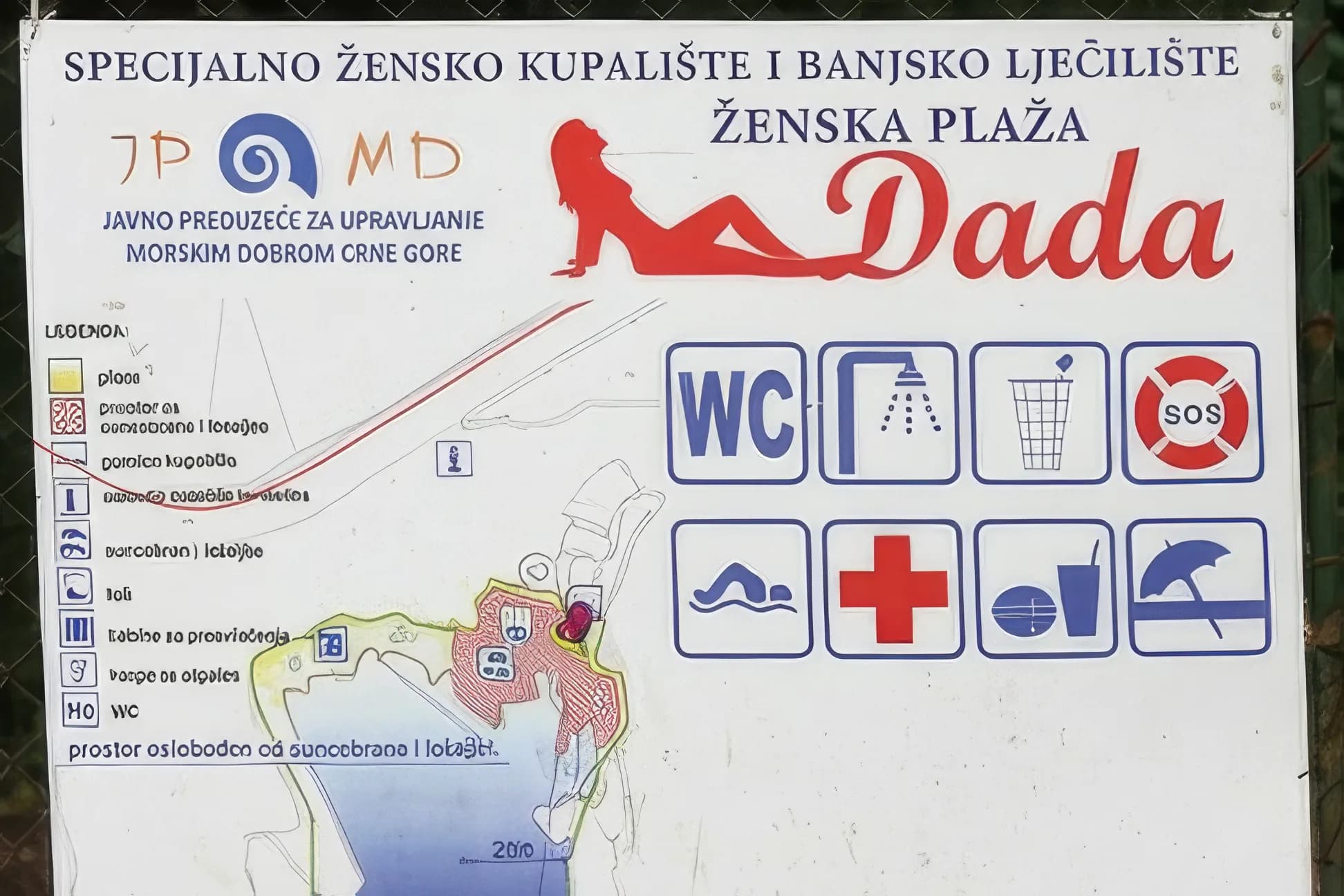
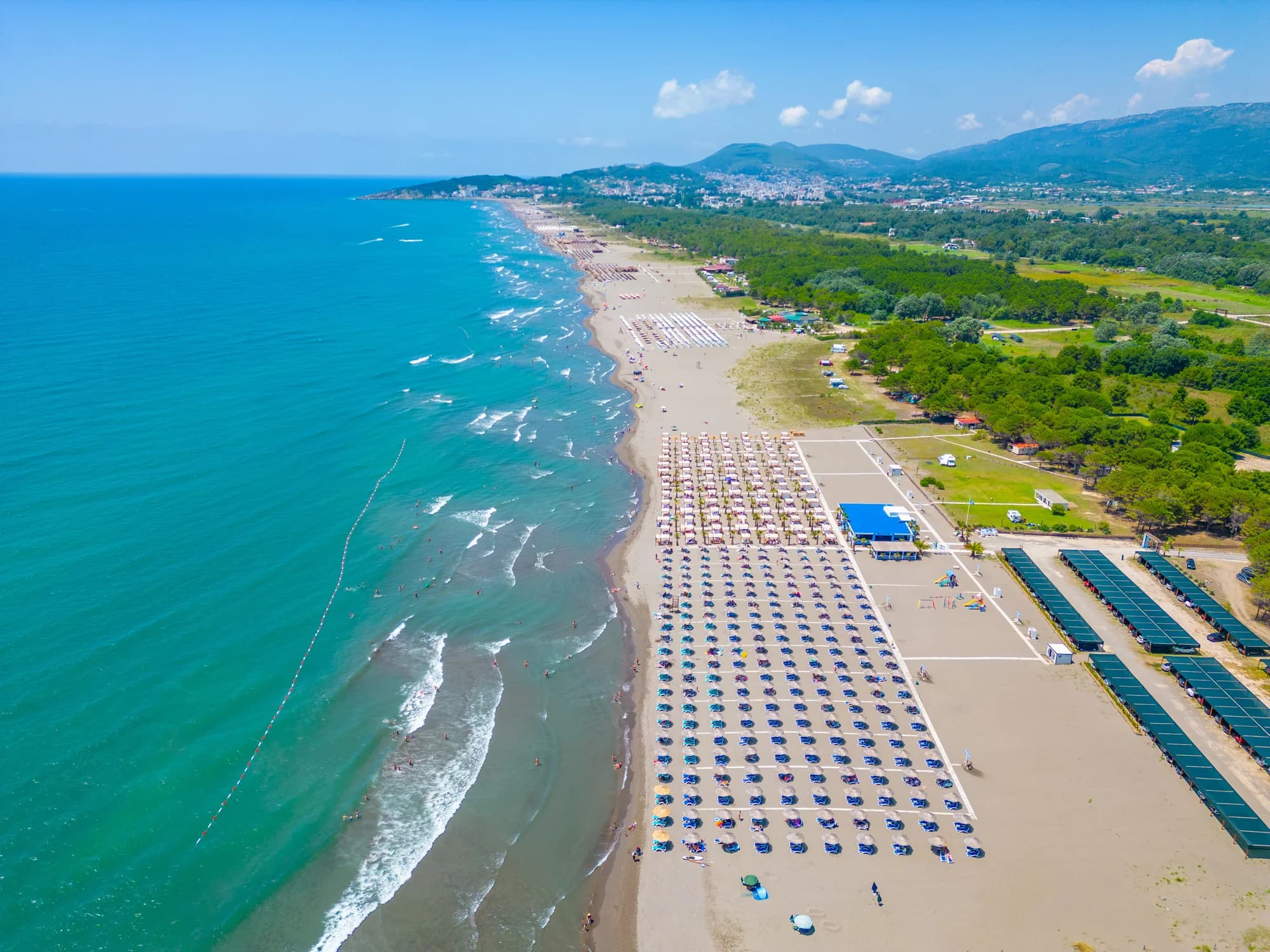
Summer brings beach crowds directly around the site, so early morning is calmer for the waterfront exterior, subject to worship. For a coherent half-day, look at the mosque from Pristan, climb to the Old Town, then return along Mala Plaža. The crowded urban beach is not the same experience as Velika Plaža, while the women-only bathing tradition at Ženska Plaža requires its own etiquette.
To continue the maritime theme beyond central Ulcinj, compare the recovered mosque landmark with the traditional fishing structures in our Port Milena kalimera guide. For a different relationship between worship, sea and settlement, the small harbour of Rose on Luštica offers a useful northern-coast contrast.
FAQ
Is the Sailors’ Mosque really from the fourteenth century?
That date belongs to a Moorish-foundation tradition, not a conclusively documented construction event. The reviewed source-critical account says the original period cannot be established precisely. Even the identification of this site with the Ibrahim-Pasha mosque documented for Ulcinj requires more research.
Did the mosque serve as a lighthouse?
Community heritage sources record a lamp at the old minaret as a signal to sailors approaching Ulcinj. It is fair to describe a landmark or lighthouse-like role, but not to claim a formally charted lighthouse or a current navigational function.
Is the present building original?
No. The earlier mosque was demolished in 1931. Foundations were investigated in 2003, reconstruction began in 2008, and the current mosque opened on 1 June 2012.
Can non-Muslims visit?
The exterior is visible from public space. No current tourist-entry schedule was found for the active mosque. If interior access is available, ask permission, dress modestly, avoid prayer times, follow posted guidance and do not photograph people without consent.
Is the Sailors’ Mosque a UNESCO World Heritage Site?
No. Ulcinj Old Town is on Montenegro’s UNESCO Tentative List, which is not the World Heritage List. The mosque stands below the walls, and the reviewed evidence does not establish a separate UNESCO designation for it.
Methodology and sources
This guide gives institutional and contemporary reports priority for dated events, uses a source-critical local study to frame unresolved origins, and uses scholarly architectural work only for typological context. It keeps four separate questions apart: whether an earlier prayer place existed, when it began, what the Ottoman record actually links to Ibrahim Pasha, and how much old material survives in the 2012 building. That method produces a less dramatic opening sentence, but a more durable history.