Risan’s Roman Mosaics preserve the floors of a large second-century building, including a rare multicoloured image of Hypnos, the god of sleep. Yet the site is more interesting than its familiar “Villa Urbana” label suggests. The public operator calls it an elite town villa; a detailed architectural study argues that it functioned as a hospitium, an inn or lodging house. The hours currently displayed by two museum sources also conflict.
The Roman defeat of the Illyrian king Gentius occurred in 168 BCE, roughly three centuries before the main mosaic programme. For the wider town, waterfront and accommodation context, start with the complete Risan guide.
Risan Roman Mosaics at a glance
| Topic | Details | Planning note |
|---|---|---|
| What survives? | A roughly 790 m² rectangular complex; six rooms retain mosaic floors and two retain fragments. | Not every documented room or fragment is necessarily exposed in the same way on every visit. |
| How old are the mosaics? | Specialists date the main programme to the second century CE, with later repairs probably in the fourth century. | The building’s use may have continued or changed beyond the original decorative campaign. |
| Was it a villa? | Muzeji Kotor and CANU retain the term villa urbana. | Piotr Dyczek argues that the plan and floor arrangement fit a hospitium, or lodging house. |
| What is the key image? | A reclining, winged young Hypnos in a multicoloured medallion. | None of the five licensed photographs in this article depicts the figure itself. |
| When is it open? | The operator page displays Tuesday–Sunday, 10:00–16:00, with Monday and January closures. | A March 2026 museum-network profile lists longer summer hours; confirm directly before relying on them. |
| What does entry cost? | The operator page displays €6 individual admission. | The page labels this as a 2024 tariff, so confirm the current price. |
| May I photograph? | The operator says photography requires special approval. | Ask before taking out a camera or phone. |
Gentius and Risan’s Roman period
A surviving ancient summary dates the Roman campaign against the Illyrian king Gentius to 168 BCE. Gentius was defeated, surrendered and was taken into Roman custody. Risan’s main mosaic programme followed roughly three centuries later.
Risan’s integration into the Roman world unfolded over generations. Political control, civic development and the second-century mosaic programme belong to different stages of the town’s history.
The settlement had Illyrian and Hellenistic phases before Roman rule. The ancient Boka overview traces those regional layers alongside Risan.
| Date | Event |
|---|---|
| 168 BCE | Gentius defeated |
| 2nd c. CE | mosaic programme |
| 4th c. CE | probable repairs |
| 1930 | Vuksan excavates |
| 1956–1960 | renewed work |
Source: livius.org, muzejikotor.me, leks.canu.ac.me
Villa urbana or hospitium? The label is genuinely disputed
Muzeji Kotor presents the complex as a villa urbana, a prestigious city house and representative work of Roman provincial architecture. CANU’s art encyclopedia uses the same conventional name while acknowledging an alternative. The rectangle, central open space and decorated rooms can indeed be read as a wealthy residence.
Dyczek’s published re-analysis reaches a different conclusion. He notes that the building occupied only part of an urban block, that an adjacent “Villa of the Meander” followed a different footprint, that front rooms could be entered from the street, and that two staircases imply substantial movement between floors. Repeated central-panel floor designs left usable space around them. Together, he argues, these features are more consistent with a hospitium—an inn or lodging establishment near the shore and ancient harbour—than with a private mansion.
The Hypnos image fits both readings. In a house it could mark a bedroom or sleeping suite; in an inn it could signal guest accommodation. The motif suggests sleep, but it does not identify the owner, room name or business model by itself.
| Reading | Evidence | Proposed by |
|---|---|---|
| Villa urbana | rectangular, symmetrical complex; central open space with rooms around it; costly mosaic decoration; Hypnos compatible with sleeping suite | Used by the public-site operator |
| Hospitium / lodging | some front rooms entered from street; repeated central-panel floor layouts; two staircases and guest circulation; near shore and ancient harbour | Proposed by Dyczek from plan analysis |
Source: muzejikotor.me, doi.org, leks.canu.ac.me
What the mosaic floors actually show
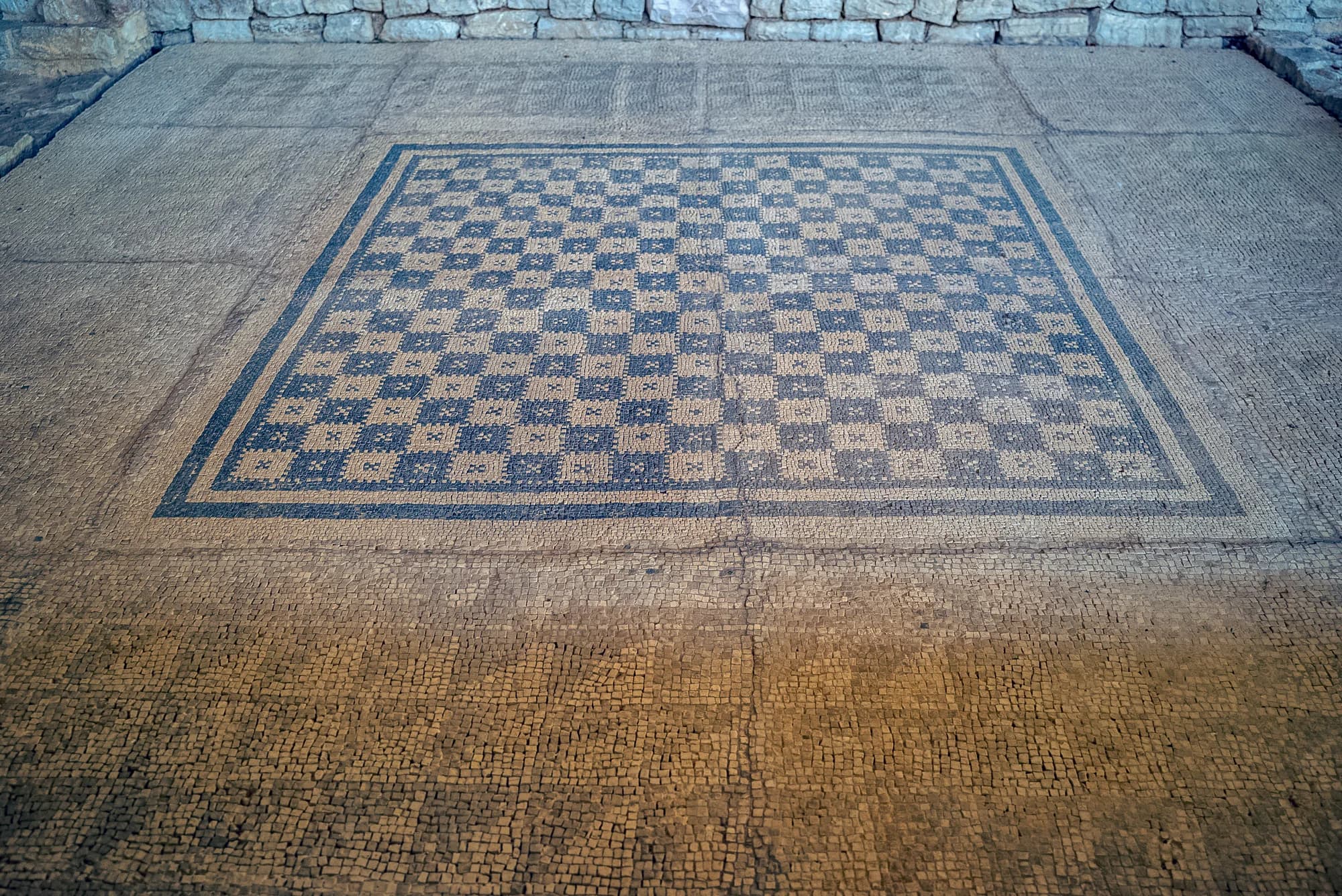
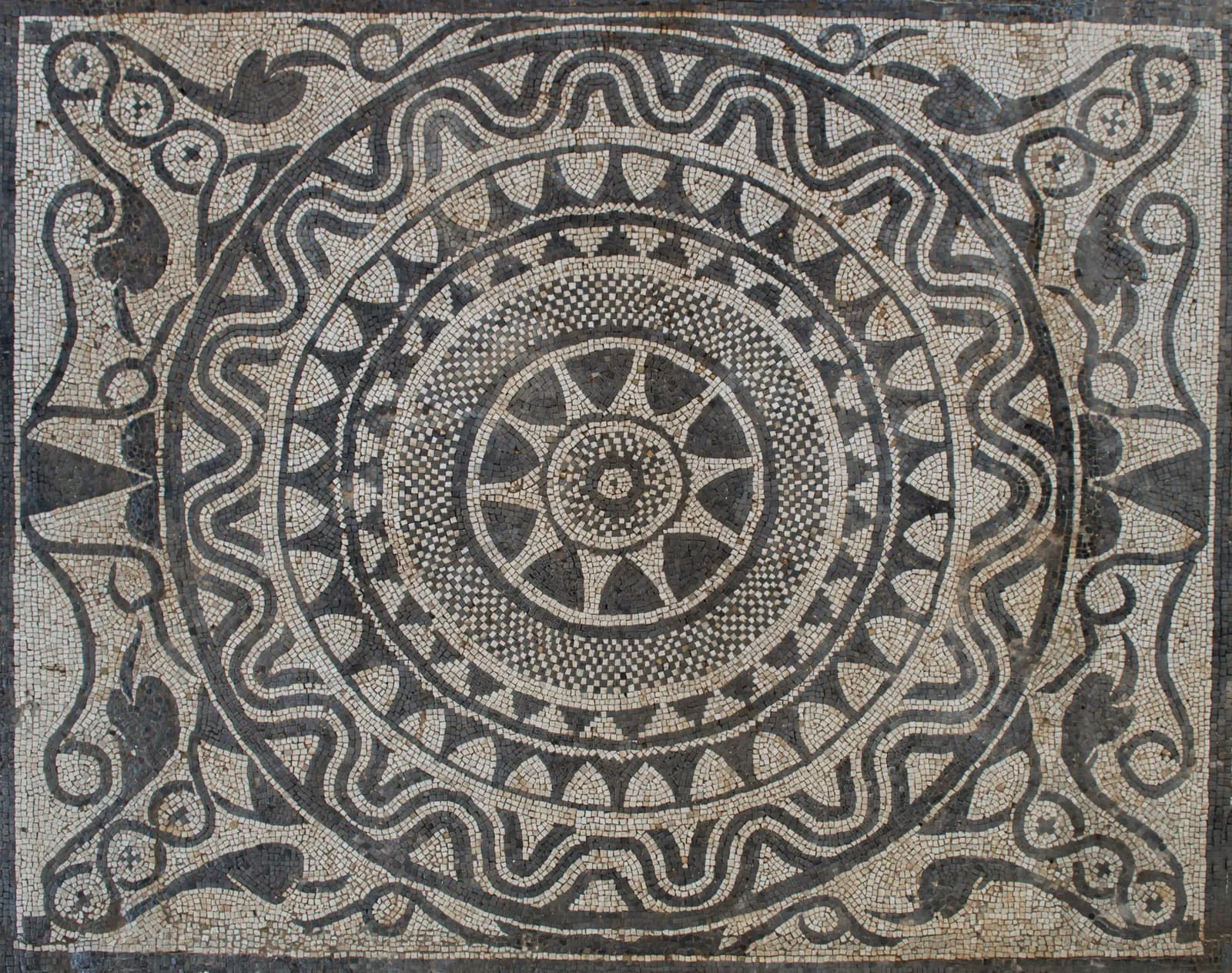
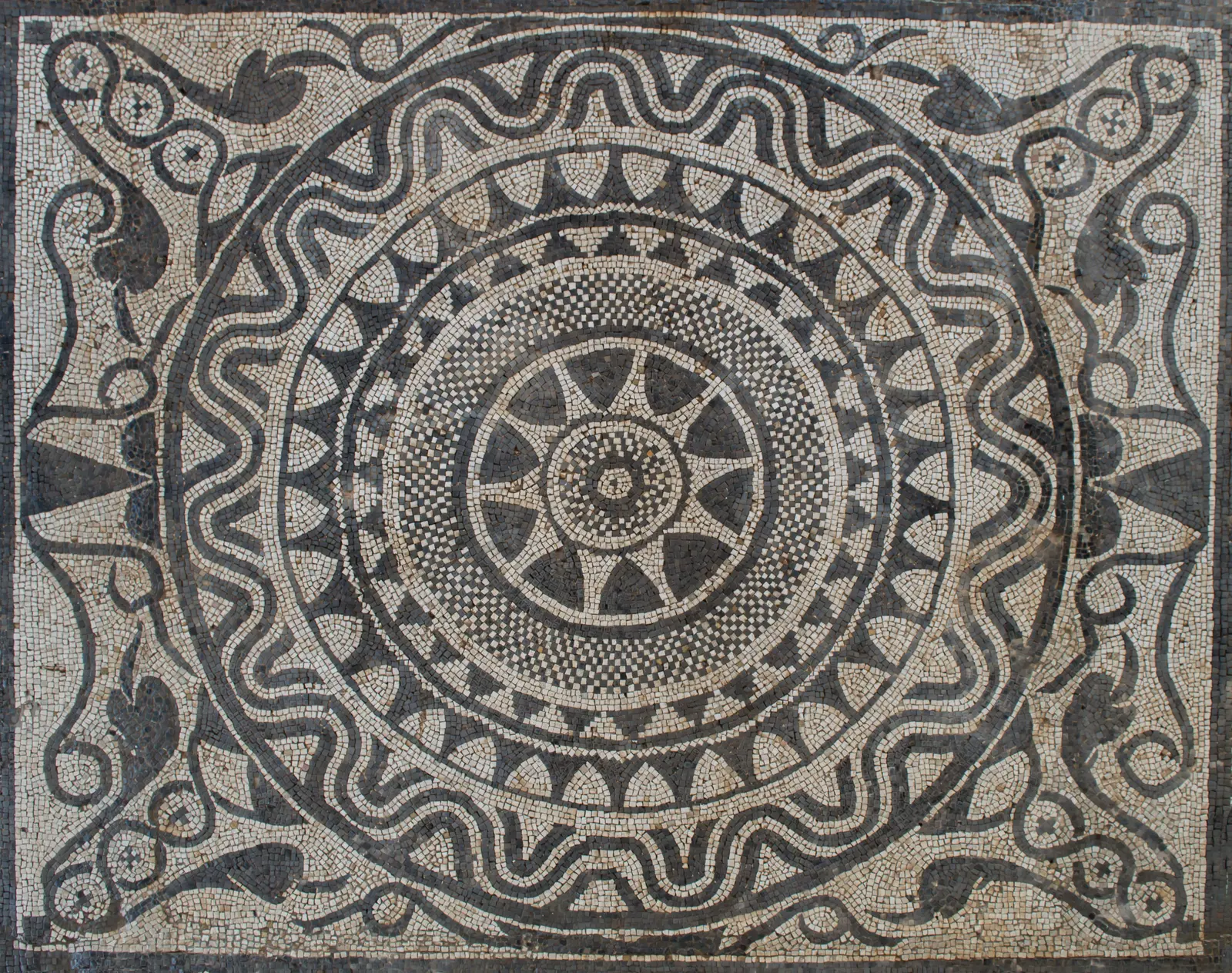
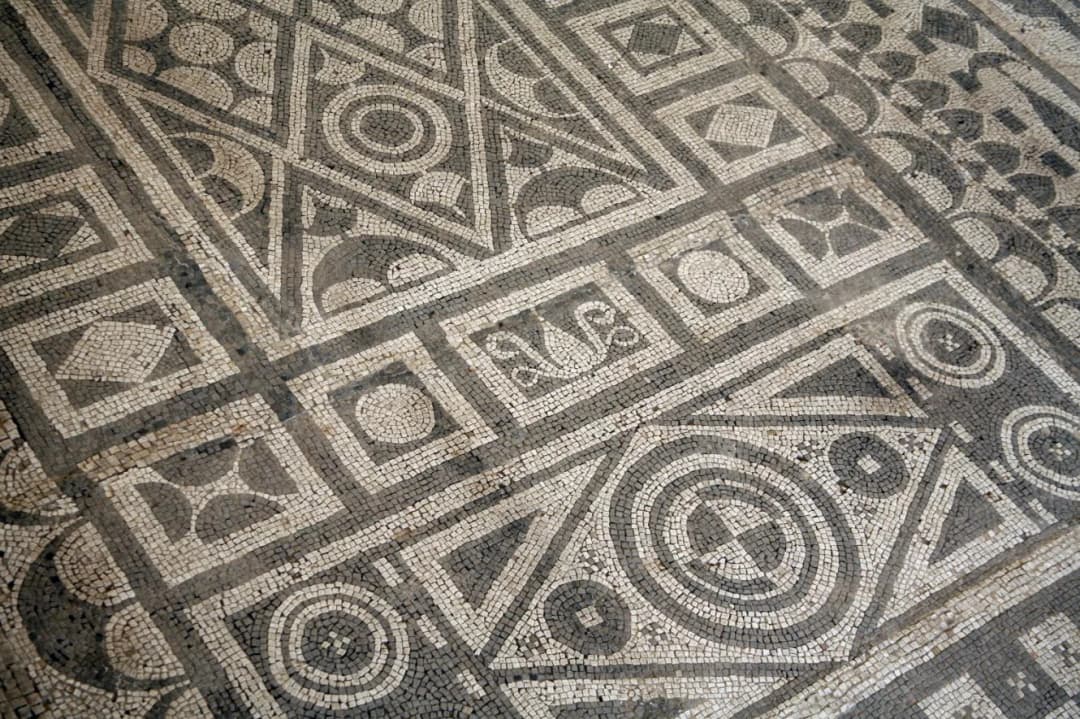
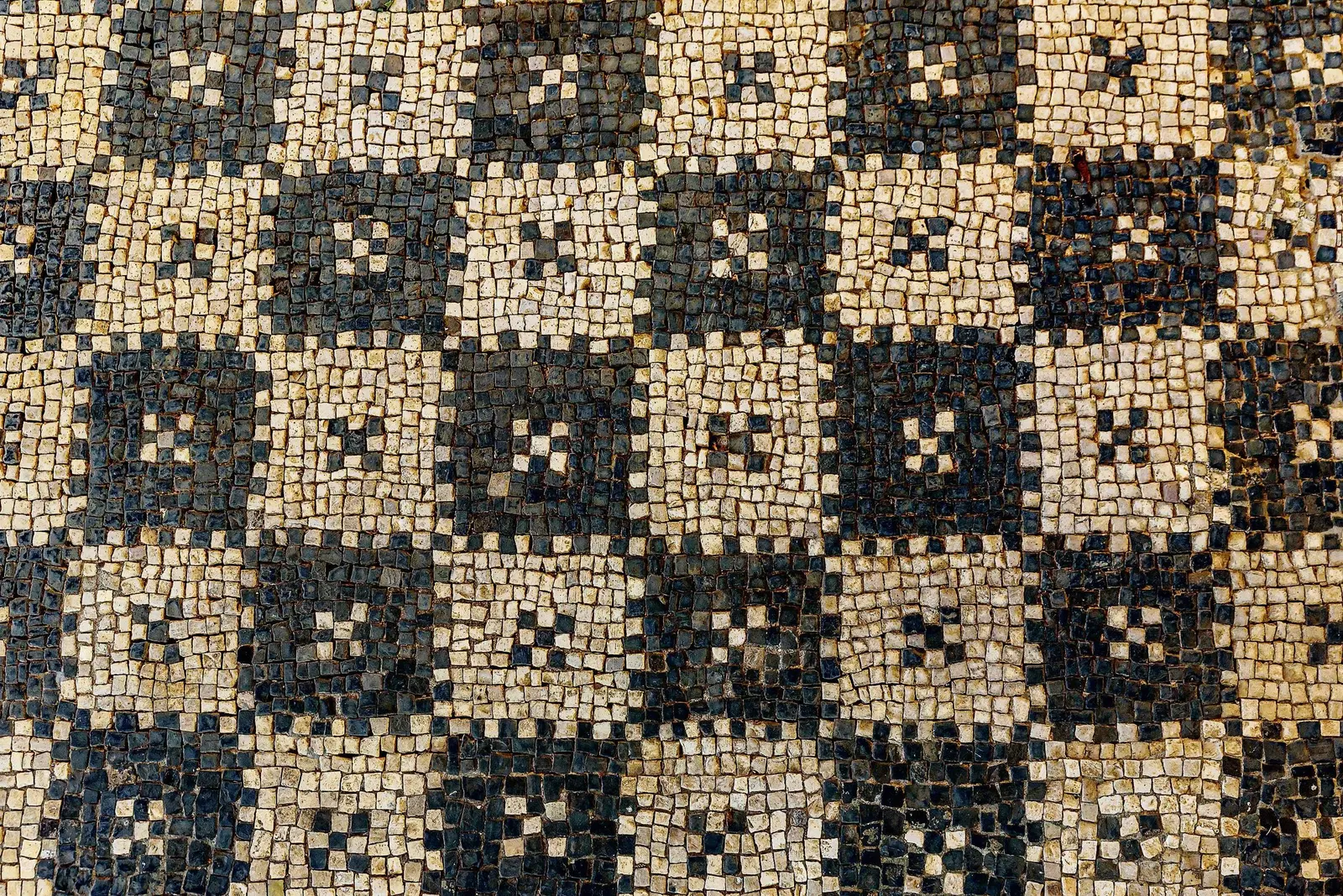
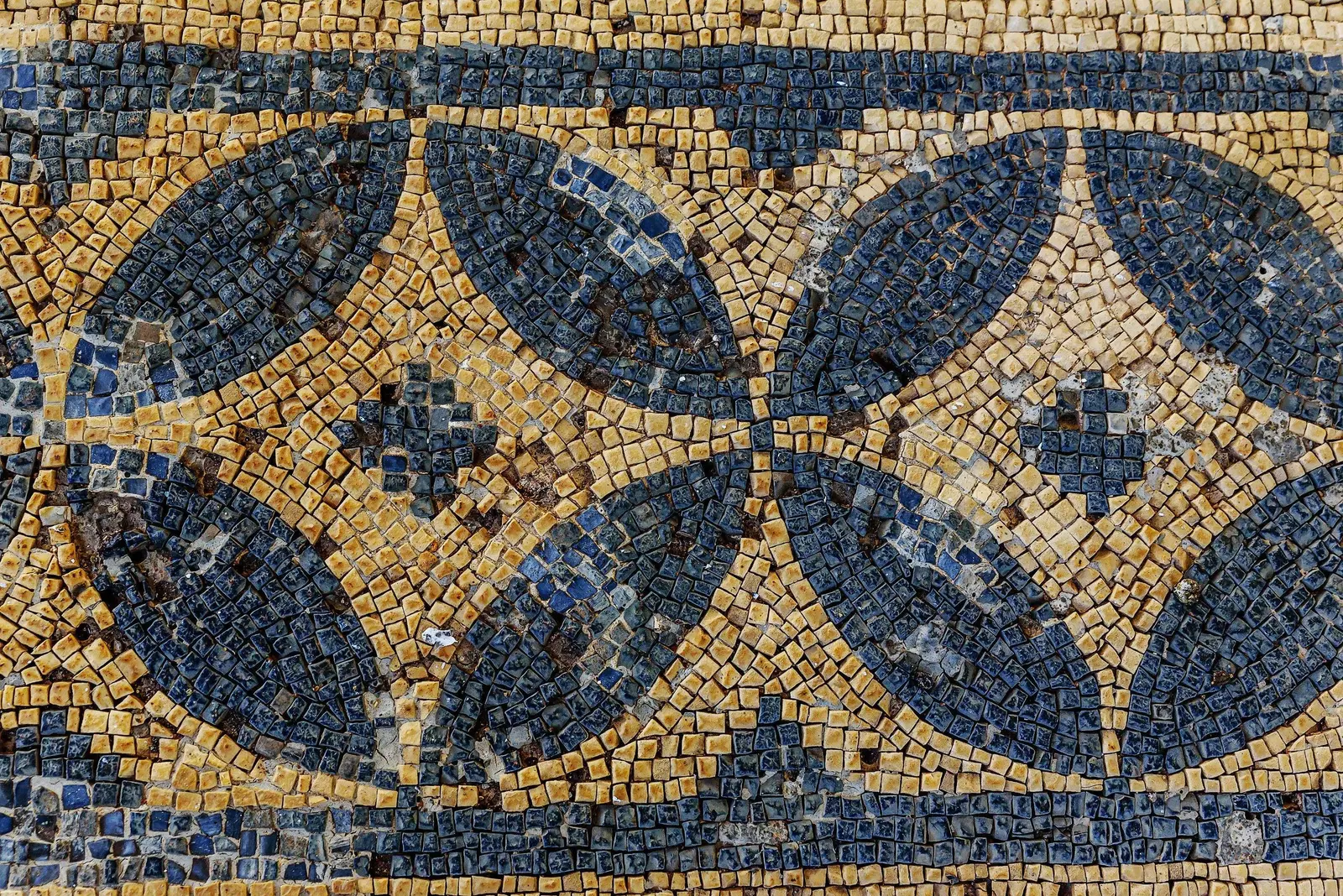
CANU records six rooms with preserved mosaic decoration and two more with fragments. Most floors use white, grey and black stone tesserae in opus tessellatum: relatively regular cubes arranged into vines, heart-shaped leaves, buds, meanders, circles, semicircles, diamonds, rosettes, triangles and checker fields. The forms are deliberately flat and ordered rather than illusionistic.
The floors show opposed curves, leaf-like units and interlocking geometries, but shape resemblance alone is not enough to identify an animal or cult symbol. The academy’s catalogue uses cautious geometric and floral terms for these patterns.
Hypnos: the figured panel the photographs do not show
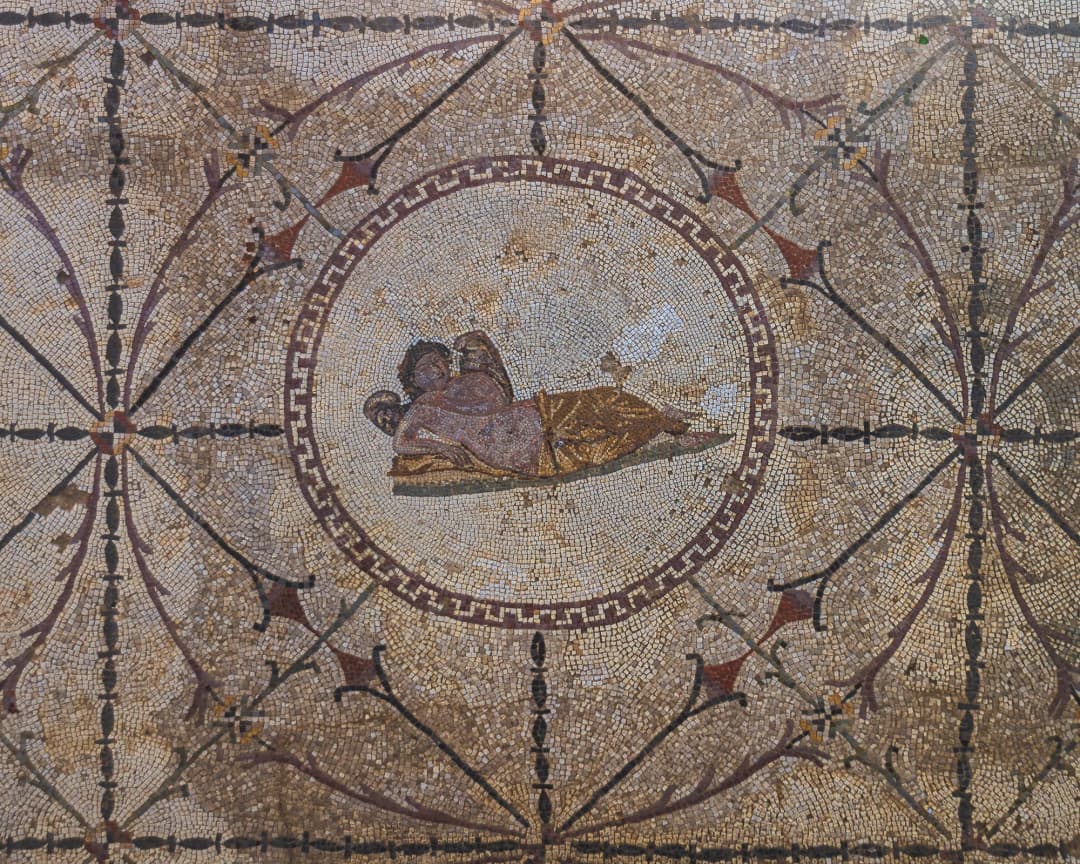
The celebrated floor differs from those close-ups. Its central field is divided into sixteen units with stylised floral decoration in white, green, blue, red and black. In the medallion, Hypnos appears as a half-naked young man reclining with crossed legs and folded wings visible behind his shoulders. CANU describes poppy buds around the composition, an apt plant for the god of sleep.
The fine figured work is identified as opus vermiculatum, using small tesserae and curving lines suited to modelling a body and face. The other floors are primarily opus tessellatum.
Muzeji Kotor identifies the reclining figure as Hypnos, the Greco-Roman personification of sleep, known as Somnus in Roman tradition. CANU describes the Risan representation as unique in Roman mosaic art.
| Feature | Other preserved floors | Hypnos medallion |
|---|---|---|
| Technique | opus tessellatum | opus vermiculatum |
| Palette | white · grey · black | adds red · yellow · green · blue |
| Subjects | geometric + floral fields | reclining winged young man |
Source: leks.canu.ac.me, muzejikotor.me
How to look at the floors
Begin with the building plan before concentrating on individual motifs. The preserved rooms were arranged around a central open space, and their thresholds, wall lines and floor fields reveal how movement through the complex was organised. This spatial view also makes the debate over the building’s use easier to understand: a private residence and a lodging house could both contain decorated sleeping spaces, but street access and circulation between rooms carry different implications.
Next compare the broad palette of the geometric rooms with the Hypnos medallion. Black, grey and white tesserae create borders, circles, diamonds, rosettes and plant forms across most of the preserved floors. The Hypnos composition adds red, yellow, green and blue and uses finer pieces to form the reclining body and face. Colour and tessera size therefore distinguish the figured panel even before its subject is identified.
Follow each pattern from its border toward its centre. Repeated bands frame the main field, while circles, leaves and interlocking forms control the visual rhythm. The central panels leave open floor around them, an arrangement that Dyczek connects with the placement of beds or other furnishings. The same layout can still be viewed within the villa interpretation, so the floor plan remains important to both readings of the building.
Finally, look for changes in texture and material. Some irregular sections belong to later ancient repairs, probably made in the fourth century with coloured limestone and ceramic fragments. Other changes reflect excavation damage, exposure and modern conservation. Together, these layers turn the floors into a record of construction, continued use, rediscovery and preservation extending far beyond their original second-century design. A slow circuit makes their subtle contrasts easier to see.
Ancient repairs and modern conservation
The floors are not untouched snapshots of one second-century day. CANU identifies later interventions, probably from the fourth century, using coloured limestone pieces and ceramic fragments. Those repairs show continued use and maintenance in antiquity. Modern conservation adds another layer, but it should not be confused with the ancient patching.
Dušan Vuksan excavated the building in 1930. According to Muzeji Kotor, an Italian archaeologist reopened the mosaics in 1942 and reburied them without prior protection, causing damage. Systematic work resumed in 1956 and continued to 1960.
Dyczek’s interpretation also considers the neighbouring “Villa of the Meander,” the differing building footprints and the ancient shoreline. The mosaic shelter forms one part of Risan’s larger archaeological landscape.
At World Heritage scale, Risan belongs within the 14,600-hectare Natural and Culturo-Historical Region of Kotor, not a separate UNESCO inscription. A 2025 UNESCO-ICOMOS advisory mission warned about urbanisation pressure and inappropriate conservation interventions in Risan. Visitors should stay on the route, avoid touching the remains and respect photography controls.
Practical visit planning for 2026
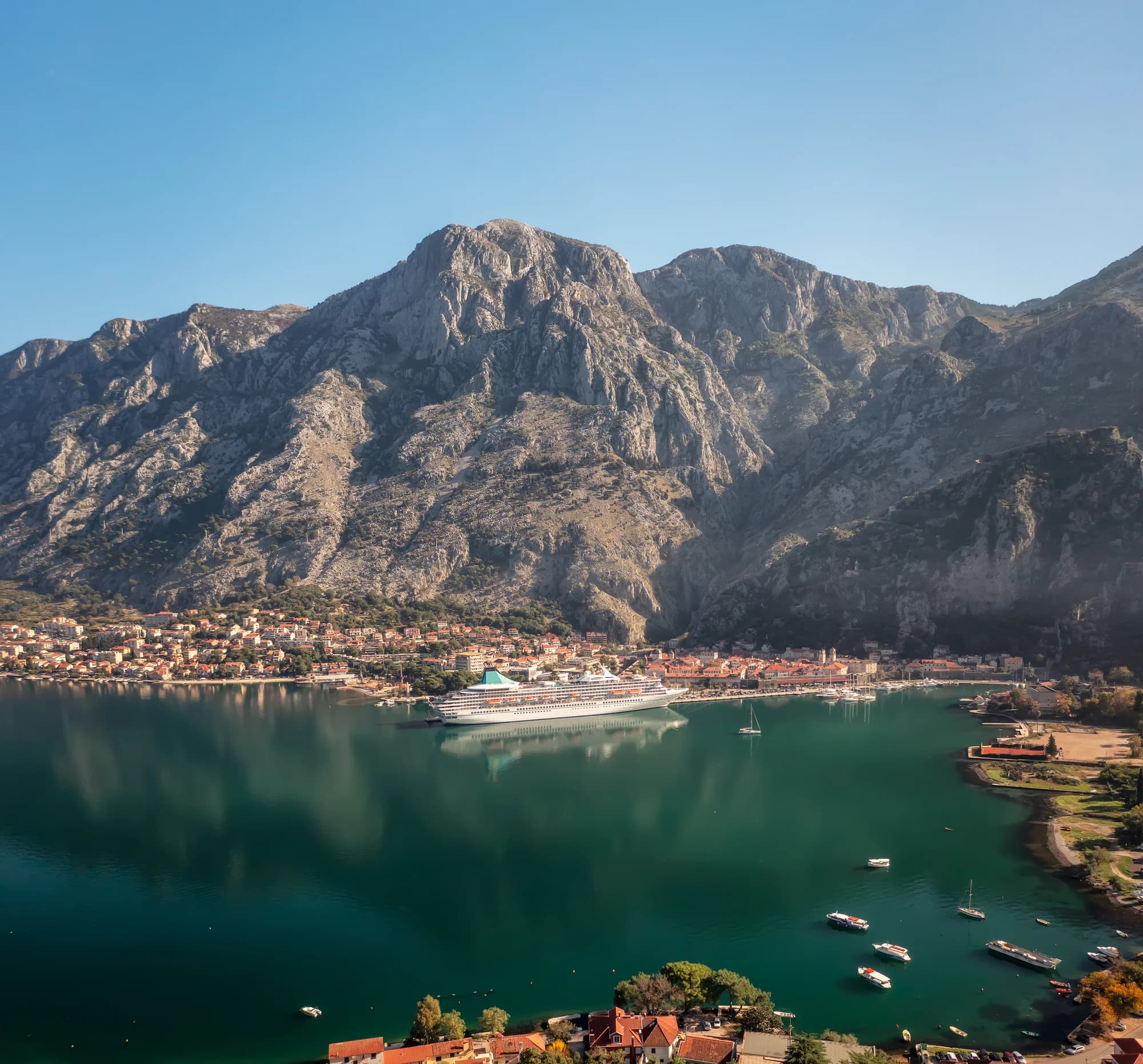
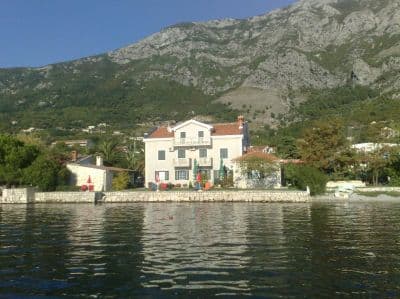
The mosaics are in Risan on the inner bay. Once in the compact town, follow current local signs to “Rimski mozaici.” For unhurried viewing, allow roughly 30–45 minutes, then add time if staff interpretation is available.
Hours: use the conservative overlap
The official Muzeji Kotor page currently displays 10:00–16:00 Tuesday–Sunday in both winter and summer, with closure every Monday, throughout January, on Orthodox Easter, 1 May, and 13–14 November. A museum-network profile published in March 2026 instead lists 10:00–16:00 in winter and 08:00–20:00 from 15 April to 15 October.
Because the two published schedules conflict, do not build a same-day route around an 08:00 opening or an after-16:00 visit without direct confirmation. The safest common window is Tuesday–Sunday, 10:00–16:00, outside the named closure dates. Seasonal events, conservation or staffing can still change access.
Tickets, photography and access
The official page displays €6 individual entry and labels the amount as a tariff effective from 1 January 2024. Confirm the current price before budgeting.
The same page states that photography is not permitted without special approval. Ask staff first; do not infer permission from images online. Published material does not provide enough detail to guarantee a step-free route, accessible toilet or wheelchair turning space. Travellers who need those features should contact Muzeji Kotor before leaving. Mosaic surfaces remain below the visitor route: do not step across rails, lean equipment over a floor or touch exposed masonry.
How to combine Risan without rushing the mosaics
Choose one of three route styles rather than collecting every nearby name:
- Archaeology first: pair the Risan floors with the Roman mosaics at Mirišta near Petrovac only if your wider itinerary already crosses the coast. The comparison is about site context and conservation, not a short walk between two villas.
- Inner-bay day: use the Risan–Perast–Kotor practical route for transport decisions, or the separate inner-bay cultural reading if architecture and chronology matter more than checklists. Do not assume the two articles are extra destinations.
- Longer road trip: place Risan into the 10-day Montenegro itinerary rather than squeezing it between long border transfers.
If arriving from Croatia, solve the border day first with the Dubrovnik-to-Kotor transport guide. A delayed crossing makes a late-afternoon mosaic visit risky, especially while published closing times disagree. Travellers deciding how much time to devote to the fortified city after Risan can use the Kotor versus Dubrovnik comparison; it answers a trip-allocation question, not the archaeology.
Frequently asked questions
Are the Risan mosaics from the second or third century?
Muzeji Kotor and CANU place the main building and mosaic programme in the second century CE. CANU also identifies probable fourth-century repairs.
Was the building really a Roman villa?
That remains the public name and an accepted interpretation. Dyczek’s detailed plan study instead argues for a hospitium or lodging house. Visitors should treat “Villa of Hypnos” as a conventional label, not a closed functional diagnosis.
Is the figure Hypnos or Morpheus?
Muzeji Kotor and CANU identify the reclining winged youth as Hypnos, the god or personification of sleep.
Do the photographs here show Hypnos?
No. They show non-figural geometric and floral mosaics and the surrounding Risan landscape.
Can I take photos at the site?
The operator page says photography requires special approval. Ask staff before photographing, including with a phone.
What are the 2026 opening hours?
Two published sources disagree on summer hours. Both include 10:00–16:00 Tuesday–Sunday, while the 2026 network profile extends summer to 08:00–20:00. Confirm directly and remember the published Monday, January and holiday closures.
Is Risan Roman Mosaics a UNESCO World Heritage Site?
Risan lies within the wider Natural and Culturo-Historical Region of Kotor World Heritage property. The mosaic shelter is not separately inscribed as its own UNESCO property.