Muo: The Quiet Fishing Village with the Best Views of Kotor
Muo is a tiny fishing village directly across the bay from Kotor, offering the best panoramic views of the Old Town and a peaceful alternative to the bustling tourist centre.
Updated Originally published 19 min readby Pavle Obradović
Muo: Kotor's Unassuming Neighbour with a Million-Dollar View
Muo is a tiny fishing village on the western shore of the inner Bay of Kotor, directly across the narrow strait from Kotor's Old Town. With a population of around 800, Muo is the kind of place that most visitors glimpse only from the Kotor city walls or from the deck of a cruise ship. Yet for those who make the short journey across the bay, Muo offers something that Kotor itself cannot: a front-row, unobstructed view of one of the most beautiful walled cities in the Mediterranean, combined with the quiet, village atmosphere that Kotor has largely lost to tourism.
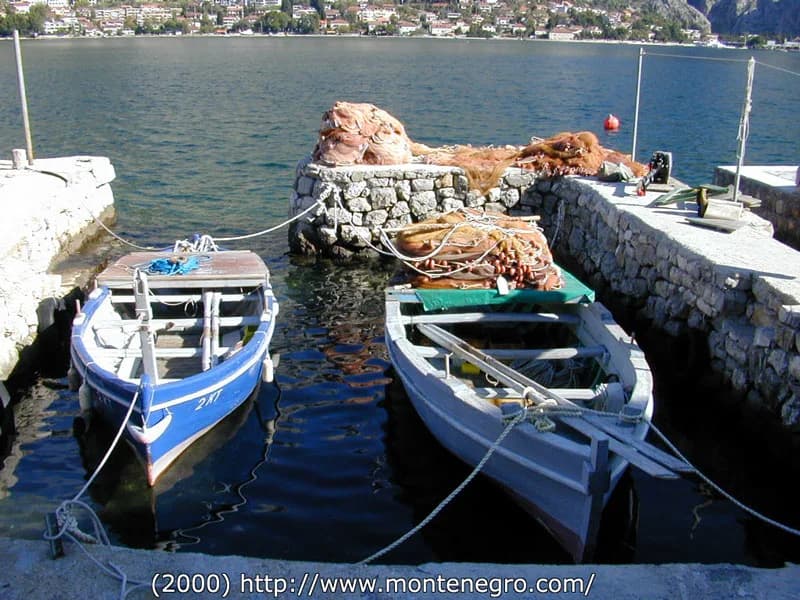
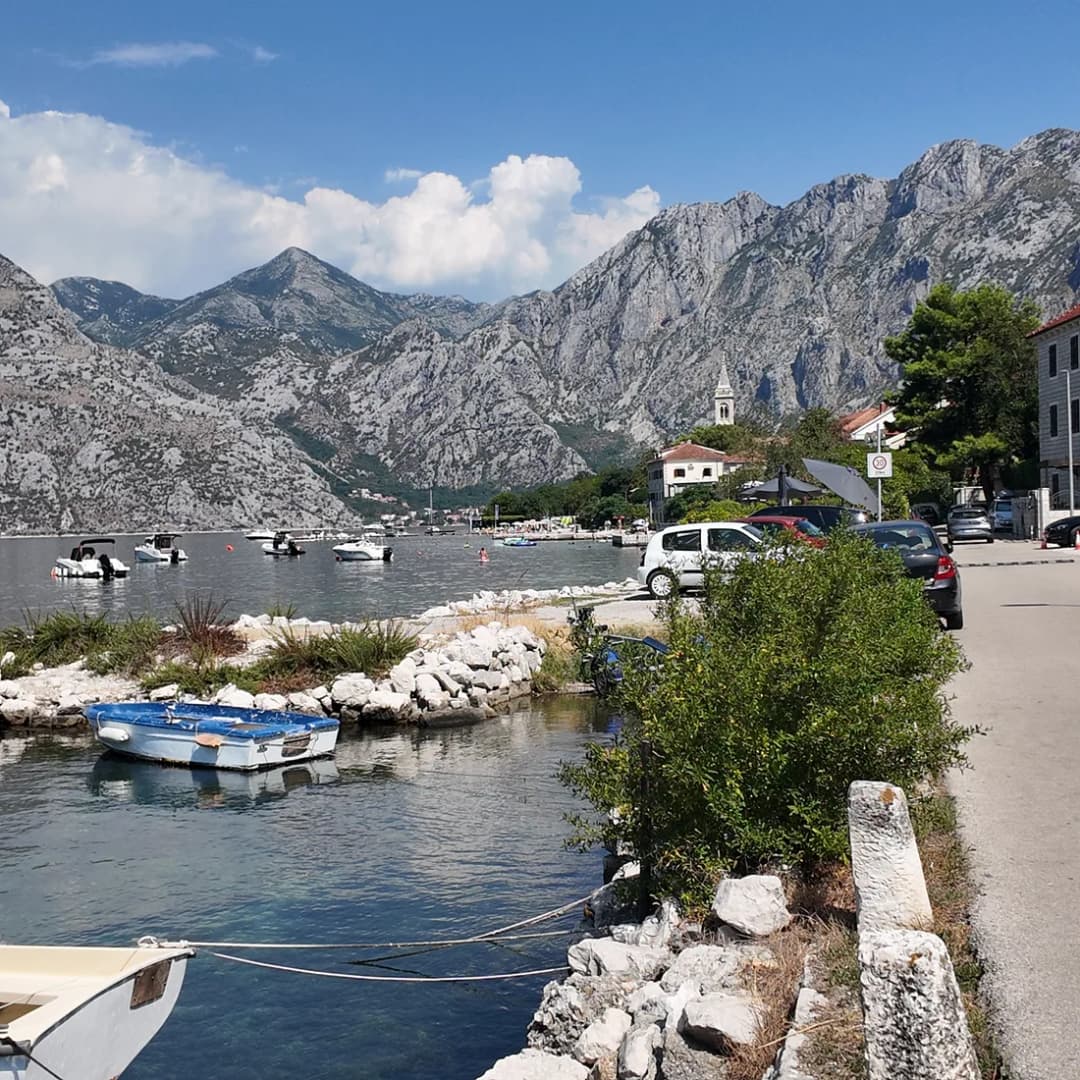
Muo's waterfront is lined with stone houses, fishing boats, and small cafes where locals gather in the evening. There are no major monuments, no ticket offices, no souvenir shops. What there is, instead, is an authentic slice of Bay of Kotor life and what may be the finest viewpoint of Kotor's Old Town and its mountain backdrop anywhere in the bay. The village has existed for centuries as a settlement of fishermen, sailors, and craftsmen who served the nearby city without quite belonging to it — a distinction that has, paradoxically, preserved Muo's charm while Kotor's Old Town has been transformed by mass tourism.
Location and How to Get There
Muo lies just 2 km from Kotor along the coastal road that follows the western shore of the inner bay. You can walk from Kotor's Old Town in about 30 minutes along the waterfront promenade, cycle in 10 minutes, or drive in 5 minutes. The road continues past Muo toward Prcanj and Stoliv further along the bay.
From Tivat Airport, the drive to Muo takes approximately 15 minutes via the Vrmac tunnel or 25 minutes along the scenic coastal road. From Dubrovnik Airport, allow around 90 minutes including the border crossing at Debeli Brijeg. There is no regular bus service to Muo specifically, but buses running the Kotor-Herceg Novi route pass through nearby Prcanj and can drop you within a 10-minute walk.
Water taxis also operate between Kotor and Muo during the summer season, offering a scenic arrival by boat that takes just five minutes across the strait. The village is small enough to explore entirely on foot in 15 minutes from end to end.
Best Time to Visit
Muo can be visited year-round, which is one of its advantages over more seasonal destinations. Summer (June through September) is ideal for swimming, evening strolls, and outdoor dining on the waterfront. The village is pleasant even on busy summer days in Kotor, as very few tourists make the journey across the bay.
Spring (April and May) and autumn (September and October) offer mild temperatures, fewer visitors, and beautiful light for photography. The low-angle sun during these months creates particularly dramatic effects on Kotor's city walls and the surrounding mountains, making the views from Muo even more spectacular than in high summer.
Winter in the Bay of Kotor is mild by European standards, with daytime temperatures typically between 8 and 15 degrees Celsius. Rain is more frequent from November through February, but dry winter days offer extraordinarily clear views of Kotor under dramatic skies, often with snow dusting the highest peaks of Mount Lovcen behind the city. The waterfront cafes remain open year-round, and there is something deeply satisfying about drinking a macchiato in Muo while gazing at Kotor on a crisp January morning with the bay perfectly still.
Things to See and Do
The View of Kotor Old Town
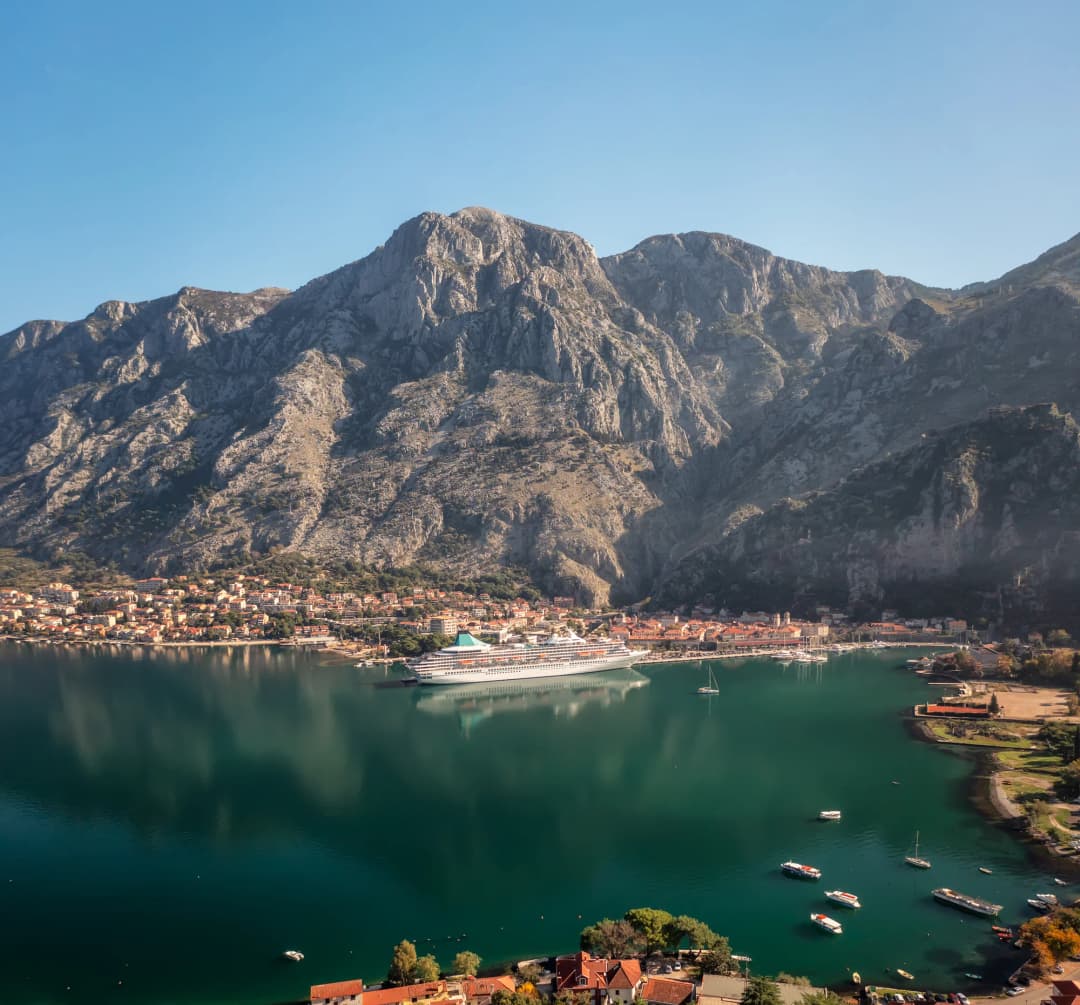
The primary reason to visit Muo is the view. From the waterfront, you look directly across the narrow strait at Kotor's fortified Old Town, with the city walls climbing dramatically up the mountainside to the fortress of San Giovanni at 1,200 metres. In the golden light of late afternoon or with the walls illuminated at night, this panorama is breathtaking. Photographers prize this angle above almost any other in the Bay of Kotor — it captures the full drama of the walled city against the mountain in a way that is impossible from within Kotor itself. The view at blue hour, just after sunset when the sky turns deep indigo and the walls are lit by floodlights, is particularly stunning and well worth timing your visit around.
Waterfront Strolling and Swimming
Muo's riva (waterfront promenade) is a peaceful strip of stone, a few cafes, and fishing boats pulled up on the shore. Walking along it at sunset, with the bay turning golden and Kotor glowing across the water, is one of the Bay of Kotor's simple pleasures. Swimming spots can be found along the waterfront — the water is clean and deep close to shore, though the bottom is rocky, so water shoes are helpful. There are several concrete bathing platforms where locals swim, and the water quality in the inner bay is surprisingly good given its sheltered position. A ladder descends into the water at several points along the riva, making access easy for all ages.
Church of St. Roch
The small Church of St. Roch (Crkva Svetog Roka) sits in the village and dates from the 15th century. While modest in size, it contains some interesting medieval stonework and is a peaceful spot to step out of the sun. The church reflects the Catholic heritage of the Bay of Kotor's western shore villages, which historically looked toward Venice for spiritual and cultural guidance. The church's feast day, celebrated on 16 August, is a village event with a procession, special mass, and communal gathering on the waterfront afterwards.
Kayaking Across the Bay
Several operators in the Kotor area offer kayaking tours that cross the bay to Muo and continue along the western shoreline. Paddling from Kotor to Muo takes about 20 minutes and gives you a water-level perspective on the bay's extraordinary beauty. Some tours combine kayaking with snorkelling and swimming stops along the rocky coast. The calm waters of the inner bay make this suitable even for beginners, and the experience of approaching Kotor's walls from the water is unforgettable. Sunset kayak tours are available in summer and are highly recommended.
Day Walks Along the Bay
From Muo, the coastal path continues south toward Prcanj and Stoliv — two other atmospheric Bay of Kotor villages. A leisurely walk along this road, with the bay on one side and stone houses on the other, takes you through some of the most photogenic scenery in the region. The walk to Prcanj is about 30 minutes and passes the grand Church of the Nativity of the Blessed Virgin Mary, one of the largest churches in the Bay of Kotor. Continuing to Stoliv adds another 30 minutes and brings you to the starting point for the hike up to the abandoned upper village of Gornji Stoliv.
Fishing Boat Excursions
Local fishermen in Muo sometimes offer informal boat trips around the inner bay, particularly in summer. These short excursions give you a chance to see the bay from the water, pass beneath the walls of Kotor, and visit swimming spots along the western shore that are inaccessible by land. Ask at the waterfront cafes about availability — these are informal arrangements rather than commercial tours, so flexibility and cash are essential.
Photography Walks
Muo is a genuine photographer's paradise, offering compositions that range from intimate village scenes to sweeping bay panoramas. The stone houses, colourful fishing boats, weathered maritime details, and the ever-present backdrop of Kotor provide endless material. The best times for photography are early morning, when the bay is often mirror-still, and late afternoon through sunset, when the light on Kotor's walls is at its warmest. Tripod users will find excellent positions along the riva for long-exposure shots of the illuminated city at night.
Where to Eat
Muo punches well above its weight for dining, with several restaurants that draw visitors specifically for their food and views.
Konoba Akustik is a small waterfront restaurant serving fresh seafood, grilled fish, and Montenegrin appetisers. The terrace looks directly across to Kotor Old Town, making dinner here on a summer evening genuinely magical. The buzara-style mussels and the grilled orada (gilt-head bream) are particular standouts. Prices are notably lower than equivalent restaurants in Kotor's Old Town.
Galion, located at the edge of Muo closest to Kotor, is a more upscale option with a refined take on Montenegrin seafood cuisine. The restaurant occupies a prime waterfront position with what many consider the single best view of Kotor available from any restaurant terrace in the bay.
Several smaller cafes along the riva serve coffee, drinks, pastries, and light snacks throughout the day. These are the ideal spots for a morning espresso with the best view in the Bay of Kotor, at a fraction of the price you would pay in Kotor's tourist-oriented Old Town. An espresso in Muo typically costs one euro, compared to two or three euros in Kotor's main square.
Where to Stay
Muo has a growing number of apartments and small guesthouses, many with stunning views of Kotor across the bay. Accommodation here ranges from simple studios suitable for a couple to larger apartments that can accommodate families, and several renovated stone houses offering characterful self-catering stays.
Staying in Muo is an excellent alternative to Kotor's often overpriced and noisy Old Town accommodation — you get the view, the quiet, and Kotor is just a short walk or water taxi ride away. Many visitors who discover Muo end up returning specifically to stay in the village rather than in Kotor itself, finding that the peace and views more than compensate for the short journey to the Old Town. Browse montenegro.com for properties in Muo and the western Bay of Kotor shore.
Practical Tips
Visit Muo in the late afternoon for the best light on Kotor's Old Town — the sun is behind you and the walls glow warm gold.
For the night view, come after dark when Kotor's walls are illuminated. The reflection in the still bay water doubles the effect.
The waterfront walk from Kotor to Muo is flat and easy, but bring water and sun protection in summer — there is little shade along the route.
If staying in Muo, you can use the water taxi to get to Kotor in the evening and avoid the walk back in the dark.
Parking in Muo is limited but free. There are a few spots along the waterfront road, but in peak summer you may need to park slightly outside the village.
Muo is significantly quieter and cheaper than Kotor for accommodation, while being close enough to enjoy everything the Old Town offers. It is one of the Bay of Kotor's best-kept secrets for savvy travellers.
The village has no ATM or supermarket. Bring cash and stock up on supplies in Kotor before heading over.
Mobile phone reception and Wi-Fi coverage are good throughout the village.
Direct answer: what makes Muo distinctive?
UNESCO's description of the Natural and Culturo-Historical Region of Kotor
says the historic coastal landscape preserves settlements connected by paths
and roads, and a shoreline marked by pontas and mandrachi.
Those small maritime structures show how the sea functioned as route,
workplace and threshold. Muo is a particularly legible place to read that
relationship, but UNESCO does not provide an individual inventory of every
structure there.
Muo heritage and visitor guidance
Subject
What is documented
What remains uncertain
Visitor approach
Name
A documented link to Latin moles and the pier term
One uncontested origin story
Keep competing traditions in context
Shore structures
Pontas and mandrachi matter to the Kotor landscape
Exactly 50 historic public piers
View from lawful public ground
Fishing
Archival regulation, labour and bonito disputes
A guaranteed catch or menu today
Read heritage; do not stage encounters
Churches
Three named sites in Kotor planning material
Current hours or universal access
Check parish access respectfully
Bay crossing
Growing maritime traffic needs stronger safety
A safe casual swim to Kotor
Never improvise a cross-bay swim
Muo, Mula, Muljani: reading the name carefully
A Radio Kotor local-history programme reports several explanations for the
unusual place-name. It cites linguist Petar Skok's connection between Muo and
Latin moles, via a local maritime word for a pier, harbour embankment
or berth. It also records alternative local theories involving mud and a
social-history story. The Latin maritime derivation is one explanation rather
than a proven origin, and the competing traditions remain part of local
memory.
The grammar explains some apparent variation. Muo is the settlement's
nominative form; Mula appears in inflected local usage; and residents are
Muljani and Muljanke. Meanwhile mul, mulo and
molo belong to a family of Adriatic terms for a mole or landing
structure. Translation software can confuse those words with mules, mud or
unrelated titles. In context, the maritime meaning is the useful one.
One shore, several related words
Term
Meaning
Type
MUO
the settlement
place-name
MULA
inflected form
“of/in Muo” context
MULJANI
the residents
community name
MULO
pier or mole
maritime structure
Translation rule
keep the place-name
explain the maritime term instead of literalising it
Source: radiokotor.info, whc.unesco.org
The waterfront is a system, not a pier count
UNESCO says the 14,600-hectare Kotor property retains a historical
land-and-seascape in which coastal settlements, green and cultivated areas,
roads, paths and shore structures work together. It specifically mentions
pontas and mandrachi among its characteristic shore features. A
ponta is a small point or landing projection; a mandrać is a
sheltered inner harbour space. Local use varies, and individual structures may
have more specific names.
No current official survey or heritage inventory gives Muo exactly 50 historic
piers. Concrete platforms visible today also differ in age, ownership and
construction. Mussels attach themselves to hard surfaces, but that fact does
not establish living colonies as a structural bonding system for Muo’s piers.
Look at differences in scale, shelter, steps, mooring points and relationship
to houses. Ask which features appear designed for a small boat, washing,
fishing or simply reaching the water. Observe without climbing onto private or
deteriorated structures, moving gear, or treating working space as a photo
set.
From landscape value to one structure
Level
What it covers
What it needs
LANDSCAPE
World Heritage
coast + settlement
TYPE
ponta / mandrać
context needed
OBJECT
age + fabric
inventory needed
ACCESS
ownership + safety
never assume
Caveat
World Heritage context does not make every shoreline platform a public attraction
Source: whc.unesco.org
Kotor and its mountains form the urban landscape seen across the water from
Muo.
Fishing in the historical archive
Radio Kotor's report on a presentation by the Historical Archive of Kotor
describes documents naming fishers, boat owners, equipment and fishing
grounds, and says fishing rules were expected to be followed strictly. One
1823 file records a fisher's complaint after inspectors required a catch of
bonito to be discarded as spoiled. An 1835 regulation of the Dalmatian
government on marine fishing was circulated to coastal municipalities.
These records support a community whose livelihood involved skill, regulation,
risk and disputes—not a generic “quaint fishing village” label. Another
local-history programme reports a major 1890 bonito catch associated with a
Muo fishing company, while also describing agriculture, sericulture, vines and
boat transport. Fishing was central, but it was not the only work.
A local tradition describes a silver bonito offering in a church, but current
public catalogues do not identify its date, location or display status. Do not
expect it to be on view. Likewise, historic fish names are not promises about
today's catch or restaurant menus. For contemporary food context, use the
Montenegro food guide and ask
restaurants what is actually available.
Blessed Gracia and Muo's churches
The government-hosted Kotor spatial-plan concept lists four heritage points at
Muo: the Church of Our Lady Help of Christians, the Church of Saints Cosmas
and Damian, the Chapel of Blessed Gracia, and a memorial plaque to ten local
wartime dead. A specialist organ study also identifies Our Lady Help of
Christians as Muo's parish church and connects it with the continuing
veneration of Blessed Gracia.
The Croatian National Council of Montenegro gives Gracia's life dates as
1438–1508, describes his origins in Muo and religious life in Venice, and says
his body was transferred to Muo in 1810. These dates do not mean a relic is
always visible, the church is continuously open or worship can be interrupted
for sightseeing.
Check current parish information before making a dedicated visit. Dress and
speak appropriately, do not photograph people or interiors without permission,
and accept a closed door. If worship or parish activity is encountered, treat
it respectfully rather than as an attraction. For wider sacred and urban
context across the water, pair this section with the
Bay of Kotor guide, not with an assumption
that all sites keep Old Town attraction hours.
1979 earthquake, restoration and current pressure
What the sources say
UNESCO records that the 1979 earthquake seriously damaged monuments and
historic urban areas across the Kotor region, followed by extensive
restoration. Individual Muo landings may have different damage and repair
histories. Appearance alone cannot date a structure’s core, distinguish
reconstruction from original fabric or certify safety.
The current management picture is also unsettled. A 2025 UNESCO advisory
mission found the 2011 management plan obsolete and insufficiently integrated
with planning, and recommended urgent revision plus clearer identification of
the attributes that carry Outstanding Universal Value. World Heritage status
applies to the connected landscape; it does not automatically make every
waterfront platform medieval or publicly accessible.
Heritage pressure is not abstract. Kotor municipality held a 2026 public
consultation on a proposed road in Ramadanovići–Muo. The proposal’s
construction status and any resulting traffic changes should be checked
locally. Visitors should expect residential movement and evolving works rather
than treating Muo as an open-air museum.
Practical heritage walk
Use the
comprehensive Muo travel guide
for accommodation and broad logistics. Begin only after checking the current
route and transport conditions. The settlement is linear, and start point
determines distance. Walking time from Kotor depends on the exact boundary,
destination, pace, footway and traffic.
Wear shoes suited to uneven edges and keep out of the carriageway wherever
possible. Do not block doorways, moorings or narrow working access. A small
landing may belong to a house or serve a boat even when it looks empty.
Photograph the relationship between houses, water and Kotor from public
ground; do not climb walls, untie lines or move fishing equipment.
Parking is not guaranteed along the waterfront. A 2026 municipal road
consultation concerns local access but does not allocate visitor parking. If
arriving by car, use a clearly authorised space and be prepared to continue
elsewhere. Visitors staying overnight should also check their host has
completed the required registration described in the
tourist tax and registration guide.
Carry water, sun protection and a light layer for wind along the bay. Start in
cooler hours when summer heat is strong, and allow extra time wherever the
footway narrows. Families should keep children on the building side of the
route and hold hands near traffic or unfenced water. After rain, stone edges
and algae beside the shore can be slippery. If a section requires stepping
into moving traffic, crossing private property or balancing on a seawall, turn
back and choose another viewpoint. Muo is best experienced slowly from lawful
public space, with residents, boats and working access given priority.
Do not swim from Muo to Kotor
The water between Muo and Kotor carries vessel traffic and is not suitable for
a casual cross-bay swim. In April 2026, Montenegro's Ministry of Maritime
Affairs said growth in tourism and maritime traffic increased the need for
smarter Bay of Kotor navigation safety. July 2026 inspections recorded
offences involving vessel distance from shore and swimmers, speed and
documentation.
Those notices do not create a Muo-specific prohibition, but they demonstrate
an active traffic environment and imperfect compliance. Never improvise a
cross-bay swim. Use a designated bathing area with current local safety
information, remain within marked limits, and follow authorities and
lifeguards. Water clarity and a visible opposite shore do not reveal vessel
approach, wake, current or the ability of a pilot to see a swimmer.
A respectful visit protects people and place
Decision
Condition
Condition
Condition
GO
public route confirmed
traffic manageable
observe without intrusion
MODIFY
unclear footway
church closed
parking unavailable
STOP
private or unstable pier
unsafe road exposure
cross-bay swim plan
Rule
Heritage value never grants access to a private or unsafe structure
Source: gov.me, kotor.me
Fit Muo into a wider Bay day
Muo works best as a slow cultural-landscape reading, not a checklist stop.
Pair it with Kotor only if traffic and timing allow. The
Kotor versus Dubrovnik comparison
helps set expectations for the region's scale, while the
Kotor day-trip guide offers
alternatives when the waterfront route is inconvenient.
For comparison with another historic fishing settlement, read the
Bigovo guide. The two
villages have different geography, access and history, so rules do not
transfer automatically. If the aim is a boat experience rather than a shore
walk, choose a properly operated excursion and use the
Blue Cave planning guide to
understand the questions to ask.
History Highlights
Muo has been settled since at least the medieval period, serving as a satellite community to the fortified city of Kotor across the strait. The village's residents were traditionally fishermen, boat builders, and labourers who worked the bay's waters and supported Kotor's maritime economy. Unlike the wealthy captains' villages of Prcanj and Dobrota, Muo was always a working settlement, and this humble heritage is still visible in the scale and simplicity of its stone houses.
During the centuries of Venetian rule over the Bay of Kotor (1420-1797), Muo functioned as part of Kotor's extended municipality. The village supplied fish and labour to the city, and its residents participated in the bay's extensive maritime trade network. The Church of St. Roch, built in the 15th century, dates from this era and reflects the Catholic faith that Venice encouraged throughout its Adriatic territories.
Under subsequent Austrian and Yugoslav rule, Muo continued its quiet existence as a fishing village. In the 20th century, some modest tourism developed, but the village never experienced the kind of transformation that came to larger towns. This continuity of character is precisely what makes Muo appealing today.
···
Updated · Originally published
Montenegro Travel Newsletter
Get weekly stories, guides, and insider tips about Montenegro delivered to your inbox.
This article is about
Browse accommodation, travel guides, and local tips.
Pavle Obradović is from Herceg Novi. He was Manager of Montenegro.com, then Director of the Herceg Novi Tourism Organization, and is now Coordinator for Investment and Development Projects at the Municipality of Herceg Novi. He holds a BSc in International Hospitality and Service Management from the Rochester Institute of Technology (RIT).