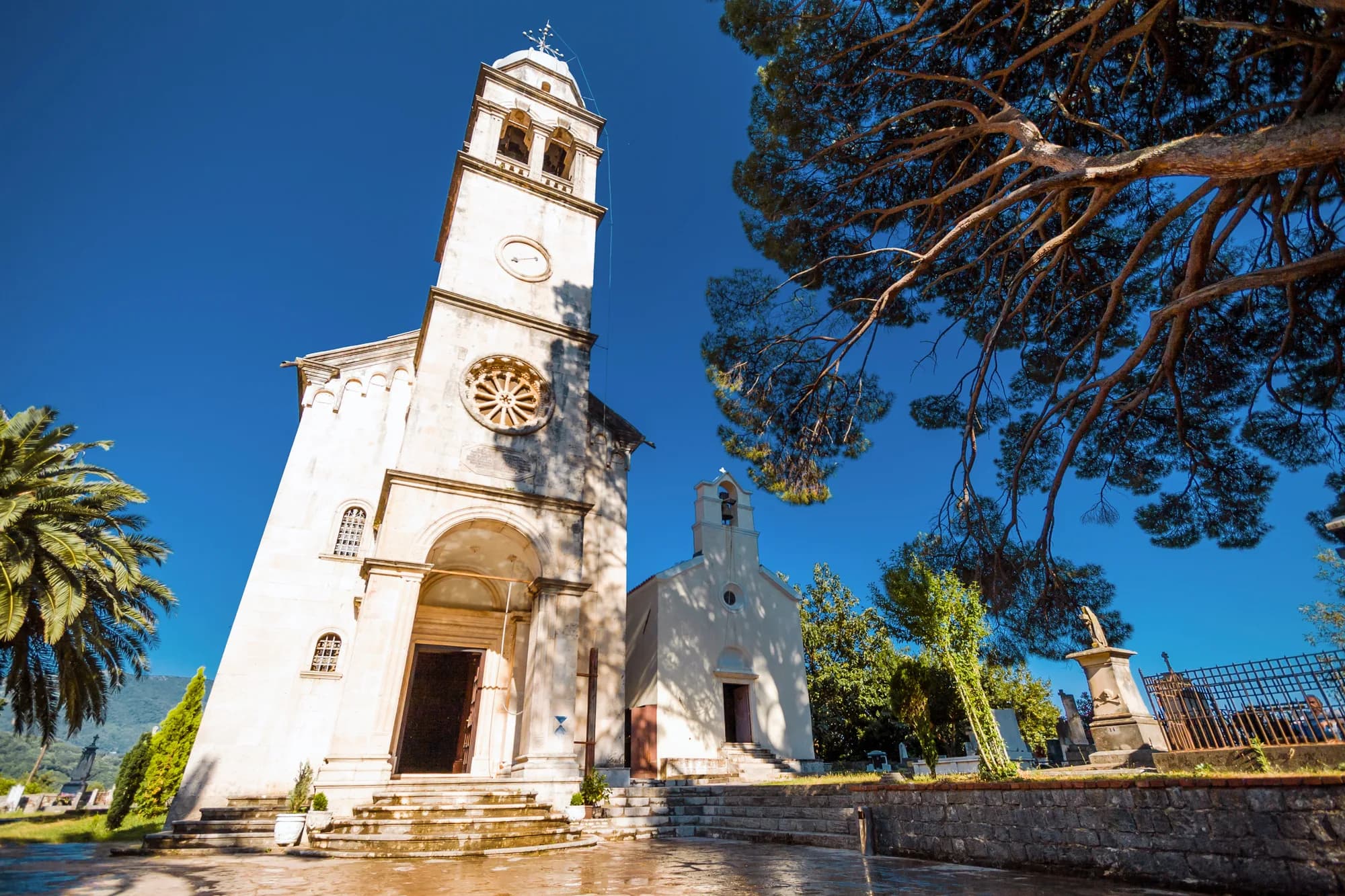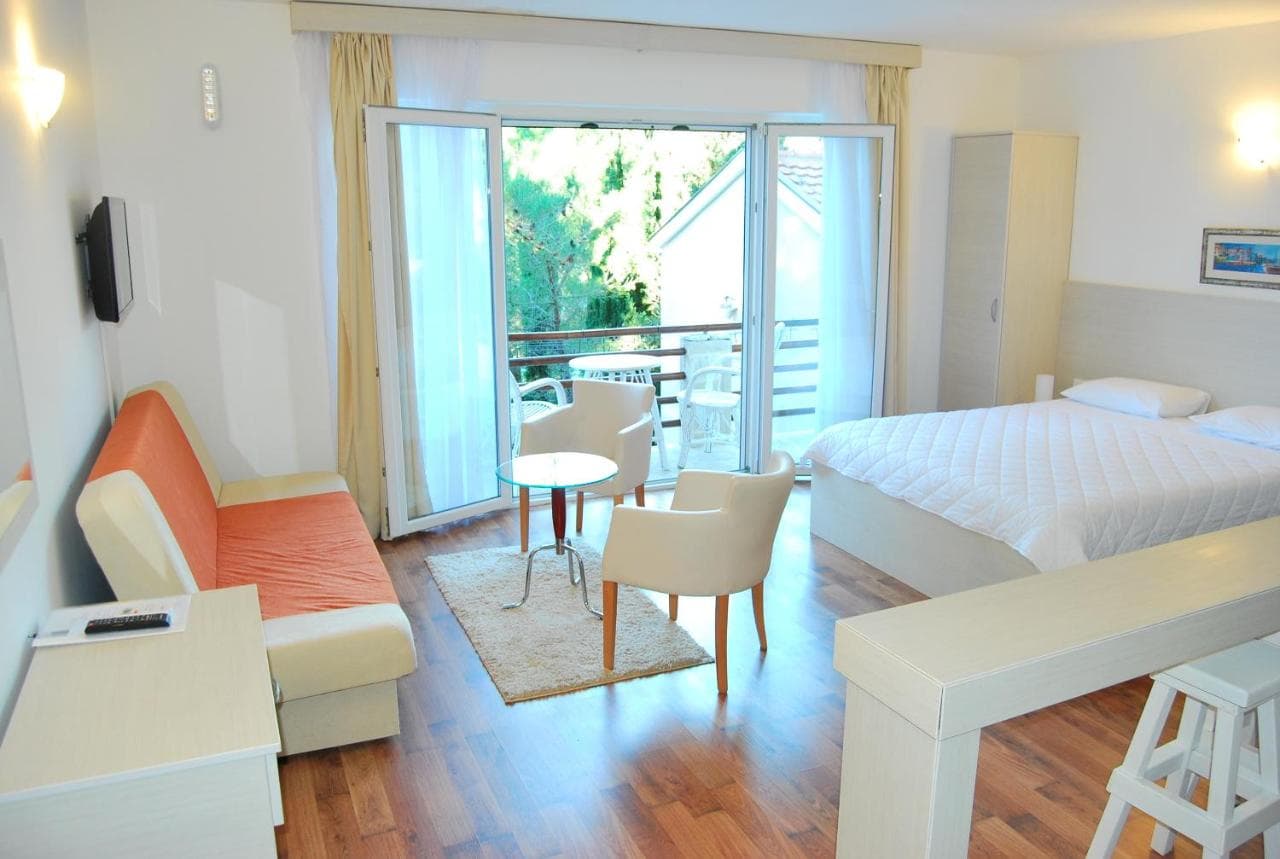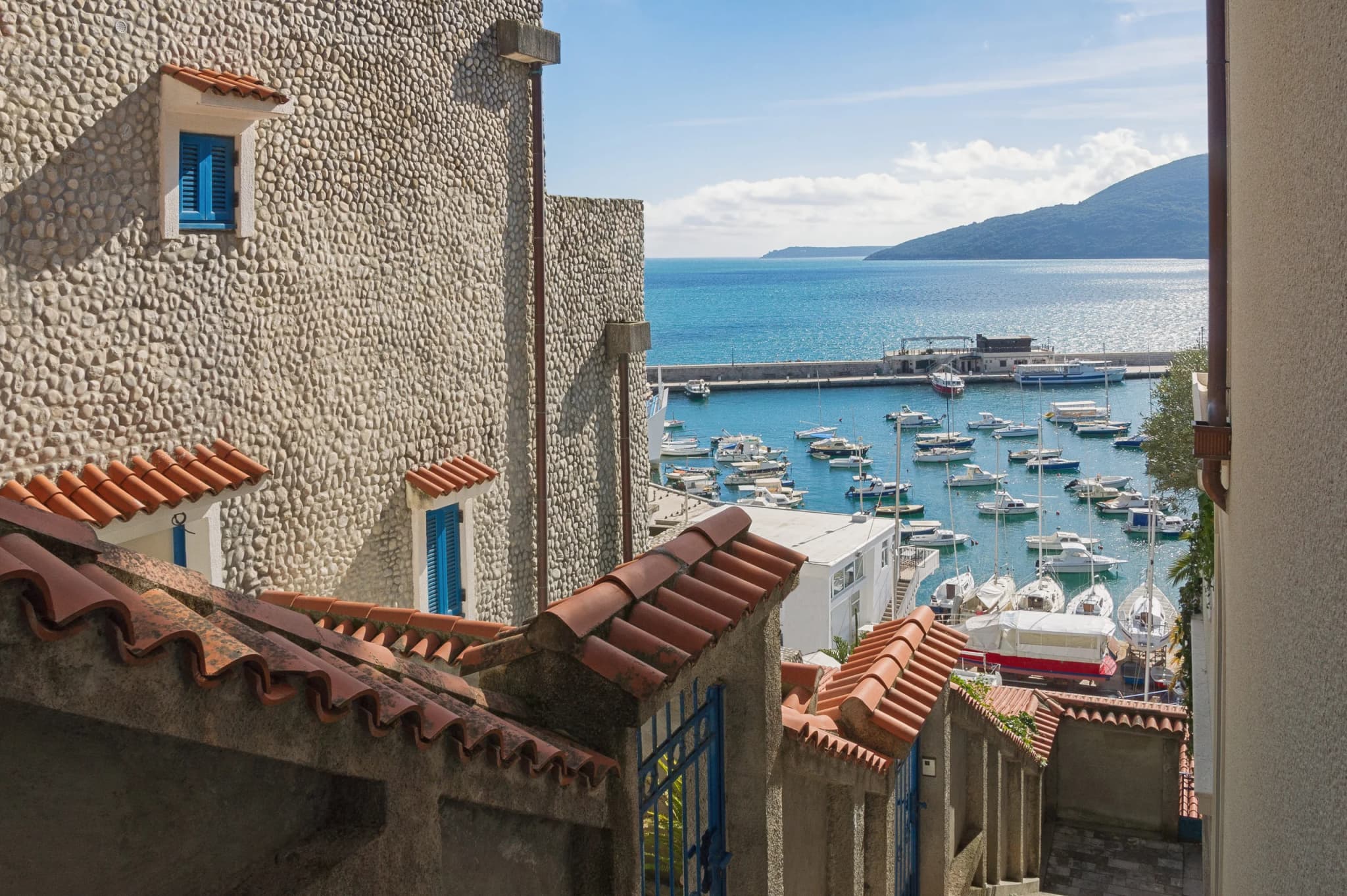
Topla is not a literary theme park. It is a lived-in Herceg Novi neighbourhood where two small museums preserve very different beginnings: the one-room school associated with the young Petar II Petrović Njegoš, and the only house Ivo Andrić had built for himself. The connection is geographical, not biographical—the writers lived in different centuries—but both sites turn a short walk above the coast into a lesson about how cultural memory is made.

| Site | Detail |
|---|---|
| Ivo Andrić House | Njegoševa 79 |
| Topla complex | churches · school · courtyard |
| Waterfront / Šetalište | Promenade below the hillside |
Source: hercegnovi.me, hercegnovi.travel
What “Njegoš’s School” actually protects
The useful starting point is the municipality’s signed 2018 Cultural Heritage Protection Study. It does not treat the classroom as an isolated celebrity relic. It registers the wider administrative-sacral complex of the Topla community: the Church of Saint George, the Church of the Ascension of Christ (also called Saint Saviour or Sveti Spas), the courtyard, historic cemetery, former administrative buildings and the school in which Njegoš studied.
The study records protection decisions 1122 for the Church of Saint Saviour and 1123 for Njegoš’s School, both dated 25 November 1957, plus a later decision for the complex. It separately records the marble memorial plaque on the building as an immovable cultural property protected in 1973. In other words, “the school,” “the plaque” and “the complex” are related but not interchangeable legal descriptions.
| Element | Detail |
|---|---|
| Saint George | older church · 17th century |
| Saint Saviour | Church of the Ascension · 1713 |
| Shared courtyard | community and parish setting |
| Historic cemetery | part of the registered ensemble |
| Stone buildings + school | one-room school among community buildings |
Source: hercegnovi.me
The school before its famous pupil
The municipal heritage study says a Serbian-language school operated in the complex from 1769. A separate municipal attractions record adds a useful archival distinction: inventory and account books show a school before 1788, while the Savina hieromonk and Topla parish priest Josif Tropović renewed its work in 1813. Those dates describe phases in an institution, not a single uncontested “foundation day.”
Rade Tomov Petrović—the future Petar II Petrović Njegoš—was sent to Tropović for instruction. The municipal account identifies Italian, mathematics, Church Slavonic and church singing among the subjects. The protected plaque gives the range 1825–1827. That is firmer than inherited retellings that assign an exact number of months, reproduce a classmate’s praise without a traceable edition, or claim every later school Njegoš founded copied Topla directly. The municipality uses more careful language: it says those later schools are assumed to have been modelled on this one.
| Date | Milestone |
|---|---|
| 1769 | school language |
| before 1788 | books attest activity |
| 1813 | Tropović renews work |
| 1825–1827 | plaque's attendance range |
| 1957 | school protected |
| 2018 | museum opens |
Source: hercegnovi.me
How to read the one-room building
The register describes a single-storey, one-room stone building facing west, with a central entrance, two iron-grilled windows and a single-pitch roof. It also records later concrete interventions after the earthquake and says some visible structural work reduces the ensemble’s cultural value. This is an important corrective to the idea that every surface is untouched nineteenth-century fabric.
The museum display reopened to the public in 2018. Its scope is intentionally narrow: the history of the school at Saint Saviour, the life of Josif Tropović and the years in which Njegoš studied at Topla. Objects, documents and visual material are bounded mainly from the late eighteenth to the early nineteenth century. The building is small; the historical context is the exhibit.
| Strand | Entries |
|---|---|
| Documented Topla subjects | Italian; Mathematics; Church Slavonic; Church singing |
| Later public life | Montenegrin ruler; Orthodox bishop; Poet and author; The Mountain Wreath, 1847 |
| Caveat | Connection is biographical context, not proof of a single causal line. |
Source: hercegnovi.me, gov.me
For the larger arc, the Government’s cultural-history record confirms that Njegoš published The Mountain Wreath in Vienna in 1847, while the current Cultural Heritage Administration describes his later Biljarda residence and museum in Cetinje. Travellers following that story can connect Topla to Njeguši, his birth village, and to Savina Monastery without pretending that all three sites interpret the same chapter.
The house Andrić chose
Ivo Andrić received the 1961 Nobel Prize in Literature; the Nobel Foundation identifies The Bridge on the Drina among the works through which he traced individual lives against historical, cultural and religious backgrounds. The official house history says Andrić and his wife, theatre costume designer Milica Babić, spent part of spring and summer 1961 in Herceg Novi. Their house was then built in 1962–1963 to a design by the Belgrade architect and painter Vojislav Đokić.
The couple lived there from 1963 to 1968. The Ivo Andrić Foundation biography records that Milica died in the family house in Herceg Novi in March 1968. That source supports the end date; it does not support the inherited embellishment that Andrić “could not bear” the house or effectively never returned. This guide omits those claims.
| Date | Milestone |
|---|---|
| 1961 | couple stays in town |
| 1962–1963 | house built |
| 1963–1968 | Ivo + Milica live here |
| 2018–2020 | revitalization |
| 9 Apr 2021 | public opening |
| 2022 | personal objects added |
Source: knia.me, ivoandric.org.rs, hercegfest.me
What survives—and what was reconstructed
“Andrić’s only house” should not be read as “an untouched house full of original belongings.” The official tourism listing says the initial display included replicas of his Nobel diploma and medal and identified a period mirror as the only preserved original object then in the house. In July 2022 the municipality announced an expanded display: original furniture, photographs, pipes, intimate letters, family material and Milica’s costume designs were acquired, restored and added.
The garden is also an interpretation. The current listing says 51 plant species were replanted using a list Andrić compiled, and notes a 1974 bust by sculptor Nikola Koka Janković. These details make the garden meaningful without pretending every plant dates from Andrić’s residence.
| Layer | What you see |
|---|---|
| Ground floor | photographs of Herceg Novi life and recognisable city places |
| Upper floor | writer, Nobel laureate and diplomat |
| Garden | replanted species + 1974 bust; not an untouched time capsule |
| 2022 additions | personal objects, letters, photographs, furniture and Milica's designs |
Source: hercegnovi.travel, hercegnovi.me
Restoration, access and a living cultural venue
The house was revitalized from 2018 to 2020 through the Co.Co.Tour project. The Interreg programme confirms that EU cross-border funding supported the work. Herceg Fest’s report says the museum first opened to the public on 9 April 2021. It now operates both as a permanent exhibition and as a venue for literary, music, theatre and film programmes. An event can enrich a visit or alter ordinary access, so check the institution’s current programme.
Practical visit planning
| Stop | What is firmly documented | Current visit planning |
|---|---|---|
| Ivo Andrić House | Built 1962–1963; residence 1963–1968; museum opened 2021 | Njegoševa 79; tourism office lists Mon–Sat 09:00–21:00, Sun 10:00–18:00; reconfirm |
| Topla complex | School activity predates 1788; renewed 1813; plaque says Njegoš studied 1825–1827; protected ensemble | Church, parish and small museum share one complex; no reliable current daily museum hours published |
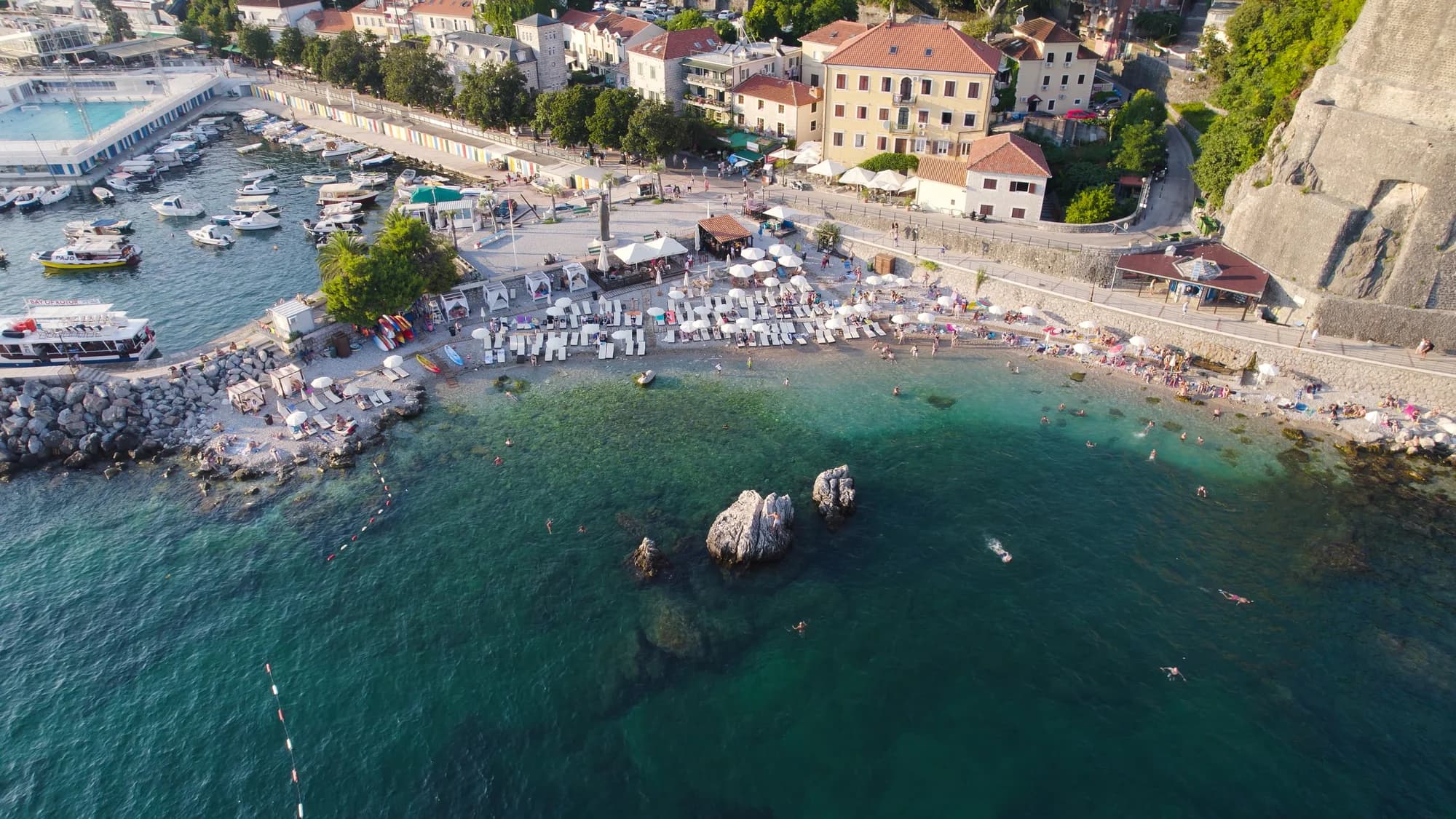
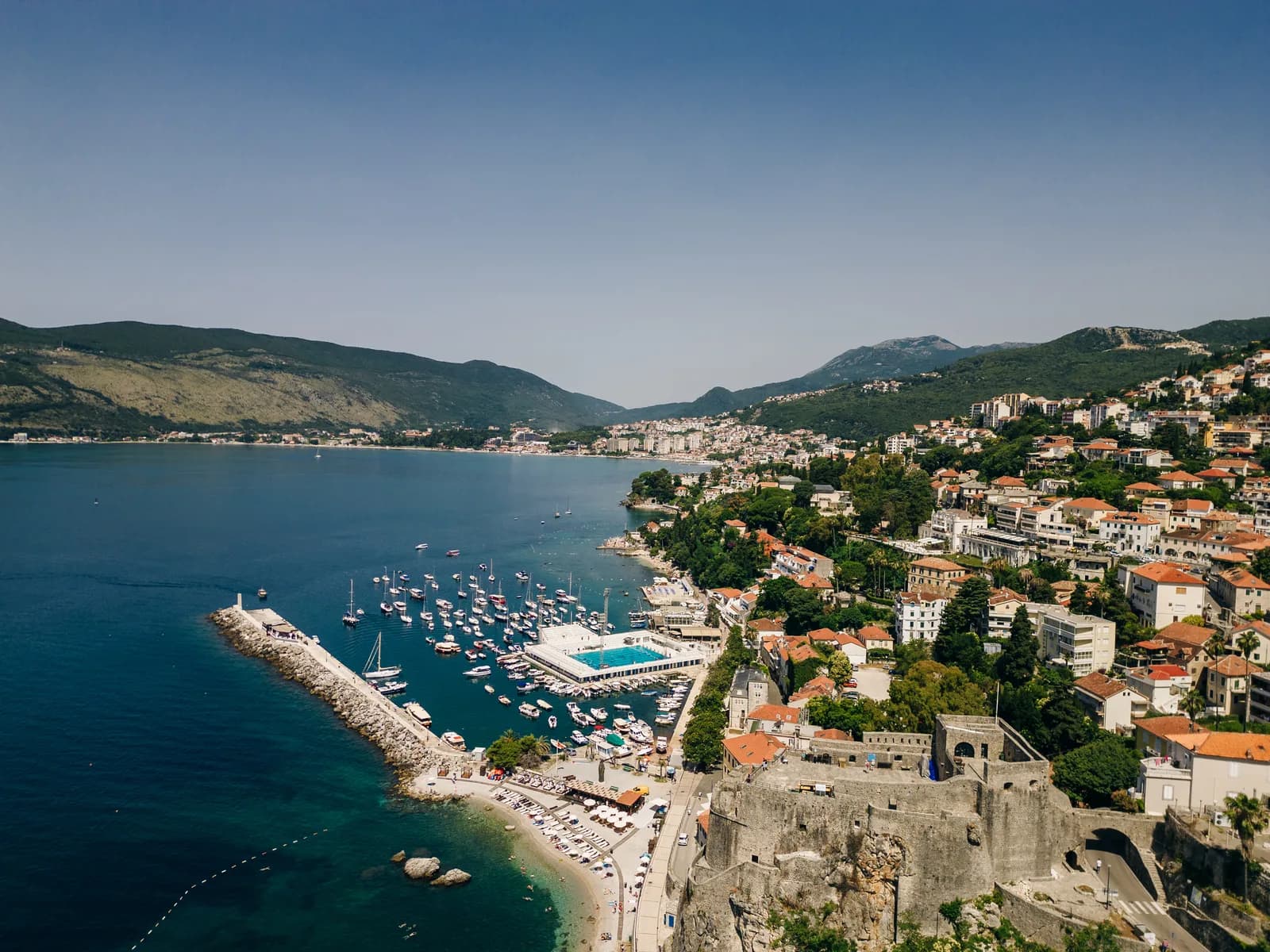
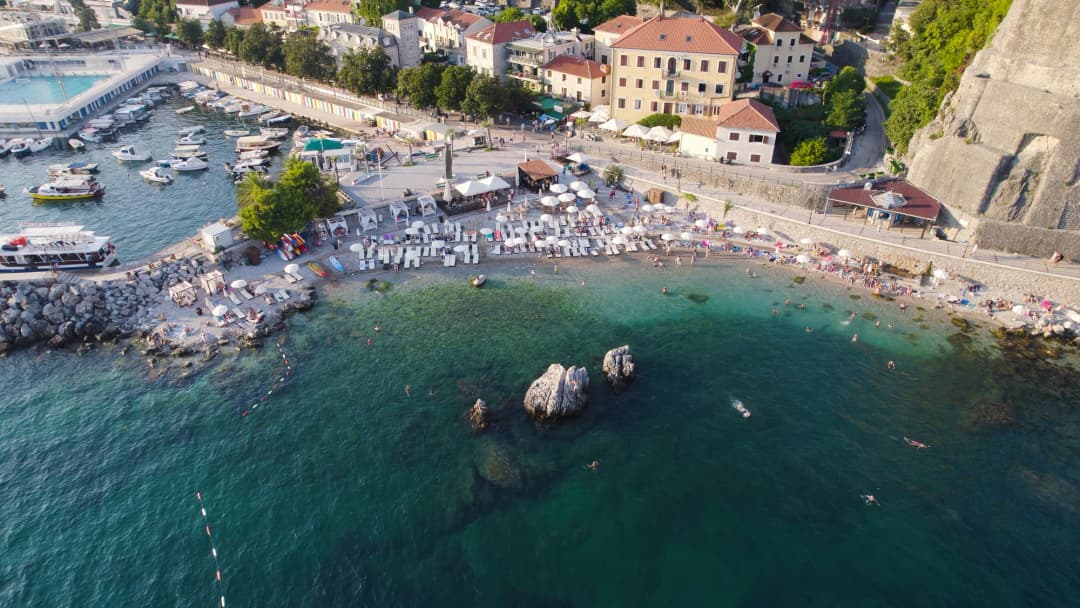
| Waterfront continuation | Šetalište Pet Danica is the coastal promenade below the hillside | Expect a descent/ascent and choose streets for your mobility and conditions |
The current Tourism Organisation page lists the Andrić House at Njegoševa 79, telephone +382 31 337 633, with Monday–Saturday hours of 09:00–21:00 and Sunday hours of 10:00–18:00. Treat these as a current listing, not a permanent guarantee. Seasonal schedules, holidays and cultural events can change access. No current official daily timetable for the Njegoš School museum was found; ask the Tourism Organisation or parish before travelling solely for the interior.
| Step | Action |
|---|---|
| 1 | Reconfirm house hours and any programme |
| 2 | Choose streets/steps for your mobility and weather |
| 3 | Enter the church complex quietly; worship comes first |
| 4 | Ask before photographing people, services or interiors |
| 5 | Descend to the promenade only if the return climb suits you |
Source: hercegnovi.travel, hercegnovi.me
A sensible sequence
Begin at the Andrić House while its opening can be confirmed. Continue through Topla toward the Saint George–Saint Saviour complex and read the school as part of that ensemble. If time and gradients permit, descend to Šetalište Pet Danica. For a wider cultural itinerary, add the city’s Trg od knjige, the Herceg Novi Winter Salon, or a practical base from the Herceg Novi neighbourhood guide.
FAQ
Did Njegoš study in this exact building?
The municipal heritage study identifies the building and plaque with his elementary schooling and records the plaque’s 1825–1827 range. The broader school existed before him and the building has undergone later interventions.
Is the whole Topla complex a museum?
No. It is an administrative-sacral and parish complex that includes two churches, a historic cemetery, courtyard and associated buildings. The small school display is one component.
Is Andrić’s house full of original objects?
It is a curated museum. Early interpretation used photographs, replicas and a surviving mirror; the permanent display was expanded in 2022 with acquired and restored personal objects, furniture, letters, photographs and Milica Babić’s costume designs.
Was the house built with Nobel Prize money?
The authoritative sources reviewed confirm the 1962–1963 construction and architect, but they do not document that financing claim. This guide therefore does not repeat it.
Are the published hours guaranteed?
No. They are the current Tourism Organisation listing accessed on 30 August 2026. Call +382 31 337 633 or check the house’s official channels for holidays, events and seasonal changes.
Methodology and sources
This guide separates protected status, museum interpretation and literary legend. The 2018 municipal heritage study controls the school complex and plaque details; current municipal and tourism pages control museum presentation and visitor information; the Ivo Andrić Foundation and Nobel Foundation control the writer’s biographical and prize context. Claims about an exact eighteen-month school term, a classmate’s quotation, Nobel-money financing, arthritis as the decisive reason for building, or Andrić never returning after 1968 were omitted because the reviewed primary or institutional sources did not establish them.