The “Herzegovinian Winter Salon” is a translation error. Hercegnovski means “of Herceg Novi,” and the event is the Herceg Novi Winter Art Salon: a collective exhibition rooted in the city’s post-war art school and the Josip Bepo Benković Gallery. In 2026 it reached its 59th edition, linking a local educational experiment to contemporary work from Montenegro and the region.
Herceg Novi’s art story begins with a school founded in Cetinje in 1946, moved to Herceg Novi in 1948 and closed in 1966. The city gallery and annual Winter Salon carried that institutional memory forward; the 59th Salon ended in March 2026, so future visits depend on a new programme announcement.
| Institution or event | Role | Visitor rule |
|---|---|---|
| Art School | Education, 1946–1966 | History, not an open campus |
| Josip Bepo Benković Gallery | City exhibition institution | Check current programme |
| Winter Salon | Annual selected exhibition | Edition-specific dates |
| Gallery collection | Preserves school and Salon works | Not all holdings displayed |
| Local art scene | Changing group presentations | Confirm each announcement |

The 59th Salon: what happened in 2026
The 59th Herceg Novi Winter Art Salon opened at the Josip Bepo Benković Gallery on 10 February 2026. Its selector, artist David Delibašić, chose the concept (Ne)Pripadanje—“(Non)Belonging”—as a way to examine identity, belonging and the boundaries people create and cross. The exhibition included painting, drawing, sculpture, collage, installation and digital graphics.
Official and local reporting records 34 artists in the 2026 selection. RTHN counted 44 works and participants from Montenegro, Serbia and Bosnia and Herzegovina, plus artists from the region working abroad. Ratko Odalović won first prize for Putnik, Marko Petrović Njegoš second for Fosil jezgra, and Lidija Nikčević third for Three Trees.
The show ran only through the end of March. The published 08:00–19:00 weekday-and-Saturday hours belonged to that edition and have expired. As of August 2026, use the institution’s current news page rather than arriving for an exhibition that has closed.
| Detail | Value |
|---|---|
| Artists | 34 |
| Works | 44 |
| Opening | 10 FEB |
| Status | Closed at the end of March 2026 · confirm future editions |
Source: rthn.me, vijesti.me
The school began in Cetinje, then moved to Herceg Novi
The Montenegrin Academy’s visual-art lexicon records that the School of Fine Arts was legally founded in Cetinje on 20 September 1946 by an initiative associated with Petar Lubarda and Milo Milunović. Classes began on 10 January 1947. Lubarda was the first director; the original teaching staff included Milunović, Svetomir Poček, Đorđe Oraovac and Milutin Milo Božović.
In October 1948 the school moved to Herceg Novi, where Miloš Vušković became director. A University of Montenegro historical study shows that the institution then changed: in 1952 it became a school for applied art, and in 1957 a school for artistic crafts. Phased closure began in 1963; operations ended in 1966. CANU records 316 graduates across the institution’s full 1946–1966 life.
Lubarda and Milunović founded the school in Cetinje in 1946; it began classes in 1947 and moved to Herceg Novi in October 1948. Its name and mission changed during its twenty-year history. For the artist’s broader significance, compare our guide to Lubarda and other Montenegrin painters.
| Year | Milestone |
|---|---|
| 1946 | founded |
| 1948 | Herceg Novi |
| 1952 | applied art |
| 1957 | artistic crafts |
| 1966 | closed |
| 1946–1966 | 316 graduates |
| Note | Legal foundation, classes, move and renaming are different milestones |
Source: leks.canu.ac.me, fedora.ucg.ac.me
How a Salon differs from a permanent exhibition
A Salon is an edition-specific argument. A selector chooses a concept and a group of artists; a jury evaluates works shown in that edition; the gallery installs them for a defined period; and awards become part of the event’s record. The 2026 concept of (Non)Belonging therefore belongs to David Delibašić’s 59th-edition selection. It should not be projected backward onto earlier Salons or forward onto an unannounced 60th.
A collection works differently. Objects can enter through purchase, award, donation or transfer, then move between storage, conservation, research and display. Winning at a Salon does not prove that a work is permanently hung, just as appearing in a collection exhibition does not prove that every related work is visible. This is why a visitor should ask two separate questions: “What exhibition is open?” and “Which collection works are included?”
The 59th edition used multiple media and a regional selection; it was not simply a show of Herceg Novi landscape painting. The local school legacy gives the institution depth, while each selector can test a different contemporary problem. That tension—continuity without compulsory style—is central to the Salon’s cultural value.
From school closure to city gallery
Artists and citizens founded the gallery after the school closed in 1966. It was named for Herceg Novi painter Josip Bepo Benković, executed at Banjica in 1943, and became part of the local museum structure in 1967. Today the public museum-and-gallery institution comprises the Mirko Komnenović City Museum in Topla and the gallery at Marka Vojnovića 4 in the Old Town.
The connection is not merely symbolic. A recent institution-led exhibition, “Art School in Herceg Novi—Professors and Students,” presented 38 artists from the museum and gallery collection, including Vojo Stanić, Luka Berberović, Đorđe Bata Pravilović, Mirko Mitko Bulajić and Luka Tomanović. The display was time-limited; it demonstrates collection stewardship, not that all 38 remain on view.
Pair the gallery with Herceg Novi Old Town or the nearby literary history of Njegoš and Andrić in Topla. Art, literature and city fabric belong to the same cultural route, but each venue has its own schedule.
| Link | Role |
|---|---|
| School | teaching |
| Collection | preservation |
| Exhibition | interpretation |
| Salon | new work |
| Caveat | A collection holding does not guarantee permanent display |
Source: hercegnovi.travel, mighn.me
Did the Salon begin in 1967 or 1968?
Current institutional and Ministry accounts describe the Salon as founded in 1967; the Tourism Organization even gives 15 January 1967 as a first-edition date. Yet a historical catalogue issued around the 40th Salon lists the first exhibition as 15 January–15 February 1968, and the 2017 jubilee presented the 50th edition with works awarded “from 1968.”
The institutional idea and gallery structure date to 1967, while historical cataloguing also uses 1968 for the first exhibition. The formal 2026 event was numbered the 59th Salon, so anniversary arithmetic can vary according to which starting milestone is used.
| Date | Used for |
|---|---|
| 1967 | founding / institutional origin |
| 1968 | catalogue / jubilee history |
| 2026 programme | 59th edition |
Source: gov.me, hercegnovi.travel, rastko.rs
Practical visit planning
- Check the institution's current notice. Use the Museum and Gallery news page or contact the gallery at Marka Vojnovića 4.
- Confirm the exhibition and hours together. A current title does not prove that yesterday’s hours still apply.
- Ask about access needs. Confirm entrance obstacles, interior circulation and available assistance directly with the gallery.
- Confirm photography. Permission can vary by lender, artwork and exhibition.
- Plan a second stop. If the gallery is between installations, continue through the Old Town or visit Topla rather than treating the trip as failed.
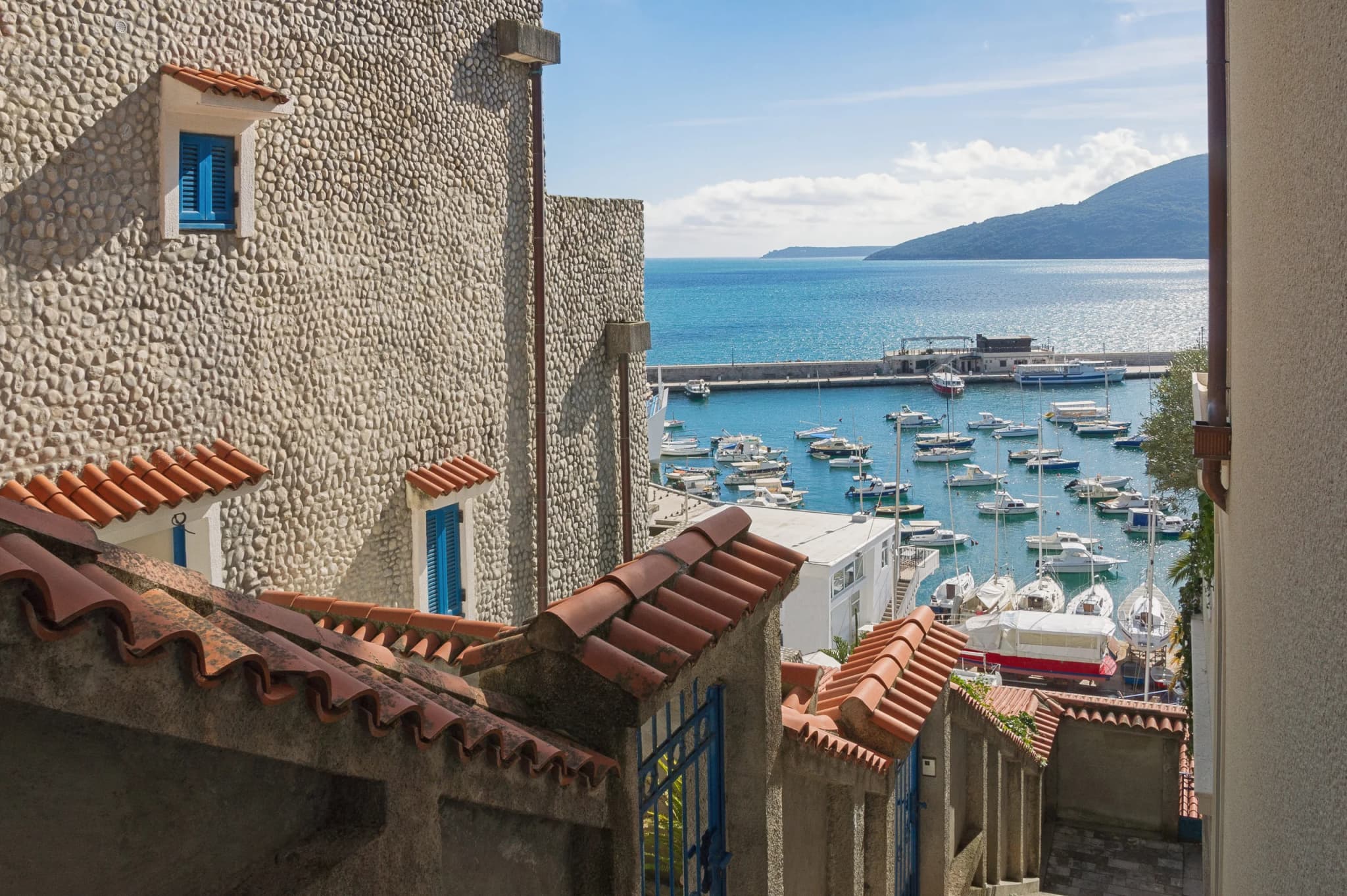
Allow time for Herceg Novi's sloping Old Town streets and stone steps, especially in wet weather. Wear stable shoes, identify a suitable drop-off point before arrival, and ask the gallery about entrance obstacles or assistance if anyone in the group has limited mobility.
When an exhibition is active, read its curatorial statement before moving through the rooms, then compare that theme with the materials and arrangement of individual works. Record artist names and titles from the current labels rather than relying on memory. If a work is absent, ask whether it was a loan, has returned to storage or belongs to another venue. This approach makes a short visit useful without assuming that one installation represents the gallery's whole collection or Herceg Novi's entire art history.
For a broader city plan, use our Herceg Novi visitor guide. Travelers choosing accommodation around a winter programme can compare areas in where to stay in Herceg Novi. For another civic cultural tradition, see Trg od knjige.
| Confirmation | Note |
|---|---|
| EXHIBITION | confirm before visiting |
| DATES | confirm before visiting |
| HOURS | confirm before visiting |
| ACCESS | confirm before visiting |
| Why | Expired event details do not determine today's visit |
Source: mighn.me, vijesti.me
Frequently asked questions
Is the 59th Winter Salon still open?
No. It ran from 10 February through the end of March 2026. Check the gallery for its current exhibition.
Did Petar Lubarda found the school in Herceg Novi?
Not exactly. Lubarda and Milo Milunović helped create the school in Cetinje in 1946. It began classes in 1947 and moved to Herceg Novi in October 1948.
Can I see works by all famous former students?
Do not assume so. The gallery preserves relevant works and stages collection exhibitions, but holdings, loans, conservation and installation determine what is visible.
Why do some sources say 1967 and others 1968?
Current institutional accounts use 1967 for the origin; a historical catalogue lists the first exhibition in 1968. The dates refer to different institutional traditions and both remain in use.
Is “Herzegovinian Art Scene” the correct English name?
No. In this context Hercegnovska likovna scena means the Herceg Novi art scene. “Herzegovinian” incorrectly shifts the geography to Herzegovina.
Herceg Novi’s winter art tradition matters because it is institutional memory in motion. A school moved, changed and closed; a gallery preserved and exhibited; an annual Salon kept selecting new work. The accurate story is stronger than the mistranslated legend.