Trg od knjige is Herceg Novi’s active open-air book fair, held on Belavista in the Old Town from 21 to 28 July. The 24th edition ran on those dates in 2026, combining publisher stands with eight evenings of author talks, literary history, archives, music, and a children’s programme. The dates are a well-established pattern, but the guests and daily schedule change every year.
This guide separates three stories that the inherited “Book Square” page blurred together: the broader Herceg Novi fair lineage that began in Igalo in 1994; the Trg od knjige name and Belavista format introduced in 2003; and Montenegro.com’s photographs and report from the second edition in 2004. It also gives practical advice for a future visit without presenting a completed 2026 programme as a permanent timetable.
Current status: what happened in 2026?
The Municipality’s opening report identifies the 2026 event as the 24th International Book Fair Trg od knjige. It opened on Belavista on 21 July with poet Milosav Tešić, a presentation of his book Sa Avale pogled, and actor Ivan Bosiljčić’s music-and-poetry programme. The municipal account also names the City Library and Reading Room and the Secretariat for Culture and Education as organisers.
Published schedules ran through 28 July. The programme ranged from a discussion of Zorica Tomić’s Tesla: svetlost senke and presentations by archives to contemporary fiction, literary history, regional publishing, and a Saturday programme for children. That breadth is not incidental: Herceg Novi’s 2024–2027 cultural development programme formally defines the fair as both a publishing exhibition and a sequence of evening cultural events.
The 2026 edition is now over. No 2027 guest list, nightly schedule, stall hours, or admission terms were treated as confirmed during this review on 29 August 2026. Anyone planning the next edition should use the fixed date window as an orientation, then wait for a dated notice from the City Library, Municipality, or Tourist Organisation before making an event-specific booking.
Belavista, Trg Hercega Stjepana, and “Book Square”
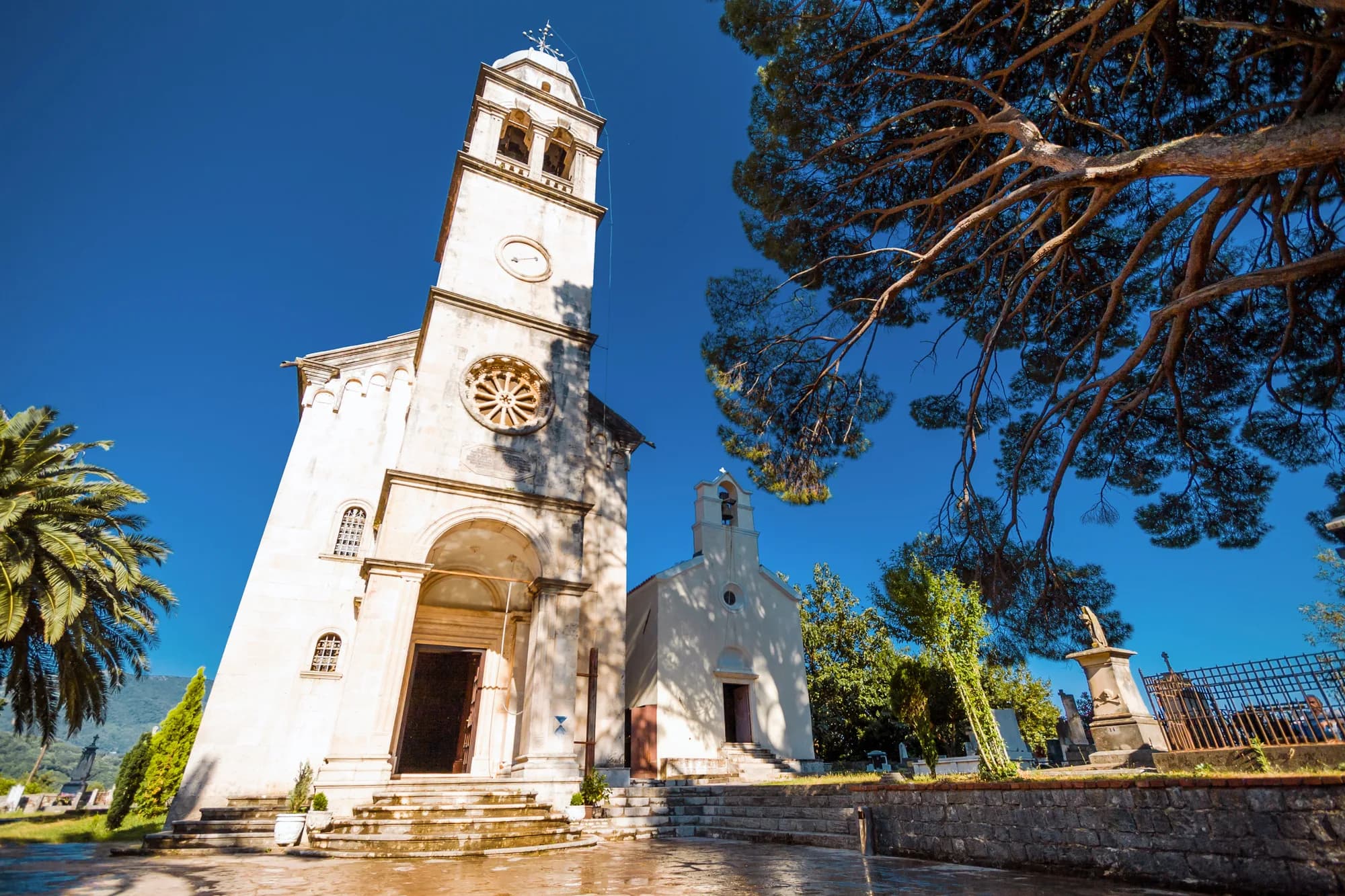
The venue has two names in normal use. Official programmes often say Trg Hercega Stjepana; local and visitor-facing reports commonly say Belavista. They refer to the same Old Town square around the Church of Saint Michael the Archangel. “Trg od knjige” is the festival name—a wordplay that turns the existing square into a square of books—not a third permanent place name.
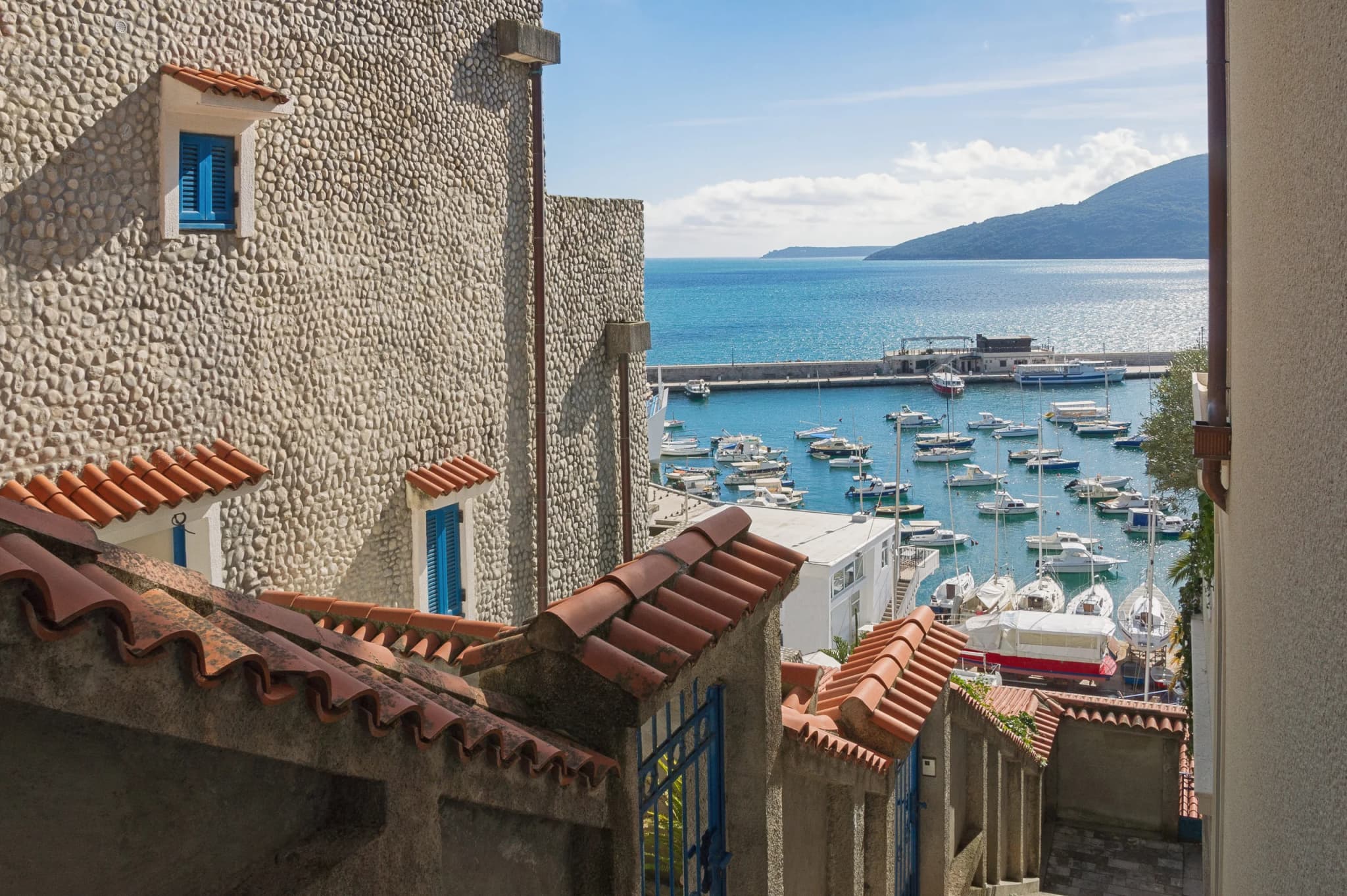
This matters when navigating. A map search for “Book Square” may not behave like a search for a formal attraction. Use Trg Hercega Stjepana or Belavista, approach through Herceg Novi’s Old Town, and then follow the fair signs and stalls. The square is elevated above the waterfront and is reached through a town known for steps and sloping lanes. The Herceg Novi accommodation guide helps compare an Old Town base with lower, flatter waterfront areas.

One lineage, two starting points
The Municipality’s festival history says a book fair was first organised in Igalo in 1994. A surviving 2004 festival bulletin explains the transition more precisely: during the following decade the fair changed name, organiser, and concept; in 2003 it adopted the name Trg od knjige, a new visual identity, and the Old Town location. The bulletin explicitly calls 2004 the second Trg od knjige.
Those facts resolve an apparent contradiction. Saying “the Herceg Novi book fair began in 1994” describes the institutional lineage. Saying “Trg od knjige began in 2003” describes the named Belavista format. Neither date should be silently substituted for the other. The 24th-edition label used in 2026 belongs to the organiser’s own numbering and should be preserved even though a simple count of calendar years from 1994 would produce a different number.
| Year | Milestone | What the evidence establishes |
|---|---|---|
| 1994 | First Herceg Novi book fair in Igalo | Start of the broader fair lineage, according to the Municipality and 2004 bulletin |
| 2003 | Trg od knjige name and Belavista format begin | New name, identity, concept, and Old Town location |
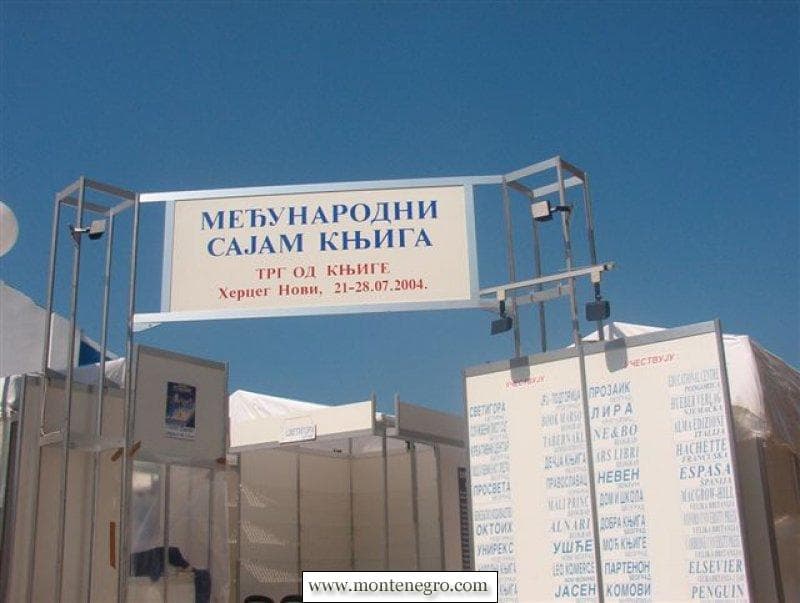
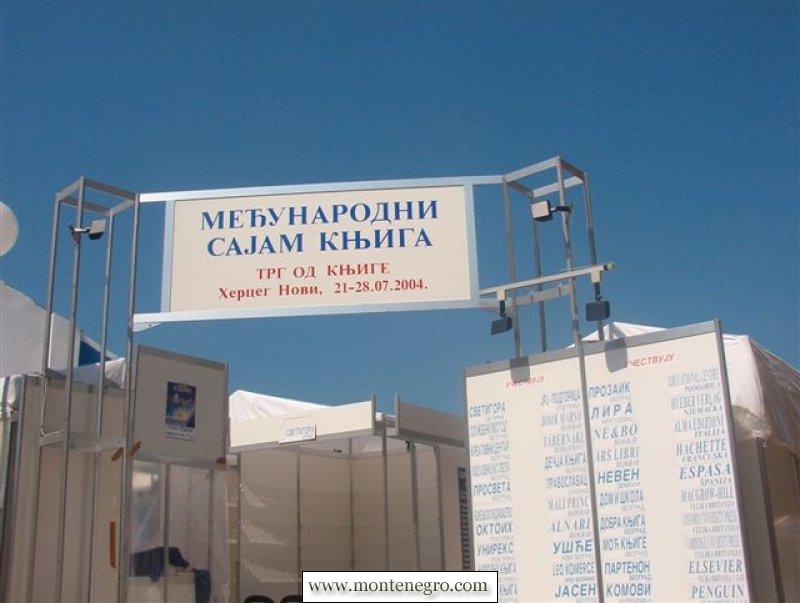
| 2004 | Second Trg od knjige, 21–28 July | Dates and edition stated in the contemporary bulletin and visible on the archive sign |
| 2011 | About 50 publishers and 25 programmes reported | Municipal annual report; useful scale snapshot, not a permanent capacity |
| 2025 | 23rd edition: 28 publishers and 15 programmes | Municipal 2025 work report |
| 2026 | 24th edition opens on 21 July | Current municipal opening report and published eight-night schedule |
| Year | Milestone |
|---|---|
| 1994 | Igalo fair |
| 2003 | new format |
| 2004 | 2nd edition |
| 2025 | 23rd edition |
| 2026 | 24th edition |
Source: hercegnovi.me, rastko.rs
Why this is more than a sales fair
The municipal culture programme divides the concept into two core parts. First, domestic and foreign publishers display current literature, scholarship, children’s books, and works on local Boka themes. Second, evening sessions present authors and new titles. Exhibitions, concerts, poetry-and-music programmes, films, theatre, press events, round tables, forums, and panels can extend that core.
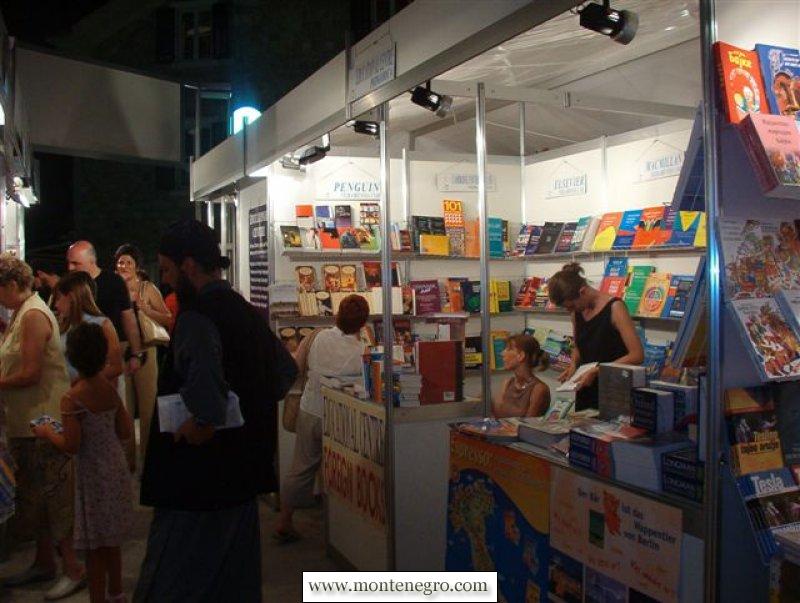
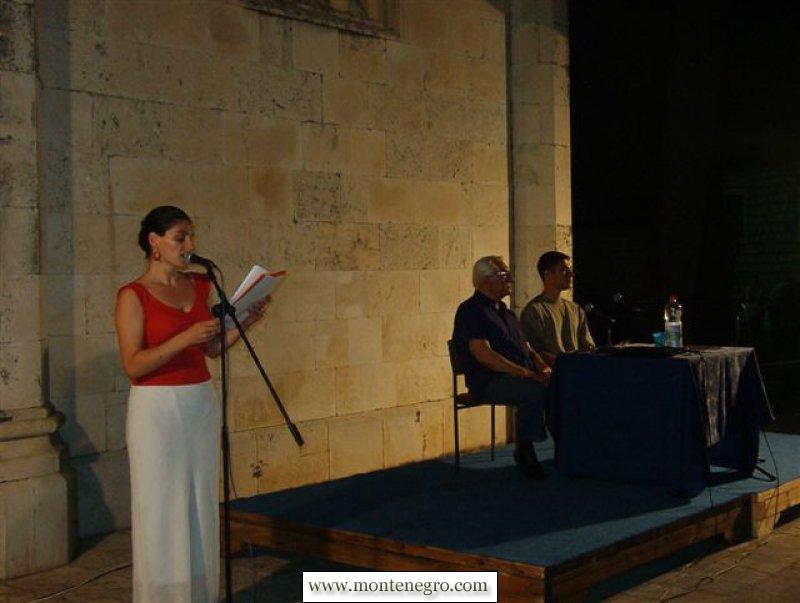
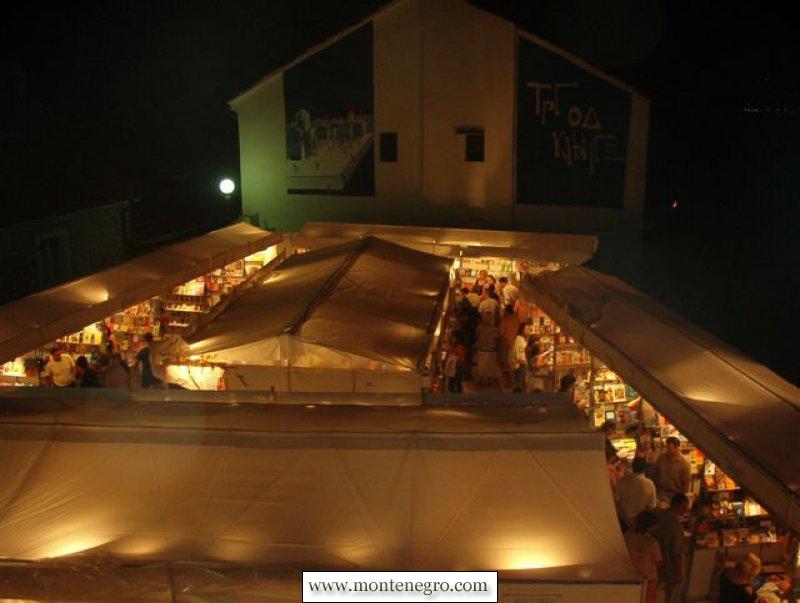
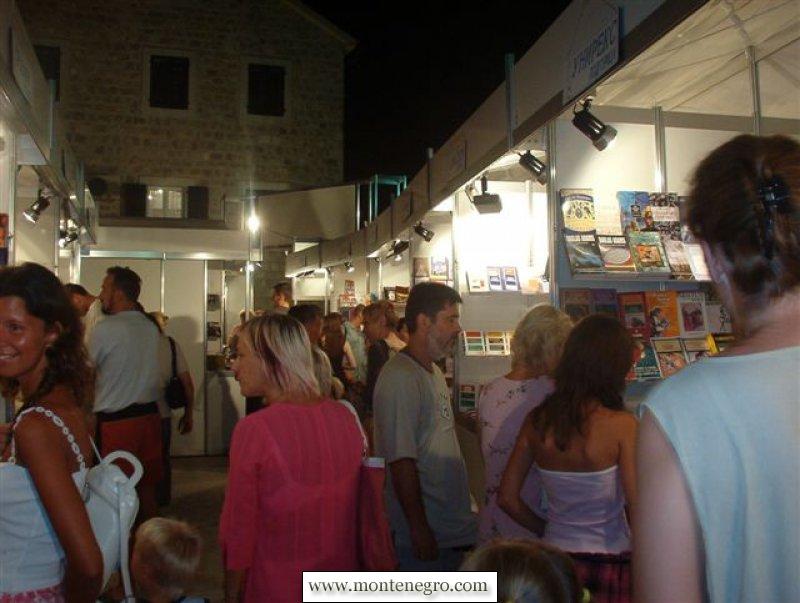
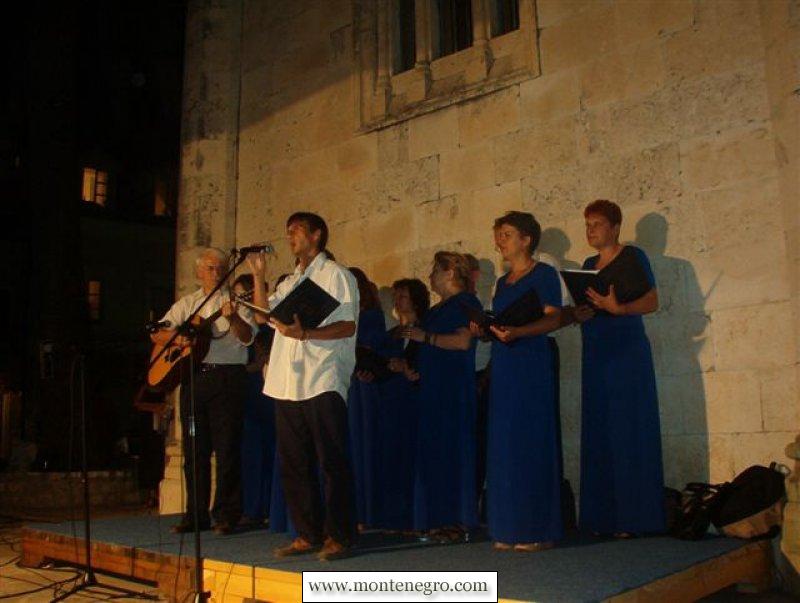
The photographs make the distinction visible. Rows of illuminated stands supported browsing and sales, while a simple platform against the church wall supported readings and performance. Visitors could pass through the fair floor without attending a formal talk, or arrive specifically for a programme and browse before or after it. “Book fair” and “literary festival” are therefore both accurate but incomplete on their own.
The 2026 programme as a planning model
The 2026 schedule is useful for understanding rhythm, not for predicting the next roster. Opening night combined a formal address, a book presentation, and staged music and poetry. Later evenings paired two or more shorter subjects: Tesla, archives, contemporary novels, criticism, publishing projects, and cultural history. Saturday gave children an earlier programme, including a book presentation and theatre.
Most adult sessions were listed for 21:00, while the children’s programme was listed for 20:30. A current local event listing described admission as free, but the municipal opening report did not publish a blanket ticket rule. Treat free entry and exact times as edition-specific information to reconfirm, especially if a future programme includes a separately produced performance.
The programme’s language is primarily the closely related Montenegrin/Serbian/Bosnian/Croatian language continuum. International authors may appear, but no general promise of English interpretation was found. An English-speaking visitor can still browse visual titles and attend for atmosphere, yet should ask the organiser about interpretation before choosing a discussion-heavy evening.
What the 2004 archive actually records
Montenegro.com’s inherited page is a report from 2004. Its “Word” motto is an abbreviated translation: the contemporary fair bulletin gives the official slogan as I bi riječ, commonly rendered “And there was the Word.” The bulletin also confirms the exact 21–28 July dates, the second-edition status, and an intention to bring recognised publishers and writers to the city during peak visitor season.
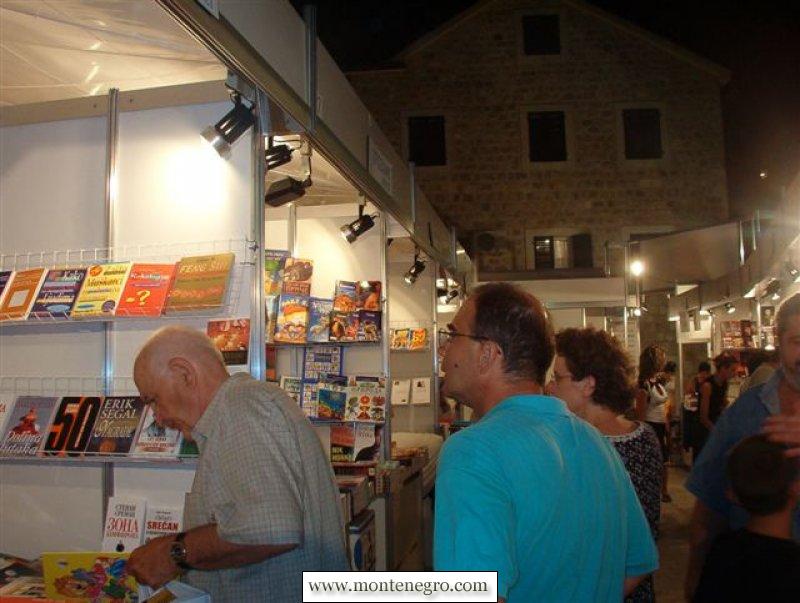
The report names publishers and institutions including Educational Centre, Unireks, Ars Libri, Stubovi kulture, Svetigora, Besjeda, the Official Gazette of Serbia and Montenegro, the textbook institute, the Herceg Novi Literary Community, and the local museum. These are records of 2004 participation, not a current exhibitor directory. The elevated photograph and stall images show a compact but densely occupied square.
A mistranslation also needs correction. The source text describes Jelisaveta Seka Sablić and Nada Blam as glumice—actresses—not poets. They appeared among a wider list of literary, scholarly, and artistic guests. The report separately notes a “Poets in the Diaspora” evening organised through the Herceg Novi literary community. Combining those adjacent sentences turned two actresses into poets in the inherited English version.
Books, awards, and claims that cannot become a current ranking
The 2004 report says visitors sought English-language classics, Oxford dictionaries, Tracy Chevalier’s Girl with a Pearl Earring, books on Slavic religion and Greek myth, and a four-language edition of Njegoš’s The Ray of the Microcosm. It also records design plaques for the Jazon library series, the four-language Njegoš edition, and the Altera philosophy series.
Those details are valuable as a snapshot of buying interests and book design in a specific publishing moment. They are not audited sales data: no quantities, till records, or ranking method survive in the page. “Most sought-after” should remain attributed to the fair report rather than converted into a numeric bestseller list. Likewise, a fair plaque documents a jury choice in that edition, not a permanent verdict on the books.
The multilingual Njegoš item fits a longer local literary landscape. For places connected with Njegoš and Ivo Andrić, continue with the Literary Topla guide. For another archival reading problem—where one paired volume was repeatedly mistaken for two books—the La Montenegrina and Sjećanja guide shows why catalogue evidence matters.
Practical plan for a future Trg od knjige
- Confirm the edition, not just the tradition. The Municipality presents 21–28 July as the stable annual slot. Still, wait for the City Library’s dated poster or programme before selecting a particular author night.
- Search both venue names. Use Trg Hercega Stjepana or Belavista in maps. “Trg od knjige” describes the event and may lead to archive pages from many years.
- Separate stand hours from programme times. The fair floor can operate for a longer evening window than the stage. Confirm when sales open, when the chosen talk begins, and whether a performance changes access.
- Ask about step-free access. Old Town routes include gradients and stairs. Contact the organiser for the most suitable approach and seating rather than relying on a generic map pin.
- Prepare for an outdoor night. July is warm, but the 2004 record mentions summer rain. Bring water and light rain protection permitted by the organiser; avoid blocking narrow aisles with large luggage.
- Check payment at each stand. Montenegro uses the euro, but card acceptance is an exhibitor-level question. Carry a modest cash alternative and request a receipt for purchases.
- Choose by format and language. A concert, staged reading, or children’s performance may be more accessible without fluent local-language comprehension than a critical panel.
- Build a cultural route. Pair Belavista with the Herceg Novi museum guide, then compare the city’s other active traditions through the Mimosa Festival and the upgraded Sunčane Skale history.
How Trg od knjige fits Herceg Novi
Herceg Novi’s cultural strategy treats the fair as part of a larger public system rather than a standalone tourist attraction. The City Library maintains collections, local-history work, publishing, digitisation, and programmes for children and adults; the Secretariat shares responsibility for the fair. The same strategy argues for added financial and spatial support because the event serves residents and summer visitors while connecting regional and international publishing.
The setting also places books inside a sequence of summer events. Days of Music precedes Trg od knjige in the established July calendar; the Days of Music archive explains that neighbouring tradition. A very different 2004 gathering appears in the Stara Brokva regatta report. Farther inland, the Bijelo Polje cultural walk connects another Montenegrin city with writers, sacred sites, and public memory.
Reading the photographs responsibly
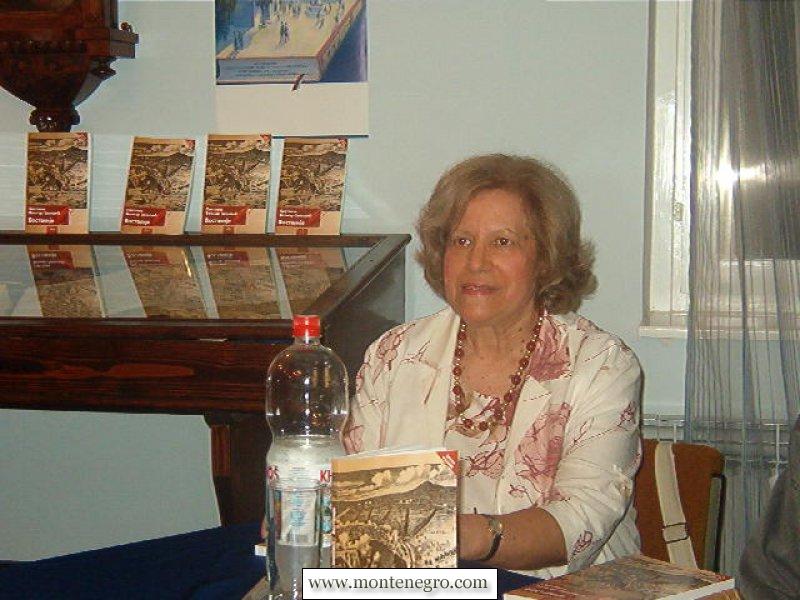
The ten surviving images are strong evidence for place, date, stall design, night-time activity, and programme variety. The entrance board carries the dates. Several stands show publisher or imprint names. Other frames show a reader, an unidentified guest with a book, and a vocal ensemble.
They are weaker evidence for identity and sequence. Filenames are camera labels, inherited alt text says little more than “Montenegro,” and not every photographed person can be matched safely to a long programme. Captions therefore describe visible roles rather than assigning names. The same rule prevents a book held near a speaker from becoming proof that she wrote it.
FAQ
Is Trg od knjige still active?
Yes. The Municipality recorded the 24th edition opening on 21 July 2026, with the published programme continuing through 28 July. The 2026 edition is complete; check official channels for the next one.
Where is Book Square?
The fair occupies Trg Hercega Stjepana, commonly called Belavista, in Herceg Novi’s Old Town. Search those place names rather than expecting “Book Square” to behave as a permanent venue pin.
Did the festival start in 1994 or 2003?
Both dates are relevant. Herceg Novi’s broader book fair began in Igalo in 1994. The Trg od knjige name, concept, and Belavista location began in 2003; the photographed 2004 event was its second edition.
Is entry free?
A 2026 local listing described admission as free, but the municipal opening report did not state a universal ticket policy. Confirm the current edition and any separately produced performance with the organiser.
Are programmes available in English?
No general English-interpretation service was found. Some foreign-language books and international guests appear, but most talks use the local language. Ask the City Library about a specific session.
Is the fair suitable for children?
Children’s literature and performance are part of the formal concept, and 2026 included a dedicated Saturday programme. Confirm the future edition’s age guidance, start time, and seating.