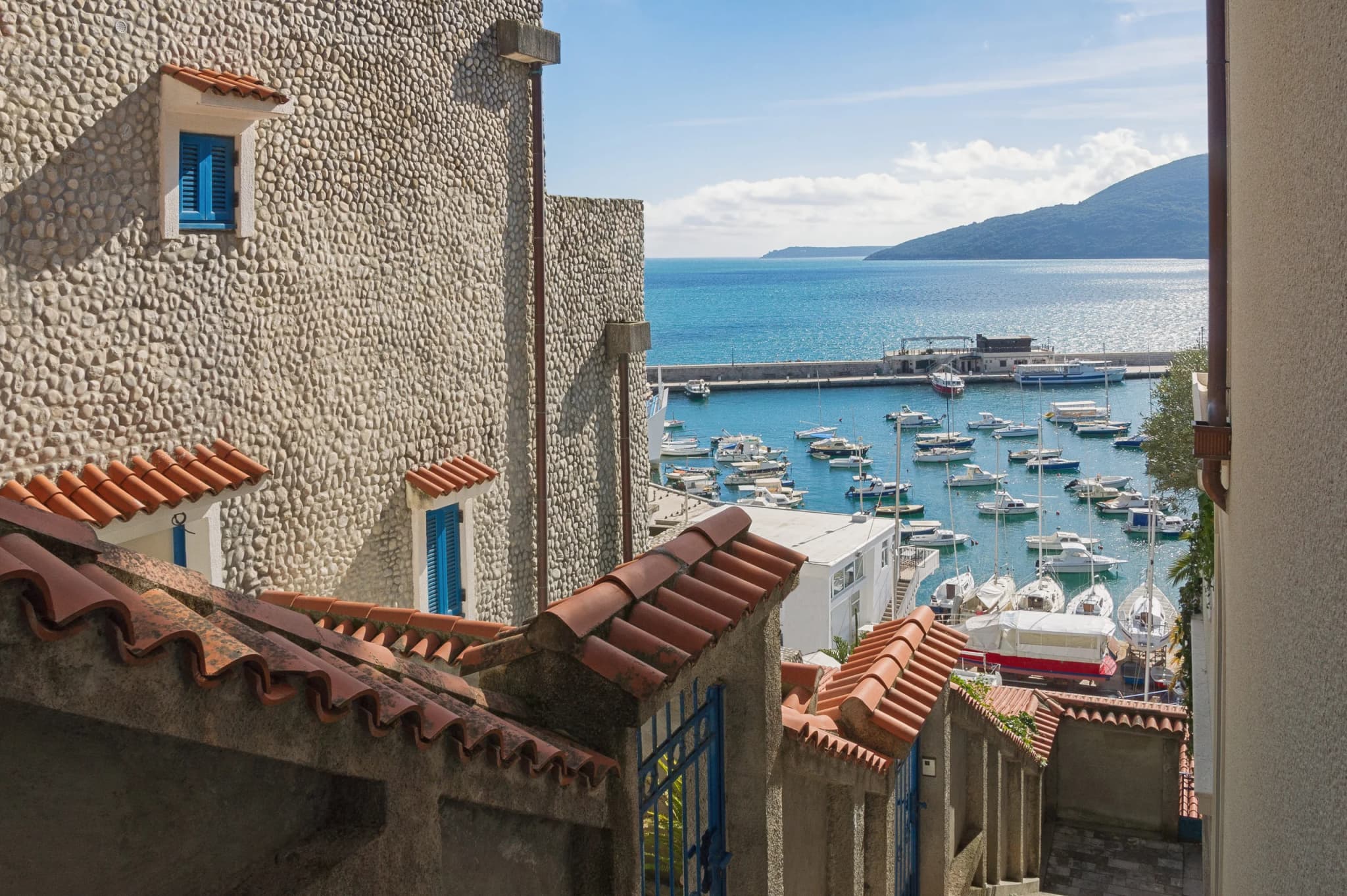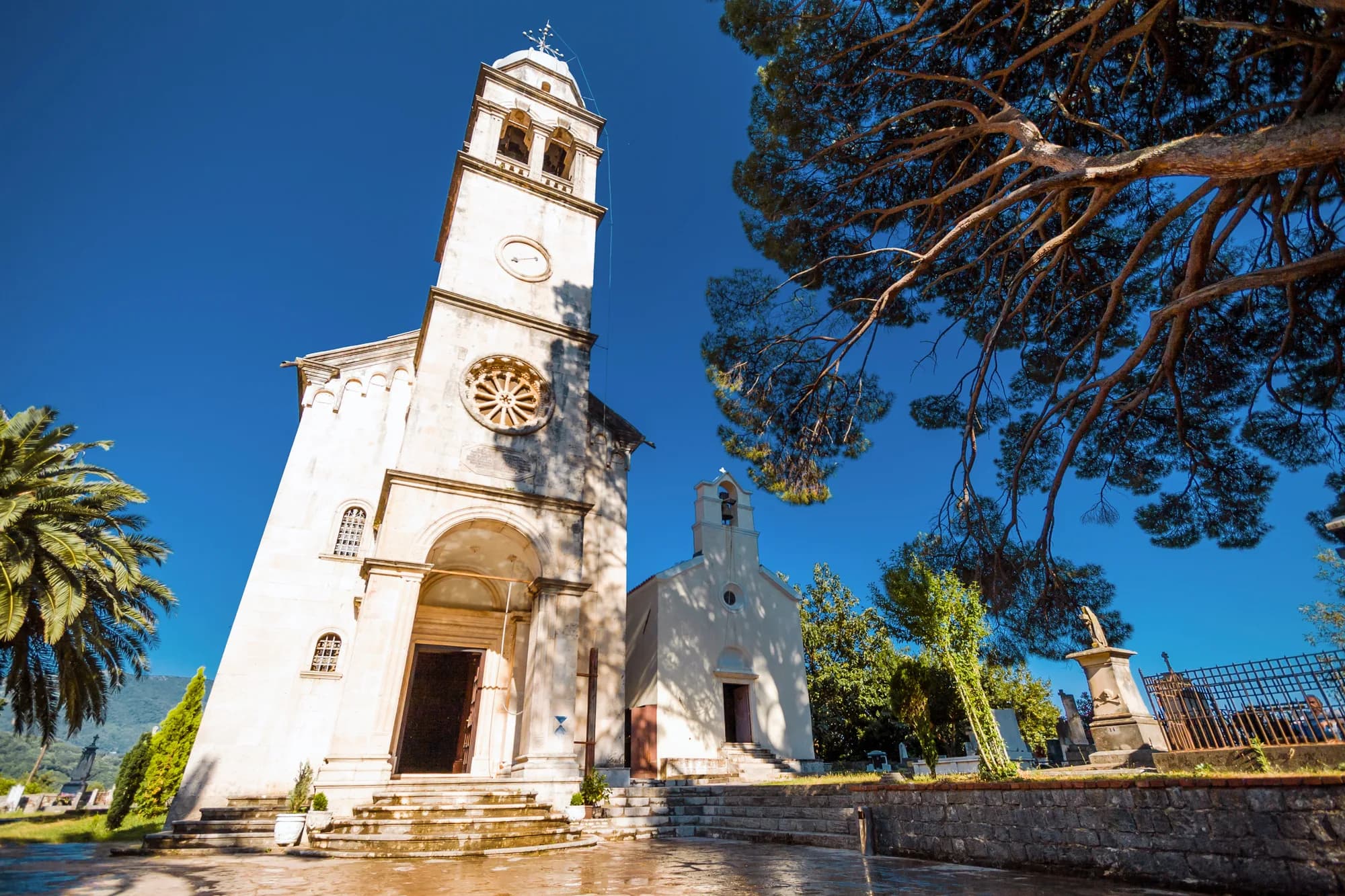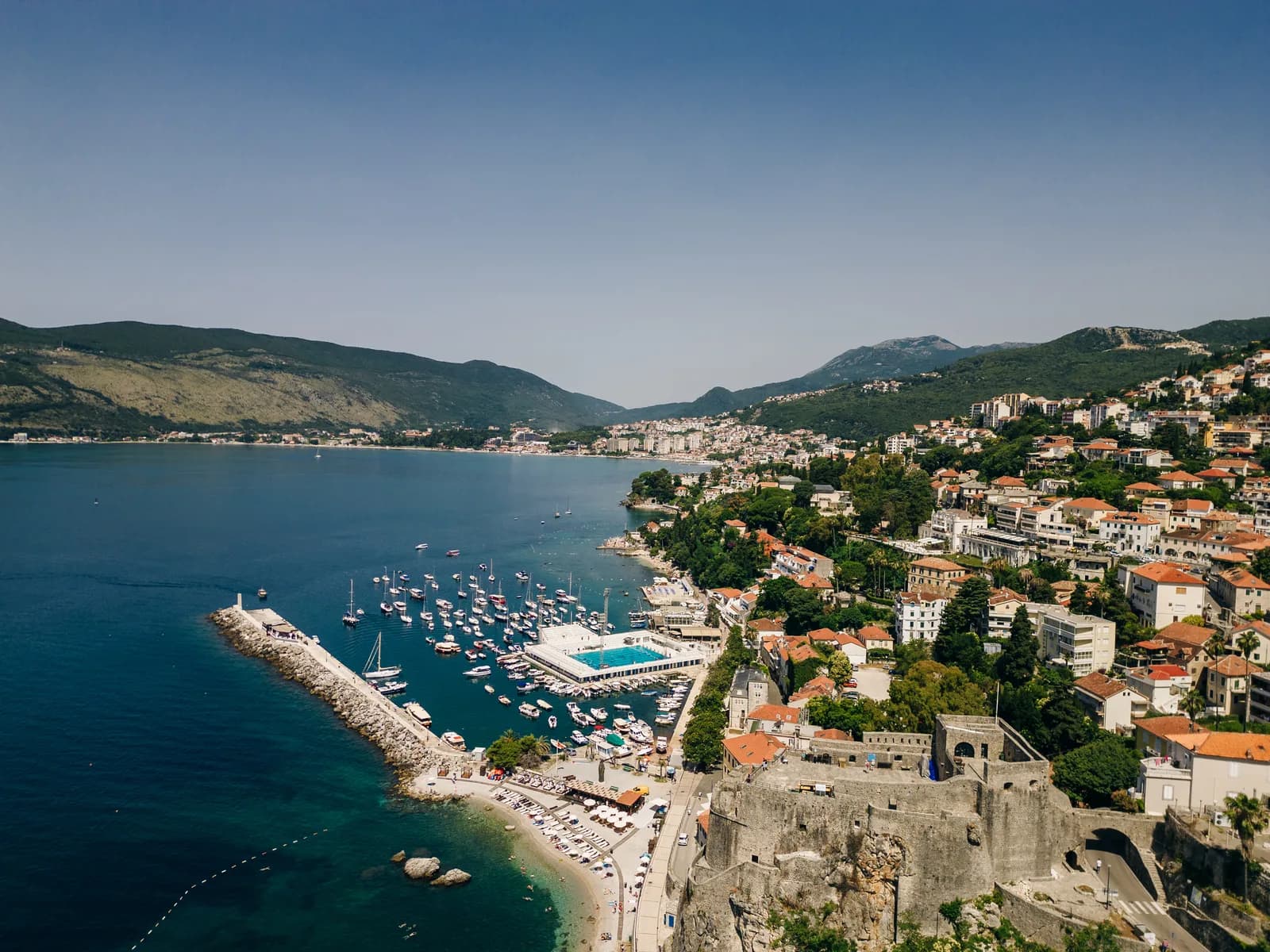
Kanli Kula and Forte Mare are not interchangeable viewpoints. The upper fortress belongs to Herceg Novi’s landward defence, prison history and open-air stage; the lower fortress grew around the medieval town’s seaward strongpoint and was repeatedly rebuilt. Walking between them makes the city’s slope and defensive logic legible, but only if visitors separate documented fabric from romantic siege stories.
What the sources say
This guide uses Herceg Novi municipal heritage records for chronology, JUK Herceg Fest for 2026 visitor information, government material for conservation context and UNESCO records for status. It removes the inherited article’s unsupported troop number, “ten flags” slogan, precise Kanli Kula construction year and any implication that Forte Mare is already part of an inscribed UNESCO property.
| Fortress | Position | Origins | Military role | Present-day use |
|---|---|---|---|---|
| KANLI KULA | upper old-town edge | sixteenth-century core | defence + prison evidence | open-air performance venue |
| FORTE MARE | seaward old-town edge | medieval nucleus + later layers | sea approach + artillery | open-air cinema tradition |
Source: hercegnovi.me, hercegnovi.travel
Kanli Kula and Forte Mare at a glance
| Question | Kanli Kula | Forte Mare | What to verify |
|---|---|---|---|
| Position | Upper edge of Old Town | Seaward edge of Old Town | Your stair route |
| Core story | Ottoman-period defence and prison | Medieval nucleus, repeatedly rebuilt | Interpretive access |
| Cultural use | Open-air stage | Open-air cinema and events | Setup or closure |
| Normal 2026 hours | 09:00–19:00 daily | 09:00–19:00 daily | Same-day notice |
| Published ordinary entry | €4 individual | €4 individual | Current price/event ticket |
| UNESCO status | Not an inscribed component | Not an inscribed component | Do not confuse with Kotor |
The hours and prices above come from Herceg Fest’s 3 April 2026 decision and its public visitor notice. They took effect on 15 April: both sites 09:00–19:00 every day, €4 for an individual visit and €3 per person for groups of ten or more. Treat these as the latest ordinary-visit information found on 1 September 2026, not a guarantee. Concerts, screenings, conservation work, weather or a later decision can change access; event admission is separate.
Forte Mare begins the town—but is not frozen in 1382
The Municipality of Herceg Novi identifies Forte Mare as the nucleus of the medieval settlement founded by Bosnian King Tvrtko I Kotromanić in 1382. This is the sound starting point, but “founded in 1382” does not mean the entire fortress visible today belongs to that moment. Official heritage interpretation identifies only limited surviving Bosnian-period fabric: a wall segment at the southeast corner and a narrow, high stair near the bottom of the eastern rampart.
Later rulers altered the fort because artillery, sea approaches and urban needs changed. The municipal account gives the Ottoman phase particular weight in establishing today’s scale, wall height, defensive crown and gun openings, with major work probably after 1542. Venetian rule left another name and layer; Austrian and Austro-Hungarian interventions continued the sequence. The result is not a single-author monument. It is a working defensive site rewritten across centuries.
| Layer | Contribution |
|---|---|
| BOSNIAN | nucleus |
| OTTOMAN | major scale |
| VENETIAN | name + works |
| AUSTRIAN | later changes |
Source: hercegnovi.me
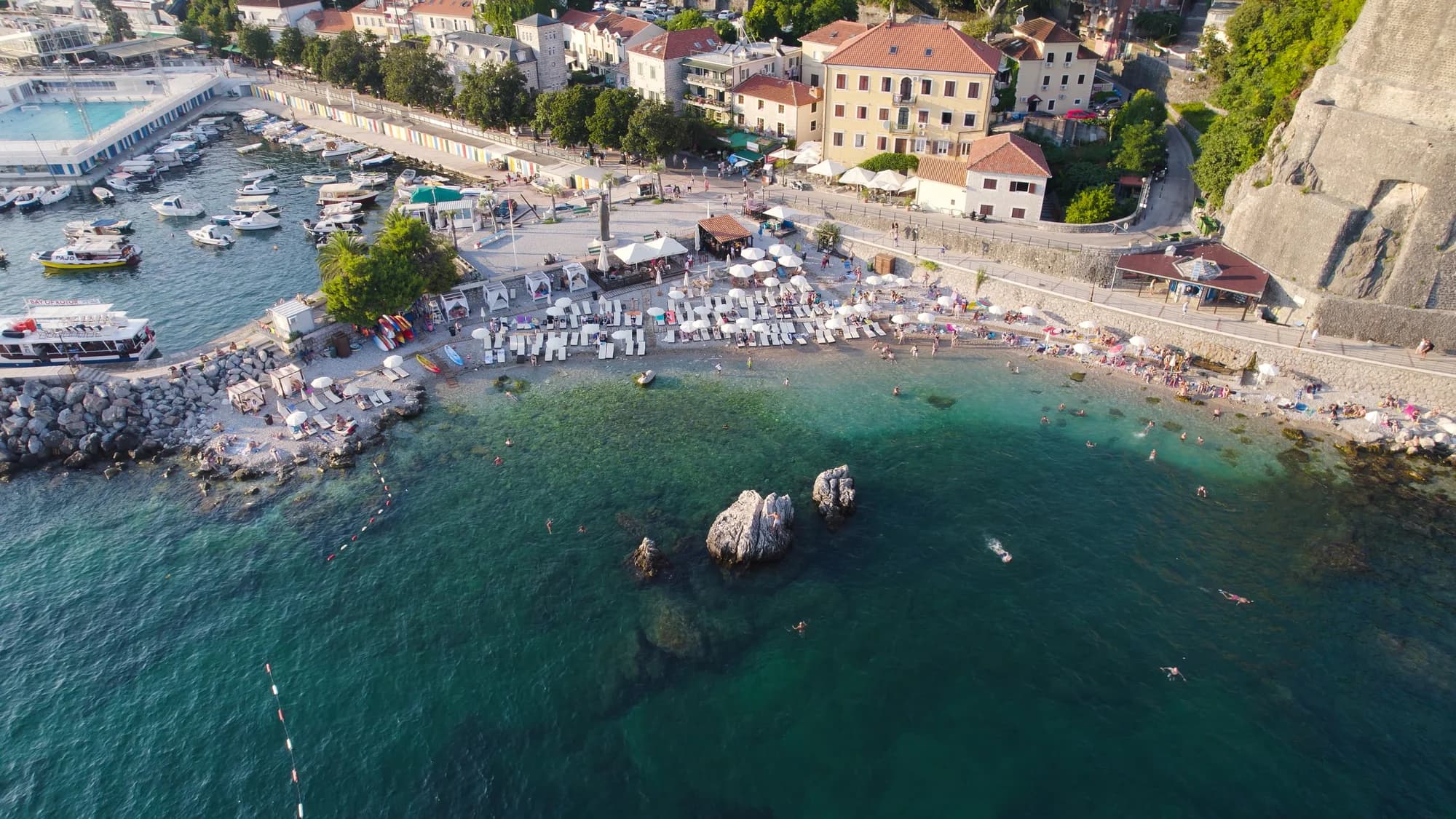
Forte Mare’s position explains the name: the fort controls the old town’s seaward approach from a rock above the shore. Its terraces now provide outlooks over the port, coast and bay entrance. They also support cultural use. Herceg Novi Tourism describes more than six decades of film screenings here, while the municipality’s 2026 film-festival programme again listed Forte Mare as an open-air venue. A festival listing proves active use on those dates, not permanent cinema access.

Kanli Kula: documented prison evidence without horror tourism
Kanli Kula stands at the upper edge of the old town. The name is usually translated as “Bloody Tower,” and both municipal and tourism sources connect the site with Ottoman prison use. But the exact building date is not known. The Municipality dates it broadly to the sixteenth century and says the first written mention located in its account is Evliya Çelebi’s 1664 travel writing. That evidence does not support presenting “built around 1539” as a settled fact.
The structure also contains evidence stronger than the name. A cistern was converted into a prison cell. Municipal interpretation records drawings on its walls: galleys, fish, arms, crosses, names and dates. The form of the drawn galleys resembles vessels used by the Ottoman state in the sixteenth and seventeenth centuries, supporting early prison use. It does not identify who drew each image, why that person was detained or whether executions occurred there. Visitors should look for material evidence without turning unknown prisoners into invented characters.
| Status | Claim |
|---|---|
| DOCUMENTED | defence + prison function |
| MATERIAL | converted cistern + drawings |
| UNPROVEN | named victims + executions |
Source: hercegnovi.me, hercegnovi.travel
Kanli Kula’s later life matters too. The municipal culture programme records its 1966 conversion into a summer stage and identifies Kanli Kula and Forte Mare as protected cultural properties since 1957, managed by JUK Herceg Fest since the early 2000s. Events are not an intrusion without history; cultural reuse is part of the modern biography. The dedicated Guitar Art Summer Fest archive provides one dated example, while the broader Herceg Novi guide places the fort within the city’s cultural calendar.
Forte Mare is not currently an inscribed UNESCO component
This distinction is easy to lose in promotional summaries. In 2017, the World Heritage Committee inscribed six components of the transnational “Venetian Works of Defence between the 16th and 17th Centuries” property. Montenegro’s inscribed component was the City of Kotor. Forte Mare was not among those six.
Montenegro later proposed adding Forte Mare through a minor boundary modification. The published 2018 ICOMOS evaluation recognized its importance but did not support that route. It cited the need to address conservation and authenticity impacts, visitor pressure, vegetation, intrusive facilities and boundary questions; it also said adding a new serial component could not be treated as a minor boundary modification. Therefore “candidate,” “proposed” and “inscribed” are not synonyms. Compare the actual Kotor component through the Kotor City Walls guide.
| Label | Subject | Stage |
|---|---|---|
| INSCRIBED | City of Kotor | 2017 decision |
| PROPOSED | Forte Mare addition | later submission |
| NOT SUPPORTED | minor-modification route | 2018 evaluation |
Source: whc.unesco.org
Conservation is part of the visit
These are protected structures, not neutral event shells. A government cultural programme funded vegetation removal and repair of smaller cracks at both forts under heritage-protection guidance. In April 2025, the culture ministry reported €30,000 for remedial work on endangered segments of Forte Mare. Those records establish continuing conservation needs; they do not prove that a project is finished or that every surface is safe to touch.
Follow barriers and staff directions. Do not climb parapets, sit on fragile wall crowns, scratch stone or enter a service area. A closed stair can be a conservation measure, an event-control measure or a safety response. Visitors do not need to diagnose the reason before respecting it. If a section is inaccessible, read the remaining sequence from the public route instead of finding a shortcut.
Practical route: a same-day visit that respects the stairs
There is no single correct direction. Starting at Kanli Kula makes the walk mainly downhill; starting at Forte Mare places the larger climb first. Either way, the old town includes stone stairs, slopes, uneven thresholds and exposed terraces. Do not infer step-free access from a short map distance. Ask Herceg Fest about the route from the nearest drop-off, handrails, seating, toilets and which levels are open before buying if mobility, balance or heat tolerance is a concern.
A practical sequence is Kanli Kula, the old-town lanes and squares, then Forte Mare and the waterfront. Pause at Belavista rather than rushing down. The Trg od knjige guide adds literary context nearby. At shore level, the Five Danicas promenade history explains the name attached to Herceg Novi’s long coastal walk. For lodging choices that reduce stair exposure, use the Herceg Novi areas guide.
| Check | What to confirm |
|---|---|
| HOURS | today |
| EVENT | setup? |
| ROUTE | up or down |
| LEVELS | open? |
| TICKET | visit/event |
Source: hercegfest.me, hercegnovi.me
Frequently asked questions
What are the 2026 opening hours?
Herceg Fest’s decision effective 15 April 2026 sets 09:00–19:00 daily for both Kanli Kula and Forte Mare. Verify before travelling because a later decision, event setup, weather or conservation work can change access.
How much is ordinary admission?
The April 2026 public notice lists €4 for an individual visit and €3 per person for groups of ten or more. Event tickets are separate. Confirm the current price and whether one ticket covers one or both sites before purchase.
Was Kanli Kula built in 1539?
That exact date is not established in the selected official interpretation. The Municipality places the fortress in the sixteenth century, says its precise construction time is unknown and reports a first written mention in 1664.
Was Kanli Kula really a prison?
Yes, prison use is supported by municipal and tourism records, including a cistern converted into a cell and surviving wall drawings. Specific victim and execution stories need evidence beyond the fortress’s dramatic name.
Is Forte Mare a UNESCO World Heritage Site?
No. UNESCO’s 2017 Venetian Works inscription includes the City of Kotor as Montenegro’s component. A later Forte Mare proposal was evaluated, but the 2018 ICOMOS document did not support adding it through a minor boundary modification.
Which fortress should I visit first?
Start at Kanli Kula for a mainly downhill route or Forte Mare to take the larger climb earlier. Heat, mobility, event access and the levels open that day matter more than a universal order.
Can I attend a film or concert inside?
Both forts remain cultural venues, but ordinary admission does not promise an event. Use the current Herceg Fest or festival programme, buy the correct ticket and check when ordinary sightseeing ends for setup.
Can a wheelchair user visit every level?
Do not assume so. The old-town approach and fortress interiors involve stairs and uneven historic surfaces. Ask the operator about the exact drop-off, entrance, gradients and levels open on your date.