Bijelo Polje rewards a slow cultural walk, but not the certainty of old travel copy. Within a compact centre, a medieval church, an Ottoman-era mosque, a former state school turned museum, a literary house and three writers' memorials show how the Lim valley became a religious, commercial and literary crossroads. The most interesting stories are also the ones that need the most careful labels: documented fact, scholarly inference and oral tradition are not interchangeable.
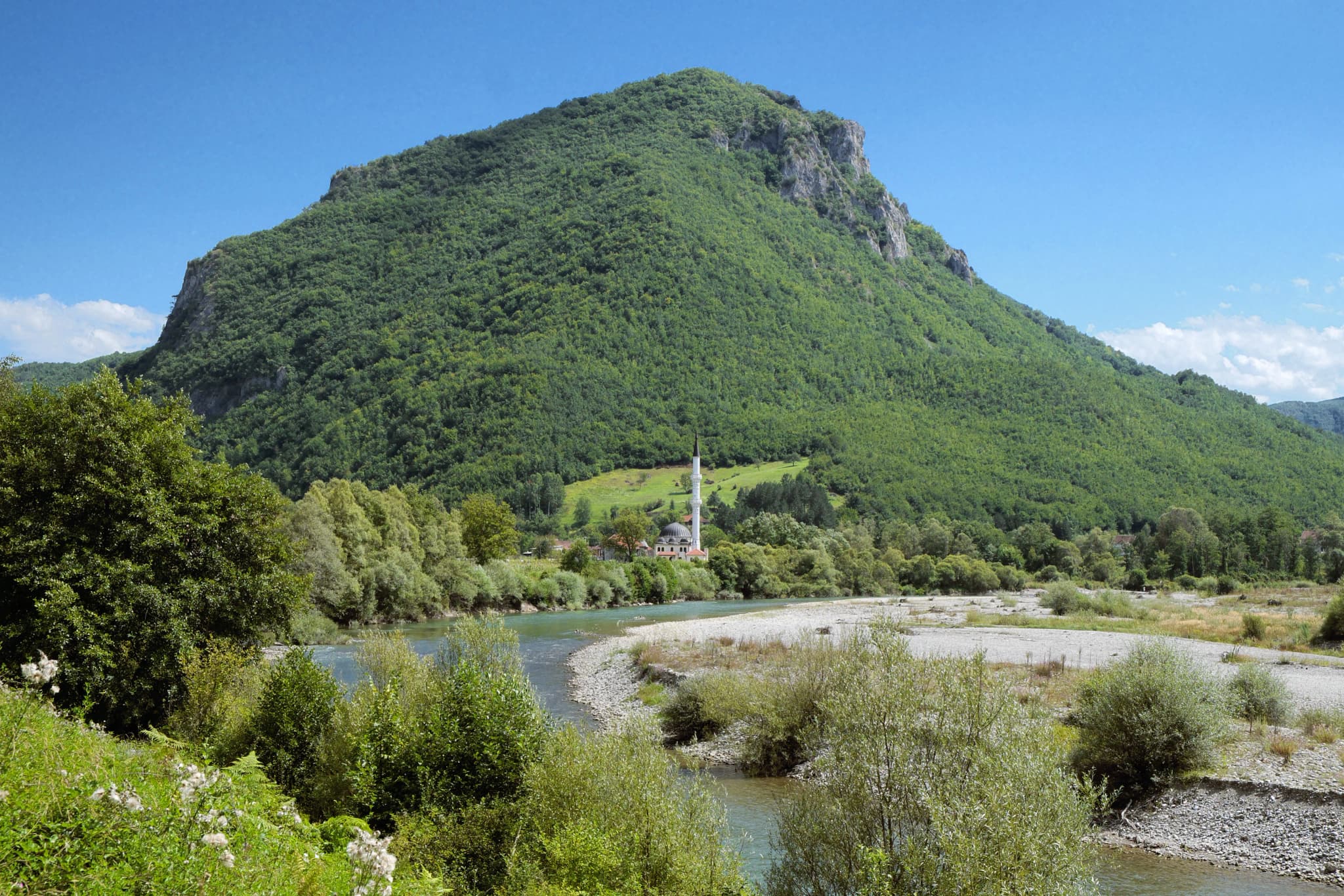
This article began as a first-person winter visit by the Montenegro.com team. The warmth of that encounter remains part of the archive, but several details needed correction. Photographs labelled as Berane did not prove what the text said about Bijelo Polje; a mosque legend was presented as settled history; the Miroslav Gospel's relationship to the church was overstated; and an old hotel renovation was described as if still current. This rebuilt walk keeps the places while making the evidence visible.
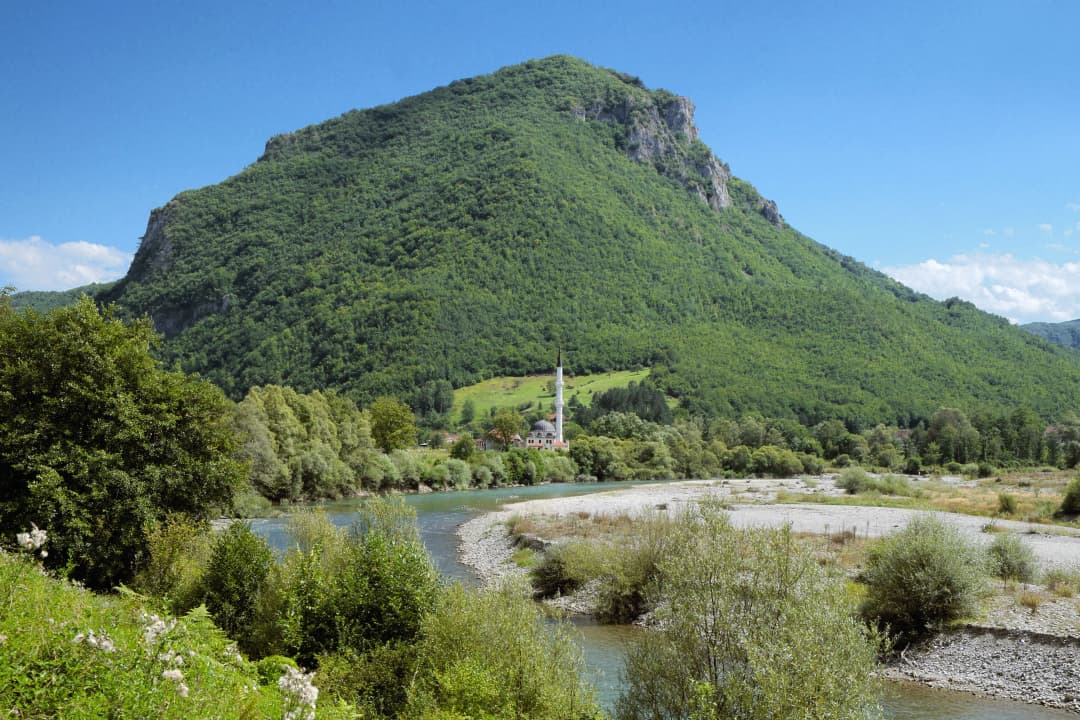
The walk at a glance
| Stop | Why it matters | Evidence caution | Visitor action |
|---|---|---|---|
| Church of Saints Peter and Paul | Late-12th-century foundation associated with Prince Miroslav | The Gospel was likely intended for the church; its exact writing place is not established here | Check service and visitor access; dress for worship |
| City/Jusuf Mosque | Protected mosque associated with 1741 and the Gušmirović name | The move from Jabučno belongs to oral tradition in official heritage material | Ask before entering or photographing worshippers |
| Municipal Museum | Registered collections in a former Ottoman state secular school | Opening hours and gallery access can change | Contact the museum before a dedicated trip |
| Risto Ratković House | Literary institution and event venue in a 19th-century family house | Event use does not guarantee drop-in access | Check the institution's current programme |
| Park of Poets | Memorials to Ratković, Sijarić and Bulatović beside the Lim | A memorial is a starting point, not a complete biography | Pair each name with a work or institutional source |
| Hotel Bijela Rada archive | Part of the original Montenegro.com visit | No current operating or renovation claim is verified | Do not use this page to book or infer status |
Why the town grew here
The municipality's historical account places the town on older movement corridors through the Lim valley. A settlement expanded around the Church of Saints Peter and Paul, while later craft, trade, roads and railway connections strengthened the urban centre. The name Bijelo Polje means “white field.” The municipal account associates it with the white daisy locally called bijela rada, but that explanation should be read as a naming tradition rather than a botanical proof.
The same account records several historical names and phases. Medieval documents mention possessions linked to the church; a Dubrovnik merchant's notes from the 1450s use Nikolj-Pazar; the name Bijelo Polje appears in a 1589 Kotor notarial record; and Ottoman usage included Akova, likewise meaning white field. These layers are more useful than forcing the town into a single “medieval” or “Ottoman” identity.
| Date | Record |
|---|---|
| Late 1100s | Church foundation |
| 1252 | Episcopal seat transfer |
| 1456–58 | Nikolj-Pazar record |
| 1589 | Bijelo Polje record |
| 1600s | Akova usage |
Source: bijelopolje.co.me
For accommodation areas, caves, regional roads and a wider itinerary, use the dedicated Bijelo Polje travel guide. This page stays with the evidence behind a central cultural walk.
Stop 1: Church of the Holy Apostles Peter and Paul
The correct full name is the Church of the Holy Apostles Peter and Paul, not simply “St Peter's Church.” It is associated with Prince Miroslav of Hum and a late-12th-century building phase. Published institutional sources disagree on an exact year, and the structure changed through later additions. The visible architecture should therefore be read as a sequence rather than an untouched object from one construction campaign.
Polim Museum's account of archaeological work describes research around the south parekklesion, a pre-Romanesque bell tower and later chapels connected with an approved restoration project. That work demonstrates why quick stylistic labels fail: masonry now seen together can belong to different periods and interventions. A Romanesque influence in the first church and later Raška-school additions can coexist.
The church is most famous for its association with the Miroslav Gospel. UNESCO's Memory of the World nomination dates the illuminated manuscript to around 1180–1190 and describes its cultural significance. UNESCO does not say it was certainly written inside this church. A Serbian government provenance summary says the manuscript was probably intended for Prince Miroslav's episcopal church here. “Probably intended for” is the responsible wording; “written here” goes beyond the evidence cited.
| Claim | Detail | Status |
|---|---|---|
| Established | Around 1180–1190 | ✓ |
| Commissioned for | Prince Miroslav | ✓ |
| Supported inference | Probably intended for the church in Bijelo Polje | ≈ |
| Not established | Certainly written inside this building | × |
Source: media.unesco.org, srbija.gov.rs, polimskimuzej.me
The original manuscript is not a church display promised by this walk. UNESCO's register identifies it as documentary heritage submitted by Serbia, and the National Museum in Belgrade is its principal custodian; one detached leaf is held separately in Saint Petersburg. Visitors should appreciate the church as the likely destination and cultural setting of the commission, not arrive expecting to see the manuscript.
Stop 2: City, Jusuf or Gušmirska Mosque
The central mosque carries several names. Official urban-planning heritage conditions identify it as the mosque in Gornja Mahala, called the Jusuf Mosque. It is also widely called the City Mosque. The name Gušmirska comes from Hafiz Mustafa Gušmirović, an imam whose grave is in the mosque courtyard.
The transfer story needs two labels. The heritage document associates the building with 1741 and states that, according to tradition, the minaret was dismantled at a mosque in Jabučno and moved to the present site. Municipal tourism material tells a fuller story in which a mosque was moved stone by stone, hand to hand. Later retellings add a single night, 48 hours or a ten-kilometre human chain. Those variants are meaningful oral heritage, but they are not equal to a contemporary construction record.
| Source of claim | What it says |
|---|---|
| Heritage record | Protected cultural property |
| Associated with 1741 | Gušmirović grave explains name |
| Oral tradition | Transferred from Jabučno |
| Hand-to-hand movement | One night or 48-hour variants |
Source: urbanizam.bijelopolje.co.me, bijelopolje.co.me
The mosque remains a place of worship. Visit outside prayer when invited, dress modestly, remove shoes where directed and ask before photographing people. Do not wander among graves or treat the courtyard as a shortcut. For a different example of layered religious use in one building, see the church-mosque evidence study; it is comparative context, not a claim that the two histories are the same.
Stop 3: the Municipal Museum
The dedicated municipal profile says the museum was founded in 1957 and occupies a former Ruždija, an Ottoman state secular school built around 1897–1905. The building itself has cultural-property status. Its archaeological, ethnographic, historical, numismatic and art collections are registered as movable cultural property.
This stop is more useful than using the town as scenery. Archaeology connects the valley to older settlement and movement; ethnographic objects explain domestic and craft life; historical collections complicate any one-community narrative; and the building embodies late Ottoman educational administration. The museum's status does not guarantee that every collection or room is open on every date. Contact it through the municipality's current institutional page before planning around a specific display.
One inherited claim placed a nationally important set of built-in bathroom-cupboards in an old house and connected that property to Hadži Lojo. Accessible authoritative sources reviewed for this upgrade did not securely establish the property, episode and object classification together. The story is omitted rather than polished into false confidence. Ask museum staff about documented domestic interiors if that subject matters to you.
Stop 4: Risto Ratković House
The municipal cultural guide identifies the 19th-century house as property of the family of merchant Đoko Ratković, father of writer Risto Ratković. It links Ratković with Nevidbog, described there as the first modern Montenegrin novel. The house is not merely a memorial shell: recent institutional reports record exhibitions and literary programmes there.
Ratković Poetry Evenings began in 1970, according to the institution's current history, and evolved into an international literary programme with awards for an established poetry book and younger poets. An older municipal document says the public institution was founded to formalize a festival that had run for decades. This continuing use is more reliable than a generic claim that Bijelo Polje “is a city of writers.” Literature here has venues, budgets, archives, prizes and audiences.
| Institution | Activity |
|---|---|
| Risto Ratković House | Poetry Evenings |
| Risto Ratković House | Book and youth prizes |
| Risto Ratković House | Archives and exhibitions |
| Risto Ratković House | Park of Poets |
Source: ratkoviceve.bijelopolje.co.me
Stop 5: Park of Poets and the Lim
On the riverbank, the park brings together busts of Risto Ratković, Ćamil Sijarić and Miodrag Bulatović. The poetry institution explains that the site began as “Risto's Park” after Ratković's bust was installed; it became Park of Poets as Sijarić and Bulatović joined him. A municipal memorial programme separately records the three busts and their protected public-memory role.
Read the grouping critically. Ratković wrote poetry and prose, Sijarić worked across novels, stories, travel writing and essays, and Bulatović became an internationally translated modern novelist. They do not represent one school or identical identity. The park makes a regional literary claim, while the nearby river places it in the landscape repeatedly used in local writing and festival programmes.
Do not stop at the busts. Pick one text before arrival, then use the institution's programme to see whether a reading, exhibition or discussion coincides with the visit. The broader history of writing about Montenegro explains how international travel coverage can privilege the coast; this park shows a northern literary canon speaking on its own terms.
| Writer | Known for |
|---|---|
| Risto Ratković | Poetry and modern Montenegrin prose |
| Ćamil Sijarić | Novels, stories, travel and essays |
| Miodrag Bulatović | Modernist fiction and drama |
Source: ratkoviceve.bijelopolje.co.me, bijelopolje.co.me
The Hotel Bijela Rada photograph: archive, not booking advice
The original team visit included Hotel Bijela Rada and described a host's ambition to transform it into a modern property. That statement belongs to the moment of the visit. It is not evidence that the same owner, renovation, quality or operating status exists now. No current status claim is made here.
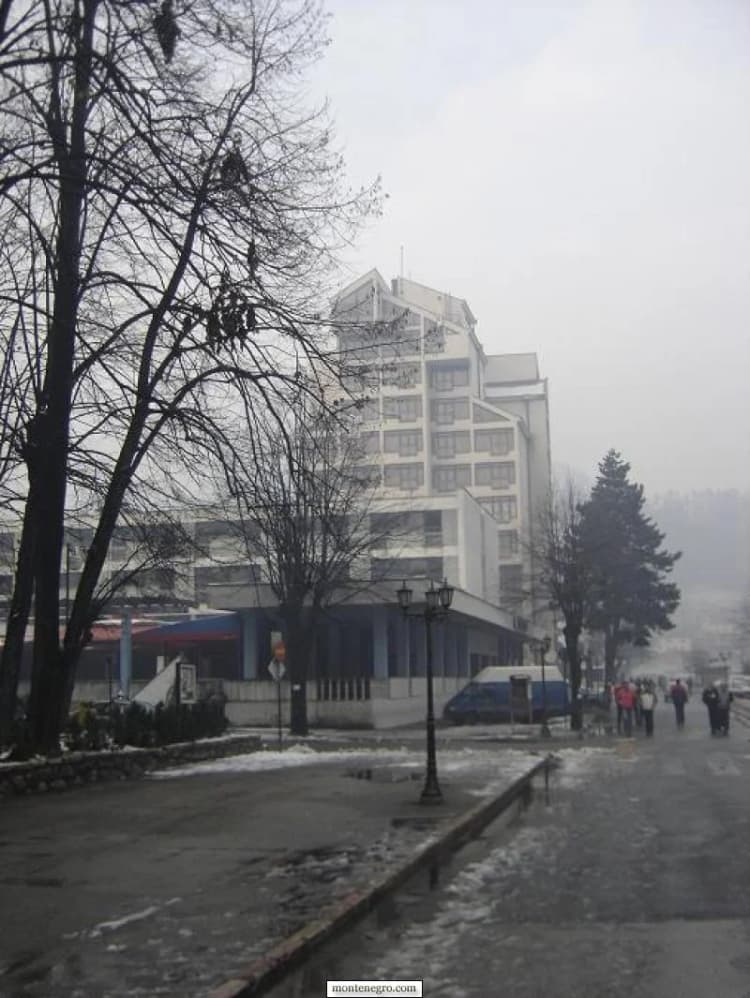
This distinction matters across travel publishing. An old photograph may be authentic while the commercial inference attached to it is obsolete. Our hotel booking-status audit explains how to separate a building's history from a sellable room. For this walk, choose accommodation through current official or direct property channels and obtain written confirmation.
Practical plan for a respectful half day
Start with the church only after checking service times and visitor access. Continue to the City Mosque outside prayer, then arrange the museum rather than assuming an unlocked door. Visit Risto Ratković House when its institution lists a programme or confirms access, and finish at Park of Poets and the river. The order is a walking framework, not a promise that every interior opens on the same day.
- Contact religious sites and the museum in advance if interior access is essential.
- Wear clothing appropriate for active places of worship; ask about shoes and photography.
- Carry the names in both Latin and Cyrillic scripts to match signs and local searches.
- Allow extra time for slopes, winter ice, rain and street works.
- Do not photograph worshippers, graves, private houses or schoolchildren without permission.
- Use the official railway date search rather than copying a timetable from this article.
Railway Transport of Montenegro publishes a date-searchable local timetable and a station contact. Services and fares change, so confirm the actual travel date. Drivers should treat mountain weather and daylight as route inputs, not rely on the old article's “Tolkien scenery” anecdote. The seven-day itinerary can help place a northern stop within a larger trip, while the national-park planning article covers a separate nature day.
If the purpose is to understand why northern Montenegro remains underrepresented in travel media, read the case for looking beyond established visitor circuits. Bijelo Polje does not need coastal comparisons to justify a visit; its church, mosque, museum and literary institutions form a coherent cultural route of their own.
Frequently asked questions
Was the Miroslav Gospel written in the church?
That is not established by the sources reviewed. UNESCO dates and describes the manuscript but does not locate its production there. A Serbian government provenance account says it was probably intended for Prince Miroslav's Church of Saints Peter and Paul in Bijelo Polje. The association is strong; the exact writing room is uncertain.
Can I see the original Miroslav Gospel in Bijelo Polje?
Do not expect it at the church. The principal manuscript is held by the National Museum in Belgrade, with one detached leaf in Saint Petersburg. Display arrangements are controlled by those custodians and can be limited for conservation.
Was the City Mosque carried by hand in one night?
The hand-to-hand move from Jabučno is an important local tradition. Official heritage material identifies the transferred-minaret account as tradition, while retellings vary between one night and 48 hours and differ on whether they mean the minaret or whole mosque. Present it as oral heritage, not a timed engineering record.
Why is it called Gušmirska Mosque?
Official heritage conditions say Hafiz Mustafa Gušmirović is buried in the courtyard, explaining the Gušmirska name. The same building is also called the City Mosque and Jusuf Mosque.
Are the three writers' monuments still together?
Current institutional and municipal sources identify the busts of Risto Ratković, Ćamil Sijarić and Miodrag Bulatović in Park of Poets. Public-space condition and event layouts can change, but the memorial grouping is well documented.
Is Hotel Bijela Rada recommended here?
No. It appears as an archival stop from the original editorial visit. This article verifies no current ownership, opening, renovation, room quality or price. Check current booking evidence independently.
How long does the walk take?
The outdoor sequence can fit within half a day, but meaningful interior visits depend on access and conversation. Reserve longer if the museum or a literary event is open. Do not compress worship sites into a timetable that pressures custodians.