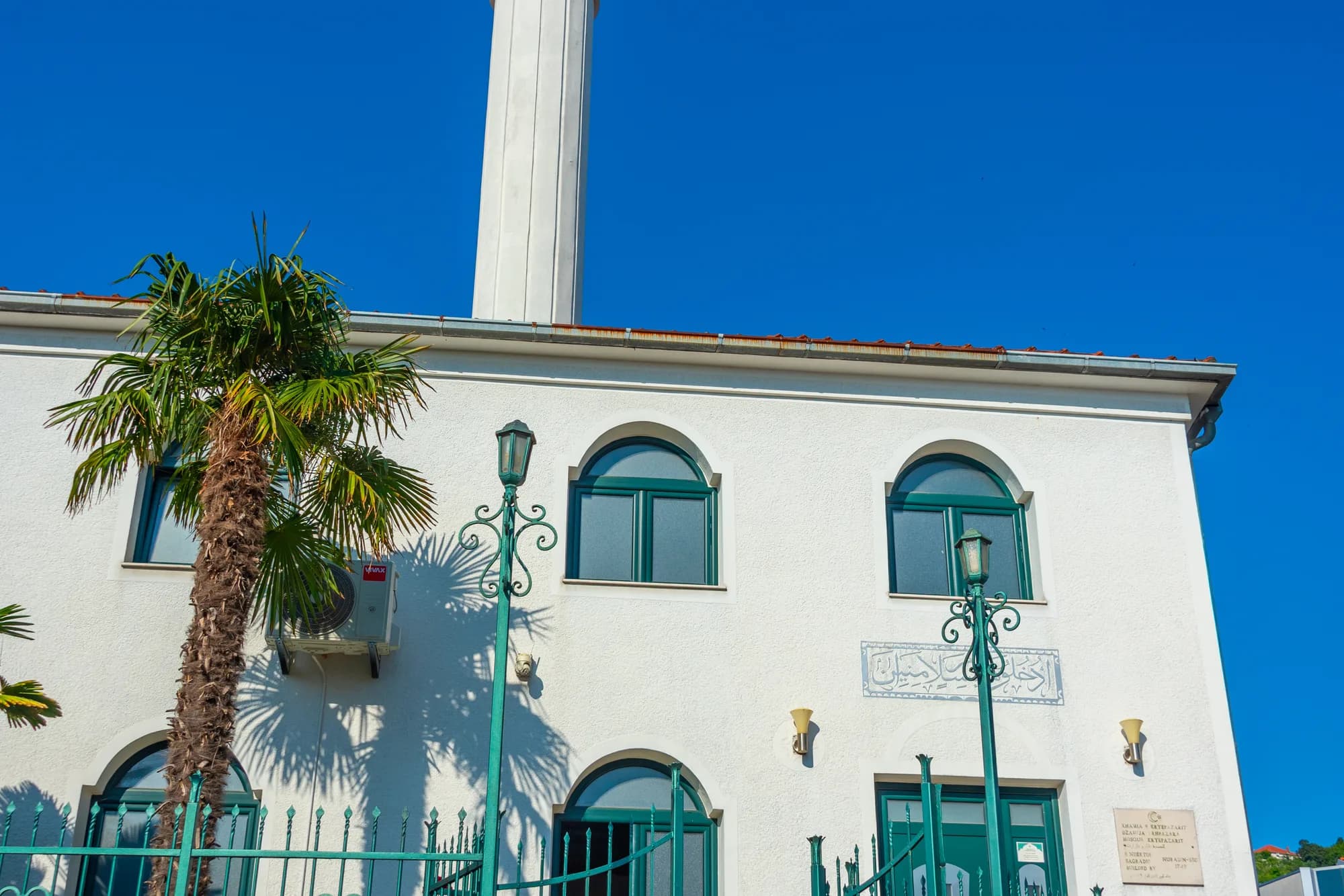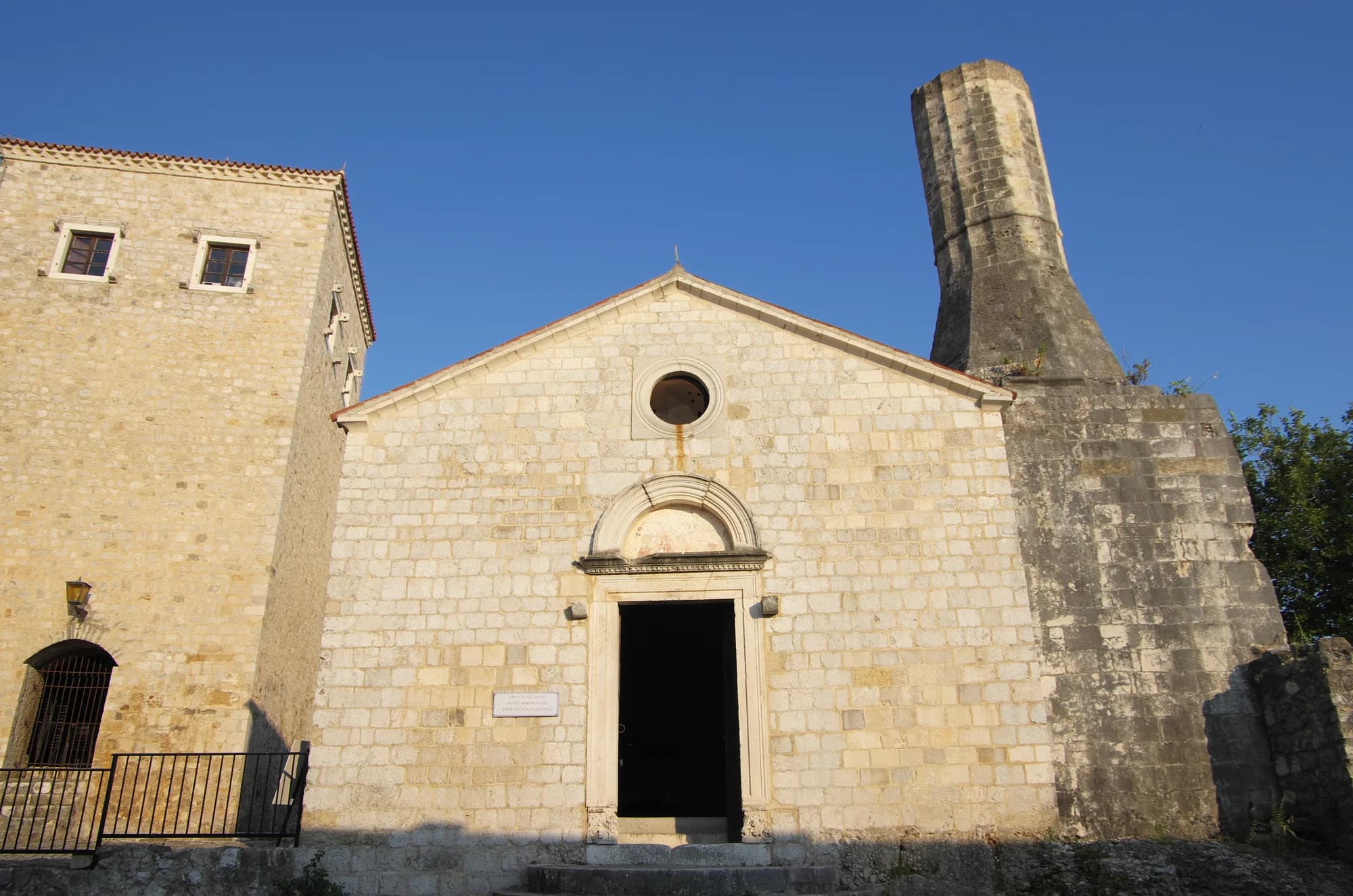
In the heart of Ulcinj's walled Old Town stands a building that refuses to be one thing. Its stone body is a sixteenth-century Venetian church; beside it rises a seventeenth-century Ottoman minaret; and through its door today you enter neither church nor mosque but a museum. Locals call it simply the Church-Mosque (Crkva-džamija; Kisha-Xhami), and no single building on the Montenegrin coast tells the region's layered story more compactly.
1510: a church under the Lion of St Mark
Ulcinj spent the fifteenth and sixteenth centuries under the Republic of Venice, the southernmost outpost of its Adriatic empire. In 1510 the Venetians built this church in the upper town and dedicated it to St Mary. It was a solid, unshowy piece of late-medieval church-building — a stone hall for a garrison town on a dangerous frontier, standing within sight of the advancing Ottoman world.
1571: the conquest changes the call to prayer
The frontier arrived in 1571, the year of the great Ottoman offensive in the Adriatic, when Ulcinj fell to the sultan's forces. As happened across the empire, the town's principal church was converted to Islam's use: St Mary's became the Mosque of Sultan Selim II, named for the reigning sultan. It held unusual status — an imperial mosque, financed directly from the state treasury rather than from a pious endowment. In 1693, Hajji Halil Skura gave the building its most visible Ottoman feature: a finely cut stone minaret rising from a rectangular base beside the old church walls. For over three centuries the building served the town's Muslims, its Christian bones carrying an Islamic voice — until history turned again in 1880, when Ulcinj passed to Montenegro after the Congress of Berlin, and the mosque's religious life ended.
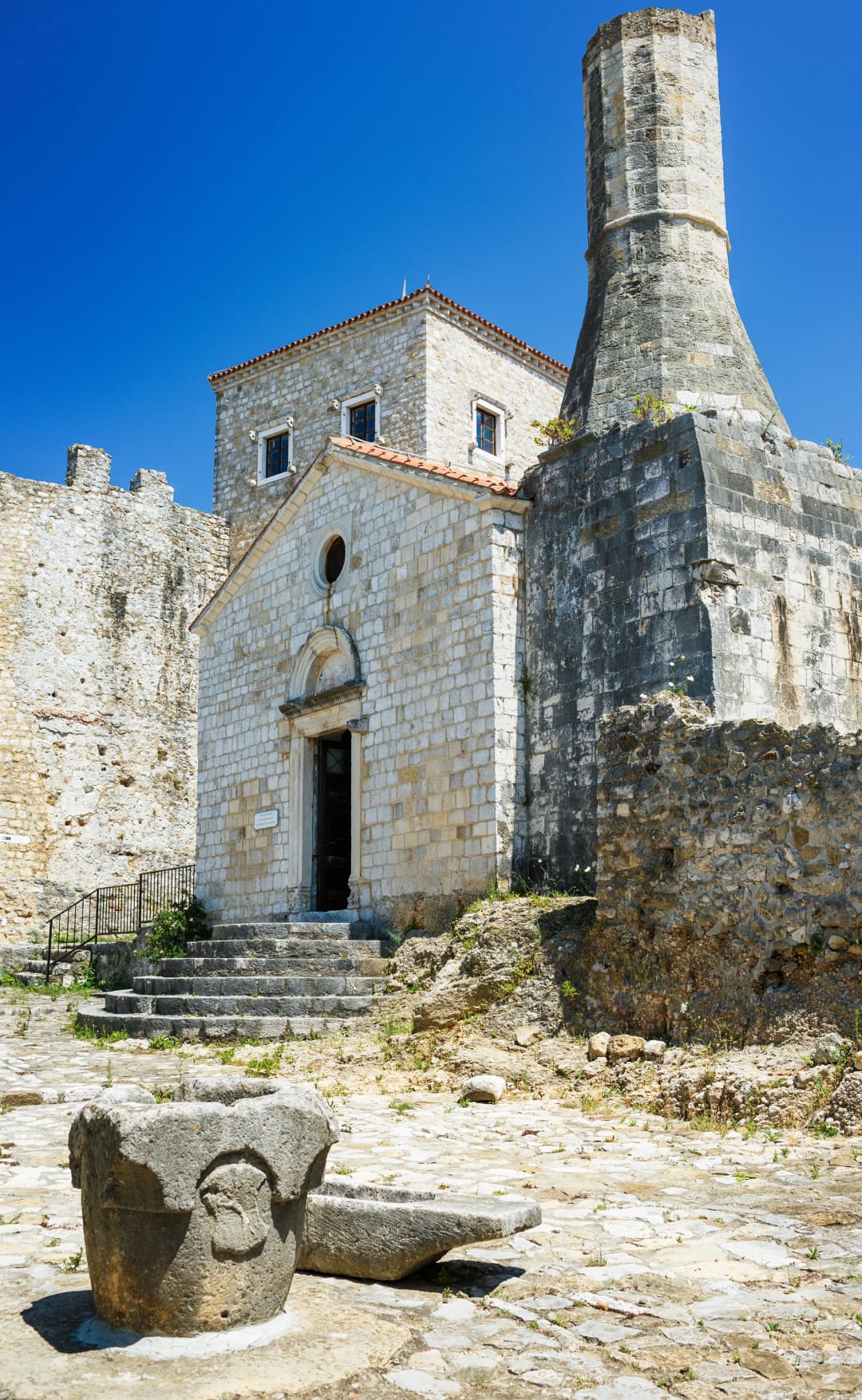
Today: a museum of everything underneath
The building's third act suits it perfectly. It now houses Ulcinj's Museum of Local History, the anchor of a small museum complex in the citadel, and its collections reach far deeper into time than either of the faiths it served. The archaeological displays begin with material from the 5th century BC — ancient Greek pottery testifying to Ulcinj's origins as a colony of the classical Mediterranean — and continue through Roman glass, ceramics and coins, the medieval centuries of the local Vojislavljević and Balšić dynasties, and the long Ottoman era. Ethnographic and art collections round out the picture of a town that has been Illyrian, Greek, Roman, Byzantine, Slavic, Venetian and Ottoman without ever moving an inch.
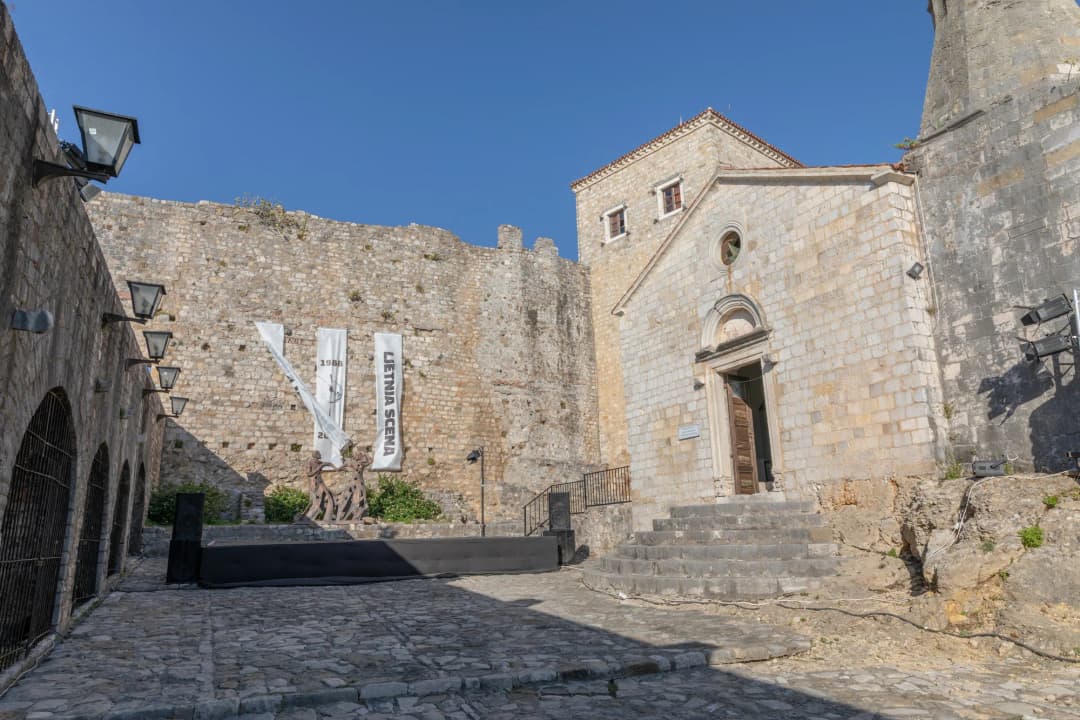
Look closely at the fabric of the building itself — it may be the best exhibit. The church's Gothic-tinged stonework and the minaret's Ottoman geometry share a foundation and a courtyard; a Roman-era relief and inscribed stones found in the citadel keep them company. Where most towns present their history as a sequence, Ulcinj presents it as a single object. Even the museum's location repeats the trick: the citadel around it was shaped in turn by Illyrian builders, Venetian engineers and Ottoman garrisons, so that the walk from the town gate to the museum door crosses more centuries than most national museums manage to contain.
One building, both faiths
It is tempting to read the Church-Mosque as a monument to conflict — conquest recorded in architecture. But standing in the quiet citadel today, the truer reading may be the opposite. Ulcinj remains one of Montenegro's most religiously and ethnically mixed towns, its mosques and churches sharing the skyline as they have for centuries. The Church-Mosque, wearing both identities at once and belonging now to everyone as a museum, is less a scar than a synthesis — the town's whole biography in one stone paragraph.
Visiting
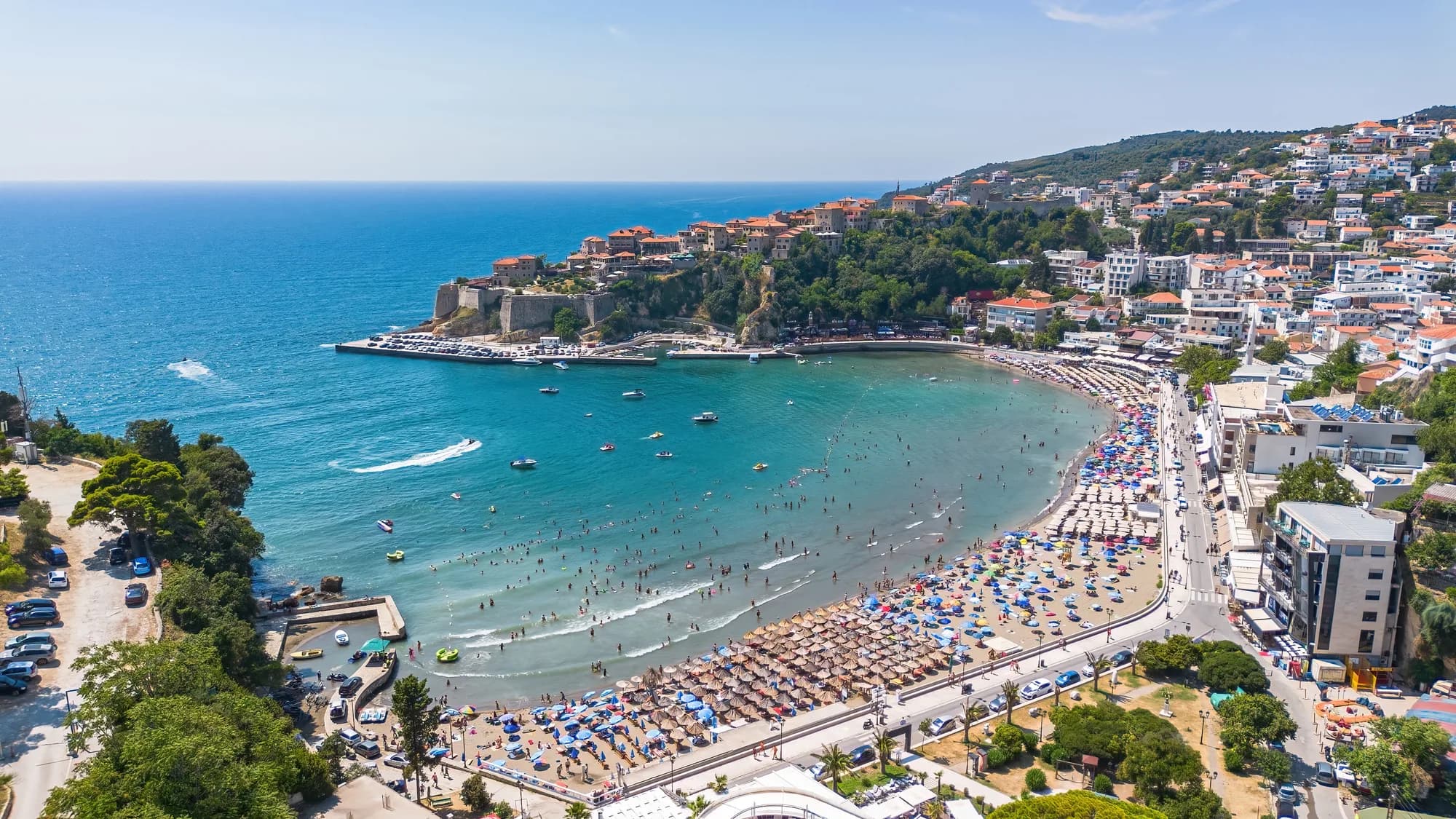
The Church-Mosque stands inside the walls of Ulcinj's Old Town, the fortified headland above Mala plaža — the citadel is a stage on the Pinjes Pines walk, which climbs to it along the coast. The museum charges a modest entrance fee; opening hours are longest in summer and reduced off-season, so check locally. Allow half an hour for the collections and as long again for the citadel around them: the ramparts, the Balšić Tower, the slave-market square of corsair legend, and the sea views that explain why everyone from Greek colonists to Ottoman admirals wanted this rock. Come in late afternoon, when the low sun warms the old stone and the Old Town's lanes begin to cool.