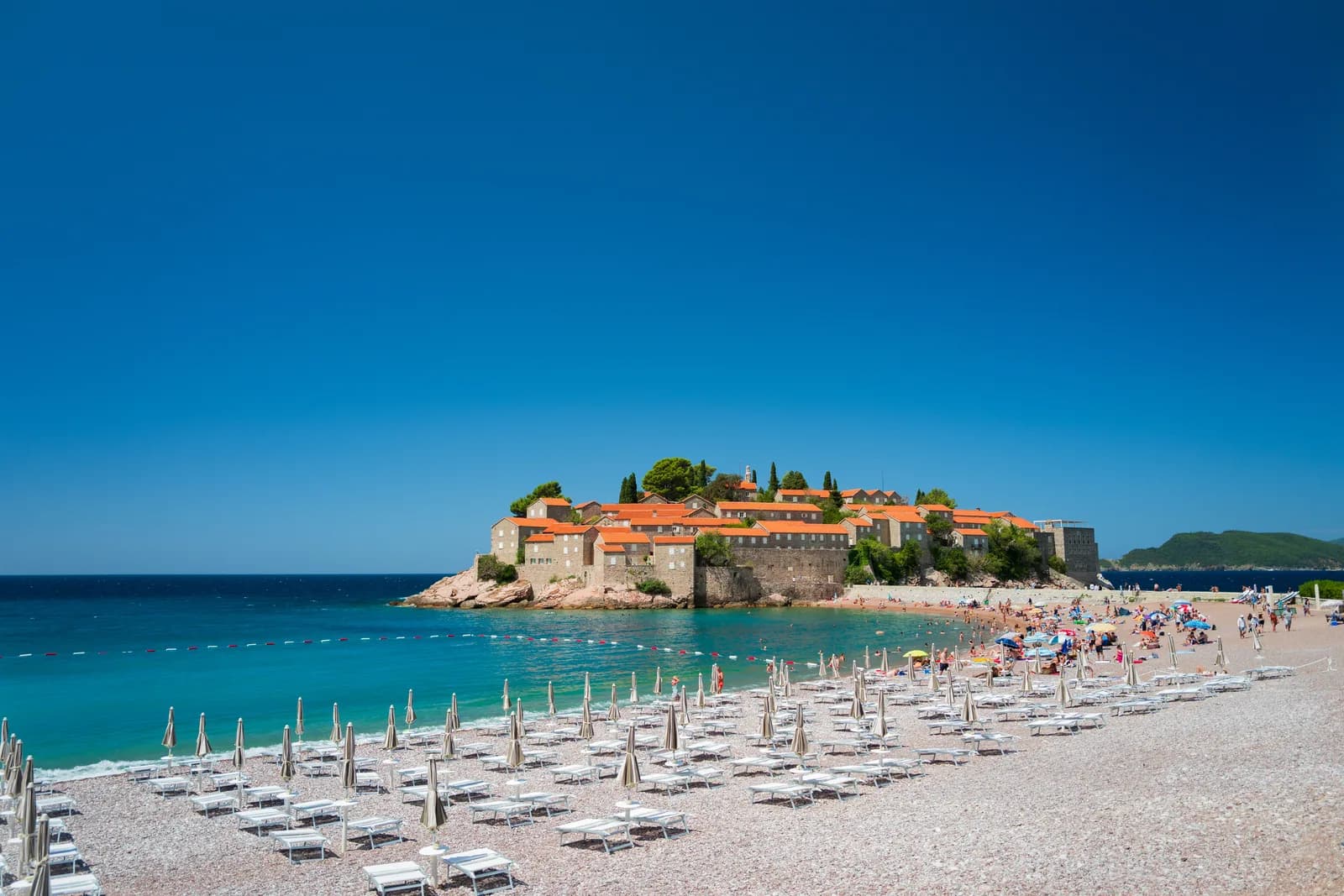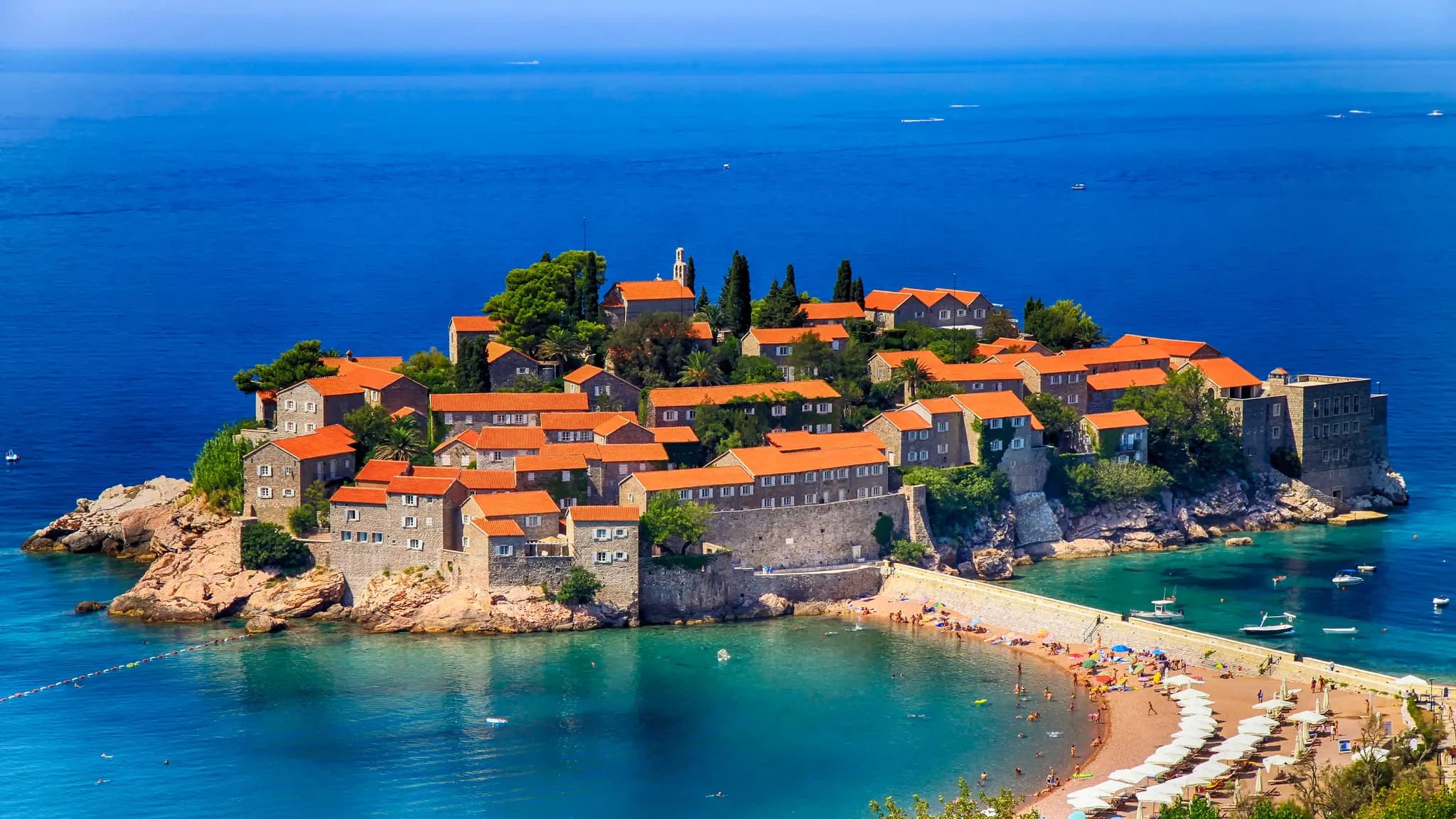
Most hidden beaches hide nothing but themselves. Drobni Pijesak — "fine sand" — hides a parliament. This small golden cove between Sveti Stefan and Reževići, walled in by cliffs and olive terraces, invisible from the road above, was for centuries the assembly ground of the Paštrovići: the place where the coast's twelve clans came down to the sea to pass laws, settle feuds and choose the men who would judge them. It is roughly 240 metres of white-gold sand and pebble, a freshwater spring, two summer restaurants — and one of the oldest political stages in Montenegro.
A tribe that governed itself
The Paštrovići held the coast from Budva toward Spič, a community of twelve brotherhoods first recorded in the mid-fourteenth century. Their defining act came on 4 April 1423, when their elders concluded an agreement with the Republic of Venice: the clans accepted Venetian sovereignty, and in exchange Venice confirmed their self-rule — their own law, their own court, their own assembly, exemption from ordinary taxation, and the right to be judged by their own people. It was one of the most favourable arrangements any small community extracted from the Serenissima, and the Paštrovići kept versions of that autonomy alive under Venice and then Austria — roughly four centuries of clan self-government conducted, much of it, on a beach.
The Bankada on the sand
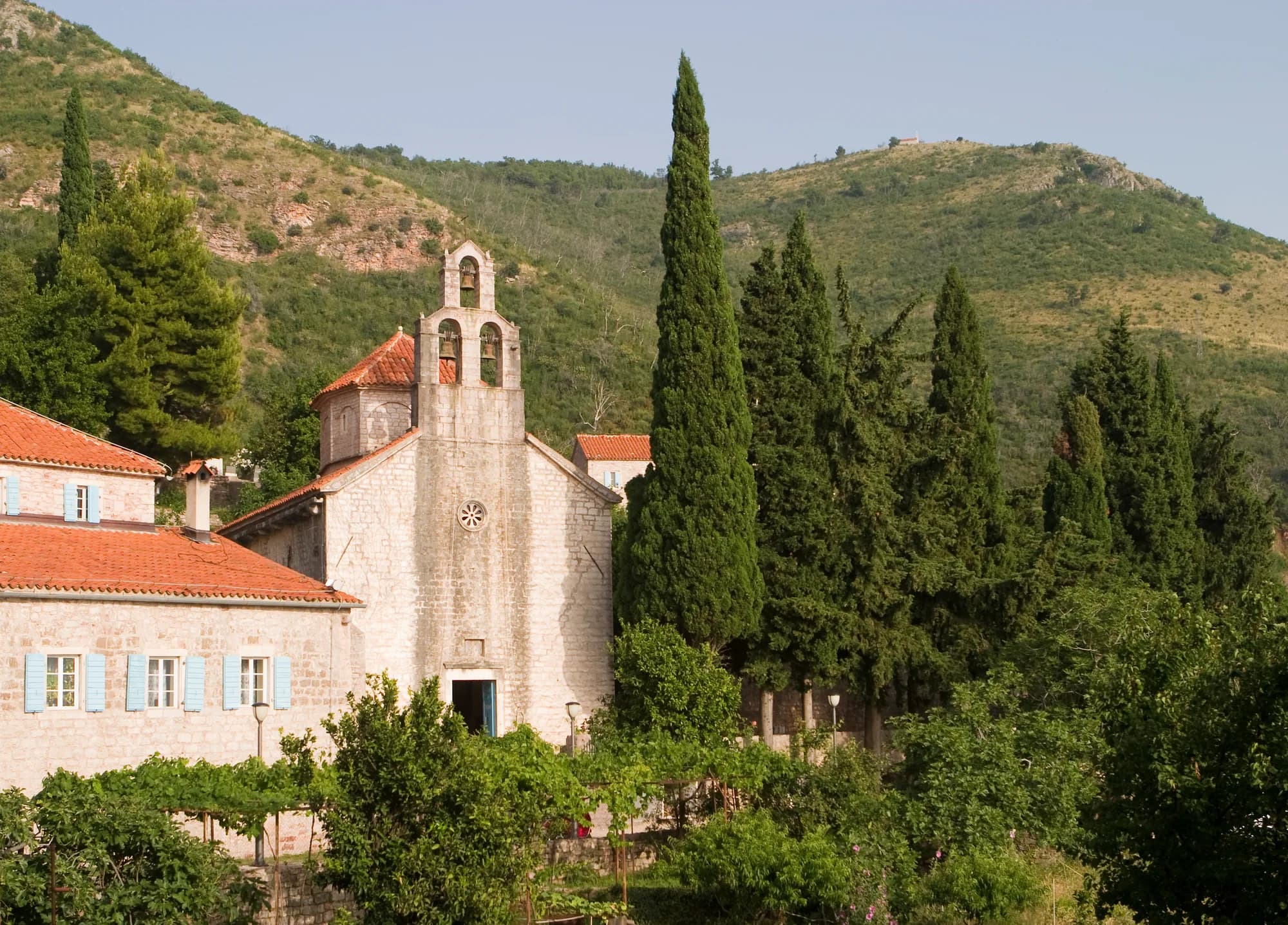
Their governing body was the Bankada — from the Italian banca, the bench — an assembly-court whose members sat on stone benches to hear cases and decide the community's business. Accounts of its exact composition vary, but the sources describe a bench of judges (suđe) and vojvode drawn from the twelve brotherhoods, so that every clan sat in its own government. The Bankada met at several sanctioned places — Sveti Stefan's gate and the Praskvica monastery among them — but its great open-air seat, from the fifteenth century into the nineteenth, was Drobni Pijesak.
The most solemn gathering came each year on Vidovdan, St Vitus' Day, the 28th of June — the most charged date in the Serbian calendar — when the Paštrovići assembled in force on this sand to elect and confirm their judges and vojvode and to decide the year's weightiest questions. Picture it against the beach you see today: boats drawn up along the waterline, the brotherhoods gathered by family under the cliffs, the bench of elders at the head of the sand, and the whole sovereignty of a small maritime nation transacted between the olive groves and the sea. The tradition has not entirely died: in recent years the Bankada has been symbolically revived, and Paštrović descendants gather again at Drobni Pijesak to honour it.
The cove itself
Even without the history, the walk down would be worth it. The cove faces southwest into open sea, its water a calm, transparent gradient of sapphire over pale sand — the "fine crushed sand" of the name. Olive groves and maquis hold the slopes; the cliffs keep out both wind and noise; and a spring of drinkable fresh water rises at the beach itself, one reason this particular cove could host day-long assemblies of an entire tribe. Facilities are light and seasonal — a bohemian beach bar and a konoba, loungers and umbrellas for rent in summer, simple showers and changing cabins, and nothing permanent enough to break the spell. Because the cliffs stand close, the sun leaves the sand relatively early in the evening; the compensation is that mornings here are flawless.
Getting down to it
Drobni Pijesak guards itself with geography. From the Adriatic highway between Sveti Stefan and Petrovac, a signed junction near Reževići drops into a steep, winding lane that switchbacks about 150 vertical metres down to the shore — comfortably walkable down, honestly sweaty back up in August. Walkers on the coastal route treat it as the wild extension beyond the manicured bays: from the Sveti Stefan stage of the Seven Bays walk the route runs southeast past the island viewpoints and along the highway shoulder and old paths toward Reževići, then down the lane to the sand. Pilgrims can combine it with Reževići monastery just beyond — monastery above, parliament-beach below, a very Paštrović pairing.
Visiting. On foot from Sveti Stefan, allow around an hour and a quarter: follow the coastal route southeast to the signed Reževići/Drobni Pijesak junction, then walk the lane down to the beach; the descent takes fifteen minutes and the climb back roughly twice that. The beach is free, with paid loungers in season and small parking lots by the shore (a few euros per day) that fill early — before 10 a.m. in July and August. Come in the morning for full sun and the calmest water, drink from the spring the assemblies drank from, and give the return climb the respect it deserves.