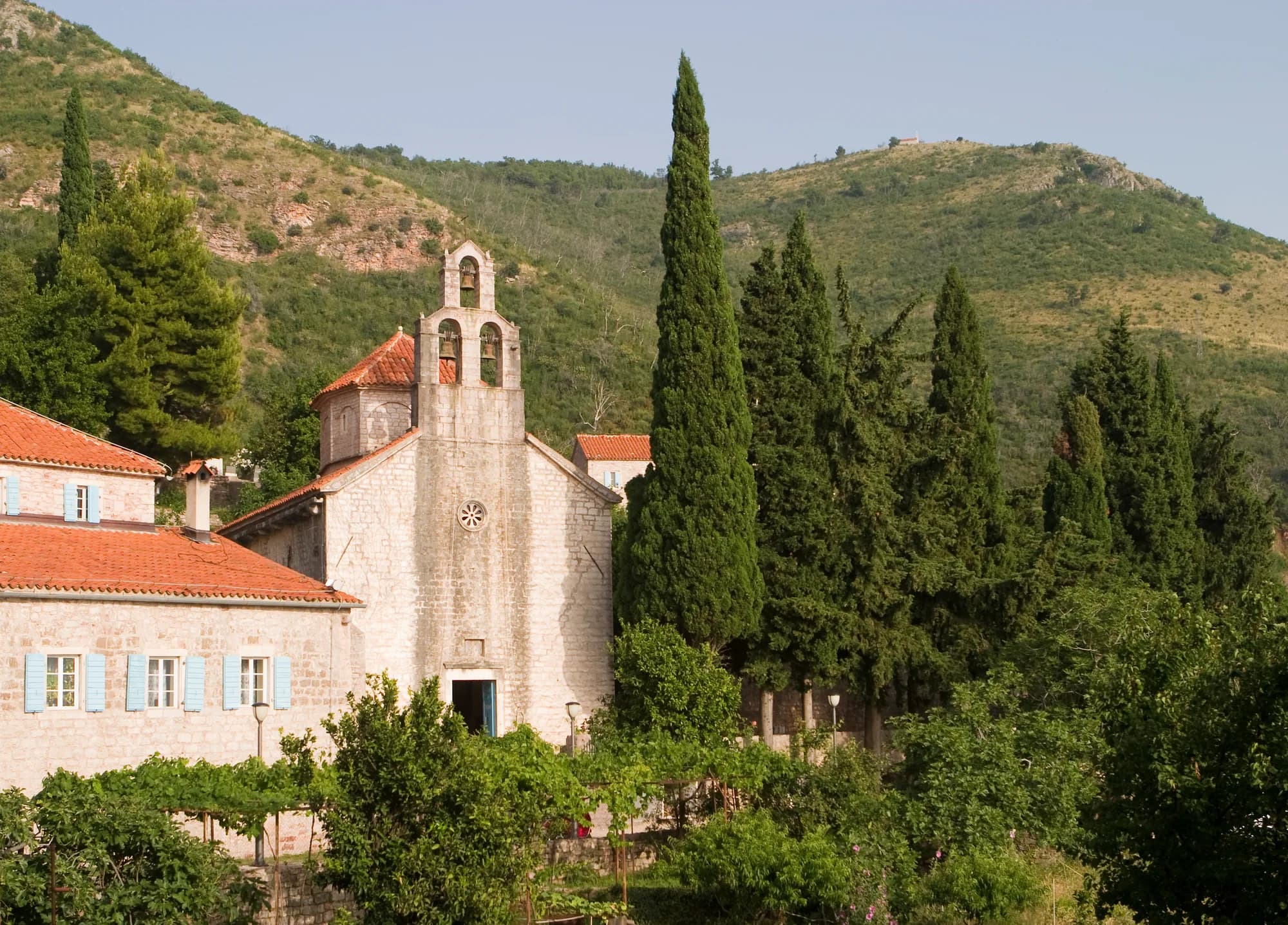
On the slope above Miločer, in the hamlet of Čelobrdo, olive terraces part around a small complex of stone churches, a bell tower and a walled garden. This is Praskvica, the monastery that served for centuries as the spiritual, political and educational heart of the Paštrovići — the clan community of this coast — and it is a place where nearly everything, starting with the name, comes with a story attached.
Water that smelled of peaches
The name first. Praskva is an old local word for peach, and tradition holds that the spring beside the monastery ran with water that carried the scent of peaches — praskvica, the little peach spring. The monks have been explaining this to visitors for six centuries, and the etymology remains the most charming on the Montenegrin coast: an entire monastery named after the smell of its water.
From 1050 to the Balšić charter
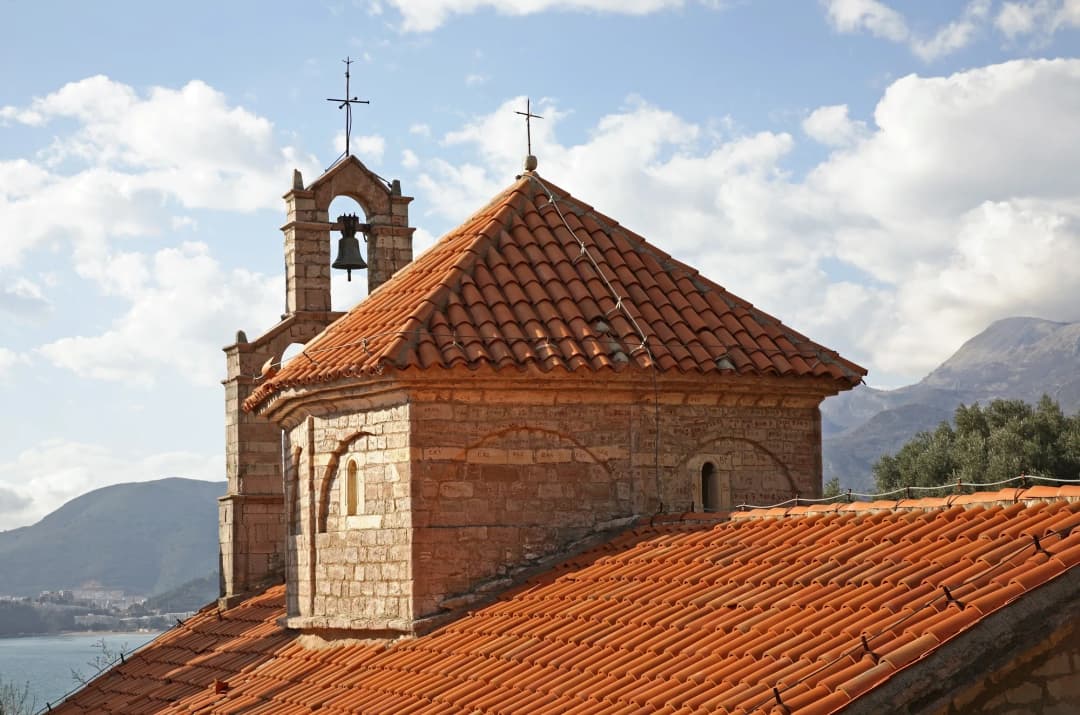
Tradition reaches deep here. Local accounts connect the site's first sanctuary to the year 1050 and to the Zeta ruler Vojislav's line, at the spot where the little Church of the Holy Trinity now stands by the cemetery. The documented history begins in 1413, when Balša III, the last ruler of the Balšić dynasty of Zeta, issued the founding charter of the monastery's main Church of St Nicholas, built with his mother Jelena — daughter of Prince Lazar of Kosovo fame. From that charter onward the monastery's life runs unbroken to the present day: a small stubborn continuity of prayer, sustained through Venetian rule, Napoleonic wars and every state that followed. Inside the Holy Trinity church survive frescoes painted in 1681 by the master Radul, one of the leading Orthodox painters of his era.
The parliament and the school
Praskvica was never only a church. For the Paštrovići — the twelve brotherhoods who governed this coast under their own assembly from the fifteenth century — the monastery was the closest thing to a capital. Their court and council, the Bankada, met at times within its walls; charters and land documents of the clan were kept here; and in the small stone outbuilding known as the kulica, the monastery ran what tradition counts among the earliest schools on this part of the Adriatic, teaching Paštrović children their letters centuries before any state thought to. When historians call Praskvica "the soul of the Paštrovići," it is shorthand for this triple role: altar, archive and classroom of an entire small nation.
The silent Russian and his path
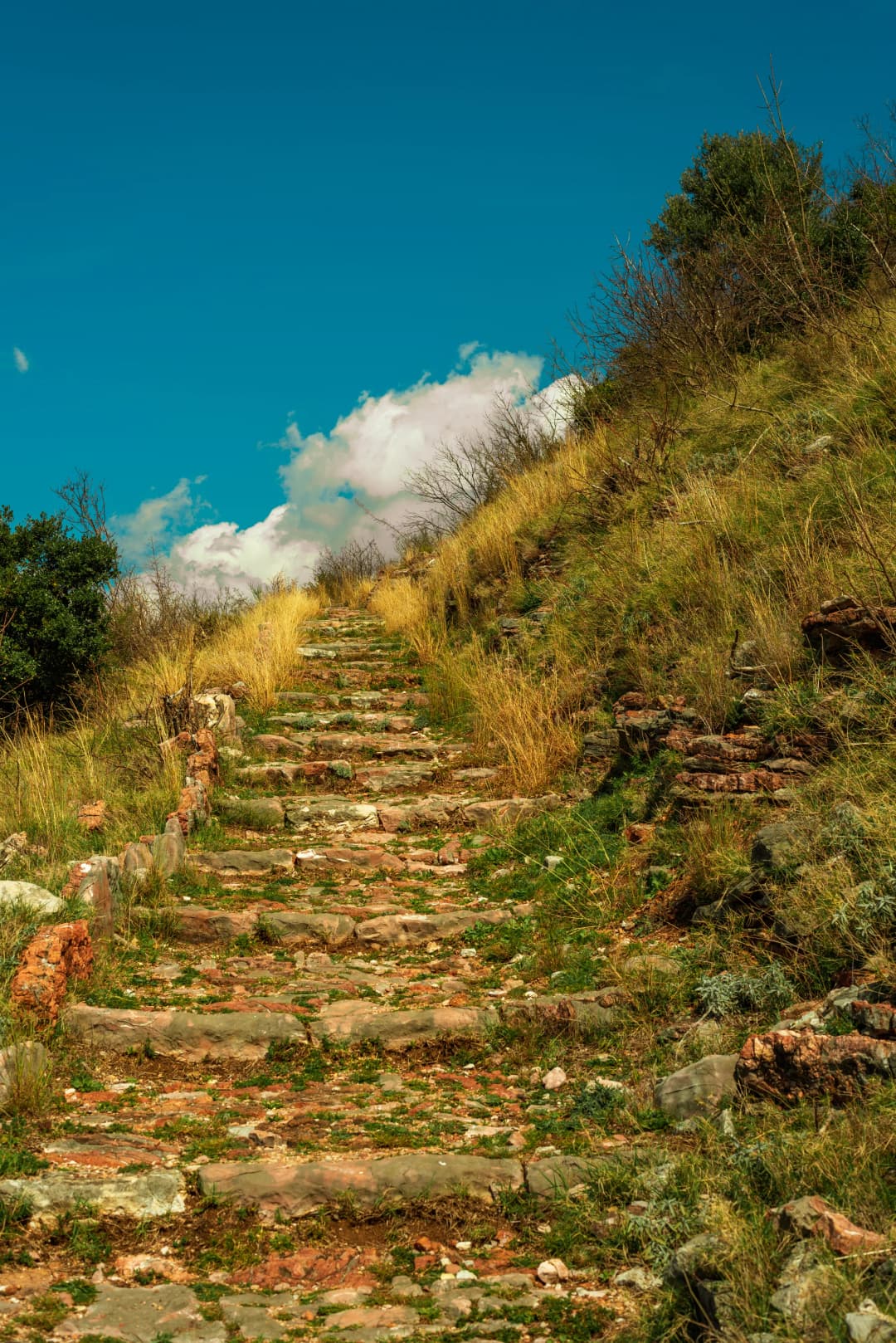
The monastery's most beloved story belongs to a foreigner. At the end of the eighteenth century a one-armed Russian military officer named Jegor Stroganov arrived on this coast, took monastic vows at Praskvica, and — so the tradition runs — bound himself to silence. He then spent roughly ten years building, alone and one-armed, a three-kilometre stone-paved path from the shore by Sveti Stefan and Miločer up through the olive groves to the monastery, so that people and pack animals could climb between the sea and the sanctuary in all weather. Locals still call it Jegorov put — Jegor's road — and long stretches of his stonework remain underfoot. Nobody recorded why he came, what he had left behind in Russia, or what the silence was for; the path is the entire biography. It is difficult to walk it without composing explanations of your own, which may be the point.
Between the resort and the ridge
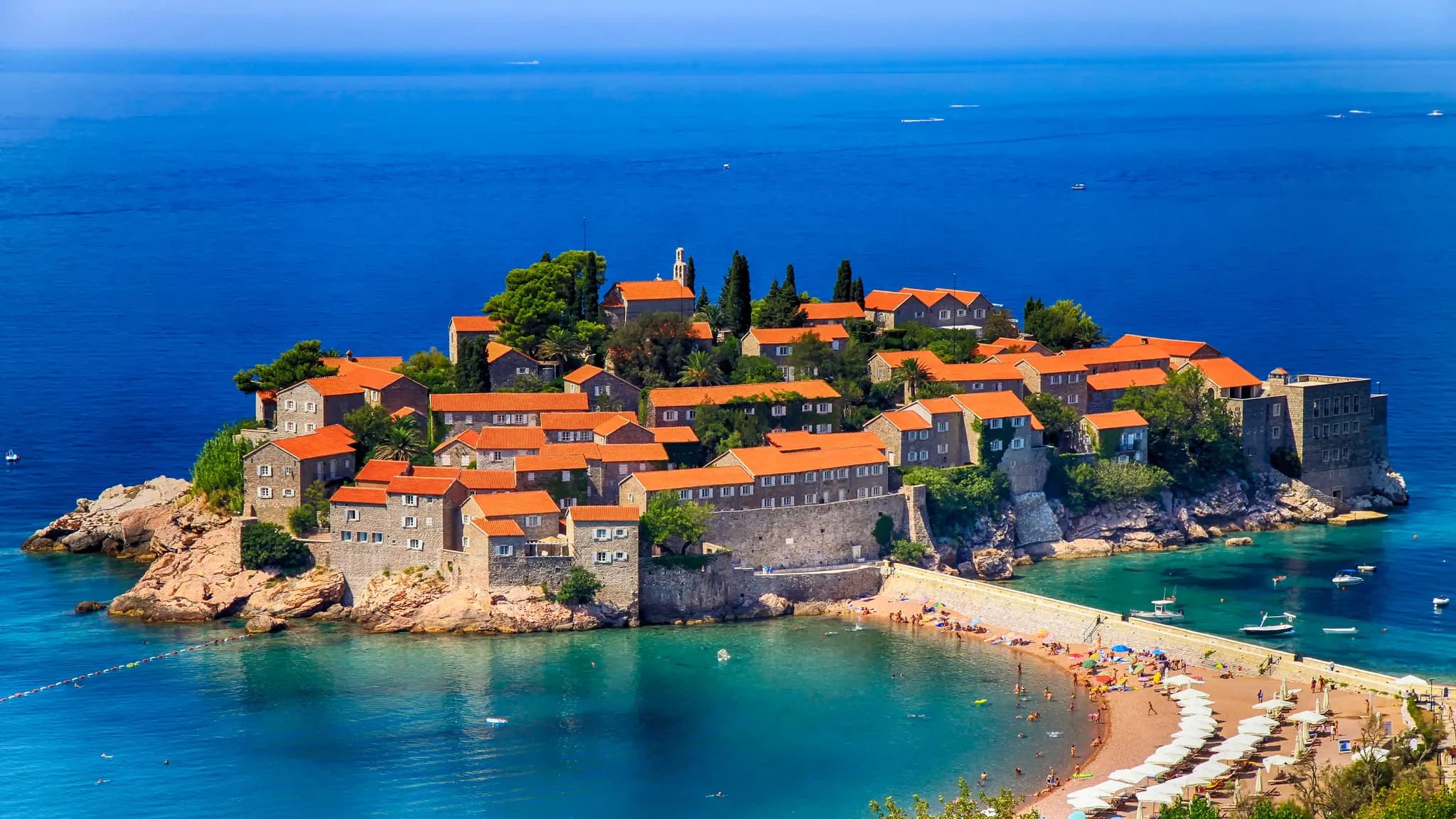
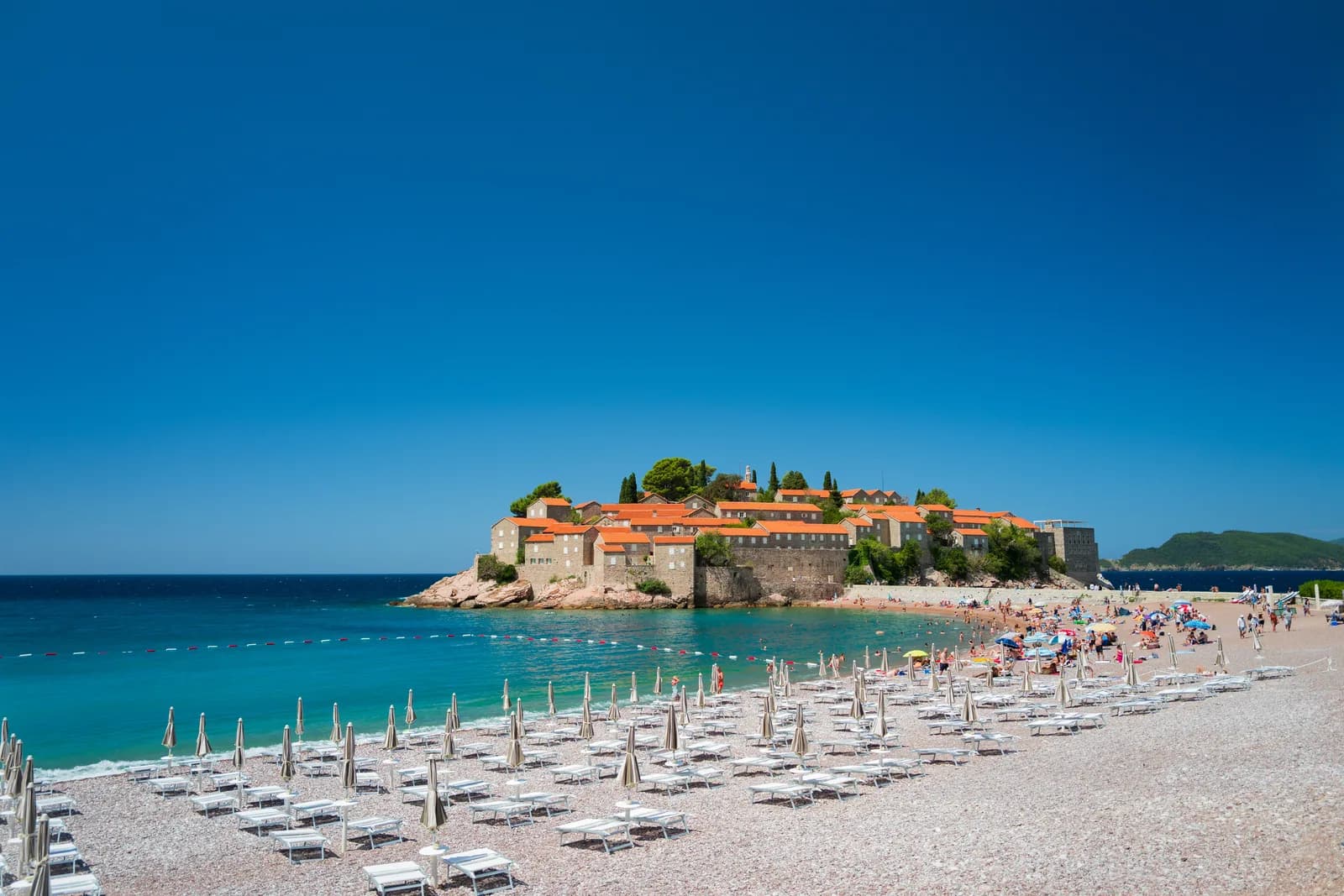
Part of Praskvica's power today is the contrast at its feet. Directly below lie Miločer's royal park and Sveti Stefan, the most photographed and most expensive real estate in Montenegro; a twenty-minute climb separates the infinity pools from a working monastery where the loudest sound is bees in the rosemary. The monastery garden looks straight down onto the island hotel — the same view the monks have had since before the island had a hotel, or the country had tourists. For walkers doing the coastal route, the climb to Praskvica is the classic detour from the Sveti Stefan stage of the Seven Bays walk: up from the sea by Jegor's path, an hour among olives and stone, and back down to the shore changed slightly in perspective.
Visiting. Praskvica stands above the coast road at Čelobrdo, behind Miločer; on foot, the historic approach is Jegor's stone path climbing from near Sveti Stefan and Miločer through the olive terraces — steep but short, twenty to thirty minutes up. Entry is free, as at all working Orthodox monasteries; dress modestly (covered shoulders and knees), keep voices low, and ask before photographing the church interiors. Morning is the best time, before the heat — and the descent back to the sea, with the island of Sveti Stefan framed in olive branches below, is the finest downhill on the entire riviera.