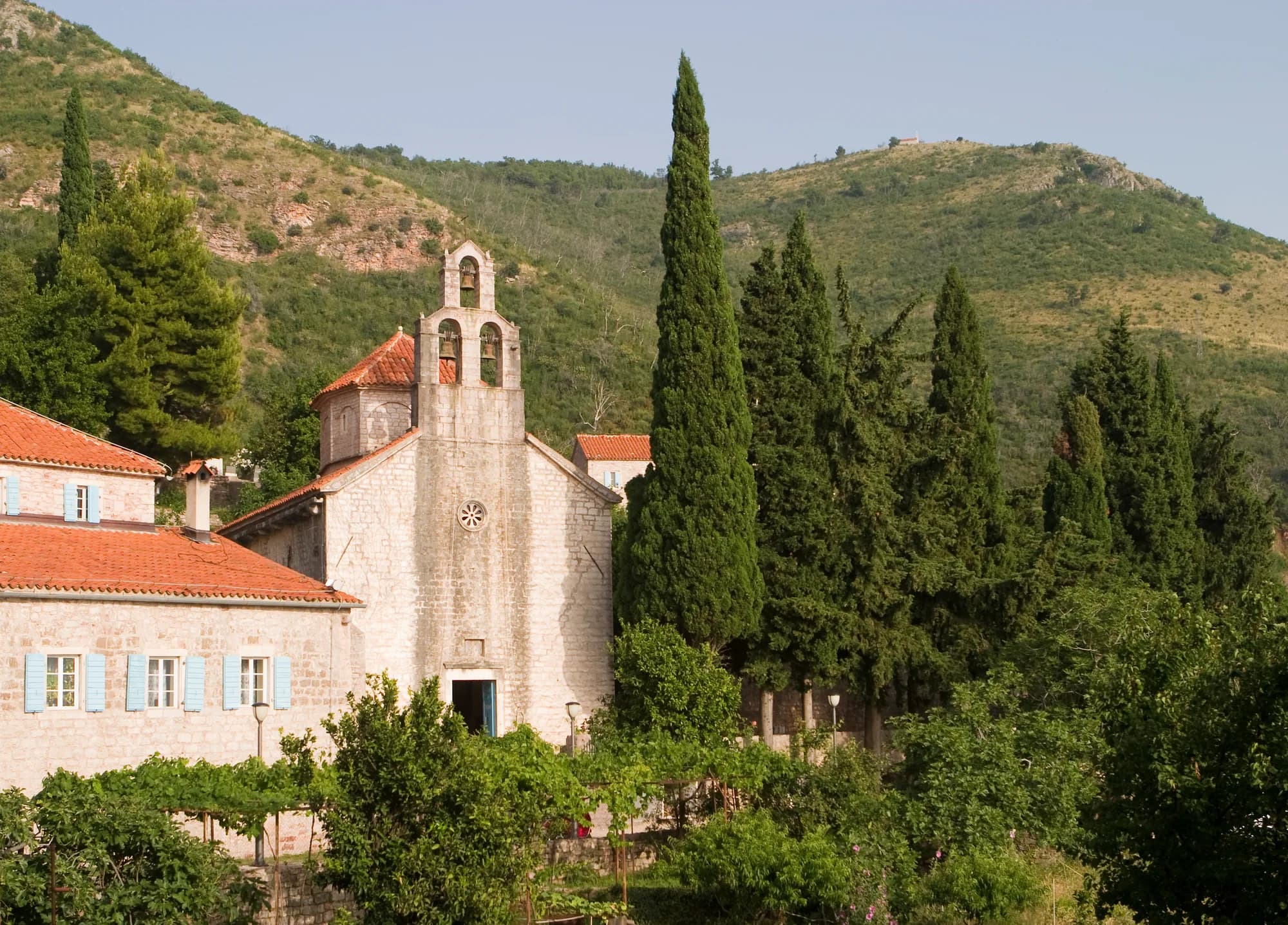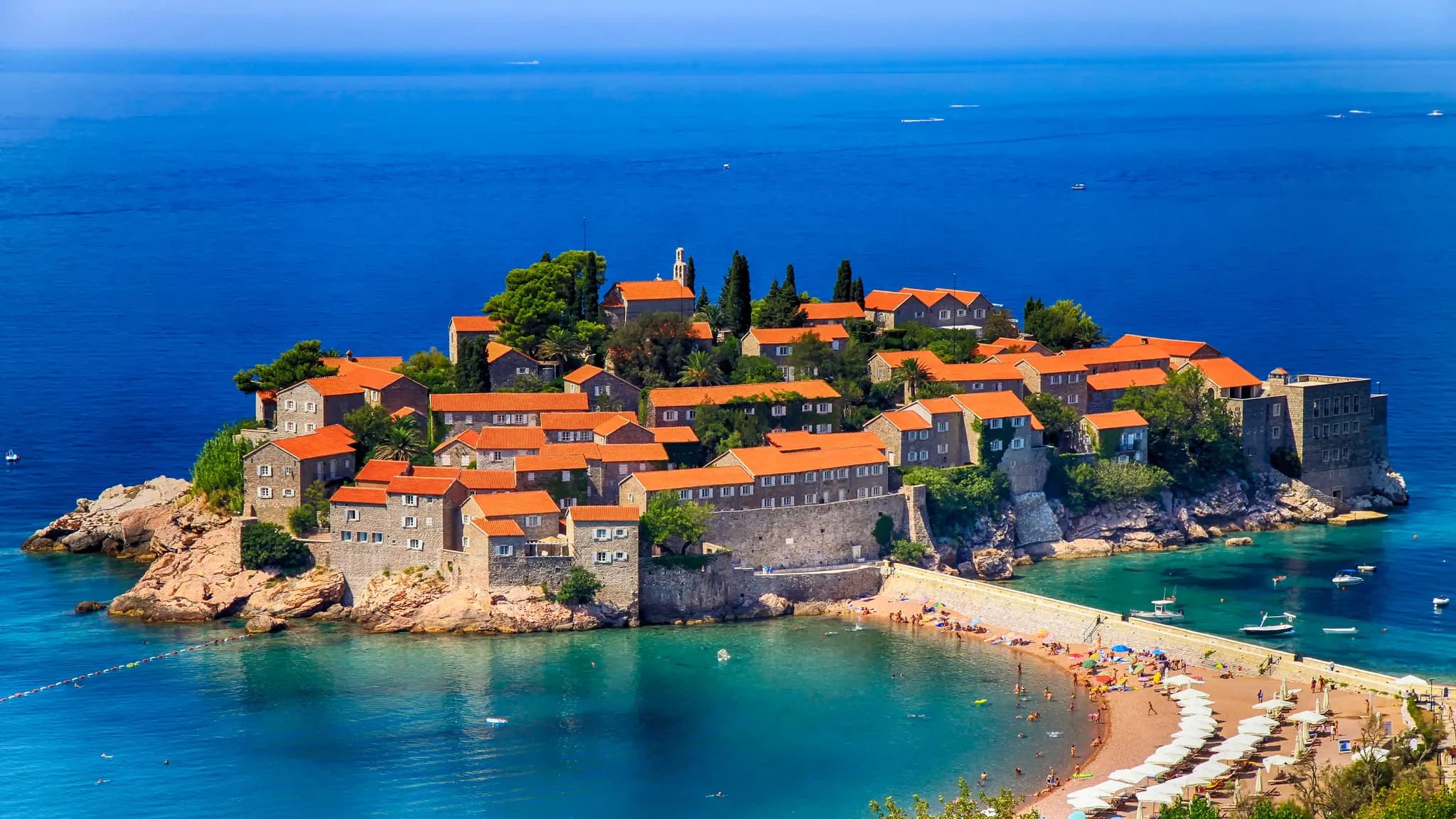
Between Pržno and Sveti Stefan, the coast turns briefly into a garden. Pines, cedars and olive walks cover the low headland of Miločer, and at its heart, facing a crescent of perfect sand, stands a stone villa with arcaded loggias that looks as if it had grown out of the terraces around it. This is Villa Miločer, the summer palace of Yugoslavia's royal family — and the two beaches at its feet, King's Beach and Queen's Beach, have spent the last decade at the centre of the most-watched property argument in Montenegro. The story runs from a royal assassination to a 2025 settlement, and it is best told standing under the pines.
A palace finished too late
The villa was begun in 1934 for King Aleksandar I Karađorđević and Queen Marija, to a design by the Belgrade architect Dragomir Tadić, in the manner of the west-European seaside residences Tadić knew from his training. In October of that same year Aleksandar was assassinated in Marseille. Construction continued, and when the house was completed in 1936 it belonged to a widow: Queen Marija summered here with her sons in the years that followed, and older Paštrovići remembered her warmly — a queen described locally as a true lady and a woman of the people. Around the villa the court laid out a park of some eighteen hectares, planting Mediterranean and subtropical species from around the world above the two coves; the tight rows of olives and the exotic cedars you walk under today are that planting, grown up.
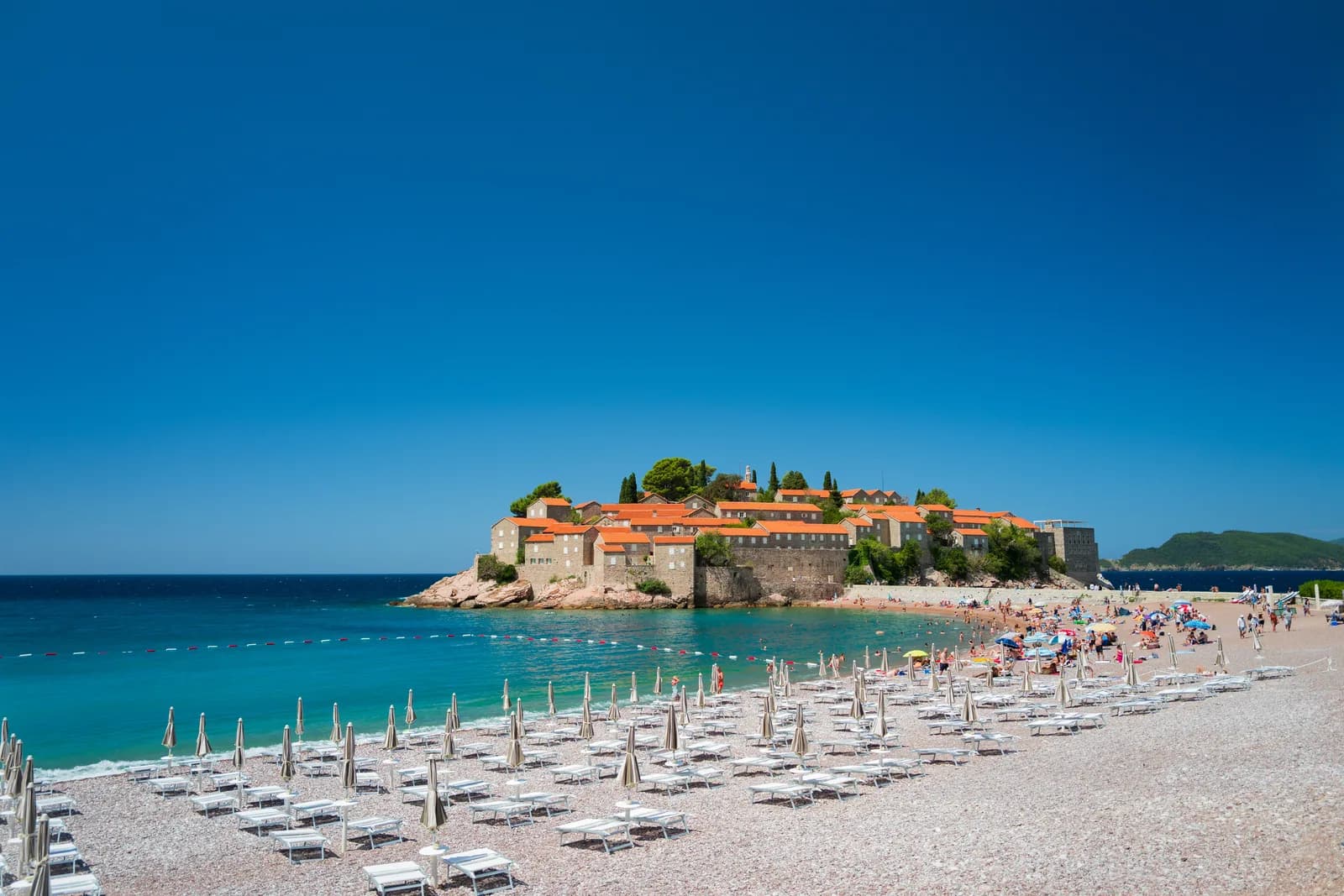
The beaches took their names from the household. The larger crescent below the villa — fine sand, framed by the park — became King's Beach (Miločer beach); the smaller, more secluded cove tucked beyond the rocks toward Sveti Stefan became Queen's Beach, Kraljičina plaža, reputedly Marija's own favoured bathing spot and still, by wide agreement, one of the most beautiful coves on the Adriatic.
Tito's turn
After the Second World War the new Yugoslavia nationalised the Karađorđević estates, and Miločer passed from one head of state to another: Josip Broz Tito used the villa as an occasional summer residence, folding it into the resort complex that made Sveti Stefan and Miločer the glamour address of socialist Yugoslavia — the coast of Sophia Loren and Kirk Douglas. History then repeated itself with strange precision. A new residence planned for Tito in the fields behind the beach was still unfinished when he died in 1980, and the work stopped — Miločer's second ruler to commission a house here and never live in it.
The dispute: who owns a swim?
In the modern era the villa and its beaches were folded into the lease of the Aman Sveti Stefan resort, which operated the island, Villa Miločer and the coves as one ultra-luxury property. Then came the rupture: the resort closed in 2021, and there followed a five-year dispute between the operator and the Montenegrin state in which beach access was the emotional core. For locals, walking through Miločer park and swimming below the villa was a right their grandparents had enjoyed under kings and communists alike; ropes and guards on a public shoreline read as a national insult. The empty island — Montenegro's most famous postcard, dark for five summers — became the symbol of the standoff.
The settlement reached in 2025 finally drew the map. Sveti Stefan's town beaches and King's Beach are public again, free of charge; Queen's Beach remains reserved for Aman guests; the state takes a share of resort profits; and — the quiet landmark buried in the deal — a permanent ban on new construction in Miločer park protects the royal planting for good. On the strength of it, the resort announced its return: Villa Miločer reopened to guests on 22 May 2026, and Sveti Stefan island itself on 1 July 2026, after five years closed. Whatever one thinks of the split — the public got the king's cove, the guests kept the queen's — the pines, for the first time in their history, have a legal guarantee.
Walking it
The joy of Miločer is that its best parts were always the free parts: the shaded path through the park, the smell of pine resin over the water, the reveal of Sveti Stefan island as you round the final point. The old royal shore is the heart of the Miločer stage of the Seven Bays walk, which comes through the park from Pržno, passes the villa's lawns and King's Beach, skirts Queen's Beach at the rocks, and delivers you to the island causeway viewpoint — a sequence of perhaps twenty minutes that compresses a century of Yugoslav history into one stroll under the trees.
Visiting. The park path is open to walkers year-round and free: enter from Pržno in the north or from Sveti Stefan in the south, on level shaded ground throughout. King's Beach is public and free since the settlement, though loungers are rented in season; Queen's Beach can be admired from the path but swum only by Aman guests now that the resort has reopened. Come early on summer mornings, before the loungers fill, or in the golden hour when the villa's stone and the island beyond turn amber — and note that from summer 2026, for the first time in five years, the lights on the island will be on again.