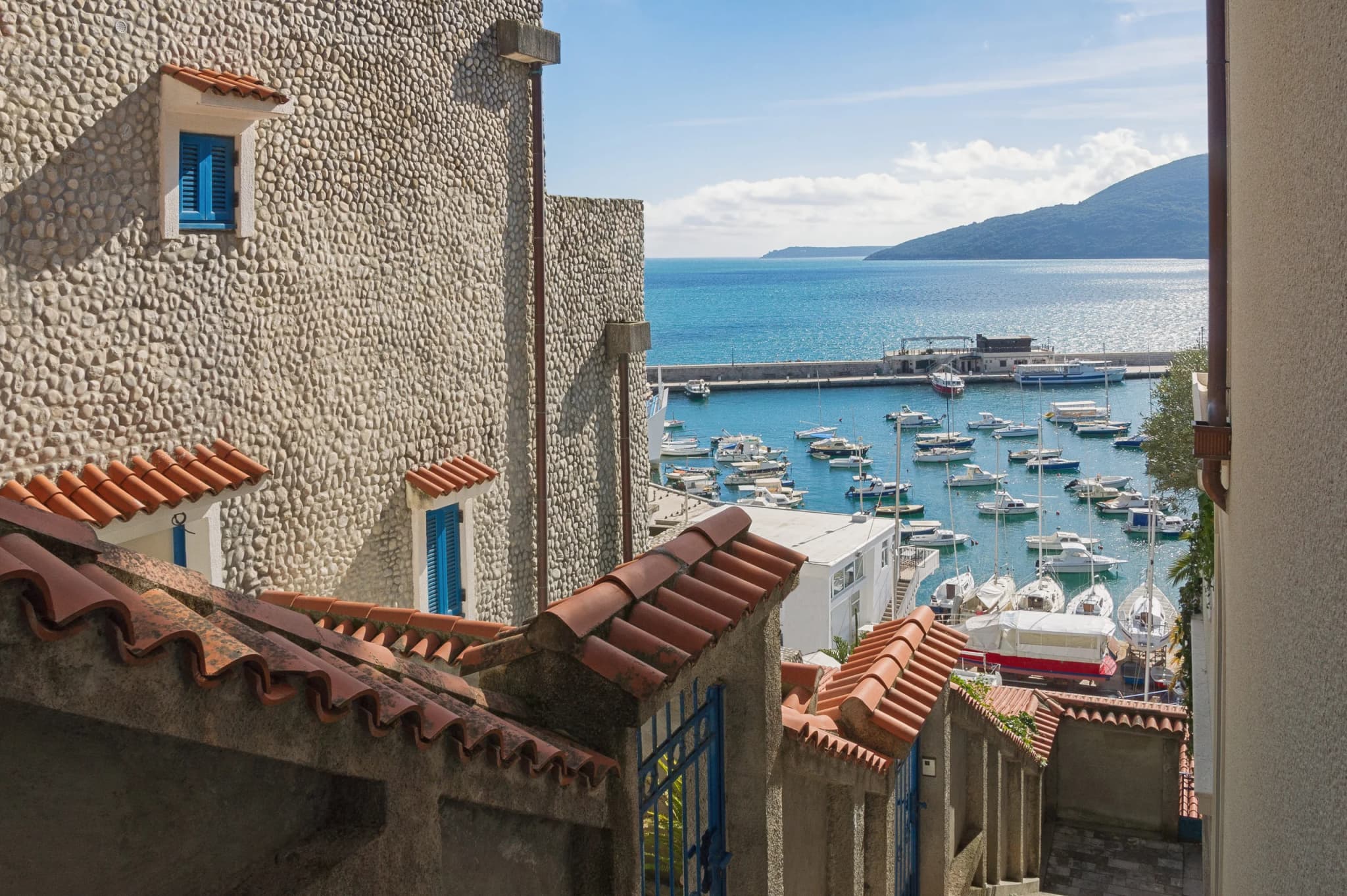
Herceg Novi's best-known seafront route carries five first names but no surnames: Danica Bojanić, Danica Đurović, Danica Kosić, Danica Popivoda and Danica Tomašević. All five were young women from the Boka region who joined the anti-fascist Partisan movement during the Second World War and died between 1942 and 1944. Their name is encountered today as Šetalište Pet Danica—the Five Danicas Promenade.
The shared name is secure; many smaller details are not. Two university studies disagree on Danica Kosić's birth year and on Danica Popivoda's birth year and birthplace. Later commemorative speeches sometimes merge the five women into one collective trajectory even though published profiles assign them different roles. A responsible account should preserve the memorial while showing where the record is thin, retrospective or contradictory.
| Name | Dates in UCG study | Record note |
|---|---|---|
| Danica Bojanić | 1922–1942 | Associated with Gornje Krivošije / Dragalj |
| Danica Đurović | 1922–1943 | Žlijebi; described in sources as fighter or nurse |
| Danica Kosić | 1922–1943 | Another university study gives 1921 |
| Danica Popivoda | 1924–1944 | Another study gives 1925 and a different birthplace |
| Danica Tomašević | 1925–1943 | Svrčuge; linked consistently to the Fifth Brigade |
| Name | Life dates | Shared |
|---|---|---|
| Danica Bojanić | 1922–1942 | Youth • anti-fascist participation • wartime deaths • Boka memory |
| Danica Đurović | 1922–1943 | Youth • anti-fascist participation • wartime deaths • Boka memory |
| Danica Kosić | 1921/22–1943 | Youth • anti-fascist participation • wartime deaths • Boka memory |
| Danica Popivoda | 1924/25–1944 | Youth • anti-fascist participation • wartime deaths • Boka memory |
| Danica Tomašević | 1925–1943 | Youth • anti-fascist participation • wartime deaths • Boka memory |
| Disputed details | Remain visible | Not silently harmonised |
Source: ucg.ac.me, cris.uns.ac.rs
Who were the five women?
A University of Montenegro study of Yugoslav-war names in public space gives the sequence now used on the promenade and memorial plaque: Bojanić (1922–1942), Đurović (1922–1943), Kosić (1922–1943), Popivoda (1924–1944) and Tomašević (1925–1943). A doctoral study of women in Boka's public memory identifies all five as anti-fascists and members of the wartime youth movement, while describing different functions: Bojanić as a homemaker and activist, Đurović as a nurse, Kosić as a fighter in the Orjen detachment, Popivoda as a machine-gunner, and Tomašević as a Fifth Montenegrin Brigade fighter.
Those concise labels should not be expanded into cinematic biographies. The sources were produced decades after the events and often through commemorative institutions. They tell us that the women participated, fought or served, and died young; they do not license invented last conversations, thoughts or exact movements.
Danica Bojanić
Both university sources give 1922–1942. One places her in Gornje Krivošije; the public tradition associates her with Dragalj, a settlement on the Krivošije plateau. A family letter by her brother Miroslav Bojanić surfaced publicly at a 2026 book event, illustrating that family-held evidence continues to enter the record. The letter is valuable testimony, but a newly presented family source should be read alongside—not substituted for—archival research. The Dragalj guide provides landscape context without turning the village into a battlefield attraction.
Danica Đurović
Sources agree on 1922–1943 and on Žlijebi, the stone-built village above Herceg Novi. They vary in emphasis: one calls her a nurse, while public commemorations place her among the fighters of the Fifth Montenegrin Proletarian Brigade and connect her death with Sutjeska. These roles are not necessarily incompatible, because wartime medical personnel moved with armed units, but they should not be collapsed without a unit record. The Žlijebi history and visit guide treats the village as a living settlement rather than a backdrop.
Danica Kosić
Her surname is consistently Kosić in the 2014 plaque report and the two university sources, although occasional secondary retellings print Kostić. The University of Montenegro article gives 1922–1943; the doctoral study gives 1921–1943. Both associate her with Svrčuge and the Partisan movement. That one-year disagreement matters because it changes the easy but often repeated claim that all five were eighteen when they died.
Danica Popivoda
This is the largest published conflict. One study gives 1924–1944 and the established account links her with Bijela. The doctoral study gives 1925–1944 and says she was born at Lješko Polje. It describes her as a woman who operated a machine gun; older commemorative accounts describe command responsibility in a Lovćen battalion. Without a directly cited personnel file, the safe conclusion is narrower: she was a young Partisan participant who died in 1944 and is one of the five women officially commemorated. For the modern setting associated with one branch of her story, see the Bijela shipyard history.
Danica Tomašević
Sources converge most closely on Tomašević: 1925–1943, from Svrčuge, a fighter in the Fifth Montenegrin Proletarian Brigade who died in the Battle of Sutjeska. The doctoral study gives 13 June 1943 and describes her as a platoon delegate and machine-gunner. That exact date is attributed to the study; it is not used to infer her final words, burial place or a personalised battlefield scene.
| Detail | UCG hodonym study | Boka women dissertation |
|---|---|---|
| Kosić, born | 1922 | 1921 |
| Popivoda, born | 1924 | 1925 |
| Popivoda, place | Bijela association | Born Lješko Polje |
| Approach | Record the conflict | Do not manufacture certainty |
Source: ucg.ac.me, cris.uns.ac.rs
| Layer | Evidence |
|---|---|
| 1 | Decisions, unit records, personnel files |
| 2 | Academic reconstruction with citations |
| 3 | Contemporary reports and plaques |
| 4 | Family and commemorative testimony |
| Rule | Each layer can add knowledge; none should silently erase a documented conflict |
Source: ucg.ac.me, cris.uns.ac.rs, novski.me
Sutjeska without the heroic shorthand
The Battle of Sutjeska was not a romantic mountain episode. The Museum of Yugoslavia catalogue dates the start of Operation Schwarz to 15 May 1943 and describes 127,000 occupying and collaborationist troops, supported from the air, facing 16,000 fighters of the Yugoslav National Liberation Army accompanied by 3,500 wounded and sick people. Sutjeska National Park dates the wider operation from 15 May to 15 June.
That asymmetry is the context for the terse entries “died at Sutjeska.” It does not prove that all five women were together, performed the same role or died in the same action. Tomašević and Đurović are most consistently connected with Sutjeska; accounts place Kosić's death near Plana before the battle's final phase, Bojanić's in 1942, and Popivoda's in 1944. The inherited claim that all five shared one unbroken brigade route is therefore too neat.
From railway track to memorial promenade
The promenade's physical story begins before its name. The narrow-gauge railway reached Zelenika on 16 July 1901, connecting the Herceg Novi coast toward Sarajevo through the regional network. The municipality says the railway operated until 1968, while a government exhibition notice identifies the principal photographic history as covering 1901–1968. Sources distinguish the last service, closure and track removal differently, so “1968” is the reliable public-history anchor, not an invented exact last-run ceremony.
After the rails were removed, the shore corridor became a promenade. The Herceg Novi Tourism Organisation's map describes a six-kilometre route following the former Sarajevo–Dubrovnik–Zelenika railway alignment and notes the preserved railway-station building in the centre. Some project material says 6.7 kilometres and popular accounts round to seven; the difference depends partly on which extensions and endpoints are counted. For a visitor, “about six kilometres on the former trackbed” is clearer than false survey precision.
| Stage | What happened |
|---|---|
| 1901 | 16 July — rail reaches Zelenika |
| 1968 | Rail operation ends; removal follows |
| Now | About 6 km promenade on former alignment |
| Traces | Tunnels + station + bridges retain railway traces |
Source: hercegnovi.me, gov.me, hercegnovi.travel

How the public name was built
A doctoral study reproducing and citing a municipal decision dates the name Šetalište Pet Danica to 28 February 1972. Because the underlying decision is referenced rather than separately available in this online source set, the date should remain attributed to that study. It is stronger than the vague claim that the name appeared “sometime in the 1970s,” but it is not a substitute for a public scan of the original municipal file.
The next visible layer came on 13 July 2014, when a memorial plaque listing all five women was unveiled on the Galeb building in Igalo. Vijesti documented the event, the names and the inscription “Zemljo moja — mladost sam ti dala” (“My country—I gave you my youth”). A 2014 education journal also published a photograph and described the plaque as a way for passers-by to understand the promenade's name.
In 2026, the presentation of a family letter concerning Bojanić and a new commemorative book showed that the memory remains active. This is not a closed monument with a single final caption. Scholarship, municipal naming, veterans' organisations, family testimony and everyday use have all shaped what “Pet Danica” means.
| Year | Date | Event |
|---|---|---|
| 1972 | 28 February | Name decision cited |
| 2014 | 13 July | Plaque unveiled |
| 2026 | — | Family letter + book enter public discussion |
| Layers | — | Official name • physical marker • continuing testimony |
Source: cris.uns.ac.rs, vijesti.me, novski.me
Practical promenade walk in 2026
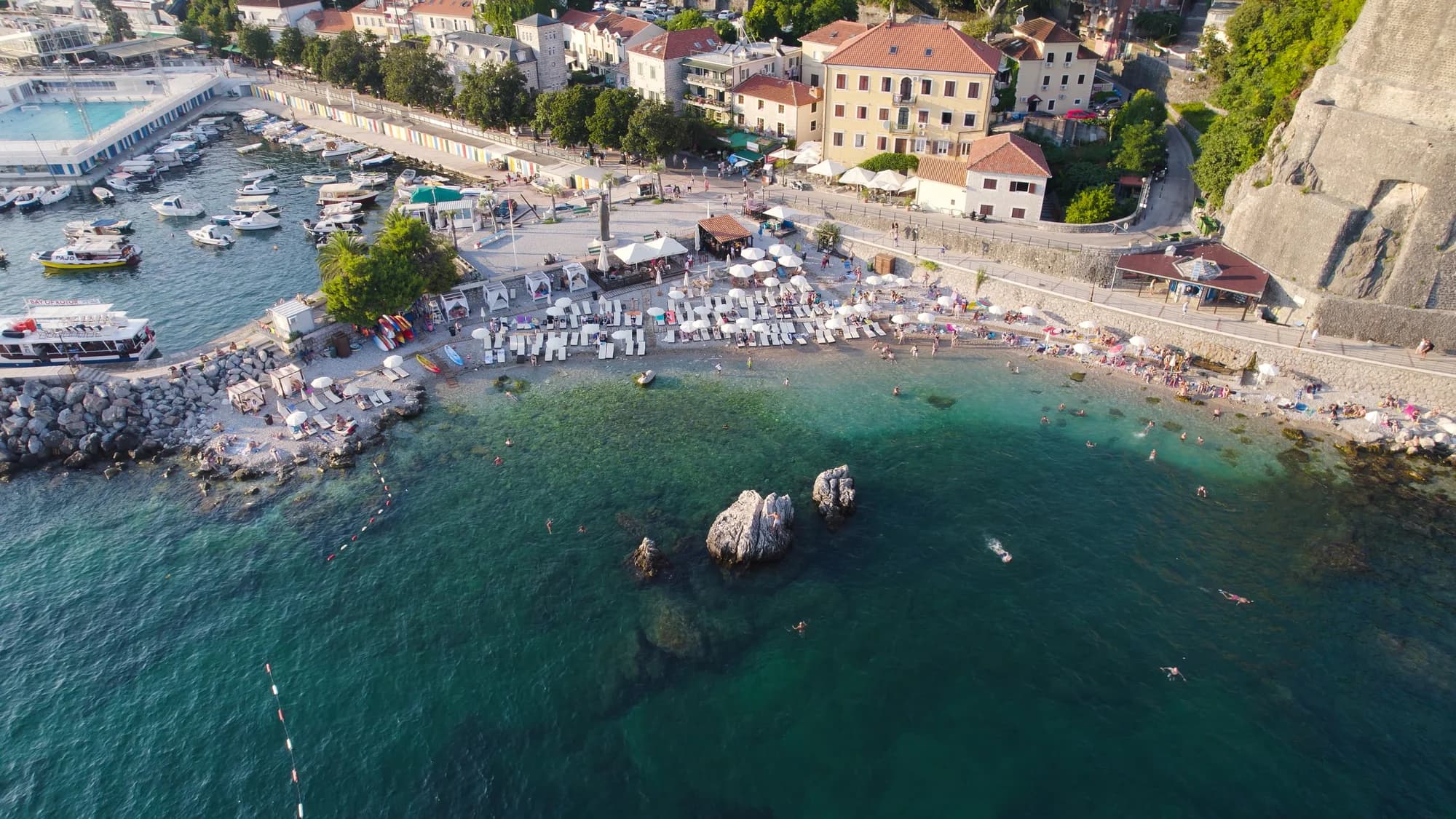
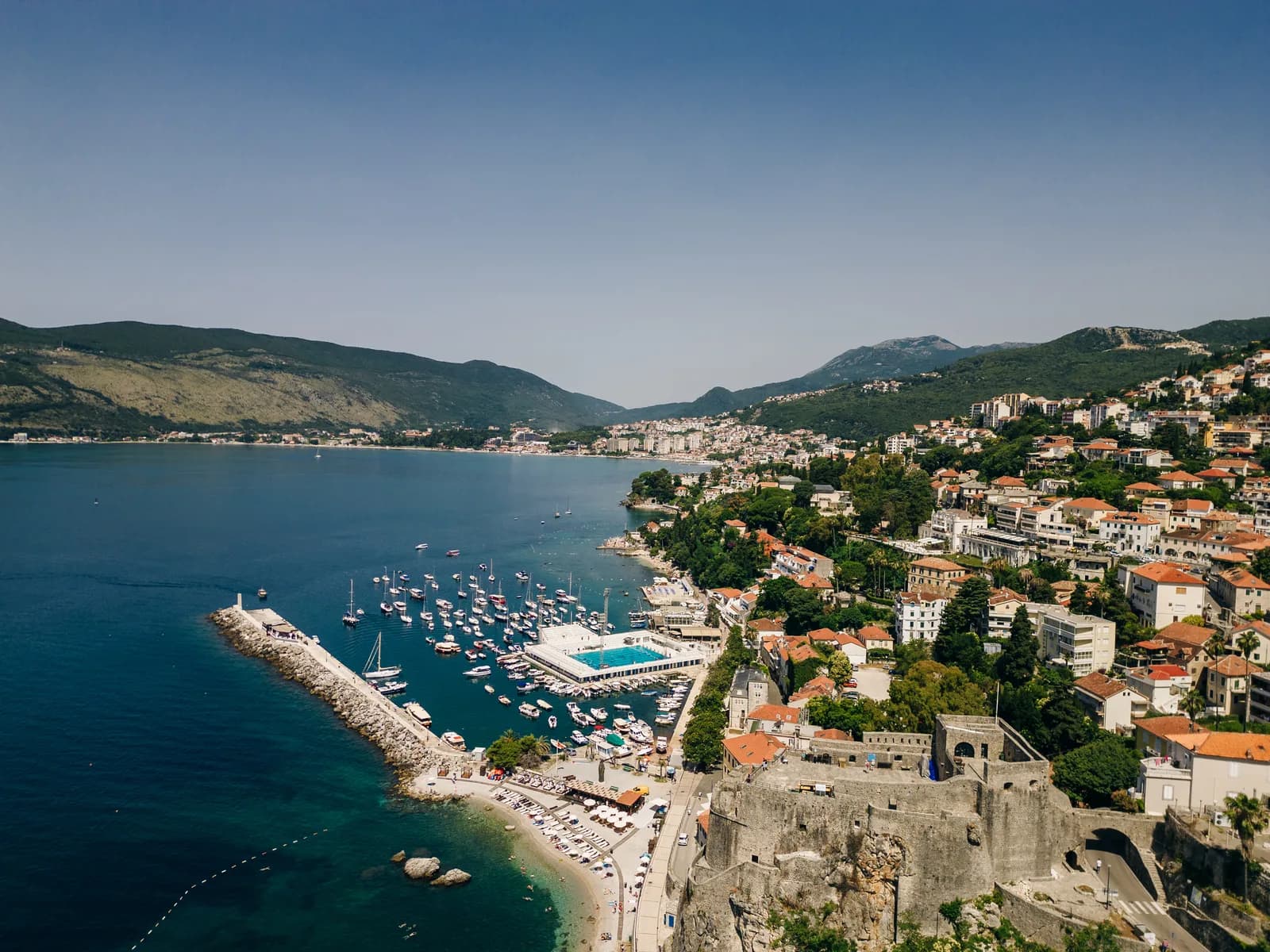
The official tourism map presents Pet Danica as a six-kilometre coastal route on the old railway alignment. It runs through the continuous Herceg Novi urban shore, connecting the Igalo side, Topla and Škver toward the eastern waterfront. The exact point where a resident says the promenade “starts” or “ends” can vary, and adjoining paths extend the walking experience. Treat six kilometres as the mapped core, not a guarantee that every connected metre has identical paving, lighting or access.
| Section | What it adds | Check before relying on it |
|---|---|---|
| Igalo side | Long waterfront approach and 2014 plaque context | Current plaque visibility; works; surface |
| Topla | Residential coast and uphill cultural detours | Steps and gradient off the promenade |
| Škver | Former station area, harbour and old-town access | Crowding, events and steep old-town return |
| Eastern continuation | Quieter waterfront toward Meljine | Current path continuity and lighting |
For a shorter history-focused walk, begin near the Igalo side, look for the plaque, continue to the former station/Škver area and return from there. For a longer coastal day, extend east toward Meljine, whose practical guide covers traffic and current water checks. The nearby Meljine lazaret history adds another layer of Boka's managed movement and quarantine. If accommodation choice will determine daily stairs, compare areas in the Herceg Novi stay guide.
| Stop | Focus | Notes |
|---|---|---|
| Igalo | Plaque context | Long shore approach |
| Topla | Residential coast | Uphill detours |
| Škver | Former station | Harbour + old town |
| East | Optional | Meljine |
| Live checks | Works • surface • lighting | Tunnel status • heat • return transport |
| Terrain | Shore comparatively level | Old-town and Topla detours are not |
Source: hercegnovi.travel, vijesti.me

How to visit respectfully
- Read the five surnames, not only the collective label; the women did not have interchangeable lives.
- Do not describe them all as eighteen. Published dates contradict that simplification.
- Treat the 2014 plaque as a memorial, not a photo prop; confirm its current position locally before planning a specific stop.
- Keep wartime claims attributed. A commemorative speech, family letter, university study and municipal decision answer different questions.
- Respect residents, doorways and harbour work along the promenade, especially when groups stop in narrow sections.
- Do not assume the former railway tunnel is continuously open or certified as a shortcut; follow current barriers and local signs.
| Step | Do | Also |
|---|---|---|
| Stop | Find the marker | Make space |
| Read | Five surnames | Exact wording |
| Question | Fact or tribute? | Which source? |
| Remember | Keep differences | Avoid myth |
| Principle | Commemoration is stronger when evidence stays visible |
Source: vijesti.me, zuns.me
Frequently asked questions
Who are the Five Danicas?
Danica Bojanić, Danica Đurović, Danica Kosić, Danica Popivoda and Danica Tomašević were young anti-fascist participants from the Boka region who died during the Second World War. Herceg Novi's seafront promenade commemorates them collectively.
When was the promenade named?
A doctoral study citing a reproduced municipal decision dates the Pet Danica name to 28 February 1972. The date remains attributed to that study until the underlying municipal file is independently available online.
How long is Pet Danica promenade?
The official Herceg Novi tourism map describes a six-kilometre route on the former railway alignment. Other sources say 6.7 or round to seven kilometres, likely because they count different adjoining sections or endpoints.
Was the promenade once a railway?
Its core follows the former narrow-gauge line that reached Zelenika on 16 July 1901 and operated until 1968. Tunnels, the former station area and other infrastructure preserve that history.
Did all five die at Sutjeska?
No reliable source set supports that simplified claim. Tomašević and Đurović are closely linked to Sutjeska, while published accounts place the others' deaths in different years or locations. The collective memorial should not erase those differences.
Is the whole walk step-free?
The former railway grade is comparatively level, but connections, surfaces, works and detours vary. Škver-to-old-town and Topla side trips can be steep. Confirm the exact route and current obstacles before relying on step-free access.