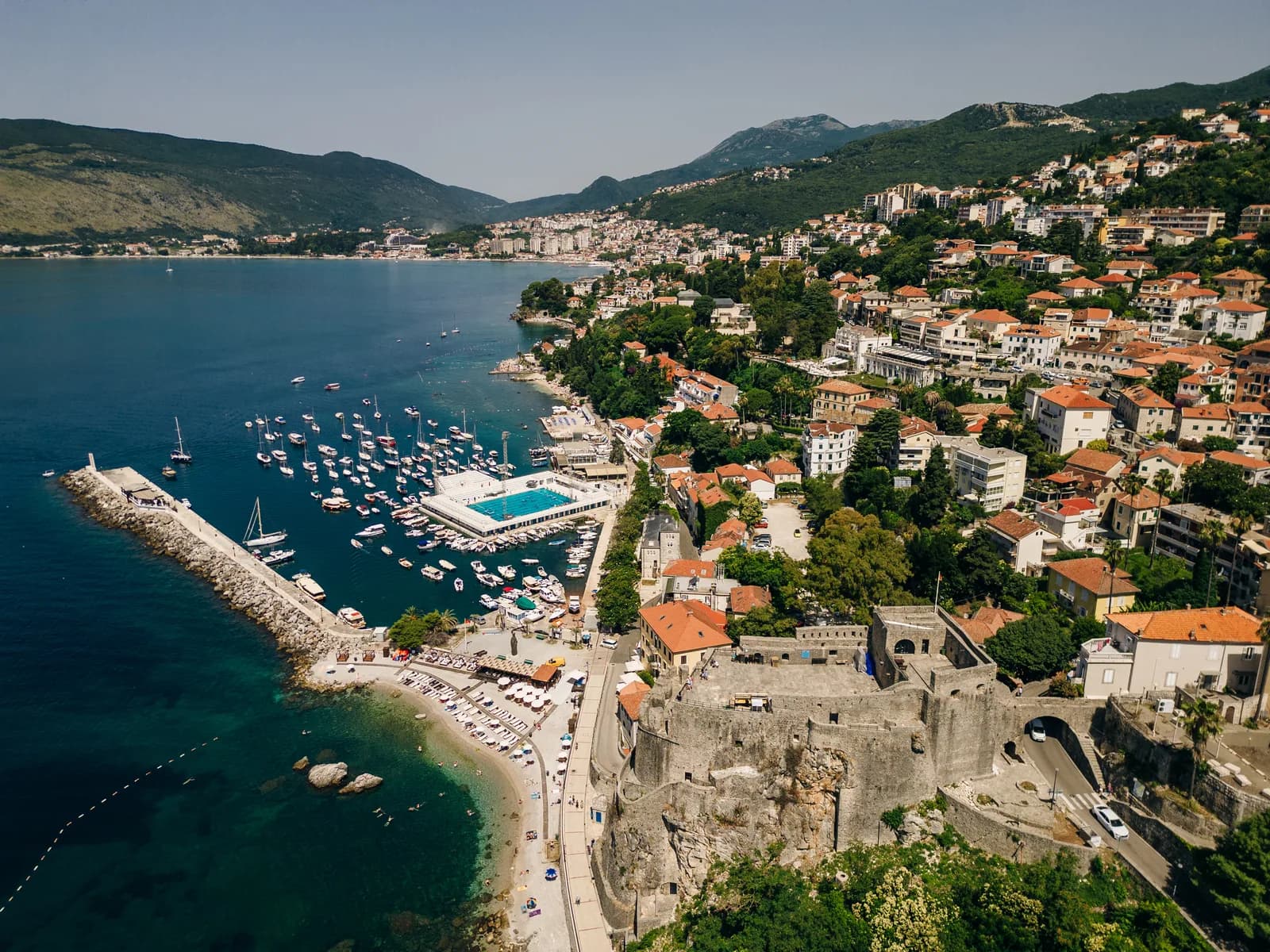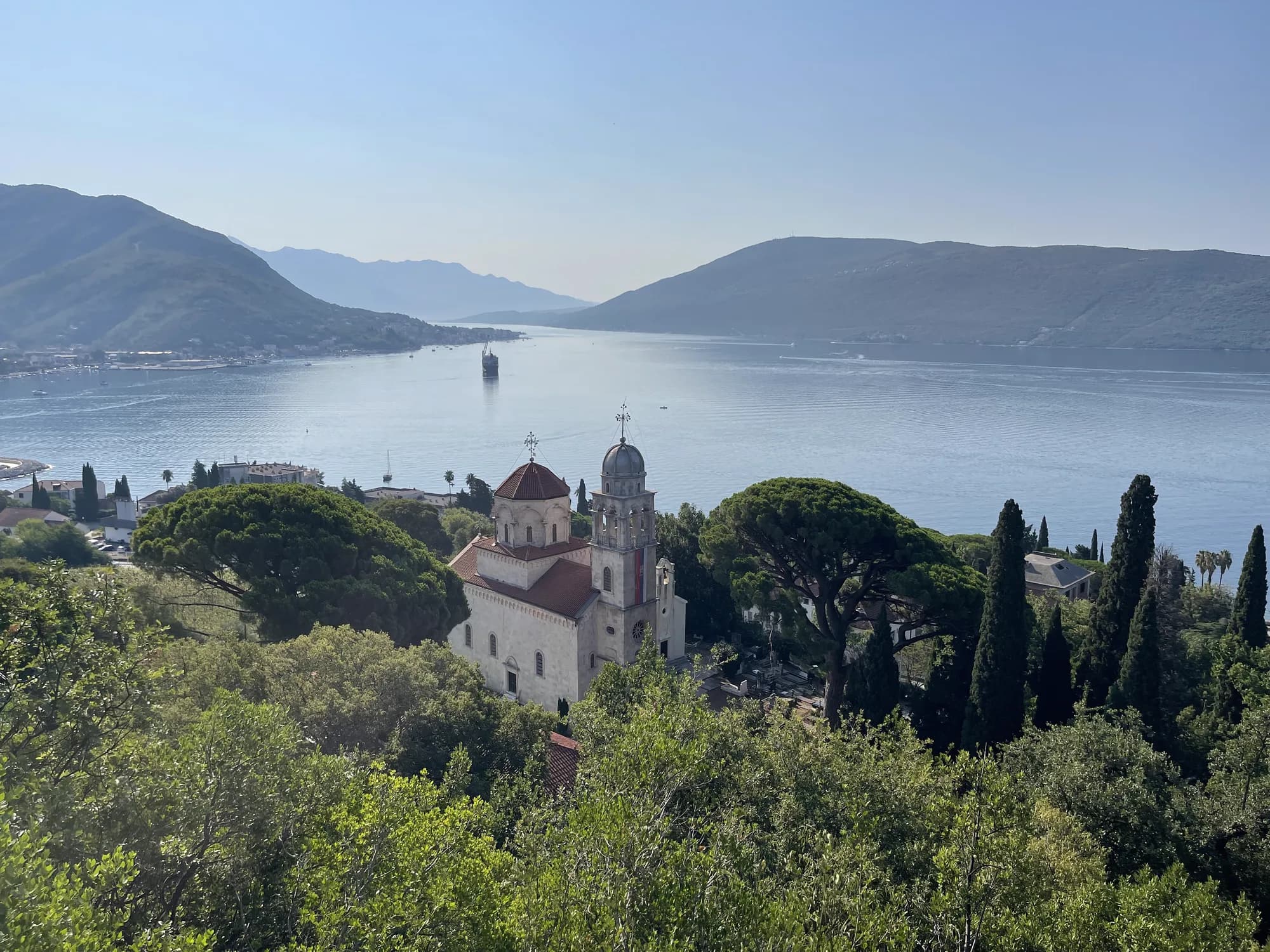
In a dense grove of oak and Mediterranean green above the shore east of Herceg Novi stands one of the most beautiful monastery settings on the entire Adriatic. Savina is not remote — the suburbs of the town lap at the edge of its woods, and yachts ride at anchor in the bay below — yet the moment you climb the lane from the coast the air changes. Three churches, a walled treasury and an old cemetery sit among cypresses on a terrace looking across the water, and the story of how they got there is a story of war, flight and stubborn rebuilding that spans nearly a thousand years.
Refugees from Tvrdoš
A small church stood on this spot long before the monastery rose around it — tradition dates it to 1030, though the oldest surviving written record of the sanctuary comes from 1648. The community's true founding moment, however, came at the end of the seventeenth century. In 1687 the Venetians finally drove the Ottomans out of Herceg Novi, and in the fighting that followed, the great Orthodox monastery of Tvrdoš near Trebinje, in the Herzegovinian hinterland, was destroyed in 1693–94. Its monks fled down to the coast, carrying with them everything they could save — icons, books, reliquaries, the accumulated treasury of centuries — and settled at the little church above the bay. Savina was reborn as Tvrdoš in exile, and to this day the monastery keeps the rescued furnishings of its destroyed mother house.
Three churches
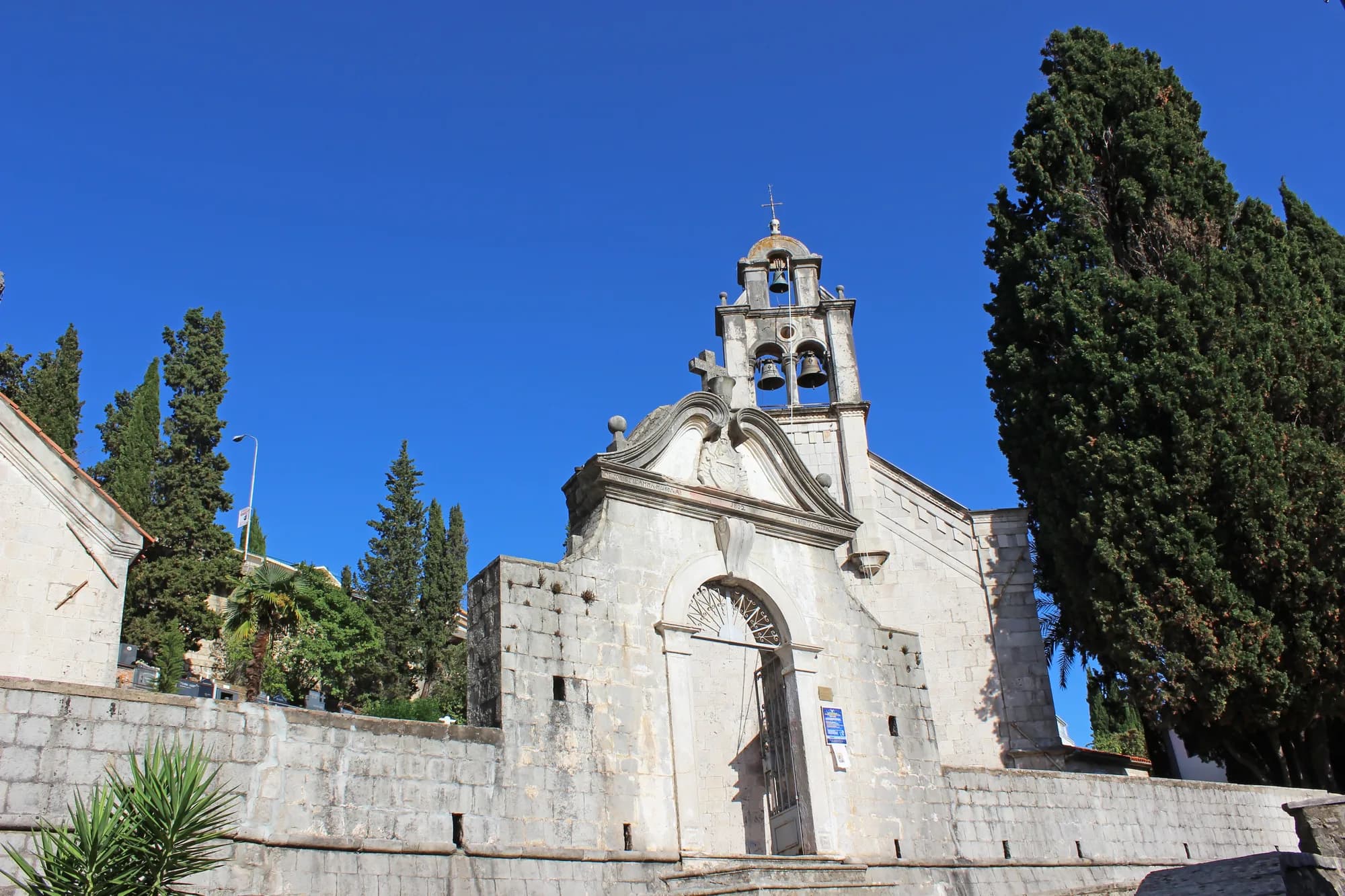
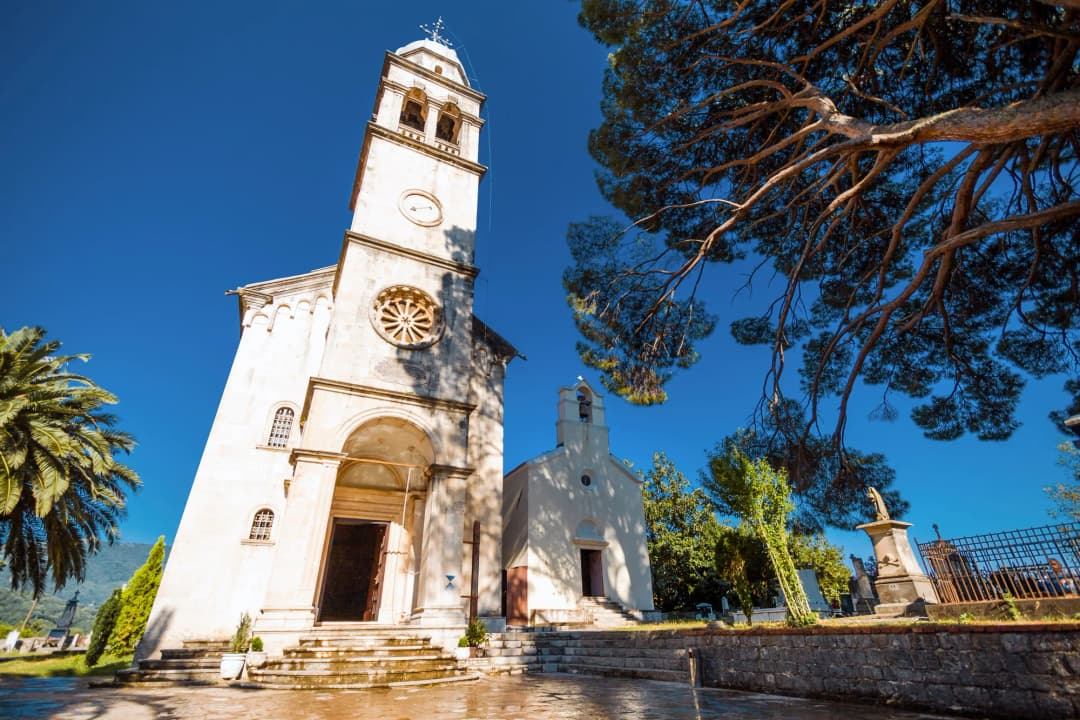
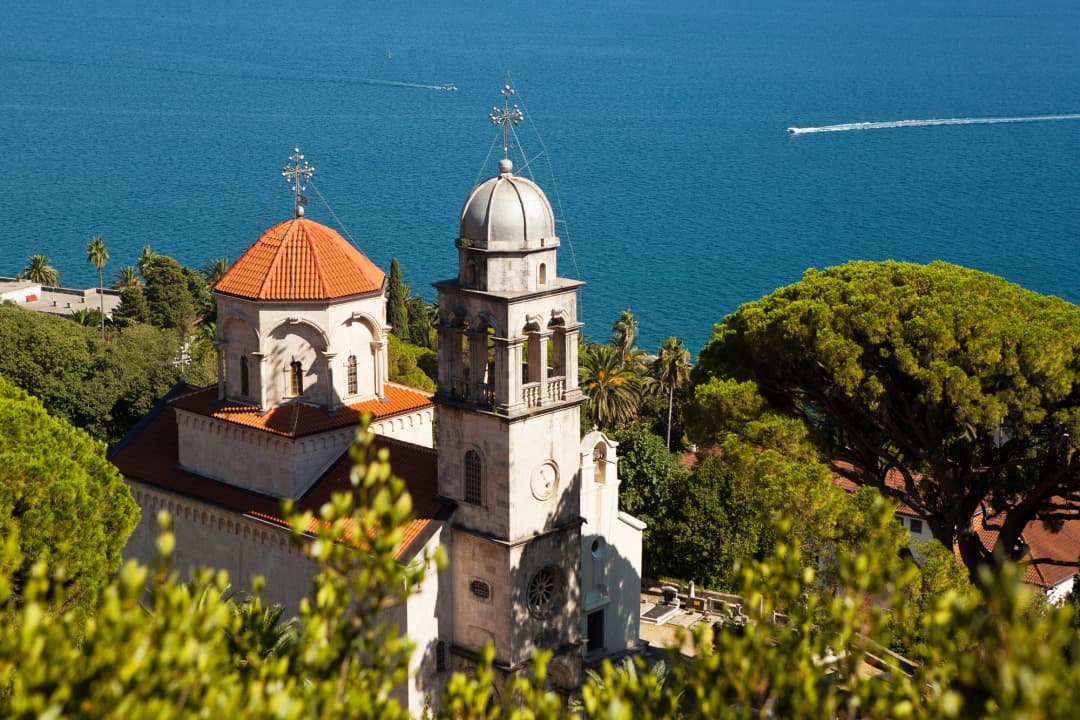
The monastery counts three churches. The Small Church of the Dormition is the ancient heart of the complex — a modest single-nave building only about ten metres long and six wide, the church the Tvrdoš monks found waiting for them. Beside it rises its opposite in every way: the Great Church of the Dormition, one of the finest baroque churches on the eastern Adriatic. It was built between 1777 and 1799 by the master builder Nikola Foretić from the island of Korčula, heir to the great Dalmatian stonemasonry tradition, and the monastery's preserved account books record that in the first eight years alone 8,454 workers took part in the construction. The result is a graceful marriage of Venetian baroque exterior and Orthodox interior — a building that could stand in Dalmatia or the Bay of Kotor's Catholic towns without embarrassment, yet holds an iconostasis and a miracle-working icon of the Mother of God, the Savinska Bogorodica, in its left choir.
Permission to build so grand an Orthodox church did not come easily in the Venetian state, and local tradition preserves a story about it: a Venetian warship, sent to put a stop to the works, was struck by lightning in the bay before it could fire — a sign, the monks concluded, of whose side heaven was on. Legend or not, the church was finished, and its slender bell tower has been a landmark for sailors entering the bay ever since. The third church, dedicated to Saint Sava, stands on the hill above the monastery amid the oaks; tradition connects the whole site with Sava himself, the founder of the Serbian church, from whom Savina takes its name.
A treasury of the Nemanjić age
What makes Savina extraordinary among coastal monasteries is its treasury, much of it carried over the mountains from Tvrdoš. The collection includes a crystal cross believed to have belonged to Saint Sava himself, a silver-gilt reliquary shaped like a miniature church brought from Tvrdoš, relics associated with the medieval Nemanjić dynasty including those of Empress Jelena, gospels from the seventeenth century, and a gallery of icons, chalices and church silver. There are also portraits of Peter the Great and Empress Catherine II of Russia — reminders that in the eighteenth century, when Venice tolerated but did not fund Orthodox life, it was to Russia that the monks travelled to raise money, and Russian imperial patronage helped pay for the great church.
The grove and the view
Give yourself time for the setting as well as the stones. The Savinska dubrava, the old oak wood around the monastery, is a protected green lung threaded with paths, and the terrace in front of the churches looks out over the anchorage of Meljine and the outer bay — one of the finest quiet viewpoints anywhere around Herceg Novi. The monastery cemetery, where sea captains and bishops lie together under carved stones, completes the sense of a place where the coast's Orthodox history is unusually concentrated and unusually intact.
Visiting
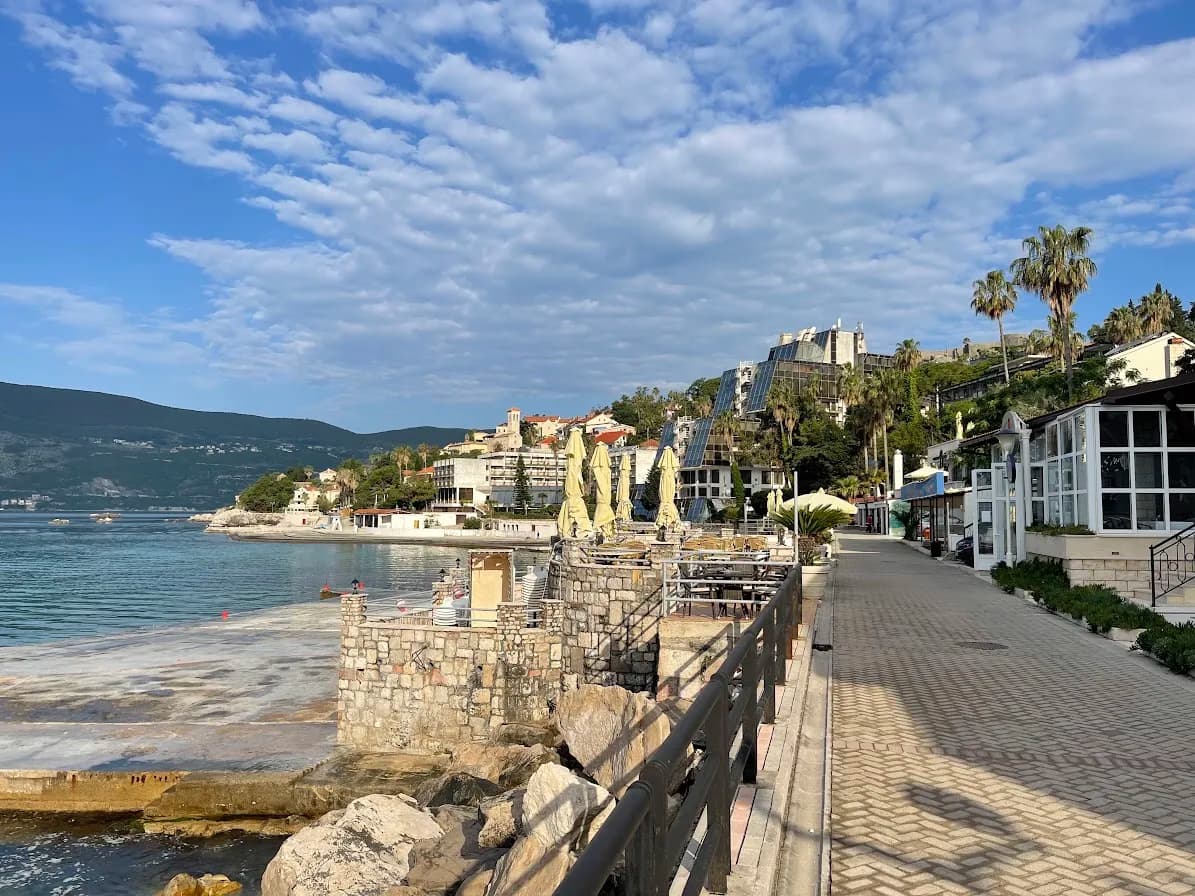
Savina is an easy detour from the Pet Danica promenade: from the shore between Škver and Meljine, signposted lanes climb through the pines to the monastery gate in ten to fifteen minutes on foot. Entry to the grounds and churches is free; the treasury museum keeps shorter hours and is worth asking about at the gate. This is a living monastery — shoulders and knees should be covered, and visits are best avoided during services unless you wish to attend one. Come in the morning, when the light falls on the bell tower and the bay below is still glassy, and combine it with a swim at Meljine on the way back down.